
先进制造业

Search documents
四中全会精神在基层 | 小物件、大作为——从零部件“向新”看湖南制造业提质升级
Zhong Guo Zheng Quan Bao· 2025-11-01 14:28
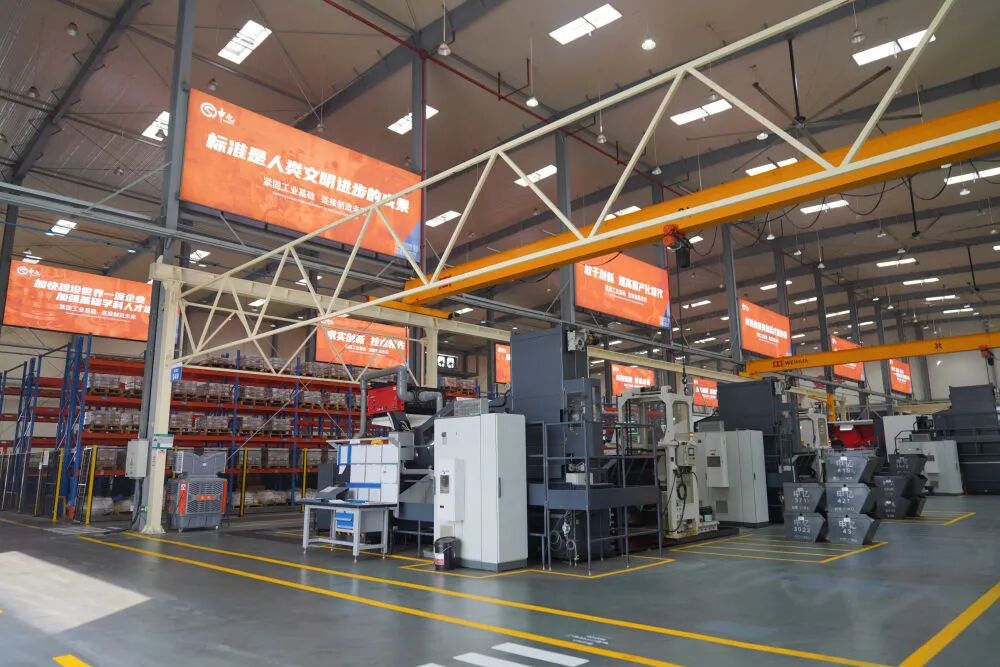
Group 1 - Hunan Shenyi Precision Parts Co., Ltd. specializes in precision components, supplying fasteners for major engineering projects and national key equipment [1][8] - The company has achieved domestic substitution of various fasteners for key engineering machinery enterprises in Hunan, contributing to the advancement of the engineering machinery industry [1][8] - The manufacturing sector in Hunan is seeing a rise in "small and beautiful" enterprises focusing on specialized and innovative manufacturing, aligning with the national strategy for a modern industrial system [3][6] Group 2 - Hongpeng Aviation Power Group is developing aviation engines from modified automotive engines, targeting the low-altitude economy with a focus on cost-effectiveness and airworthiness [3][6] - The company has achieved EASA certification for its D160 heavy oil piston engine and is pursuing CAAC certification, reflecting its commitment to independent and controllable domestic production [3][6] - Strictly Intelligent Technology Co., Ltd. emphasizes innovation in industrial robotics and machine vision, aiming to enhance technology integration within the manufacturing sector [6][8] Group 3 - The fastener industry is crucial in manufacturing, with applications across various sectors, including automotive and infrastructure, highlighting the importance of seemingly minor components [8] - Shenyi Precision has collaborated with steel companies to develop weather-resistant steel rivets, showcasing advancements in corrosion resistance, precision, strength, and toughness [8] - The continuous improvement in precision parts reflects the broader trend of technological innovation and the shift towards high-end, intelligent manufacturing [8]

通宇通讯:关于与专业投资机构共同投资的进展公告
Zheng Quan Ri Bao Zhi Sheng· 2025-10-31 11:09
Core Insights - Tongyu Communication has signed a partnership agreement with Guangdong Huazhen Private Fund Management Co., Ltd. to establish the "Guangdong Tongyu Huazhen Aerospace Industry Fund Partnership" focusing on investments in commercial aerospace, satellite communications, and advanced manufacturing [1] - The initial investment of the fund is set at 20 million RMB, with Tongyu Communication contributing 5 million RMB as a limited partner [1] - The partnership has recently decided to increase the fund's total investment from 5.01 million RMB to 20.01 million RMB, adding an additional 15 million RMB to enhance the company's satellite communication development strategy [1]

关键词读懂“十五五”丨首位任务!“十五五”为何将实体经济摆在最前?
Yang Guang Wang· 2025-10-30 01:43
Group 1 - The core strategy of the "14th Five-Year Plan" emphasizes the importance of strengthening the real economy as the foundation for national strength and resilience [1][3] - China's manufacturing industry has maintained its position as the world's largest for 15 consecutive years, with total industrial added value increasing from 31.3 trillion yuan to 40.5 trillion yuan, and manufacturing added value rising from 26.6 trillion yuan to 33.6 trillion yuan during this period [1] - The "15th Five-Year Plan" aims to solidify the foundation of the real economy to effectively respond to risks and challenges, ensuring competitiveness in the global market [1] Group 2 - The Fourth Plenary Session emphasizes advanced manufacturing as the backbone of a modern industrial system, calling for the acceleration of building a manufacturing power, quality power, aerospace power, transportation power, and network power [2] - Experts highlight the need for traditional industries to undergo upgrades focusing on high-end, intelligent, green, and integrated transformations, while also prioritizing the development of strategic emerging industries and future industries [2] - The relationship between building a modern industrial system and consolidating the foundation of the real economy is interdependent, requiring clear top-level design and resource allocation to avoid fragmentation [2] Group 3 - The focus for the "15th Five-Year Plan" is on strengthening the real economy, with a dual approach of consolidation and expansion to achieve high-quality development and gain competitive advantages [3]
李晓华:发挥先进制造业的“骨干”作用
Sou Hu Cai Jing· 2025-10-29 23:09
Core Viewpoint - The advanced manufacturing industry is essential for building a modern industrial system and strengthening the foundation of the real economy, as emphasized by the 20th Central Committee of the Communist Party of China [1][4]. Group 1: Importance of Advanced Manufacturing - Advanced manufacturing serves as the backbone of the modern industrial system, supporting the economy despite a decline in its proportion of the national economy [2][4]. - The growth of the service sector is heavily reliant on advanced manufacturing, which provides necessary tools and drives demand for services [2][3]. Group 2: Development Potential - There is significant potential for advanced manufacturing driven by technological progress and economic growth, which necessitates higher efficiency and greener production methods [3][5]. - Advanced manufacturing is crucial for the digital, intelligent, and green transformation across various industries, providing essential technologies and products [3][5]. Group 3: Supply Chain Security - Advanced manufacturing plays a critical role in ensuring the safety and stability of industrial and supply chains, especially in the face of global uncertainties and competition [4][6]. - Mastery of key core technologies within advanced manufacturing is vital for national economic and defense security [4][6]. Group 4: Strategic Initiatives - Strengthening frontier technology innovation and increasing investment in basic research are essential for advancing new productive forces [5]. - Addressing supply chain bottlenecks in critical areas such as high-end production equipment and advanced materials is necessary to enhance self-sufficiency [5]. - Accelerating digital transformation in advanced manufacturing will improve production efficiency and international competitiveness [5][6]. - Promoting international cooperation and attracting foreign investment in advanced manufacturing will facilitate global integration and market expansion [5][6].
发挥先进制造业的“骨干”作用
Jing Ji Ri Bao· 2025-10-29 22:33
Group 1 - The core viewpoint emphasizes the importance of advanced manufacturing as the backbone of a modern industrial system, which is crucial for enhancing innovation capabilities and optimizing industrial structure [1][4] - Advanced manufacturing is described as the "muscle and bone" of the modern industrial system, highlighting its growing significance despite a decrease in the manufacturing sector's share of the national economy [2][4] - The development potential of advanced manufacturing is immense, driven by technological progress and economic growth, which necessitates higher efficiency and greener production methods [3][5] Group 2 - Advanced manufacturing plays a critical role in ensuring the safety and stability of industrial and supply chains, especially in the context of global competition and technological self-sufficiency [4][6] - Key strategies for enhancing advanced manufacturing include increasing investment in basic research, addressing supply chain bottlenecks, accelerating digital transformation, and deepening international cooperation [5][6] - The need for advanced manufacturing to support the digital economy and provide essential products for various sectors, including AI and internet services, is emphasized [2][3]
A股三大指数集体高开,算力硬件股大面积高开,港股市场因重阳节休市一天
Mei Ri Jing Ji Xin Wen· 2025-10-29 05:09
Group 1 - The Hong Kong stock market is closed on October 29 due to the Double Ninth Festival, and the Shanghai and Shenzhen exchanges do not provide Hong Kong Stock Connect services, affecting the primary market for Hong Kong-listed ETFs like the Hang Seng Technology Index ETF (513180) and the Hong Kong Stock Connect Automotive ETF (159323) [1] - The A-share market opened higher with the Shanghai Composite Index up 0.05%, the Shenzhen Component Index up 0.4%, and the ChiNext Index up 1.07%, with significant gains in computing hardware stocks [1] - The "14th Five-Year Plan" recommendations were released on October 28, providing guidance for the development of emerging and future industries, emphasizing the acceleration of strategic emerging industry clusters such as new energy, new materials, aerospace, and low-altitude economy [1] Group 2 - Zheshang Securities emphasizes that building a modern industrial system relies on technological innovation to lead the development of new quality productivity, particularly in advanced manufacturing, which integrates high-tech achievements [2] - The latest valuation of the Hang Seng Technology Index ETF (513180) is 23.44 times (PETTM), which is at the 32.64% valuation percentile since the index's inception, indicating that the current valuation is lower than 70% of its historical time [2] - The outlook for the Hong Kong technology sector is positive, benefiting from the current AI-driven industrial trends, potential foreign capital inflow due to expected interest rate cuts by the Federal Reserve, and continuous accumulation of southbound funds, making the Hang Seng Technology Index promising for the fourth quarter [2]
上海要重点发力现代化产业体系——访上海市宏观经济学会会长、市“十五五”规划专家咨询委员会专家王思政
Jie Fang Ri Bao· 2025-10-29 01:49
Core Insights - The construction of a modern industrial system is a strategic task emphasized in the 20th National Congress, highlighting the importance of advanced manufacturing as the core component [2][3] Group 1: Modern Industrial System - The modern industrial system includes advanced manufacturing, modern agriculture, modern services, and infrastructure, with advanced manufacturing being the most critical [2] - Industrialization is the foundation of modernization, and advanced manufacturing is essential for driving high-quality development and new productive forces [3] Group 2: Role of Different Industries - Traditional industries account for approximately 80% of manufacturing and serve as the foundation for modern industries [4] - Emerging industries are crucial for high-quality development and represent the forefront of technological revolution and industrial transformation [4] - Future industries, driven by cutting-edge technologies, are in their infancy and possess strategic, leading, disruptive, and uncertain characteristics [4] Group 3: Shanghai's Industrial Strategy - Shanghai aims to enhance traditional industries through smart, green, and integrated transformations while expanding emerging industries and seizing opportunities in future industries [5][8] - The city is positioned as a key player in national strategies, responsible for implementing strategic deployments [5] Group 4: Importance of Integration - Integration is a global trend in innovation, moving from differentiation in traditional industries to fusion in the knowledge or digital economy [6] - The smartphone exemplifies fusion innovation, combining multiple functionalities into a single product [6] Group 5: Technology Innovation - High-level technological self-reliance is essential for developing new productive forces, with a focus on the deep integration of technological and industrial innovation [7] - Companies are now seen as the main entities for technological innovation, necessitating a high-level socialist market economy to facilitate this integration [7] Group 6: Development of Industrial Clusters - Shanghai's successful experience includes establishing leading industrial projects that create industrial bases, extend supply chains, and foster industrial ecosystems [8] - The city is developing high-end industrial clusters along the eastern coastal areas, with a focus on advanced manufacturing and emerging industries such as AI, integrated circuits, and biomedicine [8]
先进制造业地位凸显 新兴产业和未来产业蕴藏新机遇
Zhong Guo Zheng Quan Bao· 2025-10-28 21:10
Core Insights - The "14th Five-Year Plan" emphasizes the construction of a modern industrial system, reinforcing the foundation of the real economy, with a focus on intelligent, green, and integrated development [1][2] Group 1: Advanced Manufacturing - The plan highlights the importance of maintaining a reasonable proportion of the manufacturing sector, underscoring the critical role of advanced manufacturing in economic development [1][3] - Advanced manufacturing is identified as a key focus for future development, with institutions suggesting it will drive the transformation and upgrading of the economic structure [2][3] Group 2: Traditional Industries - The plan calls for the optimization and upgrading of traditional industries, aiming to enhance the global competitiveness of sectors such as mining, metallurgy, and machinery [2][3] - It emphasizes the need for technological transformation and the promotion of smart, green, and service-oriented manufacturing [2][3] Group 3: Emerging and Future Industries - The plan aims to cultivate and expand emerging and future industries, focusing on strategic sectors like new energy, aerospace, and low-altitude economy [3][4] - It outlines initiatives for large-scale application demonstrations of new technologies and products, accelerating the development of emerging industries [3][4] Group 4: Future Industry Development - The plan encourages exploration of diverse technological routes and business models in future industries, including quantum technology and hydrogen energy [4] - It highlights the potential of sectors like energy storage and solid-state batteries, which are expected to drive growth in emerging industries [4]
汽车十五五规划解读;优信-如何理解非标品生意的壁垒:周一刻钟,大事快评(W129)
Shenwan Hongyuan Securities· 2025-10-28 12:52
Investment Rating - The report indicates a positive outlook for the automotive industry, emphasizing the importance of "expanding domestic demand" and "high-quality development" as key support directions during the 14th Five-Year Plan period [1][4][7]. Core Insights - The "14th Five-Year Plan" establishes a development framework for the automotive industry centered on domestic demand, technological innovation, green transformation, and open integration, which is expected to provide medium to long-term growth support for the industry [4][7]. - The policy focus for the automotive industry is anticipated to be on three aspects: stability (preventing excessive competition and restoring pricing systems), growth (promoting the expansion of the new energy vehicle and smart product markets through fiscal and industrial policies), and upgrading (advancing product and service upgrades) [1][4][5]. - Technological innovation is highlighted as a core task of the "14th Five-Year Plan," which will be crucial for achieving high-quality development in the automotive sector, emphasizing the need for self-research capabilities in key technology areas such as chips and algorithms [6][7]. - The green transition is reinforced as a significant direction, with expectations for the automotive industry to develop along multiple routes, including pure electric, hybrid, and hydrogen energy, while enhancing energy efficiency and performance [6][7]. Summary by Sections Section 1: Policy Direction - The report outlines that the automotive industry will benefit from policies aimed at stabilizing competition, promoting growth, and upgrading products and services, reflecting a trend of policy support and structural optimization [1][4][5]. Section 2: Technological Innovation - Emphasis is placed on the need for the automotive industry to strengthen its independent research and development capabilities in critical technology areas, which is essential for achieving high-quality development [6][7]. Section 3: Green Transformation - The report indicates that the automotive industry is expected to advance in various green technologies, which will be a core driver for optimizing the industry structure and reducing energy consumption [6][7]. Section 4: International Cooperation - The ongoing promotion of open cooperation and the "Belt and Road" initiative is expected to bring new international opportunities for the automotive industry, with anticipated measures to relax foreign investment access and promote free trade zones [7].

划重点!“十五五”规划建议里的产业利好
Zhong Guo Zheng Quan Bao - Zhong Zheng Wang· 2025-10-28 12:49
Core Viewpoint - The "Suggestions" emphasize the construction of a modern industrial system, reinforcing the foundation of the real economy, with a focus on maintaining a reasonable proportion of manufacturing and promoting advanced manufacturing as a key driver for economic development [1][2]. Group 1: Advanced Manufacturing - The "Suggestions" highlight the critical role of manufacturing in economic development, aiming to maintain its value-added within a reasonable range to support overall economic growth [2]. - Advanced manufacturing is identified as a significant focus for the future development of the real economy, with expectations for new opportunities arising from the evolving global technology landscape [2]. - The emphasis on advanced manufacturing is expected to drive the transformation and upgrading of the economic structure, with specific attention to sectors such as semiconductors, artificial intelligence, digital economy, innovative pharmaceuticals, and biotechnology [2]. Group 2: Optimization of Traditional Industries - The "Suggestions" call for the optimization and upgrading of traditional industries, aiming to enhance the global competitiveness of sectors like mining, metallurgy, chemicals, light industry, textiles, machinery, shipbuilding, and construction [3]. - There is a focus on improving the self-control level of industrial chains and promoting smart, green, and service-oriented manufacturing, which is anticipated to create a market space of approximately 10 trillion yuan over the next five years [3]. Group 3: Cultivation of Emerging and Future Industries - The "Suggestions" propose the cultivation of emerging and future industries, emphasizing the development of strategic emerging industry clusters such as new energy, new materials, aerospace, and low-altitude economy [5]. - There is a forward-looking approach to future industries, exploring diverse technological routes and typical application scenarios, with a focus on quantum technology, biomanufacturing, hydrogen energy, and sixth-generation mobile communication as new economic growth points [5]. - The establishment of mechanisms for investment growth and risk sharing in future industries is highlighted, alongside the promotion of specialized small and medium-sized enterprises and the cultivation of unicorn companies [5].