对赌协议

Search documents
关于科创债的一个梦(原创)
叫小宋 别叫总· 2025-08-01 13:11
Core Viewpoint - The article discusses the challenges faced by investment firms in managing liquidity and funding new projects when capital is tied up in existing investments, and explores potential solutions such as acquiring invested companies and utilizing new financial instruments like science and technology bonds to alleviate funding difficulties [1][10]. Group 1: Liquidity Challenges - Investment firms are experiencing a liquidity crunch as funds are locked in existing projects, making it difficult to invest in new opportunities [1][7]. - The low interest rates on bank loans present a potential solution, but banks prefer tangible assets over equity stakes in invested companies [1][2]. Group 2: Proposed Solutions - One suggested approach is for investment firms to acquire their invested companies, allowing these companies to take loans and return funds to the investment firm [2][3]. - Another strategy involves leveraging state-owned limited partners (LPs) to acquire invested companies, enhancing their creditworthiness and enabling them to issue bonds for funding [3][10]. Group 3: Risk Management - The article highlights the importance of negotiating "contingent agreements" or "drawer agreements" to protect the investment firm's interests, ensuring that if other shareholders have similar agreements, the firm can benefit from the same terms [4][5]. - Continuous monitoring of invested companies' performance is crucial to identify potential triggers for these agreements and act accordingly [3][4]. Group 4: Regulatory Changes - The introduction of science and technology bonds allows investment firms to issue bonds directly, simplifying the fundraising process and reducing reliance on complex and potentially unethical maneuvers [10][11][12]. - This regulatory change is seen as a positive development, instilling greater confidence in the industry and motivating firms to pursue legitimate funding avenues [12].


企业股权融资实操手册(232页)
梧桐树下V· 2025-07-29 16:05
Core Viewpoint - The current venture capital primary market is in a downward cycle, presenting more challenges for both investors and companies, with increasing complexity in balancing investor and company demands [1] Group 1: Learning Package Overview - The "Enterprise Equity Financing Learning Package" aims to assist companies in understanding equity financing and attracting suitable investors [1] - The package includes a printed manual, online courses, and customized notebooks [2][3][4] Group 2: Manual Content Structure - The manual consists of approximately 100,000 words and 232 pages, divided into two main parts focusing on the equity financing process for non-listed companies [6][8] - The first part covers ten key aspects of equity financing, including identifying good companies from an investor's perspective, business planning, financing strategies, company valuation, and negotiation of investment agreements [9][10] Group 3: Key Topics in the Manual - The manual uses relatable metaphors, such as "a glass of beer," to explain critical concepts in the investment field [11] - It provides specific formulas and case studies for understanding valuation and equity structure design, emphasizing the importance of these elements in equity financing [12][13] - The ninth section focuses on identifying potential pitfalls in investment agreements to avoid confusion caused by complex legal terms [13] Group 4: In-depth Discussion on Financing Issues - The second part of the manual delves into essential aspects of equity financing, including internal control systems, equity structure design, business plan writing, and tax risks associated with equity transfer [14] - It discusses common equity structure problems through case studies of failed companies, providing insights for designing effective equity structures [16] Group 5: Investor Relations and Negotiation Strategies - The manual outlines strategies for companies to maximize their interests when negotiating with investors, particularly regarding performance guarantees and board seats [20] - It clarifies misconceptions about financial advisory (FA) fees and emphasizes the importance of selecting the right FA based on the company's specific needs [21] Group 6: Practical Insights and Recommendations - The manual combines perspectives from both companies and investors, sharing practical experiences and strategies to identify potential risks during the financing process [22]
身家一年缩水820亿,王健林又双叒叕“割肉”甩卖
3 6 Ke· 2025-07-25 10:01
Core Viewpoint - Wang Jianlin, once a prominent figure in China's real estate sector, is now engaged in a challenging asset divestment journey, highlighted by the sale of a 30% stake in Kuaiqian Financial for 240 million yuan, reflecting the company's financial struggles and the need to alleviate funding pressures [1][6]. Group 1: Company Overview - Kuaiqian Financial, established in 2004 and a key player in the payment sector, was acquired by Wanda in 2014 for $315 million, holding a 68.7% stake at that time [2][3]. - The company was once ranked fourth in the industry, with a transaction scale only behind UnionPay, Alipay, and WeChat Pay, showcasing its significant market position [2]. Group 2: Financial Challenges - The current valuation of Kuaiqian Financial is approximately 800 million yuan, indicating a substantial loss compared to the original investment, which is perceived as a "fire sale" by Wang Jianlin [3]. - Wang Jianlin's wealth has drastically decreased from 1,408.4 billion yuan to 588.1 billion yuan within a year, marking a 58% drop and a significant decline in his ranking among China's wealthiest individuals [9]. Group 3: Regulatory Issues - Kuaiqian Financial has faced multiple penalties for regulatory violations, including a fine of 10.04 million yuan in January 2022 for issues related to account management and anti-money laundering [3][5]. - Additional fines were imposed in 2023 for violations concerning fund settlements and management regulations, indicating ongoing compliance challenges [4][5]. Group 4: Strategic Moves - The divestment of Kuaiqian Financial is part of a broader strategy by Wang Jianlin to sell off various assets, including significant stakes in Wanda's core businesses, to manage financial pressures and debt obligations [1][6][7]. - Previous attempts to divest financial assets date back to 2018, indicating a long-standing strategy to streamline operations amid financial difficulties [5].
财说|借壳能否上岸?微创医疗对赌倒计时下的断尾求生
Xin Lang Cai Jing· 2025-07-24 00:34
Core Viewpoint - MicroPort Medical's recent announcements indicate a significant shift in its operations, including a profit warning and plans to inject its cardiac rhythm management business into a Hong Kong subsidiary, which has led to a temporary stock price surge despite ongoing financial challenges [1][3]. Financial Performance - The company expects a loss of no more than $110 million in the first half of 2025, with revenue decline limited to under 4% [1]. - For the fiscal year 2024, the company anticipates a revenue growth of nearly 10% but still projects a loss of $269 million, accumulating losses exceeding $1.8 billion over four years [1][12]. - The company reported a revenue increase of 9.6% to $1.031 billion for fiscal year 2024, with a significant reduction in net loss by 58.6% to $268 million [12]. Strategic Moves - The company is attempting to alleviate the pressure from a performance-based investment agreement by splitting its cardiac rhythm management business for a potential indirect listing [3][5]. - The plan involves HeartLink Medical issuing new shares to acquire 100% of MicroPort's CRM business and raising at least $150 million from external investors [5]. - The merger aims to create a comprehensive cardiac intervention platform, potentially leading to a combined annual revenue nearing $270 million [7]. Market Position and Competition - The combined entity is expected to significantly outperform competitors in the Hong Kong market, with MicroPort holding approximately 10% market share in rhythm devices and HeartLink dominating the TAVI valve market with a 45% share [7]. - The integration is projected to enhance operational efficiencies, potentially reducing material costs by 7-9% [7]. Challenges and Risks - The company faces a looming deadline for a performance-based investment agreement, requiring the CRM business to be listed by July 2025, or it must repay $287 million to investors [8][9]. - Regulatory hurdles and the need for compliance with cross-border data transmission laws may delay the transaction process [6]. - The company is also grappling with the impact of price reductions in the domestic market due to centralized procurement policies, which have significantly reduced market size [10][11]. Future Outlook - The company is focusing on divesting non-core assets to stabilize its financial situation, with plans to raise at least $55 million from the sale of its surgical, urology, and ophthalmology divisions [9][10]. - Despite short-term financial improvements, the long-term viability of the core business remains uncertain, as the company must navigate ongoing market pressures and regulatory challenges [12][13].

苏宁50亿元回购诉求未获支持!万达债务压力未解,年内已遭七轮股权冻结
Mei Ri Jing Ji Xin Wen· 2025-07-21 09:10
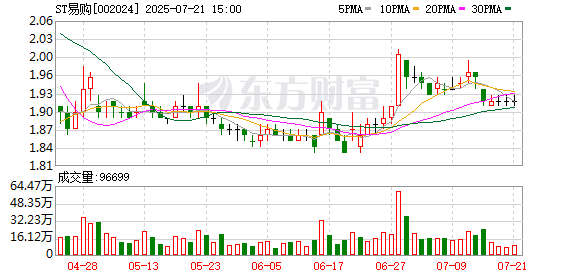
经过近9个月的等待,关于苏宁易购与万达的仲裁终于有了结果。 近日,苏宁易购(即ST易购:SZ002024,股价1.92元,市值177.88亿元)公告称,公司、苏宁国际集团股份有限公司(以下简称"苏宁国际")要求大连万达 集团股份有限公司(以下简称"万达集团")、大连万达商业管理集团股份有限公司(以下简称"万达商管")立即支付50.4亿元股份回购款的仲裁请求未予以支 持。不过苏宁易购表示,公司仍将通过包括但不限于诉讼、仲裁在内的合法路径,积极寻求回购,并继续争取其他正当权益。 与此同时,苏宁易购还将就股份回购仲裁的撤裁以及万达集团、万达商管进一步违约、侵权的事项将持续采取各种法律手段,坚决维护公司合法权益。 而对于此次仲裁结果,《每日经济新闻》记者向万达方面发去了采访提纲,对方表示"没有进一步回应"。 苏宁易购公告显示,2018年,公司与万达集团、万达商管签署《关于大连万达商业地产股份有限公司之战略合作协议》(以下简称《战略合作协议》)。根 据协议,苏宁易购以95亿元购买万达商管约3.91%股份,仍有剩余的则与万达集团签署股份转让协议,将剩余投资款全部用于购买万达集团转让的部分股 份,最终苏宁易购持有万达商管约 ...

微创医疗自救,重组旗下业务
Xin Lang Cai Jing· 2025-07-17 13:34
Core Viewpoint - MicroPort Medical announced plans to restructure its Cardiac Rhythm Management (CRM) business by merging it with MicroPort Heart, aiming to enhance operational efficiency and market recognition [1][2]. Group 1: Company Overview - MicroPort Medical is a leading high-end medical device manufacturer in China, with various business segments including MicroPort Heart and CRM [1]. - MicroPort Heart specializes in products for treating structural heart diseases, with notable offerings like the Transcatheter Aortic Valve Implantation (TAVI) series [1]. Group 2: CRM Business Details - The CRM business, currently operated by MicroPort Cardiac Rhythm Management Limited (CRM Cayman), includes products for diagnosing and managing arrhythmias and heart failure, such as pacemakers and defibrillators [2]. - As of the announcement date, MicroPort Medical holds a 50.13% stake in CRM Cayman, with the remaining shares owned by other investors [2]. Group 3: Strategic Rationale for Merger - The merger aims to create a comprehensive cardiac product platform, share international sales channels, improve capital efficiency, and enhance recognition in international capital markets [2]. - The decision to merge is also linked to a previous agreement that poses redemption risks if MicroPort Heart does not meet certain IPO milestones by July 2025 [3]. Group 4: Financial Performance - MicroPort Heart's revenue for 2020, 2021, and 2022 was $180 million, $220 million, and $205 million respectively, but it has been operating at a loss [5]. - MicroPort Medical's financial outlook for 2024 shows a projected revenue of $1.031 billion, an 8.5% increase year-on-year, with a reduced net loss of $268 million, narrowing by 58.6% [5].
心律管理业务注入心通医疗内情:微创系与高瓴赌约大限将至?
Hua Er Jie Jian Wen· 2025-07-17 10:32
Core Viewpoint - MicroPort Medical (0853.HK) is shifting from its previous strategy of spin-offs to focus on mergers and restructuring, specifically planning to merge its cardiac rhythm management business with its subsidiary, HeartLink Medical (2160.HK) [1][2]. Group 1: Merger Announcement - On July 17, MicroPort Medical announced the plan to merge its cardiac rhythm management business with HeartLink Medical, aiming to establish a cardiac product platform and share international marketing and sales channels [2]. - The merger proposal is currently non-binding and uncertain, with MicroPort Medical advising shareholders and potential investors to act cautiously when trading its securities [3]. Group 2: Financial Implications - Following the announcement, MicroPort Medical and HeartLink Medical saw stock price increases of 6.6% and 7.21%, respectively [4]. - If the merger proceeds successfully, HeartLink Medical's performance could significantly improve, as it currently faces challenges with a projected revenue of 362 million RMB and a net loss of 49 million RMB for 2024 [4]. - In contrast, MicroPort Medical's cardiac rhythm management business is already substantial, with expected revenue of 221 million USD (approximately 1.588 billion RMB) for 2024, and strong overseas market performance contributing over 80% of its revenue [4]. Group 3: Strategic Considerations - The integration of the cardiac rhythm management business into HeartLink Medical could enhance the latter's financial performance [5]. - The primary entity responsible for the cardiac rhythm management business is MicroPort Heart Rhythm Management Co., which had previously planned an IPO but has not progressed since May 2023 [6]. - The merger may be influenced by a contractual obligation to investors, as MicroPort Medical had agreed to redeem shares if the cardiac rhythm management business did not go public by July 17, 2025, with a market cap of at least 1.5 billion USD [7][8]. Group 4: Previous Transactions - This is not the first time HeartLink Medical has acquired assets from MicroPort Medical; in August of the previous year, it purchased real estate from MicroPort Medical for approximately 360 million RMB [9]. - The acquisition of significant assets by HeartLink Medical, which is not yet profitable and requires funding for research and development, raises questions about the feasibility and valuation of such transactions [10][11].
对赌失败或将易主,A厂背水一战;E厂业务没进展,玄学来背锅;G厂明星游戏项目栽在「手滑」丨鲸犀情报局Vol.15
雷峰网· 2025-07-15 12:05
Group 1: 桃厂 (Peach Factory) - The ongoing speculation about the potential sale of Peach Factory has intensified, with various large companies being considered as potential buyers, but no concrete confirmation has emerged [1] - The pressure on Peach Factory has increased due to a diminishing number of hit productions and complaints from upstream partners regarding long payment terms [2] - The content team at Peach Factory is struggling, leading to concerns that continuing operations without a sale may leave the company in a more vulnerable position [3] Group 2: A厂 (Company A) - The instant retail sector has seen many ups and downs, with Company A struggling to expand nationally despite its strong regional presence [4][5] - Competition in the instant retail space has intensified, with major players like Meituan, Alibaba, and JD.com engaging in fierce battles [6] - Company A is facing pressure from investors regarding its valuation, leading to a high-stakes situation with a performance-based agreement that could jeopardize the company's future if not met [7] Group 3: B厂 (Company B) - Company B's founder previously sought acquisition by a larger company but was turned down due to the acquirer's financial constraints and strategic priorities [8] - The competitive landscape in the food delivery sector has evolved significantly, with Company B ultimately accepting an acquisition offer from another player after failed negotiations with the initial target [8] Group 4: E厂 (Company E) - Company E has struggled with a lack of clear strategic direction, leading to confusion and rapid changes in business focus, which has negatively impacted employee morale [11][12] Group 5: H厂 (Company H) - Company H has gained significant attention in the stock market due to its success with short dramas, leading to management focusing on cashing out their shares rather than long-term business strategies [18][19] - The management's actions suggest a lack of confidence in the company's sustainable growth, as they prioritize short-term gains from stock price fluctuations [20]

GP开始为“过错”买单
母基金研究中心· 2025-07-13 08:42
Core Viewpoint - The article discusses the significant shift in the venture capital industry in China, where litigation has become a necessary tool for investment firms to recover funds from failing projects, reflecting deeper issues within the industry [5][8][31]. Group 1: Industry Changes - The venture capital industry is experiencing a transformation as many funds reach maturity with disappointing returns, leading to increased tensions between Limited Partners (LPs) and General Partners (GPs) [6][20]. - The entry of state-owned LPs has changed the rules of the game, enforcing stricter definitions of "state asset loss" and requiring clear accountability for every investment [7][21]. - A significant number of projects are now entering liquidation phases, revealing numerous "zombie" projects that do not yield high returns for investment firms [4][6]. Group 2: Litigation as a Tool - Litigation has become a common method for GPs to recover investments, with a notable increase in lawsuits related to investment disputes [9][14]. - In 2023, a leading venture capital firm initiated 38 litigation cases, with a 69% increase in disputes compared to the previous year [14][15]. - The trend of buyback agreements has become standard, with many companies failing to meet these agreements, triggering legal actions [15][16]. Group 3: Legal and Operational Challenges - Many investment firms are now facing legal repercussions for their past management practices, as they are held accountable for the performance of their investments [31][32]. - The lack of thorough due diligence and post-investment management has led to significant vulnerabilities within the industry [7][32]. - Legal complexities arise from poorly defined contractual terms, making it difficult for firms to pursue claims effectively [39][41]. Group 4: The Role of State-Owned Enterprises - State-owned enterprises are increasingly dominant in the LP structure, accounting for approximately 88.8% of contributions, with government funding making up 52.5% of that [20][21]. - The stringent requirements from state-owned LPs have led to a culture where GPs must pursue legal action to demonstrate compliance and accountability [27][30]. Group 5: Future Outlook - The article suggests that the current crisis could serve as a turning point for the industry, pushing firms to adopt more rigorous investment processes and legal safeguards [8][37]. - There is a growing recognition that the venture capital industry must evolve from a zero-sum game mentality to a more collaborative approach that emphasizes long-term growth and stability [79].

三瑞智能IPO,实控人巧妙脱钩对赌协议
Sou Hu Cai Jing· 2025-07-13 01:54
Core Viewpoint - The IPO application of Nanchang Sanrui Intelligent Technology Co., Ltd. has been officially accepted, marking the end of a "zero acceptance" situation in the ChiNext market for the year [2] Company Development - Sanrui Intelligent was established in October 2009 with an initial registered capital of 50,000 yuan, contributed by Wu Min and Wan Zhijian [3] - The company has undergone five rounds of capital increases and one equity transfer since its inception [2] - The first external shareholder was introduced in June 2021, increasing the registered capital from 28 million yuan to 30.1412 million yuan [3] - As of April 2023, the registered capital was further increased to 30.744 million yuan [3] Equity Changes - In March 2023, an equity transfer occurred where 602,800 yuan of capital was transferred to four new shareholders [3] - The company completed a share reform in April 2023, with a net asset value of 322.0491 million yuan used as the basis for share conversion [3][7] - The total share capital was adjusted to 140.46 million shares, with a par value of 1 yuan per share [3] Investment Agreements - Prior to the debt-to-equity conversion, several investors signed a betting agreement that granted them special rights, including repurchase rights and priority subscription rights [4] - In March 2023, a 2% equity stake was sold for 40 million yuan, which terminated the repurchase obligations of certain shareholders [6] - Following the share reform, all betting clauses between the involved parties were completely lifted [7]