
稳定币监管

Search documents
帮主郑重:比特币惊魂夜跌破11.7万!8亿美金蒸发背后的真相
Sou Hu Cai Jing· 2025-07-19 06:56
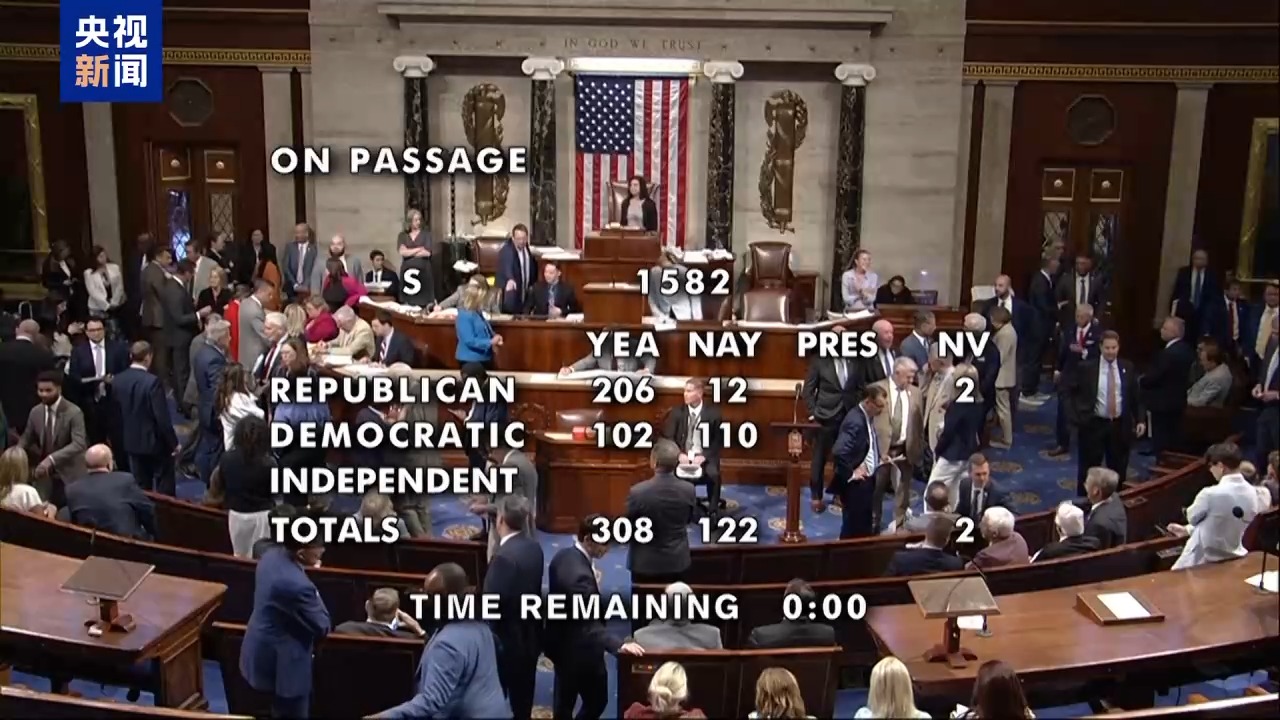
Market Overview - The cryptocurrency market experienced a significant downturn, with Bitcoin dropping to $117,000 and Ethereum losing the $3,600 support level, resulting in a total liquidation of $814 million across 180,000 accounts [1][3] - The contract market saw $542 million in long positions liquidated and $272 million in short positions, indicating a severe impact on traders [3] Causes of the Decline - Regulatory changes in the U.S. have led to panic selling, particularly among leveraged traders, following the passage of a stablecoin regulation bill and internal conflicts among Republican lawmakers [4] - The total open interest in the cryptocurrency market reached a historical high of $86 billion, which, combined with high leverage, triggered a cascading liquidation effect [5] - Technical analysis indicates a bearish "M-top" pattern for Bitcoin, with a warning that a drop below $90,000 could lead to further declines towards $80,000 [5] Investment Insights - Short-term trading is cautioned against due to fragile market sentiment and potential for increased volatility, with technical indicators suggesting a possible further decline of 10% [6] - Long-term fundamentals remain strong, with institutional buying continuing, as evidenced by MicroStrategy's recent $5.4 billion purchase, which is seen as a critical support factor [6] - Ethereum is emerging as a potential new focal point for investment, with a recent 17% increase in futures and a recovery in the ETH/BTC exchange rate [7]


特朗普稳定币法案生效后首单IPO:加密交易所Bullish申请上市
Hua Er Jie Jian Wen· 2025-07-19 01:25
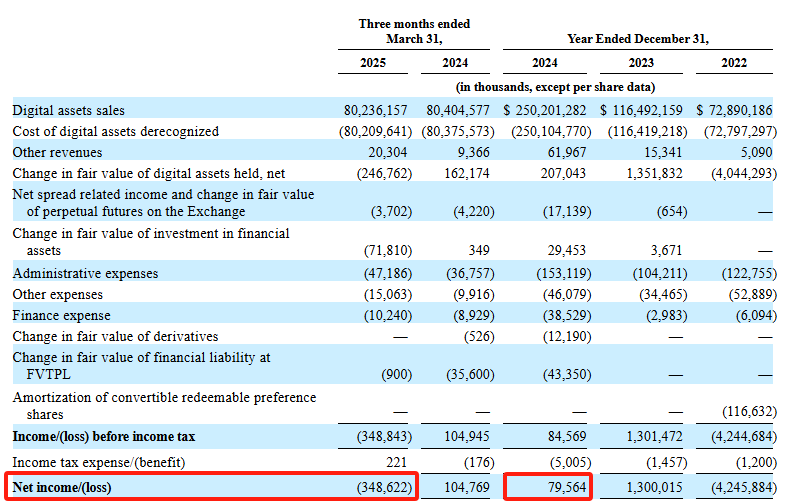
Group 1 - Bullish has submitted an IPO application to the SEC, becoming the first cryptocurrency company to seek public listing after the signing of the Stablecoin Act by Trump [1][4] - The company holds 24,000 BTC and projects a net profit of $80 million for 2024, but anticipates a net loss of $349 million in Q1 2025, despite maintaining a positive adjusted EBITDA of $13 million [1][2] - CEO Tom Farley believes the digital asset industry is entering a new growth phase, emphasizing transparency and compliance as key operational values [3][4] Group 2 - The IPO is underwritten by JPMorgan, Jefferies, and Citigroup, with plans to list on the NYSE under the ticker "BLSH" [3] - Bullish's business includes cryptocurrency spot trading, margin trading, and derivatives trading, and it acquired media company CoinDesk in 2023 [3] - The recent signing of the Stablecoin Act is seen as a favorable policy shift for the cryptocurrency industry, encouraging more companies to pursue public listings [4][6] Group 3 - As of March 31, 2025, Bullish reported total current assets of $1.962 billion, with only $28 million in cash, while digital assets dominate its asset composition [4] - The company’s holdings of over 24,000 BTC are allocated for various purposes, including 20,960 BTC as intangible assets, inventory, and financial assets [4] - The trend of cryptocurrency companies seeking public listings is gaining momentum, with notable examples like Circle, which saw its stock price surge significantly post-IPO [4][5]
稳定币能够稳定美国金融吗?美加密货币相关法案落地引发三连问
Yang Shi Xin Wen· 2025-07-18 23:32
Core Points - The signing of the "Genius Act" by President Trump establishes the first regulatory framework for digital stablecoins in the U.S. [1][5] - The U.S. government is accelerating the legislative process for cryptocurrency regulations, with the Senate passing the "Genius Act" and the House approving three related bills [1][3][5] Legislative Developments - The "Genius Act" aims to create a regulatory framework for stablecoins, requiring them to be backed by liquid assets like the U.S. dollar or short-term government bonds, and mandates monthly disclosures of reserves by issuers [3][8] - The "Digital Asset Market Clarity Act" was also passed, which seeks to clarify the regulatory roles of the SEC and CFTC in the cryptocurrency market [3] - The "Anti-Central Bank Digital Currency Monitoring Act" was passed by the House, aiming to prohibit the Federal Reserve from issuing a central bank digital currency due to privacy concerns [3] Market Context - Stablecoins are pegged to the U.S. dollar and are designed to maintain price stability, with the largest stablecoins being Tether (USDT) and USD Coin (USDC), which together account for approximately 90% of the market [8] - The stablecoin market has grown significantly, from $20 billion in 2020 to approximately $247 billion currently, with projections estimating it could reach $3.7 trillion by 2030 [8][10] Strategic Objectives - The U.S. government aims to maintain its dominance in the global monetary system through the promotion of stablecoins, countering the impact of digital currencies on the dollar's value and influence [10][12] - Experts suggest that the success of stablecoins in maintaining the dollar's status will depend on the U.S.'s ability to fulfill its global responsibilities and commitments [12] Industry Reactions - The passage of the "Genius Act" is seen as paving the way for U.S. banks to issue digital assets, with major banks expressing interest in entering the digital asset space [13] - However, there are concerns regarding the performance and risks associated with stablecoins, including their lack of central bank backing and potential for misuse [14][16]
隔夜美股 | 三大指数涨跌不一 特朗普正式签署《GENIUS 法案》
智通财经网· 2025-07-18 23:22
智通财经APP获悉,周五,三大指数涨跌不一。本周道指累计下跌0.07%,纳指上涨1.51%,标普500指 数上涨0.59%。美国总统特朗普在白宫正式签署《指导与建立美国稳定币国家创新法案》(GENIUS 法 案),标志着美国稳定币监管立法进入实施阶段。 【美股】截至收盘,道指跌142.30点,跌幅为0.32%,报44342.19点;纳指涨10.01点,涨幅为0.05%,报 20895.66点;标普500指数跌0.57点,跌幅为0.01%,报6296.79点。纳指连续第五个交易日上涨,并创盘 中与收盘历史新高。加密概念股涨跌互现,Robinhood(HOOD.US)涨4.07%、Coinbase(COIN.US)涨 2.2%、Circle(CRCL.US)跌4.71%、Hut 8(HUT.US)跌2.26%。3M(MMM.US)跌3.63%,奈飞(NFLX.US)跌 5.10%。 【欧股】德国DAX30指数跌80.57点,跌幅0.33%,报24286.90点;英国富时100指数涨17.38点,涨幅 0.19%,报8990.02点;法国CAC40指数涨0.67点,涨幅0.01%,报7822.67点;欧洲斯托克50 ...
深夜暴涨!中国资产,大爆发!!刚刚,特朗普签了
券商中国· 2025-07-18 23:14
Core Viewpoint - Chinese assets have experienced a significant surge, with foreign investment institutions increasingly optimistic about the outlook for these assets due to stable economic performance and improving corporate earnings [2][10][12]. Group 1: Market Performance - The Nasdaq Golden Dragon China Index rose over 2% at one point, while the three-times leveraged FTSE China ETF surged over 6%, and the two-times leveraged China Internet Stocks ETF increased by over 5% [4]. - Popular Chinese concept stocks saw substantial gains, with Luida Technology soaring over 33% and Xinyang rising over 17% [4]. - KraneShares China Overseas Internet ETF (KWEB) recorded a nearly 7% increase this week, while iShares MSCI China ETF (MCHI) rose over 4%, marking the largest weekly gains since early March [5]. Group 2: Foreign Investment Sentiment - A survey by Invesco revealed that international investment institutions are showing renewed interest in the Chinese market, with a total asset management of approximately $27 trillion [10]. - HSBC's chief economist for Greater China noted that international investors, especially from Europe and the U.S., are increasingly interested in Chinese assets due to ongoing capital market reforms and technological innovation [11]. - BlackRock's chief equity investment officer expressed optimism about the macro environment and corporate earnings, anticipating a positive performance for Chinese A-shares in the second half of the year [12]. Group 3: Company-Specific Insights - Futu Holdings has seen strong customer growth, with a client base of 2.7 million and assets under management exceeding $100 billion, growing at an annual rate of 20%-25% [7][6]. - Barclays highlighted Futu's potential for accelerated growth in the coming years, driven by the recovery of the Asian capital markets [6]. - Revenue projections for Futu indicate a growth of 48% to HKD 18.9 billion by 2025, with an expected EPS of $60.94 for the same year [8].

美股三大指数小幅高开,纳指与标普再创历史新高
Feng Huang Wang Cai Jing· 2025-07-18 13:48
Group 1: Market Performance - US stock indices opened slightly higher, with the Dow Jones up 0.16%, Nasdaq up 0.35%, and S&P 500 up 0.25% [1] - Chinese concept stocks saw significant gains, with New Oxygen rising over 9%, Kingsoft Cloud up over 7%, and JD.com and Bilibili both up over 5% [1] Group 2: Economic Policy and Currency - The Bank of England has requested financial institutions to assess their resilience against potential dollar shocks, indicating a decline in global trust in the US dollar due to current economic policies [2] - The US dollar is considered the "lifeline" of the global financial system, but recent actions by the Trump administration have prompted a reevaluation of reliance on the US for emergency dollar liquidity during financial stress [2] Group 3: Oil Market - International oil prices are in a dangerous zone, threatening the profitability of oil producers, as stated by a top energy investor [3] - Current price trends indicate that oil prices are "dangerously close" to levels where producers may operate at a loss [3] Group 4: Cryptocurrency Regulation - The US House of Representatives has passed significant legislation regarding stablecoins, establishing clear regulatory rules for the cryptocurrency industry [4] - The "Genius Acts" requires stablecoin issuers to maintain a 1:1 reserve with short-term government bonds or similar regulated products [4] Group 5: Company News - Yushu Technology has initiated its listing guidance with CITIC Securities as the advisory institution, with the controlling shareholder holding 34.763% of the company [5] - Apple is participating in the China International Supply Chain Promotion Expo for the third consecutive year, showcasing collaboration with Chinese suppliers to promote local innovation and green transformation [6] Group 6: Technological Advancements in Media - Netflix has utilized AI for the first time to create visual effects for a series, aiming to reduce production costs while enhancing content quality [7] - The Argentine sci-fi series "The Eternaut" is the first project to feature AI-generated visual effects [7]
【美股盘前】中概股普涨;加密货币概念股集体走高;扎克伯格与Meta股东和解,了结80亿美元脸书隐私案;癌症药物遭FDA否决,葛兰素史克跌逾1%
Mei Ri Jing Ji Xin Wen· 2025-07-18 11:02
Group 1 - US stock index futures are showing slight gains, with Dow futures up 0.08%, S&P 500 futures up 0.06%, and Nasdaq futures up 0.06% [1] - Cryptocurrency-related stocks are rising following the US House passing three legislative proposals regarding stablecoins and cryptocurrency regulation, with Circle up 2.94% and Coinbase up 1.89% [1] - Chinese concept stocks are also experiencing gains, with Bilibili up 3.37%, Alibaba up 2.37%, and NetEase up 1.96% [1] - Nvidia's H20 chip sales to China have been approved, leading to a 7.01% increase in Kingsoft Cloud's stock [1] - Charles Schwab is set to release its Q2 earnings report, with expectations of $5.723 billion in revenue, a 22.03% year-over-year increase, and an EPS of $1.05, a 59.09% increase year-over-year, resulting in a 2.15% stock rise [1] Group 2 - GlaxoSmithKline's cancer drug Blenrep faced a setback as the FDA advisory panel voted against its use for treating relapsed or refractory multiple myeloma, causing the stock to drop 1.4% [2] - Barclays raised TSMC's target price from $249 to $275 while maintaining an "overweight" rating on the stock [2] - Mark Zuckerberg has reached a settlement with Meta shareholders regarding an $8 billion privacy lawsuit, although the final compensation amount remains unclear [2] Group 3 - Netflix reported Q2 earnings exceeding $3 billion, with revenue of $11.08 billion, a 16% year-over-year increase, and a profit of $3.1 billion, a 46% year-over-year increase [3]
凯德北京投资基金管理有限公司:稳定币法案落地 美联储降息在即
Sou Hu Cai Jing· 2025-07-18 00:27
随着监管框架确立,PayPal、苹果等科技巨头可能加速布局稳定币业务。美联储理事沃勒表示:"在确保金融稳定的前提下,将支持私营部门创新。"市场预 计,未来12个月全球稳定币市场规模有望从当前1500亿美元扩张至3000亿美元。 美联储同日公布6月货币政策会议纪要,显示多数官员认为"通胀持续降温",为降息铺平道路。CME利率期货显示,9月降息概率已升至85%,年内或累计降 息50个基点。受此影响,比特币突破6.3万美元,以太坊站上3400美元,加密货币总市值单日增长逾800亿美元。 市场反应热烈: 专家指出,稳定币监管落地将显著降低加密货币市场波动,而美联储转向宽松政策可能引发新一轮全球资金轮动。值得注意的是,法案特别要求发行方定期 披露储备金构成,这或对部分透明度不足的稳定币构成压力。 美国国会正式通过《稳定币监管法案》,为加密货币市场确立首个联邦级监管框架。与此同时,美联储释放强烈降息信号,双重利好刺激全球风险资产集体 走高。 此次通过的稳定币法案明确要求发行方必须保持1:1储备金,并接受美联储和财政部双重监管。法案还规定,非银行机构发行稳定币需获得特许执照,而银 行机构可直接开展业务。分析认为,该法案将大 ...

X @Yuyue
Yuyue· 2025-07-16 09:04
RWA & DeFi - Plume Network's RWA concept is closely related to WLFI, showing promising data and supporting USD1 yield products [1] - Regulatory clarity on stablecoins, driven by the upcoming GENIUS Act, is expected to accelerate the migration of user deposits and yield opportunities to on-chain finance [1] - Compliant Real World Asset (RWA) products are anticipated to become the next generation of "savings accounts" for mainstream users [1] - SEC's role in RWA is being shaped despite uncertainty surrounding the CLARITY Act in the Senate [2]
“加密周”遇冷!多项加密货币法案遭众议院否决 Circle(CRCL.US)一度跌超7%
智通财经网· 2025-07-15 22:24
Group 1 - The failure of key procedural votes in the House of Representatives for cryptocurrency regulation bills represents a significant setback for the entire crypto industry, which was widely expecting these bills to pass smoothly [1][2] - The three shelved bills include the GENIUS Act, aimed at establishing a federal regulatory framework for stablecoins, and the CLARITY Act, which seeks to define whether crypto assets are securities or commodities [2][3] - The opposition to the bills highlights divisions within the Republican Party, with some members expressing concerns over the inclusion of provisions related to Central Bank Digital Currency (CBDC) [2][3] Group 2 - Circle, the issuer of the USDC stablecoin, holds approximately 24% of the global dollar-pegged stablecoin market, and the proposed legislation was seen as a crucial step towards mainstreaming stablecoins and enhancing regulatory clarity in the U.S. digital asset space [3] - The crypto industry has invested over $245 million in lobbying and political donations in 2024 to support pro-crypto congressional candidates, indicating a strong push for favorable regulations [3] - The U.S. stablecoin market is projected to grow from several hundred billion dollars to over $2 trillion if the GENIUS Act is passed, according to the U.S. Treasury Secretary [3]
