精益管理

Search documents
分时用电实现降本增效
Qi Lu Wan Bao· 2025-09-21 16:11
Core Insights - The company is implementing a lean management approach to optimize energy usage and reduce costs through the use of time-of-use electricity pricing [1][2] - The successful application of this model in the Wema project has led to significant cost savings and operational efficiencies [2] Group 1: Energy Management Strategy - The company identified that electricity costs are closely linked to equipment operating hours and implemented a "three early" strategy to align production schedules with lower electricity rates [1] - High-energy-consuming equipment is operated during off-peak hours, while low-energy tasks are scheduled during peak times to minimize costs [1] Group 2: Operational Efficiency - The implementation of a "time-based operation schedule" ensures that equipment usage aligns with electricity price fluctuations, enhancing resource allocation [2] - Training programs for personnel have been enhanced to ensure flexibility in workforce deployment, maximizing productivity during off-peak hours [2] Group 3: Economic Impact - The application of the time-of-use electricity model has resulted in a 12% increase in workload for the company’s fifth team, while the usage of key equipment during peak hours decreased by 40% [2] - The company saved 10,000 yuan in electricity costs in July compared to the previous year, demonstrating the effectiveness of the lean management approach [2]
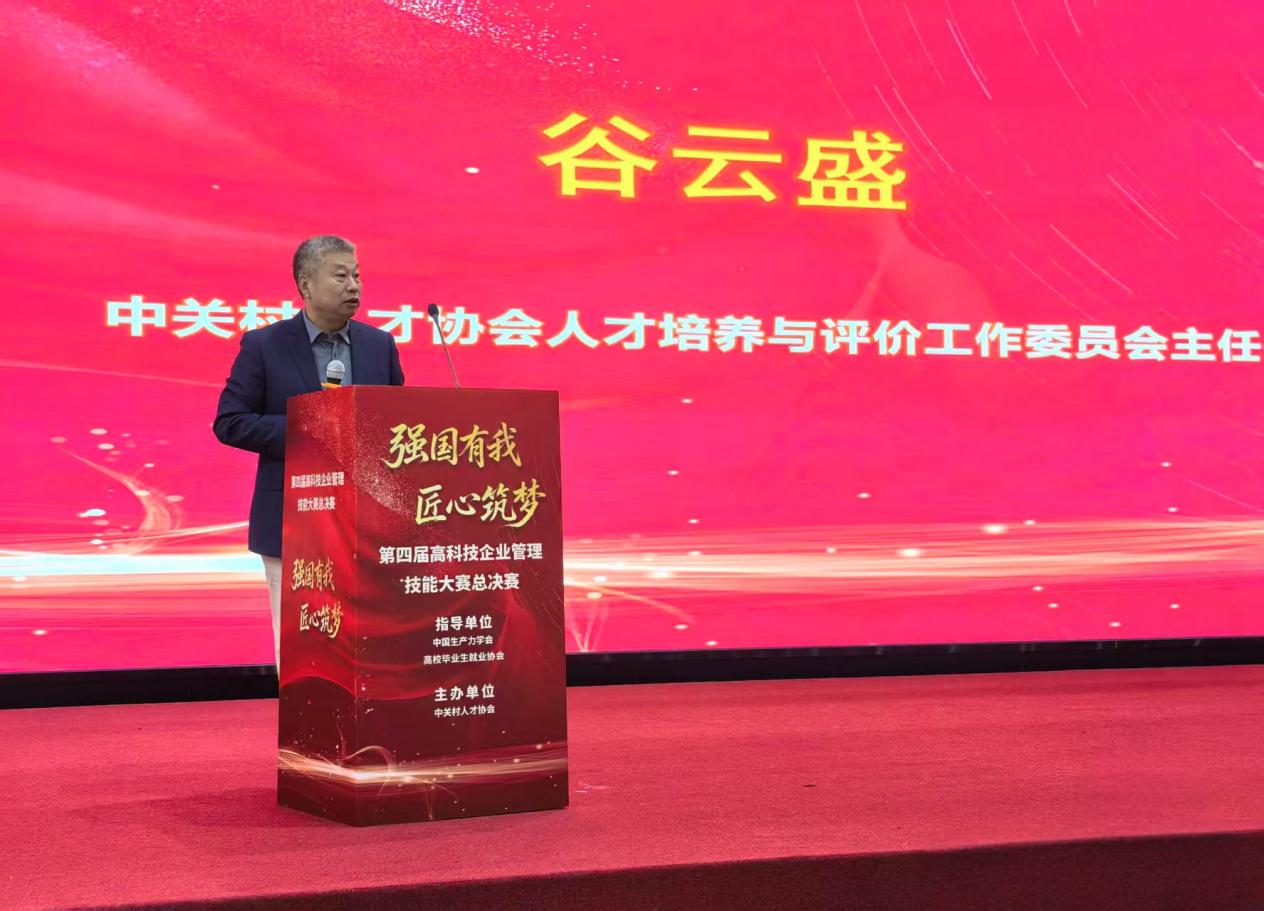
第四届高科技企业管理技能大赛总决赛在京开幕
Zhong Guo Jing Ji Wang· 2025-09-20 03:47
Group 1 - The fourth High-Tech Enterprise Management Skills Competition aims to promote management innovation and cultivate high-quality management talent in China's high-tech industry [2][3][8] - The competition has attracted hundreds of organizations and over 30,000 participants since its launch on May 12, 2025, with 315 team leaders, 133 lean managers, and 27 inspection personnel advancing to the finals [1][8] - The competition's structure includes practical assessments that evaluate real-world management skills, emphasizing team coordination, problem-solving, and value chain optimization [7][8] Group 2 - The event serves as a platform for enhancing management capabilities in the face of challenges posed by artificial intelligence, necessitating a comprehensive upgrade of management systems and cultural frameworks [5][7] - A three-tier collaborative cultural system is proposed to address the cultural challenges brought by AI, focusing on enterprise culture, employee culture, and team culture [5] - The competition continues to emphasize the importance of management innovation, aiming to foster a new generation of management talent with innovative spirit and exceptional management skills [8]

山东能源古城煤矿承压奋进冲刺全年目标
Qi Lu Wan Bao Wang· 2025-09-18 08:34
Core Viewpoint - Shandong Energy Luxi Mining's Gucheng Coal Mine is focusing on dual enhancement of safety and efficiency through standardized production, disaster management, and cost control to overcome operational challenges [1] Group 1: Standardization and Quality Control - The mine has initiated a "Standardization Improvement Special Action" to integrate safety and efficiency throughout the production process, emphasizing the importance of both [2] - Training programs are being conducted for employees to ensure adherence to standards, with a focus on practical skills and safety education [2] - A management system has been implemented to ensure daily checks and immediate rectification of non-compliance issues in the field [2] Group 2: Disaster Management and Production Efficiency - The mine has established a disaster management system that emphasizes proactive measures and precise strategies to mitigate risks [3] - Monthly meetings are held to analyze potential risks and develop disaster response plans based on geological data and monitoring [3] - Specific measures are being taken in key work areas to ensure production stability and efficiency, with a focus on daily assessments and adjustments [3] Group 3: Cost Control and Asset Optimization - The mine is adopting a cost-saving approach by managing energy consumption, optimizing asset use, and repairing old equipment [4] - A plan to reduce electricity costs by utilizing off-peak hours for major equipment has been implemented, saving over 40,000 yuan per month [4] - Initiatives to dispose of idle assets and standardize warehouse management are in place to maximize resource utilization and minimize expenses [4]
美的集团董事长方洪波:以丹纳赫为镜,锻造企业韧性
首席商业评论· 2025-09-17 03:46
Core Viewpoint - The article discusses the challenges faced by Chinese enterprises in a highly competitive environment characterized by homogenization, price wars, and rising costs, emphasizing the need for a systematic methodology to navigate these challenges and achieve sustainable growth [2][4]. Group 1: Challenges in the Business Environment - By 2025, the business landscape is undergoing unprecedented restructuring, with common issues such as homogenized competition eroding profits and price wars squeezing survival space [2]. - The failure rate of mergers and acquisitions remains high, indicating a pressing need for effective strategies among Chinese companies [2]. Group 2: The Danaher Model - The book "The Danaher Model" dissects the success strategies of Danaher, known as the "king of acquisitions," highlighting the Danaher Business System (DBS) as a key engine for success [2][10]. - Danaher’s approach involves transforming lean management from a tool into a core competency, validated by over 400 successful acquisitions [2]. Group 3: Midea Group's Implementation - Midea Group began learning from international advanced enterprises, specifically the Toyota Production System, but initially saw limited success [4]. - After engaging with Danaher, Midea developed its own Midea Business System (MBS), focusing on establishing a lean talent system and achieving factory lean transformation [4][5]. - By 2018, Midea completed the lean transformation of its domestic factories, leading to an average efficiency improvement of approximately 15% annually [5]. Group 4: Globalization and Core Competencies - Danaher’s strategy evolved from diversified acquisitions to a focus on healthcare, demonstrating that a company's boundaries are defined by its core competencies rather than capital [7]. - Midea's global strategy includes establishing 17 R&D centers and 22 manufacturing bases, emphasizing the importance of localizing R&D to meet local demands [8]. Group 5: Lessons for Chinese Enterprises - The book serves as a high-density management tool, addressing key questions about achieving capability integration through acquisitions, evolving lean management into a core competency, and balancing localization with integration in globalization [10]. - The success of Danaher, which grew from a $1 million loan for its first acquisition to a market value exceeding $200 billion, underscores the importance of adhering to fundamental principles such as process reliance, fact respect, and efficiency [10].


长城钻探苏里格气田分公司:五维战略筑体系,激活高质量发展新动能
Zhong Guo Neng Yuan Wang· 2025-09-16 00:30
Core Insights - The company aims to build a "domestically leading tight gas field" by deploying five core strategies to activate new momentum for high-quality development in the natural gas sector [1][2][3] Resource Development - The company has established a professional geological research team to utilize advanced exploration technologies and data analysis methods to understand resource distribution and enhance single well output and recovery rates [1] - Optimization of well location planning and well network layout is being implemented, along with collaboration with other gas fields for technical research and resource allocation [1] Technological Innovation - The company has developed a collaborative innovation system involving industry, academia, and research, investing annually in research funds and establishing joint research centers with renowned domestic universities and research institutions [1] - Focus areas include low permeability reservoir transformation and efficient gas extraction, with an emphasis on cultivating core technologies with independent intellectual property rights [1] Lean Management - The company integrates refined, standardized, and intelligent management throughout its operations, optimizing processes to reduce redundancy and ensuring standardized operations and management systems [2] - A digital management platform is being established for real-time monitoring of gas well production data and equipment status, promoting a transition to digital and intelligent gas field development [2] Talent Management - A multi-level and multi-channel talent training system has been constructed, addressing new employee onboarding, skill enhancement, and career development [2] - The company has set up a talent reward fund to recognize outstanding contributions in technological and management innovation, fostering a supportive environment for talent development [2] Green Development - The company has established comprehensive environmental management systems, utilizing advanced equipment for wastewater treatment and waste gas purification to control emissions [3] - A "three-step" development path has been outlined, aiming for initial breakthroughs in the domestic market by 2025, enhancing international market influence by 2030, and competing with global developers by around 2035 [3]
调研速递|大连重工接受众多投资者调研,聚焦业绩与发展要点
Xin Lang Cai Jing· 2025-09-12 13:33
Core Insights - The company held an online performance briefing on September 12, 2025, discussing its semi-annual report and business operations with investors [1] - In the first half of 2025, the company achieved a revenue of 7.453 billion yuan, a year-on-year increase of 6.38%, and a net profit attributable to shareholders of 312 million yuan, up 13.88% [1] Performance Highlights and Business Analysis - The significant growth in net profit was primarily driven by the material handling equipment segment, which saw a substantial increase in gross profit, while the gross profit of the new energy equipment segment declined [1][2] - The gross profit margin for the new energy equipment segment was only 4.42%, significantly lower than the core components segment's 27.93%, attributed to intense market competition leading to price reductions [2] Strategic Layout of Business Segments - The company aims to create an internationally leading heavy industry group, focusing on four core professional areas: - Material handling machinery: Developing high-end, intelligent, green, and lightweight solutions [3] - Metallurgical machinery: Focusing on high-end, intelligent, and environmentally friendly equipment [3] - Core components: Expanding the core components business, including gear transmission and electrical control [3] - Large casting: Enhancing capabilities in large-scale, high-value-added manufacturing, particularly in wind power products [3] - Comprehensive services: Building an intelligent service model for the entire product lifecycle through international trade and engineering services [3] - Emerging industries: Cultivating energy-saving, environmental protection, and intelligent logistics equipment as new growth drivers [3] Stock Price and Incentive Plan Responses - The company acknowledged that stock price fluctuations are influenced by various factors and emphasized its commitment to improving operational performance and competitiveness [4] - The 2025 restricted stock incentive plan was not approved by the shareholders' meeting, and the company is carefully evaluating feedback and strategic planning for future proposals [4] Development Goals for the Second Half - The company will maintain a market-oriented approach, adjusting marketing strategies based on market insights and industry trends to ensure steady performance growth [5] - Key drivers for the second half of 2025 will be the port, bulk machinery, and core components for wind power [5]

Diebold Nixdorf (NYSE:DBD) 2025 Conference Transcript
2025-09-10 17:32
Diebold Nixdorf Conference Call Summary Company Overview - **Company**: Diebold Nixdorf (NYSE: DBD) - **Core Markets**: Banking and Retail [6][7] - **Opportunities**: Focus on branch automation in banking and expansion in the U.S. retail market [6][8] Banking Segment Insights - **Branch Efficiency**: Banks are seeking to improve branch efficiency as running a branch network accounts for 60% of their expenses [7][23] - **Solutions Offered**: - Recycling ATMs and teller cash recyclers to enhance cash management [7][24] - Software solutions that integrate physical branches with digital channels [25] - **Productivity Gains**: Recent implementations have improved teller productivity by 50% [24] Retail Segment Strategy - **Market Position**: Strong presence in Europe, aiming to expand in the U.S. [7][8] - **Self-Checkout Leadership**: Achieved number one position in self-checkout in Europe, targeting U.S. market expansion [26][39] - **AI-Driven Solutions**: Focus on reducing theft at checkout through AI and computer vision technologies [28][30] Financial Performance and Projections - **Free Cash Flow**: Positive free cash flow for three consecutive quarters, with a target of $800 million by 2027 [10][12] - **Revenue Growth**: Projected mid-single-digit growth from low single digits, with a target of 4% to 6% top-line growth by 2027 [12][42] - **Backlog**: Current backlog stands at $980 million, providing strong visibility into future revenue [46] Operational Improvements - **Margin Growth**: Product margins improved from low teens to mid to high 20s over two years [18][48] - **Lean Manufacturing**: Continuous improvement initiatives have led to significant enhancements in quality and delivery times [49][50] Capital Allocation and Shareholder Returns - **Debt Management**: Aiming for a 1.5x net debt leverage ratio, maintaining a strong balance sheet [13] - **Share Buyback Program**: Announced a $100 million buyback program, with $38 million already executed [13][14] Risk Factors and Market Conditions - **Tariff Exposure**: Estimated impact of $5 million to $10 million from tariffs, mitigated by local-to-local manufacturing strategies [52][53] - **ATM Market Dynamics**: The ATM market is stable with a slight growth trend, primarily driven by replacement rather than new installations [32] Key Differentiators - **Comprehensive Solutions**: Integration of hardware, software, and services to enhance banking and retail operations [25][31] - **Customer-Centric Approach**: Focus on understanding customer needs and providing tailored solutions [39][40] Conclusion Diebold Nixdorf is positioned for growth in both banking and retail sectors, leveraging technology and operational efficiencies to enhance profitability and shareholder value. The company is committed to executing its strategic initiatives while maintaining a strong focus on free cash flow generation and capital allocation.

山东能源鲁西煤矿:精细管理提质增效
Qi Lu Wan Bao Wang· 2025-09-10 14:29
Core Insights - Shandong Energy Luwest Mining aims to enhance quality and efficiency while reducing costs and consumption through lean management principles, establishing a robust development path amid challenging circumstances [1] Cost Control - The company has implemented a dual control responsibility system focusing on the top ten cost items and ten key expenses, resulting in a reduction of controllable expenses by 1.05 million yuan, a decrease of 37.63% compared to the budget [2] - The total cost of commodity coal was reduced by 5.5 million yuan, with unit costs dropping to 717.91 yuan per ton, which is 13.09 yuan lower than the annual target [2] - The company has also optimized material orders, saving 680,000 yuan in ineffective material orders and revitalizing idle assets worth 402,300 yuan in the first half of the year [2] Mechanism Innovation - The company has extended internal marketization to every position, identifying and rectifying issues such as hydraulic pipe leaks, which saved 32,000 yuan per month in hydraulic oil consumption [3] - The company has capitalized on policy benefits, achieving 5 million yuan in effects from R&D expense deductions and saving over 500,000 yuan in financial costs through low-interest debt replacement [3] - The company successfully completed the assessment and transfer of 261.9 acres of subsided land, providing a solid foundation for operational efficiency [3] Flexible Marketing - The company has adopted a "lean marketing" strategy, achieving a premium income of 3.4227 million yuan through market-based auctions of high-grade coal [4] - Adjustments to washing and selection plans based on real-time coal quality data have ensured product quality stability and accelerated the digestion of premium coal inventory [4] - The company aims to further reduce costs by 11% and control expenses within 6.8 million yuan while focusing on achieving annual targets through innovative strategies [4]
重庆机电202509004
2025-09-04 14:36
Summary of the Conference Call Company and Industry Overview - The conference call discusses **Chongqing Mechanical and Electrical Co., Ltd.** and its segments, particularly focusing on the **clean energy equipment** and **high-end intelligent equipment** sectors [2][3][4][6]. Key Points and Arguments Clean Energy Equipment Segment - The clean energy equipment segment is primarily composed of **Chengfei Company** (wind turbine blades) and **Gepai Company** (cables, batteries, etc.) [2][4]. - Wind power generation equipment has the highest revenue share, with significant improvements in gross margins due to enhanced performance in wind turbine equipment [2][3]. - In the first half of 2025, the clean energy equipment segment achieved **revenue of 3.738 billion yuan**, a **year-on-year increase of 11.3%**, with an operating profit of **153 million yuan** [3]. High-end Intelligent Equipment Segment - The high-end intelligent equipment segment includes **intelligent machine tools** and **intelligent manufacturing solutions**, with machine tools having the largest share [6]. - Revenue in this segment grew slightly, but gross margins remained stable due to non-recurring income from the previous year and impairments from overseas subsidiaries [3][6]. Chongqing Cummins Performance - **Chongqing Cummins** reported revenue of approximately **2.5 billion yuan** in the first half of 2025, reflecting a **20% year-on-year growth**, with net profit contributions increasing by **28%** [7]. - The traditional K series engines dominate the product mix, while new models Q19 and Q50 are ramping up production, and Q60's output reached nearly **400 units** in the first half [7][8]. - The engine market share breakdown includes **66%-70%** in the power market and **20%** in the industrial market, with data center products starting to gain traction [8][9]. Operational Efficiency and Cost Management - The company has implemented **lean management** practices to enhance internal efficiency, successfully turning around the hydropower generator business from losses to profitability [11]. - A comprehensive reform plan is in place for the overseas PPG company to optimize its business and capital structure [11][12]. Future Outlook and Strategic Goals - The company aims for stable growth in its Chongqing Cummins business, with expectations of maintaining market share despite high growth rates from the previous year [10]. - The group emphasizes quality improvement over mere revenue growth, focusing on internal order quality and product quality [13]. - There are no immediate plans for asset restructuring, but future strategies may include investments and acquisitions to optimize profitability [16]. Shareholder Returns and Governance - The company has initiated a mid-year dividend in 2025, indicating a shift towards improved shareholder returns [15]. - The local government has issued guidelines for high-quality development, focusing on market value growth and enhanced corporate governance, particularly in ESG aspects [14]. Project Involvement - In the **Yalong River Hydropower Station** project, the company is involved in multiple areas, including hydropower generator components and high-voltage transformer production through its subsidiary [17]. Market Demand and Production Capacity - Chongqing Cummins has a planned production capacity of **23,000 units** for its large-capacity diesel generator sets, with strong market demand reflected in order backlogs [18][19]. - The Q60 model is expected to have a total delivery of **800 units** in 2025, with a balanced order schedule throughout the year [20][21]. Additional Important Information - The localization rate for core components of Chongqing Cummins is approximately **80%-90%**, with some critical parts still imported from the U.S. [23]. - The company is exploring the integration of its products into data centers, including diesel generator sets and cooling systems [26]. - The overall growth outlook for 2025 and beyond remains positive, with detailed forecasts to be completed in the fourth quarter of this year [27].
2025年西安铁路局旅客发送量已突破一亿人次
Zhong Guo Xin Wen Wang· 2025-09-04 08:45
Core Insights - The Xi'an Railway Bureau has achieved a record passenger volume of over 100 million, reaching 100.248 million by September 3, 2025, marking a historical high for the same period [1][3] Passenger Flow and Service Enhancements - The railway passenger flow in Shaanxi has been consistently high, with key holiday periods such as Spring Festival, Qingming Festival, and May Day seeing significant increases in passenger numbers [3] - A total of 16 stations, including Xi'an North and Hanzhong, have broken their own passenger sending records [3] - The Xi'an Railway Bureau has implemented a dynamic scheduling mechanism called "one day, one map" to match passenger flow changes, introducing new night trains to major cities [3][4] Network Expansion - The railway network is continuously expanding, with new high-speed rail lines such as Xi'an North to Hong Kong West Kowloon and Xi'an North to Changsha, enhancing connectivity to various tourist destinations [3] - The introduction of new routes has reduced travel time significantly, with some routes saving up to 1.5 hours compared to existing lines [3] Technological Advancements - The Xi'an Railway Bureau has adopted a "humanized + digital" approach to optimize the entire passenger service process, especially during peak times [4] - The implementation of a digital passenger flow warning system and AI technology has improved security and efficiency, with a daily capacity increase at security checkpoints [4] Specialized Services - The bureau has launched "point-to-point" special trains for students and workers, with a notable service for workers from Xuanzhou to Shanghai, which has been running for 27 years [5] - Senior tourism special trains have also been introduced, with 59 trains serving over 33,000 passengers throughout the year [5] Future Plans - The Xi'an Railway Bureau plans to continue optimizing its scheduling mechanism and enhance service facilities to meet growing passenger demands [5]