零关税

Search documents
封关第四天海南板块掀起涨停潮:23只个股涨停
第一财经· 2025-12-22 05:47
Core Viewpoint - The establishment of the Hainan Free Trade Port marks a significant step in China's commitment to high-level openness and the construction of an open world economy, with the "zero tariff" policy being a key feature of this initiative [3][5]. Group 1: Market Performance - As of December 22, four days after the official closure of the Hainan Free Trade Port, the "Hainan Free Trade Port" sector saw a strong performance, rising by 9.47%, with 23 stocks hitting the daily limit [3]. - On December 18, the day the closure operation officially started, the sector initially dropped by 4.15% but rebounded with a 4.44% increase the following day [3]. Group 2: Policy Impact - The "zero tariff" policy aims to reduce import costs for enterprises by gradually implementing tariff exemptions, significantly expanding the range of zero-tariff goods from 1,900 to 6,600 items, increasing the proportion from 21% to 74% [3][4]. - Since 2020, Hainan Airlines has imported aviation materials worth approximately 350 million yuan, saving over 50 million yuan in tariffs and VAT due to these policies [4]. - The total value of imported goods under the zero-tariff lists, including raw materials and production equipment, reached 29.22 billion yuan, with tax reductions amounting to 5.474 billion yuan [5]. Group 3: Economic Integration - The closure of the Hainan Free Trade Port is intended to better integrate with the global economic cycle, showcasing China's determination to share development opportunities with the world [5]. - Hainan Island, as China's second-largest island, is strategically positioned to connect the vast Chinese market with the dynamic ASEAN economic circle, serving as a crucial gateway for opening up to the Pacific and Indian Oceans [5].


封关第四天海南板块掀起涨停潮:23只个股涨停
Di Yi Cai Jing Zi Xun· 2025-12-22 05:29
Core Viewpoint - The official closure of Hainan Free Trade Port on December 18 marks a significant step in China's commitment to high-level openness and the construction of an open world economy, leading to a surge in market enthusiasm and stock performance in the related sector [1][2]. Group 1: Market Performance - As of December 22, the "Hainan Free Trade Port" sector saw a strong performance, with a notable increase of 9.47%, and 23 stocks within the sector hitting the daily limit [1]. - Following the closure announcement, the sector experienced a decline of 4.15% on December 18, but rebounded with a 4.44% increase on December 19 [1]. Group 2: Policy Impact - The "zero tariff" policy is a key feature of the Hainan Free Trade Port's regulatory framework, aimed at reducing import costs for businesses through phased tariff reductions [1]. - The scope of "zero tariff" goods has expanded significantly from 1,900 tax items to 6,600, increasing the proportion from 21% to 74% [1]. Group 3: Economic Benefits - Since 2020, Hainan Airlines has imported aviation materials worth approximately 350 million yuan, saving over 50 million yuan in tariffs and VAT due to the zero tariff policy [2]. - The total import value of raw materials, vehicles, and self-use production equipment under the zero tariff list reached 29.22 billion yuan, with tax reductions amounting to 5.474 billion yuan [2]. - As of November this year, the processing value exempt from tariffs in Hainan Free Trade Port has reached 11.42 billion yuan, with a total tax reduction of 878 million yuan [2]. Group 4: Strategic Positioning - Hainan Island, as China's second-largest island, is strategically positioned with abundant resources and serves as a vital gateway for trade between East Asia, Southeast Asia, and South Asia, enhancing its role in the global economic cycle [2].
海南封关买40克金饰省1万?网友:订机票!
Xin Lang Cai Jing· 2025-12-22 05:22
Core Viewpoint - The recent implementation of the "zero tariff" policy for imported vehicles in Hainan has generated significant public interest, particularly regarding its implications for consumers and businesses [3][5][10]. Group 1: Zero Tariff Policy for Imported Vehicles - The "zero tariff" policy allows eligible imported vehicles to be exempt from customs duties, value-added tax, and consumption tax, significantly reducing vehicle prices [3][5]. - For example, a Toyota Hiace valued at 227,000 yuan had tax exemptions of approximately 84,000 yuan, resulting in a price reduction of nearly 40% [3][5]. - However, this policy is limited to enterprises engaged in transportation and tourism in Hainan, and personal purchases are not permitted [5][6]. Group 2: Conditions for Eligibility - Vehicles must be used for operations and equipped with satellite positioning systems connected to regulatory networks [6]. - The vehicle's origin and destination must include at least one location within the Hainan Free Trade Port, and it must not stay in mainland China for more than 120 days annually [6][8]. - Enterprises must meet specific criteria, such as operating for over three years with a fleet of at least 15 vehicles or importing more than ten "zero tariff" vehicles at once [6][8]. Group 3: Consumer Impact and Market Response - The introduction of the "zero tariff" policy has led to a surge in consumer interest, with many looking to book flights to Hainan [10][15]. - The Hainan government is also distributing consumer vouchers, which can further reduce prices on various products, including gold and electronics [10][12]. - For instance, a 40-gram gold ornament can save consumers over 8,000 yuan when combined with government vouchers [10][12]. Group 4: Tourism and Travel Trends - Flight bookings to Hainan have increased significantly, with over 720,000 tickets sold for the upcoming New Year holiday, marking a 10% year-on-year growth [15][17]. - Popular routes include flights from Beijing, Chengdu, and Shanghai, with some tickets exceeding 2,000 yuan [17][47]. - The international flight bookings to Hainan have also seen a notable increase, with a 40% rise in international ticket reservations for the holiday period [17][47]. Group 5: Broader Implications of Hainan's Free Trade Port - The full closure of Hainan's Free Trade Port aims to create a special customs area, enhancing trade and travel convenience [20][52]. - The policy allows for a broader range of zero-tariff goods, expanding from 21% to 74%, covering over 6,600 products [53][54]. - The initiative is expected to boost economic opportunities and attract international resources, positioning Hainan as a significant hub for trade and tourism [28][60].

海南正式封关:既是红利,也有风险,这取决于……
Sou Hu Cai Jing· 2025-12-22 03:08
Core Insights - The official launch of Hainan's zero-tariff and low-tax policy marks a significant step towards higher levels of openness, but it poses both opportunities and risks for policymakers, entrepreneurs, and residents [3][5] - The success of Hainan's free trade zone will depend on its ability to transition from a policy-driven economy to one that fosters industrial growth and innovation [5][9] Industry Challenges - Hainan's economic structure is characterized by a weak industrial base, primarily reliant on agriculture and low-end tourism, lacking a robust manufacturing sector [7][9] - The risk of "deindustrialization" looms if Hainan attempts to bypass traditional manufacturing in favor of high-end services without a solid industrial foundation [7][9] Economic Opportunities - The introduction of a 30% value-added tax exemption for processing and manufacturing presents a unique opportunity to revitalize Hainan's economy by attracting high-value industries [9][11] - Potential growth sectors include luxury goods assembly, biomedicine, and advanced technology, leveraging Hainan's unique geographical and regulatory advantages [11][15][17] Strategic Positioning - Hainan must transform from a geographical outlier to a functional hub by creating a platform for international trade and logistics, similar to Dubai's model [19][22] - The implementation of the "seventh freedom" in aviation could enhance Hainan's connectivity and attractiveness for international logistics [22][25] Consumption and Market Differentiation - Hainan's tourism strategy must evolve beyond low-cost offerings to focus on unique privileges and high-value experiences that cannot be found elsewhere in China [35][37] - Key areas for differentiation include healthcare, education, data access, airspace management, and cultural experiences, which can attract both domestic and international consumers [37][38][40][42][45] Future Outlook - Hainan faces a complex challenge of overcoming its geographical disadvantages, avoiding homogeneous competition, and preventing industrial hollowing [47] - The future success of Hainan will hinge on integrating high-level open policies with its unique resources, aiming for a transformation from a policy landscape to a thriving industrial ecosystem [47]
“海南封关120多万元卡宴只要60万元”?最新解读
Sou Hu Cai Jing· 2025-12-22 02:56
Group 1 - The "zero tariff" import policy for vehicles in Hainan is only applicable to enterprises engaged in transportation and tourism, not individual consumers [2][3] - The policy allows eligible imported vehicles to be exempt from customs duties, value-added tax, and consumption tax, significantly reducing vehicle prices; for example, a Toyota Hiace valued at 227,000 yuan had tax exemptions of approximately 84,000 yuan, resulting in a nearly 40% price reduction [2] - Enterprises must meet specific criteria to qualify for the policy, including having at least 15 operational vehicles for over three years or importing a minimum of 15 zero-tariff vehicles at once [3] Group 2 - The vehicles purchased under the "zero tariff" policy are subject to strict regulations, including being registered for operational use only, with a mandatory scrapping period of 15 years [3] - Any transfer of the zero-tariff vehicles requires approval from customs, and if transferred to non-eligible entities, taxes must be repaid [3] - On December 18, Sanya reported impressive duty-free sales, with total sales reaching 118 million yuan, reflecting a 60% increase in customer traffic and an 85% increase in sales year-on-year, showcasing the positive impact of the closure policy on the consumer market [4]

海南封关后,120多万的保时捷卡宴只卖60多万?销售:个人无法购买
Sou Hu Cai Jing· 2025-12-22 02:20
Core Insights - The Hainan Free Trade Port will officially implement a "zero tariff" policy for imported vehicles starting December 18, 2025, significantly reducing vehicle prices and attracting public interest [2][3] Group 1: Policy Implementation - The "zero tariff" policy exempts qualifying imported vehicles from customs duties, value-added tax, and consumption tax, leading to substantial price reductions [2] - An example from 2021 shows that a Toyota Hiace valued at 227,000 yuan had tax exemptions of approximately 84,000 yuan, resulting in a nearly 40% price drop [2] Group 2: Eligibility and Regulations - The policy applies only to vehicles used for transportation and tourism by companies, which must have at least 15 operational vehicles for over three years or import a minimum of 15 zero-tariff vehicles at once [2] - Vehicles must be equipped with satellite positioning systems and must not stay in mainland China for more than 120 days annually [2] Group 3: Market Impact - Following the implementation, Sanya's duty-free sales exceeded 1 billion yuan within three days, with daily sales reaching 118 million yuan on the first day and showing significant year-on-year growth of 45.8% and 47% on subsequent days [3] - On the first day of the policy, customs reported 360 million yuan worth of "zero tariff" goods, primarily including crude oil, aviation equipment, and medical devices, indicating an expanding openness in trade [3]
商贸零售行业周报:海南封关正式启动-20251222
Xiangcai Securities· 2025-12-22 01:51
Investment Rating - The industry investment rating is maintained at "Overweight" [3] Core Insights - The retail sector experienced a significant increase of 6.66% last week, outperforming the CSI 300 index by 6.94 percentage points [5][10] - The current Price-to-Earnings (PE) ratio for the retail sector is 52X, which is a 3.25 percentage point increase from the previous week, with a one-year range of 31.27X to 52X [6][17] - The launch of the Hainan Free Trade Port and the implementation of a new customs supervision system are expected to create new growth opportunities for the retail sector, particularly through the expansion of the "zero tariff" product catalog [7][21][22] Summary by Sections Industry Performance - The retail sector's index closed at 2458.79 points, with a weekly increase of 6.66%, ranking first among the Shenwan primary industries [5][10] - Various sub-sectors showed positive performance, with general retail up 9.67% and professional chains up 5.06% [11] Industry Dynamics - The Hainan Free Trade Port's full closure has been officially launched, allowing for maximum freedom of goods movement between Hainan and overseas, while maintaining efficient regulation with the mainland [7][21] - The "zero tariff" policy has expanded significantly, increasing the number of duty-free items from approximately 1,900 to about 6,600, enhancing the competitiveness of retail prices in Hainan [22][24] Investment Recommendations - Focus on leading duty-free retailers that hold duty-free operating licenses, as they are the most direct beneficiaries of the new policies [8][25] - High-end consumer goods and department stores are expected to benefit from the favorable retail environment created by the closure [8][25] - Modern logistics and supply chain service providers will see increased business volume due to the expected growth in people and goods movement [8][25] Valuation Metrics - The current Price-to-Book (PB) ratio for the retail sector is 2.09X, with a one-year range of 1.52X to 2.1X [6][18]
海南封关激活高尔夫服装市场,国际品牌加速布局岛内“价格洼地”
Sou Hu Cai Jing· 2025-12-21 16:31
Core Viewpoint - The launch of the Hainan Free Trade Port's full island closure operation on December 18, 2025, is transforming the economic landscape of Hainan, particularly benefiting the golf apparel industry through significant policy changes and market opportunities [1][10]. Group 1: Policy Changes - The range of "zero tariff" goods has expanded from 1,900 to approximately 6,600 items, achieving a coverage rate of 74%, which will significantly reduce the price disparity between domestic and international golf apparel [3]. - The Hainan Free Trade Port offers a 15% corporate income tax rate for encouraged industries, which is 10 percentage points lower than the mainland, reducing operational costs for golf apparel retailers [3]. - High-end talent working in Hainan can benefit from personal income tax exemptions on amounts exceeding 15%, potentially saving nearly 120,000 yuan annually for those with a taxable income of 1 million yuan [3]. Group 2: Market Transformation - The Hainan golf apparel market is transitioning from a "price highland" to a "price lowland," with some high-end products expected to see price reductions of up to 50%, attracting consumers from across the country and Southeast Asia [4]. - Local residents can purchase duty-free sports goods with annual departure records, stimulating the local consumption market and creating a dual-driven model of "local regulars + external tourists" [4]. - The expansion of imported goods categories post-closure allows consumers to access more international golf apparel brands, enhancing both functional and fashion needs [4]. Group 3: Industry Response - International golf apparel brands are adjusting their strategies, planning to establish R&D and production bases in Hainan to leverage "zero tariff" policies and processing value-added incentives [4][5]. - Local companies are also responding by deepening their focus on golf apparel manufacturing, aiming to create competitive domestic brands that can compete with international players [5]. - The industry chain is evolving, with "zero tariff" goods and their processed products allowed to flow freely among beneficiaries, fostering a complete ecosystem of "R&D - production - sales - experience" [5]. Group 4: Customs and Trade Facilitation - Customs supervision has been optimized post-closure, significantly improving clearance efficiency for "zero tariff" goods, with the number of declaration items reduced from 105 to 33 [7]. - A new "batch export, centralized declaration" model has been introduced, allowing companies to streamline their export processes and reduce financial pressure [7]. - The implementation of a smart regulatory platform enhances clearance efficiency, facilitating a "one-time declaration, one-time inspection, one-stop release" process for golf apparel trade [7]. Group 5: Future Development - Brand building is crucial for local golf apparel companies, which can draw on international experiences while incorporating local cultural elements to create distinctive brands [8]. - Technological innovation is a future direction, with the potential for smart golf apparel that includes health monitoring and sports data analysis features [8]. - The emergence of industry cluster effects is expected as more golf apparel-related companies establish operations in Hainan, positioning the region as a trade hub and fashion trendsetter in the Asia-Pacific [8].
海南封关"零关税"!全球资本人才疯狂涌入,中国最强开放王牌亮剑
Sou Hu Cai Jing· 2025-12-21 14:54
Core Viewpoint - The establishment of the Hainan Free Trade Port with a new tax system represents a strategic move by China to create a benchmark for openness amid global economic uncertainty and rising protectionism [1][4][31]. Tax System Upgrade - The new tax system, centered around "zero tariffs, low tax rates, and simplified tax regulations," aligns with international high-standard free trade port rules and facilitates domestic and international dual circulation [4][25]. - The number of products eligible for zero tariffs in Hainan has increased dramatically from 1,900 to 6,600, allowing a vast majority of international goods to enter without tariffs [9][11]. - The policy now opens up benefits previously available only to large corporations to all entities with import needs, including individual merchants, enhancing the attractiveness of Hainan for trade [11][18]. Value-Added Processing Policy - Hainan has optimized its value-added processing policy, allowing products processed in Hainan to enter the mainland without tariffs if their value increases by over 30% [13][14]. - The previous stringent requirements for companies to qualify for these benefits have been removed, making it easier for various businesses to participate [16][20]. Talent Attraction and Tax Incentives - Hainan offers competitive tax rates, including a 15% corporate income tax and a maximum of 15% personal income tax for qualified high-end talent, making it attractive for skilled professionals [20][22]. - The tax policies are designed to be dynamic and continuously optimized, providing a stable framework that appeals to both businesses and talent [22][25]. Simplified Tax System - The planned simplification of the tax system aims to merge various taxes into a single sales tax at the retail level, reducing management costs for businesses and administrative burdens for the government [25][29]. - This reform is seen as a significant step not only for Hainan but also as a potential model for national tax reform in China [29][31]. Geopolitical and Economic Significance - Hainan's tax upgrades have broader geopolitical implications, signaling China's commitment to expanding openness and integrating into the global economy despite rising protectionism [31][33]. - Hainan is positioned as a crucial hub for China's "dual circulation" development strategy, enhancing logistics efficiency and reducing trade costs for goods from southwestern and southern China [33][35]. - The island is evolving from a tourist destination to a pivotal player in global economic changes, serving as a stable anchor for international trade [35].
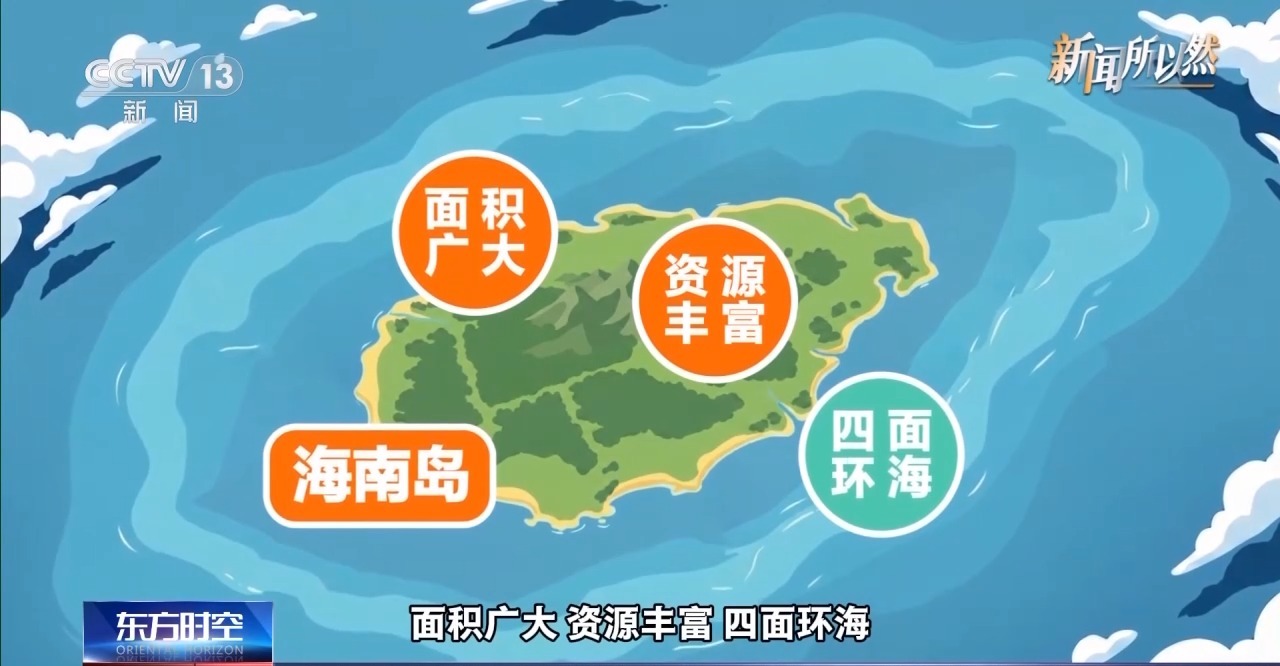
视频丨这五个方面 带你读懂海南自贸港全岛封关
Xin Lang Cai Jing· 2025-12-21 02:12
Core Viewpoint - The official launch of the Hainan Free Trade Port on December 18 marks a significant step towards high-level openness in China, aiming to establish Hainan as a unique experimental zone for international trade and investment [1][28]. Group 1: Hainan's Strategic Importance - Hainan Island, as China's second-largest island, is strategically located to connect East Asia with Southeast Asia and South Asia, serving as a vital gateway for international trade [3]. - The island's development is not focused on traditional trade and manufacturing but aims to enhance tourism, modern services, and high-tech industries, emphasizing comprehensive human development and innovation [5]. Group 2: Phased Development Plan - The construction of the Hainan Free Trade Port is divided into three phases: 1. By 2025, establish a preliminary system focusing on trade and investment facilitation. 2. By 2035, mature the system and operational model. 3. By the mid-21st century, fully develop a high-level free trade port with significant international influence [5]. Group 3: Innovative Institutional Openness - The term "institutional openness" appears frequently in the Hainan Free Trade Port's overall plan, indicating a shift from traditional trade facilitation to aligning domestic regulations with international standards [8]. - The operational model post-closure is characterized by "one line open, two lines controlled, and free movement within the island," allowing for greater freedom in international exchanges while maintaining control over domestic markets [10][12]. Group 4: Tax Policies and Economic Benefits - The "zero tariff" policy post-closure significantly expands the range of goods eligible for tariff exemptions from 1,900 to 6,600 items, increasing the proportion from 21% to 74%, thereby reducing operational costs for businesses [24]. - The policy encourages high-value-added processing industries by allowing products with over 30% added value to be exempt from import tariffs when sold to the mainland [24]. Group 5: Talent Attraction and Immigration Policies - Hainan has implemented a competitive personal income tax rate of 15% for high-demand talent, regardless of nationality, and has optimized immigration processes for 86 countries to attract skilled professionals [26]. Group 6: Global Economic Implications - The launch of the Hainan Free Trade Port is a clear signal of China's commitment to expanding high-level openness and participating actively in shaping international trade rules, especially in the context of rising protectionism globally [30].