
绿色金融

Search documents
2025绿色金融生态大会在渝开幕
Zheng Quan Shi Bao Wang· 2025-11-27 22:54
Core Insights - The 2025 Green Finance Ecological Conference opened in Chongqing, focusing on "Green Transformation and Biodiversity Finance Empowering Beautiful China" with over 200 experts and representatives from financial institutions and enterprises attending [1] - Chongqing is the only provincial-level comprehensive green finance reform and innovation pilot zone in China, enhancing its service chain in "standard systems, financial products, project libraries, trading platforms, and information disclosure" to support green development [1] - The Chongqing Green Finance Ecological Innovation Alliance was established, launching the first batch of "Chongqing Green and Transformation Investment and Financing Opportunity List" and "Chongqing Green and Transformation Financial Service Product List" [1] Financial Initiatives - The People's Bank of China Chongqing Branch and the Chongqing Municipal Financial Office jointly released the "Chongqing Financial Support for Biodiversity Protection Action Joint Initiative" [2] - Various associations, including the Chongqing Banking Association and Insurance Association, launched initiatives to promote green consumption and low-carbon development [2] - New projects in ecological corridors, ecological tourism, and ecological fisheries were announced, showcasing the comprehensive strength and collaborative advantages of Chongqing's green finance reform and innovation [2] Financial Performance - As of now, the balance of green loans in Chongqing has exceeded 1 trillion yuan, with a growing product system including green investments, green bonds, and green insurance [3] - The conference aims to leverage Chongqing's role as a demonstration zone for green finance reform and innovation, promoting systemic and product innovation to contribute to national green finance development [3]


深耕绿色金融“责任田” 江苏银行北京分行以创新实践守护绿水青山
Bei Jing Ri Bao Ke Hu Duan· 2025-11-27 22:44
Core Viewpoint - Addressing climate change and promoting green and sustainable development are key societal concerns, with Jiangsu Bank positioning green finance as a core strategy for transformation and development [1][9]. Group 1: Green Finance Initiatives - Jiangsu Bank has integrated green finance into its strategic framework, focusing on energy low-carbon transition, environmental protection, and urban-rural green development [1][3]. - The "Green Factory Loan" product allows companies to convert their green performance into tangible financial benefits, with a quick loan approval process taking only three days [2][3]. - The bank's innovative approach links loan interest rates to the green factory certification and ESG evaluations, incentivizing companies to enhance their energy-saving and carbon-reduction efforts [3][4]. Group 2: Supply Chain Financing - Jiangsu Bank has introduced a "Green + Supply Chain" financing model to support the sustainable development of entire supply chains, ensuring that both core enterprises and their suppliers engage in green practices [4][5]. - The bank utilizes an API to connect with core enterprises' supply chain management systems, assessing suppliers based on various ESG performance metrics [5][6]. - By September 2025, Jiangsu Bank had provided over 1.3 billion yuan in credit support to more than 100 suppliers through this model, promoting a comprehensive green upgrade across the supply chain [5][6]. Group 3: Green Bonds - Jiangsu Bank has facilitated the issuance of green bonds, such as a 300 million yuan green medium-term note for renewable energy projects, contributing to significant reductions in carbon emissions and other pollutants [7][8]. - The bank's expertise in the green bond market has enabled it to support major clean energy projects, reinforcing the concept that ecological preservation can align with financial growth [7][8]. Group 4: Customized Financial Solutions - The bank has developed a range of tailored financial products to meet the diverse needs of different industries, including loans for solar energy projects and ecological restoration initiatives [8][9]. - Jiangsu Bank actively collaborates with government agencies to enhance its green finance offerings and participates in various green finance events to increase its brand influence [8][9]. Group 5: Performance Metrics - As of September 2025, Jiangsu Bank's green credit balance reached 16.172 billion yuan, a 40.92% increase from the beginning of the year, serving over 300 green industry clients [9]. - The bank has established itself as a key player in the green finance sector, recognized as a partner in green financial services and actively involved in local sustainability initiatives [9].

做好“五篇大文章” 推动金融高质量发展(高质量发展故事汇·第13期)
Ren Min Ri Bao· 2025-11-27 22:20
Core Insights - The Chinese government emphasizes the importance of finance as a vital component of national competitiveness and economic modernization, with a focus on high-quality financial development through five key areas: technology finance, green finance, inclusive finance, pension finance, and digital finance [1][2][3]. Group 1: Financial Development Strategies - The government aims to deepen the understanding of the essence of socialist finance with Chinese characteristics, integrating Marxist financial theory with contemporary Chinese realities and traditional culture [2]. - The focus is on serving the real economy, risk prevention, and promoting financial innovation within a market-oriented and legal framework [2][4]. Group 2: Implementation of Financial Policies - Various policy frameworks and tools have been established, including significant funding allocations for technology innovation and green finance initiatives, such as a 200 billion yuan technology innovation relending program and a 400 billion yuan inclusive pension relending program [4][6]. - The introduction of diverse financial products, such as patent pledge loans and technology insurance, aims to support technology enterprises and enhance the financial service ecosystem [5][6]. Group 3: Performance Metrics - As of September 2023, technology loans accounted for 30.5% of all new loans, with a 22.3% year-on-year increase in loans to technology SMEs, significantly outpacing overall loan growth [6]. - The balance of green loans reached 43.5 trillion yuan, reflecting a 22.9% year-on-year growth, with green bonds totaling 4.9 trillion yuan issued [6]. Group 4: Future Directions - The government plans to continue promoting the five key areas of finance to support the construction of a strong financial nation and the rejuvenation of the Chinese nation, aligning with the 15th Five-Year Plan [7][10]. - Emphasis will be placed on enhancing digital finance capabilities, improving service efficiency, and ensuring data security and consumer protection in the digital age [10][16].
新能源金属期货添“新力军” 绿色金融赋能产业链稳航
Zhong Guo Zheng Quan Bao· 2025-11-27 20:21
Core Insights - The launch of platinum and palladium futures and options on November 27, 2025, by the Guangzhou Futures Exchange marks a significant development in China's green finance market, aimed at supporting the green energy sector and addressing the cyclical volatility in the industry [1][3] Group 1: Market Overview - Platinum and palladium are critical raw materials in green industries, with applications in automotive emissions control, wind energy, and hydrogen energy, accounting for 60% and 80% of their respective uses [1] - The trading of platinum futures reached a volume of 66,700 contracts and a turnover of 29.231 billion yuan, while palladium futures had a volume of 34,200 contracts and a turnover of 13.049 billion yuan on the first day, totaling over 42.2 billion yuan [2] Group 2: Demand for Risk Management - The high volatility of platinum and palladium prices has increased the demand for risk management tools among upstream and downstream enterprises in the industry [2][3] - The launch of these futures provides a "safe haven" for companies to stabilize operations and manage price fluctuations effectively [3] Group 3: Benefits for Enterprises - The introduction of platinum and palladium futures and options offers significant advantages for companies, including hedging tools to manage price risks and enhance operational focus [4] - The availability of domestic futures contracts is expected to improve the safety of hedging practices and expand sales and procurement channels for enterprises [4] Group 4: Future Outlook - The Guangzhou Futures Exchange aims to continue supporting the real economy and green development, enhancing market cultivation and regulatory efforts to ensure stable market operations [4]
沪市绿色债券累计发行规模近9000亿元 上交所扎实推进绿色及ESG债券市场建设
Shang Hai Zheng Quan Bao· 2025-11-27 18:20
Core Insights - The Shanghai Stock Exchange (SSE) is actively promoting the development of the green and ESG bond market, aligning with national green development strategies [1][2] - As of October 2025, the cumulative issuance of green bonds (including ABS) on the SSE has approached 900 billion yuan, with low-carbon transition bonds exceeding 80 billion yuan since their introduction in 2022 [1] - The market structure of green and low-carbon transition bonds is characterized by a diversified maturity profile, primarily mid-term, with issuers from key industries including large state-owned enterprises, local state-owned enterprises, and private companies [1] Market Mechanism Innovation - The SSE has facilitated smoother low-carbon financing for enterprises through innovative market mechanisms, enhancing financing convenience [3] - Companies like COSCO Shipping Development have successfully issued green bonds, demonstrating the effectiveness of SSE's financing mechanisms [3] - The SSE has lowered the threshold for green bonds to be included in benchmark market-making securities, improving liquidity and pricing efficiency in the secondary market [4] Future Development Directions - The SSE plans to continue advancing the green and ESG bond market under the guidance of the China Securities Regulatory Commission, aiming to provide stronger financing support for the green transition of real enterprises [2] - Discussions at the symposium highlighted the importance of enhancing the flexibility of fund usage and management, as well as optimizing incentive policies to expand the depth and breadth of the green bond market [6] - Investment institutions expressed a desire for a broader supply of green bonds to widen investment options, with expectations for more enterprises to issue green bonds on the SSE [6]
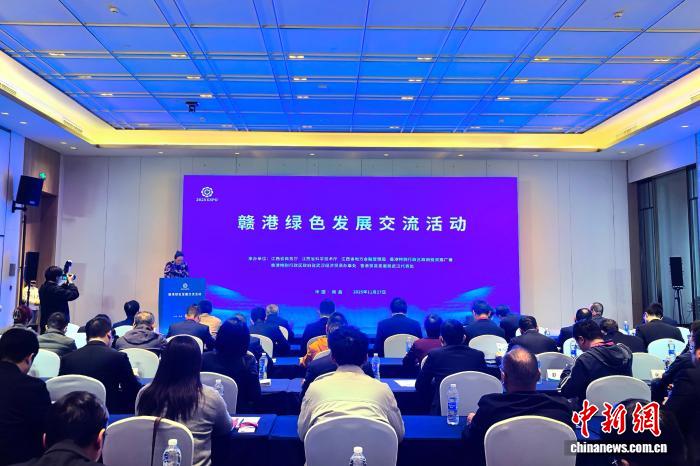
赣港共促绿色产业合作
Zhong Guo Xin Wen Wang· 2025-11-27 15:28
Core Insights - The Gantong Green Development Exchange Event was held in Nanchang, Jiangxi, focusing on green industry cooperation between Jiangxi and Hong Kong [1][3] - The event highlighted the importance of developing green industries as a global trend and a key response to climate change [3] Group 1: Green Industry Development - The combination of green finance and green technology is expected to accelerate the creation of rich industrial clusters, leading to significant business opportunities and financing needs [3] - Hong Kong possesses advanced technologies and business models in energy-saving technology, new energy, and smart transportation, while Jiangxi has a strong foundation in green manufacturing fields such as photovoltaics and lithium batteries [3] Group 2: Investment Opportunities - There is a call for Hong Kong's international capital and innovative financial tools to align precisely with Jiangxi's green industry needs [3] - The event encouraged more Hong Kong enterprises to invest in Jiangxi and suggested that Jiangxi companies consider establishing international business headquarters in Hong Kong [3] Group 3: Research and Development Collaboration - Jiangxi's Science and Technology Department proposed advancing Jiangxi-Hong Kong green technology cooperation, inviting Hong Kong universities and tech companies to participate in various research initiatives in Jiangxi [3] - Support was expressed for Jiangxi enterprises to establish "innovation hubs" in Hong Kong [3]

沪市债券新语丨聚焦绿色创新发展 上交所召开绿色及ESG债券座谈调研会
Xin Hua Cai Jing· 2025-11-27 13:53
Core Insights - The article emphasizes the importance of enhancing market-driven dynamics, optimizing policy coordination, and improving the precision and effectiveness of services to the real economy as key issues for promoting high-quality development of green finance [1] Group 1: Green Bond Market Development - The Shanghai Stock Exchange (SSE) has actively implemented the national green development strategy, continuously promoting innovation in green finance products and mechanisms, and developing the green and ESG bond market [1] - As of October 2025, the cumulative issuance scale of green bonds (including ABS) on the SSE is approaching 900 billion, while the cumulative issuance of low-carbon transition bonds has exceeded 80 billion since their launch in 2022 [1] - The market structure of green and low-carbon transition bonds shows a diversified maturity characteristic, primarily mid-term, with short-term and long-term bonds as supplements, covering key industries such as industrial, public utilities, and finance [1] Group 2: Financing Mechanisms and Market Participation - At a recent symposium, participants discussed how the SSE's green and ESG bond market can facilitate smooth low-carbon financing for enterprises, highlighting the convenience of financing mechanisms [2] - Companies like COSCO Shipping Development successfully issued a 1 billion 15-year low-carbon transition bond at a rate of 2.18%, indicating satisfaction with the financing results [2] - The SSE has lowered the threshold for green bonds to be included in benchmark market-making bonds, which enhances liquidity and pricing efficiency in the secondary market [3] Group 3: Future Directions and Recommendations - Participants at the symposium suggested enhancing the flexibility of fund usage and management, as well as optimizing incentive policies to expand the depth and breadth of the green bond market [5] - There is a call for further diversification of green bond supply to broaden investment options, with expectations for more enterprises to issue green bonds on the SSE [5] - Experts recommend introducing more diverse institutions in the investment sector and expanding bond innovations in areas such as biodiversity, climate adaptation, and carbon benefits to promote the green finance system's development [6]
上市券商投行业务前三季度净收入251.5亿元 2026年又将押注哪些热点赛道?
Mei Ri Jing Ji Xin Wen· 2025-11-27 13:29
Core Insights - The investment banking sector is experiencing a recovery with significant growth in net income and IPO activities, particularly in A-shares and H-shares [1][2][3] Group 1: Market Performance - In the first three quarters of 2025, listed brokers achieved a net investment banking income of 251.5 billion yuan, a year-on-year increase of 24% [1][2] - A-shares and H-shares IPO scales grew by 61% and 237% respectively, with Hong Kong IPOs ranking first globally [1][2] - The top five companies in the investment banking sector accounted for 52% of the market share, with several mid-sized brokers experiencing growth rates exceeding 50% [1][3] Group 2: Future Outlook - The investment banking industry anticipates that hard technology, mergers and acquisitions, and green finance will be core hotspots in 2026 [1][4] - The deepening of the registration system and the demand for cross-border financing are expected to drive market expansion [1][3] Group 3: Strategic Initiatives - Companies are enhancing their organizational mechanisms and focusing on industry-specific strategies to improve service efficiency and client support [5][6] - Investment banks are actively responding to policy changes, such as the "Eight Articles of the Sci-Tech Innovation Board" and "Six Articles of Mergers and Acquisitions," to capitalize on market opportunities [5][6] - Firms are building comprehensive platforms for merger opportunities and establishing dedicated departments to streamline merger and acquisition processes [6][8] Group 4: Cross-Border Expansion - Major investment banks are strengthening their presence in the Hong Kong market, leveraging cross-border integration advantages to enhance service capabilities [7][8] - Companies like Huatai have completed numerous Hong Kong IPO projects, positioning themselves among the top in the market [7]






从卷规模到卷服务:汽车金融行业如何“破局”增长?
Zheng Quan Ri Bao Wang· 2025-11-27 12:27
Core Viewpoint - The domestic automotive industry is undergoing a deep adjustment period towards high-quality development, and the automotive finance sector is transitioning from scale expansion to quality and efficiency improvement [1] Group 1: Industry Trends - The automotive finance industry is entering a rational development phase, shifting from traditional credit growth and price competition to structural optimization and product innovation [2] - The market is experiencing a transition from "high returns" competition to "low returns" rational development, with increasing pressure on market participants [2] - The demand for innovative financial products is rising, extending beyond traditional car loans to include battery leasing, charging rights, and after-sales leasing [2] Group 2: Market Challenges - The automotive finance market is facing intensified competition, leading to compressed profit margins and increased complexity in risk management [2] - Regulatory measures have positively influenced the market's move towards standardized development, impacting the structure of automotive consumer loans [2] - The friction costs in automotive transactions are challenging banks' digital risk control and operational capabilities [2] Group 3: Opportunities in New Markets - The trend of new energy vehicles (NEVs) going global is creating new financial service demands, particularly in international settlement and risk management for small enterprises [3] - Banks are exploring ways to provide quality financial services to NEV companies expanding overseas, focusing on financing needs arising from international trade [3] Group 4: Strategic Directions - The automotive finance industry is moving towards quality improvement and efficiency, with a focus on digital operations and customer service ecosystems [4] - Future competition will be characterized by diversification of participants and a strong emphasis on service rather than just price and scale [4] - Key strategies for high-quality development include deep integration with the automotive lifecycle, technology-driven innovation, and promoting green finance products [4] Group 5: Operational Enhancements - Banks need to enhance their operational systems, professional capabilities, product offerings, and digital risk control abilities to meet the evolving demands of the automotive finance market [5] - The integration of resources between technology and risk control departments is crucial for improving digital risk management and operational capabilities [6] - Compliance remains a fundamental operational baseline for automotive finance market participants, with effective risk management being essential for sustainable development [6]
上交所绿色债券累计发行规模已接近9000亿元
Zheng Quan Ri Bao Wang· 2025-11-27 12:11
Core Insights - The Shanghai Stock Exchange (SSE) is actively promoting green finance and has made significant progress in developing the green and ESG bond market, with a cumulative issuance of nearly 900 billion yuan in green bonds and over 80 billion yuan in low-carbon transition bonds by October 2025 [1] - A recent seminar gathered various stakeholders to discuss the achievements and future directions of the green bond market, emphasizing the importance of collaboration among enterprises, securities firms, investment institutions, and experts [1][4] Group 1: Market Development - The SSE has implemented innovative mechanisms to support green bond issuance, enhancing liquidity and pricing efficiency in the secondary market [3] - The introduction of green and low-carbon transition bonds has facilitated smoother financing for companies, as evidenced by successful issuances like the 1 billion yuan low-carbon transition bond by China COSCO Shipping Development Co., with a favorable interest rate of 2.18% [2] - The SSE is also developing public REITs in the green sector, with six projects listed, totaling 16.2 billion yuan, focusing on clean energy assets [3] Group 2: Stakeholder Engagement - Participants at the seminar highlighted the need for flexible fund management and optimized incentive policies to expand the depth and breadth of the green bond market [5] - Investment institutions expressed a desire for a broader supply of green bonds to enhance investment choices, with expectations for more enterprises to issue green bonds on the SSE [5] - Experts suggested diversifying the types of bonds to include areas like biodiversity and climate adaptation, aiming to deepen the green finance system [6] Group 3: Future Directions - The SSE plans to continue advancing the green and ESG bond market under the guidance of the China Securities Regulatory Commission, focusing on enhancing financing support for the green transition of real enterprises [6]