
能源转型

Search documents
磷酸铁锂行业需求回暖?但价格仍是问题
2 1 Shi Ji Jing Ji Bao Dao· 2025-11-19 01:49
Core Insights - The lithium iron phosphate (LFP) industry is experiencing a recovery in the first half of 2025, with top five companies operating at full capacity and an expected production increase to 3.7 million tons in China [1] - Despite the anticipated recovery, the industry has faced significant price declines, with material prices dropping from 173,000 yuan/ton to 34,000 yuan/ton, a decrease of 80.2% from the end of 2022 to August 2025 [1] - The industry is under severe profit pressure, with continuous losses for over 36 months and an average debt ratio of 67.81% among six listed companies [1] Industry Overview - The LFP materials sector is identified as the most competitive and profit-constrained segment within the lithium battery supply chain [1] - A study presented at a recent seminar indicated that the average cost of LFP materials ranges from 15,714.8 yuan/ton to 16,439.3 yuan/ton, while the market average selling price is 14,177.1 yuan/ton, highlighting the significant cost pressures faced by the industry [2] - Only two out of the top five companies are currently profitable, indicating an abnormal situation in the market [2] Market Demand and Growth - The demand for LFP materials is expected to rise, with projections suggesting that production could reach between 5.1 million to 5.3 million tons in 2026 due to increasing electric vehicle (EV) battery capacities [3] - The lithium-ion battery export value reached $55.38 billion in the first nine months of 2025, a year-on-year increase of 26.75%, with a total of 3.399 billion units exported, reflecting robust growth in both domestic and international markets [3] - The penetration rate of new energy vehicles has surpassed 45%, and the installed capacity for energy storage has surged by 60% year-on-year, contributing to a projected industry output value nearing 3 trillion yuan [3] Strategic Recommendations - The industry is encouraged to utilize a cost index as a benchmark for market pricing and to focus on innovation and upgrading to create new value growth avenues [4] - Establishing a capacity warning mechanism and promoting long-term strategic cooperation between material companies and leading downstream firms are recommended to ensure orderly capacity release and avoid the cycle of "demand growth without profit increase" [4]
双融日报-20251119
Huaxin Securities· 2025-11-19 01:33
2025 年 11 月 19 日 双融日报 --鑫融讯 分析师:万蓉 S1050511020001 wanrong@cfsc.com.cn 市场情绪:47 分(中性) 最近一年大盘走势 资料来源:Wind,华鑫证券研究 -15 -10 -5 0 5 10 15 20 25 (%) 沪深300 相关研究 | 1、《双融日报》2025-11-18 | | --- | | 2、《双融日报》2025-11-17 | | 3、《双融日报》2025-11-14 | ▌ 华鑫市场情绪温度指标:(中性) 华鑫市场情绪温度指标显示,昨日市场情绪综合评分为 47 分,市场情绪处于"中性"。历史市场情绪趋势变化可参 考图表 1 ▌ 热点主题追踪 今日热点主题:有色金属、电力设备、银行 1、有色金属主题:美元降息提振需求预期,AI 数据中心拉 动边际增量。铜:金融属性叠加矿端紧张、冶炼厂减产,传 统需求韧性+AI 拉动,价格中枢上移。铝:国内产能见顶、 海外增量有限,十五五开局紧平衡强化。相关标的:紫金矿 业(601899)、中国铝业(601600) 2、电力设备主题:在全球能源转型与数字化转型的交汇点, 人工智能正加速渗透电力行业 ...
KULR Technology (KULR) - 2025 Q3 - Earnings Call Transcript
2025-11-18 22:30
Financial Data and Key Metrics Changes - KULR Technology Group reported approximately $6.9 million in revenue for Q3 2025, representing a 116% year-over-year growth and a 75% sequential increase from the previous quarter [4][23] - The company achieved a new trailing 12-month revenue record of $16.7 million, marking the fifth consecutive quarter of revenue growth compared to the prior year [23] - Product revenue grew by 112%, while services revenue declined by 74%, indicating a strategic shift towards a product-driven business model [23] Business Line Data and Key Metrics Changes - The transition from services to product revenue is evident, with product revenue more than doubling [4] - The launch of KULR One Air has resulted in over 150 battery SKUs, positioning the company in a rapidly growing market segment [5][11] Market Data and Key Metrics Changes - The UAV and drone battery market is projected to grow from approximately $1.5 billion in 2025 to over $2.4 billion by 2030, driven by increased adoption in various sectors [12] - KULR is expanding its KULR One platform into AI data centers and telecom infrastructure, tapping into some of the fastest-growing energy markets globally [5][14] Company Strategy and Development Direction - KULR aims to grow its energy storage and management business tenfold over the next three years, supported by a strong financial foundation and strategic investments [5] - The company plans to expand its Texas headquarters to over 100,000 sq ft and scale production significantly to meet rising demand [6][13] Management's Comments on Operating Environment and Future Outlook - Management expressed optimism about entering a super growth cycle as demand surges for advanced energy storage solutions across core markets [8] - The company is well-positioned to capitalize on the increasing demand for high-performance energy systems, particularly in the context of AI and telecom infrastructure [9][10] Other Important Information - KULR holds approximately $120 million in Bitcoin, reflecting a disciplined approach to its digital asset strategy [26][34] - The company has no debt and a strong cash position, allowing it to navigate market volatility effectively [34] Q&A Session Summary Question: What is KULR's strategic priorities today as a Bitcoin treasury company with operations? - KULR's priorities are focused on its core energy management and storage business, alongside vibration reduction technologies, both of which are expected to drive strong revenue growth for 2026 [27] Question: What is the long-term strategy for the Bitcoin treasury and mining operations? - The company believes in a favorable long-term pricing outlook for Bitcoin and has shifted to growing its position through mining, which also aligns with its energy storage solutions [29] Question: What outcomes have been achieved in terms of institutional participation and market perception since the reverse split? - Since the reverse split in June 2023, institutional ownership has more than doubled, and there are no plans for another reverse split [30] Question: Can management provide updates on partnerships with government, military, aerospace, and corporate sectors? - KULR is making steady progress on partnerships, which involve multi-stage qualification and certification processes, and these engagements are crucial for establishing long-term pathways for product integration [31] Question: What concrete steps is management taking to stabilize the stock price? - The primary focus is on accelerating revenue growth in core markets, with significant traction in autonomous systems and energy storage solutions [33]
UL Solutions (NYSE:ULS) 2025 Conference Transcript
2025-11-18 20:42
Summary of UL Solutions Conference Call Company Overview - **Company**: UL Solutions (NYSE: ULS) - **Industry**: Testing, Inspection, and Certification (TIC) Key Points Business Segments and Revenue - UL Solutions operates in two main segments: industrial tech and consumer tech, with 33% of revenue being recurring from inspection and certification services [4][8][11] - Industrial tech is identified as the core focus, with historical roots in electrical safety [11][12] - Industrial segment has experienced high single-digit revenue growth, driven by mega trends such as energy transition and the proliferation of devices connected to the electrical grid [14][15] Growth Drivers - The industrial segment has seen double-digit revenue growth in 2023 and 2024, attributed to trends in energy generation and innovative uses of electrical energy [14] - Data centers and renewable energy are significant growth drivers, although specific revenue percentages tied to these sectors have not been disclosed [16][17][38] Margin Expansion - EBITDA margin expansion in the industrial segment is attributed to operational efficiencies and pricing initiatives [23][28] - Consumer segment margins have improved but are inherently lower due to higher labor intensity in testing processes [36][37] Market Position and Competitive Advantage - UL Solutions has a strong reputation in the U.S. market, benefiting from its involvement in crafting safety standards and regulations [38][39] - The company has historically outperformed industry growth rates and expects to continue this trend [39][41] Future Investments and Innovations - Plans for new laboratory facilities, including a Fire Research Center of Excellence, are set to enhance UL's capabilities in fire safety [50][72] - The company is focusing on expanding its software and advisory services, particularly in supply chain traceability and ESG reporting [51][75] Challenges and Adaptations - The consumer product division faced challenges due to tariff uncertainties, but clients have adapted to the new normal [33][34] - The company is continuously looking for ways to optimize its lab utilization and operational efficiency [31][32] Conclusion - UL Solutions is positioned for continued growth in the TIC industry, with a strong focus on industrial tech and a commitment to innovation and operational efficiency. The company is adapting to market changes and investing in future capabilities to maintain its competitive edge.

Compañía de Minas Buenaventura (NYSE:BVN) 2025 Investor Day Transcript
2025-11-18 15:32
Summary of Compañía de Minas Buenaventura (NYSE:BVN) 2025 Investor Day Company Overview - **Company**: Compañía de Minas Buenaventura - **Event**: 2025 Investor Day held on November 18, 2025 - **Key Speakers**: Leandro García (CEO), Daniel Dominguez (CFO), Juan Carlos Ortiz (VP of Operations), Roque Benavides (Chairman) Industry Insights - **Mining Sector**: Focus on gold, silver, and copper production - **Market Position**: Currently ranked 81st in market capitalization, with aspirations to reach the top 50 in 15 years - **Production Goals**: - Gold: From current 120,000-130,000 ounces to 200,000-220,000 ounces per year - Silver: From current levels to 20-22 million ounces per year - Copper: From current levels to 120,000-130,000 tons per year Core Strategies and Financial Performance - **Revenue Mix**: 50% base metals and 50% precious metals, targeting a minimum EBITDA margin of 30% [5][6] - **Financial Strength**: Current leverage ratio at 0.45, down from 6 times EBITDA five years ago [9] - **Investment Grade**: Aiming to regain investment grade status and participate in new mining standards [5] Production and Operational Highlights - **Flagship Projects**: - **Cerro Verde**: Partnership with Freeport-McMoRan - **Uchucua and Yumpac**: Silver complex - **Brocal**: Copper mine - **San Gabriel**: Expected to start production in December 2025 [3][6] - **Production Forecast**: - Gold production expected to reach 75,000-80,000 ounces in 2026, increasing to over 100,000 ounces in subsequent years [28] - Copper production at El Brocal projected to reach 60,000 tons per year by 2029 [34] Cost Management and Efficiency - **Cost Reduction Initiatives**: - San Gabriel cash costs projected to decrease from $2,000 to $1,500-$1,400 per ounce as production ramps up [52] - El Brocal cash costs expected to reduce from $6,000 to $5,000 per ton [53] - Uchucua cash costs projected to decrease from $12 to $9-$10 per ounce [53] - Coimolache costs expected to drop from $1,400 to $1,100 per ounce [54] Environmental, Social, and Governance (ESG) Practices - **Local Employment**: 64% of employees are from local communities [14] - **Safety Record**: Zero fatal accidents reported this year [15] - **Renewable Energy**: 100% of energy sourced from renewable sources [16] - **Community Investment**: $240 million spent annually on local services and goods [15] Political and Economic Context - **Political Landscape**: Upcoming elections in Peru may bring discussions on nationalization and tax changes, but the current political context is more stable compared to 2021 [18][19] - **Macroeconomic Fundamentals**: Strong central bank and positive performance of the Peruvian sol [19] Future Outlook - **Cash Flow Projections**: Expected positive free cash flow starting in 2026, with projections of $150 million in 2026 and $400 million in 2027 [56][57] - **Capital Expenditures**: Estimated at $400 million for 2025, with a focus on San Gabriel construction and sustaining CapEx for other projects [55] - **Dividend Expectations**: Anticipated dividends from Cerro Verde of $150 million-$170 million annually [56] Conclusion - **Strategic Focus**: Buenaventura is committed to operational stability, strategic expansion, and maintaining a strong financial position while enhancing production capabilities across its flagship projects [58][59]

“储能电芯很缺”“光伏链主企业还有五倍、十倍以上成长空间”“2025第八届中国国际光伏与储能产业大会”传递出这些行业信息
Mei Ri Jing Ji Xin Wen· 2025-11-18 14:02
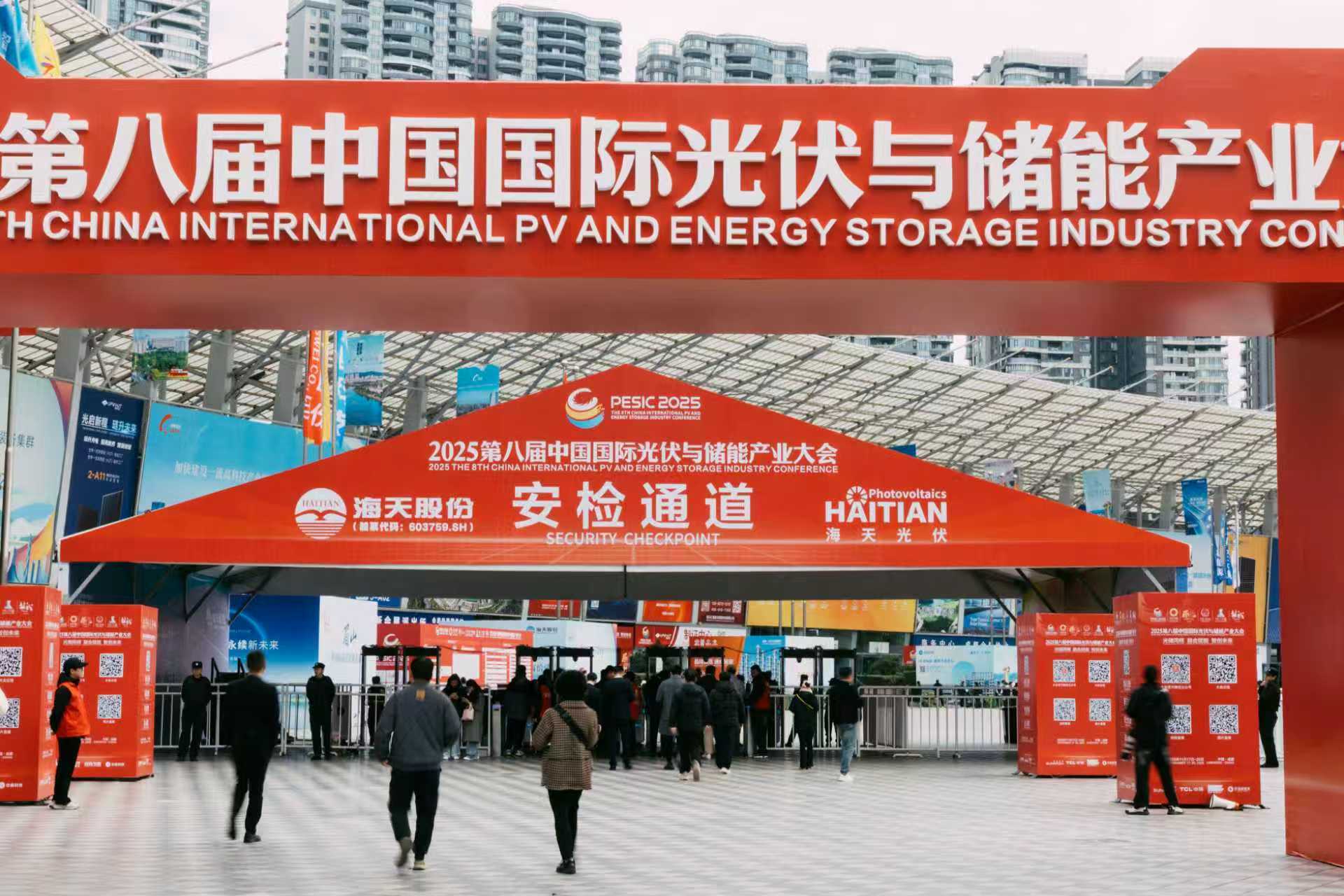
Core Insights - The term "anti-involution" has become a prominent topic in the photovoltaic (PV) industry this year, highlighting the issue of excessive competition leading to price declines across various segments of the solar product supply chain [1][3] - The integration of solar and energy storage systems is becoming more cost-effective, with component costs accounting for approximately 30% of the total system cost [1] Industry Overview - The 2025 8th China International Photovoltaic and Energy Storage Industry Conference took place from November 17 to 20, where industry leaders discussed the current state of the PV and energy storage markets [4] - The PV industry is experiencing a supply-demand imbalance, with significant price drops across the supply chain. For instance, prices for polysilicon, silicon wafers, batteries, and modules have decreased by approximately 10%, 20%, 15%, and 2% respectively since the beginning of the year [4][5] - Despite the challenges, some leading companies like Tongwei and Longi Green Energy have reported a reduction in losses in their third-quarter results [4] Market Dynamics - The energy storage sector is showing signs of recovery, attributed to the price declines in the PV industry, which have made energy storage systems more economically viable [3][9] - There is a notable demand for energy storage solutions, particularly in regions with high renewable energy generation, driven by changes in pricing mechanisms [9][10] - The market for energy storage is expected to grow significantly, with projections indicating that by the end of 2024, new energy storage installations will reach 73.76 million kilowatts, accounting for over 40% of global installations [10] Technological Developments - New technologies in solar cells, such as perovskite and various combinations of existing technologies, are being explored, although stability and maturity remain concerns [8] - The focus on safety and efficiency in energy storage technologies is leading to innovations, including solid-liquid hybrid storage systems [9][11] Strategic Insights - Industry leaders emphasize the need for a balanced competitive environment to avoid excessive internal competition, which can hinder overall industry growth [5][7] - The importance of self-sufficient core technologies is highlighted as essential for maintaining competitive advantages and ensuring the sustainability of the industry [11][12] - Future growth in the renewable energy sector is anticipated to be supported by advancements in energy storage and the establishment of a new power system that integrates renewable sources effectively [15]

“储能电芯很缺”“光伏链主企业还有五倍、十倍以上成长空间”⋯⋯“2025第八届中国国际光伏与储能产业大会”传递出这些行业信息
Mei Ri Jing Ji Xin Wen· 2025-11-18 13:53
Core Insights - The photovoltaic industry is experiencing significant price declines due to excessive competition, leading to a focus on "anti-involution" as a key theme for 2023 [1][5][6] - The energy storage sector is showing signs of recovery, partly driven by falling prices in the photovoltaic supply chain, although some industry players remain cautious about market conditions [3][4][10] Industry Overview - The "2025 8th China International Photovoltaic and Energy Storage Industry Conference" highlighted the need for companies to maintain a broader perspective while competing, ensuring the overall health of the industry ecosystem [3][6] - The photovoltaic industry is currently facing a supply-demand imbalance, with prices for polysilicon, silicon wafers, batteries, and modules dropping approximately 10%, 20%, 15%, and 2% respectively since the beginning of the year [5][12] Company Strategies - Companies are focusing on cost reduction and efficiency improvements while also increasing innovation to survive in a challenging market [4][11] - The production capacity of major companies, such as Meike Co., is currently at 60 GW, primarily in the silicon wafer sector, indicating a supply surplus [4] Market Dynamics - The energy storage market is experiencing high demand, particularly for lithium iron phosphate batteries, driven by changes in clean energy integration costs [10][11] - The anticipated growth in energy storage installations is significant, with projections indicating that by the end of 2024, new energy storage installations will reach 73.76 million kW, accounting for over 40% of global installations [11] Technological Advancements - New technologies in photovoltaic cells, such as perovskite and various combinations of existing technologies, are being explored, with the next five years seen as critical for assessing their viability [9][12] - The industry is urged to focus on core technology independence to enhance competitiveness and ensure sustainable growth [12][13] Future Outlook - The photovoltaic industry is expected to evolve towards a more integrated energy system, combining generation, storage, and consumption, particularly in regions with high renewable energy output [15] - The establishment of a fair and efficient market mechanism for energy resources is deemed essential for the sustainable development of the industry [13][15]


储能引领・绿电未来:2026 菲律宾国际电力新能源展览会
Sou Hu Cai Jing· 2025-11-18 12:09
Core Insights - The 2026 Philippines International Power, Lighting, and New Energy Exhibition (Phil Energy 2026) will take place from June 24-26, 2026, in Manila, focusing on the Philippines' energy transition strategy and covering the entire industry chain from power, new energy, lighting, to electric vehicles [1][3] Exhibition Advantages - The event is organized by the Philippine Institute of Electrical Engineers and is expected to feature an exhibition area of 20,000 square meters, attracting over 300 global exhibitors and more than 25,000 professional attendees [3] - The exhibition coincides with the fourth round of the Green Energy Auction (GEA-4), presenting opportunities for 9.378 GW of clean energy expansion, particularly in solar and energy storage integration [3] - Various activities such as government-enterprise matchmaking sessions, project signing ceremonies, and technical seminars will be held to connect energy officials, project developers, buyers, and technical experts, targeting a $30 billion investment market [3] Core Exhibits - Key exhibits will include advanced photovoltaic components, floating solar systems, onshore/offshore wind power equipment, biomass energy devices, geothermal power technology, and hydrogen storage and fuel cells [4] Power and Storage Equipment - Featured products will encompass high-voltage switches, transformers, moisture-resistant cables, off-grid storage systems, integrated solar storage charging solutions, batteries, and energy storage testing equipment [5] Smart and Digital Solutions - Innovations in this category will include smart meters, energy management systems (EMS), AI microgrid management systems, blockchain applications in electricity, and drone inspection equipment [5] Electric Vehicles and Lighting - The exhibition will showcase commercial electric buses, electric vehicles, charging stations and accessories, energy-efficient lighting systems, building energy-saving solutions, and energy consumption monitoring devices [5] Strategic Value of Participation - The exhibition provides an opportunity to align with the Philippines' renewable energy development plans and engage with resources related to green energy auction projects, aiming for a target of 35% renewable energy share by 2030 [7] - It allows companies to tap into the Southeast Asian energy demand market, leveraging the Philippines' population of 90 million to establish regional partnerships and expand long-term business operations [7] - Attendees will gain insights into innovative applications such as solar-storage integration and floating solar technology through industry forums and technical displays, positioning themselves ahead of technological trends [7]
“深耕”可持续,真正“接地气”——华晨宝马地热项目创造能源转型新范本
第一财经· 2025-11-18 09:11
Core Viewpoint - The Huachen BMW geothermal energy project represents a significant advancement in BMW Group's long-standing commitment to clean energy and sustainability, showcasing the collaborative vision of Chinese and German enterprises in sustainable development [2][17]. Group 1: Project Overview - The Huachen BMW geothermal energy project commenced operations on October 31, enabling the powertrain factory to achieve 100% non-fossil energy heating, with an expected annual carbon reduction of 18,000 tons, thereby lowering the carbon footprint of BMW's "New Generation" models from the source [4][8]. - This project is part of BMW's extensive sustainability efforts over the past 50 years, marking a breakthrough in their commitment to environmental protection and sustainable practices [5][17]. Group 2: Technological Innovation - The project involves drilling 28 deep geothermal wells to a depth of approximately 2,900 meters, utilizing a "heat extraction without water" method, which enhances environmental protection while ensuring stable and efficient geothermal energy collection [9][11]. - The innovative approach of using coaxial heat exchangers for thermal exchange with underground rock layers represents a significant advancement in geothermal energy utilization, particularly in the context of China's automotive industry [11][12]. Group 3: Collaborative Efforts - The project is a collaborative effort involving Huachen BMW, China Huaneng Group, Wanjing New Energy Co., Ltd., and Shenyang Sino-German Development Zone Construction Group, with the Shenyang municipal government providing crucial support [12][14]. - The project employs a contract energy management model, allowing for shared investment, construction, and operation among the partners, which enhances its commercial sustainability [12][14]. Group 4: Future Potential - BMW plans to expand geothermal energy applications in its factories and potentially throughout the Shenyang Iron West District, with expectations of further reducing costs while achieving 100% non-fossil energy heating [14][16]. - The project serves as a model for clean energy applications in industrial regions, providing valuable insights for broader adoption of geothermal energy in similar contexts [12][17].

香港金管局&迪拜金管局研究报告:中东与北非地区以及亚太新兴地区的可持续债务市场有很大发展空间
智通财经网· 2025-11-18 08:45
Core Insights - The research report by the Hong Kong Monetary Authority and Dubai Financial Services Authority highlights the significant growth potential of the sustainable debt market in the Middle East, North Africa, and Asia-Pacific regions [1][2] - The report emphasizes the need for governments to support issuers by offsetting issuance costs and providing guidance to overcome market entry challenges [1] - The study showcases innovative sustainable finance examples, including blue bonds and sustainability-linked loans, demonstrating the evolution of sustainable debt instruments [1] Group 1 - The sustainable debt market is projected to reach $94 billion in issuance by 2024, indicating increasing investor confidence and market resilience [2] - Hong Kong aims to be a sustainable finance hub, facilitating 45% of international green bond issuance in Asia, while addressing the climate funding gap in emerging markets [2] - The report aims to identify barriers faced by issuers and explore growth opportunities in the sustainable debt sector [2] Group 2 - The collaboration between the Hong Kong Monetary Authority and Dubai Financial Services Authority is expected to enhance trust and transparency in financial markets through sustainable debt [2] - A joint climate finance conference will be held in Dubai on November 26, where key findings from the report will be discussed [2] - Bloomberg New Energy Finance serves as a knowledge partner for the report, contributing insights into the sustainable debt market's potential [1]