资产配置

Search documents
新型浮动费率基金再添新丁,银华鑫禾混合今起发行
Zhong Guo Zheng Quan Bao· 2025-10-27 08:27
Core Insights - The article discusses the launch of the Yin Hua Xin He Mixed Securities Investment Fund, which features a floating management fee structure linked to investor holding periods and performance [1][2] - The fund aims to create a shared interest between the fund manager and investors, encouraging long-term investment while enhancing investor satisfaction [1][2] Fund Structure and Fee Model - The fund charges a management fee of 1.20% for holdings of less than one year, which can increase to 1.50% if annualized excess returns exceed 6% and decrease to 0.60% if excess returns fall below -3% after one year [1][2] - The fund will invest 60%-95% of its assets in stocks, with up to 50% of stock investments allocated to Hong Kong Stock Connect stocks, allowing for diversified asset allocation [2] Performance and Management - The fund manager, He Wei, has a strong track record, with the Yin Hua Hu Shen Stock Connect Mixed A fund achieving a net value growth rate of 24.08% over three years, outperforming its benchmark by 35.69% [2][4] - The fund manager emphasizes risk-reward balance and aims for long-term excess returns while actively managing drawdowns [1][2] Market Outlook - Analysts suggest that the restructuring of the global monetary order and the declining safety of dollar assets will lead to a revaluation of RMB assets, indicating a stable foundation for market growth [2] - The upcoming policy initiatives and favorable trends in sectors like technology are expected to support a long-term and steady market environment, despite potential short-term adjustments [2]
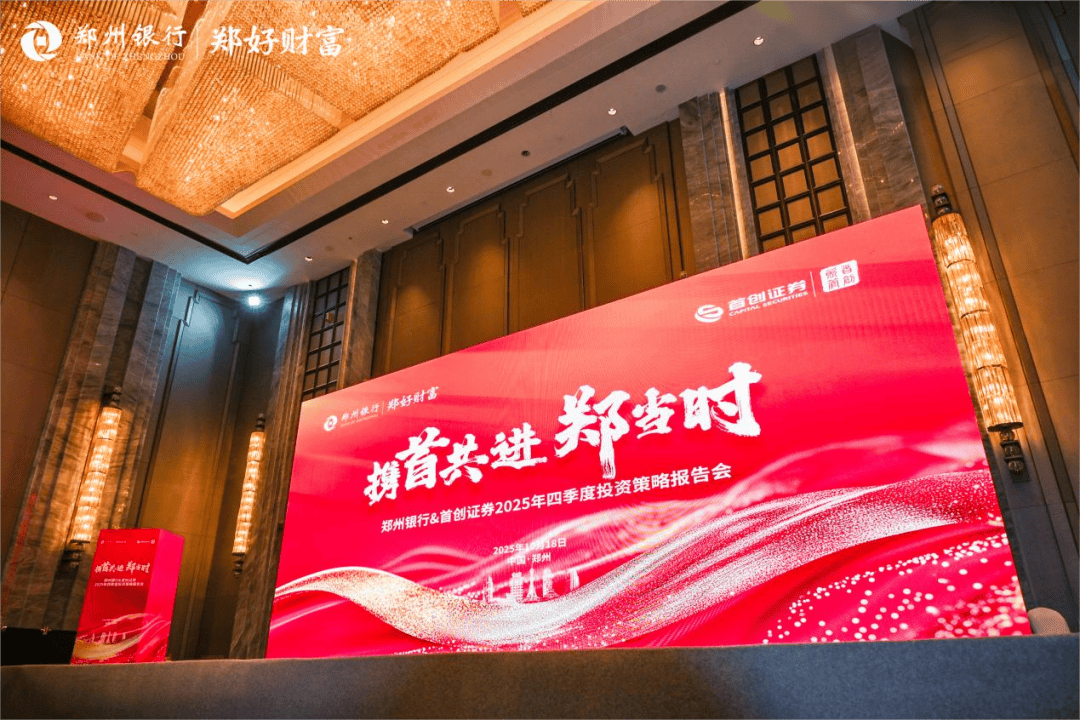
郑州银行:携“首”共进,“郑”当时——2025年四季度投资策略报告会圆满落幕
Sou Hu Cai Jing· 2025-10-27 06:40
Core Insights - The investment strategy report meeting hosted by Zhengzhou Bank focused on macroeconomic trends and asset allocation opportunities for the fourth quarter of 2025 [1][8] - The event gathered industry experts and valued clients to discuss the current economic environment and investment strategies [1][3] Group 1: Opening Remarks - The opening speech was delivered by Sun Runhua, Vice President of Zhengzhou Bank, emphasizing the bank's commitment to being a "professional wealth manager" amidst a complex economic landscape [3] - The bank aims to protect value and guide clients through market cycles, fostering a collaborative approach to wealth management [3] Group 2: Macroeconomic Insights - The first keynote address was presented by Dr. Chen Hui, Assistant President of the Asset Management Division at Shichuang Securities, who analyzed the macroeconomic situation and capital market outlook during the economic transformation cycle [4] - This analysis provided valuable references for investors' strategic planning [4] Group 3: Investment Strategies - Dr. Sun Min, an investment manager at Shichuang Securities, discussed investment opportunities in equity markets and fixed-income products, advocating for a "steady progress and dynamic balance" allocation strategy [6] - This presentation aimed to create a clear investment roadmap for the fourth quarter [6] Group 4: Interactive Session - The event featured an interactive Q&A session where attendees engaged with experts on asset allocation and industry opportunities for the fourth quarter [7] - The expert team provided detailed and insightful answers, enhancing participants' investment confidence and creating a lively atmosphere [7] Group 5: Future Outlook - The report meeting concluded with a reaffirmation of Zhengzhou Bank's commitment to client-centric services and collaboration with top partners to deliver professional market insights and customized wealth management solutions [8] - The bank aims to be a trusted wealth manager, helping clients seize timely investment opportunities [8]

黄金暴跌6%,这届年轻人被割哭了?
Sou Hu Cai Jing· 2025-10-27 06:40
Core Insights - The article discusses the recent sharp decline in gold prices, which caught many investors off guard, particularly younger investors who viewed gold as a stable investment against inflation [2][4] - The decline is attributed to a combination of factors, including a strong dollar, easing geopolitical tensions, and the need for market correction after months of rising prices [2][4] - The phenomenon of younger generations investing in gold has emerged, reflecting their collective anxiety about an uncertain future and a desire for tangible assets [3][4] Market Dynamics - Gold prices experienced a sudden drop of over 6%, leading to significant losses for investors who had previously seen consistent gains [2] - The market's reaction was swift, with panic spreading among various investor groups, from Wall Street traders to retail investors [2] - Analysts are attempting to understand the causes of this decline, emphasizing the need for a market correction after excessive speculation [2][4] Investment Behavior - The trend of younger individuals investing in gold has transformed the traditional perception of gold as a safe haven into a more dynamic and social investment activity [3] - The ease of trading gold through mobile platforms has increased participation but also heightened market volatility [4] - Emotional decision-making has replaced rational analysis in some cases, as social media influences investment choices [4] Long-term Perspectives - Despite the recent volatility, the fundamental investment logic for gold remains unchanged, with ongoing central bank purchases and persistent geopolitical risks supporting its long-term value [4] - The recent market turmoil serves as a lesson for young investors about the inherent risks in even traditionally safe assets like gold [4][6] - Financial advisors recommend a balanced approach to gold investment, emphasizing it as a stabilizer rather than a means for quick wealth accumulation [6]

急涨急跌,买金年轻人夜不能寐
首席商业评论· 2025-10-27 04:01
Core Viewpoint - The article discusses the recent surge in gold prices, driven by global central banks increasing their gold reserves, and highlights the growing interest among young investors in gold investment, particularly through gold ETFs and funds. However, it also warns of the volatility and risks associated with gold investments, especially for inexperienced investors [5][12][22]. Group 1: Gold Price Trends - Gold prices have soared this year, with international gold prices reaching a peak of $4,379.38 per ounce, marking an overall increase of over 60% [5]. - The price of gold has seen significant fluctuations, including the largest single-day drop in five years, which has impacted new investors who quickly experienced losses after initial gains [5][10]. Group 2: Young Investors and Gold Funds - Gold funds have become a popular choice for young investors due to their low entry barriers, allowing investments starting from as little as 1 yuan [7]. - Young investors, such as Zian and Ruoxi, have shared their experiences of investing in gold funds, highlighting the emotional rollercoaster of gains and losses they faced [6][8]. Group 3: Investment Strategies and Recommendations - The article emphasizes the importance of understanding different gold investment options, including physical gold, paper gold, and gold ETFs, with a focus on the ease of trading through mobile platforms [12][15]. - Financial experts suggest that young investors should set stop-loss and take-profit points to manage risks effectively, especially in a volatile market [22][24]. Group 4: Future Outlook for Gold Prices - Predictions for gold prices vary, with some analysts expecting further increases while others anticipate corrections due to rapid price rises [18][19]. - Historical patterns indicate that after significant bull markets, gold often enters prolonged bear markets, suggesting caution for current investors [19][20].
安联基金沈良: 立高远之志 行务实之事
Zhong Guo Zheng Quan Bao· 2025-10-26 22:55
Core Insights - Allianz Fund aims to integrate international vision with local practices in China's asset management market, emphasizing a long-term, stable investment experience for investors [1][3] - The company is positioned to leverage its strong data advantages, extensive market investment experience, and deep risk management culture to meet the evolving needs of Chinese investors in the "Wealth Management 2.0" era [1][3][4] Group 1: Company Vision and Strategy - Allianz Fund is committed to providing customized asset allocation solutions and one-stop services, reflecting its ambition in the "Wealth Management 2.0" era [2][4] - The firm emphasizes a pragmatic approach, focusing on professional research, product development, and service quality to build trust with investors [1][5] Group 2: Team and Research Capabilities - The investment research team at Allianz Fund comprises a significant portion of its workforce, indicating a strong focus on research-driven asset management [5][6] - The team utilizes grassroots research methods to gain insights into market opportunities, enhancing its competitive edge in the foreign asset management sector [6][5] Group 3: Product Development and Market Positioning - Allianz Fund launched its first product, the Allianz China Select Mixed Fund, in a challenging market environment, demonstrating confidence in the Chinese asset market [7][8] - The company plans to expand its product offerings, including fixed-income products and potentially cross-border investment products, to cater to diverse investor needs [8][7] Group 4: Market Outlook and Investment Opportunities - Allianz Fund identifies significant value re-evaluation potential in the Chinese stock market, supported by structural economic transformations and advancements in technology [10][11] - The firm highlights the importance of high-quality alpha opportunities in China, emphasizing the need to focus on sustainable development and long-term investment quality [12][11]
FOF指数化配置渐成趋势 部分产品10只重仓基9只为ETF
Zheng Quan Shi Bao· 2025-10-26 22:34
Core Insights - The trend of index-based allocation in public FOFs (funds of funds) is becoming increasingly evident, with many FOFs heavily investing in ETFs [1][3] - The demand for diversified FOF products and ETF-FOF innovations is rising, reflecting a shift in investment strategies [4][5] - The growing complexity and variety of index funds require enhanced asset allocation capabilities from fund managers [6][7] Group 1: FOF Investment Trends - As of October 25, 2023, many FOFs have a significant portion of their top holdings in ETFs, with some FOFs having up to 9 out of 10 top holdings as ETFs [1][2] - Notable examples include the Jianxin FOF and Wanjiayou FOF, which have multiple ETFs among their top holdings, indicating a strong preference for index funds [2][3] - A report from Huatai Securities predicts that by the end of 2024, 90.73% of public FOFs will have allocated to ETFs [3] Group 2: New Product Innovations - The market is seeing the introduction of new FOF products, such as multi-asset allocation FOFs and ETF-FOFs, to meet investor demand [4][5] - As of October 25, 2023, there are 7 multi-asset allocation FOFs established in 2025, which include provisions for index funds [4] - The ETF-FOF products are designed to allocate over 80% of their non-cash underlying assets to ETFs, reflecting a strategic response to market demand [5] Group 3: Challenges and Requirements - The rise of index-based allocation increases the complexity of asset management, necessitating higher asset allocation skills from fund managers [6][7] - Fund managers are expected to develop capabilities in multi-asset allocation and to identify arbitrage opportunities, which are essential for achieving excess returns [6][7] - Challenges include market volatility affecting asset rotation strategies and potential liquidity issues with certain ETFs, which could lead to homogenization of ETF-FOF products [7]
10月26日,不必等待!金价或将历史重演
Sou Hu Cai Jing· 2025-10-26 18:49
2025年10月下旬,黄金市场经历了惊心动魄的一幕。 单日暴跌创下十二年记录,2.5万亿美元市值瞬间蒸发。 然而戏剧性的是,仅仅五天后,金价就稳稳站在4112美元的高位。 这种过山车行情让人不禁想起2006年的历史。 当时金价在暴涨60%后急速回落30%,一个半月时间抹去大量涨幅。 历史会不会重演? 这个问题让投资者们 攥着钞票左右为难。 华尔街投行正在上演自相矛盾的戏码。 摩根大通分析师信誓旦旦预测2026年金价突破5055美元,但同一家公司的量化团队却在内部报告中预警当前走势与 2006年暴跌前高度相似。 这种矛盾不仅存在于投行内部,更体现在黄金ETF期权市场。 那里正出现罕见的多空对决,杠杆资金仓皇出逃的场面令人瞠目。 有交易员形容这就像"一群 人在漆黑的电影院里抢着找出口"。 黄金市场的本质正在发生根本转变。 过去投资者把它单纯当作避险工具,现在它正在演变为股票风险对冲器。 摩根大通研究显示,机构投资者开始用黄金 替代债券来对冲股票风险。 这个转变的影响超乎想象。 全球投资者只需将黄金配置比例提升两个百分点,三年内金价就可能实现翻倍。 这意味着黄金正在从配角升级为主角。 各国央行的行为也印证了这一趋势 ...
超7亿元涌入黄金ETF!
Shang Hai Zheng Quan Bao· 2025-10-26 03:35
Core Insights - Gold prices have experienced significant volatility, yet many investors continue to increase their positions in gold assets, indicating a strong belief in the long-term value of gold despite short-term fluctuations [1][5]. Group 1: Market Performance - As of October 24, the domestic gold ETF scale increased by over 700 million yuan compared to before the price drop on October 20, reaching a net subscription of 848 million shares [1][4]. - From August to October 20, COMEX gold saw a cumulative increase of over 30%, attracting substantial capital inflow, but experienced a sharp decline of over 5% on October 21 [2][4]. - Despite the recent price drop, the scale of domestic gold ETFs rose from 236.13 billion yuan on October 20 to 236.86 billion yuan by October 24, reflecting a net increase of 730 million yuan [4]. Group 2: Investor Sentiment - Investor enthusiasm for gold remains high, with a notable increase in searches for gold on platforms like Alipay, which saw over 9.4 million searches in the week following the National Day holiday, a fivefold increase year-on-year [5]. - Young investors, particularly those born in the 1990s and 2000s, are becoming a significant force in gold investment, with over 55% of gold users on the Ant Wealth platform belonging to these age groups [5]. - The demand for physical gold remains robust, with reports indicating that many young consumers are purchasing gold jewelry for both investment and decorative purposes [5]. Group 3: Future Outlook - Analysts suggest that while gold may experience short-term corrections following rapid price increases, the long-term outlook remains positive due to ongoing capital inflows from central banks and reduced volatility in recent years [7][8]. - Investment strategies should focus on disciplined asset allocation, ensuring that gold holdings are maintained at predetermined levels to avoid impulsive decisions based on market fluctuations [8].
给暴富的心泼一盆冷水
雪球· 2025-10-26 01:47
Core Viewpoint - The article emphasizes the importance of long-term investment strategies and the reality of stock market returns, highlighting that a 10-year investment yielding a 6.6% annualized return is commendable in a challenging market environment [2]. Group 1: Investment Philosophy - The author believes in the viability of value investing, which was reinforced by early exposure to literature on Warren Buffett, leading to sustained enthusiasm for investing despite initial losses [3]. - The author maintains realistic expectations, recognizing that a long-term annualized return of over 12% is exceptional, which helps in avoiding emotional reactions to market fluctuations [3]. - The article advises against following market fads and emphasizes the importance of understanding one's investment capabilities, with the author having never invested in high-risk sectors like the ChiNext board [3][4]. Group 2: Investment Strategy - The author prefers to invest in large-cap companies during market downturns or when negative events occur, as these companies tend to have stable operations and better control over market volatility [4]. - The strategy includes avoiding high-risk financing and frequent trading, focusing instead on earning from business operations and benefiting from dividends, which provides a steady cash flow for reinvestment [4]. - The article introduces the "雪球三分法" (Snowball Three-Part Method), which advocates for long-term investment and asset allocation through diversification across assets, markets, and timing to achieve diversified returns and risk mitigation [5].

防守还是出击?“基金买手”四季度这样干
Shang Hai Zheng Quan Bao· 2025-10-25 12:37
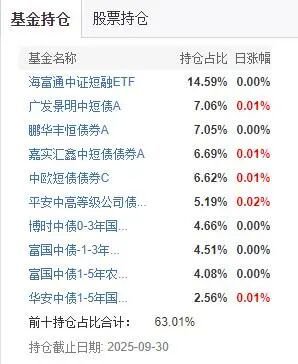
Core Insights - The FOF (Fund of Funds) managers are divided on whether to adopt a defensive or aggressive strategy in the fourth quarter after a year of market fluctuations, with some reporting significant returns [1] Group 1: Performance Overview - As of September 30, 2025, the average return of all public FOF products in the market over the past year was 19.04%, with all achieving positive returns [1] - Notable performers include Guotai Youxuan Lihang One-Year Holding Mixed FOF and E Fund Advantage Lihang Six-Month Holding Mixed FOF, with net value growth rates exceeding 60%, at 66.65% and 60.83% respectively [1] - Nearly ten products reported net value growth rates over 50%, indicating strong performance in a structural market [1] Group 2: Investment Strategies - FOFs that performed well typically timed their investments correctly and took bold positions, such as Guotai Youxuan Lihang One-Year Holding FOF, which had nearly 30% of its top ten holdings in rare earth ETFs [1] - E Fund Advantage Lihang Six-Month Holding Mixed FOF had a top ten holdings concentration of 65.96%, primarily in E Fund products, emphasizing a focus on technology growth [2] Group 3: Manager Insights - Manager Deng Da of China Europe Yingxuan Stable Six-Month Holding FOF opted for a conservative approach, analyzing asset risk-return characteristics to maintain stability [3] - Deng highlighted that large-cap technology stocks in the A-share market have a lower risk-return ratio compared to similar U.S. and Japanese stocks, while domestic blue-chip stocks present better risk-return characteristics [3] - Manager Liu Jian of Tongtai Youxuan Three-Month Holding FOF expressed a balanced yet proactive strategy, focusing on macroeconomic clarity and the importance of technology sectors [5] Group 4: Portfolio Composition - The top ten holdings of China Europe Yingxuan Stable Six-Month Holding FOF are all bond funds, with the largest being Hai Fuyitong Zhongzheng Short Bond ETF at 14.59% [5] - Tongtai Youxuan Three-Month Holding FOF showed a significant shift in its portfolio, with the top two holdings being Fu Guo Zhongzheng Hong Kong Stock Connect Internet ETF and Huaan Chuangban 50 ETF, indicating a more aggressive stance [6]