
人工智能(AI)

Search documents
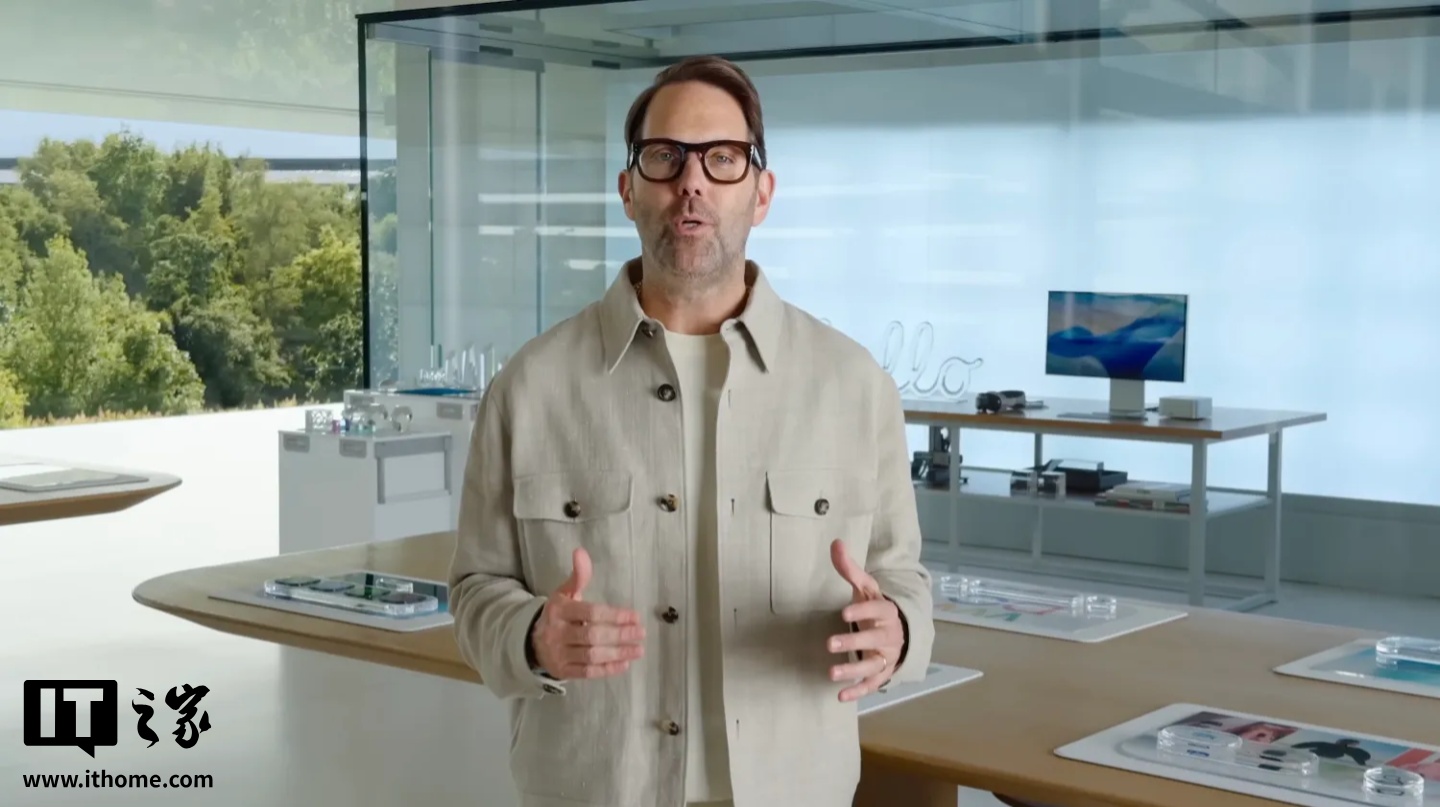
Meta 从苹果挖走用户界面设计负责人艾伦・戴伊,加速 AI 硬件布局
Xin Lang Cai Jing· 2025-12-04 11:25
Core Insights - Meta has successfully recruited Alan Dye, a prominent industrial design executive from Apple, indicating a significant move into consumer hardware integrated with artificial intelligence (AI) [1][9] - This leadership change is seen as a major shift in Silicon Valley, highlighting Meta's ambition to establish itself as a hardware manufacturer [3][11] Company Developments - Alan Dye has been appointed as the Chief Design Officer at Meta, effective December 31, and will lead a new design studio focusing on hardware, software, and AI integration [4][12] - During his tenure at Apple, Dye was instrumental in the design of key products, including the Vision Pro headset, Apple Watch, and iPhone X, and he played a significant role in the visual language of Apple's operating systems [5][12] Market Reactions - Following the announcement of Dye's departure, Apple's stock fell nearly 1% to $284.15, while Meta's stock decreased by 1.2% to $639.60 [6][12] Leadership Changes at Apple - Dye's exit adds to a series of recent departures of key executives at Apple, including COO Jeff Williams and AI head John Giannandrea, raising concerns about talent retention within the company [8][13] - Apple has appointed Steve Lemay to replace Dye, who has been with the company since 1999 and has contributed to significant design projects [3][11]


2025年12月资产配置报告:由守转攻,布局高景气
HWABAO SECURITIES· 2025-12-04 10:23
Macro Strategy Overview - The report indicates a transition from a defensive to an offensive investment strategy, focusing on sectors with high growth potential as the market stabilizes [1][5] - The U.S. labor market is showing signs of gradual cooling, with expectations of a Federal Reserve interest rate cut in December, maintaining a loose liquidity environment [4][20] - Domestic economic pressures are increasing, with a forecasted GDP growth rate of around 4.5% for Q4, while the annual target of 5% remains achievable [4][25] Domestic Economic Environment - Domestic consumption and investment are experiencing downward pressure, with retail sales growth slowing to 2.9% in October [28][33] - Fixed asset investment growth has declined to -1.7% year-to-date, influenced by anti-involution policies and excess capacity [38] - Industrial production showed a slight recovery, but overall demand remains weak, impacting growth [28][38] A-Share Market Strategy - The A-share market is expected to shift towards a more optimistic outlook, with a focus on technology and growth sectors as the market stabilizes [5][6] - The report suggests that December is a favorable time for positioning in sectors with improving growth prospects, particularly in technology and growth-oriented industries [5][6] - The report highlights the importance of a diversified asset allocation strategy, including global equities and commodities, to mitigate risks [6][60] Sector Performance - In November, the A-share market saw a general decline, with technology sectors experiencing significant drops while traditional sectors like textiles and banking showed resilience [10][12] - The report notes that the technology growth sectors, such as AI and semiconductors, are expected to present investment opportunities as the market approaches the spring rally [5][12] - The report emphasizes the need to monitor sector rotation and the performance of high-dividend stocks as market conditions evolve [60]
王忠民:AI不应只服务资本,更应服务普通人,促进社会公平
Nan Fang Du Shi Bao· 2025-12-04 10:23
Group 1 - The core viewpoint of the article emphasizes the interdependence of AI and ESG, suggesting that the future of AI development must align with ESG principles to create a greener, smarter, and fairer society [1][3] - Wang Zhongmin highlights that AI's development is heavily reliant on energy, noting the trend that "the end of green electricity is space," indicating a potential shift of AI computing centers to space for sustainable energy supply [3] - The article discusses the transformation in material usage driven by AI, moving from single materials to composite materials, influenced by ESG's strict resource consumption requirements [3] Group 2 - Wang Zhongmin points out that ESG requirements are driving breakthroughs in AI hardware, particularly through the rise of optical computing, which significantly reduces energy consumption and increases speed [3] - The emergence of new hardware like thermodynamic chips is mentioned as a response to energy efficiency challenges, showcasing how ESG demands are prompting innovation in AI technology [3] - The article addresses the social implications of AI, stressing that AI must adhere to social responsibility requirements outlined in ESG, particularly in addressing aging populations and ensuring equitable wealth distribution [4]

新晋独角兽企业Brevo募资5.83亿美元,挑战客户关系管理巨头
Xin Lang Cai Jing· 2025-12-04 09:05
Core Insights - Brevo, a Paris-based customer relationship management company, has achieved "unicorn" status with a valuation exceeding $1 billion after raising €500 million (approximately $583 million) in its latest funding round [1][6] - The company aims to expand its market presence in the U.S. and compete with industry giants like HubSpot and Salesforce, with a goal for the U.S. market to contribute 50% of its revenue [1][2][6] Financial Performance - Brevo's annual recurring revenue (ARR) surpassed $100 million in 2023, qualifying it as a "decacorn" [2][7] - The company has already met its 2025 target of €200 million in ARR ahead of schedule and plans to reach €1 billion by 2030 [2][5][7] - Brevo's EBITDA margin is reported to be in double digits, indicating strong profitability [2][7] Funding and Investment Strategy - The recent funding will be allocated towards two main initiatives: investing €50 million in artificial intelligence over the next five years and pursuing acquisitions as a growth strategy [2][7][9] - Brevo has completed 11 acquisitions to date and plans for acquisitions to contribute 45% of its revenue target by 2030 [5][9] Market Position and Strategy - Brevo has transitioned from a small email marketing provider to a comprehensive platform offering marketing automation, CRM, and customer data management [3][8] - The company competes with Mailchimp in the email marketing space while also integrating AI technologies into its offerings [4][9] - Brevo's competitive strategy focuses on product excellence rather than relying solely on its European roots [3][8]
2000亿英镑大调仓!AI泡沫风险逼退英国养老金
Sou Hu Cai Jing· 2025-12-04 08:25
Group 1 - UK pension funds are reducing their exposure to US stocks due to concerns over market concentration in a few tech giants and potential AI bubble risks [2][3] - The Nasdaq Composite Index, driven by stocks like Nvidia, Alphabet, and Meta, has surged over 20% this year, raising alarms about the dominance of a few stocks in the market [3][4] - The concentration of US tech stocks and their high valuations are prompting pension funds to reassess risks for their members, particularly those with long-term investment horizons [4][6] Group 2 - Aon Master Trust sold approximately 10% of its global equity portfolio, primarily US stocks, to capitalize on opportunities in the UK bond market while mitigating risks associated with the AI bubble [5] - Nest, a government-backed pension plan, is diversifying investments away from large tech stocks without selling existing US holdings, emphasizing risk management through diversification [6] - Some pension fund managers are hesitant to reduce exposure to strong-performing US tech stocks due to fears of missing out on further gains, despite acknowledging the risks of high valuations [7][8]




中国苹果概念股股价涨幅超过苹果
日经中文网· 2025-12-04 08:13
Core Viewpoint - The stock prices of Apple-related companies listed in mainland China and Hong Kong have shown strong performance, driven by the success of the new "iPhone 17" and a shift in business models towards profitability in the AI sector, contrasting with Apple's modest stock price increase of only 14% from late 2024 to December 2, 2025 [2][10]. Group 1: Financial Performance - Foxconn Industrial Internet (FII) reported a strong financial performance for Q3 2025, with revenue reaching 243.1 billion yuan, a 42% year-on-year increase, and net profit surpassing 10.3 billion yuan, up 62% [2]. - The revenue from AI servers using GPUs increased fivefold, while revenue from high-speed data communication network devices for AI data centers surged 27 times [5]. - Luxshare Precision, another Apple supplier, saw its revenue grow by 31% year-on-year to 96.4 billion yuan for Q3 2025, with net profit increasing by 25% to 3.9 billion yuan, largely attributed to AI-related factors [8]. Group 2: Business Model Shifts - Companies in the Apple supply chain are increasingly focusing on AI-related businesses to mitigate risks associated with dependency on Apple contracts, which can be terminated unexpectedly [9]. - Industrial Internet's strong performance in AI servers is partly due to the challenges posed by U.S. semiconductor export restrictions, leading to a restructuring of supply chains [7]. - Blue Glass Technology is attempting to reduce its reliance on Apple by diversifying into AI-equipped automotive smart cockpits, with its revenue from non-Apple related businesses growing to nearly 10% [9]. Group 3: Market Dynamics - The competitive landscape in AI investments between the U.S. and China is benefiting companies integrated into the global supply chain, as they adapt to the changing market conditions [2]. - The departure of Apple's AI department head raises questions about Apple's future profitability in AI, while companies that have already pivoted towards AI are receiving positive market feedback [10].



全球AR市场增长逻辑与投资机遇:消费级AR眼镜系列报告(一):破局与展望
Minmetals Securities· 2025-12-04 03:11
Investment Rating - The report does not explicitly state an investment rating for the industry, but it emphasizes the potential growth and investment opportunities in the AR glasses market. Core Insights - The development of consumer-grade AR glasses has been relatively slow due to the challenge of achieving both lightweight design and affordability. The current trend is towards a "gradual iteration" paradigm, starting with audio glasses, moving to AI glasses, and eventually to AI+AR glasses [2][3]. - The global market for AI smart glasses is projected to reach 1.52 million units in 2024, while traditional AR glasses are expected to sell 500,000 units. The acceptance of "AI+social" product positioning is reflected in the sales growth of Meta's upgraded Ray-Ban Meta glasses, which are expected to reach nearly 3 million units by Q2 2025 [2][3]. - The traditional eyewear market, with annual sales exceeding 1.5 billion units, provides a substantial replacement market for smart glasses. If the AI+AR solution matures, the penetration rate could rise from 0.01% in 2023 to 4.44% by 2030, with the global AR smart glasses market projected to grow from 735 million RMB in 2023 to 118.7 billion RMB by 2030, reflecting a CAGR of 106.7% [3][4]. Summary by Sections Industry Turning Point - The XR industry is diversifying, with AR emerging as a new growth engine. The report outlines the historical challenges and commercialization phases of AR technology, highlighting the shift from initial excitement to a recovery growth phase driven by technological advancements [12][16][24]. Competitive Landscape - The competition is evolving from a focus on hardware products to building ecological barriers. Major players like Meta and Google are adopting different strategies, with Meta focusing on AI+AR technology and Google moving towards an open ecosystem model. Domestic companies are categorized into those focusing on rapid hardware iteration and those leveraging their mobile ecosystems for cross-device collaboration [4][5][6]. Industry Chain Analysis - The report emphasizes the importance of focusing on core segments of the industry chain that hold significant value. The cost structure of AR glasses is detailed, with optical display units accounting for 43% of the BOM cost, followed by chip-based computing units at 31% [5][6]. Market Outlook - The report predicts a significant growth trajectory for AR glasses, with a gradual increase in sales expected as the technology matures. The AI glasses market is expected to see substantial growth, with sales projected to reach 3.5 million units by 2025, while traditional AR glasses are forecasted to sell only 650,000 units [49][52]. Conclusion - The report concludes that the gradual iteration path taken by AI glasses is more aligned with market demands, providing a foundation for the future development of AR glasses. This approach is expected to facilitate the overcoming of initial technological bottlenecks and accelerate market penetration [34][41][42].

中国与东盟数据中心:2025 年第三季度总结 -订单量、资本支出扩张及资本循环前景向好;买入万国数据、世纪互联-China & ASEAN Data Centers_ 3Q25 wrap_ Positive outlook on order volume, capex expansion and capital recycling; Buy GDS_VNET
2025-12-04 02:22
Summary of China & ASEAN Data Centers Conference Call Industry Overview - The report focuses on the China and ASEAN data center sector, highlighting positive trends in order volume, capital expenditure (capex) expansion, and capital recycling strategies for companies like GDS and VNET [1][6][37]. Key Companies - **GDS Holdings (GDS)**: Target price set at US$43/HK$42 for ADR/H-share, reflecting a slight decrease from previous targets. Valuation of DayOne, a subsidiary, increased by 17% to US$10.5/HK$10.2 per GDS ADR/H-share [1][49]. - **VNET**: Maintained a target price of US$14, with a Buy rating [1][49]. Core Insights - **Order Volume and Demand**: Both GDS and VNET are expected to secure around 300MW of orders each in 2026, representing a significant increase in market share from 9% in 2025 to approximately 20% of incremental data center demand in China [6][10]. - **Capex Growth**: GDS's organic capex is projected to reach Rmb7 billion in 2026, up from Rmb4.8 billion in 2025, to support capacity expansion. VNET's capex is expected to exceed Rmb8 billion for 350-400MW capacity delivery [6][7]. - **Favorable Financing Environment**: The report notes a positive outlook for financing, with GDS and VNET expected to generate substantial operating cash flow (Rmb4 billion+ for GDS and Rmb3 billion+ for VNET in 2026) [7][10]. Financial Performance - **DayOne's Performance**: DayOne reported a significant year-over-year growth in revenue (+177%) and adjusted EBITDA (+358%), indicating strong operational execution and capacity expansion [53][59]. - **Capacity Expansion**: DayOne aims to reach approximately 1GW of committed capacity by the end of 2025, with ongoing projects in Thailand and other regions [53][54]. Market Trends - **Data Center Demand Growth**: The China data center market is projected to grow at a CAGR of 23% from 2024 to 2028, reaching 33GW by 2028 [10][12]. - **Utilization Rates**: GDS and VNET are expected to account for over 11% of data center demand in China by 2028, driven by above-industry utilization rates [17][12]. Regulatory Environment - New electricity tariffs in Malaysia may increase operational costs for data center operators, while stricter water consumption rules could benefit companies like DayOne that focus on higher-tier data centers [54][54]. Valuation Adjustments - GDS's valuation was adjusted to Rmb66 billion or US$37.4/HK$36.4 per ADR/H-share due to increased share count from recent offerings. DayOne's valuation was raised based on improved growth estimates [48][49]. Conclusion - The outlook for the China and ASEAN data center sector remains positive, with strong demand, increased capex, and favorable financing conditions. GDS and VNET are well-positioned to capitalize on these trends, supported by robust operational performance and strategic expansions.

深夜,美股异动,这只股票暴涨超5倍
Zheng Quan Shi Bao· 2025-12-03 23:07
Group 1 - The latest ADP employment report indicates a surprising decrease of approximately 32,000 jobs in the U.S. private sector for November 2025, significantly below market expectations for job growth [1] - Treasury Secretary Yellen noted that certain sectors of the economy are showing signs of weakness, suggesting a need for interest rate cuts [1] - Micron Technology announced plans to acquire startup Celestial AI for about $3.25 billion, aiming to capture a larger share of the rapidly growing AI computing market [1] Group 2 - Micron Technology reported Q3 FY2026 revenue of $2.08 billion, a 37% year-over-year increase, slightly above market expectations of $2.07 billion [1] - Adjusted earnings per share for Micron were reported at $0.76, also exceeding market expectations [1] - Microsoft shares fell nearly 3% as reports emerged that several sales teams had not met fiscal year-end targets, leading to lowered sales growth expectations for some AI products [1] Group 3 - Apple shares rose nearly 1%, with IDC predicting that iPhone shipments in 2025 could reach a new high, surpassing the record set in 2021, driven by strong performance of the iPhone 17 series and a recovery in the Chinese market [3] - Tesla shares increased nearly 3% following CEO Musk's announcement about the progress of the Optimus humanoid robot, with production lines expected to be operational next year [3] - Capricor Therapeutics Inc. experienced a surge of over 500% in stock price due to positive results from its Phase 3 trial for DMD cell therapy, leading to a temporary trading halt [3] Group 4 - The Nasdaq Golden Dragon China Index fell nearly 1%, with Bawang Tea's shares dropping nearly 6% despite a strong operational performance, including over 30% growth in membership and a 26% increase in store count [4] - Alibaba shares declined by over 2%, while companies like Yijiatong Technology and Douyu saw gains of over 4% [5]

ADP数据强化12降息预期 三大指数收涨 比特币突破9.3万美元关口
Zhi Tong Cai Jing· 2025-12-03 23:02
Market Overview - The three major U.S. indices rose, with the Dow Jones up 408.44 points (0.86%) to 47882.9, the Nasdaq up 40.42 points (0.17%) to 23454.09, and the S&P 500 up 20.35 points (0.3%) to 6849.72 [1] - European indices showed mixed results, with Germany's DAX30 down 14.85 points (0.06%) to 23695.02, while Spain's IBEX35 rose 124.55 points (0.76%) to 16590.55 [1] Employment Data - The ADP report indicated a surprising decline in U.S. private sector employment for November, with a loss of 32,000 jobs, following a revised gain of 47,000 jobs in October [4] - The unemployment rate rose to a four-year high of 4.4% in September, with only 119,000 jobs added to the economy [4] Service Sector Performance - The ISM non-manufacturing PMI for November was reported at 52.6, slightly up from 52.4 in October, indicating stable service sector activity [5] - However, the employment index within the service sector remains in contraction at 48.9, marking six consecutive months of decline [5] Commodity Prices - Crude oil prices saw slight increases, with light crude for January delivery at $58.95 per barrel (up 0.53%) and Brent crude for February at $62.67 per barrel (up 0.35%) [2] - Gold prices fell by 0.07% to $4202.85 [3] Corporate Developments - Salesforce (CRM.US) reported Q3 revenue of $10.3 billion, a 9% year-over-year increase, with adjusted EPS of $3.25 compared to $2.41 last year [10] - Coinbase (COIN.US) CEO announced that major banks are collaborating with the company on pilot projects related to cryptocurrency trading [12] - Meta (META.US) has hired Apple's design head Alan Dye, indicating a strategic move to enhance its hardware and AI integration [11]

