生成式AI

Search documents
Coreweave宣布收购Marimo
Ge Long Hui A P P· 2025-10-30 14:57
格隆汇10月30日|英伟达持仓股Coreweave宣布收购Marimo,以统一生成式AI开发者的工作流程。交易 条款未披露。 ...

亚马逊再裁员1.4万人,美国就业市场进入寒冬
财富FORTUNE· 2025-10-30 13:09
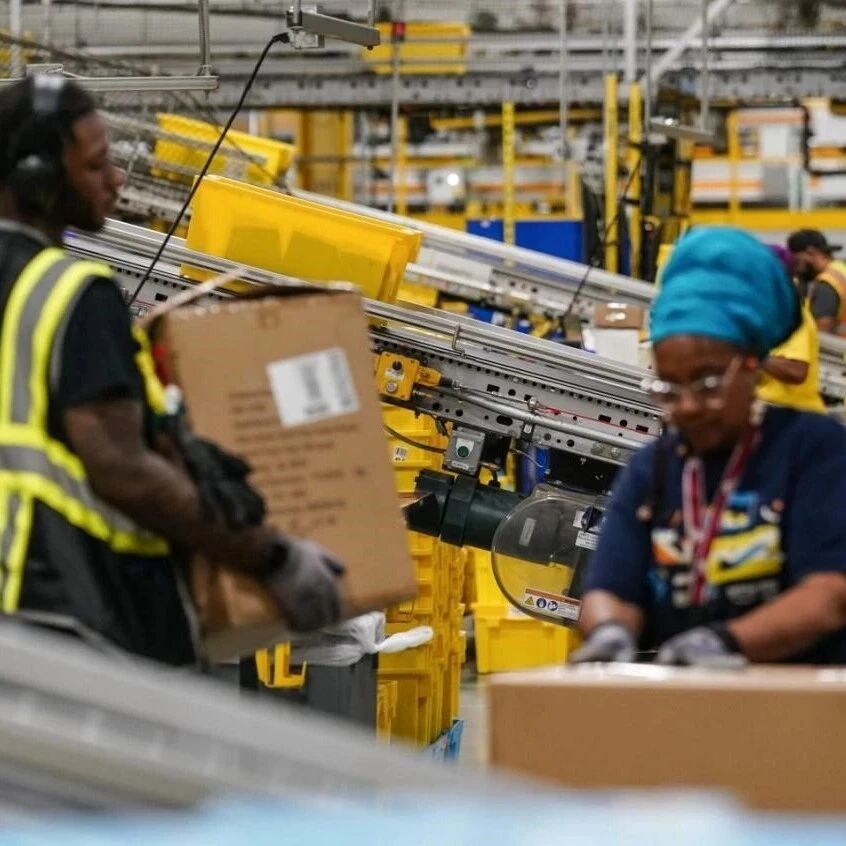
Core Viewpoint - Amazon is reducing approximately 14,000 corporate positions while increasing investments in AI, indicating a strategic shift towards technology and cost-cutting measures under CEO Andy Jassy's leadership [1][3]. Group 1: Workforce Reduction - The layoffs affect about 4% of Amazon's corporate workforce, which totals around 350,000 employees [3]. - Employees impacted by the layoffs will have 90 days to seek new positions within the company, with transitional support provided for those who do not find new roles [3]. - This marks Amazon's largest round of layoffs in 2023, following a previous reduction of 27,000 positions earlier in the year [3]. Group 2: AI Investments - Amazon is actively developing over 1,000 generative AI services and applications, which are expected to significantly reduce the need for corporate employees in the coming years [1][2]. - The company plans to invest $10 billion in building a campus in North Carolina to expand its cloud computing and AI infrastructure [1]. - Amazon is competing with major tech companies like OpenAI, Google, Microsoft, and Meta in the AI space, with a focus on enhancing its Amazon Web Services (AWS) business [1]. Group 3: Market Context - The layoffs occur amid a broader trend of job reductions in the retail and tech sectors, as companies adjust to post-pandemic realities and economic uncertainties [3][4]. - Despite the layoffs, Amazon plans to hire 250,000 seasonal employees, maintaining its recruitment levels from the previous holiday season [4]. - Analysts suggest that Amazon's layoffs reflect a deep restructuring of its corporate workforce, driven by the need to adapt to rising costs and a shift towards technology infrastructure [4].


AI黄仁勋演讲骗倒10万老外,冒充GTC直播,干出8倍观看量
3 6 Ke· 2025-10-30 12:37
Core Points - Deepfake technology has become pervasive, with a recent incident involving a deepfake of NVIDIA's CEO Jensen Huang garnering 96,000 views on YouTube, significantly surpassing the 12,000 views of the actual live stream [2][8] - The deepfake live stream was misleadingly promoted as an official NVIDIA event, ranking first in search results for "Nvidia gtc dc" on YouTube [5] - The deepfake impersonated Huang, promoting a cryptocurrency distribution scheme linked to NVIDIA, which included requests for viewers to scan a QR code for transfers [8] Industry Implications - This incident highlights the growing ease and realism of generating deepfake content, raising concerns about the potential for misinformation and scams targeting unsuspecting audiences [8][9] - The recurrence of deepfake scams, including previous instances involving figures like Elon Musk, underscores the urgent need for regulatory frameworks to govern the use of deepfake technology [9] - The entertainment industry has also been affected, with deepfake technology being used to create non-consensual adult content featuring celebrities, indicating a broader societal issue that requires legal intervention [9]

谷歌营收被Nano Banana带飞!季度首破千亿美元,Gemini APP月活6.5亿
量子位· 2025-10-30 10:31
Core Insights - Google's quarterly revenue has surpassed $100 billion for the first time, reaching $102.3 billion, a year-over-year increase of 16% [12][22] - The AI-driven growth is evident, with Gemini app achieving 650 million monthly active users and processing 7 billion tokens per minute [5][24] - The company's net profit rose to $34.98 billion, a 33% increase compared to the previous year, with an operating margin of 30.5% [12][18] Group 1: Financial Performance - Google's total revenue for Q3 2025 was $102.3 billion, marking a historic milestone [12] - Net income reached $34.98 billion, with earnings per share (EPS) of $2.87, reflecting a 35% year-over-year increase [12][18] - The Google Services segment generated $87.05 billion in revenue, a 14% increase year-over-year, while Google Cloud revenue grew by 34% to $15.16 billion [12][26] Group 2: AI and Product Development - The Gemini AI model has been commercialized, with significant user engagement and processing capabilities [22][23] - Google Workspace has integrated Gemini AI, enhancing productivity tools for enterprise clients [25] - The demand for AI-related services is rising, with Google Cloud's AI product suite driving revenue growth [27] Group 3: Investment and Future Outlook - Google plans to increase its capital expenditure to approximately $91-93 billion for 2025, focusing on AI infrastructure [30][31] - The company is also investing in energy infrastructure, including a partnership to restart a nuclear power plant to support its data centers [32][36] - The tech industry is facing unprecedented energy demands due to the rapid adoption of generative AI, prompting companies to enhance their energy strategies [36]


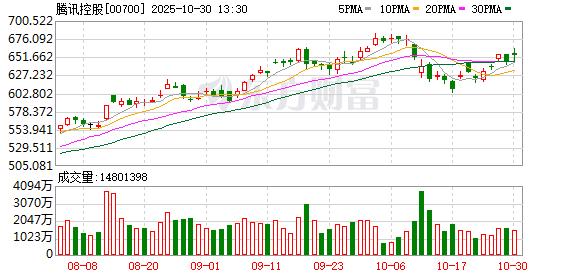
腾讯、蔚来涨逾2%,美的集团前三季度归母净利同比增长19.51%
Mei Ri Jing Ji Xin Wen· 2025-10-30 05:29
Group 1 - The core viewpoint highlights that the Hong Kong technology sector is undergoing a critical phase of value reassessment, driven by a surge in domestic generative AI user adoption, with over 90% of users preferring local models [1] - Major Hong Kong tech companies are not only users of AI technology but also key builders of the industry chain, covering high-growth areas such as software and hardware, new energy vehicles, and innovative pharmaceuticals [1] - The CSI Hong Kong Stock Connect Technology Index shows a significantly lower price-to-earnings ratio compared to the A-share ChiNext Index, with a horizontal discount exceeding 40%, while the vertical AH share premium index continues to converge [1] Group 2 - In terms of financial performance, Midea Group reported a net profit attributable to shareholders of approximately 37.883 billion yuan for the first three quarters, reflecting a year-on-year growth of 19.51% [1] - The influx of southbound funds and global capital is creating a resonance that drives the valuation recovery of the technology sector [1] - The technology sector in Hong Kong is seen as an ideal choice for investing in "new quality productivity" due to its growth potential and valuation advantages in the fourth quarter [1]

Meta AI部门大地震,小扎急派心腹干将「救火」
3 6 Ke· 2025-10-30 04:35
Core Insights - Meta has undergone significant personnel changes in its AI department, with former metaverse head Vishal Shah being reassigned to the role of Vice President of AI Products at Meta Superintelligence Labs, reporting to Nat Friedman [1][3][10]. Group 1: Personnel Changes - Vishal Shah's transition to the AI department is aimed at accelerating the maturity and implementation of Meta's AI products, especially following the underperformance of the Vibes video application [3][5]. - Shah has a long history with Meta, having joined Instagram in 2015 and later leading the metaverse division, which included the development of Horizon Worlds [3][8]. - Nat Friedman emphasized the need for the team to evolve from being just an AI team to becoming an AI company, with Shah playing a crucial role in collaboration and strategy [5][9]. Group 2: Strategic Context - The personnel shift is closely linked to Friedman's recent management performance, particularly after the rapid launch of Vibes, which was overshadowed by competitors like OpenAI [6][7]. - Meta has been aggressively hiring AI talent since 2025, especially after the disappointing launch of the Llama 4 model, leading to multiple reorganizations within the AI team [6][21]. - The integration of Shah is seen as a way to bridge the gap between new leadership and existing teams, enhancing communication and execution of AI strategies [9][22]. Group 3: Future Directions - Shah will oversee the integration of AI technologies into Meta's augmented and virtual reality divisions, which are considered vital for the company's "superintelligence" strategy [11][12]. - The recent personnel changes may mark a turning point for Meta as it transitions from a phase of rapid AI development to one of organizational integration [23].


【PE/VC洞察】《乘AI风,破周期浪》之一:全球AI行业及投资趋势
Sou Hu Cai Jing· 2025-10-30 04:21
Group 1 - The core viewpoint is that the next decade is likely to belong to artificial intelligence (AI), with the global AI market expected to reach nearly $400 billion by 2025 and surpass $1.8 trillion by 2030, reflecting a compound annual growth rate (CAGR) of 37.3% [2][6] - AI's rapid adoption is reshaping both consumer experiences and industrial structures, making it a key area for investment that can potentially navigate economic cycles [2][6] - The article introduces a series titled "Riding the AI Wave, Breaking the Cycle," aimed at providing a systematic perspective on policy trends, trading logic, valuation frameworks, and application implementation [2] Group 2 - The global AI market reached $196.6 billion in 2023 and is projected to grow to $1.81 trillion by 2030, representing a ninefold increase from 2023, driven by advancements in multimodal large models and embodied intelligence [6] - The growth of the AI industry is characterized by the collaborative expansion of hardware, software, and services [7] Group 3 - Hardware is expected to grow at a CAGR of 24.6%, driven by demand for AI chips and data centers, although profit margins may decline due to increased competition [10] - Software is projected to grow at a CAGR of 33.6%, fueled by the lowering of AI development barriers and the rise of generative AI, which has significantly increased demand for large language models and development platforms [11] - The services sector is anticipated to grow at a CAGR of 48.7%, as it plays a crucial role in bridging the gap between AI technology and its practical application in businesses [12] Group 4 - The future of AI will see a shift towards service providers that can offer end-to-end AI solutions, particularly those with deep vertical industry knowledge [13] - Deep learning is expected to grow at a CAGR of 33.5%, driven by architectural innovations and the increasing availability of computational power [16] - Natural language processing (NLP) is experiencing the fastest growth at a CAGR of 48.7%, thanks to breakthroughs in large models and their applications [18] Group 5 - Mergers and acquisitions (M&A) in the AI sector are on the rise, driven by companies seeking to enhance specific capabilities and the interest of private equity and venture capital in AI's long-term growth potential [24] - The increase in M&A activity is attributed to factors such as the need for large-scale language models, the competitive landscape for data and computational resources, and the tightening of global regulations [25][29] Group 6 - Software and related services companies are the most sought-after M&A targets due to their central role in the AI value chain, offering direct delivery of AI capabilities [30] - The future of AI M&A is expected to evolve from a focus on acquiring technology and teams to a more integrated approach that emphasizes ecosystem building [31] Group 7 - The global AI market is transitioning from a trial phase to a commercialization phase, with growth opportunities emerging in infrastructure upgrades, industry empowerment, and innovative applications [33] - AI is moving towards industry-specific solutions, with significant advancements expected in sectors such as healthcare, manufacturing, and finance [35] - Generative AI is transforming human-computer interaction, leading to new business models and applications [36] Group 8 - The Chinese market is becoming a central battleground for AI transformation, supported by policy, talent, and industrial advantages [38] - The narrative of AI is evolving, focusing on reconstructing an intelligent world rather than merely replicating the internet [39]

马斯克最大对手完成变身,史上最大IPO即将来临
创业邦· 2025-10-30 03:34
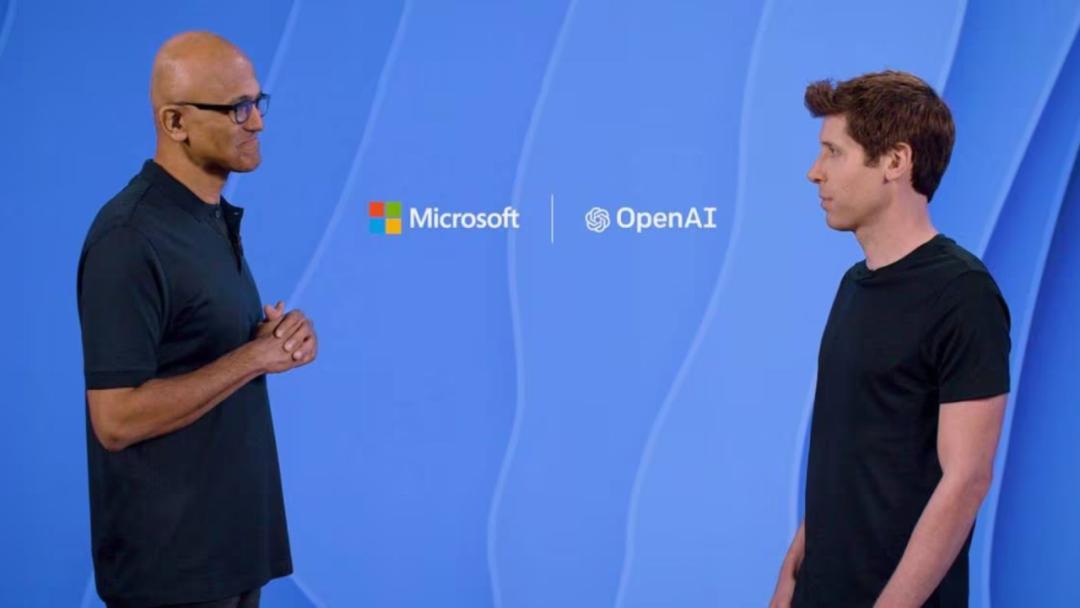
Core Viewpoint - OpenAI has successfully transformed from a non-profit organization to a profit-oriented tech giant, clearing major obstacles for its upcoming IPO, which is expected to be the largest in history, potentially occurring in 2027 [5][7][12]. Group 1: Transformation and Impact - OpenAI's transformation marks a significant shift in the AI industry, positioning it as a leader in the generative AI sector and influencing global infrastructure development [5][7]. - The restructuring process involved intense negotiations with regulators, investors, and competitors, particularly Elon Musk, who has been critical of OpenAI's shift from its original mission [8][12]. Group 2: Financial Structure and Control - OpenAI has adopted a new dual-layer structure, with the non-profit foundation retaining control over the profit-oriented entity, ensuring a balance between commercial interests and public mission [10][12]. - Microsoft remains the largest external investor with a 27% stake, valued at approximately $135 billion, while the non-profit foundation holds about 26% of the equity, valued at around $130 billion [10][12]. Group 3: Strategic Partnerships and Market Reaction - OpenAI's partnerships with major tech companies like Microsoft, Oracle, and Nvidia have led to significant stock price increases for these firms, with a combined market value increase of $630 billion following announcements of related deals [8][12]. - The new agreements with Microsoft include a commitment to purchase $250 billion in cloud services and shared intellectual property rights, while also allowing both companies to independently develop AGI [14][15]. Group 4: Competitive Landscape - Elon Musk's attempts to undermine OpenAI's transformation have included multiple lawsuits and a failed bid to acquire the company, reflecting his desire to regain influence over the AI landscape [18][20]. - Musk's new venture, xAI, aims to compete directly with OpenAI, having quickly developed its own AI models, indicating a rapidly evolving competitive environment in the AI sector [23][24]. Group 5: Future Investments and Risks - OpenAI's ambitious infrastructure investments are projected to exceed $1.5 trillion by 2025, with a focus on building AI data centers and securing necessary computing resources [25][27]. - Despite projected revenues of $4.5 billion in 2025, OpenAI faces significant financial challenges, with expected losses of at least $14 billion and a funding gap of $115 billion by 2029 [31].
马斯克最大对手完成变身,史上最大IPO即将来临
3 6 Ke· 2025-10-30 01:36
Core Insights - OpenAI has successfully completed its transformation from a non-profit organization to a profit-oriented tech giant, paving the way for a potential IPO, expected around 2027, which could set a record for fundraising [1][2][3] Group 1: Transformation and Market Impact - OpenAI's transition has significantly influenced the AI industry and global infrastructure, marking a dramatic shift from its original mission of ensuring AGI benefits all humanity [2][3] - The company has formed strategic partnerships with major tech firms like Microsoft, Oracle, NVIDIA, AMD, and Broadcom, which has tightly bound its interests with the broader AI ecosystem [2][3] - Following the announcement of its transformation, stock prices for NVIDIA and Microsoft surged, reaching new market capitalizations of over $5 trillion and $4 trillion respectively [2] Group 2: Financial Structure and Control - OpenAI's new structure includes a dual-layer system where the non-profit foundation retains control over the profit-oriented entity, OpenAI Group PBC, which is valued at approximately $5 trillion [4][6] - Microsoft remains the largest external investor with a 27% stake, valued at around $135 billion, while the foundation holds about 26% of the equity, valued at approximately $130 billion [4][6] - The restructuring has removed previous financing restrictions, allowing OpenAI to freely raise funds from investors and partners, thus facilitating its path to an IPO [7] Group 3: Strategic Agreements and Investments - OpenAI has committed to significant agreements, including a $500 billion project with Oracle and SoftBank for AI data centers, and a $300 billion cloud computing deal with Oracle [19][21] - The company has also secured a $250 billion cloud service agreement with Microsoft, alongside substantial investments from NVIDIA and AMD for hardware procurement [21][22] - OpenAI's aggressive investment strategy is projected to exceed $1.5 trillion by 2025, with a focus on expanding its AI infrastructure [18][22] Group 4: Competitive Landscape and Challenges - Elon Musk's opposition to OpenAI's transformation has been marked by multiple lawsuits and attempts to undermine its progress, reflecting a personal rivalry stemming from their shared founding of the organization [12][13][14] - OpenAI's financial model faces scrutiny, as its projected expenses significantly outweigh its revenues, leading to anticipated losses of at least $14 billion by 2025 [22][23] - The company's ambitious infrastructure investments are seen as a high-stakes gamble, with the potential to either revolutionize AI or trigger a systemic crisis in the industry [22][23]
EA要用AI加速游戏开发,可打工人却唱起了反调
3 6 Ke· 2025-10-30 00:04
Group 1 - EA has been acquired by a consortium led by Saudi Arabia's Public Investment Fund and Silver Lake Partners for $55 billion, marking the largest all-cash privatization deal in history [1] - The privatization is expected to be completed by Q1 2027, but its effects on EA have already begun to manifest [1] Group 2 - EA has partnered with AI startup Stability AI to integrate generative AI technology into its game development process, aiming to enhance the speed and quality of game asset creation [3] - The collaboration will focus on developing AI models and tools, including a "smart brush" for generating 2D textures and 3D environments with accurate color and lighting [3] Group 3 - Some EA employees express skepticism about the effectiveness of AI tools, claiming that the implementation has made their work more cumbersome rather than efficient [6][8] - Reports indicate that EA's internally developed AI tool, ReefGPT, frequently outputs erroneous code, necessitating manual intervention [6] Group 4 - A humorous meme created by EA employees reflects their confusion and frustration regarding the company's AI strategy, highlighting a disconnect between management's push for AI and employees' understanding of its application [8] - The current landscape of AI in the workplace presents challenges, as employees must adapt to new tools while managing their existing workflows [10] Group 5 - A report from Bain Capital indicates that while over two-thirds of software companies have deployed generative AI tools, actual usage rates among developers remain low, with productivity gains reported at only 10% to 15% [12] - EA's management is aware of the limitations of AI tools but feels compelled to promote them due to financial pressures stemming from a $20 billion debt incurred during the privatization [13] Group 6 - EA's financial performance is declining, with a reported total revenue of $7.4 billion for FY2025, down 0.81% year-over-year, and a net profit of $1.121 billion, down 11.94% [15] - The company has provided a bleak revenue forecast of $7.1 billion for FY2026, indicating significant revenue pressure and a need to cut costs through AI implementation [15]