
自动驾驶

Search documents
突发,603359或终止重大资产重组!科技巨头获爆买超50亿港元
Xin Lang Cai Jing· 2026-01-11 04:57
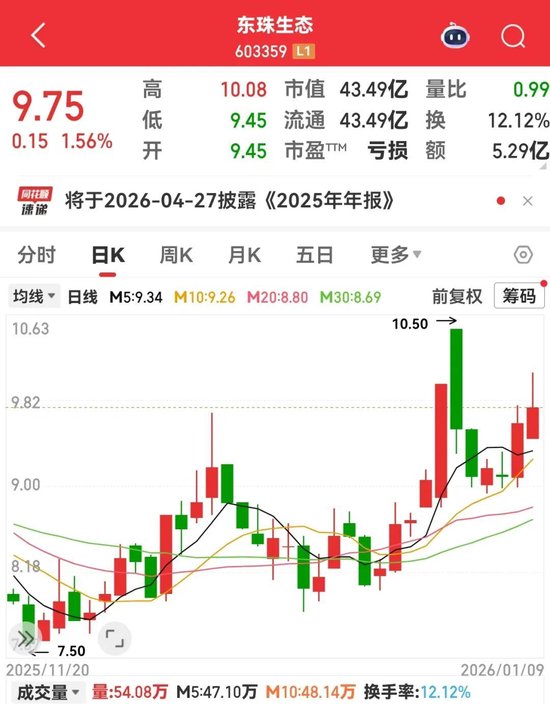
Group 1: East Pearl Ecology - East Pearl Ecology (603359) announced the potential termination of a major asset restructuring involving the acquisition of control over Kai Rui Xing Tong Information Technology (Nanjing) Co., Ltd. due to failure to reach preliminary agreement on valuation and commercial terms [1][11][12] - The target company specializes in satellite communication technology and systems, with products including satellite communication baseband products, terminals, network management systems, and application systems [1][11][12] - If the transaction had been completed, East Pearl Ecology would have achieved a strategic transformation into the satellite communication and space information technology sector, creating a second growth curve [1][12] - Following the announcement of the restructuring plan, East Pearl Ecology's stock price experienced a significant increase, rising 16.35% by January 9 compared to before the announcement [1][12] Group 2: Legal Issues - East Pearl Ecology is involved in a lawsuit against Huai'an Baima Lake Investment Development Co., Ltd. and Huai'an Baima Lake Planning and Construction Management Office over a construction contract dispute, seeking 320 million yuan in damages [2][12] Group 3: Southbound Capital Flow - During the week of January 5 to January 9, southbound capital saw a net inflow of 32.694 billion HKD despite a decline in major Hong Kong stock indices, with the Hang Seng Index falling 0.41% [4][14] - Notable stocks with significant southbound capital inflow included Alibaba-W (53.514 billion HKD), SMIC (31.296 billion HKD), and Tencent Holdings [4][15] - Xiaomi Group-W received the highest net buy amount from southbound capital at 5.089 billion HKD, while China Mobile faced a net sell of 3.45 billion HKD [4][15] Group 4: Stock Performance - Xiaomi Group-W's shareholding by southbound capital has increased for 15 consecutive weeks, reaching 4.716 billion shares valued at 178.375 billion HKD [4][15] - The stock performance of various companies showed mixed results, with notable gains for Kuaishou-W (up 12.75%) and Ping An Insurance (up 4.79%), while China Mobile saw a decline of 3% [6][15] Group 5: Automotive and Technology Sector - Southbound capital has increased holdings in several autonomous driving-related stocks, with notable increases in holdings for Zhongwei New Materials (up 98.99%) and Youjia Innovation (up 84.07%) [18][21] - Zhongwei New Materials has reported over a 30% increase in stock price over the past month, focusing on solid-state battery technology and establishing partnerships with leading clients [19][20]


贾可吴伯凡吴声张晓亮,4万字2025-2026跨年对谈全文(上)
汽车商业评论· 2026-01-10 23:05
Core Viewpoint - The article discusses the evolution and current state of the Chinese automotive industry, highlighting the significance of achieving global sales leadership for domestic brands and the need for industry maturity and strategic resource consolidation [5][31][44]. Group 1: Achievements in the Automotive Industry - In 2025, Chinese domestic brands achieved global sales leadership, with total sales expected to reach 27 million units, surpassing Japanese brands by approximately 2 million units [13][20]. - The domestic market is projected to exceed 34 million units, marking a growth of about 3 million units from the previous year [13][20]. - The automotive industry contributes over 10% to China's GDP, emphasizing its critical role in the national economy [18][25]. Group 2: Industry Challenges and Maturity - The industry faces challenges such as declining profit margins, with the average profit rate rising slightly from 4.3% to 4.4% [35][25]. - There is a need for the industry to transition from aggressive competition to value-based competition, as highlighted by government interventions aimed at curbing price wars and promoting sustainable practices [31][36]. - The government has implemented measures to address industry chaos, including guidelines to prevent arbitrary price reductions and improve supply chain management [34][31]. Group 3: Resource Consolidation and Strategic Adjustments - Traditional automakers are increasingly consolidating resources and streamlining operations to enhance efficiency and competitiveness [45][47]. - Companies like Geely and Dongfeng are integrating their brands to strengthen their market position and improve operational effectiveness [45][47]. - The article emphasizes the importance of strategic focus and resource allocation in navigating the evolving automotive landscape, with companies needing to adapt to new market realities [51][53].

又一批L3上路!二季度将向个人用户开放
Zhong Guo Zheng Quan Bao· 2026-01-10 13:44
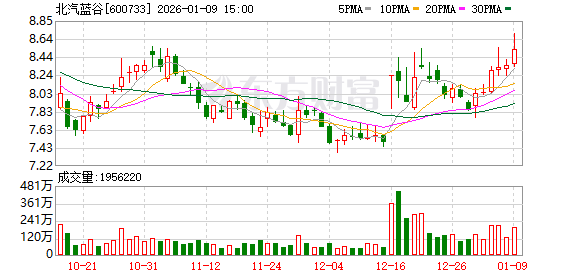
Core Viewpoint - The launch of the L3 version of the Arcfox Alpha S by BAIC New Energy marks a significant step in the commercialization of autonomous driving in China, with plans for trial operations beginning in designated areas [2][5][7]. Group 1: Launch and Operations - BAIC New Energy announced the initiation of trial operations for the Arcfox Alpha S (L3 version) in collaboration with Beijing Mobility, with a focus on safety and a phased approach to opening up to individual users by Q2 2026 [2][6]. - The first batch of 30 L3 autonomous vehicles is set to operate in specific areas of major highways, including the Beijing-Taipei and Daxing Airport highways [3][5]. - The L3 vehicles will initially operate under limited conditions, including specific scenarios, road segments, and speed limits, as part of the regulatory framework for autonomous driving [5][6]. Group 2: Industry Implications - The approval of the L3 autonomous vehicles signifies a transition from technology validation to mass application in the autonomous driving sector, highlighting BAIC New Energy's role as a key player in this evolution [7]. - The collaboration with Pony.ai aims to expand the Robotaxi service globally, with significant progress already made in mass production and operational deployment of the Arcfox Alpha T5 Robotaxi [8]. - The shared mobility market in China is shifting towards high-quality growth, with Robotaxi technology expected to fundamentally optimize the cost structure of the industry and drive the next growth curve [9].

自动驾驶激战CES:黄仁勋硬刚马斯克,中国军团已默默量产破局
Sou Hu Cai Jing· 2026-01-10 13:41
Core Insights - The autonomous driving industry is experiencing a pivotal moment at CES 2026 after years of volatility, with significant technological advancements and a shift towards practical applications [2][54] - The competition is intensifying among major players, including Nvidia, Tesla, Qualcomm, Mobileye, and various Chinese companies, each pursuing different technological and business strategies [4][10][18] Group 1: Nvidia's Role - Nvidia's CEO Jensen Huang introduced the open-source autonomous driving model Alpamayo, which is described as a "ChatGPT moment for physical AI," emphasizing the importance of sensor fusion in autonomous driving [4][7] - The competition between Nvidia and Tesla highlights a broader industry debate between vision-based and sensor-based approaches to autonomous driving [7][8] Group 2: Competitive Landscape - Qualcomm is collaborating with Leap Motor to create an integrated solution that combines cockpit, driving assistance, and vehicle control systems, showcasing a shift towards multi-domain control [10][14] - Mobileye is advancing its L3 solutions in partnership with Audi and is testing a prototype that allows drivers to close their eyes while driving, indicating significant progress in autonomous technology [16] Group 3: Chinese Companies' Innovations - Great Wall Motors is showcasing its ASL architecture, which aims to integrate AI capabilities into vehicles, with plans for ASL 1.0 to be implemented in the first half of the year [18][21] - Geely has announced its upgraded AI 2.0 technology system, which integrates driving, cockpit, and chassis systems, with plans to roll out L3 and L4 functionalities by the end of 2026 [27] Group 4: Market Trends and Business Models - The CES 2026 event indicates a lowering of entry barriers for new players in the autonomous driving sector, with a clear divergence in business models emerging [45][46] - Two primary paths are identified: one focusing on vertical market breakthroughs for profitability in closed environments, and the other targeting the Robotaxi market for broader expansion [51][54] Group 5: Future Outlook - The industry is moving beyond technical validation into commercial viability, with various applications like RoboBus and autonomous delivery vehicles beginning to emerge [51][54] - The next 12 months are critical for the autonomous driving sector, as it transitions into a phase where practical implementations will be tested and scaled [54]



伊朗骚乱,“全国范围”断网,哈梅内伊喊话特朗普;内存涨价潮引爆市场,闪迪大涨37%;韩国回应“无人机入侵朝鲜领空”| 一周国际财经
Mei Ri Jing Ji Xin Wen· 2026-01-10 12:43
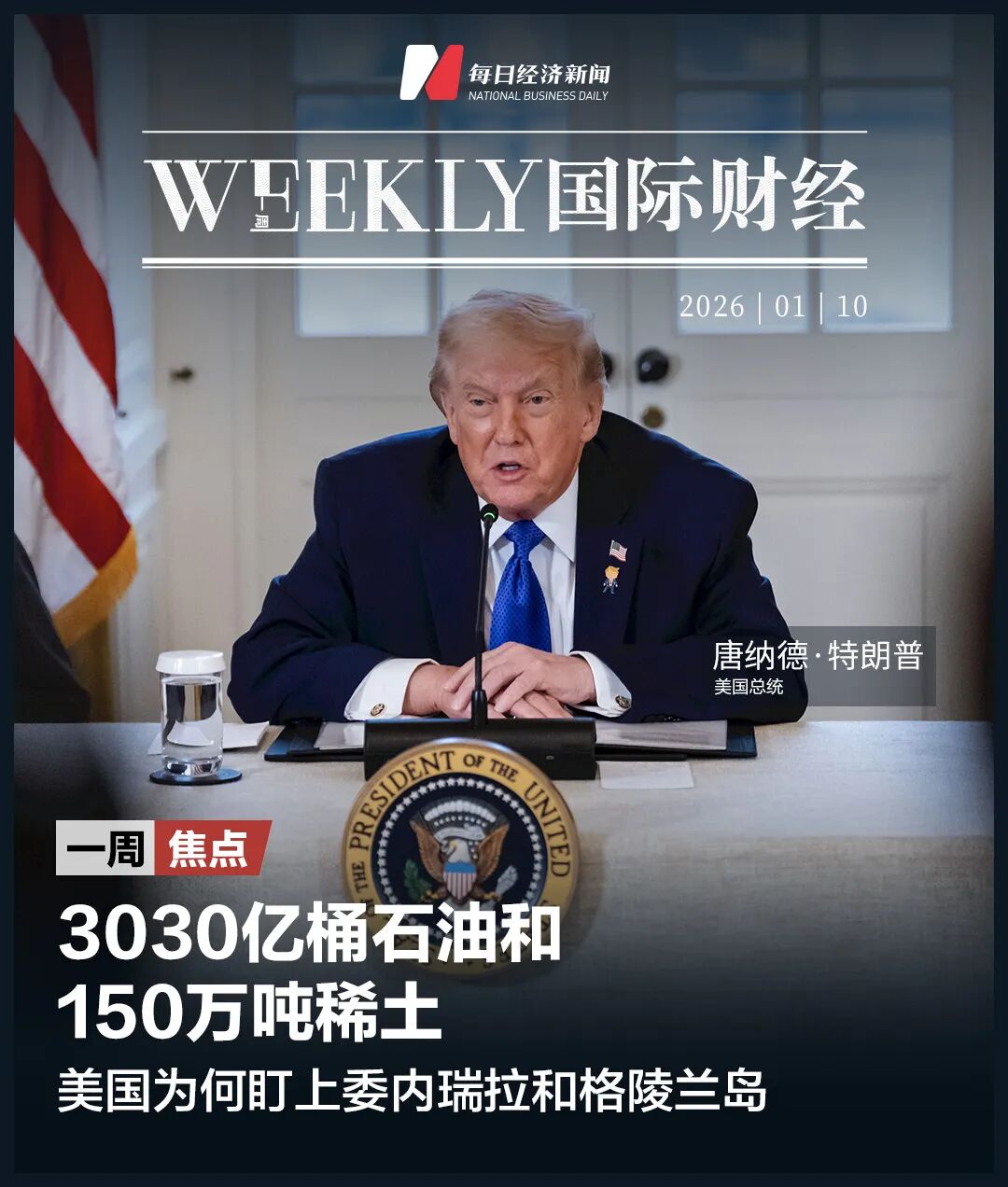
Group 1 - The Trump administration is aggressively targeting Venezuela and Greenland for their vast natural resources, with plans to invest $100 billion to control Venezuela's oil and to acquire Greenland for its rare earth minerals [4][5][10]. - Approximately 20% of global oil trade is now conducted without using the US dollar, and the dollar's share in global foreign exchange reserves has dropped to a record low of 56.92%, indicating a weakening of the dollar's dominance [5][21][24]. - Venezuela holds the world's largest proven oil reserves at 303 billion barrels, which is about 17% of the global total, and the US aims to control its oil sales and production [7][8][9]. Group 2 - Greenland is rich in strategic resources, including 1.5 million tons of rare earth elements, and is considered vital for US national security due to its location and resource wealth [11][12][17]. - The US Secretary of State has prioritized the competition for energy and resource dominance as a key diplomatic objective [6]. - The US government plans to control the sale of Venezuelan oil, with immediate plans to refine and sell up to 50 million barrels, with proceeds being personally overseen by Trump [8][9]. Group 3 - The US is facing a significant debt burden exceeding $38 trillion, which is driving the need to secure stable financing through resource control [25][31]. - The traditional "petrodollar" system, where oil sales are conducted in dollars, is under threat as more countries move towards non-dollar transactions, complicating the US's financial strategy [18][24]. - The US's efforts to regain control over oil and resources are seen as a way to restore confidence in US debt instruments and combat the trend of "de-dollarization" [24][31].


加速推动自动驾驶商业化落地 北汽新能源L3车型开启规模化上路通行试点运营
Bei Jing Ri Bao Ke Hu Duan· 2026-01-10 12:42
Core Viewpoint - The launch of the BAIC Arcfox Alpha S (L3 version) marks a significant step towards the commercialization of autonomous driving in China, with pilot operations beginning on designated highways [1] Group 1: Company Developments - BAIC New Energy is one of the earliest companies in China to invest in autonomous driving technology, achieving coverage from L2 to L4 levels [1] - The company plans to introduce a high-end intelligent connected technology system called "Yuanjing Intelligent" by 2025, which includes a comprehensive safety assurance system [1] - The pilot operation will initially adopt a "B-end first, gradually open" strategy, with plans to open to individual users by the second quarter of 2026 [1] Group 2: Industry Trends - The pilot operation signifies that the autonomous driving industry in China is accelerating towards large-scale commercial implementation [1] - Future models equipped with L3 autonomous driving technology are expected to be launched by BAIC New Energy [1]
2025年汽车以旧换新超1150万辆,全年乘用车零售2374.4万辆
Xinda Securities· 2026-01-10 11:06
Investment Rating - The industry investment rating is "Positive" [2] Core Insights - The report highlights that in 2025, over 11.5 million vehicles will be replaced under the vehicle trade-in program, leading to a total retail of 23.744 million passenger cars, with approximately 54% being new energy vehicles [20][3] - The report indicates a projected growth in the automotive market, with a U-shaped sales trend expected for passenger vehicles in 2026, maintaining overall sales levels similar to 2025 [20] - Key companies to watch include BYD, Geely, Great Wall Motors, and others in the passenger vehicle sector, as well as major players in commercial vehicles and auto parts [3][20] Industry Performance - The A-share automotive sector underperformed the market, with a weekly increase of 2.53% compared to the 2.79% rise in the CSI 300 index, ranking 24th among A-share industries [3][9] - The report notes that the passenger vehicle segment saw a 3.8% year-on-year increase in retail sales, while new energy vehicles experienced a 17.6% growth [20] Key Industry News - The Ministry of Commerce announced that the vehicle trade-in program will exceed 11.5 million vehicles in 2025, contributing to over 1.6 trillion yuan in new car sales [20] - Geely received the largest L3 autonomous driving test license in China, covering an area of 9,224 square kilometers [20] - Baidu's autonomous driving platform, "萝卜快跑," obtained the first full unmanned testing license in Dubai, paving the way for commercial operations [20] Upstream Data Tracking - The report includes tracking of key material prices such as steel, aluminum, and lithium carbonate, which are crucial for automotive manufacturing [23][24]





北汽新能源L3车型开启规模化试点运营,2026年将开放个人用户
Zhong Guo Jing Ying Bao· 2026-01-10 10:24
Core Viewpoint - The launch of the L3 autonomous driving model by BAIC New Energy marks a significant step towards the commercialization of autonomous driving in China, with plans to open to individual users by 2026 [1] Group 1: Pilot Operation - BAIC New Energy's L3 model, the Arcfox Alpha S, has officially begun large-scale pilot operations on designated highways [1] - The pilot will initially focus on B-end operations, gradually opening to individual users starting in the second quarter of 2026 [1] Group 2: Industry Position - BAIC New Energy is one of the earliest companies in China to invest in autonomous driving technology, covering levels L2 to L4 [1] - The company has developed a high-end intelligent connected technology system called "Yuanjing Intelligent," which includes a comprehensive safety assurance system [1] Group 3: Safety Measures - The safety framework consists of a "one core, three rings" system, ensuring robust testing, process assurance, and operational monitoring [1] - BAIC New Energy aims to provide comprehensive safety support through a fully redundant safety architecture [1]

北汽新能源L3车型开启规模化上路通行试点运营 计划2026年面向个人用户开放
Zhong Guo Jing Ying Bao· 2026-01-10 08:19
Core Viewpoint - The launch of the large-scale trial operation of the BAIC Arcfox Alpha S (L3 version) marks a significant step towards the commercialization of autonomous driving in China, indicating accelerated development in the industry [1] Group 1: Trial Operation Details - The first batch of vehicles will operate in designated areas on the Beijing-Taiwan Expressway, Airport North Line Expressway, and Daxing Airport Expressway [1] - The trial operation will adopt a "B-end first, gradually open" strategy to ensure safety and order, with plans to gradually open to individual users starting in the second quarter of 2026 [1] Group 2: Company Background and Technology - BAIC New Energy is one of the earliest companies in China to invest in autonomous driving technology and is the first in the industry to cover levels L2 to L4 [1] - In 2025, BAIC will launch a high-end intelligent connected technology system called "Yuanjing Intelligent," which includes a "one core, three rings" safety assurance system [1] - The company has established a comprehensive safety architecture with robust testing, process assurance, and operational monitoring to ensure vehicle safety [1]
我国科学家创出全新计算架构提升算力
Xin Hua She· 2026-01-10 07:54
Core Insights - The research team from Peking University has developed a novel multi-physical domain fusion computing architecture that utilizes post-Moore new devices to support Fourier transforms, achieving nearly a fourfold increase in computing power, which opens new possibilities in fields such as embodied intelligence, edge perception, brain-like computing, and communication systems [1][2]. Group 1: Technological Advancements - The new computing architecture allows for various computational methods to be executed in their suitable physical domains, such as current, charge, and light, enhancing computational efficiency [2]. - The integration of volatile vanadium oxide devices and non-volatile tantalum/hafnium oxide devices has created a hardware system capable of diverse computational methods, including Fourier transforms [1]. Group 2: Performance Improvements - The new framework has improved the speed of Fourier transform calculations from approximately 130 billion operations per second to about 500 billion operations per second, representing a significant increase in computational speed [2]. - The innovative computing framework is expected to overcome the challenges of expanding the operator spectrum of post-Moore new devices, enabling them to support multiple computational methods effectively [2].