全球资产配置

Search documents
你抛美债,我抛中债?境外纷纷减持中国债,大量资金流向美国?
Sou Hu Cai Jing· 2025-11-20 22:41
Core Insights - The trend of foreign investors reducing their holdings in Chinese bonds while increasing their investments in U.S. Treasuries is noteworthy and reflects underlying economic factors [1][3][10] Group 1: Data Analysis - As of October 2025, foreign institutions held approximately 3.2 trillion yuan in Chinese bonds, a decrease of about 11.1% from 3.6 trillion yuan in the same period of 2024 [1] - In contrast, foreign investors net increased their holdings of U.S. Treasuries by approximately 280 billion dollars in the first three quarters of 2025, with a significant portion coming from Asia [1][3] Group 2: Economic Factors - The divergence in interest rate policies between China and the U.S. is a primary factor influencing this trend, with U.S. 10-year Treasury yields around 4.2% compared to China's 2.8%, creating a yield spread of 1.4 percentage points [3] - Currency fluctuations also play a critical role, as the Chinese yuan has depreciated by about 3.5% against the dollar since the beginning of 2025, impacting the total returns for foreign investors [3][10] Group 3: Investor Behavior - The reduction in Chinese bond holdings is primarily driven by hedge funds and short-term investment funds, which are more sensitive to yield changes [4] - Approximately 60% of the foreign investors reducing their Chinese bond holdings are private investment institutions, while 40% are official institutions, indicating that market-driven factors are predominant [4] Group 4: Market Fundamentals - The fundamentals of the Chinese bond market remain robust, with stable economic growth, sound fiscal conditions, and low default risk supporting the attractiveness of Chinese bonds [5][10] - The ongoing improvement of market access mechanisms, such as Bond Connect and QFII, is expected to enhance the investment environment for foreign investors [6][7] Group 5: Long-term Outlook - Historical trends suggest that the current adjustments may be temporary fluctuations within a longer-term upward trajectory of foreign participation in the Chinese bond market [4][10] - The internationalization of the yuan and its increasing use in global trade may enhance the demand for Chinese assets in the future [9] Group 6: Market Dynamics - The competition and cooperation between the Chinese and U.S. bond markets are likely to persist, fostering improvements in both markets [8] - The stability and predictability of regulatory policies are crucial for maintaining investor confidence in the Chinese bond market [8][10]


恒生投资凌子敬:香港ETF可成为内地投资者全球配置的重要抓手
2 1 Shi Ji Jing Ji Bao Dao· 2025-11-20 12:00
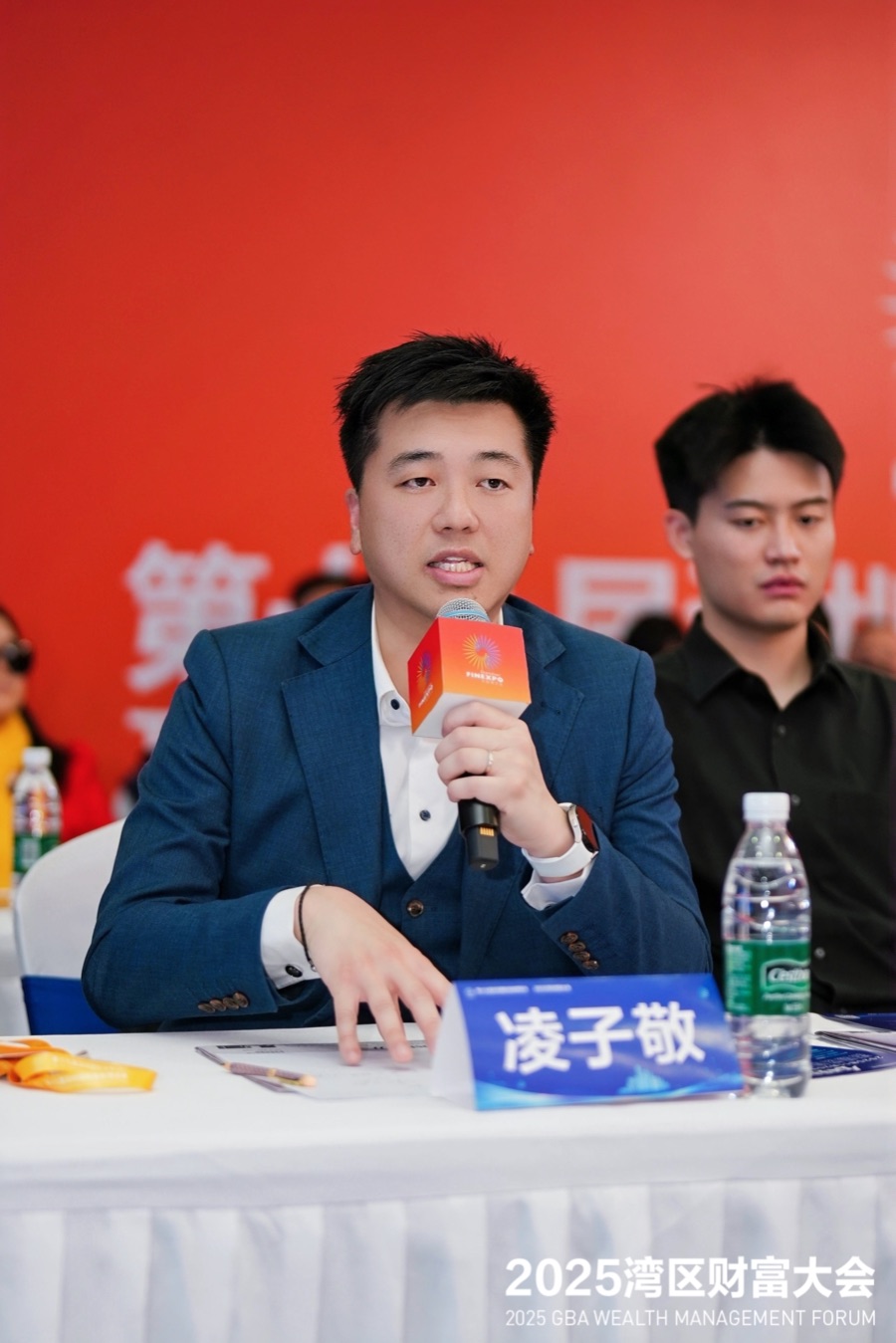
凌子敬表示,整体来看,香港ETF市场在资金流入、品种创新上呈现良好发展态势,随着互联互通渠道的完善,为内地投资者 提供了低门槛、低成本的参与路径。未来,随着品种持续丰富,香港ETF有望成为内地投资者全球资产配置的重要抓手。 2025湾区财富大会由21世纪经济报道、深圳金博会运营发展有限公司联合主办,广东粤港澳大湾区研究院、湾区金融大咖会提 供智库支持。 据凌子敬介绍,目前香港市场共有约200多只ETF,品种覆盖广泛,不仅包含港股、A股相关标的,还有恒生科技、港股红利等 风格类产品,同时涵盖美股、日本股票、亚洲地区股票组合等跨境标的,能满足不同投资者的配置需求。 凌子敬从资金流入的角度,分析了近年香港ETF市场结构变化。其中,一大变化是整体资金流入大幅提升;另一大变化则是品 种偏好从宽基转向科技与红利,特别是今年恒生科技相关ETF表现更为突出,年初至今资金流入超300亿港币,成为最热门的品 种之一,红利相关的ETF亦有超过160亿港元流入。 21世纪经济报道记者庞成深圳报道 今年以来,港股市场表现强势,大量投资者希望通过多元方式参与港股投资,香港ETF市场因此迎来显著的资金流入,成为市 场关注的焦点。 11月2 ...
汇丰:加码财富管理服务 助力打造大湾区优质生活圈
2 1 Shi Ji Jing Ji Bao Dao· 2025-11-20 07:43
Core Insights - The Greater Bay Area (GBA) is experiencing accelerated integration and development, with increasing cross-border financial and wealth management service demands driven by the growing movement of people between Hong Kong and mainland China [1][6][12] Group 1: Financial Services Demand - There is a noticeable increase in both "southbound" and "northbound" customers seeking financial services, indicating a diverse demand for banking and wealth management in the GBA [1][6] - HSBC has expanded its personal banking and wealth management services in the region to cater to the evolving needs of residents [1][6] Group 2: Service Enhancements - HSBC is investing in digital channels and enhancing branch service capabilities to improve customer experience and meet the rising cross-border service demands [3][5] - New flagship wealth management branches have been opened in Shenzhen and Guangzhou, featuring innovative service areas and community engagement activities [3][5] Group 3: Wealth Management Opportunities - The GBA is identified as one of China's wealthiest regions, presenting significant growth opportunities in the wealth management market as residents accumulate wealth and seek diversified global asset allocation [6][12] - HSBC offers a variety of products for global asset allocation, including QDII and QDLP funds, to meet the needs of clients in both mainland China and Hong Kong [6][7] Group 4: Comprehensive Financial Services - HSBC is developing a comprehensive financial service system to address the diverse needs of GBA residents, focusing on personal and family health, retirement, wealth management, and insurance [9][10] - The bank has established health management centers and partnerships with medical institutions to enhance the healthcare experience for clients in the GBA [10] Group 5: Future Outlook - The GBA's population exceeds 87 million, leading to a substantial demand for financial services related to retirement and wealth management, with long-term growth potential in these areas [12] - HSBC is committed to expanding its operations in the GBA, viewing it as a strategic priority for business development and investment [12]


【申万宏源策略】双宽驭险,中期伏波——申万宏源2026年全球资产配置投资策略
申万宏源证券上海北京西路营业部· 2025-11-19 07:05
申万宏源策略 【申万宏源策略】双宽驭险,中期伏波——申万宏源2026年全球资产配置投资策略 原创 阅读全文 ...

恒生科技指数高开涨0.37%,外资一致看好长期配置价值
Mei Ri Jing Ji Xin Wen· 2025-11-19 02:14
Core Viewpoint - The Hong Kong stock market, particularly the technology sector, is attracting foreign investment due to its low valuation compared to historical averages and growth potential amid global market volatility [1][1]. Group 1: Market Performance - On November 19, the Hang Seng Index opened up by 0.09%, while the Hang Seng Tech Index rose by 0.37% [1]. - Baidu Group saw an increase of over 2%, and XPeng Motors rose nearly 2%, while Xiaomi Group experienced a decline of nearly 2% [1]. Group 2: Investment Trends - According to a Morgan Stanley report, despite significant gains in the MSCI Hong Kong Index this year, its valuation remains below the ten-year average, making it one of the cheapest stock markets in the Asia-Pacific region, excluding ASEAN [1]. - As of the end of September, passive funds have cumulatively flowed into the Chinese stock market amounting to $18 billion this year [1]. Group 3: Sector Focus - The technology sector in Hong Kong has become a focal point for foreign investment, with institutions viewing it as having both valuation safety margins and industry growth potential [1]. - Analysts suggest that with the stabilization of the local economy, recovery of the IPO market, and improvement in global liquidity due to the Federal Reserve's interest rate cuts, the tech sector in Hong Kong is likely to continue gaining revaluation momentum [1]. Group 4: Future Outlook - Morgan Stanley anticipates that the upward trend in the Hong Kong tech sector will extend until 2026, providing long-term investment opportunities for investors [1].
外资新设独资公募入局!养老FOF再迎新品,规模较小问题待解
Bei Jing Shang Bao· 2025-11-18 11:40
Core Insights - The first foreign-funded wholly-owned public offering of a pension target fund (Pension FOF) is set to launch, with Fidelity Fund becoming the first foreign entity to introduce a pension FOF in China [1][3] - As of November 18, 2023, a total of 10 pension FOFs have been established this year, with a combined issuance scale of approximately 3.67 billion [4][5] - The introduction of the pension FOF by Fidelity is seen as a significant step in enhancing the pension financial system in China, aiming to provide a comprehensive pension solution for domestic investors [3][6] Fund Launch Details - Fidelity Fund announced the launch of the Fidelity Renyuan Conservative Pension Target One-Year Holding Mixed Fund (FOF) on November 18, 2023, with public sales scheduled from December 1, 2025, to February 27, 2026, and a minimum issuance of 200 million shares [3] - The fund's performance benchmark includes global assets such as the Hang Seng Index, S&P 500, and gold, marking it as the first pension FOF in the market to incorporate overseas market indices [3] Market Challenges - The average scale of newly launched pension FOFs is relatively small, with the largest fund, Qianhai Kaiyuan Kangyue Stable Pension One-Year Holding Mixed Fund, reaching 2.26 billion, while others fall below 1 billion [5] - A total of 10 pension FOFs have been liquidated this year due to insufficient scale, with many existing products also facing similar challenges [5][6] - The small scale of pension FOFs is attributed to a high number of offerings, varying product quality, and a preference among sales channels for higher-fee products [6] Future Outlook - Experts suggest that enhancing the competitiveness and performance of pension FOFs is crucial for their growth, recommending diversification through the inclusion of assets like gold and overseas investments [6] - The transformation of pension FOFs from niche products to mainstream options is contingent upon policy support and improved institutional performance [6]

富达首发养老FOF 以全球智慧打造稳健养老策略
Zhong Zheng Wang· 2025-11-18 03:37
该产品的拟任基金经理赵强于2022年加入富达,拥有十多年投资管理经验,尤其擅长从全球视野深入把 握宏观环境进行资产配置。他同时也是富达基金多元资产部负责人、养老投资业务负责人,以及富达在 中国市场的首只FOF——富达任远稳健三个月持有混合型基金中基金的基金经理。 赵强表示:"我们此次推出的养老FOF,其业绩比较基准中包含了恒生、标普500和黄金等全球资产,是 目前市场上首只在基准中包含海外市场指数的养老FOF基金。这一设计不仅体现了我们对全球资产配置 的前瞻性思考,更旨在通过全球多元布局,为国内养老人群提供更具韧性的投资组合。同时,该基金背 后还有来自富达全球研究网络、养老投资顾问郑任远先生,以及人工智能和金融科技团队的协作和支 持,助力我们更好地服务于中国投资者的养老需求。" 富达基金管理(中国)有限公司总经理孙晨表示:"养老是关乎国计民生的重要事业,也是富达尤其能贡 献价值的领域之一,更是我们在中国的长期战略核心支柱。此次养老FOF的推出,标志着我们在中国养 老金融领域迈出了坚实的一步,借此,我们能够把富达在养老投资领域的国际经验及产品布局有序地引 入并落地中国市场,逐步为中国投资者打造覆盖全生命周期的养 ...
跨境ETF规模较年初增长超117%
Zheng Quan Ri Bao· 2025-11-16 17:18
Core Insights - The recent surge in cross-border ETF trading activity has led to significant growth in the market, with total assets reaching 923.78 billion yuan as of November 16, marking an increase of over 117% since the beginning of the year [1][4]. Group 1: Market Dynamics - The growth of cross-border ETFs is driven by investors' ongoing demand for global asset allocation and the improvement of product attributes, which has expanded the investment landscape [1]. - The performance of Hong Kong stock ETFs has been particularly notable, leading in both investment returns and asset growth, thus becoming a key growth engine in the cross-border ETF sector [1][4]. Group 2: Premium Situation - Several cross-border ETFs, including the Southern S&P 500 ETF (QDII) and Huaxia Nasdaq 100 ETF (QDII), have recently issued warnings about significant premium risks in secondary market trading, with the Southern S&P 500 ETF (QDII) showing a premium of over 5% as of November 14 [2][3]. - The premium situation is attributed to three main factors: heightened demand for cross-border assets, the asynchronous nature of net value updates compared to foreign market trading, and external market volatility affecting redemption efficiency [2]. Group 3: Performance of Hong Kong Stock ETFs - Hong Kong stock ETFs have shown remarkable performance, with several achieving net value growth rates exceeding 50% this year, and five ETFs surpassing 90% growth [5]. - The investment focus on innovative pharmaceuticals and technology sectors has been a significant driver of the high net value growth rates for Hong Kong stock ETFs [5]. - Market sentiment for Hong Kong stocks is expected to improve, with potential for a technical rebound, as core assets in the Hong Kong market exhibit substantial upward elasticity [5].
专家:财富增值可关注科技行业、事件驱动型收益、全球资产配置
Zhong Guo Jin Rong Xin Xi Wang· 2025-11-16 10:23
Core Insights - The event "Zijin Wealth Management - Smart Financial Cube 2025 Annual Closed-door Private Sharing Conference" highlighted key investment opportunities for 2026, emphasizing the importance of technology sector selection, event-driven returns, and global asset allocation capabilities [1] - Experts discussed the inclusion of gold as a safe-haven asset in family asset allocation, along with a focus on dividend assets, retirement-related sectors, and data assets as new opportunities [1] Group 1: Wealth Management Innovations - The event featured discussions on wealth management innovation practices and investment strategies for high-net-worth clients [1] - The collaboration between Licaimofang and Huaxia Bank aims to combine intelligent investment research with high-end financial services, providing a one-stop wealth management solution [1] Group 2: Smart Account Product - Licaimofang's core product, the Smart Account, allows clients to access personalized investment services with a minimum investment of 300,000 to 500,000 yuan, breaking traditional high-threshold barriers [2] - The Smart Account supports automated follow-up investments and intelligent regular investments, enabling clients to enjoy professional asset allocation without constant monitoring [2] Group 3: Comprehensive Advisory Services - Huaxia Bank's investment advisor shared insights on macroeconomic trends and a comprehensive advisory service model that integrates investment banking, commercial banking, and private banking [2] - The bank's "1+1+N" service team structure includes dedicated client managers, senior private banking managers, and expert investment advisory teams, along with a scientific asset allocation recommendation of 40% base assets, 30% stable appreciation, 20% reduced correlation, and 10% income-generating assets [2]
资管一线 | 规模超9000亿元,跨境ETF缘何成资产配置“新宠”?
Xin Hua Cai Jing· 2025-11-14 14:47
Core Insights - The popularity of cross-border ETFs has surged in 2023, with the number of domestic cross-border ETFs increasing from 139 to 191 and total assets growing from 428.48 billion to 928.62 billion yuan, indicating a doubling in size within ten months [2][5] - The investment landscape for cross-border ETFs is expanding, now including emerging markets in Latin America, as evidenced by the recent listing of two Brazilian ETFs on domestic exchanges [2][5] - Despite the growth, high premium risks are emerging as a significant concern for investors, with instances of ETFs trading at prices significantly above their net asset values [7][9] Investment Trends - Cross-border ETFs are defined as those tracking indices outside of A-shares and listed on domestic exchanges, becoming increasingly attractive to investors seeking global asset allocation [2][5] - The core markets for these ETFs remain Hong Kong and the US, with Hong Kong-related products accounting for 74.69% of the total market size, while US-related products make up 17.72% [5][6] - The top 22 cross-border ETFs have assets exceeding 10 billion yuan, with several surpassing 40 billion yuan, highlighting a pronounced head effect in the market [5][6] Risks and Concerns - High premium rates pose a risk, as seen with the Huaxia Nomura Nikkei 225 ETF, which maintained a premium rate above 5% since November 5, prompting warnings from the fund manager [7][9] - Historical instances of extreme price movements and high turnover rates have raised alarms, with the Jiashi Germany DAX ETF experiencing a 61.27% price increase over 13 trading days earlier this year [8][9] - The underlying causes of high premiums include market sentiment and the inefficacy of arbitrage mechanisms during extreme market conditions, leading to sustained premium situations [9][10] Future Outlook - Experts believe that the cross-border ETF market has significant growth potential, driven by increasing global asset allocation needs among domestic investors [6][10] - The ongoing opening of China's financial markets and the growing wealth of residents are expected to further enhance the demand for cross-border ETFs [10]