
太空算力

Search documents
全球股市大反攻!A股超4800家上涨,cpo、太空光伏涨停潮
Sou Hu Cai Jing· 2026-02-03 09:53
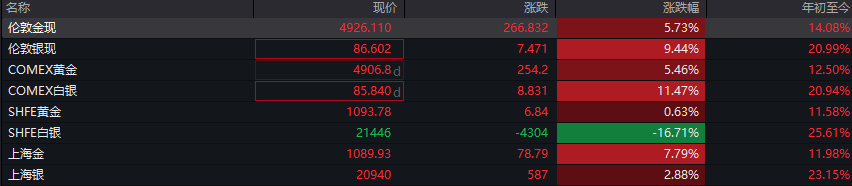
昨天给大家分析过,全球股市暴跌更多是流动性冲击导致的非理性下跌,并没有破坏牛市的趋势,昨晚黄金、白银期货 反弹,美股也是低开高走,显示在大量杠杆爆仓后流动性冲击已经缓解。今天贵金属继续反弹,现货黄金重新站上4900 美元/盎司,日内涨超5%;现货白银报86.10美元/盎司,日内涨8.7%。 | 名称 | 现价 | 淵跌 | 涨跌幅 | 年初至今 | | --- | --- | --- | --- | --- | | 伦敦金现 | 4926.110 | 266.832 | 5.73% | 14.08% | | 伦敦银现 | 86.602 | 7.471 | 9.44% | 20.99% | | COMEX黄金 | 4906.8 d | 254.2 | 5.46% | 12.50% | | COMEX白银 | 85.840 d | 8.831 | 11.47% | 20.94% | | SHFE黄金 | 1093.78 | 6.84 | 0.63% | 11.58% | | SHFE自银 | 21446 | -4304 | -16.71% | 25.61% | | 北海会 | 1089.93 | 78.79 | ...

马斯克大动作!8.7万亿,史上最大独角兽诞生,中国如何突围?
创业邦· 2026-02-03 09:09
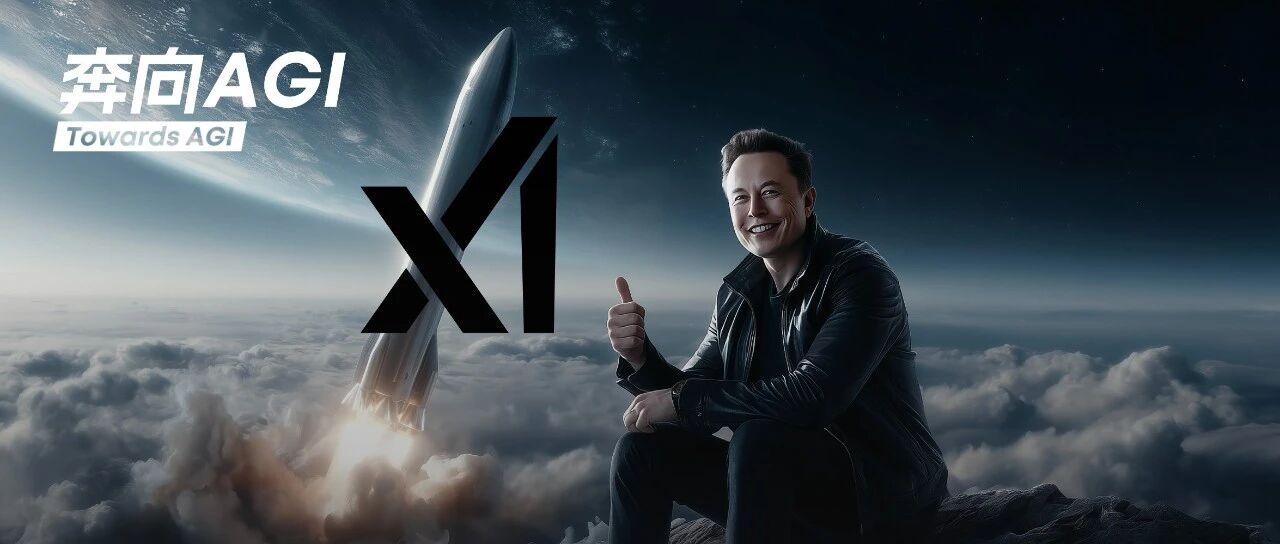
Core Viewpoint - SpaceX is shifting its strategy from merely connecting the Earth to providing computational resources through a proposed deployment of up to 1 million satellites, aiming to create a "space AI empire" valued at approximately $1.25 trillion [2][10]. Group 1: SpaceX's Strategic Shift - SpaceX has applied to deploy up to 1 million satellites, marking a fundamental shift in its strategy towards providing computational capabilities rather than just connectivity [2][5]. - The acquisition of xAI for stock is a critical component of this strategy, with SpaceX's valuation at around $1 trillion and xAI at approximately $250 billion [2][10]. - The goal is to establish a massive computational system in low Earth orbit, utilizing solar energy and enabling AI model inference and machine learning [8][10]. Group 2: Competitive Landscape - The near-Earth orbit is expected to become crowded, with China also applying for approximately 203,000 satellite frequency resources [4][5]. - The competition is driven by a "first come, first served" rule, with significant implications for information sovereignty and resource allocation in space [5][6]. - Other players, including China's satellite network initiatives, are responding to SpaceX's aggressive strategy by submitting their own satellite constellation plans [13][32]. Group 3: Business Model Transformation - SpaceX is transitioning from a telecommunications company charging for internet access to a cloud computing company renting out computational power, expanding its market potential from billions to trillions [18][19]. - The new model will allow SpaceX to compete directly with established cloud service providers like Amazon AWS and Microsoft Azure [20][29]. - The anticipated cost advantages of space-based computation could disrupt the AI industry by providing a more efficient means of generating AI computational power [20][21]. Group 4: Technological and Regulatory Challenges - The deployment of 1 million satellites poses significant technical challenges, including the need for advanced radiation-resistant chips and high-speed inter-satellite communication [23][24]. - Regulatory approval for such a large-scale deployment is uncertain, as previous applications for smaller satellite constellations have faced delays [24]. - The successful execution of this plan will require overcoming substantial logistical and operational hurdles, including the need for a high frequency of launches [24][25]. Group 5: Implications for Global Technology Landscape - SpaceX's strategy could redefine the competitive landscape for cloud computing and AI, creating a globally distributed computational network that is not bound by geographical or political constraints [29][30]. - This shift may lead to a new type of technology giant that controls orbital computational resources, fundamentally altering the infrastructure of the digital economy [46]. - The race for orbital resources is not just a commercial competition but also a strategic maneuver in the context of global power dynamics [6][29].
港股收盘 | 恒指收涨0.22% 加税传闻扰动科网股 商业航天、有色金属强势反弹
Zhi Tong Cai Jing· 2026-02-03 08:54
Market Overview - The Hong Kong stock market experienced volatility, with the Hang Seng Index closing up 0.22% at 26,834.77 points, while the Hang Seng Tech Index fell 1.07% to 5,467.26 points, reflecting a mixed performance across sectors [1] - Huatai Securities noted that the recent "Wash Trade" led to a global risk-off sentiment, causing liquidity pressure and a decline in commodities and Asian markets, but they believe the adjustment is more technical and emotional, with a positive medium-term outlook for Chinese assets [1] Blue-Chip Stocks Performance - Tencent (00700) saw a significant drop of 2.92%, closing at 581 HKD, contributing to a decline in the Hang Seng Index by 59.56 points, influenced by rumors regarding potential tax adjustments on high-margin sectors like financial services and internet value-added services [2][7] - Other notable blue-chip movements included a rise of 8.09% for CSPC Pharmaceutical Group (01093) and a decline of 2.42% for both Semiconductor Manufacturing International Corporation (00981) and China Unicom (00762) [2] Sector Highlights - The technology sector faced pressure due to tax rumors, with Tencent dropping over 6% at one point, while gold and silver prices rebounded significantly, with gold rising over 5% to 4,916.6 USD/oz [3][4] - The commercial aerospace sector gained attention with SpaceX's acquisition of xAI, valued at approximately 1.25 trillion USD, which is expected to benefit the domestic space photovoltaic industry [5] - The engineering machinery sector showed resilience, with a reported 13.2% year-on-year increase in export trade, driven by strong demand for excavators [7] Notable Stock Movements - Ying Si Intelligent (03696) reached a new high, closing up 14.52% at 69 HKD, following milestone payments related to its clinical trial project [8] - CIMC Group (000039) also performed strongly, closing up 14.98% at 9.98 HKD, with significant deliveries in data center business and a robust order book in the marine engineering sector [9] - The AI model companies, MINIMAX (00100) and Zhizhu (02513), saw increases of 10.98% and 8.28% respectively, following the release of new models [9]

港股收盘(02.03) | 恒指收涨0.22% 加税传闻扰动科网股 商业航天、有色金属强势反弹
智通财经网· 2026-02-03 08:46
Market Overview - The Hong Kong stock market experienced volatility, with the Hang Seng Index closing up 0.22% at 26,834.77 points, while the Hang Seng Tech Index fell 1.07% to 5,467.26 points, reflecting a mixed performance across sectors [1] - Huatai Securities noted that the recent "Wash Trade" triggered a global risk-off sentiment, leading to liquidity pressures and declines in commodities and Asian markets, but they believe the adjustment is more technical and emotional, with a positive medium-term outlook for Chinese assets [1] Blue-Chip Stocks Performance - Tencent (00700) saw a significant drop of 2.92%, closing at 581 HKD, contributing to a decline in the Hang Seng Index by 59.56 points, influenced by rumors regarding potential tax adjustments targeting the financial and internet sectors [2][7] - Other notable blue-chip movements included a rise of 8.09% for CSPC Pharmaceutical Group (01093) and a decline of 2.42% for both Semiconductor Manufacturing International Corporation (00981) and China Unicom (00762) [2] Sector Highlights - The technology sector faced pressure due to tax rumors, with Tencent dropping over 6% at one point, while gold and silver prices rebounded significantly, with gold rising over 5% to 4,916.6 USD/oz and silver increasing by over 9% [3][4] - The commercial aerospace sector gained attention with SpaceX's acquisition of xAI, valued at approximately 1.25 trillion USD, which is expected to benefit the domestic space photovoltaic industry [5] - The engineering machinery sector showed resilience, with a reported 13.2% year-on-year increase in export trade, driven by strong demand for excavators [7] Notable Stock Movements - Ying Si Intelligent (03696) reached a new high, closing up 14.52% at 69 HKD, following milestone payments related to its clinical trial project [8] - CIMC Group (02039) also performed strongly, closing up 14.98% at 9.98 HKD, with significant deliveries in its data center business and a robust order book in its marine engineering segment [9] - MiniMax (00100) and Zhiyuan (02513) both saw gains, with increases of 10.98% and 8.28% respectively, following the release of new AI models [10]
估值1.25万亿SpaceX刚宣布收购xAI,爱泼斯坦邮件就曝光?马斯克得罪谁了?
Sou Hu Cai Jing· 2026-02-03 08:26
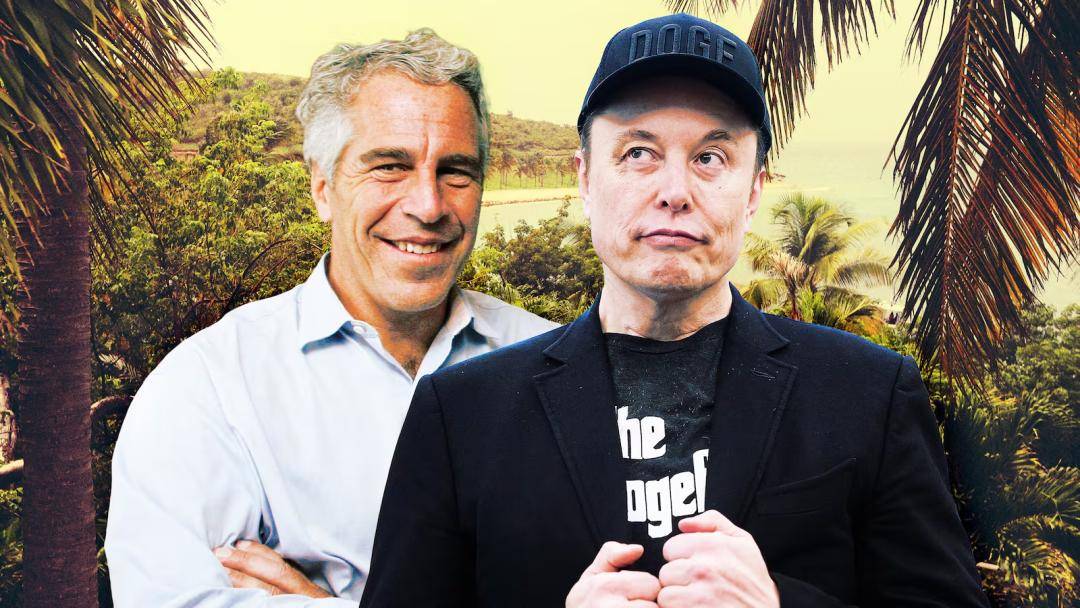
这两天科技圈最大的新闻,莫过于马斯克旗下公司的大动作了。SpaceX宣布收购xAI,估值飙到1.25万亿美元,还有个500亿美元的融资计划,这阵仗,真可 谓"地球及外最具雄心的创新引擎"。紧接着,SpaceX又向美国政府申请,要发射100万颗卫星,搞一个环绕地球的轨道数据中心。想想看,用太空无限的太 阳能来驱动AI算力,再通过星链传回地球,一个"能源-算力-通信"的太空闭环好像就在眼前了。从回收火箭到布局太空算力,你不得不承认,马斯克在拓展 技术边界上,确实敢想敢干,改写了我们对怎么利用宇宙资源的想象。 但关键在于,突破的代价和初衷是什么? 真正的进步,不该以独占全人类的公共资源为代价,更不能用科技的未来光环,去漂白过去的道德污点。想想 看,如果一边喊着"推动人类文明",一边把本属于全人类的太空轨道圈成自家后院,一边又和涉嫌侵害未成年人的罪犯私下往来甚密,那所谓的"创 新"与"进步",是不是就沾染上了一层难以擦洗的功利和虚伪? 你看,一边是冲向星辰大海的宏大叙事,一边却是跟性犯罪罪犯扯不清的暧昧往来。 这时间点卡得这么准,难免让人怀疑,这万亿估值和百万卫星的爆炸 性新闻,是不是一场精心设计的"舆论转移术"?在 ...
马斯克将SpaceX与xAI合体,估值飙至8.7万亿,或批量造就亿万富翁
Sou Hu Cai Jing· 2026-02-03 08:26
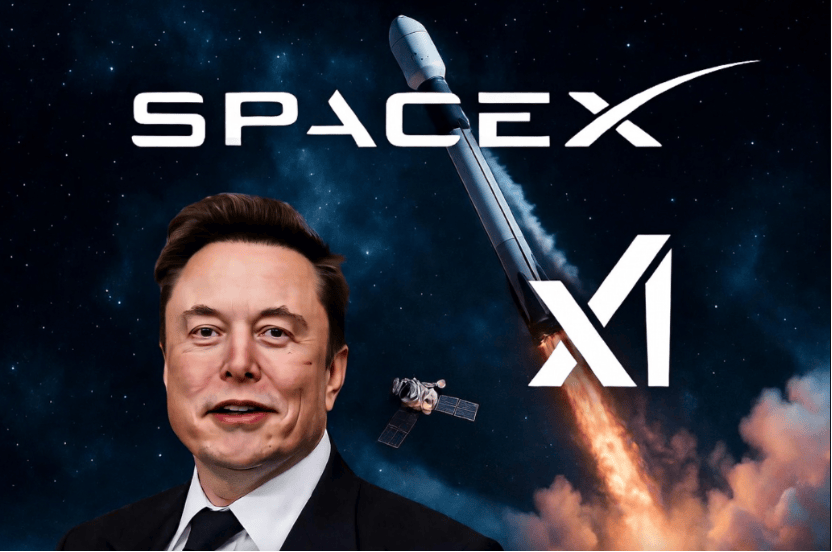
出品|搜狐科技 作者|郑松毅 编辑|杨锦 北京时间2月3日,马斯克旗下商业航天巨头SpaceX正式官宣收购马斯克AI大模型独角兽xAI,合并后总估值直接飙升 至1.25万亿美元(约合人民币8.71万亿元),这一数额已经逼近科技巨头Meta(1.79万亿美元)。 据知情人士透露,合并后,SpaceX预计将股票定价为每股526.59美元(约合人民币3657.96元)。 这起横跨航天与AI的并购案,不只是资源合并,更是一场"太空基建救AI,AI铸航天灵魂"的双向救赎,也是马斯克为 人类星际文明布局的又一步疯狂豪赌。 "1+1>2",xAI员工赢麻了 这场被业内戏称为"马斯克帝国大一统"的收购,并不是"左手倒右手"的简单操作,每一步举措里,都藏着马斯克的缜 密逻辑。 据悉,本次收购交易采用了股权置换模式,xAI股东拿着手中股权,可以直接兑换SpaceX对应份额(XAI与SpaceX设 定的股份交换比例为0.1433),部分核心高管还能选择现金"落袋为安"(按每股75.46美元)。 业内分析,合并后xAI将直接接入SpaceX的万亿级IPO轨道,这意味着,对于早期加入xAI或部分高管而言,手中的股 权价值短短2-3年内 ...
xAI员工赢麻了!全员换股SpaceX,AI月烧10亿美元终于有人兜底了
AI前线· 2026-02-03 07:36
Core Viewpoint - The acquisition of xAI by SpaceX is a strategic move to create a vertically integrated innovation engine that combines space technology with AI capabilities, aiming to revolutionize computational power in space [2][8][20]. Group 1: Acquisition Details - SpaceX plans to acquire xAI, with a combined company valuation of approximately $1.25 trillion, significantly higher than xAI's current valuation of around $250 billion [2][20]. - The acquisition is structured as an all-stock transaction, with xAI investors receiving 0.1433 shares of SpaceX for each share of xAI they hold [2]. - The merger aims to leverage SpaceX's resources and infrastructure to enhance xAI's capabilities and address its financial challenges [19][21]. Group 2: Strategic Vision - Elon Musk envisions a future where AI computation costs are lowest in space, driven by the unique advantages of the space environment, such as reduced cooling needs and abundant solar energy [9][12]. - The integration of xAI into SpaceX is expected to transform AI from merely a model development company into a system-level capability that supports various applications, including communication and real-time world modeling [19][23]. - Musk's ambition includes deploying a significant number of satellites to create a "orbital data center system," which could provide vast computational power [12][20]. Group 3: Financial Implications - SpaceX's revenue is projected to grow from $8.7 billion in 2023 to $15 billion by 2025, with a significant portion coming from Starlink [21]. - The merger is seen as a way to stabilize xAI's financial situation, which has been characterized by high cash burn rates and ongoing losses [21][22]. - The combined entity is positioned to present a more compelling narrative for an upcoming IPO, potentially raising up to $50 billion with a valuation target of $1.5 trillion [20][23].
Space X催化下卫星主题强势回归,聚焦太空光伏+固态电池的科创新能源ETF易方达(589960)涨超4.5%
Ge Long Hui· 2026-02-03 07:17
Group 1 - The core viewpoint of the article highlights the significant rise in the space photovoltaic industry, driven by SpaceX's acquisition of xAI, which integrates resources across AI, rockets, and space internet [1] - SpaceX's acquisition is seen as a step towards completing the puzzle of space computing power, with the domestic industry benefiting directly from this development [1] - The article emphasizes that the space photovoltaic sector is on the verge of large-scale deployment, fueled by new demands from "space computing power + AI" and the ongoing competition for low Earth orbit resources [1] Group 2 - The E Fund's Innovation Energy ETF (589960) has seen a rise of over 4.5%, focusing on new energy companies in the Sci-Tech Innovation Board, with nearly 50% weight in space photovoltaics and about 40% in solid-state battery themes [1] - Solid-state batteries, as the next-generation battery technology, are noted for their higher energy density and smaller size, making them suitable for satellite applications and likely to benefit from the space computing power development [1] - CITIC Securities asserts that the growth of space photovoltaics is not speculative but rather a response to emerging demands and competitive dynamics in the industry [1]
首航新能(301658.SZ):目前的产品尚未涉及商业航天以及太空算力的相关应用
Ge Long Hui· 2026-02-03 07:11
Core Viewpoint - The company, Shouhang New Energy (301658.SZ), primarily focuses on products related to photovoltaic grid-connected inverters, photovoltaic energy storage inverters, energy storage batteries, commercial and industrial energy storage systems, and centralized energy storage systems. Currently, the company's products do not include applications in commercial aerospace or space computing [1]. Group 1 - The main products of the company include photovoltaic grid-connected inverters and photovoltaic energy storage inverters [1]. - The company also offers energy storage batteries and commercial and industrial energy storage systems [1]. - Centralized energy storage systems are part of the company's product lineup [1]. Group 2 - The company has not ventured into commercial aerospace applications [1]. - There are no current products related to space computing within the company's offerings [1].
光伏板块午后涨幅扩大,科创新能源指数领涨市场,关注科创新能源ETF易方达(589960)等配置价值
Mei Ri Jing Ji Xin Wen· 2026-02-03 07:10
国内太空光伏与固态电池产业链有望受益于太空算力建设。上证科创板新能源主题指数聚焦科创板内新 能源优势企业,其中太空光伏权重近50%,固态电池主题相关权重约40%,弹性突出;中证光伏产业指 数则聚集光伏产业链,涵盖硅料、硅片、电池片、组件、逆变器及电站运营等各环节龙头企业,行业纯 度高,有望深度受益于太空光伏发展与全球光储建设。 (文章来源:每日经济新闻) 消息面上,SpaceX近日官宣已完成对人工智能初创企业xAI的收购,两家公司合并后的估值约为1.25万 亿美元,SpaceX的太空算力拼图已接近补齐。 中金公司研报指出,商业航天蓬勃发展背景下,太空光伏作为其电源系统升级的核心方向,在星座批量 组网的牵引下正迈向技术路线升级与产业化交付的新阶段。随着我国低轨星座进入密集部署期、单星功 率持续上行叠加太空算力等新应用场景推进探索,建议把握太空光伏带来的全产业链变革,持续关注制 造产业端落地密集催化。 2月3日午后,市场全面反弹,光伏、固态电池板块涨幅持续扩大。截至14:50,科创新能源指数上涨 6.5%,在所有ETF跟踪的指数中位居第一,中证光伏产业指数上涨5.6%,同样位居市场前列。 ...