
情绪价值

Search documents
AI玩具,也开始割韭菜了?
投中网· 2026-01-06 06:11
以下文章来源于凤凰网科技 ,作者凤凰网科技 凤凰网科技 . 凤凰科技频道官方账号,带你直击真相。 将投中网设为"星标⭐",第一时间收获最新推送 被高估的"情绪价值"。 作者丨 林阳 编辑丨 赵子坤 来源丨 凤凰网财经 "我想要它能从我的只言片语中发现我的闪光点,让我感受到被爱。" 北京 海淀 的 无 界 咖啡馆 里 , 一位顾客向AI玩具品牌创始人吐露心声。她轻抚着面前毛绒玩具, 停顿片刻后略显失望:"但延迟反应已经让我失去一半兴趣了,好像总是不明白我在说什么。" 她 买单 的 是,数百甚至上千元、标榜"情感陪伴"的高溢价产品,得到的却是价值仅几十元的技术 内核提供的迟钝反应。这种支付与获得之间巨大的价值错配,正在成为整个AI玩具行业的真实写照。 2025年,被从业者们视为"AI玩具元年"。当"情绪价值"成为消费市场的硬通货,AI与玩具的结合, 被视为最直接的技术解决方案。市场研究机构预测,其市场规模将在十年内飙涨超过五倍,高达 2247.5亿美元。 资本市场闻风而动。IT桔子数据显示,AI玩具赛道已经吸引了96家投资机构的参与,包括字节跳 动、联想创投、京东科技、可口可乐、赛福投资基金、金沙江创投等头部投资 ...


AI玩具,也开始割韭菜了?
Feng Huang Wang· 2026-01-05 07:33
Core Insights - The AI toy industry is experiencing a significant disconnect between the high prices of products, often ranging from hundreds to thousands of yuan, and the actual performance, which is often disappointing due to issues like response delays and inability to engage in normal conversation [2][4][9] - The market for AI toys is projected to grow over five times in the next decade, reaching a size of $224.75 billion by 2025, as emotional value becomes a key currency in consumer markets [2][4] - Despite the capital market's enthusiasm, feedback from consumers and manufacturers indicates a more cautious reality, with many products failing to meet expectations [3][10] Industry Overview - The AI toy sector has attracted significant investment, with 96 investment institutions involved, including major players like ByteDance and Coca-Cola [2] - The gross margins for AI toys vary significantly based on product positioning, with basic models achieving margins of 50%-65% and mid-to-high-end products reaching 70%-85% [6] - Many AI toys are built on low-cost components, with core chip costs dropping below 50 yuan, leading to a market flooded with similar products lacking unique features [6][12] Consumer Experience - Consumers report that the high emotional value claimed by AI toys does not translate into actual performance, with many products failing to deliver meaningful interaction [4][9] - The dissatisfaction among consumers is reflected in high return rates, with some brands experiencing return rates as high as 30%-40% [13] - The primary market for AI toys is in children's education and companionship, but there is a growing demand for products that cater to adult emotional needs, often priced above 1,000 yuan [8][14] Market Dynamics - The industry is witnessing a shift as many AI toy companies pivot towards B2B opportunities, partnering with sectors like education and tourism to secure stable revenue streams [14] - The reliance on low-tech, customized orders for B2B clients may hinder the development of competitive consumer brands in the long run [14] - The current landscape reveals a gap between the marketed emotional value of AI toys and the actual technological capabilities, leading to a necessary reassessment of product value [14]

2026年的实体商业,会不会更难?
3 6 Ke· 2026-01-05 03:03
Core Insights - The article discusses the challenges facing the retail and consumption sectors in China, predicting that while a collapse is unlikely, conditions will become more difficult for most businesses in 2026 [3][30]. Group 1: Market Trends - The overall retail sales in China grew by 4% year-on-year from January to November 2025, indicating a positive trend in consumption [4]. - However, the growth is not perceived as strong by many, as it does not follow familiar patterns [5]. - The growth rate in the first half of 2025 was higher than in the second half, with monthly data since June showing a decline [6]. Group 2: Regional Disparities - Rural areas and smaller cities are experiencing higher growth rates compared to urban centers, with urban retail growth lagging behind the national average since July 2025 [7]. - Provinces like Hainan and Henan are leading in growth, while wealthier provinces like Guangdong and Jiangsu are underperforming [8]. - Beijing has been in a negative growth zone, with a year-on-year decline of 3.1% as of November 2025 [9]. Group 3: Consumption Patterns - Retail growth is outpacing dining, and online sales are growing faster than offline, indicating a shift in consumer behavior [11]. - The top three categories for retail sales above designated limits are communication equipment, cultural and office supplies, and furniture, driven by government subsidies [12]. - The growth is concentrated in areas where many businesses are not adept at operating, leading to increased pressure on traditional commercial projects [10][14]. Group 4: Investment Opportunities - Despite the challenges, some investors are successfully identifying opportunities in sectors with strong price-performance ratios and emotional consumption [17][18]. - A report by Nielsen IQ indicates that 50% of consumers expect their financial situation to improve by early 2026, up from 45% in 2024, suggesting a growing optimism [20]. - The luxury goods sector is seeing a resurgence, with brands like LVMH expanding aggressively in major cities [21][23]. Group 5: Consumer Behavior - The article highlights a trend where consumers are willing to spend money for experiences and value, leading to a more fluid consumption pattern [25]. - Projects that fail to attract consumer interest risk being overlooked or failing entirely [26]. - The importance of creating emotional value for consumers is emphasized, as happiness becomes a more scarce commodity in a competitive market [28][29].

透过“火热”数据看元旦假期文旅市场成绩单 新场景、新玩法“掀”消费热潮
Yang Shi Wang· 2026-01-04 13:29
Group 1: Transportation Trends - The total inter-regional mobility from January 1 to January 3 reached 595 million person-times, with an average of 198 million person-times per day, reflecting a year-on-year increase of 19.62% compared to the same period in 2025 [1] - Railway passenger volume was 48.087 million person-times, averaging 16.029 million per day, showing a significant year-on-year growth of 52.66% compared to 2025 [1] - Road mobility accounted for 539 million person-times, averaging 180 million per day, with a year-on-year increase of 15.7% compared to 2025 [1] - Waterway passenger volume was 2.248 million person-times, averaging 749,300 per day, with a year-on-year increase of 32.9% compared to 2025 [2] - Civil aviation passenger volume reached 5.876 million person-times, averaging 1.959 million per day, reflecting a year-on-year growth of 10.4% compared to 2025 [3] Group 2: Tourism and Consumption - During the New Year holiday, domestic travel reached 142 million person-times, with total spending amounting to 84.789 billion yuan, indicating a vibrant tourism market [5] - The winter tourism offerings were diverse, with popular activities including ice and snow tourism, warm escape trips, and New Year celebrations, leading to increased local travel and short-distance tourism [5][7] - Various New Year activities were organized, enhancing public engagement through events like concerts and drone shows, while winter sports gained popularity across different regions [7] - The tourism sector introduced consumer incentives such as vouchers and ticket discounts, while ensuring safety and order through measures like dynamic crowd control in popular areas [10] - New consumption trends emerged during the holiday, with a focus on "experience" and "ceremony," leading to increased interest in theme parks and cultural events [14]

情绪价值当道,微度假地产走出“独立行情”,“非标商业”成破局关键
Hua Xia Shi Bao· 2026-01-04 12:41
Core Insights - The article highlights the emerging trend of "light cultural tourism and micro-vacation" in suburban urban projects, emphasizing the emotional value that drives consumer decisions, particularly among younger demographics [2][4] - The micro-vacation market in China is experiencing explosive growth, with some platforms reporting a compound annual growth rate of 41% in order volume [2] - Successful projects like Shanghai's Panlong Tiandi and Chengdu's Luhua demonstrate the potential of the micro-vacation sector, with significant visitor numbers and residential price premiums [2][3] Group 1: Market Trends - The micro-vacation market is evolving, with projects increasingly integrating cultural elements and community activities to enhance residential appeal [3][6] - A report by JLL indicates that 42% of consumers prioritize emotional satisfaction in shopping, a 9% increase from 2021, highlighting the rise of emotional consumption [4] Group 2: Project Development - The development of micro-vacation projects relies on innovative business models and service concepts, with a focus on high-quality soft services [2][5] - The "Dangu" project in Beijing has seen over 2 million expected commercial visitors by 2025, demonstrating a stable growth trajectory during market adjustments [2][5] Group 3: Community Engagement - The Dangu project fosters a vibrant community atmosphere through frequent activities and events, which helps maintain steady customer traffic even during weekdays [5][6] - The integration of local culture and micro-vacation experiences has created a unique cultural ecosystem, attracting visitors and enhancing community engagement [6][7] Group 4: Innovative Business Models - Dangu's non-standard commercial ecosystem, centered around "curators," has led to innovative business combinations, such as a bookstore and bar, which have become cultural symbols [7] - The project has successfully attracted quality brands, creating a self-sustaining cycle of customer attraction and brand integration [7][8]

全球潮玩进化论:在不同坐标里,拆开相似的快乐
Sou Hu Cai Jing· 2026-01-04 07:16
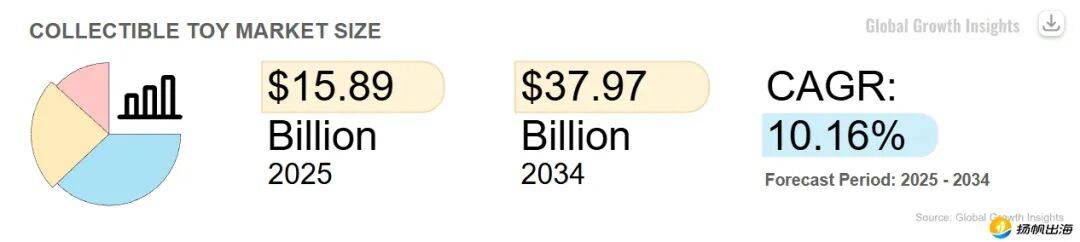
Core Insights - The toy market is experiencing significant growth, particularly in collectible toys, with the global market expected to reach approximately $15.89 billion in 2025 and grow to $37.97 billion by 2034, reflecting a compound annual growth rate (CAGR) of about 10.16% from 2025 to 2034 [1][3] - The trend of adult consumers collecting trendy toys is becoming mainstream, with emotional expression and personal interests driving this consumption shift [3][4] - The U.S. toy market is witnessing structural changes, with adult consumers aged 18 and above increasing their spending by approximately 12% year-on-year in Q1 2025, reaching about $1.8 billion [4] Market Trends - The collectible toy segment, particularly trendy toys, has gained a significant share of over 36% in global consumer preferences, with around 40% of buyers prioritizing limited edition items [1][3] - Emotional support toys are becoming popular, with social media platforms like TikTok showcasing their role in emotional well-being, leading to increased consumer discussions and purchases [3][4] - In the U.S., the toy industry saw a 7% year-on-year sales increase in the first three quarters of 2025, driven by adult consumers and collectible toys [4] Brand Strategies - Brands like Relatable are capitalizing on the emotional support trend by creating products that resonate with consumers' emotional needs, such as the "Emotional Support Pals" series [6][9] - Established IPs are crucial for driving toy sales, as they lower consumer decision-making costs and facilitate long-term purchasing choices [10] - Chinese brand Pop Mart reported a revenue of approximately 13.88 billion RMB in the first half of 2025, a 204.4% increase year-on-year, with significant growth in overseas markets [17][19] Regional Insights - The French toy market reached a total sales volume of 4.3 billion euros in 2024, with around 5 million active collectors spending an average of over 500 euros annually [12] - In Germany, popular brands include LEGO and Playmobil, reflecting consumer preferences for familiarity and quality [14] - The UK toy market saw a sales increase of over 1 billion pounds in the first half of 2025, with licensed toys related to movies and TV shows growing at nearly double the rate of other toys [14] Global Expansion - Chinese brands are increasingly entering the global toy market, with Pop Mart leading the way through social media and limited edition strategies [17][19] - 52TOYS is adopting a dual approach of self-owned and licensed IPs, achieving rapid growth with overseas revenue exceeding 1.47 billion RMB [21] - TOPTOY is exploring overseas markets by leveraging existing channels and localizing production, showing a flexible approach to international retail [23]

黄欣伟:趁购房者还剩几分感性
Sou Hu Cai Jing· 2026-01-04 03:41
Group 1 - The core argument of the articles emphasizes the importance of emotional value in transactions, particularly in real estate, where buyers' decisions are influenced by both rational and emotional factors [1][19][21] - Real estate salespeople are facing challenges as buyers become more informed and rational, leading to a shift in the sales dynamic where emotional engagement becomes crucial [1][19] - The concept of "cost-cutting" in business, such as eliminating roles perceived as unnecessary, can overlook the emotional and experiential value that these roles provide, which is essential for customer satisfaction and loyalty [3][5][21] Group 2 - The article discusses how marketing strategies, such as "free refills" in restaurants, can create a perception of value that influences consumer behavior, even if the actual usage of the offer is low [8][14] - The rise of online shopping among older demographics highlights a shift in consumer behavior, where emotional engagement and the desire to feel relevant drive purchasing decisions [12][19] - The emotional connection to the concept of "home" plays a significant role in real estate transactions, where buyers may choose properties based on feelings rather than just logical comparisons of features [19][21][22] Group 3 - The discussion on seasonal marketing strategies, such as leveraging cultural events like the Winter Solstice, illustrates how emotional narratives can be used to drive consumer engagement and sales in real estate [16][17] - The articles suggest that the real estate market's dynamics are influenced by both emotional and rational factors, with a noted 70% rational and 30% emotional balance in buyer decision-making [19][21] - The importance of service quality, which includes emotional value, is highlighted as a critical factor in differentiating real estate offerings in a competitive market [22]

新场景点燃新需求,“情绪价值”成增长密码——元旦假期消费市场盘点
Xin Hua Cai Jing· 2026-01-04 00:50
Group 1: Travel and Transportation - Approximately 590 million trips were made during the New Year holiday, with an average of about 198 million trips per day [2] - The opening of the Xi'an to Yan'an high-speed railway reduced travel time to about 1 hour, contributing to a 165% increase in daily visitors to the Hukou Waterfall scenic area [2] - Didi's ride-hailing demand surged by 31% year-on-year during the holiday, with peak demand exceeding 189,000 requests per minute on New Year's Eve [2] Group 2: Tourism and Cultural Experiences - The emphasis on "experience" and "ceremony" in cultural tourism was highlighted, with a 125% year-on-year increase in searches related to New Year travel [5] - Popular destinations for ice and snow tourism saw significant interest, with 40% of the top 20 domestic flight routes during the holiday being related to ice and snow activities [8] - The trend of "experience-oriented" consumption reflects a shift from material satisfaction to emotional experiences among consumers [5] Group 3: Consumer Goods and Retail - The introduction of the "National Subsidy" policy led to a surge in the home appliance market, with foot traffic in stores increasing by 110% during the holiday [10] - The government allocated 62.5 billion yuan for consumer goods to support the "old for new" replacement program, aimed at boosting consumption during peak seasons [10] - The "China Purchase" trend gained momentum, with foreign tourists increasingly attracted to unique Chinese products, leading to long queues in shopping districts [10]

2026,从这条Flag开始 | 红杉汇读者Flag大赏
红杉汇· 2026-01-04 00:06
Personal Development - The article emphasizes the importance of personal growth and setting clear goals for the future, particularly in the context of professional development and learning new skills [1][2] - Several contributors outline their specific plans for 2026, focusing on areas such as deep learning, industry networking, and continuous education through reading and online seminars [3][4][5] Family Planning - Contributors express a desire to strengthen family bonds through shared activities, such as exercise and quality time, highlighting the significance of family support in personal endeavors [10][11] - Specific goals include regular family exercise days, celebrating important dates, and creating lasting memories through shared experiences [12][13][15][16] Life Philosophy - The article encourages readers to find balance in life, suggesting that amidst busy schedules, one should seek moments of joy and connection with loved ones [17][18] - Contributors share aspirations for health and well-being, including fitness goals and maintaining a healthy lifestyle, which are seen as foundational for pursuing dreams [19][20][21][22]

元旦假期消费市场盘点:新场景点燃新需求 “情绪价值”成增长密码
Xin Lang Cai Jing· 2026-01-03 23:23
Core Insights - The New Year's holiday in 2026 showcased vibrant consumer activity across China, with approximately 590 million trips taken, reflecting the country's economic vitality and consumer enthusiasm [1][4]. Transportation and Travel - The opening of the Xi'an to Yan'an high-speed railway significantly reduced travel time to about one hour, contributing to a total high-speed rail network exceeding 50,000 kilometers [2]. - The Xi'an to Yan'an high-speed railway, spanning 299 kilometers, has boosted tourism, with the Hukou Waterfall scenic area experiencing a 165% increase in daily visitor numbers [3]. - During the New Year holiday, the average daily cross-regional passenger flow was approximately 198 million, with Didi ride-hailing demand increasing by 31% year-on-year [4]. Tourism and Cultural Experiences - The holiday saw a rise in experiential and ceremonial tourism, with searches for "New Year travel" increasing by 125% and significant growth in bookings for theme parks and cultural events [6]. - Ice and snow tourism remained popular, with a notable increase in visitors to Harbin's ice-themed attractions and ski resorts across the country [7][8]. Consumer Spending and Retail - The introduction of the "National Subsidy" program led to a surge in consumer spending on home appliances, with a reported 110% increase in foot traffic at stores during the holiday [9]. - The "China Shopping" trend gained momentum, with foreign tourists actively purchasing local products, highlighting the appeal of China's diverse shopping experiences [10].
