自主研发

Search documents
我国自主研发新一代CPU发布
财联社· 2025-06-26 08:14
Core Viewpoint - The newly launched domestic general-purpose processor, Longxin 3C6000, represents a significant advancement in China's independent technology capabilities, matching the performance of mainstream products expected in 2023 or 2024 [1] Group 1 - The Longxin 3C6000 is designed with China's self-developed instruction system, Long architecture, eliminating reliance on foreign authorized technologies and overseas supply chains [1] - This new generation processor is capable of meeting diverse computing needs across various scenarios, including general computing, intelligent computing, storage, industrial control, and workstations [1]

中国攻破“卡脖子”技术!电力心脏不再受制于人,东电再立新功!
Sou Hu Cai Jing· 2025-06-25 00:32
Core Viewpoint - China has achieved a significant breakthrough in the power sector by independently developing key technologies that were previously reliant on foreign imports, particularly in high-end power equipment such as transformers and large generator sets [1][3][5]. Group 1: Technological Breakthrough - The term "bottleneck" refers to critical technologies that China could not produce domestically and had to import, leading to vulnerabilities in the power supply [3]. - The successful development of a domestically produced 1 million kilowatt nuclear power main unit technology by Dongfang Electric Group marks a significant milestone, previously dependent on suppliers from the US and Japan [5]. - This achievement has resulted in hundreds of patents and has filled a technological gap in the domestic market [5][6]. Group 2: Economic Impact - The shift to domestic production is expected to save millions of dollars previously spent on imports, allowing funds to be redirected towards other technological research and development [6]. - The self-sufficiency in power equipment has increased from 60% five years ago to over 85% currently, indicating a substantial improvement in domestic capabilities [7]. Group 3: National Security and International Standing - The independence in power equipment production enhances national security by reducing reliance on foreign suppliers, which could disrupt power supply during international tensions [5][6]. - China's international standing has improved, transitioning from a "follower" to a "leader" in high-end manufacturing, with Dongfang Electric's products being exported to countries involved in the Belt and Road Initiative [6][9]. Group 4: Future Directions - The next goal for Dongfang Electric's research team is to develop energy storage technologies to maximize the use of renewable energy sources like wind and solar [9]. - The overall message emphasizes that self-reliance and innovation are crucial for future success in the power sector [9].
任正非提到罗登义、屠呦呦和黄大年!他眼中的基础理论研究显然并非纯理论,为什么?
Sou Hu Cai Jing· 2025-06-13 02:57
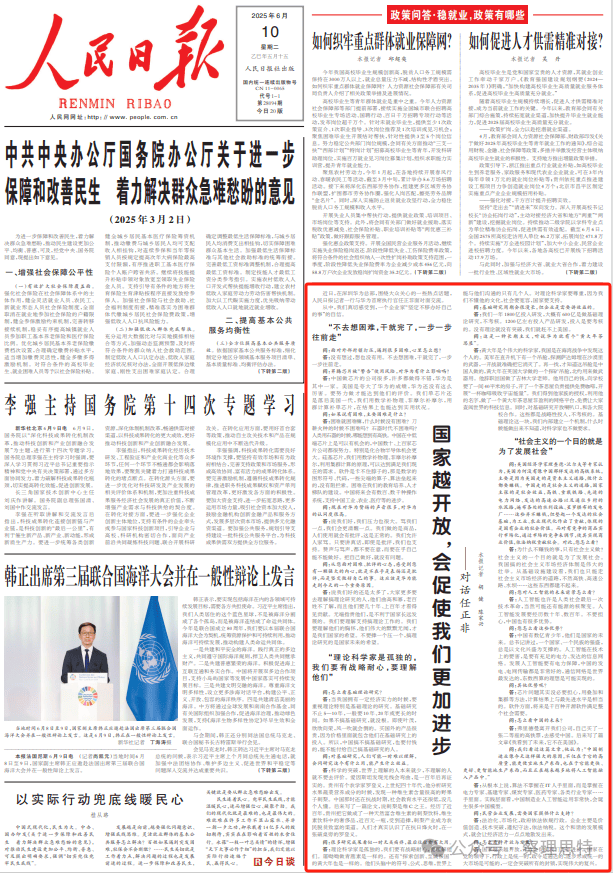
Core Viewpoint - Ren Zhengfei, the founder of Huawei, recently gave an interview to People's Daily, marking his return to the public eye amid significant geopolitical tensions, particularly the ongoing US-China trade negotiations and the impact on China's chip industry [4][5]. Group 1: Huawei's Response to External Pressures - Huawei is facing a full-chain blockade from the US on its chip industry, which has forced China to rebuild an independent chip supply chain [4]. - In the interview, Ren emphasized a proactive approach to external pressures, stating, "Just do it, step by step" [4]. - Ren acknowledged the exaggeration of Huawei's achievements by the US and expressed that external criticism helps Huawei remain vigilant [4]. Group 2: Research and Development Focus - Huawei's R&D expenditure for 2024 is projected to be 179.7 billion yuan, accounting for approximately 20.8% of its total revenue, with cumulative R&D investment exceeding 1.249 trillion yuan over the past decade [5][6]. - Ren highlighted that around 60 billion yuan of the R&D budget is allocated to fundamental theoretical research, which is not subject to performance evaluation, while about 120 billion yuan is focused on product development [6]. - The company employs a significant number of R&D personnel, with approximately 54.1% of its total workforce dedicated to research and innovation [10]. Group 3: Intellectual Property and Innovation - Huawei leads in global patent applications, with 6,600 applications in 2024, significantly outpacing competitors like Samsung and Qualcomm [10]. - The company has transformed its patent portfolio into a revenue-generating asset, earning 560 million USD from intellectual property in 2023 [10]. - Ren's commitment to innovation is rooted in Huawei's history, where he emphasized the importance of having proprietary technology over merely acting as a reseller [8]. Group 4: Broader Implications for Chinese Technology - The interview reflects a broader trend among Chinese companies prioritizing independent R&D and innovation, which is reshaping global industry dynamics [11][12]. - China's stance in international negotiations, particularly regarding technology and resources, indicates a firm commitment to maintaining its position without concessions [12]. - Ren's assertion that "the era of begging for survival is over" signifies a shift in mindset towards self-reliance and resilience in the face of external challenges [10][12].
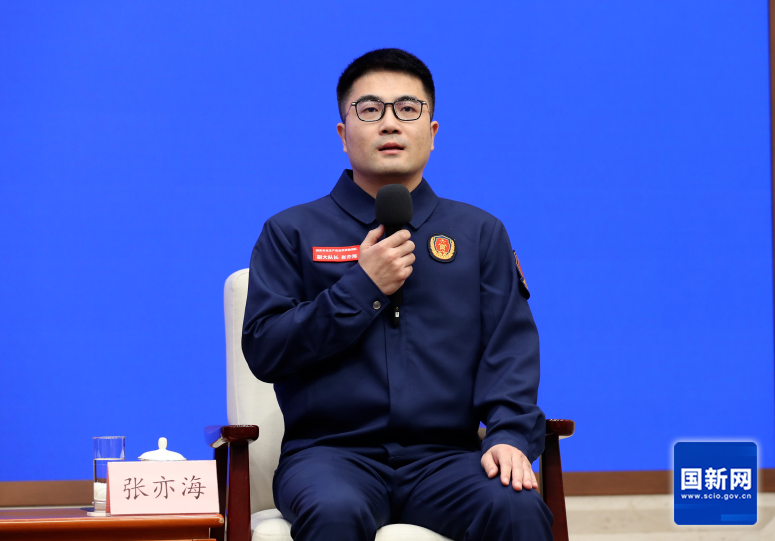
国家安全生产应急救援勘测队张亦海答21记者:研发装备每天保障5万矿工安全
2 1 Shi Ji Jing Ji Bao Dao· 2025-06-12 10:31
Core Viewpoint - The National Emergency Rescue Survey Team is focused on developing independent intellectual property equipment to enhance national safety and emergency response capabilities, addressing critical needs in advanced equipment and improving core competitiveness [2][3][4]. Group 1: Team Development and Achievements - The National Emergency Rescue Survey Team was established in 2018, relying on the slope radar team of the China Academy of Safety Science and Technology [4]. - The team has participated in over 50 major emergency actions since its inception, utilizing self-developed equipment for real-time monitoring and warning to ensure the safety of rescue personnel [4]. - The team has developed more than 10 types of monitoring equipment suitable for various scenarios, winning 16 provincial and ministerial awards, including the Beijing Science and Technology Progress Award and the China Patent Award [3]. Group 2: R&D Motivation and Impact - The motivation for the team's independent research and development stems from addressing the "bottleneck" issues in advanced equipment, driven by the national demand for such technologies [3]. - The team emphasizes the integration of production, education, research, and application, showcasing a spirit of striving for technological superiority [3]. - The self-developed slope radar monitoring equipment significantly reduces production costs and decreases the market share of imported devices, enhancing the safety production level in open-pit mines [3][4]. Group 3: International Collaboration and Safety Assurance - The team has responded to the national "Belt and Road" initiative by assisting countries like Serbia, Tajikistan, and Peru in safety monitoring for large open-pit mines, successfully providing Chinese solutions and early warnings [4]. - The developed equipment ensures the safety of approximately 50,000 miners daily, greatly improving safety standards in open-pit mining operations both domestically and internationally [4].
美国对华芯片战失败,上半年我国芯片出口5427亿,欧美不淡定了
Sou Hu Cai Jing· 2025-06-10 04:17
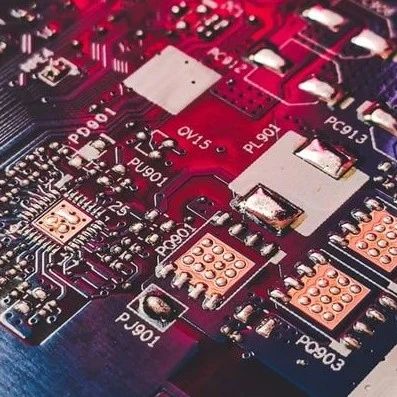
Group 1 - The core point of the article is that China's semiconductor industry has achieved significant growth, with integrated circuit exports reaching 542.7 billion yuan in the first half of 2025, marking a historical high and a 25.6% increase [1][3][12] - The development of China's semiconductor industry has been propelled by national policies since the late 1990s, with the 2014 "National Integrated Circuit Industry Development Promotion Outline" elevating the sector to a strategic level [3][4] - Despite facing U.S. sanctions, China's semiconductor industry has made remarkable progress, particularly in smartphone and public transportation sectors, showcasing the emergence of domestic chips [4][10] Group 2 - U.S. sanctions intended to block China's access to advanced semiconductor technology have inadvertently led to economic repercussions for American high-tech manufacturing [6][8] - Major U.S. semiconductor companies, including Intel, Qualcomm, and NVIDIA, have expressed dissatisfaction with the government's restrictions and have lobbied for easing export limitations to China [8][10] - As China's semiconductor industry continues to rise, the effectiveness of U.S. sanctions is diminishing, prompting the U.S. to consider increasing tariffs on certain Chinese goods [10][12] Group 3 - China's self-reliance in semiconductor technology has been bolstered by years of innovation, allowing domestic manufacturers to replace imports in key areas such as storage chips and 5G communications [10][12] - The article suggests that the U.S. is facing increasing economic challenges and global competition, making it difficult to maintain a prolonged conflict with China in the semiconductor sector [12][13] - The future of U.S.-China cooperation in the semiconductor industry remains uncertain, as China's influence continues to grow and more countries seek economic ties with China [12][13]

印度要自研2nm GPU
半导体行业观察· 2025-06-09 00:53
Core Viewpoint - India is aiming to develop its own 2nm GPU by 2030 to reduce reliance on foreign companies like Nvidia and strengthen its domestic AI capabilities [1][2]. Group 1: Development Plans - The Bangalore-based Centre for Development of Advanced Computing (C-DAC) has received $200 million in funding to develop the GPU, with a preview expected by the end of 2025 [1][2]. - The early prototypes of the GPU will be produced by the end of this year, with plans to create around 29 units for testing [8]. - The goal is to have the GPU integrated into C-DAC's cloud servers and supercomputers by 2030, enabling local researchers and startups to build AI models [4][9]. Group 2: Cost and Production - The cost of India's GPU is projected to be 50% lower than Nvidia's current chip prices [2]. - India is likely to collaborate with TSMC for large-scale production, as it may not have a domestic manufacturing facility ready within the next five years [2][4]. - C-DAC's annual capital fund allocation for FY24 is 10.56 billion INR ($1.22 million), with an increase expected in FY25 [5]. Group 3: Geopolitical Context - The U.S. has the ability to restrict access to critical chips for countries like India, prompting the need for India to develop its own chips [4]. - The push for indigenous chip development is also driven by security concerns related to dependence on foreign supply chains, particularly from China [5][9]. Group 4: Challenges and Industry Insights - Building indigenous chips faces challenges such as high licensing costs for electronic design automation (EDA) tools and the complexity of GPU design processes [10]. - Industry experts emphasize the importance of creating proprietary semiconductor IP to enhance domestic value and reduce reliance on foreign patents [10].

两轮融资!聚焦儿童眼科高精诊疗器械
思宇MedTech· 2025-05-30 09:12
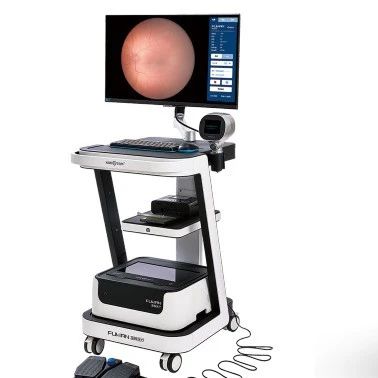
近日,致力于儿童眼健康领域产品和服务开发的 江苏富翰医疗产业发展有限公司( 简 称:"富翰医疗") 宣布 完成 A+轮融资 ,金额未披露。本轮融资由金雨茂物管理 的连云港市产业投资基金领投,知名医疗上市公司产业投资人跟投。 所募资金将主要用于 加速小儿眼底多模态系统、智能化儿童视力检查系统以及全球首创婴幼儿 眼科接触式OCT的研发 、注册与市场推广,助力打破国际品牌垄断,推动国产高端眼科设备的全球竞 争力。 公司已在去年 完成了 数千万元A轮融资, 所募资金用于 加速Kiretem系列超广域眼底相机在市场端打破国际品牌垄 断 ,加快系列创新产品的研 发和注册,实现国产优品的跨洋出海。 # 从"无米可炊"到"自研突围" 思宇年度活动回顾: 首届全球眼科大会 | 首届全球骨科大会 | 首届全球心血管大会 即将召开: 2025年6月12日,首届全球医美科技大会 2025年7月17日,第二届全球医疗科技大会 2025年9月4-5日,第三届全球手术机器人大会 在传统眼底筛查中,医疗设备笨重、操作复杂、使用门槛高,一直是制约儿童尤其是婴幼儿群体获得及时、精 准眼底检测的重要因素。如今,在南京市儿童医院眼科门诊,一项"小器 ...
中国化学多业务协同发展营收净利7连增 聚焦自主研发累获授权专利5730件
Chang Jiang Shang Bao· 2025-05-26 01:16
Core Viewpoint - China Chemical (601117.SH) continues to deepen its global presence in the chemical engineering sector, with significant contract signings and a strong financial performance in the first quarter of 2023 [1][5]. Contract Signing Summary - In the first four months of 2023, China Chemical signed 1,404 contracts with a total value of 123.017 billion yuan, with 96.36% of this amount coming from construction engineering contracts [2][3]. - The breakdown of new contracts includes 735 in chemical engineering worth 94.223 billion yuan, 140 in infrastructure worth 22.661 billion yuan, and 10 in environmental governance worth 1.661 billion yuan [3]. - The company’s domestic and international contract values were 1,048.83 billion yuan and 181.34 billion yuan, respectively, accounting for 85.26% and 14.74% of the total [3]. Financial Performance Summary - China Chemical has achieved continuous revenue and net profit growth for seven consecutive years, with 2023 Q1 net profit reaching 1.445 billion yuan, a year-on-year increase of nearly 20% [1][6]. - The company reported a revenue of 44.653 billion yuan in Q1 2023, a slight decline of 1.15% year-on-year, while maintaining a positive cash flow trend from 2021 to 2024 [7]. - As of the end of Q1 2023, the company had over 30 billion yuan in cash and approximately 10.3 billion yuan in interest-bearing debt [1][4]. Research and Innovation Summary - Over the past three years, China Chemical has invested more than 18 billion yuan in research and development, with a total of 5730 authorized patents by the end of 2024 [1][10][11]. - The company focuses on technological innovation in traditional and new chemical fields, contributing to its competitive edge and ability to undertake significant global projects [8][9]. International Expansion Summary - China Chemical has successfully entered new international markets, with over 70% of contract values from key markets like Egypt and Kazakhstan, and has completed contracts exceeding 100 billion USD along the Belt and Road Initiative [9].

科创板航空航天企业积极拓展新应用场景
Zhong Guo Zheng Quan Bao· 2025-05-22 21:02
Group 1: Industry Overview - The aerospace industry companies showcased strong independent R&D capabilities, driving the intensive landing of technological achievements [1] - Companies emphasized long-term value return through performance growth and dividend planning [1] Group 2: Company-Specific Insights - Changyingtong plans to enhance its innovation system through internal and external dual-driven strategies, focusing on technological breakthroughs and market demand [1] - In 2024, Changyingtong's R&D investment reached 33.877 million, accounting for 10.24% of its revenue, reflecting its commitment to improving product competitiveness [2] - Plitel's R&D investment was 211 million, a 15.17% increase year-on-year, with significant advancements in titanium alloy powder production and application [3] - Plitel aims to expand its metal additive manufacturing technology into various sectors, including medical, automotive, and robotics, enhancing its market presence [4] - Changyingtong is pursuing a three-growth curve strategy, focusing on sensor, power transmission, and thermal management industries to expand its market reach [4] - Changyingtong is also focusing on mergers and acquisitions to enhance its competitive edge in the optical communication sector [5] Group 3: Investor Relations - Zhenyou Technology has a negative distributable profit as of the end of 2024, but has developed a three-year dividend plan to improve its profitability and investor returns [6] - The company emphasizes maintaining investor relations and providing multiple communication channels for investor engagement [6] - Hangya Technology is focusing on domestic market opportunities and strengthening international collaborations to achieve economic breakthroughs and meet annual performance goals [7]
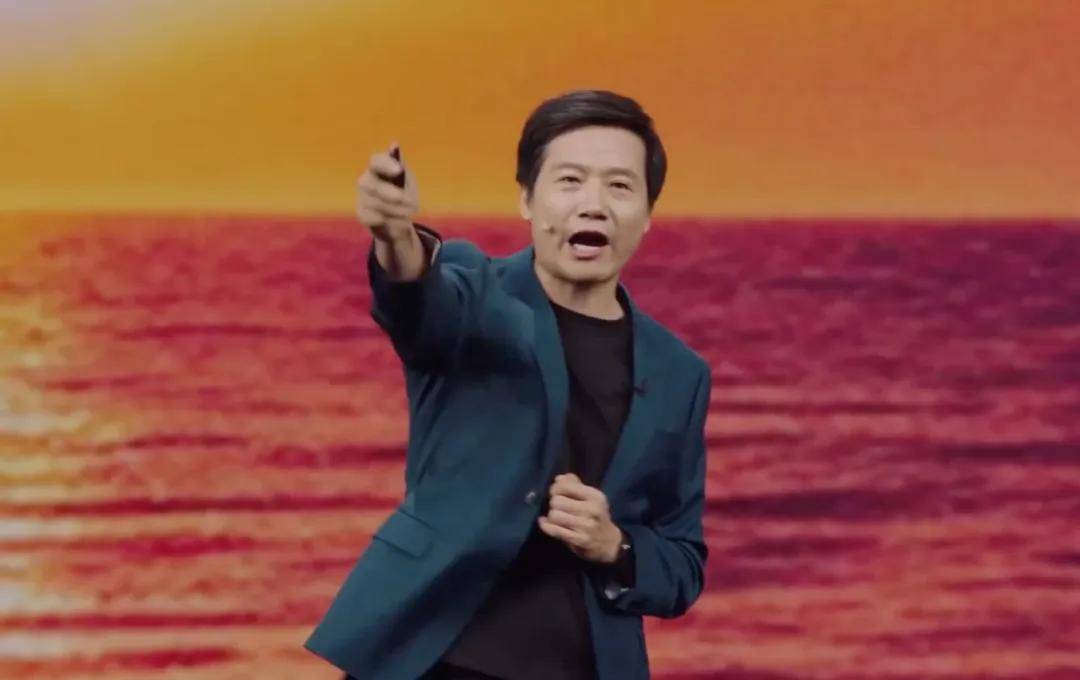
雷军无法回头
Sou Hu Cai Jing· 2025-05-22 15:47
Core Viewpoint - Xiaomi's founder and CEO Lei Jun is shifting his focus from mobile phones to the automotive sector, indicating a significant strategic pivot for the company as it faces a trust crisis and seeks to reaffirm its market position [2][3][4]. Group 1: Leadership and Marketing Strategy - Lei Jun has stated that half of his energy will be dedicated to the automotive business, while only one-third will be allocated to mobile phones, highlighting a major shift in priorities [2]. - The recent product launch event on May 22 marks Xiaomi's 15th anniversary and is the first major event following a significant trust crisis, necessitating Lei Jun's return to the public eye to restore confidence [3]. - Lei Jun's personal branding is deeply intertwined with Xiaomi, making it difficult for him to abandon his previous marketing strategies despite recent controversies [3][4]. Group 2: Recent Challenges and Responses - Following a serious incident involving the Xiaomi SU7, Lei Jun reduced his social media presence, reflecting a period of introspection and strategic recalibration for the company [5][6]. - Xiaomi acknowledged issues with the SU7's carbon fiber hood, leading to customer complaints and a public apology, which indicates the company's responsiveness to consumer feedback [7]. - The legal department of Xiaomi reported the resolution of a network smear campaign against the company, which may help mitigate some of the negative publicity [8][10]. Group 3: Product Launch and Future Plans - During the recent product launch, Xiaomi announced a significant R&D investment plan, committing to 200 billion yuan over the next five years, emphasizing its focus on innovation and self-research [12]. - The new model, Xiaomi YU7, is positioned as a mid-to-large SUV, targeting a larger market segment compared to the previous SU7, which faced a more competitive environment [15]. - The launch event showcased Xiaomi's advancements in self-developed technology, including the mass production of its 3nm mobile processor, positioning the company as a key player in the tech industry [10][12].