
货币政策正常化

Search documents
机构:潜在的干预措施不太可能扭转日元的广泛贬值趋势 需进行财政和货币政策转变以帮助稳定日元
Sou Hu Cai Jing· 2025-11-24 04:42
Core Viewpoint - The potential intervention measures are unlikely to reverse the broad depreciation trend of the yen but may slow its decline [1] Group 1: Factors Influencing Yen Depreciation - Fiscal policy shifts, delayed monetary policy, and geopolitical uncertainties are contributing to the yen's weakness [1] - Recent comments from Japan's Finance Minister indicate concern over the rapid and unilateral depreciation of the yen [1] Group 2: Intervention Risks and Requirements - Analysts suggest that if the yen sharply weakens again, approaching the 158-160 yen range, the risk of intervention is real [1] - To reverse the trend of USD/JPY, decision-makers need to demonstrate fiscal discipline to restore credibility [1] - The Bank of Japan also needs to normalize its policies for effective intervention [1] - A weaker dollar could also assist in stabilizing the yen [1]
中国外汇投资研究院:日元存在一定回升机会
Xin Hua Cai Jing· 2025-11-21 07:44
(文章来源:新华财经) 新华财经北京11月21日电中国外汇投资研究院金融分析师张正阳表示,日本通胀水平已连续三年维持在 央行2%目标之上,且最新经济数据表现良好,这为日本央行再次加息提供了条件。目前日本政府的宽 松政策立场与日本央行的加息倾向形成对立,可能导致日元短期内继续承压。然而,随着日本央行可能 坚持货币政策正常化,以及美元可能因美联储降息预期而延续贬值,日元存在一定回升机会。 ...
通胀高企叠加日元贬值 日本央行12月或“被迫”行动
Xin Hua Cai Jing· 2025-11-21 04:35
新华财经北京11月21日电(崔凯)日本总务省21日公布的数据显示,10月剔除生鲜食品价格后的核心消 费者物价指数(CPI)同比上涨3.0%,较9月的2.9%进一步加速,连续第35个月高于日本央行设定的2% 通胀目标。 食品价格持续走高是推动通胀上行的主要因素。作为高度依赖进口资源的经济体,日本在日元急剧贬值 背景下,进口成本显著上升,并进一步传导至国内物价,尤以食品和能源领域表现突出。总务省指出, 自2022年4月以来,该核心通胀指标始终处于或高于2%的目标水平。 这一数据进一步强化了市场对日本央行短期内推进货币政策正常化的预期。日本央行此前已多次强调, 为确保物价稳定,有必要逐步退出超宽松政策框架。 同日,在国会听证会上,日本央行行长植田和男明确表示,日元持续疲软可能进一步推高国内通胀。他 指出,由于日元贬值抬升进口成本,企业当前更倾向于同步上调工资与产品价格,从而强化了汇率波动 向物价的传导效应。植田强调,相较以往,汇率对通胀的影响正变得"更为显著",央行必须对此保持高 度警惕。 (文章来源:新华财经) 值得注意的是,审议委员小枝淳子近日亦发表偏鹰派言论,凸显日本央行内部对通胀风险的担忧正在上 升。尽管副 ...
政策博弈下的贬值压力与干预隐忧并存 日元贬至10个月新低
Xin Hua Cai Jing· 2025-11-20 09:11
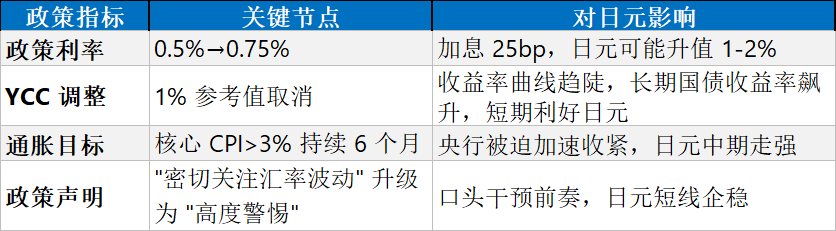
Core Viewpoint - The Japanese yen is experiencing significant depreciation against the US dollar, influenced by various factors including government fiscal expansion policies, the Bank of Japan's monetary policy normalization, and widening interest rate differentials between the US and Japan [1][2][3] Group 1: Currency Exchange Dynamics - The USD/JPY exchange rate reached 157.48, the highest level since January 2025, reflecting a 5% appreciation since October 4, 2023 [1] - The nominal effective exchange rate of the yen fell to 71.4, nearing the low point observed during the intervention in July 2024 [1] - The depreciation of the yen is coupled with rising Japanese government bond yields, with the 10-year yield hitting 1.825%, the highest since the 2008 financial crisis [1][2] Group 2: Fiscal Policy and Economic Impact - The Japanese government is pushing for a comprehensive economic strategy exceeding 20 trillion yen, which includes child subsidies and energy assistance, raising concerns about debt sustainability as the current debt-to-GDP ratio stands at 260% [2] - Japan's GDP contracted by 0.4% quarter-on-quarter in Q3, marking the end of six consecutive quarters of growth, indicating weak domestic and external demand [2] Group 3: Monetary Policy and Market Sentiment - The market's expectation for a rate hike by the Bank of Japan in December is only at 57%, as the central bank maintains a policy rate of 0.5% despite core CPI exceeding the 2% target for 36 consecutive months [2][3] - The Japanese government opposes interest rate hikes, arguing that inflation has not yet reached a sustainable level, which conflicts with the Bank of Japan's logic of a wage-price positive cycle [2][3] Group 4: Market Reactions and Predictions - Financial institutions have lowered their forecasts for the yen, with JPMorgan adjusting its prediction for the USD/JPY exchange rate to 156 by the end of 2025 [4] - Key upcoming events include the announcement of the stimulus plan on November 21 and the Bank of Japan's monetary policy meeting in December, which could significantly influence the yen's trajectory [4] Group 5: Policy Indicators and Potential Outcomes - A potential increase in the policy rate from 0.5% to 0.75% could lead to a 1-2% appreciation of the yen [5] - Continuous inflation above 3% for six months may force the Bank of Japan to tighten monetary policy, leading to a medium-term strengthening of the yen [5] - The government's focus on monitoring exchange rate fluctuations may signal a prelude to verbal interventions, potentially stabilizing the yen in the short term [5]

日本央行委员小枝淳子明言“必须加息” 12月成关键窗口期
Xin Hua Cai Jing· 2025-11-20 06:28
Core Viewpoint - The Bank of Japan's policy adjustments will depend on a detailed assessment of economic and price trends, despite inflation gradually approaching the 2% target [1][2]. Group 1: Inflation and Economic Outlook - Potential inflation is gradually moving towards the 2% target, but there is insufficient evidence to confirm its stability [1]. - Recent inflation rates in Japan have exceeded potential inflation rates, indicating a relatively strong performance in overall prices [3]. - The Bank of Japan will monitor temporary supply-side factors, such as rising food prices, which may affect the Consumer Price Index (CPI) [3]. Group 2: Monetary Policy and Interest Rates - The Bank of Japan emphasizes a gradual approach to normalizing monetary policy, opposing hasty actions [1][2]. - There is a necessity to normalize interest rates to avoid future distortions, with a clear indication that the central bank should continue to raise policy rates based on economic activity and price improvements [2]. - The market anticipates that the Bank of Japan may raise interest rates by December 2025, with recent statements reinforcing this expectation [2]. Group 3: Currency and Market Stability - The impact of yen fluctuations on domestic prices is a significant concern, with a focus on how exchange rate stability reflects economic fundamentals [1]. - The Bank of Japan is prepared to intervene in the market through increased bond purchases and emergency operations to maintain market stability during rapid and irregular fluctuations in long-term yields [1].
日元跌至10个月低点之际 日本央行坐不住了! 释放12月加息信号
智通财经网· 2025-11-20 05:59
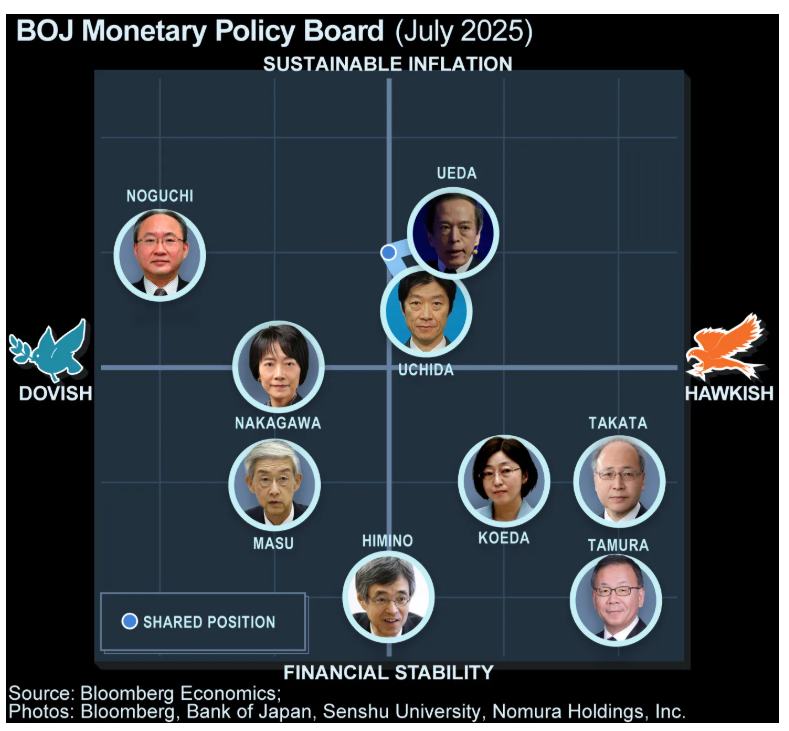
智通财经APP获悉,在日元汇率跌至大约10个月以来最低位之后,日本央行货币政策委员会成员小枝淳子在谈到 有必要推动货币政策正常化时,释放出日本央行最早可能在下个月重启加息的重磅信号。这意味着在日元汇率 (兑美元)持续下跌之际,日本央行终于坐不住了——当前日元汇率位于1月以来最低且距离自去年7月以来的最弱 水平仅一步之遥,紧急派出代表放出鹰派言论稳住日元汇率。 据了解,小枝淳子周四在日本北部新潟向当地企业界领袖发表讲话时表示:"鉴于当前实际利率处于显著偏低的 水平,我认为日本央行需要及时推进利率正常化进程。" 从日本央行货币政策委员会的鹰鸽成员阵营对照表来看,小枝淳子显然属于立场较强硬的鹰派阵营,不过小枝的 最新言论看似意在日元汇率持续走弱之际传递鹰派信息来维持日元稳定。然而日元兑美元却进一步走低,这表明 外汇市场交易员们或许在期待接下来日本央行官员们在日元走弱时期更为强硬的表态。 日本央行观察人士普遍预计,日本央行最迟不会晚于明年1月重启加息进程,隔夜掉期市场的最新定价显示,对 下个月采取货币政策行动的市场押注正在大幅降温。由于市场愈发相信美联储下个月不会降息,叠加市场惧怕崇 尚"安倍经济学"的高市早苗欲推出 ...
日本10年期国债收益率升至17年高位 财政扩张预期引爆“高市交易”
Xin Hua Cai Jing· 2025-11-20 05:15
新华财经北京11月20日电在经济数据疲软与超大规模财政刺激预期的双重冲击下,日本金融市场近期剧 烈波动。日内盘中,10年期日本国债收益率攀升至1.80%上方,创下自2008年6月全球金融危机以来的 最高水平;40年期收益率飙升至3.747%的历史峰值,20年期收益率触及2.853%,至1999年以来新高。 日本内阁官房长官木原稔亦于稍早表态称,政府"正密切关注外汇市场,包括投机性在内的过度且无序 的波动",并对近期汇率走势"感到担忧",重申汇市应稳定反映经济基本面。 长期国债收益率的飙升还反映出结构性压力:通胀预期回升、货币政策正常化推进,以及传统买家(如 银行和保险公司)需求疲软。数据显示,今年以来30年期日债收益率已累计上涨逾100个基点,而同期 美国30年期国债收益率却有所回落,凸显日本债市的独特脆弱性。 市场正密切关注将于近期正式公布的补充预算细节及下周40年期国债标售结果,以评估财政风险溢价是 否将进一步扩大。 (文章来源:新华财经) 日本内阁府于11月17日公布的初步数据显示,2025年第三季度实际GDP环比下降0.4%,按年率计算下 降1.8%,为2024年第一季度以来首次负增长,亦终结了连续六 ...
日本央行委员呼吁稳步推进货币政策正常化
Xin Hua Cai Jing· 2025-11-20 05:15
在劳动力市场方面,小枝淳子称产出缺口约为0%,劳动力市场状况紧张。她提醒,除每年春季工资谈 判("春斗")外,还需综合关注最低工资涨幅、冬季奖金与企业利润的关联度,以及跳槽对薪资水平的 提升作用,以全面判断工资增长的可持续性。 新华财经北京11月20日电日本央行审议委员小枝淳子20日就货币政策路径发表讲话,主张应以可预测的 方式推进资产负债表正常化,并继续根据经济与物价形势适度上调政策利率。其表态反映出日本央行内 部对退出超宽松货币政策框架的审慎共识正在增强。 针对近期食品价格上涨,特别是大米价格显著上扬,小枝淳子警示其可能加剧消费者对物价上涨的感 知,并通过推高通胀预期引发更广泛的物价上行风险。但她预计,此类供给侧冲击的影响将在下一财年 上半年(即2025年4月起)逐步减弱。她同时呼吁密切关注暂时性因素对CPI的贡献是否如期消退,并 评估食品及其他商品价格持续超预期上涨对长期通胀预期的潜在影响。 关于货币政策操作,小枝淳子重申:"必须使利率正常化,以避免未来造成扭曲。"她指出,即便实际利 率负区间略有收窄,当前金融环境仍极有可能保持宽松,足以继续支撑消费与投资。她强调,日本央行 应"根据每个时间点可获得的数 ...
日本央行内部鹰派抬头!弱日元或成12月加息关键推手?
Jin Shi Shu Ju· 2025-11-20 05:11
Core Viewpoint - The Bank of Japan (BOJ) must continue to normalize its monetary policy by raising real interest rates to avoid unexpected market distortions, as stated by BOJ member Junko Koeda [1]. Group 1: Monetary Policy and Interest Rates - Junko Koeda indicated that if BOJ Governor Kazuo Ueda proposes a rate hike in the coming months, she would support it, emphasizing the need for policy rate adjustments based on economic activity and price improvements [1]. - The BOJ has maintained its policy rate at 0.5% despite core consumer inflation exceeding the 2% target for over three years, highlighting a cautious approach to interest rate changes [1]. - A survey revealed that 53% of economists expect the BOJ to raise the short-term interest rate from 0.50% to 0.75% in the upcoming December meeting, with a median forecast of 1.00% by the end of 2026 [3]. Group 2: Economic Conditions and Inflation - Koeda noted that corporate profits remain high, the economy shows resilience, and recent food price increases may affect inflation expectations [1]. - The Japanese yen has depreciated significantly, leading to concerns about imported inflation and price pressures, prompting expectations of early rate hikes by the BOJ [4]. - Economists believe that if wage growth momentum is confirmed and aligns with government coordination, the likelihood of a December rate hike is very high [4]. Group 3: Labor Market and Wage Growth - Koeda is monitoring Japan's minimum wage standards and the impact of increased employment mobility on wages, indicating that wage negotiations will be crucial for achieving inflation targets [2]. - A majority of economists (81%) expect that wage increases in the upcoming year will not exceed the previous year's 5.25%, suggesting a potential slowdown in wage growth [4]. - Despite a slight expected decline in overall corporate profits, strong corporate earnings are anticipated to support high wage growth rates through 2026 [5].
日本央行释放12月加息信号
Jin Tou Wang· 2025-11-20 03:37
Core Viewpoint - The USD/JPY exchange rate is hovering near a ten-month high, with expectations of a potential interest rate hike by the Bank of Japan (BoJ) following hawkish comments from a BoJ board member, signaling a possible shift in monetary policy [1][2]. Group 1: Market Dynamics - The USD/JPY exchange rate recently broke above the 157 level, reaching a high of 157.18, the highest since January 15, when it hit 158.08 [2]. - The market anticipates that the USD/JPY pair will maintain its strong trend unless there are substantial interventions from Japanese authorities [2]. - Investors are closely monitoring any signals that could indicate a policy shift, as the yen has recently fallen to a ten-month low, diminishing its appeal as a safe-haven asset [2]. Group 2: Monetary Policy Expectations - Market expectations suggest that both the Bank of Japan and the Federal Reserve will maintain their current policies during their December meetings, supporting Japanese and U.S. government bond yields [2]. - The recent hawkish remarks from BoJ board member Junko Koeda have heightened expectations for a potential interest rate hike as early as December, with the market interpreting her comments as a clear signal for policy normalization [1][2]. - The BoJ faces the challenge of balancing monetary policy normalization with currency stability, especially as the yen weakens [1]. Group 3: Technical Analysis - Technical indicators show that the daily RSI for USD/JPY is in a slightly overbought territory, suggesting a potential need for consolidation or a moderate pullback before the next upward movement [3]. - Key support levels are identified at the 156.60 area, with further declines below 156.00 potentially triggering additional selling pressure [3]. - If the price continues to rise, the 157.50 area is seen as a critical resistance level, with a breakthrough potentially leading to a test of the 158.00 mark [3].