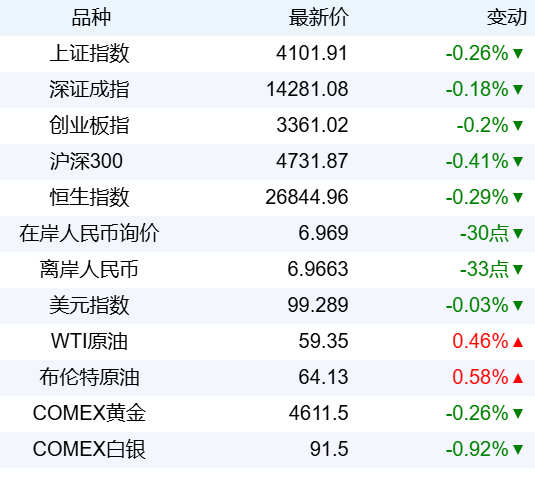
逆周期调节

Search documents
A股突然降温!融资收紧保证金调整,是打压市场还是保护散户?
Sou Hu Cai Jing· 2026-01-17 10:21
Core Viewpoint - The adjustment of the financing margin ratio from 80% to 100% by the Shanghai, Shenzhen, and Beijing stock exchanges aims to reduce excessive leverage in the A-share market, which has seen record-high trading volumes and margin balances, thereby ensuring market stability and protecting investors' rights [1][15]. Group 1: Policy Changes and Market Reactions - The new financing margin ratio will take effect on January 19, significantly reducing investors' new financing capabilities and directly lowering the overall leverage level by 20% [4][6]. - Following the announcement, the A-share market experienced a sharp decline, with major indices turning negative and significant sell orders observed in heavyweight stocks, such as China Merchants Bank with over 6.5 billion yuan in sell orders [1][4]. - The adjustment is a response to the overheated margin trading environment, with the A-share margin trading volume reaching a record 427.2 billion yuan on January 12 and the margin balance exceeding 2.7 trillion yuan on January 15 [1][12]. Group 2: Impact on Investors and Market Dynamics - The increase in the financing margin ratio raises the entry barrier for retail and aggressive investors, making them more cautious about leveraging their investments [6][17]. - The "new and old separation" rule allows existing financing contracts to continue under the previous 80% margin ratio, providing a buffer period for the market to adjust without forcing existing investors to add margin or face liquidation [6][10]. - The current leverage level in the A-share market is relatively low, with margin balances accounting for only 2.56% of the A-share market's circulating value, indicating that the market is not in a bubble [12][15]. Group 3: Long-term Market Outlook - The adjustment is seen as a moderate normalization of policy rather than a drastic measure to suppress the market, aiming for a sustainable "slow bull" market rather than a speculative "crazy bull" [10][15]. - The regulatory intent is to guide the market from being driven by capital to being driven by performance, fostering a more rational investment environment [14][17]. - Analysts believe that while high-volatility sectors may face profit-taking pressures, blue-chip stocks will be less affected, and the overall market is unlikely to experience systemic risks [12][15].


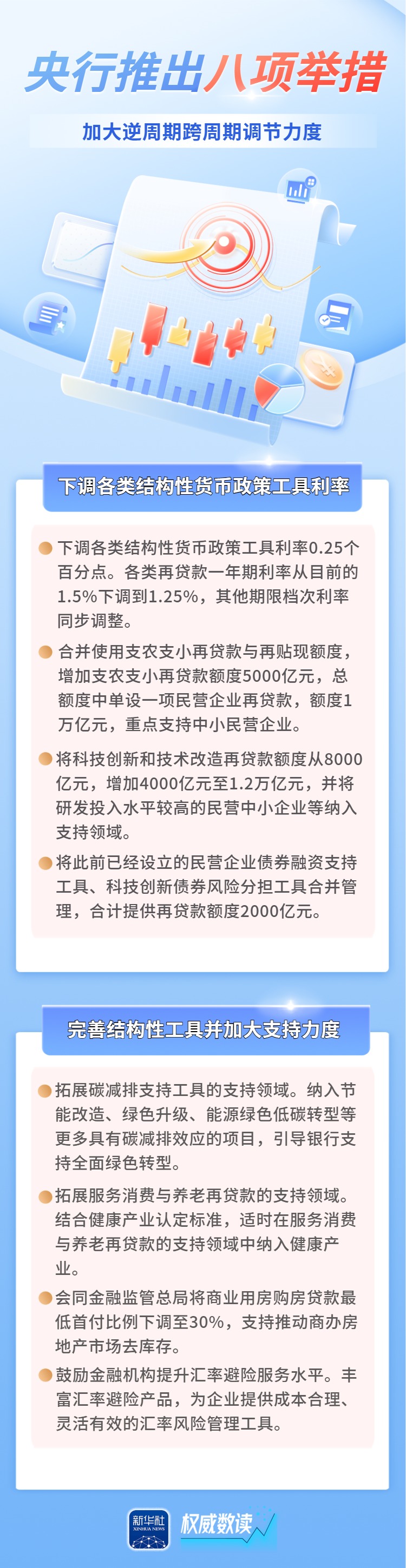
新年伊始,央行八项举措助力逆周期跨周期调节力度
Xin Hua She· 2026-01-17 07:06
Group 1 - The People's Bank of China will implement eight measures to enhance credit support in key areas, aiming to assist in the optimization of economic structure transformation [1] - The one-year interest rate for various relending types will be reduced from 1.5% to 1.25%, with other term rates adjusted accordingly [3] - The quota for relending to support agriculture and small enterprises will be increased by 500 billion, with a total quota of 1 trillion specifically for private enterprises [3] Group 2 - The quota for relending aimed at technological innovation and technological transformation will be increased from 800 billion to 1.2 trillion, including support for high R&D investment private small and medium enterprises [3] - The minimum down payment ratio for commercial property loans will be lowered to 30% to support the destocking of commercial real estate [6] - Financial institutions are encouraged to enhance foreign exchange risk management services, providing cost-effective and flexible tools for enterprises [6]
证监会召开2026年系统工作会议提出:及时做好逆周期调节 坚决防止市场大起大落
Zhong Guo Zheng Quan Bao· 2026-01-17 01:45
Core Viewpoint - The China Securities Regulatory Commission (CSRC) emphasizes the need for comprehensive reforms in the capital market to enhance stability, improve regulatory effectiveness, and promote high-quality development in 2026 [1][2][4]. Group 1: Market Stability and Reform - The CSRC aims to consolidate the market's positive momentum by deepening public fund reforms and expanding channels for long-term capital sources [1][4]. - The implementation of the entrepreneurship board reform and the promotion of the Sci-Tech Innovation Board reforms are prioritized to enhance refinancing convenience and flexibility [1][4][5]. - The CSRC plans to strengthen market monitoring and warning systems, ensuring timely counter-cyclical adjustments and maintaining trading fairness [1][4]. Group 2: Regulatory Effectiveness - The CSRC is committed to enhancing the effectiveness and deterrence of regulatory enforcement, focusing on combating financial fraud, price manipulation, and insider trading [5][7]. - In 2025, the CSRC handled 701 cases of securities and futures violations, imposing fines totaling 15.47 billion yuan, indicating a significant increase in regulatory enforcement quality [3][5]. - The establishment of a comprehensive punishment and prevention system for financial fraud is underway, alongside a special campaign against illegal activities in private equity funds [3][5]. Group 3: Capital Market Development - The total cash dividends and buybacks by listed companies reached 2.68 trillion yuan in 2025, reflecting a growing momentum for high-quality development [3][5]. - The total amount of IPOs and refinancing in the capital market was 1.26 trillion yuan, with bond issuances reaching 16.3 trillion yuan, showcasing the robust functionality of the multi-level capital market [3][5]. - The CSRC is also focused on enhancing the governance and operational standards of listed companies, with plans to introduce new regulations for corporate governance [5][6]. Group 4: Internationalization and Openness - The CSRC is pushing for deeper and higher-level openness in the capital market, including optimizing the Qualified Foreign Institutional Investor (QFII) scheme and expanding the range of futures products available for foreign investment [6][7]. - Efforts are being made to improve the regulatory framework for overseas listings, enhancing transparency and standardization in the management of foreign investments [6][7].
交易所一周出手800余次,A股打出严防大起大落“组合拳”
Di Yi Cai Jing· 2026-01-16 23:38
Group 1 - The core viewpoint of the articles indicates a significant cooling in the A-share market after a month of rapid growth, driven by regulatory actions and increased margin requirements [1][2] - The China Securities Regulatory Commission (CSRC) emphasized the need for comprehensive market monitoring and timely counter-cyclical adjustments to maintain market stability and prevent excessive volatility [2][5] - The CSRC announced a rise in the minimum margin requirement for new financing contracts from 80% to 100%, marking the first increase in 10 years as the Shanghai Composite Index approached 4200 points [3][4] Group 2 - The regulatory measures include strict enforcement against market manipulation and excessive speculation, with the CSRC actively investigating cases of abnormal trading and misleading statements [5][6] - The Shanghai Stock Exchange reported taking self-regulatory measures against 365 instances of abnormal trading behavior within a week, indicating a significant increase in regulatory actions [6][8] - The Shenzhen Stock Exchange also intensified its regulatory efforts, addressing 387 cases of abnormal trading behavior in the same week, reflecting a broader trend of heightened scrutiny in the market [7][8]
证监会召开2026年系统工作会议提出 及时做好逆周期调节 坚决防止市场大起大落
Zhong Guo Zheng Quan Bao· 2026-01-16 22:00
Core Viewpoint - The China Securities Regulatory Commission (CSRC) emphasizes the need for comprehensive market monitoring and regulation to maintain stability and promote high-quality development in the capital market, while also addressing risks and enhancing investor protection [1][2][4]. Group 1: Market Stability and Development - The CSRC aims to strengthen market monitoring and timely counter-cyclical adjustments to prevent significant market fluctuations and ensure fairness in trading [1][4]. - In 2025, the capital market demonstrated resilience and vitality despite multiple risks, with significant breakthroughs in attracting medium- and long-term funds [2][3]. - The total cash dividends and buybacks from listed companies reached 2.68 trillion yuan, indicating a focus on high-quality development [3]. Group 2: Regulatory Enhancements - The CSRC plans to deepen public fund reforms and expand channels for medium- and long-term capital sources, promoting a market environment conducive to long-term investments [5][6]. - A comprehensive system to combat financial fraud and enhance regulatory effectiveness has been established, with 701 cases of securities and futures violations handled, resulting in fines totaling 15.47 billion yuan [3][5]. - The CSRC is committed to improving the governance of listed companies and enhancing regulatory frameworks, including the introduction of new regulations on share buybacks and employee stock ownership plans [5][6]. Group 3: Capital Market Reforms - The CSRC is implementing reforms for the ChiNext board and continuing to promote the Science and Technology Innovation Board, aiming to improve refinancing convenience and flexibility [1][4][5]. - The bond market is being restructured to enhance quality, adjust structure, and expand total volume, with a total issuance of various bonds reaching 16.3 trillion yuan [3][5]. - The CSRC is also focusing on the integration and high-quality development of the Beijing Stock Exchange and the New Third Board [5]. Group 4: Internationalization and Openness - The CSRC is advancing the opening of the capital market to a deeper and higher level, optimizing the Qualified Foreign Institutional Investor (QFII) scheme and expanding the range of specific futures products [6]. - Efforts are being made to improve the regulatory framework for overseas listings, enhancing transparency and standardization in the process [6].
及时做好逆周期调节 坚决防止市场大起大落
Zhong Guo Zheng Quan Bao· 2026-01-16 20:47
Core Viewpoint - The China Securities Regulatory Commission (CSRC) emphasizes the need for comprehensive reforms in the capital market to enhance stability, improve regulatory effectiveness, and promote high-quality development in 2026 [1][2][3]. Group 1: Market Stability and Reform - The CSRC aims to strengthen market monitoring and implement counter-cyclical adjustments to maintain market stability and prevent excessive volatility [1][3]. - The implementation of reforms in the ChiNext board and the continued advancement of the Sci-Tech Innovation Board are highlighted to improve refinancing convenience and flexibility [1][2]. - The introduction of various long-term investment products and risk management tools is intended to attract more long-term capital into the market [3][4]. Group 2: Regulatory Enhancements - The CSRC plans to enhance the effectiveness and deterrence of regulatory enforcement, focusing on combating financial fraud, market manipulation, and insider trading [4][5]. - A comprehensive punishment and prevention system for financial fraud is being established, with 701 cases of securities and futures violations handled in the previous year, resulting in fines totaling 15.47 billion yuan [2][4]. - The regulatory framework for private equity funds will be improved, and technology will be leveraged to enhance regulatory capabilities [4][5]. Group 3: Corporate Governance and Development - The CSRC is committed to improving the operational standards of listed companies and accelerating the introduction of new regulations for corporate governance [5][6]. - Measures to enhance the value growth and governance of listed companies include improving dividend repurchase, equity incentives, and employee stock ownership plans [5][6]. - The integration of the Beijing Stock Exchange and the New Third Board is aimed at promoting high-quality development in these markets [4][5]. Group 4: Capital Market Openness - The CSRC is focused on advancing the two-way opening of the capital market to a deeper and higher level, including optimizing the Qualified Foreign Institutional Investor (QFII) scheme [5][6]. - The expansion of the open range for specific futures products and the improvement of regulations for overseas listings are also priorities [5][6]. - Enhancing the regulatory and risk prevention capabilities in an open environment is essential for participating in international financial governance [5][6].
央企重大项目开工“赶前抓早”
Zheng Quan Ri Bao· 2026-01-16 16:26
Group 1 - The core point of the news is the commencement of major infrastructure projects by central enterprises in China, signaling a strong push for investment and development in various sectors, including energy and construction [1][2][3] Group 2 - China National Nuclear Corporation's Jiangsu Xuwei Nuclear Energy Heating Power Plant has begun concrete pouring for its first unit, marking the start of the world's first large-scale coupling project between nuclear energy and the petrochemical industry [1] - The first phase of the project plans to construct two Hualong One reactors and one high-temperature gas-cooled reactor, which will supply 32.5 million tons of industrial steam annually and generate over 11.5 billion kilowatt-hours of electricity [1] - The project is expected to reduce coal consumption by 7.26 million tons and cut carbon dioxide emissions by 19.6 million tons each year, providing high-quality low-carbon industrial steam to the Lianyungang petrochemical industry base [1] Group 3 - In January, China Energy Investment Corporation's Ningxia Tengger 1.5 million kilowatt wind power project is set to officially commence construction, with a total installed capacity of 1.5 million kilowatts and plans to install 209 wind turbines [2] - The company also plans to start construction on the Dadu River Danba Hydropower Station in the first quarter of this year [2] Group 4 - State Grid Corporation of China announced that its fixed asset investment during the 14th Five-Year Plan period is expected to reach 4 trillion yuan [3] - The concentrated launch of major projects by central enterprises is seen as a clear signal of increased investment, which is expected to have multiplier effects on economic stability and growth [3] - These investments are anticipated to provide strong momentum for China's economy in the current year and lay a foundation for future economic transformation and competitiveness over the next five to ten years [3]


交易所一周出手800余次!A股打出严防大起大落“组合拳”
第一财经· 2026-01-16 15:14
2026.01. 16 本文字数:1993,阅读时长大约4分钟 作者 | 第一财经 在本周商业航天等板块主动公告降温、沪深北交易所集体提高融资保证金比例、监管密集出手打击异 常交易之后,A股维持了近1个月的快速上涨态势迎来明显降温。 证监会16日公布了2026年系统工作会议的主要内容,对当前市场监管的原则也予以明确。会议于15 日举行,证监会主席吴清出席并讲话,会议总结了2025年工作,分析当前形势,研究部署了2026年 工作。 "坚持稳字当头,巩固市场稳中向好势头。"会议强调,全方位加强市场监测预警,及时做好逆周期 调节,强化交易监管和信息披露监管,进一步维护交易公平性,严肃查处过度炒作乃至操纵市场等违 法违规行为,坚决防止市场大起大落。 同时,继续深化公募基金改革,持续拓宽中长期资金来源渠道和方式,推出各类适配长期投资的产品 和风险管理工具,积极引导长期投资、理性投资、价值投资,全力营造"长钱长投"的市场生态。 周五盘后沪深交易所公布监管动态显示,两大交易所一周出手800余次,对异常交易、问题信披等密 集出手监管。 启动逆周期调节 融资保证金比例是股市"逆周期调节"的重要抓手。 1月9日,证监会通报对天普 ...

交易所对杠杆“点刹”!融资保证金回归100%,A股慢牛要来了?
Sou Hu Cai Jing· 2026-01-16 13:17
Group 1 - The core point of the article is the regulatory adjustment of the financing margin ratio, which has been raised from 80% to 100%, aimed at cooling down the overheated A-share market [8][27]. - The timing of this policy change is notable, as it comes after a significant influx of leveraged funds, with net purchases reaching 140 billion yuan and margin trading balances exceeding 2.68 trillion yuan, marking a historical high [4][8]. - The adjustment is expected to impact high-volatility sectors such as AI, semiconductors, and new energy, which have seen significant price increases driven by leveraged trading [13][14]. Group 2 - The increase in the financing margin ratio is likely to lead to a shift in market focus from speculative trading to fundamental-driven investment strategies, emphasizing the importance of company performance [22][24]. - Brokerages that heavily rely on margin trading for income may face challenges, particularly smaller firms, while larger firms with diversified business models may experience limited impact [16][20]. - Low-valuation, high-dividend sectors such as banking, insurance, and utilities may become attractive to investors seeking stability amid increased financing costs [18][20].
新华财经晚报:市场监管总局附条件批准美国车桥收购道莱斯股权案
Xin Hua Cai Jing· 2026-01-16 09:50
Key Points - The China Securities Regulatory Commission (CSRC) emphasizes maintaining stability in the market and implementing counter-cyclical adjustments to support a steady market trend [1] - The Ministry of Finance and the State Administration of Taxation announced the continuation of tax incentives for public rental housing, exempting land use tax during construction and for land occupied by completed public rental housing [2] - The State Administration for Market Regulation conditionally approved the acquisition of Dole's shares by American Axle Manufacturing, ensuring fair supply and stable pricing for high-performance automotive parts [2] - The Ministry of Industry and Information Technology introduced interim measures for the recycling and comprehensive utilization of used power batteries from new energy vehicles, emphasizing the responsibility of manufacturers [2] - The China Automotive Power Battery Industry Innovation Alliance reported a cumulative production of 1755.6 GWh for power and energy storage batteries in 2025, with a year-on-year growth of 60.1% [3] - A strategic cooperation was signed between Beijing Ziwei Yutong Technology Co., Ltd. and the Yangtze River Delta Solar Photovoltaic Technology Innovation Center to provide comprehensive services for solar battery space deployment and on-orbit testing [3] - Japan's Finance Minister reiterated that monetary policy is the central bank's responsibility, indicating a desire to avoid further interest rate hikes amid pressure on the yen [4] - Malaysia's GDP grew by 5.7% year-on-year in Q4 2025, marking the fastest quarterly growth since Q2 2024 [5] - Germany's CPI for December 2025 was reported at 1.8%, with an average inflation rate of 2.2% for the year, indicating a stabilization in price trends [5]