降本增效

Search documents
宝业集团2025年中期业绩下滑,股价微涨
Jing Ji Guan Cha Wang· 2026-02-11 06:26
Core Viewpoint - The company reported a decline in both revenue and profit in its recent financial disclosures, yet its stock price experienced a slight increase on the announcement day [1]. Recent Events - On January 5, 2026, the company disclosed its monthly report on securities changes, indicating no changes in authorized share capital, issued shares, or treasury shares, with H-shares and unlisted shares remaining stable. The announcement also referenced a stock incentive plan proposed in 2018, but no new shares were issued or transferred this month. The stock closed at HKD 4.02, up 0.5% [2]. Performance and Operations - The mid-year report for 2025 (ending June 30, 2025) revealed revenue of CNY 8.503 billion, a year-on-year decrease of 33.42%. The net profit attributable to shareholders was CNY 141 million, down 62.29% year-on-year. Revenue from construction and real estate development dropped by 34% and 46%, respectively, while the construction materials segment saw a slight revenue increase of 5%, but with an expanded operating loss. The company maintained a net cash position with a debt ratio of approximately 2.3% [3]. Industry Policy and Environment - The decline in performance is primarily attributed to the downturn in the real estate sector and intensified market competition, with new engineering contract amounts decreasing by 36% year-on-year. The company plans to address these challenges through cost reduction, efficiency improvements, and a focus on urban renewal initiatives [4].
中煤能源20260210
2026-02-11 05:58
Summary of China Coal Energy Conference Call Industry Overview - In early 2026, coal production experienced a slight year-on-year decline of 1.8%, influenced by stricter safety regulations and the relocation of coal enterprises. Coking coal saw a significant decrease, while thermal coal remained relatively stable. The relocation issue is gradually being resolved [2][3][4]. Company Performance - China Coal Energy achieved a long-term contract fulfillment rate exceeding 90% in 2025, in line with national requirements. The long-term contracts for 2026 have been mostly signed, with a similar scale to 2025, utilizing over 75% of self-owned resources for these contracts [2][5][6]. - The company is progressing with ongoing projects, including the Li Bi smokeless coal mine expected to commence production in 2027 and the Tailzigou project anticipated to start by the end of 2026. The Yulin Phase II coal chemical project will be self-sufficient in coal supply from the Dahai coal mine [2][7][8]. Cost Management - The cost in Q4 is expected to remain stable or slightly lower than Q3, benefiting from cost reduction and efficiency improvement strategies. Despite rising raw material and labor costs, the company maintains a low cost level through various measures [2][10][11][12]. Market Dynamics - The impact of Indonesia's export restrictions on China Coal Energy is limited, as domestic power plant inventories are high and purchasing enthusiasm is low. A reduction in imported coal may raise the central price of coal, but alternative sources must be considered [2][14][15]. - The overall coal supply in 2026 is expected to decrease, which could lead to a slight increase in coal prices. However, the exact impact remains uncertain due to potential increases in imports from Mongolia and Russia [2][15]. Regulatory Environment - The safety supervision policies remain stringent, with overproduction becoming a strict red line. No enterprises have exceeded production limits during this period, as the end and beginning of the year are typically off-peak seasons [2][19]. Future Outlook - China Coal Energy plans to maintain a dividend payout ratio of no less than 30%, with a target of 35% for 2024 and an expected increase for 2025. The company aims to balance capital expenditures with shareholder returns [2][3][24]. - The company has no immediate plans for asset injections, focusing instead on enhancing operational efficiency and future development prospects [2][20][21]. Additional Insights - The total investment for the Li Bi coal mine is approximately 9.4 billion yuan, with 1.217 billion yuan invested by the end of 2025. The profitability of this project will depend on market price fluctuations [2][13]. - The company is involved in strategic investments, including a 30% stake in Ping Shuo New Energy, aimed at improving management rather than a full-scale entry into the new energy market [2][23]. Upcoming Events - The monthly production and operation plan for January 2026 will be announced around February 13-14, and a performance briefing will be held on March 30 in Shanghai [2][26].

IPO对赌倒计时 赎回负债超45亿元 鑫谊麟禾卖身也还不起投资人债
Sou Hu Cai Jing· 2026-02-11 03:38
Core Viewpoint - The MRO (Maintenance, Repair, and Operations) sector, despite being a seemingly low-profile market, is attracting significant capital interest as traditional consumer e-commerce growth slows down. Companies like Xin Yi Lin He are attempting to capitalize on this trend through IPOs and strategic acquisitions [2][3]. Industry Overview - The MRO procurement service market in China is projected to grow from CNY 3.0 trillion in 2020 to CNY 3.7 trillion by 2024, with a compound annual growth rate (CAGR) of 5.6%, indicating a substantial market opportunity [3]. - MRO products include essential items like hardware, lubricants, and various chemicals, which are aggregated on platforms to reduce supply chain costs and enhance pricing [2]. Company Performance - Xin Yi Lin He, established in 2013, operates the B2B e-commerce platform Rui Gu Mall, ranking fifth in the domestic MRO sector. The company reported a revenue increase from CNY 5.05 billion in 2023 to CNY 8.77 billion in 2024, a growth rate of 73.7%. However, its MRO platform business revenue is declining, with a 17.82% drop expected in 2024 [3][5]. - In the first three quarters of 2025, Xin Yi Lin He's revenue reached CNY 11.24 billion, but the contribution from its digital platform continued to decrease, accounting for only 24.4% of total revenue [5]. Financial Challenges - Xin Yi Lin He's sales and marketing expenses were CNY 2.99 billion in 2023, representing 59.21% of its revenue. The company faced operating losses of CNY 3.51 billion in 2023 and CNY 3.83 billion in 2024, with cumulative losses of CNY 9.51 billion over three years [7][19]. - The company holds only a 0.9% market share in the online MRO procurement service market, indicating limited scale and profitability [8]. Strategic Shifts - To address the challenges of its platform business, Xin Yi Lin He has shifted towards acquisitions, purchasing Shanghai Hezong for CNY 90 million in December 2023 and acquiring a 40% stake in Ming Lei Group for CNY 300 million in November 2024, aiming to enhance its control over the supply chain [9][10][11]. - The revenue from manufacturing operations surpassed that of the digital platform for the first time in 2024, contributing CNY 4.63 billion, or 52.7% of total revenue [12]. Debt and Valuation Concerns - Xin Yi Lin He faces significant financial pressure, with redeemable preferred shares amounting to approximately CNY 4.45 billion by September 2025, while total assets were only CNY 32.35 billion, leading to a debt-to-asset ratio of 185.85% [18][19]. - The company’s goodwill balance was CNY 82.26 million as of September 2025, raising concerns about potential impairments if acquired assets underperform [16]. Conclusion - Xin Yi Lin He's upcoming IPO is seen as a critical juncture for the company, which is navigating the complexities of transitioning from an e-commerce platform to a manufacturing entity while managing substantial debt and operational losses. The success of this transition will be pivotal for its long-term sustainability and investor confidence [20].


中韩石化炼油与化工首月均盈利
Zhong Guo Hua Gong Bao· 2026-02-11 02:13
今年以来,中韩石化以效益为核心,落实源头管控与精益管理,优化生产、排产,同时分解年度指标, 深挖降本潜力,提升成本竞争优势。中韩石化在运营方面聚焦原料资源、生产运行、产品结构三大关键 环节,推动系统性增效;在原料采购上,跟踪原油品种边际效益,增加胜利油及高性价比进口原油比例; 在化工原料上,努力提升轻烃、化工轻油自产量,并拓展系统内原料来源;在生产运行上,全力做大有 效益的产品加工量,炼油板块坚持"稳汽压柴增航做特"策略,航煤产品实现产销两旺。 (刘荣艳 吴卫 兵) 中化新网讯 1月,中韩石化炼油与化工两大板块自2023年以来首次同时实现盈利。 ...
财联社汽车早报【2月11日】
Xin Lang Cai Jing· 2026-02-11 01:22
Group 1 - In 2026, the average subsidy for scrapped and updated models is expected to decrease by 21% compared to 2025, while the subsidy for replacement models will drop by 30% [1] - The shift from fixed subsidies to tiered subsidies is expected to enhance fiscal efficiency, ensuring better funding support throughout the year [1] - The passenger car market is projected to experience a low-to-high trend in 2026, benefiting from consumption upgrades and policy support [1] Group 2 - Jianghuai Automobile has raised approximately 3.5 billion yuan through a private placement, with notable investor Ge Weidong subscribing for 2004.81 million shares at 49.88 yuan per share [2] - The investment reflects confidence in Jianghuai's collaboration model with Huawei [2] Group 3 - Zhejiang Geely Holding Group has undergone a change in legal representative, with An Conghui taking over from Li Donghui, indicating a strategic shift towards technology and operational depth [3] - The company was established in March 2003 with a registered capital of 1.03 billion yuan, involved in various automotive and investment activities [3] Group 4 - Alipay has launched a Robotaxi ride-hailing mini-program, currently operational in select areas of five cities, with plans for expansion [4] - This initiative is expected to accelerate the commercialization of autonomous driving taxis [4] Group 5 - Xiaomi has officially ceased production of its first-generation SU7, with total deliveries nearing 370,000 units [4] - The new SU7 is anticipated to continue driving sales for Xiaomi's automotive segment [5] Group 6 - In January, Toyota and Nissan reported sales increases in China, with Toyota up 6.6% to 145,500 units and Nissan up 10.1% to 50,024 units, while Honda's sales fell 16.5% to 57,489 units [6] - The decline in Honda's sales is attributed to delays in launching new electric vehicles [6] Group 7 - Hyundai is seeking to supply 50,000 IONIQ 5 autonomous vehicles to Waymo by 2028, with a total contract value potentially reaching 2.5 billion USD [6] - This represents one of the largest potential commercial orders in the autonomous driving sector in recent years [6]

丰田换帅背后:日系车阵营加速分裂
Zhong Guo Jing Ji Wang· 2026-02-11 01:21
日前,丰田宣布了核心管理层的重大调整:57岁的首席财务官近健太将升任社长兼首席执行官,于 4月1日生效;原社长佐藤恒治转任副会长和新设立的首席行业官;现任会长丰田章男继续留任。 这一人事变动的背后,是丰田正遭遇的盈利承压与市场竞争双重挑战。丰田在2026财年第三季度 (2025年10月至12月)净利润大幅下滑43%,美国关税政策的持续侵蚀叠加电动化转型的长期资金储备 需求,让这家全球汽车销冠急需一位擅长成本把控的掌舵者,破解盈利困局的同时直面中国市场的激烈 竞争。 在全球市场,丰田依旧保持着头部优势。2025年,丰田汽车全球销量再创纪录达到1132.3万辆,同 比增长4.6%。这是其连续第六年登顶全球车企销量榜,领先第二名大众汽车集团约230万辆。 但这份辉煌并未延伸至中国市场,曾经齐头并进的日系"两田一产",如今在中国市场的命运已截然 不同。2025年,丰田在华销量微增0.23%,成为日系三强中唯一实现正增长的企业,而日产和本田则分 别下降6.26%和24.28%。根据中国汽车工业协会发布的数据,日系品牌在华的整体市场份额已从2020年 的23.1%萎缩至2025年的约9.7%,昔日的黄金时代不复存在。 丰 ...

四川宏达股份有限公司第十届董事会第二十七次会议决议公告
Shang Hai Zheng Quan Bao· 2026-02-10 18:37
Group 1 - The company held its 27th meeting of the 10th Board of Directors on February 10, 2026, where all 9 directors were present, and the meeting was conducted in accordance with relevant laws and regulations [2][4]. - The Board unanimously approved the investment proposal for the construction of a 110kV power transmission and transformation project by the Shifang Nonferrous Metals Branch, with a total investment capped at approximately RMB 71.43 million [3][9]. Group 2 - The project aims to upgrade the existing 10kV power supply system, which has been in use for over 20 years, to address issues such as high power loss and safety hazards, thereby ensuring stable and efficient power supply for the company's operations [10][13]. - The project is expected to significantly enhance the power supply stability and efficiency for the Shifang Nonferrous Metals Branch, reduce electricity costs, and support future technological upgrades and capacity enhancements [19]. Group 3 - The project is currently in the preparatory stage, having received approval from relevant authorities for the technical plan, although land acquisition is still pending [16][17]. - The funding for the project will come from the company's own resources, and it is not expected to adversely affect the company's financial status or operational cash flow [19][18].

2026年生猪养殖行业:总量压力下的效率竞争与结构分化
Xin Lang Cai Jing· 2026-02-10 13:43
Core Viewpoint - The pig farming industry is undergoing a deep adjustment in a relaxed supply environment, with overall pig prices declining throughout 2025, despite a slight year-end recovery, remaining at relatively low levels. The competition is shifting from scale expansion to efficiency and collaboration within the industry chain [2][5][26]. Supply Capacity Analysis - The pig farming industry is expected to face supply pressure in the first half of 2026, with a projected output of 719.73 million pigs in 2025, a 2.4% increase, and a pork production of 59.38 million tons, a 4.1% increase [2][4]. - The breeding efficiency is improving, with the average number of weaned piglets per sow increasing from 18.32 in 2021 to 24.03 in 2024, indicating a reduction in production costs [4][6]. - The industry is experiencing increased concentration, with over 70% of pig farming being scaled, and the top 20 companies accounting for over 30% of output [4][5]. Demand Matching Capability Analysis - Overall pork consumption is expected to show weak recovery in 2026, influenced by population and income levels, with a projected per capita pork consumption of 26.6 kg per year, a 5.4% decrease from the previous year [8][9]. - The demand for pork is being affected by the availability of alternative meats, which may divert consumption away from pork [8][9]. - The overall pig price trend in 2025 was downward, with slight year-end recovery, but still at low levels, influenced by seasonal demand and supply pressures [9][11]. Industry Chain Position Analysis - The pig farming industry is positioned as a conversion link in the value chain, connecting upstream feed and breeding industries with downstream slaughtering and processing sectors [12]. - The bargaining power of upstream suppliers is weak, while the downstream bargaining power varies, with leading companies establishing long-term supply agreements to enhance pricing power [12][13]. - The competitive landscape is shifting towards efficiency and collaboration, with leading companies focusing on integrated operations across the supply chain [14][16]. Innovation Capability Analysis - The industry is guided by policies aimed at stabilizing production and improving quality, with a focus on enhancing breeding efficiency and reducing costs through technological advancements [17][19]. - Leading companies are leveraging technology to restructure cost advantages, while smaller firms are encouraged to innovate in niche markets [20][21]. - The regulatory environment is evolving towards more systematic management, emphasizing compliance and quality control across the supply chain [19]. Credit Rating Situation Analysis - In 2025, the agricultural sector issued 75 bonds totaling 51.134 billion yuan, with major issuers being leading companies like Muyuan Foods and New Hope [21][22]. - The industry is experiencing a divergence in credit quality, with larger firms maintaining stable financing channels while smaller firms face tighter financing conditions [25][27]. - The overall credit risk in the pig farming industry is manageable, with stronger companies expected to solidify their credit standing amid ongoing market pressures [27].





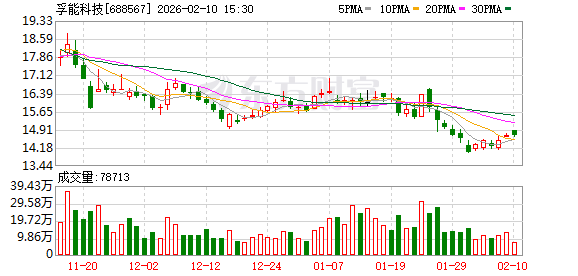
孚能科技:公司将进一步深化降本增效工作
Zheng Quan Ri Bao· 2026-02-10 13:12
Core Viewpoint - The company aims to enhance operational efficiency and reduce costs while ensuring large-scale production and delivery of SPS products, accelerating the industrialization of solid-state batteries, and expanding into overseas markets, eVTOL, and humanoid robots, ultimately improving its operational performance and investment value [2] Group 1 - The company will deepen cost reduction and efficiency enhancement efforts [2] - The company is focused on ensuring large-scale production and delivery of SPS products [2] - The company plans to accelerate the industrialization of solid-state batteries [2] Group 2 - The company is exploring opportunities in overseas markets [2] - The company is expanding into eVTOL and humanoid robot sectors [2] - The company aims to enhance its core competitiveness and investment value [2]

德方纳米:公司通过技术降本、工艺降本、管理降本等方式持续推进降本增效工作
Zheng Quan Ri Bao Wang· 2026-02-10 13:11
Core Viewpoint - The company, Defang Nano (300769), is actively implementing cost reduction and efficiency enhancement strategies through technological, process, and management improvements, achieving significant results [1] Group 1: Technological Cost Reduction - The company is investing in research and development to create lower-cost raw materials and more efficient production technologies [1] Group 2: Process Cost Reduction - The company is optimizing production processes by introducing lean manufacturing concepts and increasing automation levels to enhance production efficiency and resource utilization [1] Group 3: Management Cost Reduction - The company is strengthening expense control, optimizing management processes, and enhancing supply chain and quality management to lower management costs and improve efficiency [1]