
创新药

Search documents
创新药10年冰火淬炼:千亿BD交易背后的繁荣和挑战(上)丨2025·大复盘
Tai Mei Ti A P P· 2025-11-24 00:06
Core Insights - The Chinese innovative pharmaceutical industry is experiencing significant transformation, marked by substantial licensing deals and a shift towards global leadership in quality over quantity [2][3][6] - The total amount of License-out upfront payments has surpassed that of the primary market for the first time, indicating a shift in funding dynamics within the industry [13][31] - Despite the growth, there are underlying challenges such as a lack of clinical development capabilities and the undervaluation of early-stage pipelines, leading to a phenomenon of "selling seedlings at a discount" [16][20][24] Group 1: Industry Growth and Transactions - In 2025, the total amount of License-out transactions in China is expected to exceed that of the U.S. by 3.2 times, reflecting a rapid acceleration in drug approvals and a surge in innovative drug development [3][6] - The total amount of BD transactions in the Chinese pharmaceutical sector has surpassed $100 billion, with a significant increase in both the number of deals and transaction values [8][11] - Major transactions include a $125 billion collaboration between Hengrui Medicine and GSK, a $114 billion partnership between Innovent Biologics and Takeda, and a $61.5 billion deal between 3SBio and Pfizer, positioning these deals among the largest in global innovative drug licensing [9][10] Group 2: Challenges and Market Dynamics - The industry faces a stark divide, with leading companies achieving profitability while smaller biotech firms struggle with funding and development risks, leading to a survival of the fittest scenario [28][31] - The proportion of License-out transactions for late-stage clinical projects has only slightly increased, indicating ongoing challenges in clinical development capabilities [16][20] - The gap in clinical trial design and execution between Chinese companies and multinational corporations (MNCs) remains significant, impacting the ability of domestic firms to retain control over late-stage assets [19][21][24] Group 3: Financial Performance and Market Reactions - Innovative drug companies in China reported a revenue increase of 22.1% year-on-year in the first three quarters of 2025, with a notable reduction in net losses [28][31] - The market is becoming more discerning, focusing on clinical value and commercialization potential rather than short-term trading excitement, leading to a more cautious approach to BD transactions [32][33] - The capital market's response to BD transactions has been mixed, with significant deals not necessarily translating into sustained stock price increases, highlighting the need for long-term value realization [32][33]




华泰证券:AI叙事起争论、流动性收紧、地缘扰动构成了近期市场回调底色,当前A股回调已初具空间感
Sou Hu Cai Jing· 2025-11-23 23:58
Core Viewpoint - Recent market adjustments are attributed to debates surrounding AI narratives, tightening liquidity, and geopolitical disturbances, which have collectively increased market volatility [2][3]. Market Adjustment Factors - The market correction is driven by multiple factors: 1) Growing skepticism among global investors regarding sustained capital expenditure in AI, exacerbated by Nvidia's unexpected earnings report leading to a decline in its stock price, heightening investor concerns and market deleveraging [2][3]. 2) Year-end profit preservation sentiment among investors and tightening dollar liquidity expectations have disturbed global risk assets, with the Fed's rate cut expectations dropping to about 30% [2]. 3) Increased geopolitical tensions have accelerated a risk-off sentiment in the market, reflected in declines across various asset classes including stocks, bonds, and gold [2]. A-shares Market Valuation - Current A-share market adjustments indicate a preliminary sense of space, with a model predicting a reasonable forward PE TTM of approximately 13.6x for the Shanghai Composite Index, suggesting strong support around the market's central position in late September [3]. Liquidity Improvement Signals - Positive signals for liquidity include: 1) A potential reduction in leverage among financing funds, with the average guarantee ratio in the margin trading market falling to early August levels [4]. 2) A continued upward trend in private equity fund registrations [4]. 3) Investor sentiment, as measured by the breadth index, has declined to near yearly lows, indicating a potential recovery foundation [4]. 4) The peak of stock unlocks has passed, alleviating supply-side pressures [4]. Investment Strategy and Focus Areas - Emphasis on safety margins in investment strategies, focusing on: 1) Identifying stocks with low valuation and low crowding, particularly in sectors like seasoning and fermentation, leisure food, and communication services [5]. 2) Basic fundamentals, targeting sectors with improving supply-demand dynamics, such as textiles, commercial vehicles, and rare metals [5]. 3) High-dividend assets, as market risk appetite declines, with a focus on cyclical dividends in coal, chemicals, and steel, as well as potential dividends in railroads, food processing, and construction materials [5].

“主题投资”风行一时 “全市场选股”暂避锋芒
Zheng Quan Shi Bao· 2025-11-23 23:34
Core Viewpoint - The investment style of public funds in China is shifting from traditional core assets to emerging industries, driven by economic transformation and policy support, leading to a focus on thematic investments rather than broad market selection [2][3][5]. Group 1: Investment Strategy Changes - Public funds are moving from a "full market selection" strategy to a "thematic investment" approach, allowing for better positioning in high-growth stocks and enhancing competitiveness in performance rankings [3][4]. - The previous success of large-cap stocks like Sany Heavy Industry and Kweichow Moutai has diminished, with thematic products now dominating annual performance rankings [4][5]. - The rapid development of broad-based indices and Smart Beta products has made traditional active equity products less competitive, necessitating differentiation in style and active management [5][6]. Group 2: Thematic Investment Trends - Thematic funds have gained prominence, focusing on high-growth sectors such as artificial intelligence and innovative pharmaceuticals, which are seen as more lucrative compared to traditional sectors [6][7]. - Structural opportunities are increasingly concentrated in a few high-growth sectors, leading to significant performance disparities among funds [7][8]. - The focus on single themes allows for potentially higher returns, but also increases volatility and risk, necessitating careful management of exposure and risk [8][9]. Group 3: Challenges of Thematic Investment - Thematic investment requires deeper industry understanding and foresight, raising the bar for fund managers in terms of research and analysis capabilities [9][10]. - The need for rigorous valuation and risk management frameworks is heightened, as concentrated investments in specific sectors can lead to significant impacts from individual stock performance or policy changes [10][11]. - The complexity of managing concentrated portfolios increases, demanding more sophisticated risk management strategies to mitigate potential losses [10][11]. Group 4: Future of Investment Strategies - The "full market selection" strategy is not expected to disappear, as it offers unique advantages in capturing structural opportunities across various sectors [12][13]. - The market's aesthetic preferences will continue to evolve, but the fundamental skills associated with "full market selection" will remain relevant [12][13]. - The dual nature of thematic investments presents both opportunities for high returns and risks of significant losses, emphasizing the need for careful asset allocation and risk management [14][15].

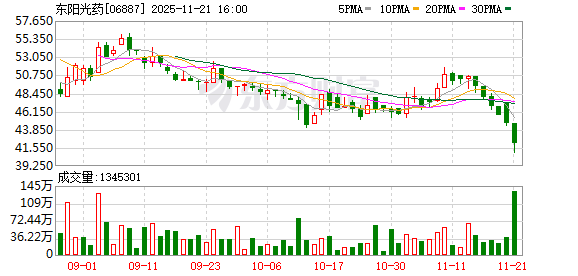
东阳光药董事长张英俊: 以“创新+国际化”双引擎开启中国药企进阶新篇章
Zheng Quan Shi Bao· 2025-11-23 21:51
Core Insights - The Chinese pharmaceutical industry is transitioning from "generic following" to "innovation leading," with 704 original innovative drugs expected from Chinese companies in 2024, ranking first globally [2] - The chairman of Dongyang Sunshine Pharmaceutical, Zhang Yingjun, emphasizes that the industry is entering a "golden decade" driven by innovation and internationalization, supported by favorable policies [2][3] - Dongyang Sunshine is focusing on source innovation, with a diverse R&D pipeline that includes small molecules, antibodies, small nucleic acids, ADCs, and cell therapies [2][3] Industry Trends - The Chinese pharmaceutical sector is experiencing a strategic opportunity period centered on innovation and internationalization, as highlighted by Zhang Yingjun at the 2025 Greater Bay Area Technology and Financial Innovation Development Conference [2] - The industry is benefiting from a supportive policy environment, including integration into ICH and continuous inclusion of innovative drugs in government work reports [2] Company Strategy - Dongyang Sunshine has shifted its R&D strategy from "Me-too" and "Fast-follow" to pursuing "BIC" (Best-in-Class) and "FIC" (First-in-Class) drugs [2] - The company currently has nearly 50 projects in the pipeline, with over 10 in registration or key clinical stages, showcasing differentiated advantages and international competitiveness [2] Technological Innovation - The company is leveraging AI technology, having developed six AI models for drug discovery, with its first AI-driven small molecule drug, HEC169584, entering clinical trials [3] - Dongyang Sunshine has established multiple core technology platforms to address significant unmet clinical needs, such as solid tumor treatment and hepatitis B cure [3] Internationalization Efforts - The internationalization strategy of Dongyang Sunshine is multifaceted, involving "License-out" agreements and plans for self-marketing products in Europe and the U.S. [3] - The company aims to have its insulin product approved in the U.S. by Q1 2026, potentially becoming the first domestically produced insulin to enter the U.S. market [3] Future Goals - Dongyang Sunshine aims to become a leading comprehensive pharmaceutical company focused on "innovation + internationalization + sustainability," targeting over 20 billion yuan in revenue and 5 billion yuan in profit within five years [4] - The company plans to launch over 10 new products and achieve more than five global collaborations in the same timeframe [4] Industry Perspective - Zhang Yingjun states that the advancement of Chinese pharmaceutical companies is fundamentally about the global recognition and validation of innovative value [5] - The company is actively participating in and leading this historic process through its dual focus on innovation and internationalization [5]

京新药业(002020.SZ):传统业务稳健,创新打开成长空间
Changjiang Securities· 2025-11-23 14:54
Investment Rating - The report initiates coverage with a "Buy" rating for the company [11]. Core Insights - The company has a solid foundation in traditional business, with a focus on innovation that opens up growth opportunities. It has established a comprehensive layout covering active pharmaceutical ingredients, formulations, and medical devices, particularly in the CNS, CVD, and digestive system fields. The company has accelerated its innovation transformation, with key products like the insomnia treatment drug, JX2201 targeting Lp(a) reduction, and promising pipelines for schizophrenia and Parkinson's disease [3][7][47]. Summary by Sections Traditional Business Stability - The company's finished drug business is the core, with revenue expected to reach 2.522 billion yuan in 2024, reflecting an 8% year-on-year increase. The company has managed to stabilize its revenue despite previous pressures from centralized procurement [7][32]. Innovation and Growth Potential - The insomnia drug, JX2201, has been commercialized and is expected to generate significant revenue, with 55 million yuan achieved in the first half of 2025. The drug's advantages include fewer side effects and lower dependency risks compared to competitors [8][47]. - JX2201 focuses on the Lp(a) lipid reduction mechanism, positioning itself uniquely in a competitive market dominated by RNA-based drugs. The company is the only domestic player with an Lp(a) small molecule in clinical stages, indicating strong business development potential [9][47]. Pipeline Development - The company continues to deepen its innovation in the CNS field, with ongoing clinical trials for schizophrenia and Parkinson's disease treatments. The collaboration between innovative and generic drugs is expected to enhance the overall product matrix [10][48]. Financial Projections - The company forecasts net profits of 795 million yuan, 965 million yuan, and 1.162 billion yuan for 2025, 2026, and 2027, respectively, with corresponding EPS of 0.92, 1.12, and 1.35 yuan [11].

策略:调整后的布局线索
HTSC· 2025-11-23 13:27
Core Insights - Recent market adjustments are influenced by debates surrounding AI narratives, tightening liquidity, and geopolitical disturbances, suggesting that the current market correction has begun to establish a sense of space [2][3] - The market valuation is approaching a "reasonable" central level, and if there is an overshoot, it may present opportunities to increase positions, focusing on mid-term themes and emphasizing safety margins [2][4] Market Adjustment Factors - The market correction is attributed to multiple factors: skepticism about sustained capital expenditure in AI, tightening liquidity expectations, and increased geopolitical tensions leading to a risk-off sentiment [3] - Historical data indicates that corrections caused by liquidity shocks often have a high probability of short-term rebounds [3] A-Share Market Valuation - Based on macro variables, the model predicts that the "reasonable" forward PE TTM central level for the Shanghai Composite Index is approximately 13.6x, indicating that the current correction has established a sense of space [4] Liquidity Improvement Signals - Positive signals for domestic liquidity include a potential reduction in leverage in financing funds, a rebound in private equity fund registration data, and a decrease in investor sentiment indicators [5] - The expectation for a rate cut by the Federal Reserve has risen to over 70%, which may improve overseas liquidity conditions [5] Investment Focus Areas - Emphasis on safety margins in investment strategies, focusing on sectors with low valuation and improving fundamentals, such as domestic consumption, domestic computing power, and innovative pharmaceuticals [6] - High-dividend assets are highlighted as having investment value in a low-risk appetite environment, with recommendations to focus on cyclical dividends and potential dividends in sectors like coal, chemicals, and food processing [6]
苑东生物(688513)2025年三季报点评:主业经营持续改善 创新药进展顺利
Xin Lang Cai Jing· 2025-11-23 12:36
Core Insights - The company reported Q3 2025 revenue of 365 million yuan (-1.55%) and a net profit attributable to shareholders of 83.59 million yuan (+18.52%, including stock incentive expenses), with a non-GAAP net profit of 69.19 million yuan (+27.85%, including stock incentive expenses), indicating a significant profit surprise due to new product launches and controlled investment in generic drug R&D [1] Group 1: Business Performance - The main business has reached a turning point, with expectations for a return to high growth. The impact of the tenth batch of national procurement has pressured H1 2025 performance, but the second half is expected to benefit from a low base, gradually alleviating procurement pressures [2] - Core products such as Butorphanol, Nalbuphine, and Oxazepam have entered a rapid growth phase, with Q3 2025 operational trends expected to continue and accelerate [2] Group 2: Internationalization and Innovation - The company has achieved breakthroughs in internationalization, with the Naloxone nasal spray production line passing FDA pre-approval inspections with zero defects and awaiting the final inspection report. Exclusive commercialization agreements have been signed with agents in the U.S. and Canada [2] - Strategic control of Chaoyang Pharmaceutical has strengthened the innovation engine, with the company increasing its stake to 51.48% and integrating its core pipeline into the company's innovation system [3] - The progress of Chaoyang's pipeline is promising, with the core product HP-001 showing good safety in Phase I clinical trials and demonstrating "Best-in-Class" potential [3] - The company has also made breakthroughs in independent R&D, with multiple projects entering clinical trials, including the ADC drug YLSHO03 and the third-generation calcium channel modulator EP-02260 [3] Group 3: Investment Outlook - The company is rapidly launching new products while actively adjusting R&D investments in generics. Despite the significant impact of the tenth batch of national procurement, the company is expected to unlock stock incentive profit assessment indicators for the year [4] - Profit forecasts have been adjusted, with expected net profits for 2025-2027 at 277 million, 339 million, and 423 million yuan, representing year-on-year growth of 16.2%, 22.5%, and 24.7% respectively [4] - The rapid progress of Shanghai Chaoyang's innovative drugs has led to an adjustment in valuation models, with a target market value of 14.6 billion yuan and a target price of 82.5 yuan, maintaining a "strong buy" rating [4]

年内医药“翻倍基”清零,机构称调整近尾声
第一财经· 2025-11-23 12:18
Core Viewpoint - The pharmaceutical sector is undergoing a significant adjustment, with the number of funds doubling in value sharply decreasing within the month. As of November 23, no pharmaceutical funds have achieved over 100% returns this year, contrasting with six funds that did so just three months prior [3][5]. Group 1: Market Performance - As of November 23, 54 out of 116 pharmaceutical-related funds have declined over 10% since September, with the largest drop being nearly 20% for Shenwan Lingxin Pharmaceutical Pioneer [5]. - All 48 innovative drug-themed funds have recorded declines since September, with 30 funds experiencing drops exceeding 10%. The largest decline was 17% for the Huabao Hang Seng Hong Kong Stock Connect Innovative Drug Selected ETF [5][6]. - Newly established funds have shown even more pronounced declines, with Longcheng Hong Kong Stock Healthcare Selected A and Huafu Medical Innovation A losing 13% and 20%, respectively [5]. Group 2: Investment Insights - The pharmaceutical sector's adjustment is seen as nearing its end, with analysts suggesting that funds may return to focus on innovative drug sectors following the third-quarter report disclosures [8]. - Investment in the pharmaceutical sector should align with broader industry trends, favoring high-quality companies without significant weaknesses for long-term investment [6]. - The Chinese innovative drug industry is in a critical transition from "R&D investment phase" to "value realization phase," with a notable increase in the approval of innovative drugs and medical devices during the 14th Five-Year Plan [9]. Group 3: Growth Potential - China's biopharmaceutical market has become the second largest globally, with approximately 30% of the world's innovative drugs under development [9]. - The sales revenue from innovative drugs is growing rapidly, with companies like Heng Rui Pharmaceutical reporting 9.561 billion yuan in innovative drug sales, accounting for 60.66% of total revenue [9]. - The penetration rate of domestic medical devices has increased significantly, from less than 3% in 2017 to 20%-30% currently, indicating a strong commercial progress [9].
年内医药“翻倍基”清零,机构称调整近尾声
Di Yi Cai Jing· 2025-11-23 11:57
Group 1 - The pharmaceutical sector is experiencing a significant adjustment, with the number of funds doubling in value sharply decreasing within the month [1][2] - As of November 23, all pharmaceutical funds with over 100% annual returns have dropped to zero, compared to six funds achieving this milestone as of September 1 [1][2] - The adjustment is particularly pronounced in innovative drug funds, with all 48 innovative drug-themed funds recording declines since September, and 30 of them falling over 10% [2][3] Group 2 - Analysts suggest that the recent downturn in the pharmaceutical sector may be nearing its end, with potential for a rebound as funds may return to the innovative drug sector [4][6] - The domestic innovative drug and medical device industry is transitioning from a "research and development investment phase" to a "value realization phase," with significant growth in approved innovative drugs and medical devices [4][5] - The Chinese biopharmaceutical market is now the second largest globally, with approximately 30% of the world's innovative drugs under development, indicating a growing international recognition of Chinese innovative drugs [4][5] Group 3 - Companies like Heng Rui Pharmaceutical and Fosun Pharmaceutical are showing promising sales growth in innovative drugs, with Heng Rui's innovative drug sales reaching 9.561 billion yuan in the first half of 2025, accounting for 60.66% of its revenue [4][5] - The penetration rate of domestic medical devices has increased significantly, from less than 3% in 2017 to 20%-30% currently, indicating a strong commercialization trend [5] - The development of advanced technologies, such as AI in medical devices, is opening up new commercial opportunities in international markets [5]
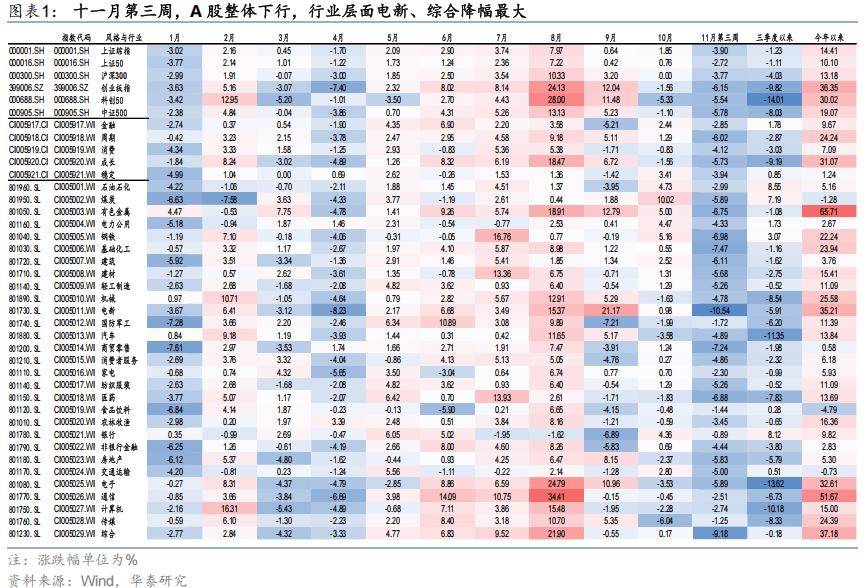
医药行业周报(2025/11/17-2025/11/21):本周申万医药生物指数下跌6.9%,关注个股创新研发亮点-20251123
Shenwan Hongyuan Securities· 2025-11-23 11:23
Investment Rating - The report indicates a neutral investment rating for the pharmaceutical industry, suggesting that the industry is expected to perform in line with the overall market [23]. Core Insights - The pharmaceutical sector experienced a decline of 6.9% this week, underperforming compared to the Shanghai Composite Index, which fell by 3.9% [3][5]. - The overall valuation of the pharmaceutical sector stands at 28.9 times earnings, ranking it 10th among 31 primary sectors [5][3]. - Key events include the acceptance of a new drug application for 百利天恒's drug iza-bren, which showed promising results in clinical trials for nasopharyngeal cancer [9]. - 泽璟制药's ZG006 received orphan drug designation from the FDA, indicating its potential in treating neuroendocrine cancer [10]. - 盟科药业 decided to terminate its stock issuance plan due to disagreements among major shareholders [11]. Market Performance - The pharmaceutical index's performance ranked 26th out of 31 sectors, with various sub-sectors showing significant declines, including raw materials (-8.6%) and chemical preparations (-6.8%) [3][5]. - The report highlights a focus on innovative drug sectors and medical devices, with specific companies recommended for investment [2]. Recent Key Events - 百利天恒's drug iza-bren demonstrated a complete response rate of 54.6% compared to 27.0% for standard chemotherapy, indicating its effectiveness [9]. - ZG006 showed an overall response rate of 38.5% in late-stage neuroendocrine cancer patients, with no severe adverse reactions reported [10]. - 盟科药业's stock issuance plan was halted due to internal conflicts, which may impact its operational stability [11].