
绿色低碳转型

Search documents
中广核电力20250828
2025-08-28 15:15
Summary of Key Points from the Conference Call Company Overview - The conference call pertains to China General Nuclear Power Corporation (CGN) and its operations in the nuclear power sector. Core Developments - **Project Updates**: - Huizhou Unit 3 achieved First Concrete Date (FCD) on June 10, 2025, marking the start of full construction [2] - Lufeng Unit 6 completed dome lifting on July 14, 2025, and entered equipment installation [2] - Huizhou Unit 2 completed its hot functional test on July 30, 2025, preparing for commercial operations [2] - A-share convertible bonds were issued on July 25, 2025, to support nuclear projects and optimize capital structure [2] - **Financial Performance**: - On-grid power generation reached 1,133.6 billion kWh in H1 2025, up 6.93% YoY [5] - Revenue was RMB 39.167 billion, down 0.5% YoY, with net attributable profit at RMB 5.952 billion, down 16.3% YoY [5] - Electricity sales revenue increased by 0.9% YoY to RMB 306.58 billion, but overall growth was hindered by declining market-based tariffs [21] Industry Context - **Electricity Consumption**: - China's electricity consumption rose by 3.7% YoY in H1 2025, totaling approximately 4.84 trillion kWh, driven by high summer temperatures [6] - Non-fossil energy sources accounted for over 60% of installed capacity and contributed 43.1% to total power generation, up 3.7 percentage points YoY [6] - **Nuclear Power's Role**: - Nuclear power represented about 1.7% of China's total installed capacity but contributed around 5.2% of total power generation as of June 2025 [7] - The average utilization hours for nuclear facilities increased by 167 hours YoY, indicating high stability [7] Safety and Operational Management - The company maintained zero incidents classified as Level 2 or above on the International Nuclear Event Scale in H1 2025 [9] - 91.07% of managed nuclear power units reached the world's top quartile advanced level based on WANO key performance indicators [10] Financial Strategy and Market Dynamics - **Market-Based Tariffs**: - The average market-based tariff in Guangdong was approximately 0.33 RMB per kWh, down by 6.5 RMB cents YoY [32] - The company is actively negotiating with provincial authorities regarding tariff adjustments to mitigate revenue impacts [33] - **Acquisitions and Capital Expenditures**: - The company approved a cash acquisition of equity interests in four companies, including Huizhou Nuclear Power, expected to complete by year-end [4] - Future capital expenditures will primarily be funded through bank loans, with minimal additional capital anticipated for completed projects [34] Environmental Impact - The company's operations contributed to a reduction of approximately 34.09 million tons of standard coal consumption and about 107 million tons of CO2 emissions, supporting national carbon neutrality goals [14] Future Outlook - The company plans to enhance research on strategic issues and improve operational management to ensure safe production during peak demand seasons [25] - Anticipated stable macroeconomic growth is expected to drive higher electricity consumption demand in H2 2025, benefiting nuclear unit generation [26] Conclusion - The company is positioned to leverage ongoing projects and market dynamics while focusing on safety, operational efficiency, and environmental sustainability to navigate the challenges and opportunities in the nuclear power sector.
中远海控2025年上半年息税前利润255亿元
Zheng Quan Shi Bao Wang· 2025-08-28 14:36
Financial Performance - The company reported a revenue of RMB 109.10 billion for the first half of 2025, representing a year-on-year increase of 7.78% [1] - EBITDA reached RMB 25.49 billion, up 3.40% year-on-year, with an EBITDA margin of 23.37% [1] - Net profit was RMB 20.21 billion, reflecting a growth of 4.95% year-on-year, while attributable net profit to shareholders was RMB 17.54 billion, up 3.95% [1] - The company announced an interim cash dividend of RMB 0.56 per share, amounting to approximately 50% of the net profit attributable to shareholders [1] Business Segments - Container shipping business generated revenue of RMB 104.80 billion, a year-on-year increase of 7.49%, while terminal operations revenue was RMB 5.84 billion, growing by 14.75% [1] - The company’s container shipping volume reached 13.28 million TEU, marking a 6.59% increase, with significant growth in various international routes [2] Fleet and Operations - The company operates a fleet of 557 container ships with a total capacity exceeding 3.4 million TEU, maintaining a leading position in the industry [2] - New shipping routes have been established, enhancing connectivity between key ports, including direct services from QianKai Port to Shanghai and a new route from Yangpu to Southeast Asia and the U.S. [2] Digital Transformation and Innovation - The company has launched standardized full-chain products and solutions, including an online "fast booking" and intelligent customer service platform, leading to a significant increase in supply chain revenue [3] - The implementation of AI applications aims to enhance operational efficiency, including intelligent space management and pricing platforms [3] Sustainability Initiatives - The company is advancing its green transition by constructing 42 new methanol dual-fuel ships and retrofitting existing vessels for methanol fuel [3] - The first domestic methanol dual-fuel container ship has successfully completed green methanol refueling, supporting the company's commitment to sustainable shipping practices [3]
半年报看板|中远海控上半年营收净利双增长 拟中期派发红利86.74亿元
Zhong Guo Jin Rong Xin Xi Wang· 2025-08-28 14:10
Core Insights - COSCO Shipping Holdings Co., Ltd. reported a revenue of 109.10 billion RMB for the first half of 2025, reflecting a year-on-year growth of 7.78% [1] - The company's EBIT reached 25.49 billion RMB, with a growth of 3.40%, and a corresponding EBIT margin of 23.37% [1] - Net profit for the period was 20.21 billion RMB, marking a 4.95% increase, while the net profit attributable to shareholders was 17.54 billion RMB, up by 3.95% [1] Financial Performance - Revenue from container shipping business was 104.80 billion RMB, a year-on-year increase of 7.49% [1] - Terminal business revenue reached 5.84 billion RMB, growing by 14.75% [1] - The company reported a net cash inflow from operating activities of 25.78 billion RMB and a net financial income of 2.10 billion RMB [1] Dividend and Share Buyback - The board announced an interim cash dividend of 0.56 RMB per share, totaling approximately 8.67 billion RMB, which represents 50% of the net profit attributable to shareholders [2] - The company has repurchased approximately 102 million A-shares and 237 million H-shares during the reporting period, with all repurchased shares being canceled [2] Operational Strategy - COSCO Shipping is focusing on an integrated and intelligent supply chain system combining "container shipping + ports + related logistics" [2] - The company aims to enhance its global market presence by innovating business models and improving operational efficiency [2] Fleet and Capacity - The self-operated container fleet consists of 557 vessels with a total capacity exceeding 3.4 million TEU, maintaining a leading position in the industry [3] - The company has new ship orders amounting to a capacity of 910,000 TEU, indicating ongoing fleet expansion [3] Market Expansion - The company is actively expanding its market reach by enhancing service capabilities on major routes and exploring emerging markets [3] - Cargo volume for container shipping reached 13.28 million TEU, a year-on-year increase of 6.59%, with significant growth in various international routes [3] Future Outlook - The container shipping industry faces a complex and changing market environment influenced by trade policies, geopolitical factors, and technological advancements [4] - COSCO Shipping plans to strengthen its core competitiveness and adapt to market changes while focusing on digital supply chain operations and green transformation [4]
中石油上半年赚840亿元 预计国际油价在70美元左右波动
Nan Fang Du Shi Bao· 2025-08-28 13:45
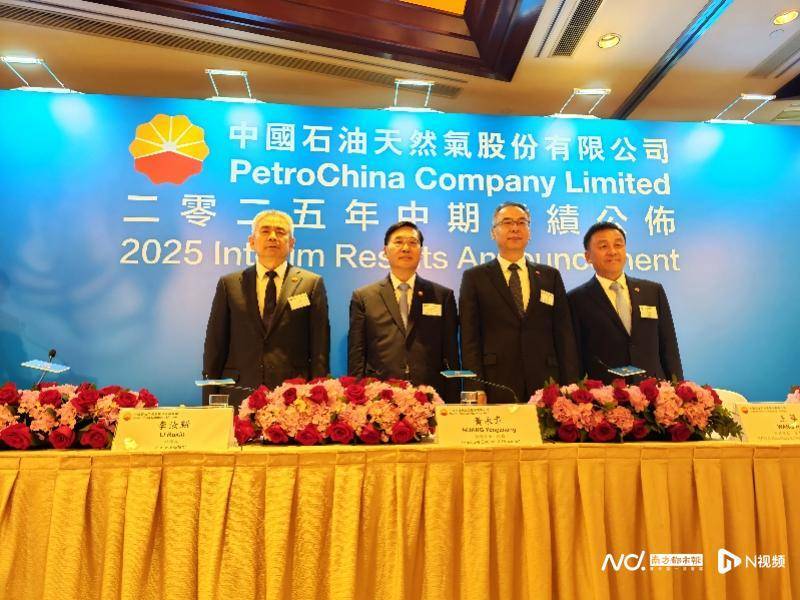
Core Viewpoint - China National Petroleum Corporation (CNPC) reported a solid performance in the first half of 2025, with significant increases in oil and gas production, alongside a strategic focus on green energy transition and market adaptability [1][2][3]. Production and Financial Performance - In the first half of 2025, CNPC's oil and gas equivalent production reached 924 million barrels, a year-on-year increase of 2%, with crude oil production at 476 million barrels, up 0.3% [1]. - The company achieved a natural gas production of 26.8 trillion cubic feet, marking a 3.8% increase, setting historical highs for both natural gas and oil equivalent production [1]. - CNPC's revenue for the first half of 2025 was RMB 1.5 trillion, with a net profit attributable to shareholders of RMB 84.01 billion, and a mid-year dividend of RMB 0.22 per share was declared [2]. Strategic Initiatives and Market Adaptation - CNPC optimized crude oil resource allocation and adjusted product structures dynamically to increase the production of high-margin refined and chemical products [3]. - The company is advancing its green low-carbon transition, with natural gas production's share of total output increasing, and is actively developing renewable energy projects [3]. - The management outlined a three-step plan for renewable energy, targeting 7% of total energy capacity from renewables by 2025, with a long-term goal of equal shares for oil, gas, and renewables by 2050 [3]. Market Outlook and Demand Trends - Despite a general decline in refined oil demand in the first half of the year, CNPC's domestic refined oil sales grew by 0.3%, increasing its market share by 1.5 percentage points [3]. - The company anticipates that domestic economic recovery will support energy consumption, particularly in residential travel and industrial oil use, although gasoline and diesel consumption may face downward pressure [3]. - Aviation fuel consumption is expected to continue growing at a rapid pace [3]. Oil Price and Risk Management - CNPC's management emphasized the importance of integrated supply chain management and cost control in responding to market changes [4]. - The company is closely monitoring international oil prices, which are influenced by OPEC+ production levels, geopolitical factors, and monetary policy [4][6]. - The management expects international oil prices to fluctuate around $70 per barrel in the third quarter, citing the company's robust risk management capabilities due to its comprehensive industry chain [6].

中共中央 国务院关于推动城市高质量发展的意见
证监会发布· 2025-08-28 12:30
Overall Requirements - The article emphasizes the importance of urban development in modern China, transitioning from rapid growth to stable development, focusing on quality improvement and efficiency enhancement in urban areas [2][3] - It outlines the goal of building modern, innovative, livable, beautiful, resilient, civilized, and smart cities by 2030 and achieving significant progress by 2035 [3][4] Optimizing Urban Systems - The article advocates for the integration of urban clusters and metropolitan areas, promoting a modern urban system with a focus on coordinated development among cities [5] - It highlights the need to enhance the competitiveness of mega cities while controlling their scale and optimizing their core functions [5][6] - It calls for improving the capacity of small and medium-sized cities and county towns to support urbanization and economic development [6] Cultivating New Urban Development Momentum - The article stresses the importance of fostering innovation ecosystems tailored to local resources and conditions, enhancing technological and industrial innovation [7] - It encourages the activation of existing urban resources, including real estate and infrastructure, to improve efficiency [8] - It proposes establishing a sustainable financing system for urban construction and operation, involving local governments and private capital [8] Creating High-Quality Urban Living Spaces - The article promotes the construction of quality housing and complete communities to meet diverse housing needs [10] - It emphasizes the need for improved urban infrastructure and public services to enhance living standards [11] Promoting Green and Low-Carbon Urban Transformation - The article outlines strategies for energy conservation and carbon reduction in production sectors, promoting green technologies and practices [12] - It encourages the adoption of sustainable lifestyles and the enhancement of urban ecological environments [13] Enhancing Urban Safety Resilience - The article calls for improved safety management of buildings and infrastructure, emphasizing disaster prevention and response capabilities [14] - It highlights the importance of public health systems and emergency management to enhance urban resilience [15] Promoting Cultural Prosperity in Cities - The article advocates for the protection and utilization of historical and cultural resources in urban areas [16] - It emphasizes the need to shape unique urban characteristics and enhance the cultural life of cities [17] Improving Urban Governance Capabilities - The article suggests enhancing urban governance systems and promoting digital transformation for better management [18] - It encourages community participation in governance and the establishment of effective social governance mechanisms [19] Strengthening Implementation - The article stresses the importance of centralized leadership and coordinated efforts among various levels of government to implement urban development strategies effectively [20]

中石油上半年赚840亿元,预计国际油价在70美元左右波动
Sou Hu Cai Jing· 2025-08-28 12:29
Core Viewpoint - China National Petroleum Corporation (CNPC) reported strong mid-year performance for 2025, with significant revenue and profit growth, alongside a commitment to dividend distribution [1][3]. Financial Performance - CNPC's revenue for the first half of 2025 reached RMB 1.5 trillion, with a net profit attributable to shareholders of RMB 84.01 billion [1]. - The board declared an interim dividend of RMB 0.22 per share [1]. Production and Operations - Oil and gas equivalent production reached 924 million barrels, a year-on-year increase of 2%, with crude oil production at 476 million barrels (up 0.3%) and marketable natural gas production at 2.68 trillion cubic feet (up 3.8%) [1][3]. - The company optimized crude oil resource allocation and adjusted product structure to increase high-margin refined and chemical products [3]. Green Transition and Future Plans - CNPC is advancing its green low-carbon transition, with a focus on increasing natural gas production's share in total output and developing renewable energy [3]. - The company aims for renewable energy to account for 7% of total oil and gas equivalent production by the end of 2025, with a long-term goal of equal shares for oil, gas, and renewable energy by 2050 [3]. Market Dynamics - Despite a decline in overall refined oil demand, CNPC's domestic refined oil sales grew by 0.3%, increasing its market share by 1.5 percentage points [3]. - The company anticipates that domestic economic recovery will support energy consumption, particularly in residential travel and industrial oil use, although gasoline and diesel consumption may face downward pressure [3]. International Oil Price Outlook - CNPC's management highlighted the influence of OPEC+ production decisions and geopolitical factors on international oil prices, predicting a fluctuation around $70 per barrel in Q3 [4]. - The company emphasized its integrated supply chain management and cost control as key strengths in navigating market changes [4].
重磅!中共中央 国务院最新发布!
Zheng Quan Ri Bao Wang· 2025-08-28 12:26
Core Viewpoint - The document outlines the "Opinions on Promoting High-Quality Urban Development" by the Central Committee of the Communist Party of China and the State Council, emphasizing the transformation of urban development towards high quality by 2030 and the establishment of modern urban systems by 2035 [1][3][4]. Group 1: Overall Requirements - The document stresses the importance of adhering to Xi Jinping's thoughts on socialism with Chinese characteristics, focusing on human-centered urban development, and promoting urban renewal as a key strategy [4][3]. - Key goals include significant progress in modern urban construction by 2030, with improvements in living quality, green transformation, and governance levels [4][3]. Group 2: Urban System Optimization - The document advocates for the integration of urban clusters and metropolitan areas, enhancing the competitiveness of mega cities while controlling their scale [5][6]. - It emphasizes the need to improve the capacity of small and medium-sized cities and county towns, promoting urbanization and rural economic development [6]. Group 3: New Development Drivers - The document highlights the importance of fostering innovation ecosystems tailored to local resources, enhancing technological innovation, and developing advanced manufacturing clusters [7][8]. - It calls for activating the potential of existing urban resources and establishing a sustainable financing system for urban construction and operation [8]. Group 4: High-Quality Urban Living Spaces - The document promotes the construction of "good houses" and complete communities, aiming to meet diverse housing needs and improve service quality [10]. - It emphasizes the need for urban infrastructure optimization and the enhancement of public services to ensure equitable access [11][12]. Group 5: Green and Low-Carbon Transformation - The document outlines strategies for energy conservation and carbon reduction in production, promoting green buildings and sustainable urban living practices [12][13]. - It stresses the importance of ecological environment governance and the improvement of urban air quality [13]. Group 6: Urban Safety and Resilience - The document emphasizes the need for robust safety management of buildings and infrastructure, enhancing disaster prevention and response capabilities [14][15]. - It highlights the importance of public health emergency management and the establishment of a comprehensive disaster risk management system [15]. Group 7: Cultural Prosperity - The document encourages the protection and utilization of urban historical and cultural heritage, promoting a unique urban identity [16][17]. - It calls for the enhancement of public cultural services and the integration of culture with tourism and technology [17]. Group 8: Governance Improvement - The document advocates for a coordinated urban governance system, enhancing the role of community participation in urban management [18][19]. - It emphasizes the need for digital transformation in urban governance, improving efficiency and service delivery [18]. Group 9: Implementation and Organization - The document stresses the importance of centralized leadership from the Party and government in urban development, establishing a collaborative framework for implementation [20].
破解“减排成本高”难题,碳市场建设进入新阶段
Di Yi Cai Jing· 2025-08-28 12:20
Group 1 - The core viewpoint of the article emphasizes the importance of the newly issued "Opinions" as a guiding document for the construction of a national carbon market in China, marking a new phase in the country's green and low-carbon transition efforts [1][5] - The carbon market is identified as a crucial policy tool for addressing climate change and accelerating the green transformation of the economy, with the establishment of both mandatory and voluntary carbon trading markets [2][5] - The national carbon market aims to reflect the marginal costs of emissions reduction and social value through carbon pricing, guiding capital and resources towards low-carbon technologies and services [2][3] Group 2 - The construction of the carbon market is designed to provide flexible mechanisms for achieving greenhouse gas control targets at lower social costs, allowing companies to choose their compliance paths [3][5] - The national carbon market is expected to accelerate the transition to clean energy and technological innovation in key industries such as electricity, metallurgy, and cement, promoting decarbonization across supply chains [3][5] - The article highlights the need for a unified carbon market with standardized management, trading, and regulatory frameworks to enhance resource allocation efficiency and market potential [6][9] Group 3 - The voluntary carbon market is an essential component of the national carbon market system, aimed at creating significant green market opportunities and supporting national climate goals [8][9] - As of now, the voluntary carbon market has made progress with the establishment of registration and trading systems, and several greenhouse gas reduction projects have been registered, totaling approximately 9.48 million tons of CO2 equivalent [9] - The government plans to focus on key areas for carbon peak and neutrality, developing methodologies for voluntary reduction projects and exploring international pathways for voluntary trading mechanisms [9]
2025民营企业500强揭晓!京东第一!华为第四!
国芯网· 2025-08-28 12:12
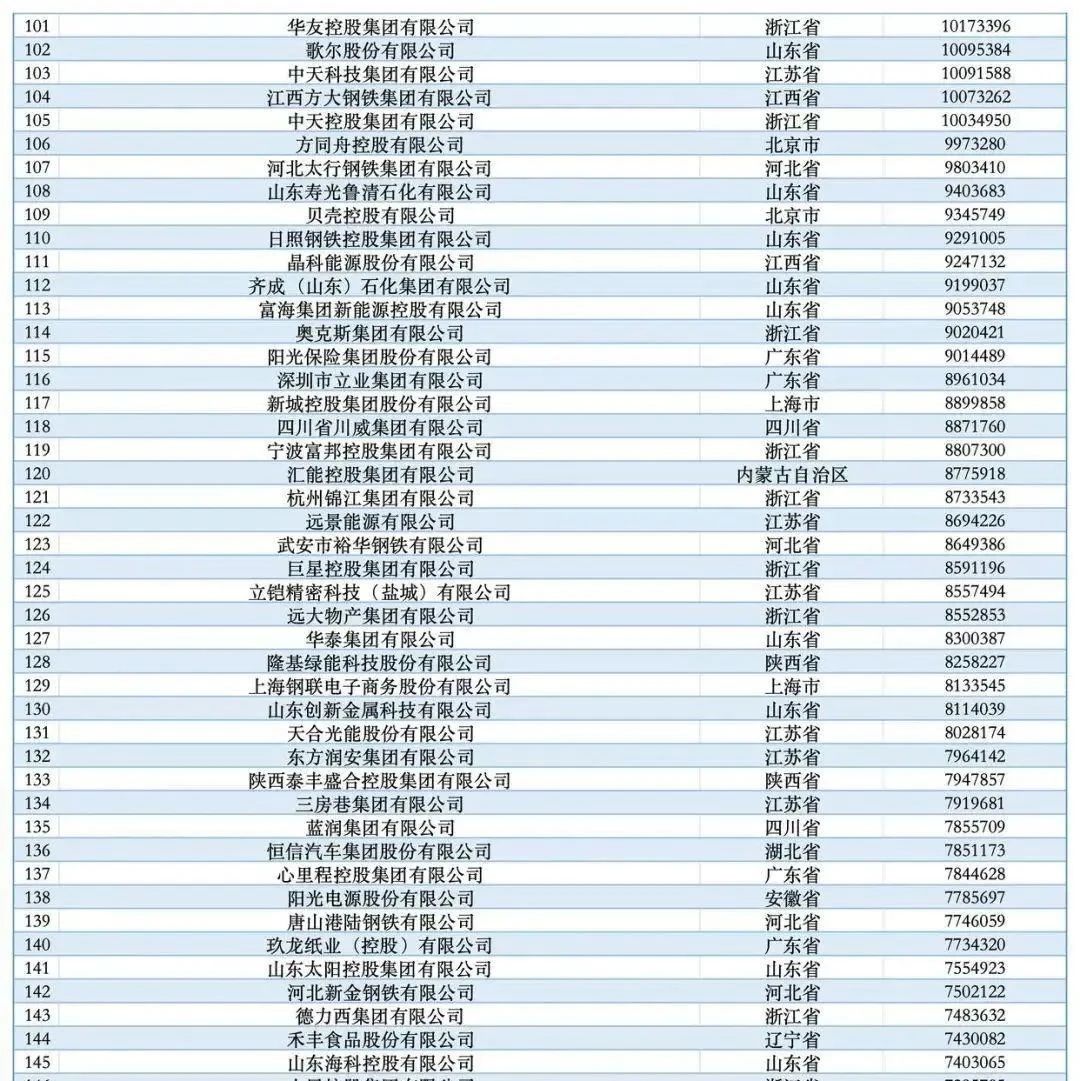
Core Viewpoint - The 2025 China Private Enterprises Top 500 report highlights the continuous growth and resilience of private enterprises in China, showcasing their increasing revenue, assets, and innovation capabilities. Group 1: Overall Scale and Financial Performance - The threshold for entering the Top 500 private enterprises increased to 27.023 billion yuan in 2024, with total revenue reaching 4.305 trillion yuan, and average revenue per enterprise at 861.02 million yuan, a growth of 2.72% year-on-year [2][3] - Total assets amounted to 51.15 trillion yuan, with an average asset value of 1.023 billion yuan, reflecting a growth of 2.62% [2] - The number of enterprises with revenue exceeding 100 billion yuan reached 105, an increase of 8 from the previous year [2] Group 2: Profitability and Efficiency - The combined net profit of the Top 500 private enterprises was 1.8 trillion yuan, with an average net profit of 360.5 million yuan, marking a growth of 6.48% [3] - The average return on net assets was 10.61%, and the total asset turnover rate was 86.62% [3] Group 3: Industry Composition and Development Trends - 72% of the Top 500 enterprises belong to the secondary industry, with 66.4% in manufacturing [4] - Manufacturing enterprises generated total revenue of 29.63 trillion yuan, a growth of 7.66%, and accounted for 68.84% of the total revenue of the Top 500 [4] - 64.2% of enterprises have developed digital transformation strategies, and 83% are advancing green and low-carbon transitions [4] Group 4: Innovation and R&D - The total R&D expenditure of the Top 500 enterprises reached 1.13 trillion yuan, with an average R&D investment intensity of 2.77% [5] - The number of valid patents held by these enterprises increased to 721,600, a growth of 8.23% [6] Group 5: Governance and Social Contribution - 52.24% of the Top 500 enterprises have introduced strategic investors, and 90% have established internal control and compliance mechanisms [7][6] - The total tax contribution of the Top 500 enterprises reached 1.27 trillion yuan, with 240 enterprises paying over 1 billion yuan in taxes [8] Group 6: Employment and Community Engagement - The total employment generated by the Top 500 enterprises was 11.0912 million, with an average of 22,000 employees per enterprise [8] - 72.8% of enterprises are actively involved in rural revitalization efforts, and 79% participate in charitable donations, totaling 10.476 billion yuan [8]



易普力2025年半年报业绩亮眼 绿色智能爆破技术引领行业新生态
Zheng Quan Shi Bao Wang· 2025-08-28 11:55
Core Viewpoint - Yipuli (002096), a leading company in the domestic civil explosives industry, reported robust growth in its 2025 semi-annual report, with significant increases in key financial metrics, driven by market investment and operational efficiency [1] Financial Performance - In the first half of the year, the company achieved operating revenue of 4.713 billion yuan, a year-on-year increase of 20.42% - The net profit attributable to shareholders reached 409 million yuan, up 16.43%, both figures marking new highs since the company's restructuring [1] Market and Industry Trends - The global green low-carbon transition and China's "dual carbon" goals are creating historic opportunities for the clean energy industry, with hydropower's role becoming increasingly significant [2] - The focus of hydropower engineering construction has shifted from mere installed capacity to the environmental impact and comprehensive benefits over the entire lifecycle, necessitating higher standards for project sustainability [2] Technological Advancements - Yipuli has pioneered the introduction of on-site mixed explosives technology in domestic hydropower projects since 1993, establishing a foundation for green blasting [3] - The company has developed a comprehensive solution encompassing ten technical advantages, transitioning from a single service provider to a full-chain solution supplier [3] - The integration of IoT, big data, and AI into traditional blasting operations is becoming a new trend, with Yipuli actively adopting these technologies to enhance its competitive edge [3] R&D and Innovation - The company has developed advanced on-site mixed water gel explosive technology, achieving international standards and filling domestic gaps [4] - Yipuli is advancing the application of robotic loading and building smart production lines, promoting a shift towards less human-intensive operations in explosive production [4] - As China's hydropower development progresses into more challenging geological conditions, the demand for high-tech blasting services is expected to grow, positioning Yipuli favorably in the market [4]
