生成式AI

Search documents
市值蒸发千亿后,要如何绝地反击?
虎嗅APP· 2025-10-20 09:57
Core Viewpoint - The article discusses the transformation of the company CreateAI from its previous focus on autonomous driving to the gaming and generative AI industry, highlighting the strategic decisions and opportunities that led to this pivot [5][8][20]. Group 1: Company Background and Transformation - CreateAI, previously known as TuSimple, was once a leader in the autonomous driving sector with a peak market value exceeding $16 billion [5][7]. - Following regulatory challenges and a significant decline in market value, the company announced a shift in focus to gaming and generative AI in August 2022, rebranding as CreateAI [8][9]. - The decision to pivot was influenced by the management's understanding of the industry landscape and the desire to leverage existing resources and technology [10][20]. Group 2: New Business Focus - CreateAI is developing a AAA game titled "Jin Yong's Heroes," based on the popular works of author Jin Yong, with plans for a limited beta test by late 2027 and a full release in 2028 [11][13]. - The company has secured IP rights for 15 Jin Yong works, which are expected to enhance its competitive edge in the gaming market [11][23]. - In addition to gaming, CreateAI launched a video generation platform called Animon, which focuses on anime content and aims to reduce production costs significantly [15][19]. Group 3: Market Strategy and Competitive Advantage - The global market for gaming and anime content is estimated to be around $25 billion annually, providing a substantial opportunity for CreateAI [28]. - The company aims to combine content creation with a user-generated content (UGC) platform, enhancing engagement and efficiency in anime production [28][29]. - CreateAI's existing AI technology and financial resources position it favorably compared to typical startups in the gaming and anime sectors [23][24].

AI资本开支太狂热了?高盛:这才到哪呢
华尔街见闻· 2025-10-20 09:24
Group 1 - The core viewpoint of the article is that the current scale of AI investment is sustainable and not overheated, indicating a robust macro story for AI infrastructure development [1][3][6] - Goldman Sachs' latest report suggests that AI-related investments currently account for less than 1% of the US GDP, which is significantly lower than historical peaks in other technology cycles [7] - The report anticipates that productivity gains from AI will generate $8 trillion in capital income for US companies, far exceeding the total current and foreseeable AI investment [2][7] Group 2 - Since mid-2023, there has been a significant acceleration in AI infrastructure investment, with an estimated $300 billion in revenue growth for US companies in AI-related infrastructure by 2025 [4] - The report highlights two main reasons supporting continued AI capital expenditure: significant productivity improvements and increasing demand for computing power [5] - It is projected that the application of generative AI will enhance US labor productivity by 15% over the next decade, with AI applications showing potential productivity increases of 25-30% [5]



2030年VR/MR头戴装置全球出货量预估将达1,440万台
WitsView睿智显示· 2025-10-20 09:19
Core Insights - Apple is re-entering the market with an upgraded Vision Pro, focusing on enhancing computational performance and improving weight distribution in VR/MR headsets [2] - TrendForce's report predicts that OLEDoS technology will see a significant increase in penetration, reaching 58% in VR/MR applications by 2030 [2] - Despite a projected decline in global VR/MR product shipments to 5.6 million units in 2025, long-term growth is expected, with shipments reaching 14.4 million units by 2030 [2] Group 1: Market Trends - OLEDoS is emerging as a key display technology for mid-to-high-end VR/MR devices, benefiting from breakthroughs in both supply chain and application [2] - The current market is dominated by high-cost LCD displays, but the expansion of OLEDoS production lines by Chinese suppliers is expected to lower production costs [5] - Major brands are investing in both software and hardware upgrades, which will drive the long-term growth of the VR/MR market [2] Group 2: Competitive Landscape - Apple and Samsung are enhancing user experience through application platforms and generative AI, with Apple’s Vision Pro utilizing the new M5 chip for improved performance [6] - Samsung is collaborating with Google and Qualcomm to launch the Galaxy XR, featuring a 4K OLEDoS display, integrating applications across devices [6] - Meta is also innovating by using a combination of 0.9-inch OLEDoS and Pancake optical architecture to meet the demand for thinner VR/MR products [6] Group 3: Future Outlook - OLEDoS is expected to transition from the mid-to-high-end market to mainstream adoption, becoming a crucial driver for the transformation of the VR/MR industry [6]






张亚勤院士:AI五大新趋势,物理智能快速演进,2035年机器人数量或比人多
机器人圈· 2025-10-20 09:16
Core Insights - The rapid development of the AI industry is accelerating iterations across various sectors, presenting significant industrial opportunities [3] - The scale of the AI industry is projected to be at least 100 times larger than the previous generation, indicating substantial growth potential [5] Group 1: Trends in AI Development - The first major trend is the transition from discriminative AI to generative AI, now evolving towards agent-based AI, with task lengths doubling and accuracy exceeding 50% in the past seven months [7] - The second trend indicates a slowdown in the scaling law during the pre-training phase, with more focus shifting to post-training stages like reasoning and agent applications, while reasoning costs have decreased by 10 times [7] - The third trend highlights the rapid advancement of physical and biological intelligence, particularly in the intelligent driving sector, with expectations for 10% of vehicles to have L4 capabilities by 2030 [7] Group 2: AI Risks and Industry Structure - The emergence of agent-based AI has significantly increased AI risks, necessitating greater attention from global enterprises and governments [8] - The fifth trend reveals a new industrial structure characterized by foundational large models, vertical models, and edge models, with expectations for 8-10 foundational large models globally by 2026, including 3-4 from China and the same from the U.S. [8] - The future is anticipated to favor open-source models, with a projected ratio of 4:1 between open-source and closed-source models [8]
研报 | 供应链与应用端双重突破,预估2030年OLEDoS于VR/MR渗透率将快速增长至58%
TrendForce集邦· 2025-10-20 09:03
Core Insights - Apple is re-entering the market with an upgraded Vision Pro, focusing on enhancing computational performance and improving weight distribution in VR/MR headsets [2] - The OLEDoS display technology is expected to see a significant increase in penetration, projected to reach 58% in VR/MR applications by 2030 [2] Market Performance - Global VR/MR product shipments are estimated to decline to 5.6 million units in 2025 due to underperformance from major brands like Meta, Apple, and Sony [4] - Long-term projections indicate that global shipments could reach 14.4 million units by 2030, driven by software and hardware upgrades from key brands [4] Technology and Supply Chain - Display technology is crucial for pricing VR/MR products, with high-cost performance LCDs remaining mainstream; however, OLEDoS is expected to gain traction as Chinese suppliers expand production [5] - Companies like Seeya, BOE, and Sidtek are establishing 12-inch production lines, which will help reduce OLEDoS production costs through improved yield rates [5] Application Development - Apple and Samsung are enhancing user experience through application platforms and generative AI, with Apple's Vision Pro utilizing the new M5 chip for better performance and battery life [5] - Samsung is collaborating with Google and Qualcomm to launch the Galaxy XR, featuring a 4K OLEDoS display, integrating applications across mobile and tablet devices [5] Industry Trends - Meta is focusing on its ecosystem while planning to use 0.9-inch OLEDoS with Pancake optical architecture to meet the demand for thinner VR/MR products [6] - OLEDoS is anticipated to penetrate from mid-to-high-end markets into mainstream markets, becoming a key driver for the transformation of the VR/MR industry [6]
市值蒸发千亿后,要如何绝地反击?
Hu Xiu· 2025-10-20 08:47
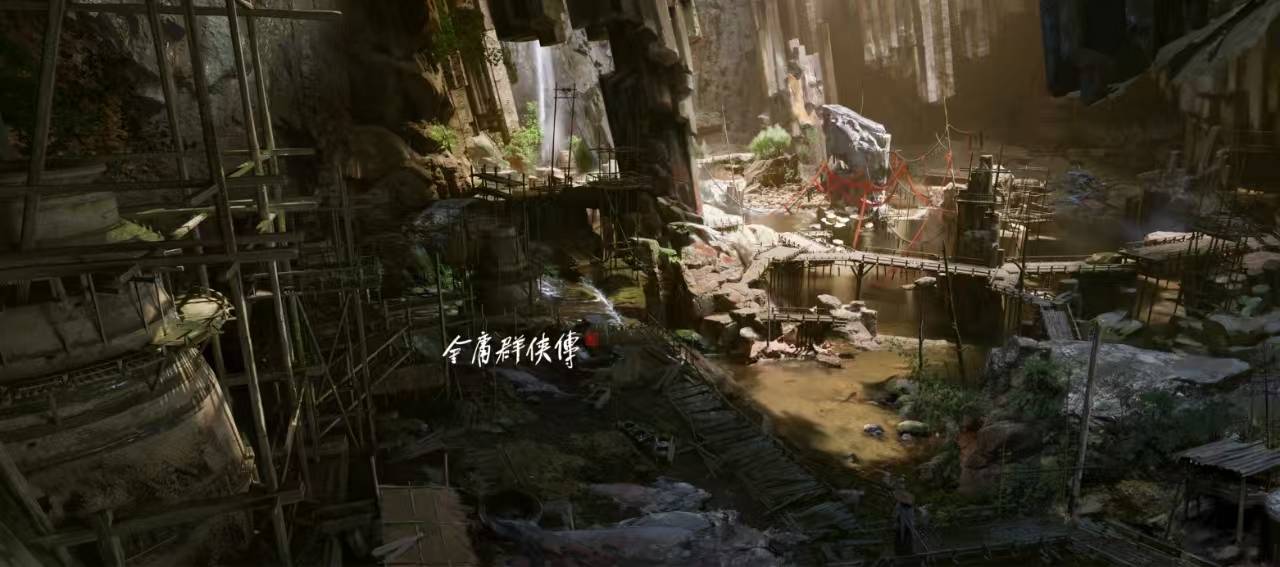
Core Viewpoint - CreateAI, formerly known as TuSimple, has pivoted from autonomous driving to the gaming and generative AI industry after a significant decline in market value, aiming to leverage its existing technology and IP resources for a successful transformation [2][5][7]. Group 1: Company Transformation - CreateAI launched in August 2023, featuring Asia's largest motion capture studio in Beijing, equipped with 130 Vicon optical motion capture devices [1]. - The company transitioned from TuSimple, which was once valued at over $16 billion, to focus on gaming and generative AI after facing regulatory challenges and a drastic drop in market value [3][5][7]. - The decision to pivot was influenced by the management's realization of the long and complex supply chain in autonomous driving, prompting a search for a clearer business path [20][22]. Group 2: New Business Ventures - CreateAI has developed a video generation platform called Animon, which allows users to create anime videos from a single image or idea, and has seen success in Japan [1][19]. - The company secured IP rights for 15 works from the renowned "Jin Yong" martial arts series, planning to develop a AAA game titled "Jin Yong Heroes" [12][13]. - The game is expected to enter closed beta testing by late 2025 and be fully released by early 2028 [15]. Group 3: Competitive Advantages - CreateAI possesses a rich accumulation of AI technology and sufficient funding, which is advantageous compared to typical startups in the gaming industry [23]. - The company holds exclusive global rights to adapt "Jin Yong Heroes" and "The Three-Body Problem," which are significant IPs in the market [24]. - The strategy includes a combination of high-return projects like AAA games and a UGC platform centered around Animon, aiming to create a sustainable revenue model [28][30]. Group 4: Market Insights - The global market for gaming and anime content is approximately $25 billion annually, indicating a substantial opportunity for growth [28]. - The use of generative AI in content creation is expected to reduce production costs significantly, making it more feasible to produce anime content [19]. - CreateAI aims to build a community around Animon, addressing the current lack of accessible platforms for anime enthusiasts to create and share content [31].
哈工大孟维康:让注意力有 “棱角”|Attention
3 6 Ke· 2025-10-20 07:58
Core Insights - The article discusses the evolution and challenges of Linear Attention in the context of Vision Transformers, highlighting the need for improved efficiency and performance in AI models [1][2][3]. Group 1: Linear Attention Challenges - Linear Attention faces two main issues: the distribution of attention weights becomes too flat, reducing model sharpness, and the use of non-negative kernel functions leads to the loss of negative interaction information [2][9]. - The traditional Self-Attention mechanism has high computational costs and energy consumption, making it difficult for smaller teams and companies to compete [1][2]. Group 2: PolaFormer Innovation - PolaFormer introduces a dual-stream architecture that separates positive and negative interactions, allowing for independent processing of these relationships [4][6][10]. - The model employs a learnable channel-wise power function to enhance the sharpness of attention distributions, aiming to recover the expressiveness of Softmax Attention while maintaining efficiency [6][10][20]. Group 3: Experimental Validation - Extensive experiments demonstrate that PolaFormer effectively replaces Self-Attention in Vision Transformer frameworks, showing significant performance improvements across various tasks such as object detection, semantic segmentation, and long sequence benchmarks [7][31]. - The model's design allows it to maintain stable performance across different input types, including short texts and long sequences, without losing global information [9][29]. Group 4: Future Applications and Implications - PolaFormer is expected to enhance applications in long-sequence and high-resolution scenarios, such as video processing and large language models, by providing a more efficient solution without compromising performance [31][32]. - The research emphasizes the importance of co-designing algorithms with hardware to address deployment challenges, particularly in resource-constrained environments [30][31].

万条推文“怒轰”、估值下跌, OpenAI被误导性“突破”反噬!陶哲轩:有实力,但方向错了?
AI前线· 2025-10-20 05:23
整理 | 华卫 "搬起自己的 GPT 石头砸了自己的脚。"这是 Meta 首席 AI 科学家 Yann LeCun 对 OpenAI 研究员们的最新评价。 事件起因是,此前这些研究员因 GPT-5 的一项新数学"突破"而高调庆祝,但在受到整个 AI 社区质疑后又迅速撤回了该说法。连谷歌 DeepMind 首席执 行官 Demis Hassabis 也对此提出批评,称其沟通存在疏漏。 GPT-5"突破" 被证明是一个错误 取得"突破"的消息,最早是由前微软副总裁、现 OpenAI 研究科学家 Sebastien Bubeck 放出。他在 X 上称,两位研究人员在周末借助 GPT-5 找到了 10 个埃尔德什问题(Erdős problems)的答案。埃尔德什问题是匈牙利数学家 Paul Erdős 提出的一系列数学问题的统称,其中既包含未解决的难题,也有 已解决的问题,著名案例包括 "不同距离问题"(Distinct Distances Problem)与 "偏差问题"(Discrepancy Problem)。这类问题以难度高著称,常成为 学界深入研究的对象,部分问题甚至设有现金奖励,鼓励研究者攻克。 10 ...

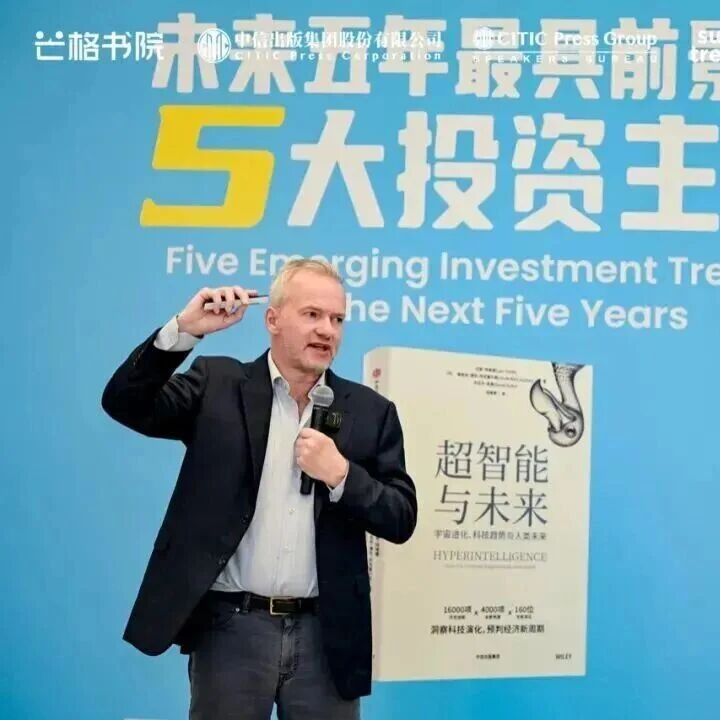
拉斯·特维德:未来5年最具前景的5大投资主题
首席商业评论· 2025-10-20 04:21
Group 1 - The core investment themes for the next five years include technology, metals and mining, passion investments, ASEAN and Chinese markets, and biotechnology [9][30][40] - The rapid growth of AI technology is expected to drive significant profits in the future, with effective compute power increasing by 100,000 times from 2019 to 2023 [13][19] - The emergence of generative AI is anticipated to create strong business moats for companies that effectively utilize it, contrasting with the commoditization of large language models [20][19] Group 2 - The metals and mining sector is projected to face a potential shortage, particularly in uranium, silver, and platinum, with uranium prices expected to rise by 225% if they return to historical peaks [31][30] - Passion investments, such as prime real estate and limited edition assets, are expected to see increased demand as wealth grows, despite their supply remaining fixed [33] - The ASEAN and Chinese markets are highlighted for their potential growth, with China showing significant innovation capabilities and a favorable investment environment [36][38] Group 3 - The biotechnology sector is currently undervalued, with an average P/E ratio of 10-11, and is expected to benefit from AI advancements that lower R&D costs and accelerate product development [40][42] - The future of work is projected to be heavily influenced by AI, with estimates suggesting that 80% of jobs could be performed by intelligent robots by 2050 [29][22] - The development of physical AI, including robotics and autonomous vehicles, is expected to create a significant market by 2027-2028, with China positioned to play a crucial role [24][28]
你是否患上了AI冒名顶替综合征?
3 6 Ke· 2025-10-19 23:13
神译局是36氪旗下编译团队,关注科技、商业、职场、生活等领域,重点介绍国外的新技术、新观点、新风向。 编者按:越来越多的人正被一种悄然滋生的怀疑所困扰:因为比不上AI,因此质疑自己的能力。本文来自编译,希望对您有所启发。 过去两年职场中发生了一件耐人寻味的事。那些曾以敏捷、聪慧和机智自豪的人,如今正默默怀疑自己是否太迟钝、太笨拙、太传统,无法应对日常工作挑 战。 并非他们突然工作能力下降,而是新加入的"同事"永不疲倦、永不呆滞地盯着屏幕,几乎能在八秒内对任何问题给出精炼答案。生成式人工智能已成为办公 室里干劲十足的实习生,以令人不安的速度批量生产备忘录、演示文稿,甚至连冷笑话都信手拈来。然而面对这份免费劳动力,许多人非但没有享受其便 利,反而陷入自卑情绪。 欢迎来到AI冒名顶替综合征(AI Impostor Syndrome):当你发现自己无法与机器匹敌时,那种潜移默化的怀疑便悄然滋生。过去的冒名顶替综合征以(非 理性地)自认优越的同类为参照,如今的标杆却变成了日常使用的生成式AI。我们既依赖又钦佩它,却因此感到自身价值被削弱。 1. 何为AI冒名顶替综合征? 传统冒名顶替症源于人类间的才能质疑,而AI冒名顶 ...