量子计算

Search documents
英伟达一周内出手两家量子公司
3 6 Ke· 2025-09-11 01:13
Core Insights - PsiQuantum has completed a $1 billion funding round, raising its valuation to $7 billion, with plans to deliver its first commercial quantum computer with one million qubits by the end of 2027 [1][2] - The funding round was led by existing investors such as BlackRock, Temasek Holdings, and Baillie Gifford, with new participation from Nvidia's venture capital arm and Qatar Investment Authority [1] - Nvidia's CEO has adjusted his expectations for quantum computing, indicating that the technology is reaching a practical application sooner than anticipated [1] Company Strategy - PsiQuantum aims to build a quantum computer capable of fault-tolerant operations, directly targeting the creation of a one million qubit system, contrasting with competitors' gradual approaches [2] - The company plans to deploy a quantum computer in Brisbane, Australia, by the end of 2027, with part of the funding allocated for building large-scale testing systems and accelerating the production of key materials [2] - PsiQuantum's manufacturing capabilities are highlighted as a strength, leveraging existing semiconductor supply chains for its quantum chips produced in New York [2] Market Focus - The focus is shifting towards ensuring that the market can effectively utilize quantum computers upon their production, emphasizing the importance of quantum software and algorithms [3] - PsiQuantum is collaborating with enterprise clients to develop application layers, and its partnership with Nvidia includes a "quantum + GPU" hybrid programming framework [3]

甲骨文创始人一度超马斯克登顶全球首富!公司股价飙升;微软将要求员工每周三天在单位办公;高德扫街榜发布;追觅进军天文领域丨邦早报
创业邦· 2025-09-11 00:08
Group 1 - Apple's stock price fell by 1.48% to $234.35 after the launch of the iPhone 17 series, which did not surprise the market [3] - The iPhone 17 series is expected to be produced in China and India, potentially affected by U.S. tariff policies [3] - Investors expressed disappointment over Apple's lack of focus on software and artificial intelligence during the product launch [3] Group 2 - Zhaomi Technology announced the establishment of an Astronomy Business Unit (BU) focused on intelligent astronomical optical systems [4] - The Astronomy BU aims to create a "Sky Eye" and is working on mass production of large-diameter optical lenses for smart telescopes [4] Group 3 - Oracle's stock surged by 42%, leading to Larry Ellison briefly becoming the world's richest person with a net worth increase of approximately $890 billion [7][9] - Oracle's quarterly earnings exceeded market expectations, significantly boosting its remaining performance obligations (RPO) and cloud infrastructure revenue guidance [7] Group 4 - Novo Nordisk announced plans to lay off approximately 9,000 employees globally as part of a company-wide transformation to streamline operations [19] - The layoffs are expected to save 8 billion Danish Krone annually by the end of 2026 [19] Group 5 - PsiQuantum, a quantum computing startup, raised $1 billion in funding, achieving a valuation of $7 billion, with plans to establish large quantum computing facilities in Australia and Chicago [19] - The funding will enhance the company's chip performance and support its expansion efforts [19] Group 6 - The Chinese automotive market saw a retail increase of 4.6% year-on-year in August, with a total of 2 million vehicles sold [24] - The average price of passenger cars in China for the first eight months of 2025 was 170,000 yuan, a decrease of 0.7 thousand yuan compared to 2024 [24]



Honeywell (NasdaqGS:HON) FY Conference Transcript
2025-09-10 15:02
Honeywell FY Conference Summary Company Overview - **Company**: Honeywell (NasdaqGS: HON) - **Date of Conference**: September 10, 2025 Key Points on Separation Journey - The spin-off of the Solstice business is on schedule for Q4 2025, with an investor day planned for October 8, 2025 [7] - The ERO spin-off is expected in the second half of 2026, with no major surprises reported during the execution process [7] - The CEO noted that the opportunity set in automation, driven by cloud, data, and AI, is larger than initially anticipated [8] - Honeywell has connected 20,000 customers, enhancing service capabilities and reducing costs [9] Strategic Focus and Portfolio Management - The separation allows each entity to focus on its own strategy, with aerospace and automation projected to generate approximately $20 billion in revenue each [13] - Honeywell is actively managing its portfolio, having made six acquisitions, four in automation and two in aerospace, while also conducting strategic reviews of existing businesses [15][16] - The company aims to drive common outcomes such as energy efficiency and operational excellence through its portfolio [14] Quantum Fundraising - Honeywell completed a quantum fundraise of $600 million, aiming to increase it to $700 million, indicating growing investor interest in quantum technology [17] - The focus areas for quantum applications include research and life sciences, banking, and cybersecurity [18] Aerospace Business Insights - The aerospace business is expected to grow to $30 billion in less than a decade, with mid-single to high-single-digit growth anticipated [23] - Margins have stagnated around 25-26%, influenced by acquisition costs and unfavorable OE mix, but are expected to stabilize [25][29] - The backlog for aerospace has reached $70 billion, indicating strong future growth potential [27] Automation Business Developments - The automation business is focusing on high-growth verticals and leveraging data and AI for operational improvements [39] - Recent acquisitions in LNG and cybersecurity are aimed at strengthening Honeywell's position in critical future markets [37] - The Access Solutions business has shown strong sales synergies, particularly in data centers [42] Market Conditions and Pricing Strategy - Honeywell is cautious about the impact of tariffs and economic conditions on its business, particularly in international markets [46][50] - The company has adopted a strategy to protect volume while managing pricing, with a focus on maintaining margins despite inflationary pressures [52][53] R&D and Growth Outlook - Increased R&D spending is expected to drive organic growth, with a typical product development cycle of 18 months [54][55] - Honeywell aims to achieve mid to high single-digit growth across its businesses, contingent on favorable market conditions [57] Conclusion - Honeywell is strategically positioning itself for future growth through separation, focused acquisitions, and leveraging technology advancements in automation and aerospace sectors. The company remains vigilant about market conditions and is committed to maintaining a strong growth trajectory.

英伟达,一周投资两家量子计算公司
财联社· 2025-09-10 13:38
Core Insights - PsiQuantum has completed a $1 billion funding round, raising its valuation to $7 billion, with plans to deliver a commercial quantum computer with 1 million qubits by the end of 2027 [3][4] - The funding round was led by existing investors such as BlackRock and Temasek, with new participants including Nvidia's venture arm and Qatar Investment Authority [3] - PsiQuantum aims to integrate quantum hardware with AI chips in collaboration with Nvidia, focusing on developing quantum algorithms that can run on GPUs [4][5] Funding and Valuation - PsiQuantum's recent funding round totaled $1 billion, increasing its valuation to $7 billion [3] - Other notable funding activities in the quantum computing sector include Finland's IQM raising $320 million and Infleqtion's SPAC listing with an $1.8 billion valuation [4] Strategic Partnerships - PsiQuantum has established a strategic partnership with Nvidia to combine quantum hardware with AI technology [4] - The collaboration aims to create a hybrid programming framework that leverages both quantum and GPU capabilities [5] Technological Advancements - PsiQuantum is pursuing an aggressive strategy to build a fault-tolerant quantum computer with 1 million qubits, differing from competitors who adopt a gradual approach [4] - The company plans to deploy a quantum computer in Brisbane, Australia, by the end of 2027, with part of the funding allocated for large-scale testing systems and key material production [4] Market Perspective - The investment community views the surge in funding for quantum computing as a signal that the industry is entering a new phase of development [4] - The focus is shifting towards ensuring that quantum computers can be effectively utilized in the market once they are operational, emphasizing the importance of quantum software and algorithms [5]

英伟达,杀入量子计算
3 6 Ke· 2025-09-10 09:53
Group 1 - Huang Renxun's shift from skepticism to support for quantum computing has generated significant excitement in the tech industry [1][2] - NVIDIA has officially entered the quantum computing sector by investing in Quantinuum, a company controlled by Honeywell International, with a valuation of $10 billion [1][2] - Huang Renxun announced the launch of the open-source quantum development platform CUDA-Q, aimed at bridging quantum computing and classical high-performance computing [1][4] Group 2 - Quantinuum, formed by the merger of Honeywell's quantum solutions division and Cambridge Quantum Computing in 2021, focuses on ion trap quantum computing and has seen its valuation double from $5 billion to $10 billion in just 18 months [2][3] - Huang Renxun previously expressed doubts about the commercial viability of quantum computing, suggesting it could take decades for practical applications to emerge [2][3] Group 3 - Following a public apology in March 2025, Huang Renxun acknowledged his previous misjudgments regarding the timeline for quantum computing commercialization [3] - NVIDIA's investment in Quantinuum is part of a broader strategy to enhance its quantum computing capabilities, including the establishment of a quantum research center in Boston [7][12] Group 4 - The integration of quantum computing and AI is a central theme in Huang Renxun's vision, with CUDA-Q designed to enable hybrid programming that utilizes GPU, CPU, and QPU resources [5][6] - Huang Renxun predicts exponential growth in quantum computing capabilities, likening it to Moore's Law, with qubit counts expected to increase tenfold every five years [6] Group 5 - The global interest in quantum computing is rising, with significant investments being made by various tech giants, including a $620 million funding round for PsiQuantum led by BlackRock [8][9] - The emergence of European quantum computing unicorns, such as IQM, highlights the growing competitive landscape in the quantum sector [9] Group 6 - The U.S. capital market is experiencing a surge in quantum computing investments, with over 200 companies now operating in this space [11] - Quantum computing is anticipated to revolutionize various fields, including AI, by drastically reducing computation times for complex tasks [11][12]
“黑天鹅”突袭!刚刚直线跳水!
Zheng Quan Shi Bao Wang· 2025-09-08 02:35
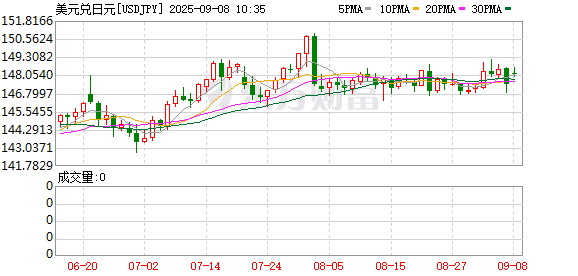
Group 1: Political Developments in Japan - The resignation of Japanese Prime Minister and Liberal Democratic Party (LDP) President Shigeru Ishiba has led to a significant drop in the yen, with the USD/JPY exchange rate rising by 0.79% [2][3] - Ishiba announced his resignation during an emergency press conference, expressing his responsibility for the party's previous election failures and the need to restore public trust in politics [4][5] - The LDP is expected to hold a presidential election to select a new prime minister, with candidates having 1-2 weeks for internal campaigning and voting [5][6] Group 2: Market Reactions - Following Ishiba's resignation, the Nikkei 225 index rose by 1.81%, and the Tokyo Stock Exchange index increased by 1.05% [4] - Analysts predict increased market volatility due to the high political instability in Japan [5][6] Group 3: US-Japan Trade Agreement - The details of a $550 billion strategic investment from Japan to the US have been revealed, with the US President having final decision-making authority on investment projects [8][10] - If Japan refuses to fund selected projects, it risks facing new tariffs from the US [8] - The profit distribution mechanism in the agreement stipulates that after Japan recoups its initial investment, the US will receive 90% of future profits while Japan will only receive 10% [9][10] Group 4: Strategic Investment Focus - The $550 billion investment will target key strategic sectors identified by Washington, including semiconductors, pharmaceuticals, critical minerals, shipbuilding, energy, artificial intelligence, and quantum computing [10]
“黑天鹅”突袭!刚刚,直线跳水!
Zheng Quan Shi Bao Wang· 2025-09-08 02:01
Core Viewpoint - The resignation of Japanese Prime Minister Shigeru Ishiba has led to significant fluctuations in the Japanese yen and stock market, indicating heightened political instability in Japan and potential market volatility [1][2][5]. Political Developments - Shigeru Ishiba announced his resignation as the leader of the Liberal Democratic Party (LDP) during a press conference, stating he would take responsibility until a new leader is elected [3][4]. - The LDP is expected to hold a leadership election soon, with candidates having 1-2 weeks for campaigning, and the new leader will be confirmed as Prime Minister by the National Diet [4][5]. - Key candidates include Sanae Takaichi and Minister of Agriculture, Forestry and Fisheries, Shinjiro Koizumi, with Takaichi currently leading in polls [4][5]. Market Reactions - Following Ishiba's resignation, the Japanese stock market saw gains, with the Nikkei 225 index rising by 1.81% and the Tokyo Stock Exchange index increasing by 1.05% [3]. - The yen experienced a sharp decline, with the USD/JPY exchange rate increasing by 0.79% shortly after the announcement [2]. Trade Agreement Details - The recently implemented US-Japan trade agreement includes a significant investment commitment from Japan, amounting to $550 billion, with details on governance and profit distribution emerging [6][7]. - The agreement stipulates that the US President will have final decision-making authority over investment projects, and Japan could face new tariffs if it refuses to fund selected projects [7][8]. - A unique profit-sharing mechanism is established, where profits from investments will initially be split 50/50 until Japan recoups its initial investment, after which the US will receive 90% of profits [7][8]. Strategic Investment Focus - The $550 billion investment is targeted at key strategic sectors identified by Washington, including semiconductors, pharmaceuticals, critical minerals, shipbuilding, energy, artificial intelligence, and quantum computing [8].
“黑天鹅”突袭!刚刚,直线跳水!
券商中国· 2025-09-08 01:53
Core Viewpoint - The resignation of Japanese Prime Minister and Liberal Democratic Party (LDP) President Shigeru Ishiba has led to increased political instability in Japan, causing fluctuations in the yen and impacting market volatility [2][4][6]. Political Developments - Ishiba announced his resignation during an emergency press conference, stating he would take responsibility until a new president is elected, expressing regret over not meeting public expectations and addressing issues like the "black money" scandal [6][7]. - The LDP is expected to hold a presidential election soon, with candidates having 1-2 weeks for campaigning. If no candidate secures a majority in the first round, a second round will be held [7][8]. - Key contenders for the new LDP president include Sanae Takaichi and Minister of Agriculture, Forestry and Fisheries, Shinjiro Koizumi, with Takaichi currently leading in polls [7]. Market Reactions - Following Ishiba's resignation, the yen depreciated sharply, with the USD/JPY exchange rate rising by 0.79% [4][6]. - The Nikkei 225 index rose by 1.81%, indicating a positive market response despite political uncertainty [6]. US-Japan Trade Agreement - The details of a significant trade agreement between the US and Japan, involving a $550 billion strategic investment, have been revealed, with the US retaining final decision-making authority over investment projects [10][11]. - Japan faces the risk of new tariffs from the US if it refuses to fund selected projects, highlighting the power dynamics in the agreement [10]. - The profit-sharing structure of the investment is notable, with Japan receiving 10% of profits after recovering its initial investment, while the US retains 90% thereafter, resembling a debt-like investment rather than traditional equity [11][12]. Strategic Investment Focus - The $550 billion investment will target key strategic sectors identified by Washington, including semiconductors, pharmaceuticals, critical minerals, shipbuilding, energy, artificial intelligence, and quantum computing [12].

开盘:沪指微跌0.02%、创业板指涨0.21%,贵金属及固态电池概念股走高,冰雪概念股走低-股票-金融界
Jin Rong Jie· 2025-09-08 01:34
Market Overview - On September 8, A-shares showed mixed performance with the Shanghai Composite Index down 0.02% at 3811.67 points, while the Shenzhen Component Index rose 0.33% to 12631.98 points and the ChiNext Index increased by 0.21% to 2964.43 points [1] - The non-ferrous metals and solid-state battery sectors led the gains, while the duty-free and CPO sectors experienced declines [1] - Precious metals continued to perform strongly, with West Gold rising by 6.44% and Zhaojin Gold increasing by 3.39% [1] Company News - Semiconductor company SMIC is planning to acquire 49% of its subsidiary, SMIC North Integrated Circuit Manufacturing, through an A-share issuance, leading to a stock suspension since September 1 [3] - Kweichow Moutai's controlling shareholder has received a loan commitment of up to 2.7 billion yuan from Agricultural Bank of China to support stock repurchase plans, with a target repurchase amount between 3 billion and 3.3 billion yuan [3] - Tongda Co. received a corrective order from the Henan Securities Regulatory Bureau for various compliance issues, including improper use of raised funds and inaccurate accounting practices [4] - Yihua Tong has terminated its plan to acquire 100% of Xuyang Hydrogen Energy due to a lack of consensus among parties involved [4] - Guokai Micro plans to acquire 94.366% of Ningbo Yongxin Integrated Circuit Co. through a combination of stock issuance and cash payment, which is expected to constitute a major asset restructuring [5] Industry Insights - The retail industry in China shows positive trends, with the retail industry prosperity index reaching 50.6% in September, marking an increase of 0.5 percentage points from the previous month [9] - New Kai Lai, a semiconductor equipment company, is nearing the end of its latest financing round with a pre-investment valuation of 65 billion yuan, targeting the high-end semiconductor equipment market [10] - The global optical switch market is projected to reach $2.02 billion by 2031, with a compound annual growth rate of 16.3% [11] - The global demand for uranium in nuclear reactors is expected to rise by one-third to 86,000 tons by 2030, creating a significant supply-demand gap due to the depletion of existing uranium mines [14] - OpenAI has significantly increased its projected cash burn to $115 billion by 2029, reflecting the growing investment in AI technologies [18]

华尔街见闻早餐FM-Radio|2025年9月8日
Sou Hu Cai Jing· 2025-09-07 23:34
Market Overview - US non-farm payroll data for August showed an increase of only 22,000 jobs, significantly below expectations, with the unemployment rate rising to 4.3%, the highest in nearly four years [15] - The market anticipates the Federal Reserve to cut interest rates three times this year, with a 96% probability of a 25 basis point cut in September and a possibility of a 50 basis point cut [15][25] - Major US stock indices opened high but closed lower due to recession fears overshadowing rate cut expectations, with the Nasdaq dropping over 1.5% from its daily high [2] - AMD shares fell by 6.58%, while Broadcom surged over 9% following news of a partnership with OpenAI to design AI chips [2][18] - Gold prices reached a record high of $3,600, reflecting increased demand amid rate cut expectations and risk aversion [2] Key News - China's foreign exchange reserves increased by 0.91% in July, with the central bank adding gold for the tenth consecutive month, totaling 122,000 ounces (approximately 38 tons) since November [3][13] - The Shenzhen real estate market has seen significant policy changes, allowing non-residents to purchase up to two properties and lifting restrictions for single individuals [5][14] - The US Treasury Secretary indicated that the non-farm employment data for 2024 might be revised down by 800,000 jobs, emphasizing the need for the Federal Reserve to maintain public trust [15][16] Industry Insights - The AI sector is experiencing a surge in investment, with OpenAI projected to spend $115 billion over the next four years, aiming for $200 billion in revenue by 2030 [18] - The OPEC+ alliance has agreed in principle to increase production in October, shifting focus to market share rather than price stability [19] - The Chinese retail industry is showing signs of recovery, with the retail prosperity index reaching 50.6%, the highest in eight months, driven by back-to-school shopping and promotional activities [30]