商业航天

Search documents
北交所科技成长产业跟踪第六十一期(20260125):SpaceX计划2027年推出第二代蜂窝式星链卫星通信系统,关注北交所火箭产业企业
Hua Yuan Zheng Quan· 2026-01-26 05:25
Group 1 - SpaceX plans to launch the second generation of its Starlink satellite communication system in 2027, with overall capacity expected to increase by over 100 times and data throughput capability to improve by more than 20 times compared to the first generation [2][12] - The global rocket launch service market reached USD 16.45 billion in 2023 and is projected to exceed USD 50 billion by 2032, with a compound annual growth rate (CAGR) of 13% from 2023 to 2032 [2][25] - The upstream materials and core components account for 85%-90% of the total cost of rockets, with liquid engine manufacturing constituting approximately 50% of the total cost [2][18] Group 2 - The North Exchange technology growth stocks saw a median price change of +1.25% from January 19 to January 23, 2026, with 108 companies (71%) experiencing an increase [2][44] - The median price-to-earnings (P/E) ratio for the information technology industry increased by 7.40% to 83.6X, while the median market capitalization rose from CNY 2.68 billion to CNY 2.77 billion [2][50] - The North Exchange electronic equipment industry saw its median P/E ratio rise from 62.3X to 65.8X, with the total market capitalization increasing from CNY 148.39 billion to CNY 153.9 billion [2][52] Group 3 - The North Exchange rocket industry chain includes six companies: Xingtou Measurement and Control, Minshida, Suzhou Axis, Xingchen Technology, Kelong New Materials, and KQ Co., Ltd [2][40] - The average launch cost for China's satellite launches is expected to reach CNY 45,000 per kilogram by 2029, while SpaceX's Falcon 9 has a launch cost of CNY 20,000 per kilogram [2][38][37] - The commercial space market in China is projected to grow at an annual rate of over 20%, potentially reaching CNY 9 trillion by 2030 [2][24]
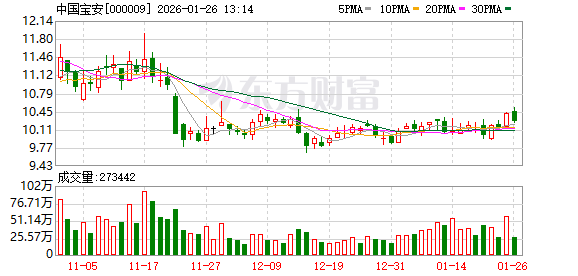
中国宝安:公司的主营业务不涉及商业航天
Mei Ri Jing Ji Xin Wen· 2026-01-26 05:14
每经AI快讯,有投资者在投资者互动平台提问:公司有业务参与商业航天吗? (文章来源:每日经济新闻) 中国宝安(000009.SZ)1月26日在投资者互动平台表示,公司的主营业务不涉及商业航天,具体业务情 况请详见公司对外披露的定期报告。 ...


计算机行业“一周解码”:持续把握商业航天机会
Bank of China Securities· 2026-01-26 05:09
Investment Rating - The industry investment rating is "Outperform the Market," indicating that the industry index is expected to perform better than the benchmark index over the next 6-12 months [34]. Core Insights - The commercial aerospace sector is experiencing a surge in favorable news, with the industry expected to enter a high prosperity cycle. Key developments include the acceleration of national aerospace strategies and breakthroughs in commercial aerospace experiments [3][10]. - High-level autonomous driving is at a critical stage of commercialization, with domestic high-performance chips and leading algorithm companies expected to gain advantages in the upcoming urban NOA (Navigation on Autopilot) rollout in 2026 [3][19]. - The Robotaxi sector is on the verge of large-scale operations, presenting significant commercialization opportunities for related companies [3][19]. Summary by Sections Commercial Aerospace - The commercial aerospace sector is witnessing multiple positive developments, including the inclusion of the goal to "accelerate the construction of a space power" in the national five-year plan. The first domestic offshore liquid rocket launch recovery test platform is under construction, and a mainstream commercial liquid rocket is set for launch and recovery tests [10][12]. - SpaceX is expected to initiate its IPO process soon, with plans to complete it by July [11][12]. High-Level Autonomous Driving - Chery has invested in a chip company, New Chip Navigation, to enhance its capabilities in high-level autonomous driving. The company has launched a high-performance chip, BMC X7, with a computing power of 272 TOPS, which meets the full scene requirements for urban NOA [15][16][18]. - The partnership with Momenta aims to combine chip and algorithm capabilities, positioning New Chip Navigation favorably for the 2026 urban NOA rollout [17][18]. Robotaxi Development - Cao Cao Mobility plans to deploy 100,000 fully customized Robotaxis by 2030, marking a significant step towards global commercialization. The company is enhancing its automated fleet operations and developing a remote safety service platform [19][20][21]. - The collaboration with Abu Dhabi's investment office aims to establish a local operational center and promote autonomous driving and green travel technology trials [20][21].
ETF午评 | 金价历史首次突破5000美元,黄金股票ETF基金、黄金股ETF工银飙涨7%
Ge Long Hui· 2026-01-26 05:04
Market Overview - The three major A-share indices showed mixed performance in the morning session, with the Shanghai Composite Index up by 0.12%, while the Shenzhen Component Index, ChiNext Index, and North Star 50 Index fell by 0.74%, 0.86%, and 0.97% respectively [1] - The total trading volume in the Shanghai and Shenzhen markets reached 22,631 billion yuan, an increase of 3,495 billion yuan compared to the previous day [1] - Over 3,700 stocks in the market experienced declines [1] Sector Performance - The sectors that saw the most significant gains included gold, non-ferrous metals, avian influenza, oil and gas, insurance, chemicals, securities, and port shipping [1] - Conversely, the sectors that faced the largest declines were commercial aerospace, military equipment, gaming, photolithography, semiconductors, humanoid robots, and AI mobile phone concepts [1] ETF Performance - International gold prices surpassed $5,000 per ounce for the first time, leading to a surge in gold and non-ferrous resource stocks [1] - The following ETFs saw notable increases: Ping An Fund Gold Stock ETF rose by 7.34%, ICBC Gold Stock ETF by 7.33%, and Guotai Fund Gold Stock ETF by 6.95% [1] - Oil and gas stocks also performed strongly, with Huatai Bairui Oil and Gas ETF increasing by 6% [1] Declines in Specific Sectors - The commercial aerospace sector experienced a widespread decline, with satellite ETFs and related funds dropping significantly: Satellite ETF fell by 6.85%, Satellite Industry ETF by 6.77%, and Guangfa Satellite ETF by 6.6% [1] - The semiconductor equipment sector also saw a downturn, with the E Fund Semiconductor Equipment ETF decreasing by 4% [1]
万亿赛道巨震,卫星产业ETF(159218)盘中跌超8%!发生了什么?
Sou Hu Cai Jing· 2026-01-26 04:32
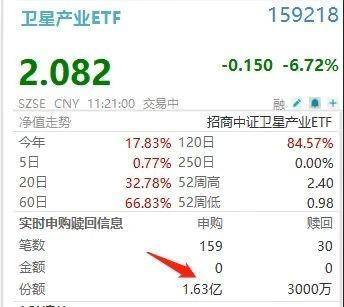
Core Viewpoint - The satellite sector experienced significant volatility, with the satellite industry ETF (159218) dropping by 6.99% and reaching a low of 8.06%, despite a net inflow of over 280 million during the downturn [1][2]. Group 1: Market Performance - The satellite industry ETF (159218) showed a decline of 6.72% as of 11:21 AM, with a trading value of 2.082 [2]. - The ETF's performance over various periods includes a 17.83% increase over the past year, a 32.78% increase over 20 days, and a 66.83% increase over 60 days, indicating prior strong growth [2]. Group 2: Market Dynamics - The recent adjustment in the satellite sector is attributed to previous excessive gains, overvaluation, and the release of "good news" sentiment, leading to profit-taking by investors [1][3]. - Analysts believe that the core drivers of the commercial space industry remain intact, including national satellite internet construction plans and advancements in reusable rocket technology [3]. Group 3: Future Outlook - The current market correction is seen as an opportunity for a "truth-seeking" phase, where funds are expected to focus on leading companies with core technologies, confirmed orders, and stable performance [3]. - The sector is anticipated to experience healthier differentiation and upward movement supported by performance as key technologies undergo validation by 2026, alongside the substantial progress of national satellite constellation tenders and construction [3].
SpaceX按下万亿IPO按钮,卫星产业ETF的二波行情买点已至?
Sou Hu Cai Jing· 2026-01-26 04:08
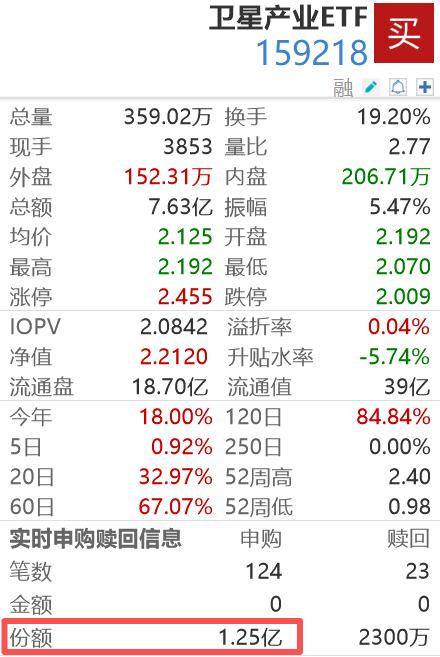
Core Viewpoint - The recent confirmation by Elon Musk that SpaceX will complete its IPO by July 2026 has ignited interest in the commercial space sector, potentially marking the beginning of a new wave of investment opportunities in the satellite industry [1][2]. Group 1: SpaceX and Market Impact - SpaceX is projected to have a valuation of $1.5 trillion, which could set a new record for IPOs and reshape the valuation logic of the satellite industry [1]. - Following the recent surge in the commercial space sector, there is a notable influx of capital into the satellite industry ETF (159218), indicating a strong interest from investors [1]. Group 2: Industry Developments - The domestic commercial space sector is entering a rapid capitalisation phase, with several companies like Blue Arrow Aerospace and Zhongke Aerospace preparing for IPOs [2]. - The Shanghai Stock Exchange has tailored a new listing standard for commercial rocket companies, linking "reusable rocket launches" directly to IPO eligibility, which encourages technological advancements [2]. Group 3: Economic Transition - The commercial space industry is transitioning from conceptual plans to tangible financial results, with projections indicating that domestic commercial launches will exceed 50% by 2025 [2]. - The successful launch of low-orbit satellite constellations and advancements in space medicine signify that the commercial space sector is moving towards real-world applications and profitability [2]. Group 4: Investment Strategy - Investors are advised to consider gradual investments in the satellite industry ETF (159218) rather than making large, singular investments, as the sector is characterized by high volatility [2]. - The satellite industry ETF tracks the Zhongzheng Satellite Industry Index, encompassing a comprehensive range of companies involved in the entire satellite value chain, making it a practical investment tool [3].
我们为什么要发展商业航天
叫小宋 别叫总· 2026-01-26 04:02
Core Viewpoint - The article discusses the development of the commercial aerospace industry in China, drawing parallels with the growth of the semiconductor and other technology sectors, emphasizing the importance of leveraging existing industrial strengths and government support to achieve competitive advantages in this emerging field [1][4][12]. Development Strategy - The strategy involves closely monitoring developments in the U.S. aerospace sector, particularly the successes of companies like SpaceX, and adapting those strategies to fit China's unique industrial landscape [7]. - The article highlights the importance of government policies in fostering industry growth, citing examples from the internet and electric vehicle sectors that have benefited from strategic support [4][6]. Advantages - China possesses several competitive advantages, including low labor costs, a large pool of skilled engineers, high administrative efficiency, a complete industrial system, a vast unified market, and a powerful electricity system [9]. - The country aims to transform these advantages into competitive strengths in the commercial aerospace sector, similar to its approach in other industries [9]. Importance of Commercial Aerospace - The development of reusable rockets is seen as crucial for reducing launch costs, with the potential for significant economic benefits from near-Earth space networks, which include communication, navigation, and remote sensing [13]. - The article emphasizes the need for a high launch frequency to lower marginal costs and create a positive feedback loop among rocket, satellite, and ground terminal companies [13]. Energy and Infrastructure - China's stable and green energy supply is highlighted as a significant advantage for the aerospace industry, with the potential to integrate renewable energy sources into launch operations and data centers [15][16]. - The article suggests that future developments could include building data centers in space powered by solar energy, aligning with innovative concepts like Musk's first principles [17]. Conclusion - The commercial aerospace sector is viewed as a critical area for national competition, with the need to establish a strong presence in space infrastructure to compete effectively against global players [17].

超3700只个股下跌
第一财经· 2026-01-26 04:01
Market Overview - The Shanghai Composite Index rose by 0.12% to 4141.01, while the Shenzhen Component fell by 0.74% to 14332.86, and the ChiNext Index decreased by 0.86% to 1864.01 [4][3] - Over 3700 stocks in the market experienced declines, indicating a broad market weakness despite some sector gains [3] Sector Performance - Gold stocks saw a surge, with several reaching the daily limit up, while sectors such as oil and gas, basic metals, insurance, coal, shipping, and brokerage firms showed strong performance [4] - Conversely, thematic stocks related to commercial aerospace, semiconductors, humanoid robots, fintech, AI applications, and consumer goods faced significant pullbacks [4] Trading Volume and Capital Flow - The trading volume in the Shanghai and Shenzhen markets reached 2.24 trillion yuan, an increase of 347.8 billion yuan compared to the previous trading day [5] - Major capital inflows were observed in sectors such as non-ferrous metals, non-bank financials, banks, oil and petrochemicals, coal, and telecommunications, while outflows were noted in electronics, defense, automotive, computing, machinery, and power equipment [5] Gold and Precious Metals - Spot gold prices surged by $100.53 to $5086.66 per ounce, marking a 2.02% increase [8] - The precious metals sector continued to perform well, with several stocks reaching their daily limit up, including Hunan Gold and Sichuan Gold [8][14] Other Notable Movements - The oil and gas sector showed resilience, with China National Offshore Oil Corporation rising over 5% to reach a historical high, and both China Petroleum and China Petrochemical increasing by over 4% [9] - The semiconductor sector initially saw gains, but some stocks like Kema Technology and Jing Sheng Machinery faced significant declines [10]

华安鑫创(300928.SZ):公司南通工厂已实现天通卫星通信模组的规模化量产
Ge Long Hui· 2026-01-26 03:57
Core Viewpoint - The company has achieved large-scale production of satellite communication modules at its Nantong factory, targeting consumer markets such as vehicle communication and low-altitude communication [1] Group 1: Product Development - The satellite communication modules provide integrated solutions for smart transportation, deep-sea shipping, and low-altitude economy [1] - The company is exploring development opportunities in emerging fields, including commercial aerospace and satellite navigation [1] Group 2: Business Strategy - The company aims to leverage technology reuse and business synergy to enhance product value across different application scenarios [1] - Progress in the company's autonomous driving and intelligent driving assistance business is being carried out in an orderly manner [1]

港股异动 | 商业航天概念股跌幅居前 亚太卫星(01045)跌超8% 金风科技(02208)跌超5%
智通财经网· 2026-01-26 03:53
Group 1 - The commercial aerospace concept stocks have seen significant declines, with Asia Pacific Satellite down 8.18% to HKD 4.38, Junda Co. down 6.67% to HKD 36.4, Lens Technology down 5.54% to HKD 30.02, and Goldwind Technology down 5.31% to HKD 16.05 [1] - Since 2026, the A-share market has experienced accelerated rotation of popular concepts such as commercial aerospace, AI applications, and humanoid robots, leading to short-term surges in certain stocks [1] - Regulatory measures have been implemented to cool the market, including raising financing margin ratios and initiating suspensions for stocks with excessive price increases, aimed at distinguishing "true value" from "false speculation" [1] Group 2 - Despite the ITU's "first come, first served" principle, actual approvals may be less than the applications due to international coordination, frequency conflicts, and orbital capacity limitations [1] - The recent applications for frequency resources are seen as strategic reserves, with Japan also proposing to create a "Japanese version of Starlink," indicating intensified competition for space resources among major countries [1] - The recent applications have raised the potential demand ceiling for domestic commercial aerospace, with the industry expected to accelerate under the leadership of national teams like the Wireless Radio Innovation Institute [1]