增收不增利

Search documents
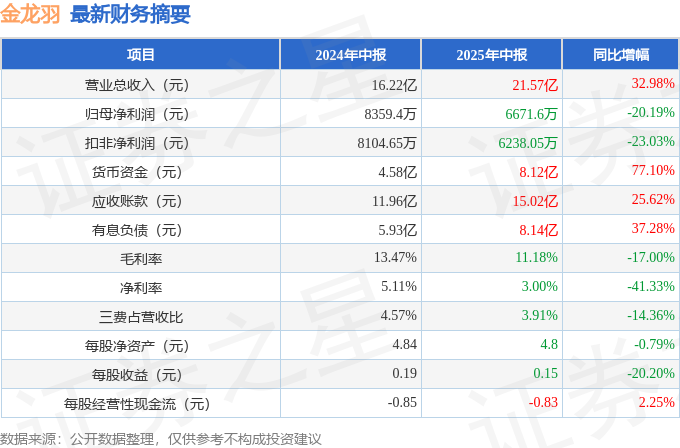
金龙羽2025年中报简析:增收不增利,公司应收账款体量较大
Zheng Quan Zhi Xing· 2025-08-09 22:25
Core Insights - The company Jinlongyu (002882) reported a total revenue of 2.157 billion yuan for the first half of 2025, representing a year-on-year increase of 32.98%, while the net profit attributable to shareholders decreased by 20.19% to 66.716 million yuan [1] - The second quarter revenue was 1.258 billion yuan, up 34.33% year-on-year, but the net profit for the same period fell by 37.78% to 29.5475 million yuan [1] - The company's accounts receivable is significantly high, with accounts receivable to net profit ratio reaching 1072.08% [1] Financial Performance - Revenue for 2024 was 1.622 billion yuan, while for 2025 it increased to 2.157 billion yuan, showing a growth of 32.98% [1] - Net profit for 2024 was 83.594 million yuan, which dropped to 66.716 million yuan in 2025, a decline of 20.19% [1] - Gross margin decreased from 13.47% in 2024 to 11.18% in 2025, a reduction of 17.00% [1] - Net margin also fell from 5.11% to 3.00%, a decline of 41.33% [1] - Total expenses (selling, administrative, and financial) amounted to 84.3134 million yuan, accounting for 3.91% of revenue, down 14.36% year-on-year [1] Cash Flow and Debt - The company has a healthy cash position with cash assets amounting to 812 million yuan, a 77.10% increase from the previous year [1] - The accounts receivable increased by 25.62% from 1.196 billion yuan to 1.502 billion yuan [1] - Interest-bearing debt rose by 37.28% from 593 million yuan to 814 million yuan [1] Business Model and Operational Efficiency - The company's return on invested capital (ROIC) was 5.47%, indicating average capital returns [1] - The historical median ROIC since the company went public is 10.2%, suggesting better investment returns in the past [1] - The company relies heavily on marketing-driven performance, necessitating a deeper analysis of the underlying drivers [2]


陆家嘴再陷“增收不增利” 高毛利率能否持续?
Xin Jing Bao· 2025-08-08 15:09
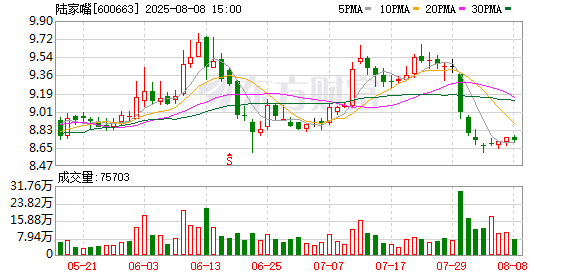
Core Viewpoint - Lujiazui, a well-established state-owned enterprise in Shanghai, reported a 33.91% increase in total revenue for the first half of 2025, reaching 6.598 billion yuan, while its net profit attributable to shareholders decreased by approximately 7.87% to 815 million yuan, indicating a situation of "increased revenue without increased profit" [2][5][8]. Financial Performance - Total revenue for Lujiazui in the first half of 2025 was 6.598 billion yuan, a year-on-year increase of 33.91% [2]. - The net profit attributable to shareholders was 815 million yuan, reflecting a year-on-year decrease of 7.87% [2][8]. - The gross profit margin decreased by 15.94% but remained significantly higher than industry peers, standing at 50.8% at the end of the reporting period [2][9]. - The total profit for the first half was 1.607 billion yuan, showing a year-on-year increase of 22% [8]. Revenue Sources - The main revenue sources for Lujiazui were real estate sales (41%) and real estate leasing (22%) [5]. - The cash inflow from real estate sales reached 6.187 billion yuan, with residential property sales contributing 5.548 billion yuan [12]. - The total contracted sales area for residential properties was 41,000 square meters, a year-on-year increase of 96%, with a total sales amount of 4.769 billion yuan, up 111% year-on-year [12]. Market Position and Competition - Lujiazui ranked seventh in Shanghai's real estate sales with a total sales amount of 13.66 billion yuan [13]. - Despite its advantageous location, some projects experienced slower sales velocity compared to leading competitors, indicating a gap in product offerings and sales speed [13]. Gross Margin Analysis - Lujiazui's gross margin, although high at 50.8%, has been on a downward trend from 66% in mid-2023 [9][10]. - The gross margins for various segments included: long-term property leasing at 65%, real estate sales at 57%, and financial services at 71% [9]. Development Strategy - Lujiazui has shifted its development focus to the Shanghai Bund area, which is a key urban development zone [3][4]. - The company has enhanced its marketing capabilities by recruiting experienced personnel from leading real estate firms, improving its market competitiveness [12]. Legal and Environmental Issues - The company is currently facing legal challenges related to the "toxic land" issue in Suzhou, which has impacted its stock price and financial performance [14][15]. - Lujiazui has stated that it is actively addressing these issues and has not made provisions for inventory impairment during the reporting period [15].

国泰航空打响“中场战事”
Hua Er Jie Jian Wen· 2025-08-07 06:34
作者 | 周智宇 编辑 | 张晓玲 如果说疫情后的强劲复苏是航空业的"上半场",那么国泰航空于8月6日交出的2025年中期成绩单,无疑 吹响了"中场战事"的哨声。 财报显示,国泰上半年录得股东应占溢利36.51亿港元,与去年同期基本持平,并宣布派发13亿港元中 期股息,对于一家刚走出历史性困境的企业而言,这是一份稳健的答卷。 然而,在营收543.09亿港元,同比增长9.5%之时,国泰航空净利增速来到1.1%。这是个清晰的信号,宣 告着那个依靠供需失衡便能轻松获取高利润的"顺风局"已经结束。 所谓"中场战事",核心已不再是关于"复苏"的速度,而是关于"博弈"的深度。当高票价成为过去,当全 球运力涌入导致竞争白热化,当宏观环境充满不确定性,如何守住盈利、争夺份额、布局未来,成为了 摆在国泰乃至整个行业面前的硬仗。这份财报,正是这场"硬仗"的开篇。 正如国泰集团主席贺以礼所言:"过去几年建立的强大基础,让我们比以往更有韧性……但影响整个航 空业的这些波动,也会影响到我们公司。" 如果说收益率下滑是"共性难题",那么子公司和货运业务的表现则反映了区域市场的特殊挑战。 子公司香港快运由盈转亏,亏损约5亿港元。国泰集团行 ...

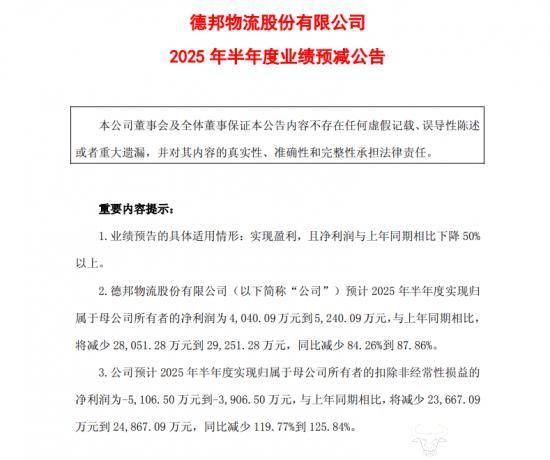
德邦物流上半年业绩预减 净利下降84.26% 董事长胡伟着急吗?
Sou Hu Cai Jing· 2025-08-04 03:43
运营商财经网 实习生郑永杰/文 近日,德邦物流发布上半年业绩预告,德邦物流股份有限公司预计2025年半年度实现营业收入约206亿 元,同比增长10%以上。归属于母公司所有者的净利润为4,040.09万元到5,240.09万元,与上年同期相 比,将减少2.8亿元到2.9亿元,同比减少84.26%到87.86%;扣非净利润为-5,106.50万元到-3,906.50万 元,与上年同期相比,将减少2.4亿元到2.5亿元,同比减少119.77%到125.84%。这种增收不增利的情况 引发关注。 通过整理历年年报数据,运营商财经网发现,过去几个季度德邦物流的盈利情况都还不错,过去几年未 曾出现过盈利为负的情况。到今年第一季度亏损6838万元,通过计算可知第二季度的净利润范围约在 1.0878亿元到1.2078亿元之间。虽然在一定程度上弥补了第一季度的亏损,但盈利水平与过去几年同期 相比仍然差距较大。 对于上半年的亏损,德邦物流在公告中给出了解释,称主要受外部环境及内部经营策略调整双重影响。 外部环境方面,受宏观环境影响,上游制造业、商贸企业等客户物流需求减少及对物流成本控制诉求增 强,物流行业整体面临价格下行的压力。 ...

财报横评|营收增长难掩利润困局 跨国车企集体遭遇“增收不增利”
Mei Ri Jing Ji Xin Wen· 2025-08-02 04:18
Core Viewpoint - The automotive industry is experiencing a widespread trend of "increased revenue but decreased profit" in the first half of 2025, with many multinational car manufacturers reporting declining profits despite stable or growing revenues [1][4][5]. Group 1: Financial Performance of Major Automakers - Volkswagen Group reported a revenue of €158.4 billion for the first half of 2025, remaining stable year-on-year, but its operating profit fell by 33% to €6.7 billion [1][4]. - General Motors' second-quarter net income was $47.122 billion, a year-on-year decrease of 1.8%, with net profit dropping 35.4% to $1.895 billion [1][7]. - Tesla's total revenue for the first half of 2025 was $41.8 billion, down 11% year-on-year, with net profit declining 30% to $2.327 billion [5][7]. - Nissan reported a net loss of ¥115.7 billion for the first fiscal quarter of 2025, marking its first loss in this period since 2020 [8][10]. - Hyundai and Kia both showed revenue growth but profit declines, with Hyundai's operating profit down 15.8% and Kia's net profit down 23.3% [8][9]. Group 2: Market Dynamics and Strategic Adjustments - The rise of Chinese domestic brands is squeezing the market share of multinational car manufacturers, prompting them to adjust their strategies [3][12]. - Many multinational car companies are transforming their Chinese operations into global export centers and R&D hubs to maintain competitiveness [3][9]. - Volkswagen Group is accelerating its localization strategy in China, planning to launch over 11 new models starting in 2026 [9][10]. - Toyota's Lexus brand has established its first overseas electric vehicle and battery R&D base in Shanghai, reflecting a shift towards electric vehicle strategies [10][11]. - The trend of "oil-electric parallel" strategies is emerging among several multinational companies, indicating a balanced approach to fuel and electric vehicles [10][11].

受海外市场影响 特斯拉供应商泉峰汽车募投项目延期一年
Nan Fang Du Shi Bao· 2025-07-31 11:25
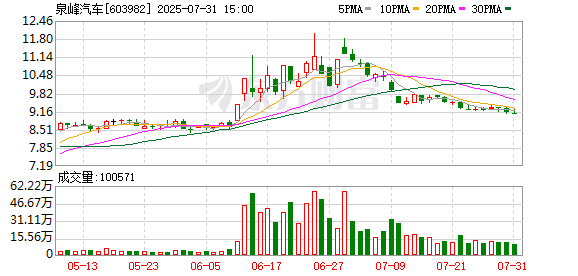
2025年7月31日,泉峰汽车发布募投项目延期公告,宣布两项重要项目达到预定可使用状态日期各延期一年。 2025年上半年,泉峰汽车销售收入预计同比实现近20%的增长,扣非净利润则预计为-1.91亿元至-1.61亿元,继续亏损。 公司称,新能源汽车行业市场竞争依旧激烈, 新能源相关零部件产品价格承压, 拖累公司新能源汽车零部件产品毛利, 加上前期资本投入较大等因素综合 影响,公司仍处于亏损状态。 而得益于销售增长及产品生产效率、良率改善,单位固定成本及变动成本较去年同期有所下降,公司毛利率逐步修复;此外,因降本增效措施的持续开展, 公司管理费用及研发费用占收入比重持续降低,财务费用因汇兑收益增加而有所下降。以上因素综合导致公司今年半年度净亏损较上年同期明显收窄。 (文章来源:南方都市报) 图源泉峰汽车公告 截至2024年末,上述项目资金投入进度均达到100%,不过,公告称,虽然前期经过充分的可行性论证,但项目在实际推进过程中,宏观环境、市场需求等 发生了诸多变化,尤其欧洲项目还受到俄乌局势、欧洲能源危机等海外不确定因素的影响。为更好地平衡市场需求,实现公司资源的优化配置,公司根据实 际情况,经审慎研究,将两个项 ...

创始人套现9亿反劝投资者耐心:石头科技赴港补血,投资者还信吗?
凤凰网财经· 2025-07-29 15:32
Core Viewpoint - Stone Technology is facing significant challenges as it attempts to rebound from declining stock prices and net profits amid a backdrop of intense competition and trust issues following the founder's cash-out incident. The company's upcoming IPO in Hong Kong is seen as a critical opportunity to recover, but it is burdened by a "growth without profit" dilemma and rising operational costs [2][4]. Group 1: Financial Performance - The company's revenue has shown a growth trend, with projected revenues of 66.11 billion RMB, 86.39 billion RMB, and 119.18 billion RMB from 2022 to 2024, respectively. The first quarter of 2025 saw a remarkable 86% year-on-year increase, reaching 34.28 billion RMB [2][4]. - Despite revenue growth, net profit has declined, with figures of 11.83 billion RMB, 20.51 billion RMB, and 19.77 billion RMB from 2022 to 2024, indicating a 3.6% drop in 2024. The first quarter of 2025 experienced a significant 32.92% year-on-year decline in net profit, amounting to only 2.67 billion RMB [4][6]. - The company's gross margin has also been under pressure, decreasing from 54.1% in 2023 to 50.4% in 2024. The gross margin for the core product, robotic vacuum cleaners, fell from 54.9% to 52.1% during the same period [4][5]. Group 2: Cost Structure - Sales expenses have surged dramatically, with figures of 12.28 billion RMB, 17.13 billion RMB, and 29.67 billion RMB from 2022 to 2024, marking a 73.23% increase in 2024 alone. Advertising and marketing expenses rose from 10.84 billion RMB in 2023 to 19.24 billion RMB in 2024, a 77.5% increase [6][7]. - The first quarter of 2025 continued this trend, with sales expenses reaching 9.51 billion RMB, a staggering 149% increase compared to the same quarter in 2024 [6][7]. Group 3: Market Dynamics - Stone Technology's overseas revenue has surpassed half of its total income, increasing from 42.29 billion RMB in 2023 to 63.88 billion RMB in 2024, contributing 53.6% to total revenue [10][11]. - The company faces external challenges, including rising tariffs in key markets like the U.S. and intense competition from rivals such as iRobot and Ecovacs, which has pressured profit margins [12][13]. - Internally, the transition from a distributor model to a direct sales model in Europe has led to increased costs, impacting profitability [13]. Group 4: Trust and Leadership Issues - The founder's cash-out of approximately 8.88 billion RMB has raised concerns among investors, particularly as it coincided with a significant drop in company performance. His shareholding decreased from 23.15% to 21.09% following the cash-out [19][20]. - The founder's public statements urging investors to be patient amid declining performance have sparked backlash, leading to a loss of trust among shareholders [22][24].


外卖大战下的餐饮哀歌
虎嗅APP· 2025-07-19 02:34
Core Viewpoint - The current critical issue in the restaurant industry is the phenomenon of "increased revenue without increased profit," primarily driven by the recent food delivery wars initiated by internet platforms [1][15][19]. Group 1: Impact on Restaurant Operations - A mid-sized fast-food chain founder reported that they have imposed strict controls on the proportion of delivery orders, setting a red line at 28% to maintain profitability, as dining-in customers typically order more, enhancing average ticket size and gross margin [1][2]. - The founder noted that after participating in a delivery platform's self-pickup project, their average daily order volume peaked at over 200, with delivery and self-pickup orders exceeding 40%, leading to a profit decline of over 12% due to reduced dining-in and lower pricing [1][2]. - A senior executive from a leading tea beverage company also confirmed experiencing the "increased revenue without increased profit" phenomenon during the delivery wars [2]. Group 2: Cost Pressures - Increased costs are attributed to three main areas: delivery costs, promotional costs, and the need for additional materials and labor due to surging order volumes [2][21]. - Many small businesses, particularly family-run establishments, are heavily reliant on dine-in customers and lack the capability to adapt to the delivery model, facing significant declines in foot traffic as consumers shift to online ordering [3][8]. Group 3: Competitive Landscape - The internal review at Meituan indicated that strategies like "self-pickup" and "zero-cost purchase" were effective in achieving high order volumes, but also placed pressure on smaller restaurants that were automatically enrolled in these promotional activities without their consent [4][5]. - The market dynamics have shifted, with platforms like Ele.me gaining significant traction, especially in first-tier cities, leading to increased order volumes for brands but also raising concerns about long-term profitability [20][21]. Group 4: Long-term Industry Implications - The ongoing delivery wars are expected to accelerate the elimination of weaker players in the market, particularly small and medium-sized businesses that lack the resources to compete effectively [18][22]. - The industry is witnessing a shift in consumer behavior towards online ordering, which could lead to a fundamental change in the restaurant landscape if the delivery wars persist [18][19]. - Predictions suggest that if the delivery wars continue, the beverage sector may see a higher elimination rate among smaller brands due to inadequate inventory management and rising labor costs [22][23].
外卖大战下的餐饮哀歌
Hu Xiu· 2025-07-18 23:10
Core Viewpoint - The current critical issue in the restaurant industry is the phenomenon of "increased revenue without increased profit," primarily driven by the recent food delivery wars initiated by internet platforms [1][14][20]. Group 1: Impact on Restaurant Operations - Many restaurant owners are now strictly controlling the proportion of delivery orders, with some setting a threshold of 28% for delivery orders to maintain profitability [1]. - A restaurant founder noted that prior to the delivery wars, their average daily order volume was over 120, with delivery orders accounting for 18%-22%. However, during the peak of the delivery wars, this volume surged to over 200, with delivery and self-pickup orders exceeding 40%, leading to a profit decline of over 12% [1][21]. - The increase in delivery orders has resulted in a significant drop in dine-in customers, which traditionally contribute more to profit margins due to higher average spending [1][14]. Group 2: Cost Pressures - Increased costs are attributed to three main areas: delivery costs, promotional costs, and the need for additional materials and labor due to the surge in orders [2][21]. - The introduction of aggressive promotional activities, such as "0 yuan purchase" campaigns, has severely squeezed the profit margins of many brands, leading to double-digit profit declines despite double-digit revenue growth [2][14]. Group 3: Challenges for Small Businesses - Small and individual restaurants, which heavily rely on dine-in customers, face greater challenges as they are often not equipped to handle the surge in delivery orders and may experience significant customer flow declines [3][19]. - Many small businesses lack the resources and capabilities to participate effectively in platform-driven promotional activities, leading to potential closures if the delivery wars persist [3][19]. - The disparity in operational capabilities means that larger chains can better absorb the pressures of increased order volumes, while smaller establishments struggle to keep up [18][19]. Group 4: Market Dynamics and Future Outlook - The competition among delivery platforms is intensifying, with companies like Ele.me gaining significant market share, particularly in first-tier cities [20]. - The ongoing delivery wars are expected to accelerate the elimination of weaker players in the market, particularly small and medium-sized businesses that cannot adapt quickly to the changing landscape [19][23]. - There is a growing concern that if the delivery wars continue, the overall health of the restaurant industry could be compromised, leading to a higher rate of business failures, particularly among smaller operators [20][21].


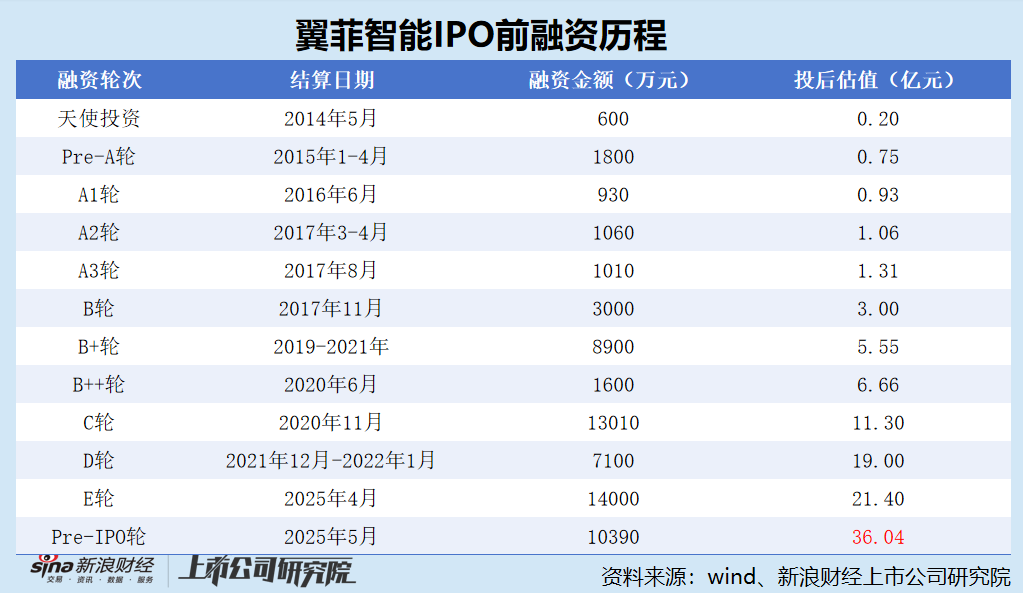
翼菲智能港股IPO:2024年售后服务费翻了3倍 最大客户收入暴跌 80后董事张子超全年领薪超900万元
Xin Lang Zheng Quan· 2025-07-11 03:49
Core Viewpoint - Yifei Intelligent has submitted an IPO application to the Hong Kong Stock Exchange, aiming to raise funds for technology development, production capacity, overseas expansion, supply chain investments, and working capital [1][2]. Financial Performance - Yifei Intelligent has experienced a "revenue without profit" dilemma from 2022 to 2024, with increasing revenues but continuous losses, totaling over 200 million RMB during the reporting period [6][12]. - The company's revenue for 2022, 2023, and 2024 was 162.21 million RMB, 201.17 million RMB, and 268.01 million RMB, respectively, reflecting a compound annual growth rate of 28.54% [7]. - Despite revenue growth, the company reported significant losses of 57.55 million RMB, 110.61 million RMB, and 71.50 million RMB for the respective years [6][12]. Client Dependency and Revenue Concentration - Yifei Intelligent's largest client, referred to as Client A, has seen its revenue contribution decline sharply from 1.16 billion RMB in 2022 to 640 million RMB in 2024, indicating a loss of dependency on major clients [7][8]. - The company relies heavily on a few key clients, with the top five clients contributing over 50% of total revenue during the reporting period [7][8]. Cash Flow and Liquidity Issues - The company's trade receivables surged from 28.11 million RMB to 138 million RMB, with a turnover period extending to 128 days by 2024, indicating increasing collection risks [13][14]. - Yifei Intelligent's cash flow from operating activities has been negative, totaling a net outflow of 200 million RMB over the reporting period, leading to a reliance on external financing [14]. Debt and Financial Health - The company's debt-to-asset ratio rose sharply to 88.42% by the end of 2024, indicating high liquidity risk [2][14]. - Yifei Intelligent's cash and cash equivalents stood at 22.89 million RMB against interest-bearing bank loans of 135 million RMB, highlighting significant repayment pressure [2][14]. Executive Compensation - Despite ongoing losses and rising debt, executive compensation has increased significantly, with total payments to executives reaching 11.736 million RMB in 2024, a 190.50% increase from the previous year [15][16]. - The compensation for the executive director Zhang Zichao reached 9.173 million RMB in 2024, with a substantial portion attributed to share-based payments [15][16].