
智能家居

Search documents
以旧换新政策扩容 智能家居与适老产品引领家居行业新风口
Sou Hu Cai Jing· 2026-01-14 11:56
Core Insights - The 2026 consumption goods replacement policy aims to stimulate demand by expanding the scope of the old-for-new program, now including smart home and elderly-friendly products for central funding subsidies [1][4][5] - The policy is designed to drive the transformation of the home industry towards green and intelligent solutions, encouraging companies to innovate products that meet new standards [1][6] Policy Expansion - The new policy features a dual-track system of national uniformity and local autonomy, specifying six categories of home appliances and four categories of digital and smart products eligible for subsidies [4] - A significant breakthrough is the inclusion of smart home and elderly-friendly products in the central funding subsidy, allowing local governments to create tailored subsidy policies within the framework [4][5] Market Demand - The demand for home improvement is driven by the growing need for renovations in existing homes and the rising popularity of smart products, with a focus on enhancing living quality through green, intelligent, and elderly-friendly solutions [6][8] - Data from the Ministry of Housing and Urban-Rural Development indicates that over 240,000 old urban communities have been renovated, benefiting more than 40 million households [6] Industry Trends - The policy encourages the home industry to transition from traditional appliances to emerging categories, aligning with consumer upgrade trends and providing clear direction for industry transformation [5][8] - The integration of smart and elderly-friendly products is expected to create a new market dynamic, with companies accelerating their strategies to meet the growing demand in these segments [10][11] Future Outlook - The home industry is anticipated to evolve from "single smart products" to "whole-home interconnected solutions," driven by artificial intelligence and changing consumer preferences [10] - The elderly-friendly market is shifting from a niche to a mainstream necessity, with predictions indicating that the silver economy could reach 30 trillion yuan by 2035, growing at a compound annual growth rate of 15.7% [10][11]

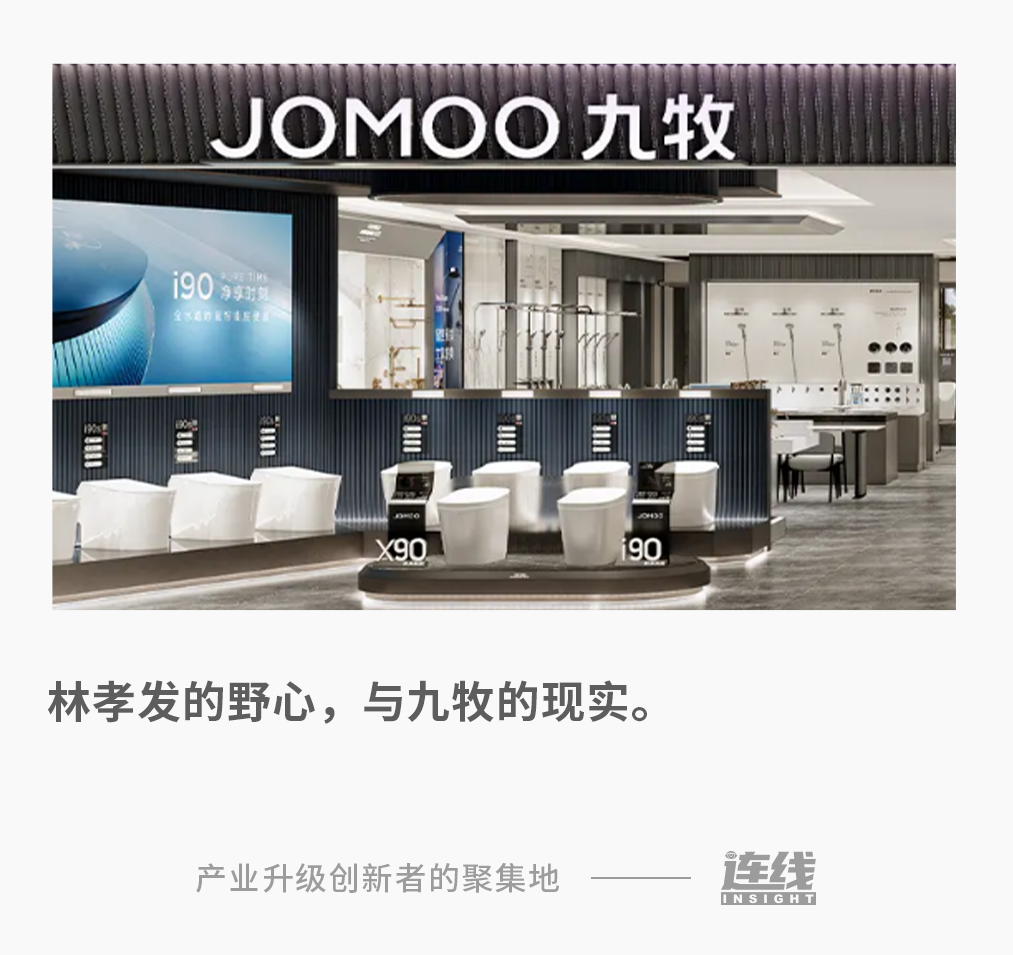
九牧的“千亿蓝图”悬空:冲高、AI与出海的现实困局
Xin Lang Cai Jing· 2026-01-14 11:25
Core Insights - Jomoo's ambitious sales targets of 50 billion by 2025 and 100 billion by 2030 appear increasingly unattainable given the current market conditions and competition [3][5] - The company is facing significant challenges in the saturated sanitary ware market, with a need for new growth narratives and strategies [5][6] Financial Performance - Jomoo's revenue for 2022 was 10.69 billion, with a projected revenue of 11.3 billion in 2023, reflecting a modest year-on-year growth of 5.7% [3] - The expected revenue for 2024 is 12.5 billion, indicating a growth rate of 10.6%, which is far from the nearly 90% annual growth required to meet its 2025 target [3][5] Market Challenges - The sanitary ware industry is experiencing a contraction, with the market size shrinking from 94.1 billion in 2022 to 79.6 billion in 2024 [6] - Jomoo is facing pressure from cheaper private label brands in the mid-range market while struggling to penetrate the high-end segment dominated by international brands [5][6] Strategic Initiatives - Jomoo is pursuing a dual strategy: maintaining its presence in the lower-tier market while attempting to break into the high-end market [6][8] - The company has launched a new brand targeting younger consumers and is focusing on smart home technology to enhance its product offerings [6][8] High-End Market Aspirations - Jomoo aims to capture a share of the high-end market, where domestic brands currently hold only 17% of the market share in finished projects [8] - The company has introduced several high-end product lines, including the i and X series of smart toilets, priced between 2,500 and 6,000 [8] AI Integration - Jomoo has rebranded itself as an "AI health terminal," launching products that incorporate AI features, although these often rely on external technologies [12][16] - The pricing of AI-enabled products has significantly increased, with some models reaching prices as high as 14,220 for the X90 smart toilet [13] Global Expansion - Jomoo is accelerating its global expansion efforts, having established operations in Europe and acquired brands to enhance its market presence [20][21] - The company faces significant challenges in entering established markets like Europe, where it competes against well-known brands [21][23] Brand and Market Perception - Despite its ambitions, Jomoo's brand recognition in international markets remains low, and it struggles to differentiate itself from competitors [21][23] - The company must navigate a complex landscape of brand perception, cost management, and distribution challenges in its global strategy [24]
好上好涨1.55%,成交额3.51亿元,后市是否有机会?
Xin Lang Cai Jing· 2026-01-14 07:51
Core Viewpoint - The company, Shenzhen Haoshanghao Information Technology Co., Ltd., is experiencing growth in its electronic component distribution business, particularly benefiting from the depreciation of the Chinese yuan and its focus on various chip technologies [2][4]. Group 1: Company Overview - Shenzhen Haoshanghao Information Technology Co., Ltd. was established on December 23, 2014, and went public on October 31, 2022 [8]. - The company primarily sells electronic components to manufacturers in the consumer electronics, IoT, lighting, industrial control, automotive electronics, and new energy sectors, providing product design solutions and technical support [3][8]. - The main revenue sources include 99.08% from distribution, 0.91% from IoT product design and manufacturing, and 0.01% from other services [8]. Group 2: Financial Performance - For the period from January to September 2025, the company achieved a revenue of 6.128 billion yuan, representing a year-on-year growth of 14.46%, while the net profit attributable to shareholders was 49.1458 million yuan, up 62.14% year-on-year [8]. - The company has distributed a total of 69.3405 million yuan in dividends since its A-share listing [9]. Group 3: Market Position and Trends - The company’s total market capitalization is 9.15 billion yuan, with a trading volume of 351 million yuan and a turnover rate of 6.93% [1]. - The company’s overseas revenue accounts for 67.36%, benefiting from the depreciation of the yuan [4]. - The stock has seen a recent increase of 1.55% [1]. Group 4: Technical Analysis - The average trading cost of the stock is 30.96 yuan, with a current price near the support level of 30.43 yuan [7]. - The stock has a dispersed ownership structure, with the main capital inflow being relatively low, indicating no clear trend in major shareholder activity [5][6].
狄耐克跌2.00%,成交额3.14亿元,主力资金净流出1767.16万元
Xin Lang Cai Jing· 2026-01-14 05:46
Group 1 - The core viewpoint of the news is that Dineike's stock has experienced fluctuations, with a recent decline of 2.00% and a current price of 17.15 CNY per share, while the company has seen a year-to-date increase of 15.88% [1] - Dineike's main business involves the research, design, production, and sales of smart community security devices, with revenue composition being 51.99% from intercom products, 22.44% from smart home products, 13.13% from smart ward and outpatient products, and 12.44% from other sources [2] - As of December 31, the number of Dineike's shareholders is 21,000, a decrease of 4.37% from the previous period, with an average of 9,129 circulating shares per person, an increase of 4.57% [2] Group 2 - In the first nine months of 2025, Dineike achieved operating revenue of 461 million CNY, a year-on-year decrease of 11.29%, and a net profit attributable to the parent company of -1.60 million CNY, a year-on-year decrease of 109.10% [2] - Dineike has distributed a total of 197 million CNY in dividends since its A-share listing, with 137 million CNY distributed in the last three years [3]
苏州固锝涨2.04%,成交额1.28亿元,主力资金净流入1218.12万元
Xin Lang Cai Jing· 2026-01-14 03:56
Group 1 - The stock price of Suzhou Gude increased by 2.04% on January 14, reaching 10.02 CNY per share, with a trading volume of 1.28 billion CNY and a turnover rate of 1.59%, resulting in a total market capitalization of 81.22 billion CNY [1] - Year-to-date, Suzhou Gude's stock price has risen by 4.92%, with a 2.87% increase over the last five trading days and a 6.82% increase over the last 20 days, while it has decreased by 0.79% over the last 60 days [1] - The company's main business revenue composition includes 74.74% from new energy materials, 23.15% from semiconductors, 2.07% from other sources, and 0.04% from leasing [1] Group 2 - As of January 9, the number of shareholders for Suzhou Gude was 106,000, a decrease of 0.44% from the previous period, with an average of 7,638 circulating shares per person, an increase of 0.44% [2] - For the period from January to September 2025, Suzhou Gude reported operating revenue of 3.02 billion CNY, a year-on-year decrease of 31.12%, while the net profit attributable to shareholders increased by 54.72% to 62.52 million CNY [2] Group 3 - Since its A-share listing, Suzhou Gude has distributed a total of 358 million CNY in dividends, with 69.53 million CNY distributed over the last three years [3] - As of September 30, 2025, Hong Kong Central Clearing Limited was the second-largest circulating shareholder, holding 10.08 million shares, an increase of 2.53 million shares from the previous period [3] - Southern CSI 1000 ETF and Huaxia CSI 1000 ETF have seen a decrease in holdings, with Southern CSI 1000 ETF holding 5.93 million shares (a decrease of 65,100 shares) and Huaxia CSI 1000 ETF holding 3.52 million shares (a decrease of 6,600 shares) [3]

博通集成涨2.02%,成交额6140.66万元,主力资金净流入371.14万元
Xin Lang Zheng Quan· 2026-01-14 02:53
Group 1 - The core viewpoint of the news is that Broadcom Integrated has shown positive stock performance and financial growth, with a notable increase in revenue and net profit year-on-year [1][2]. - As of January 14, Broadcom Integrated's stock price increased by 2.02% to 40.40 CNY per share, with a market capitalization of 6.077 billion CNY [1]. - The company has experienced a stock price increase of 7.68% year-to-date, with a 3.94% rise over the last five trading days and an 11.20% increase over the last 20 days [1]. Group 2 - For the period from January to September 2025, Broadcom Integrated achieved a revenue of 624 million CNY, representing a year-on-year growth of 8.40%, and a net profit of 9.3178 million CNY, which is a significant increase of 127.36% [2]. - The company has distributed a total of 147 million CNY in dividends since its A-share listing, with 7.5212 million CNY distributed in the last three years [3]. - As of September 30, 2025, the number of shareholders increased by 14.88% to 38,900, while the average number of circulating shares per person decreased by 12.95% to 3,870 shares [2].

智能家居2026:停止“概念竞赛”,应用场景向户外延伸
2 1 Shi Ji Jing Ji Bao Dao· 2026-01-13 10:22
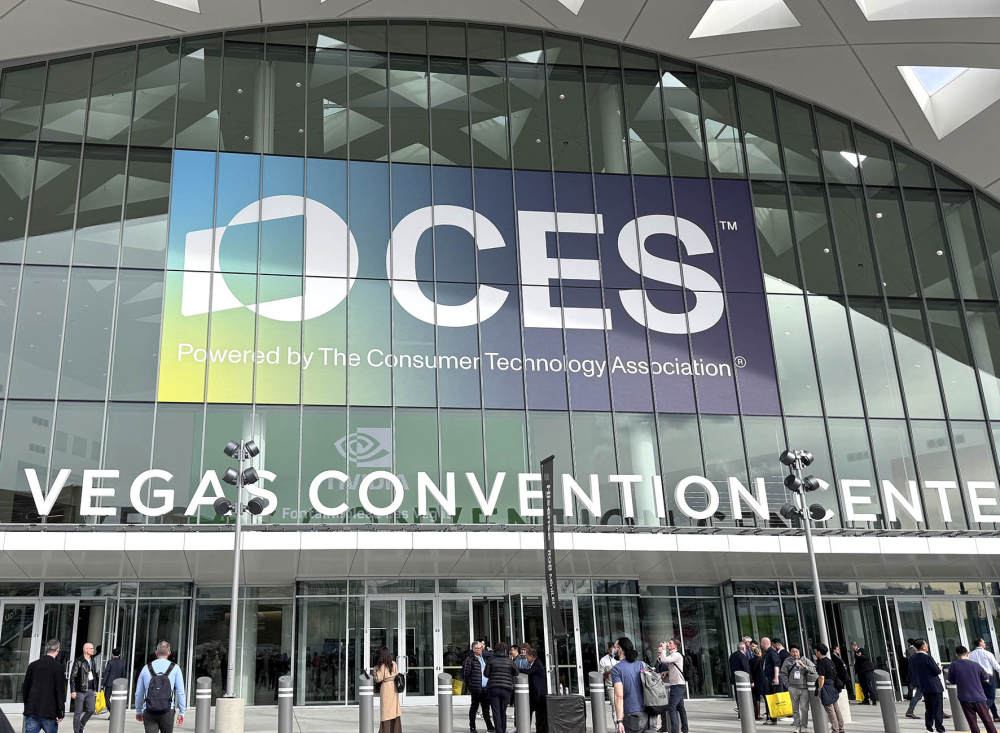
Core Viewpoint - In 2026, the Chinese smart home industry is transitioning to high-quality development, focusing on pragmatic innovation and ecological collaboration, moving away from mere concept hype to real-world problem-solving and full-scene applications [1][4]. Industry Trends - The global smart home industry has entered a mature development phase characterized by "pragmatic innovation + ecological collaboration," with a shift from product price competition to technology standard authority and local ecological integration [1]. - At CES, over a thousand Chinese companies showcased products that extend beyond traditional core areas like living rooms and kitchens to include outdoor spaces such as courtyards and swimming pools, emphasizing "pragmatic innovation, ecological collaboration, and green low-carbon" features [2]. Full-Scene Innovation - The industry has shifted from a "concept competition" mindset to a focus on real user needs, with Chinese companies prioritizing practical solutions in their product designs [4]. - Innovations in core living room products, such as Hisense's 110-inch Mini LED TV and TCL's 115-inch giant screen TV, address installation challenges and enhance user experience through optimized designs [4]. Globalization and Market Strategy - Chinese smart home companies are moving beyond simple product exports to compete in high-end technology sectors, leveraging core technological breakthroughs to capture market share [6]. - Hisense has solidified its global leadership in the 100-inch and above TV market, showcasing advanced technologies that outperform competitors in brightness and color accuracy [6]. Policy and Compliance - The high-quality development of the smart home industry is supported by domestic policies that stimulate demand and promote technological innovation, while international regulations push for sustainable practices [9]. - Policies such as the equipment update and trade-in programs are crucial for activating domestic demand and driving industry upgrades, with smart home products included in subsidy programs [9]. Standardization and Interoperability - The establishment of a unified standard system is a key focus of policy efforts, facilitating Chinese companies' participation in global competition and enhancing product compatibility [9][10]. - At CES, products from companies like Hisense, TCL, and Ugreen demonstrated support for major protocols like Matter and OLA, improving user experience and reducing development costs [10].
好上好跌3.53%,成交额3.50亿元,今日主力净流入-3024.22万
Xin Lang Cai Jing· 2026-01-13 08:02
Core Viewpoint - The company, Shenzhen Haoshanghao Information Technology Co., Ltd., is experiencing fluctuations in stock performance and is primarily engaged in the distribution of electronic components, benefiting from the depreciation of the RMB and its focus on various electronic applications [1][4]. Group 1: Company Overview - Shenzhen Haoshanghao Information Technology Co., Ltd. was established on December 23, 2014, and went public on October 31, 2022 [8]. - The company specializes in the distribution of electronic components, primarily serving manufacturers in consumer electronics, IoT, lighting, industrial control, automotive electronics, and new energy sectors [3][8]. - The main revenue sources include 99.08% from distribution, 0.91% from IoT product design and manufacturing, and 0.01% from other services [8]. Group 2: Financial Performance - For the period from January to September 2025, the company achieved a revenue of 6.128 billion yuan, representing a year-on-year growth of 14.46% [8]. - The net profit attributable to shareholders for the same period was 49.1458 million yuan, showing a significant increase of 62.14% year-on-year [8]. - The company has distributed a total of 69.3405 million yuan in dividends since its A-share listing [9]. Group 3: Market Activity - On January 13, the company's stock price fell by 3.53%, with a trading volume of 350 million yuan and a turnover rate of 6.90%, resulting in a total market capitalization of 9.01 billion yuan [1]. - The company’s main net inflow of funds was -30.2422 million yuan, indicating a lack of clear trends in major investor activity [5][6]. - The average trading cost of the stock is 31.09 yuan, with current price levels between resistance at 30.40 yuan and support at 30.27 yuan, suggesting potential for range trading [7].
剑桥科技股价连续4天下跌累计跌幅6.83%,中信保诚基金旗下1只基金持1.22万股,浮亏损失10.49万元
Xin Lang Cai Jing· 2026-01-13 07:20
Group 1 - Cambridge Technology's stock price fell by 3.71% on January 13, closing at 117.40 yuan per share, with a trading volume of 2.949 billion yuan and a turnover rate of 8.95%, resulting in a total market capitalization of 41.401 billion yuan [1] - The stock has experienced a continuous decline over four days, with a cumulative drop of 6.83% during this period [1] - The company, established on March 14, 2006, and listed on November 10, 2017, focuses on the research, production, and sales of ICT terminal products for home, enterprise, and industrial applications based on cooperative models, primarily JDM and ODM [1] Group 2 - According to data, CITIC Prudential Fund holds a significant position in Cambridge Technology, with its CITIC Prudential CSI Smart Home Index (LOF) A (165524) holding 12,200 shares, accounting for 2% of the fund's net value, making it the second-largest holding [2] - The fund has incurred a floating loss of approximately 55,100 yuan today, with a total floating loss of 104,900 yuan during the four-day decline [2] - The CITIC Prudential CSI Smart Home Index (LOF) A (165524) was established on January 1, 2021, with a current scale of 46.877 million yuan, and has achieved a year-to-date return of 8.94%, ranking 1489 out of 5517 in its category [2]

芯海科技跌2.01%,成交额9228.23万元,主力资金净流出217.70万元
Xin Lang Cai Jing· 2026-01-13 05:57
Core Viewpoint - Chipsea Technology's stock price has shown fluctuations, with a recent decline of 2.01% on January 13, 2023, while the company has experienced a year-to-date increase of 7.29% in stock price [1][2]. Group 1: Stock Performance - As of January 13, 2023, Chipsea Technology's stock price is reported at 35.19 CNY per share, with a trading volume of 92.28 million CNY and a turnover rate of 1.80%, resulting in a total market capitalization of 5.071 billion CNY [1]. - The stock has increased by 2.86% over the last five trading days, 6.12% over the last 20 days, and 3.93% over the last 60 days [2]. Group 2: Financial Performance - For the period from January to September 2025, Chipsea Technology achieved a revenue of 615 million CNY, representing a year-on-year growth of 19.59%, while the net profit attributable to shareholders was -62.98 million CNY, reflecting a year-on-year increase of 45.23% [2]. - The company has distributed a total of 49.92 million CNY in dividends since its A-share listing, with no dividends paid in the last three years [3]. Group 3: Shareholder Information - As of September 30, 2025, the number of shareholders for Chipsea Technology is reported at 12,800, an increase of 11.16% from the previous period, with an average of 11,240 circulating shares per shareholder, a decrease of 8.99% [2]. - Among the top ten circulating shareholders, Hong Kong Central Clearing Limited is the fourth largest, holding 3.2724 million shares as a new shareholder, while several funds have exited the top ten list [3].
