
智能驾驶

Search documents
图达通(02665):深度报告:多元化场景赋能,开启增长新纪元
China Post Securities· 2026-03-06 07:39
Investment Rating - The report assigns an "Accumulate" rating for the company, marking its first coverage [2][49]. Core Insights - The company, Tudatong, is a core manufacturer of LiDAR technology, diversifying its development to activate growth momentum. Established in 2016, it has achieved refined control over key production and procurement processes, supporting the large-scale production and stable delivery of automotive-grade LiDAR [3][6]. - Tudatong is currently the only company capable of mass-producing both 1550nm and 905nm LiDAR technology, allowing it to flexibly match market demands and rapidly expand its customer base. The company has secured projects with major automotive manufacturers such as SAIC Volkswagen and GAC Group [3][12]. - The company is expanding into new fields, with successful applications in low-speed scenarios such as unmanned delivery and smart transportation, including a strategic partnership with Aventi Sweden, resulting in a nearly $2.6 million order [3][42]. Summary by Sections Section 1: Company Overview - Tudatong was founded by former members of Baidu's autonomous driving division, bringing significant technical expertise in hardware and sensor fields [7]. - The company has developed a dual technology route with 1550nm and 905nm LiDAR, enhancing its adaptability to various market needs [9][12]. - Financially, the company is on a recovery path with significant improvements in profitability, as evidenced by a projected revenue increase from $0.7 billion in 2022 to $1.6 billion in 2024, with a gross margin improvement from -62.3% in 2022 to a positive 12.6% in Q1 2025 [15][18]. Section 2: Automotive Applications - The automotive LiDAR market is expected to grow significantly, with projections indicating that by 2029, the global market will reach $3.632 billion [23][24]. - Tudatong's dual-line strategy allows it to cater to both high-end and mainstream markets, with the 1550nm products stabilizing its core business and the 905nm products expanding its market reach [28][30]. Section 3: New Market Opportunities - The company is leveraging its technology in various sectors, including logistics and smart transportation, with partnerships that enhance its market presence. For instance, it has collaborated with multiple companies for unmanned delivery solutions [39][41]. - A notable achievement includes securing a $2.6 million order in the European smart transportation market, indicating the company's capability to penetrate new markets [42][44].
多项技术助力驾乘体验升级,广汽集团推出昊铂A800
Zhong Guo Qing Nian Bao· 2026-03-06 03:00
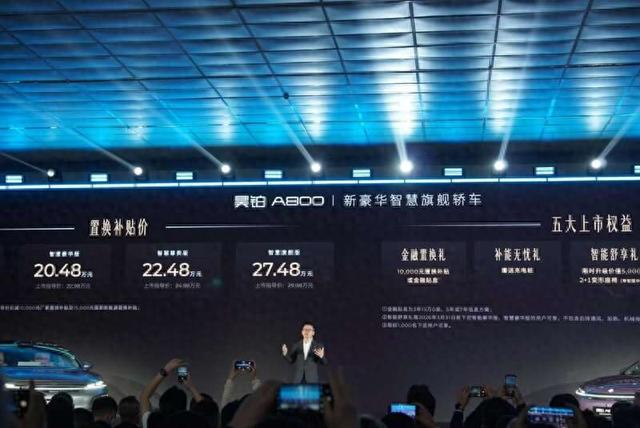
Core Viewpoint - GAC Group has launched the Haobo A800, a new luxury smart flagship sedan, featuring advanced technology and optimizations in various aspects such as chassis, safety, and intelligence [2]. Group 1: Vehicle Technology and Features - The Haobo A800 is equipped with a three-motor four-wheel drive smart digital chassis that can adjust power distribution to the left, right, front, and rear wheels in real-time, with a response time as fast as 10 milliseconds [2]. - The vehicle includes a "negative torque output" feature that enhances cornering precision, along with hardware configurations like dual-chamber air springs, SDC shock absorbers, and high-performance multi-link rear suspension [2]. - It incorporates high-speed blowout prevention technology and intelligent anti-motion sickness functions, balancing vehicle handling and passenger comfort through calibration testing and digital technology [2]. Group 2: Safety Features - The Haobo A800 is equipped with 14 safety airbags and utilizes the latest magazine battery 2.0 technology, successfully passing more stringent shooting tests than the new national standard puncture test [2]. - To ensure the stable operation of the four-laser radar intelligent driving assistance system, the vehicle features redundant designs for positioning, perception, computation, and power systems, enhancing overall travel safety [2]. Group 3: Intelligent Driving System - The vehicle is equipped with Huawei's Qian Kun intelligent driving ADS 4.1 system and features 896-line laser radar, with new urban navigation functions including three-point turns and park navigation assistance [2]. - The interior features the HarmonyOS cockpit 5, which integrates five major intelligent entities and a universal large model, enabling functions such as navigation error correction and fuzzy semantic vehicle control [2].


未知机构:天风汽车德赛西威25年报点评0305-20260306
未知机构· 2026-03-06 02:20
Company and Industry Summary Company Overview - The company reported a revenue of 32.557 billion yuan for the year 2025, representing a year-on-year increase of 17.88% [1] - The net profit attributable to shareholders was 2.454 billion yuan, up 22.38% year-on-year [1] - The gross margin was 19.07%, a decrease of 0.81 percentage points year-on-year [1] - The net profit margin stood at 7.54%, an increase of 0.28 percentage points year-on-year, meeting expectations [1] Quarterly Performance - In Q4 2025, the company achieved a revenue of 10.221 billion yuan, a year-on-year increase of 18.25% and a quarter-on-quarter increase of 32.87% [1] - The net profit for Q4 was 666 million yuan, reflecting an 11.34% year-on-year increase and a 17.82% quarter-on-quarter increase [1] - The gross margin for Q4 was 17.7%, down 0.7 percentage points year-on-year and 0.8 percentage points quarter-on-quarter [1] - The decline in Q4 gross margin may be influenced by the smart driving business, particularly from OEMs like Xiaomi YU7, Xpeng, and Li Auto [1] Business Segments 1. **Smart Cockpit** - Revenue for 2025 was 20.585 billion yuan, a year-on-year increase of 12.92% with a gross margin of 18.83% [2] 2. **Smart Driving** - Revenue reached 9.7 billion yuan, up 32.63% year-on-year, with a gross margin of 16.36% [2] - The company has achieved large-scale production deliveries for mainstream domestic and international automakers and launched the first 4D millimeter-wave radar supporting satellite architecture [2] - New project orders have an annualized sales value exceeding 13 billion yuan [2] 3. **Connected Services** - Revenue was 2.272 billion yuan, a year-on-year increase of 9.52%, with a gross margin of 32.82% [2] - The company introduced an end-to-end large model voice solution and upgraded the "Blue Whale" ecosystem for global and localized software solutions [2] 4. **Innovative Business** - Low-speed unmanned vehicles: The S6 series features a self-developed L4 driving system suitable for various scenarios [2] - Robotics: The company has secured domain control project orders and plans to commence mass production in 2026 [2] International Expansion - The company has secured new project orders from major international clients such as Volkswagen and Toyota, and has made breakthroughs with Honda and Renault [3] - Overseas production capacity has been established in Indonesia, with the first mass production project in Mexico and core equipment installation completed in Spain, positioning these regions as new growth markets [3] Profit Forecast - The company expects to achieve a net profit attributable to shareholders of 3.01 billion yuan and 3.76 billion yuan in 2026 and 2027, respectively, representing year-on-year growth of 23% and 25% [3] - Corresponding price-to-earnings ratios are projected at 23x for 2026 and 18x for 2027 [3]
两会|中国太保周燕芳:建议构建国家级智驾数据共享标准及平台
券商中国· 2026-03-06 01:12
Core Viewpoint - The article emphasizes the need for high-quality development of insurance for new energy vehicles (NEVs) in China, highlighting the unique risks and challenges posed by the rapid growth of the NEV market and advancements in intelligent driving technology [1][2]. Group 1: Unique Risks of New Energy Vehicles - The risk characteristics of NEVs differ fundamentally from traditional fuel vehicles, with the "three electric" systems (battery, motor, and electronic control) becoming the core risk areas [4]. - As the number of NEVs increases and they age, risks associated with the "three electric" systems will become more pronounced, leading to long-term pressure on insurance payouts [4]. - New manufacturing processes have increased repair costs, as advanced techniques often require complete part replacements instead of localized repairs, complicating risk management for insurers [4]. - The ambiguous usage nature of some NEVs, such as personal vehicles being used for ride-hailing, leads to mismatches in risk pricing and complicates insurance quality control [4][5]. Group 2: Impact of Intelligent Driving Technology - The proliferation of intelligent driving technology alters the logic of accident responsibility, extending liability beyond just the driver to include manufacturers and software providers [6]. - Current legal frameworks, such as the Road Traffic Safety Law, are inadequate for addressing the complexities introduced by system-led driving scenarios [6]. - The lack of standardized data collection and analysis for intelligent driving accidents hampers effective accident investigation and insurance claims processing [7]. Group 3: Recommendations for High-Quality Development - The article suggests establishing a national-level data-sharing platform for intelligent driving to enhance insurance operations and service capabilities [8]. - It advocates for the revision of relevant laws, such as the Road Traffic Safety Law and the Insurance Law, to clarify liability in intelligent driving scenarios [8]. - The development of technical standards for the "three electric" systems and a safety assessment framework is recommended to reduce disputes and protect consumer rights [9]. - The article calls for differentiated product innovation and pricing guidelines to address the diverse risk characteristics of NEVs, including dynamic pricing models based on driving behavior and risk factors [9].
全国人大代表周燕芳:建议构建国家级智驾数据共享标准及平台
经济观察报· 2026-03-05 14:07
Core Viewpoint - The article discusses the evolving risk characteristics and insurance needs of the electric vehicle (EV) market, highlighting the differences from traditional fuel vehicles and the challenges these pose for insurance products and risk management [2][3]. Group 1: Market Trends and Statistics - By the end of 2025, the number of electric vehicles in China is expected to reach 43.97 million, accounting for 12.01% of the total vehicle population, with 12.93 million new registrations in 2025, representing 49.38% of new vehicle registrations [2]. - The penetration rate of Level 2 (L2) and above intelligent driving is projected to exceed 65% by 2025 and reach 80% by 2026, while advanced driver assistance systems are expected to rise from over 15% to 25% in the same period [2]. Group 2: Risk Characteristics of Electric Vehicles - The core risk of electric vehicles lies in the "three electric" systems (battery, motor, and electronic control), which increases repair costs and deepens insurance companies' reliance on manufacturers during damage assessment and pricing [3]. - Some household electric vehicles are being used for ride-hailing services but are still insured at household vehicle rates, leading to a mismatch between risk and premium rates, complicating quality control in auto insurance [3]. Group 3: Legal and Regulatory Gaps - The rise of intelligent driving technology alters the logic of accident responsibility, shifting control from drivers to systems and manufacturers, which creates gaps in current legal frameworks and insurance product offerings [4]. - Current traffic laws focus on driver fault, which is inadequate for scenarios where accidents are caused by system failures, necessitating a reevaluation of liability and insurance coverage for drivers who may become victims due to system errors [4]. Group 4: Data and Insurance Product Development - Accident cause identification increasingly relies on vehicle operation data, but there is a lack of standardized protocols for data collection, storage, and retrieval, affecting liability determination and insurance claims efficiency [5]. - Insurance products specifically designed for intelligent driving risks are still in exploratory stages, with insufficient actuarial data leading to cautious product development and a lack of mature risk transfer tools in the market [5]. Group 5: Recommendations for Improvement - Establish a national-level intelligent driving data sharing standard and platform to enhance insurance operations and service capabilities, ensuring a reliable data loop covering the entire vehicle lifecycle [8]. - Accelerate the revision of relevant laws and regulations to clarify liability in intelligent driving scenarios and include drivers affected by system failures in insurance coverage [9]. - Develop a standard system for key technologies and services related to electric vehicles, including repair standards and environmental guidelines for battery disposal [10]. - Implement differentiated product innovation and pricing guidelines to address the complex risk characteristics of the electric vehicle market, promoting the development of insurance products for emerging technologies [10].

宁波华翔(002048) - 2026年3月4日投资者关系活动记录表
2026-03-05 09:08
Group 1: Company Overview - Ningbo Huaxiang was listed on the Shenzhen Stock Exchange in 2005 and ranked 61st among global automotive parts suppliers in 2025 [1] - The company focuses on a diverse product matrix in automotive parts, including interior and exterior components, metal parts, and electronic accessories [1][2] - Major production bases are located in Asia and North America, serving mainstream automotive manufacturers and leading companies [2] Group 2: Fundraising and Investment Projects - The company plans to raise up to CNY 2.92 billion through a targeted issuance to enhance business layout, expand production capacity, and invest in R&D and digitalization [2] - Key projects include: - Smart manufacturing projects in Wuhu and Chongqing to meet growing orders and localized supply demands [2] - R&D projects focused on lightweight components for smart chassis and humanoid robots [2] - Digital upgrade projects involving IoT devices, MOM systems, and SAP systems to strengthen core competitiveness [2] Group 3: Future Development and Strategy - The overall automotive market is expected to maintain a stable upward trend, supported by low vehicle ownership rates in China [2] - The company is enhancing operational capabilities and profitability by divesting non-performing assets [2] - There is a rapid increase in revenue from self-owned brands, with a focus on building an ecosystem around them [2] - The company aims to establish a strong presence in the smart chassis sector, leveraging opportunities from the rising penetration of advanced autonomous driving technologies [2][3] - A clear strategy for humanoid robotics is in place, focusing on cost reduction of PEEK materials and innovative applications in the industry [3]

激光雷达卷入高线数军备竞赛
第一财经· 2026-03-05 06:17
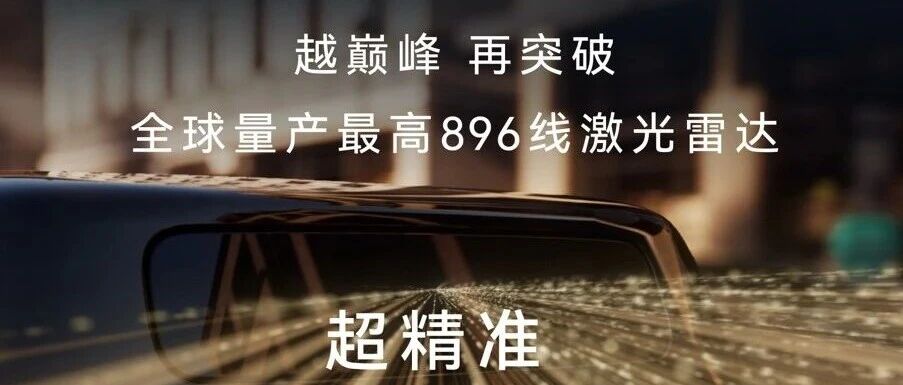
Core Viewpoint - The article discusses the competitive landscape of the automotive industry, particularly focusing on the advancements in laser radar technology, with Huawei's 896-line laser radar leading the charge in terms of production capabilities and perception accuracy [3][4]. Group 1: Laser Radar Technology Advancements - Huawei has launched the world's highest production line laser radar with 896 lines, which enhances perception capabilities from point cloud to image level, achieving a fourfold increase in resolution compared to the commonly used 192-line laser radars [3]. - The 896-line laser radar can detect small objects as low as 14 cm in height and has a stable recognition distance of 120 meters, with a 77% improvement in recognizing irregular obstacles and a 190% increase for low-reflectivity targets [3][4]. - The industry is witnessing a "race" in increasing the number of lines in laser radars, with competitors like Hesai and Suoteng claiming capabilities of 800 and over 1000 lines, respectively [4]. Group 2: Market Dynamics and Cost Considerations - Prior to Huawei's 896-line radar, the highest production line was Suoteng's EM4 with 520 lines, indicating a growing consensus among automakers on the importance of high-line-count laser radars for enhanced consumer experiences [5]. - It is noted that simply increasing the line count does not significantly enhance consumer experience unless it is aligned with driving assistance or autonomous driving functions [5]. - The cost of higher line-count laser radars is significantly higher, with 192-line radars costing over twice that of 64-line radars, influenced by rising prices of upstream precious metals and supply chain imbalances [5]. Group 3: Vehicle Integration and Pricing - The first models to feature Huawei's 896-line laser radar include the Aito S800 and the Aito M9 flagship versions, along with several other models like the Haobo A800 and the new Avita 12 [6]. - The pricing for the Aito S800 and M9 with 896-line laser radar is expected to increase by 20,000 and 10,000 yuan, respectively, compared to their 192-line counterparts, which start at 708,000 yuan and 469,800 yuan [6].
早报 | 美防长称美伊冲突或持续八周或更长;委员建议废除劳务派遣制度;苹果MacBook Neo来了;特朗普正式提名美联储主席
虎嗅APP· 2026-03-05 00:19
Group 1 - Iran has identified several candidates for the Supreme Leader position, with a temporary committee set to exercise the leader's powers until a new leader is elected [2][3] - Israel has issued a warning that any new Supreme Leader who opposes Israel and the U.S. will be targeted for elimination [3] - The U.S. Defense Secretary stated that the conflict between the U.S. and Iran could last for eight weeks or longer, while Iran denied reports of seeking negotiations with the U.S. [4] Group 2 - Russia's President Putin suggested that Russia might proactively cut off gas supplies to Europe, citing rising energy prices and the EU's plans to ban Russian gas imports [5] - The Iranian military successfully attacked Israeli defense installations, destroying seven radar systems, which has left the U.S. and Israel at a disadvantage in the region [7][8] Group 3 - Morgan Stanley plans to cut approximately 3% of its workforce, affecting various departments, including investment banking and asset management, due to performance-related reasons and changes in business priorities [14] - Xiaomi announced plans to upgrade its self-developed SOC chips annually and is preparing to launch an independent AI assistant for international markets, aiming to create a competitive edge in technology [15] Group 4 - Nvidia's CEO indicated that the recent $30 billion investment in OpenAI might be the last before the company goes public, and he expressed skepticism about a previously announced $100 billion infrastructure deal [16] - China Merchants Industry announced that the recent export ban on lithium from Zimbabwe will have a limited impact on its operations, as it maintains sufficient domestic raw material inventory [25][26]





【重磅深度】2026年智驾平权之车企智驾方案梳理
东吴汽车黄细里团队· 2026-03-04 15:36
Investment Recommendations - The current investment suggestion for the smart automotive sector is to maintain a strong outlook on the L4 RoboX theme for 2026, favoring B-end software over C-end hardware [2][6] - Preferred H-shares include Xpeng Motors, Horizon Robotics, Pony.ai, WeRide, Cao Cao Mobility, and Black Sesame Intelligence; A-shares include Qianli Technology, Desay SV, and Jingwei Hirain [2][6] Downstream Application Dimensions - Robotaxi perspective includes: 1. Integrated model: Tesla and Xpeng Motors 2. Technology providers + operational sharing model: Horizon, Baidu, Pony.ai, WeRide, and Qianli Technology 3. Transformation of ride-hailing/taxi services: Didi, Cao Cao Mobility, Ruqi Mobility, public transport, and Jinjiang Online [2][6] - Robovan perspective includes Desay SV and Jiushi Intelligent/New Stone Technology [2][6] - Other autonomous vehicle perspectives include mining trucks (e.g., HiDi Intelligent Driving), ports (e.g., Jingwei Hirain), sanitation vehicles (e.g., Yingfeng Environment), and buses (e.g., WeRide) [2][6] Upstream Supply Chain Dimensions - B-end autonomous vehicle OEMs include BAIC BluePark, GAC Group, Jiangling Motors, and Tongli Co. - Key upstream suppliers include: 1. Testing services (China Automotive Research and China Automotive Industry Corporation) 2. Chips (Horizon Robotics and Black Sesame Intelligence) 3. Domain controllers (Desay SV, Jingwei Hirain, Joyson Electronics, Huayang Group, and Coboda) 4. Sensors (Sunny Optical Technology, Hesai, and Suteng Juchuang) 5. Steer-by-wire chassis (Bertel and Nexperia) 6. Lighting (Xingyu Co.) 7. Glass (Fuyao Glass) [2][6] Mainstream Automakers' Autonomous Driving Strategies - A detailed comparison of major domestic automakers' autonomous driving strategies shows various approaches, including self-research and external supply partnerships, with notable collaborations with companies like Huawei, Momenta, and Horizon [4][5][20][21][30][32][39][40] - Chery's strategy includes a mixed model of multiple external algorithm suppliers and self-research platforms, with significant investments in partnerships [28][29] - Geely's integration of its autonomous driving team into Qianli Technology aims to streamline operations and enhance technological capabilities [20][22][23] BYD's Autonomous Driving Development - BYD's "Tianshen Eye" system has evolved to version 5.0, featuring advanced capabilities such as automatic emergency steering and braking, with a focus on enhancing user safety and efficiency [15][16] - The company emphasizes a dual approach of self-research and external collaboration, maintaining a significant investment in autonomous driving technology [10][14][47] Xiaomi's Strategic Investment in Autonomous Driving - Xiaomi has adopted a phased approach to its autonomous driving strategy, transitioning from strategic investments to full-scale self-research and development, with a significant increase in team size and R&D investment [47][48]



AI智能涌现新阶段-智驾VLA与世界模型之争
2026-03-04 14:17
Summary of Conference Call Records Industry Overview - The conference call discusses the evolution of intelligent driving paradigms, transitioning from "rules + maps" to "VLA (Vision-Language-Action) + world models" with significant advancements expected post-2025, particularly with the introduction of cost-effective reasoning models like Deepseek [1][3][4]. Key Points and Arguments Technological Advancements - The parameter scale of models is increasing, with vehicle-side models reaching tens of billions and cloud-side models approaching hundreds of billions. Xiaopeng's second-generation VLA has achieved a 33% reduction in prediction error through a 32-fold ultra-dense visual reasoning chain [1][12]. - The training paradigm is shifting from imitation learning to a combination of "pre-training + SFT (Supervised Fine-Tuning) + reinforcement learning," which enhances reasoning capabilities and addresses risk asymmetry in emergency scenarios [1][8]. Industry Dynamics - The competitive landscape is characterized by a divergence in technical paths: Huawei and NIO focus on "cloud-based world engines + vehicle-side action models," while Xiaopeng and Li Auto emphasize the VOA route, integrating LLMs (Large Language Models) into their algorithms to improve generalization in long-tail scenarios [1][2][12]. - The introduction of L2 strong standards is anticipated in Q2 2026, with external catalysts such as Tesla's Cybercab mass production and FSD (Full Self-Driving) entering China, indicating a nearing commercial breakthrough for L3/L4 [1][13]. Model Development and Training - The evolution of general AI models since 2017 has been marked by significant milestones, including the introduction of the Transformer architecture and the integration of multimodal capabilities, leading to enhanced reasoning abilities [4][5]. - The scaling law emphasizes the critical role of model size, data, and computational power in enhancing capabilities, which is also applicable to intelligent driving models [4][6]. Future Projections - By 2026, key players are expected to focus on VLA-type large models, with significant advancements in the integration of visual, language, and action components within a unified framework [9][10][12]. - The world model's role is to simulate and predict future states of the physical environment, enhancing the vehicle's ability to anticipate and respond to complex scenarios [11][12]. Additional Important Insights - The transition from traditional end-to-end systems to VLA and world models is driven by the need for better understanding of physical laws and improved decision-making capabilities in complex environments [7][10]. - The industry is witnessing a shift towards more integrated models that combine perception, reasoning, and action generation, with a focus on enhancing the interpretability and robustness of outputs [10][11]. - Key players are diversifying their strategies, with Xiaopeng focusing on enhancing driving experience through its second-generation VOA, while Huawei and NIO are leaning towards world model approaches [12][13]. Investment Focus - Investment opportunities are concentrated in areas such as LiDAR technology (e.g., Hesai), high-level autonomous driving chip localization (e.g., Horizon Robotics), and the commercialization of Robotaxi services (e.g., Pony.ai, WeRide) [2][13].