生态文明

Search documents
【英文】EMBER:中国能源转型评论2025
Sou Hu Cai Jing· 2025-09-23 03:17
Core Insights - The report "EMBER: China Energy Transition Review 2025" analyzes China's clean energy transition, highlighting its significant impact on global energy dynamics and fossil fuel usage [1][5][9]. Group 1: Domestic Energy Transition Achievements - In 2024, clean energy sources like wind and solar accounted for 84% of the increase in electricity demand, with fossil fuel generation decreasing by 2% in the first half of 2025 [11][23]. - By 2023, electricity represented 32% of total final energy consumption in China, surpassing the 24% levels seen in Europe and the US, with electricity becoming the primary energy source in the industrial sector [12][26]. - The total installed capacity of wind and solar reached 1,408 GW by 2024, exceeding coal capacity for the first time in early 2025 [33][57]. Group 2: Drivers of the Energy Transition - The transition is driven by a combination of policy initiatives and economic factors, with the clean energy sector contributing approximately 13.6 trillion RMB (about $1.9 trillion) to the economy in 2024, representing about 10% of GDP [2][28]. - Chinese companies lead global clean energy patent applications, accounting for 75% of the total, which has facilitated significant cost reductions in technologies such as wind and solar [14][28]. - The "1 + N" policy framework supports the dual carbon goals, emphasizing the establishment of a clean energy system before phasing out fossil fuel facilities [2][27]. Group 3: Global Implications of China's Energy Transition - China's advancements in clean energy technologies are enabling emerging markets to leapfrog traditional energy systems, with 25% of these markets surpassing the US in electrification levels [14][22]. - In 2024, China exported 242 GW of solar energy, with half directed towards emerging markets, and electric vehicle exports accounted for 41% of total automotive exports in the first five months of 2025 [2][22]. - The decline in China's fossil fuel consumption, which fell by 1.7% from 2015 to 2023, is expected to contribute to a structural decline in global fossil fuel demand by 2030 [12][41].


参禅的隐居者
Hang Zhou Ri Bao· 2025-09-23 01:39
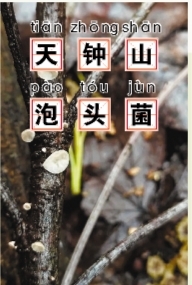
Group 1 - A new fungal species named "Tianzhongshan Bubble Fungus" was discovered in the Tianzhong Mountain area, marking a significant addition to biodiversity research [2][3] - The species was officially named Physalacria tianzhongshanensis and published in the authoritative journal Mycology, included in the "Red List of Biodiversity in China" with a DD (Data Deficient) status [3] - The discovery highlights the ecological importance of fungi and their role in connecting past and present ecosystems, emphasizing the need for conservation efforts [3] Group 2 - The Tianzhong Mountain Tourism Company, led by Yuan Bo, emphasizes the importance of protecting the newly discovered species by avoiding commercialization and maintaining its natural habitat [4] - The company advocates for a balance between human interaction and nature, promoting a philosophy of coexistence without disturbance [4] - Conservation efforts focus on allowing the fungus to thrive in its natural environment rather than turning its habitat into a tourist attraction [4]
苏芳:把握壮大县域经济的方法方向
Jing Ji Ri Bao· 2025-09-18 00:06
Core Viewpoint - The development of county-level economies is essential for achieving high-quality economic growth and is a key component of China's modernization strategy [1][2]. Group 1: High-Quality Development of County Economies - High-quality development of county economies is rooted in the goal of common prosperity, emphasizing the need to improve people's livelihoods and social stability [2][6]. - The current challenges faced by some counties include industrial upgrading and population loss, necessitating resource optimization and employment mechanism improvements to enhance residents' income and consumption [2][5]. Group 2: Urban-Rural Integration - Urban-rural integration is crucial for addressing the imbalance between urban and rural development, which has historically hindered the overall development of county economies [3][6]. - The need to break down the dual structure of urban and rural areas is emphasized, promoting the free flow of key resources such as talent, capital, and technology between urban and rural settings [3][7]. Group 3: Ecological Civilization - The concept of "green mountains and clear waters are invaluable assets" highlights the need for a balance between ecological protection and economic development in county economies [4][8]. - Counties must focus on long-term ecological sustainability rather than short-term economic gains, addressing challenges such as reliance on traditional industries and the need for green transformation [4][8]. Group 4: Consumption Upgrade - The potential for consumption in county economies is significant, driven by rising income levels among residents, which can stimulate domestic circulation [5][9]. - Strategies to enhance consumption include improving supply, optimizing the consumption environment, and developing infrastructure to activate the county consumption market [5][9]. Group 5: Key Tasks and Directions - The focus on improving people's livelihoods is essential for establishing a foundation for common prosperity, which includes enhancing public services and social security systems [6][7]. - New urbanization should be leveraged to create a new pattern of urban-rural integration, optimizing the urban system and ensuring equitable resource distribution [7][9]. - A green transformation approach is necessary to build a low-carbon circular development system, integrating ecological advantages into economic benefits [8][9]. - The development of a modern industrial system should be prioritized, focusing on key industries and fostering collaboration among various stakeholders for effective governance [9].
把握壮大县域经济的方法方向
Jing Ji Ri Bao· 2025-09-17 22:31
Core Viewpoint - The development of county economy is essential for achieving high-quality economic growth and is a key component of Chinese-style modernization, emphasizing the need for tailored strategies to enhance local economies and promote urban-rural integration [1][2][3]. Group 1: High-Quality Development of County Economy - High-quality development of county economy is rooted in the goal of common prosperity, focusing on improving people's livelihoods and social stability [2]. - The county economy must address challenges such as industrial upgrading and population outflow by optimizing resource allocation and enhancing employment mechanisms [2][4]. Group 2: Urban-Rural Integration - Urban-rural integration is crucial for addressing the imbalance in development, with a focus on facilitating the flow of resources and services between urban and rural areas [3]. - The need to break down the dual structure of urban and rural economies is emphasized, promoting equal exchange of resources and enhancing public service distribution [3][6]. Group 3: Ecological Civilization - The concept of "green mountains and clear waters are invaluable assets" highlights the importance of balancing ecological protection with economic development [4]. - There is a call for establishing mechanisms to realize the value of ecological products and to promote a sustainable development path that integrates economic, ecological, and social benefits [4][8]. Group 4: Consumption Upgrade - The potential for consumption in county areas is significant, driven by rising income levels, which can stimulate local economies and enhance domestic circulation [5]. - Strategies to activate the county consumption market include improving supply, optimizing the consumption environment, and enhancing infrastructure [5][8]. Group 5: Key Tasks and Directions - The focus on improving livelihoods, promoting urban-rural integration, ensuring ecological sustainability, and fostering consumption upgrades is essential for enhancing the vitality of county economies [6][9]. - Collaborative governance involving government, market, and social forces is necessary to optimize resource allocation and enhance competitiveness in county economies [9].
中国联合国教科文组织全国委员会答每经问:在本科教育中围绕生态文明设置了12个引导性专业
Mei Ri Jing Ji Xin Wen· 2025-09-17 15:32
Core Viewpoint - The Chinese government is actively promoting ecological civilization education and talent cultivation to support ecological development, highlighted by the upcoming 2025 World Biosphere Reserve Congress in Hangzhou, which will be the first of its kind held in Asia and aims to enhance global participation [1]. Group 1: Ecological Civilization Education - The concept of "Lucid waters and lush mountains are invaluable assets" has gained significant traction, reflecting a collective societal effort to enhance ecological awareness [2]. - Ecological civilization education has been integrated into the national education system, encompassing all levels from kindergarten to higher education, as a crucial component of moral education [2]. - Educational guidelines have been issued to incorporate ecological concepts into various subjects, including science, language, history, and biology, ensuring that students engage with ecological themes throughout their schooling [2]. Group 2: Practical Activities and Engagement - Schools are organizing diverse ecological activities, such as "Ecology First Lesson" at the beginning of the school year, summer volunteer services, and tree-planting events, to foster ecological awareness among youth [3]. - Educational institutions are leveraging local museums and biosphere reserves as practical teaching resources to instill green and low-carbon living principles in students [3]. Group 3: Talent Cultivation in Ecological Protection - The government is focusing on cultivating ecological protection talent by establishing specialized undergraduate programs in fields like ecological restoration and biomass science [4]. - Graduate education includes 18 primary disciplines related to ecology and environmental science, with over 1,000 doctoral and 3,000 master's programs available [4]. - Vocational education is also enhancing talent development in ecological protection, with over 310 schools offering related programs, thereby contributing to the cultivation of skilled professionals for ecological civilization [4].
深刻领悟习近平生态文明思想的世界意义
Ren Min Ri Bao· 2025-09-17 04:48
Group 1 - The core idea of Xi Jinping's ecological civilization thought emphasizes the importance of building a beautiful and clean world, contributing Chinese wisdom and solutions to global ecological civilization construction [1][3][11] - Xi Jinping's ecological civilization thought integrates ecological protection with civilization development, proposing a new civilization form that transcends traditional industrial civilization [3][10] - The concept of "green water and lush mountains are invaluable assets" highlights the economic, social, and cultural values of ecological environments, promoting the idea that ecological protection and economic development are not contradictory but rather complementary [8][9][13] Group 2 - Xi Jinping's ecological civilization thought provides a theoretical framework for addressing the global dilemma of sustainable development, breaking the paradox of development versus protection [7][10] - The thought reflects a shift from capital logic to a people-centered approach, emphasizing that a good ecological environment is a fundamental aspect of public welfare [4][10] - The integration of traditional Chinese ecological wisdom with modern ecological governance offers a new path for harmonious coexistence between humans and nature, distinguishing it from both ecocentrism and anthropocentrism [5][10] Group 3 - China's commitment to green development under Xi Jinping's ecological civilization thought has led to significant achievements, such as becoming the world's largest market for electric vehicles and a major player in renewable energy [9][10][13] - The thought encourages international cooperation in ecological governance, positioning China as a key contributor to global sustainable development efforts [12][14] - Xi Jinping's ecological civilization thought aims to provide a new choice for developing countries in achieving modernization without following the traditional path of pollution followed by remediation [10][12]
国家公园法草案拟提请三审
Yang Shi Xin Wen· 2025-09-05 07:33
Core Points - The National Park Law draft is set for its third review by the Standing Committee of the National People's Congress, emphasizing ecological priority and strict protection as legislative goals [1] - The draft includes provisions for the coordinated protection of natural ecosystems and cultural heritage within national parks [1] - Management measures for national parks are being refined, allowing for specific regional land use planning and arrangements for ecological restoration activities [1] - The draft promotes public participation in national park protection and encourages local governments to collaborate with management agencies for the conservation of surrounding natural resources [1]
李宏伟:绿水青山就是金山银山理念的理论价值与实践伟力
Bei Jing Ri Bao Ke Hu Duan· 2025-09-05 00:43
Core Viewpoint - The "Green Mountains and Clear Water are as Valuable as Mountains of Gold and Silver" concept, proposed by Xi Jinping 20 years ago, emphasizes the unity of economic development and ecological protection, guiding China's ecological civilization construction through significant theoretical and practical changes [1][2]. Theoretical Value - The concept has been consistently highlighted by Xi Jinping since its inception in 2005, with its importance reiterated in various national and international speeches, emphasizing the need for harmony between nature and development [2][3]. - It integrates Marxist ecological views with traditional Chinese ecological wisdom, forming a unique ecological civilization theory that promotes high-quality economic development alongside ecological protection [3][4]. Practical Innovations - The concept has led to a shift from short-term growth at the expense of the environment to a focus on ecological priority and green, low-carbon development [7][8]. - China's ecological environment has shown continuous improvement, with significant reductions in PM2.5 levels and increased public satisfaction regarding ecological conditions, demonstrating the practical effectiveness of the concept [8][9]. Economic Transformation - The concept positions natural capital as a fundamental production factor, enhancing Marxist political economy by recognizing the ecological environment's role in sustainable productivity [5][6]. - It promotes a complete cycle where ecological value is transformed into economic value, fostering a system where economic growth supports ecological protection [9][10]. International Influence - The concept serves as a model for developing countries facing ecological constraints, showcasing that high-quality development can be achieved through ecological protection [11][12]. - It encourages a paradigm shift from exploitative development to harmonious coexistence with nature, contributing to global ecological civilization efforts [12][14]. Diverse Practices - Various local initiatives in China exemplify the practical application of the concept, such as transforming ecological resources into marketable assets, providing valuable lessons for other developing nations [13][14]. - The concept has inspired innovative practices that align ecological sustainability with economic growth, offering a reference for achieving sustainable development tailored to local conditions [13][14].
庄贵阳:共同描绘美丽中国新画卷
Jing Ji Ri Bao· 2025-08-29 00:09
Group 1: Core Concepts of Beautiful China - The construction of Beautiful China is a significant goal for the comprehensive modernization of the socialist state, emphasizing the importance of ecological values and sustainable development [1][3] - The external beauty of Beautiful China is represented by a high-quality ecological environment, which is seen as a public good and essential for people's well-being [1][2] - The internal beauty of Beautiful China is reflected in high-quality development, focusing on a green transformation of the economy and society [2][3] Group 2: Achievements and Goals - Since the 18th National Congress, China has made historic changes in ecological civilization, with forest coverage exceeding 25% and significant improvements in air quality, as evidenced by PM2.5 levels dropping below 30 micrograms per cubic meter in major cities [1][2] - By 2024, clean energy consumption is projected to account for 28.6% of total energy consumption, with coal's share decreasing to 53.2%, and renewable energy contributing 86% of new power generation capacity [2] - The clean energy sector is expected to contribute approximately 10% to China's GDP in 2024, highlighting the economic significance of the green transition [2] Group 3: Principles for Implementation - The unified approach to promoting Beautiful China involves balancing high-level protection with high-quality development, emphasizing the need for collaboration and effective governance [3][4] - The concept of "whoever pollutes, whoever governs" is central to the initiative, ensuring that those who harm the environment are held accountable while also benefiting those who protect it [4] - The initiative encourages collective societal action, aiming to create a culture that values ecological civilization and engages all citizens in environmental protection efforts [4]
文山绘就绿色发展新画卷
Zhong Guo Huan Jing Bao· 2025-08-28 01:46
Core Viewpoint - Wenshan Prefecture is committed to ecological priority and green development, achieving significant improvements in environmental quality and establishing a robust ecological security barrier in southeastern Yunnan [2][30]. Institutional Framework - Wenshan has developed a comprehensive institutional framework for ecological civilization, including performance management methods that link ecological indicators to the performance evaluation of officials [3][16]. - The establishment of a horizontal ecological compensation mechanism within the Pearl River Basin has provided a model for cross-regional ecological governance in the province [3][18]. Environmental Protection and Restoration - The prefecture has completed pollution investigations on 267 plots, ensuring the safe utilization of 978,000 acres of contaminated farmland, with a 100% safety utilization rate for key construction land [4][22]. - Biodiversity surveys recorded 11,167 species, including numerous endangered plants and animals, highlighting the region's rich biological resources [5][23]. Pollution Control and Air Quality - In 2024, Wenshan achieved an air quality excellent rate of 99.4%, with fine particulate matter concentration at 19.4 micrograms per cubic meter [9][19]. - The prefecture has maintained a 100% excellent water quality rate for monitored water bodies and has implemented significant reductions in chemical oxygen demand and ammonia nitrogen [9][19]. Green Energy and Economic Development - Wenshan is transitioning to green development, with a clean energy installed capacity of 5.8674 million kilowatts, accounting for 99.8% of total capacity, and a projected clean electricity output of 11.83 billion kilowatt-hours in 2024 [25][28]. - The region has seen the establishment of several zero-carbon industrial parks and green factories, promoting sustainable economic growth [28][30]. Rural Environmental Improvement - The prefecture has significantly improved rural sanitation and wastewater treatment rates, with the rural sanitation rate increasing from 41.94% to 78.35% from 2021 to 2024 [7][29]. - Wenshan's green beautification efforts have resulted in numerous green community and village initiatives, enhancing the overall living environment [29][30]. Ecological Civilization and Recognition - Wenshan has been recognized for its ecological civilization initiatives, with several counties designated as national and provincial demonstration areas for ecological construction [30][32]. - The region's ecological governance achievements have gained widespread media attention, showcasing its successful practices in environmental management [30][32].