绿色航运

Search documents
宁波远洋: 宁波远洋运输股份有限公司2025年半年度报告
Zheng Quan Zhi Xing· 2025-08-27 11:25
Core Viewpoint - Ningbo Ocean Shipping Co., Ltd. reported a net profit attributable to shareholders of 377,658,876.09 yuan for the first half of 2025, reflecting a 36.46% increase compared to the same period last year [1][2]. Financial Performance - The company achieved operating revenue of 2,927,868,407.02 yuan, a 19.85% increase year-on-year [2][18]. - Total profit for the period was 498,403,384.55 yuan, up 37.66% from the previous year [2][18]. - The net cash flow from operating activities was 1,049,967,437.55 yuan, representing a 50.04% increase [2][18]. - The basic earnings per share rose to 0.29 yuan, a 38.10% increase compared to 0.21 yuan in the previous year [2][18]. Business Operations - The company operates a fleet of 98 container ships, covering 41 routes and providing services to 50 major ports domestically and internationally [8][10]. - Container transportation volume reached 311.7 million TEU, a 21.8% increase year-on-year [10][11]. - The company completed 1,458 million tons of bulk cargo transportation, marking a 4.3% increase [10][11]. Industry Context - The shipping industry faced challenges with container shipping prices dropping approximately 8.24% year-on-year due to trade tariffs and geopolitical factors [3][4]. - The domestic container freight index (PDCI) increased by about 24.09% year-on-year, indicating a recovery in domestic shipping rates [4][5]. Strategic Developments - The company is focusing on expanding its international services, with new routes established to Southeast Asia and the Philippines [10][11]. - The fleet's capacity increased by 12.0% in deadweight tonnage and 16.0% in container capacity, ranking third among domestic container shipping companies [11][12]. Governance and Compliance - The company has implemented a comprehensive safety management system and enhanced risk control measures, resulting in a significant number of its captains receiving national safety awards [12][13]. - The company achieved an ESG rating of A from Wind, reflecting its commitment to sustainable practices [13][14].

兴通股份: 兴通海运股份有限公司2025年半年度报告
Zheng Quan Zhi Xing· 2025-08-22 12:10
Core Viewpoint - Xingtong Shipping Co., Ltd. reported a slight increase in revenue but a significant decline in net profit for the first half of 2025, reflecting challenges in the global chemical shipping market and operational adjustments in response to market conditions [3][7][8]. Company Overview and Financial Indicators - The company achieved operating revenue of CNY 787.46 million, a 1.99% increase from the previous year [6][8]. - Total profit amounted to CNY 170.87 million, down 26.36% year-on-year [6][8]. - Net profit attributable to shareholders was CNY 135.60 million, a decrease of 24.80% compared to the same period last year [6][8]. - The net cash flow from operating activities was CNY 229.50 million, down 21.84% year-on-year [6][8]. - As of June 30, 2025, the company's net assets reached CNY 3.27 billion, an increase of 28.29% from the end of the previous year [6][8]. Industry and Main Business Situation - The company operates in the "G55 Water Transportation Industry," focusing on the global transportation of bulk liquid hazardous goods, including chemicals, refined oil, and liquefied petroleum gas [7][8]. - The domestic chemical shipping market saw a transportation volume of 47 million tons in 2024, a 9.3% increase year-on-year [7][8]. - The domestic liquefied petroleum gas shipping market completed a transportation volume of 5.7 million tons in 2024, a 0.9% increase year-on-year [7][8]. - The domestic refined oil shipping market experienced a decline of approximately 4.5% in transportation volume in 2024 [7][8]. Business Model and Operations - The company primarily operates under time charter and voyage charter models, with a focus on providing stable and efficient shipping services [8][9]. - As of June 30, 2025, the company owned 38 vessels with a total capacity of 442,600 DWT [8][9]. - The company has established long-term partnerships with major clients, including Sinopec and Petrobras, enhancing its market position [8][9]. Strategic Development and Future Outlook - The company aims to become a leading integrated service provider in the chemical supply chain, focusing on expanding its domestic and international shipping operations [8][9]. - The company is actively investing in new vessel construction, with plans for 12 chemical tankers under construction, expected to enhance its competitive edge [8][9]. - The company is also embracing digital transformation to improve operational efficiency and safety management [8][9]. Safety and Management - The company emphasizes a robust safety management system, achieving a 100% pass rate in external audits and inspections [8][9]. - The management team possesses extensive industry experience, enabling the company to adapt quickly to market changes and optimize vessel utilization [8][9].

2025年中国液货船行业分类、发展背景、进出口情况、重点企业及未来趋势研判:2025年上半年液货船出口额同比增长91.73%,江苏省出口量全国第一[图]
Chan Ye Xin Xi Wang· 2025-08-22 01:21
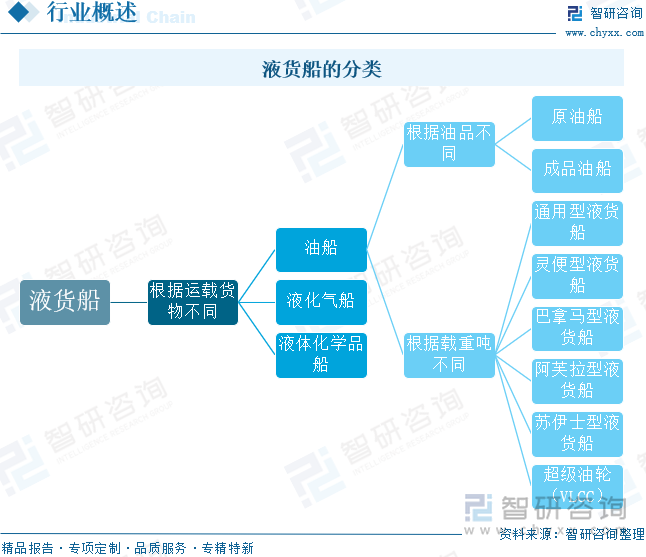
Core Viewpoint - The liquid cargo ship industry in China is experiencing significant growth, driven by increasing exports and advancements in green shipping technology, positioning itself as a key player in the global market for low-carbon shipping solutions [1][10]. Industry Overview - Liquid cargo ships are specialized vessels for transporting liquid goods, including oil, chemicals, and liquefied gases, and have become a crucial growth point for China's shipbuilding exports [3][10]. - The industry is categorized into three main types: oil tankers, liquefied gas carriers, and chemical tankers, each designed for specific liquid cargoes [3]. Development Background - The water transport industry is undergoing a transformation towards modern logistics systems, with China's water transport volume growing from 6.657 billion tons in 2017 to 9.811 billion tons in 2024, reflecting a compound annual growth rate of 5.7% [5]. - The implementation of regional trade agreements and initiatives like the Belt and Road Initiative is enhancing the water transport network, benefiting the liquid cargo ship industry [5]. Industry Chain - The liquid cargo ship industry chain includes upstream raw materials (steel, non-ferrous metals), midstream manufacturing (shipbuilding), and downstream services (transportation and leasing of liquid goods) [7]. Current Industry Status - In 2024, China is expected to export 222 liquid cargo ships, a year-on-year increase of 54.17%, with an export value of 44.185 billion yuan, up 48.98% [10]. - The first half of 2025 shows continued growth, with 136 ships exported, a 37.37% increase from the previous year, and an export value of 29.761 billion yuan, up 91.73% [10]. Key Enterprises - The industry is led by China Shipbuilding Group, with major players including Dalian Shipbuilding, COSCO Shipping Development, and Jiangsu New Yangzi Shipbuilding, among others [17][18]. - These companies are enhancing their competitive edge through technological advancements and expanding their production capabilities [17]. Development Trends - The industry is moving towards larger and more specialized vessels to meet diverse market demands, particularly in LNG and chemical transportation [24][25]. - Green technology is becoming a focal point, with companies developing LNG dual-fuel and ammonia-fueled vessels, as well as innovative designs for carbon capture and storage [27].


当全球最大造船国遇上全球第一船级社:航运业绿色转型如何提速?
Di Yi Cai Jing· 2025-08-21 08:18
Core Viewpoint - The Chinese shipbuilding industry remains the largest globally despite facing challenges from strict carbon emission regulations and market fluctuations, with a strong focus on green shipping and technological innovation [1][4]. Group 1: Regulatory Changes and Industry Response - The International Maritime Organization's (IMO) revised Annex VI of the International Convention for the Prevention of Pollution from Ships has introduced stringent carbon emission regulations effective from August 1, 2023 [1][3]. - The Norwegian classification society DNV is assisting clients in adapting to these new regulations by providing compliance strategies, alternative fuel options, and energy-saving technology recommendations [3][4]. Group 2: Market Dynamics and Trade Relations - China is Norway's largest trading partner in Asia, with bilateral trade expected to reach $10.18 billion in 2024, marking a 31.7% year-on-year increase [3]. - DNV's market share in China accounts for approximately 28% of its global business, with significant growth in regional operations and revenue over the past five years [4]. Group 3: Decarbonization Challenges and Strategies - The transition to decarbonization in shipping is gradual, with about 92% of the global fleet still using traditional fuels [5][6]. - DNV emphasizes the importance of energy efficiency measures and collaboration among stakeholders to accelerate the transition to greener shipping practices [8][9]. Group 4: Technological Innovation and Future Outlook - DNV has established several research centers in China to promote digitalization and innovation in the maritime sector, reflecting a commitment to the Chinese market [9][11]. - The Chinese shipbuilding industry has evolved into a leader in high-end ship construction, with significant advancements in various vessel types, including LNG carriers [12].
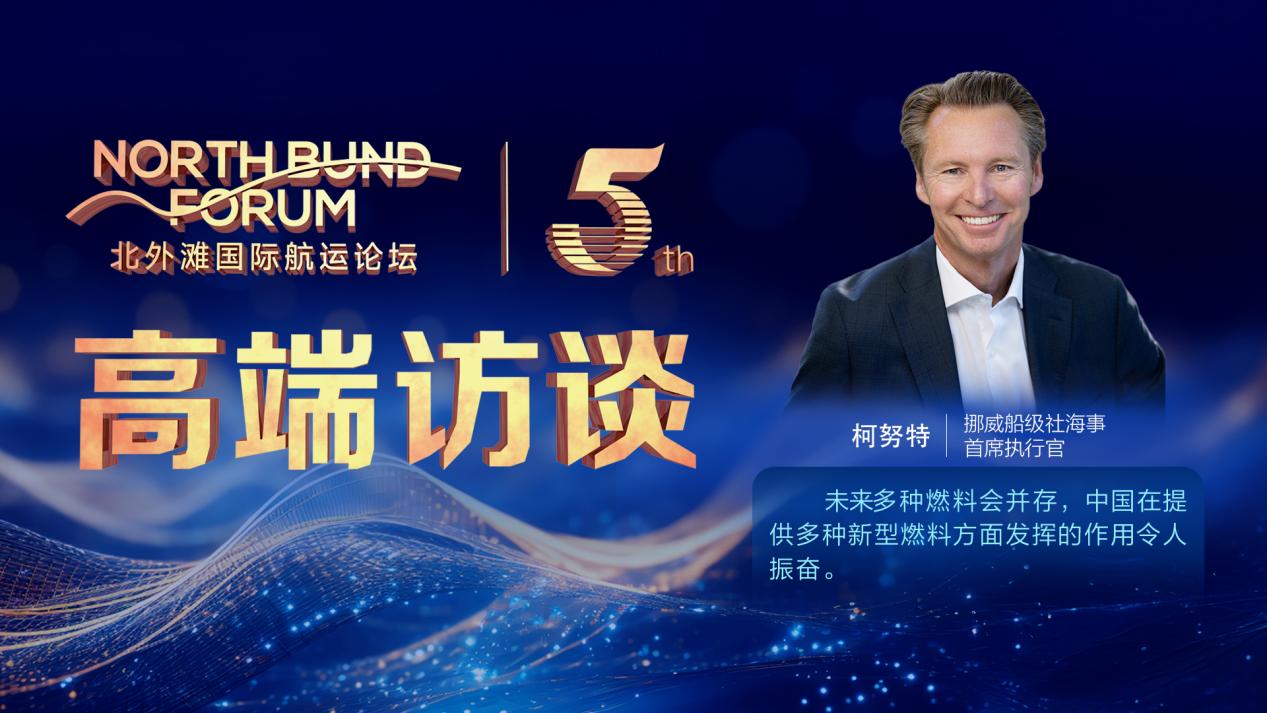
持续完善衍生工具箱 提供风险管理解决方案
Qi Huo Ri Bao Wang· 2025-08-21 00:57
Core Viewpoint - The 2025 China (Zhengzhou) International Futures Forum highlighted the latest developments in the biofuel market, focusing on policy trends, production patterns, and innovations in trading tools, as well as key advancements in shipping decarbonization [1] Group 1: Market Developments - The Chicago Mercantile Exchange Group has established a comprehensive derivatives system covering the entire biofuel industry chain to meet the rapidly growing market demand [1] - The derivatives system includes futures and options products for raw materials such as corn, soybean oil, and European rapeseed oil, as well as fuel products like RBOB gasoline, ultra-low sulfur diesel, ethanol, and biodiesel [1] Group 2: Strategic Goals - The development of the biofuel market requires a balance among policy compliance, raw material sustainability, and cost control [1] - The Chicago Mercantile Exchange Group aims to continuously improve its toolbox of derivatives and provide risk management solutions to support global energy transition and low-carbon goals [1] Group 3: Industry Impact - The innovation and development of the biofuel industry chain are providing strong momentum for green shipping and transportation decarbonization in the context of accelerating global climate action [1]

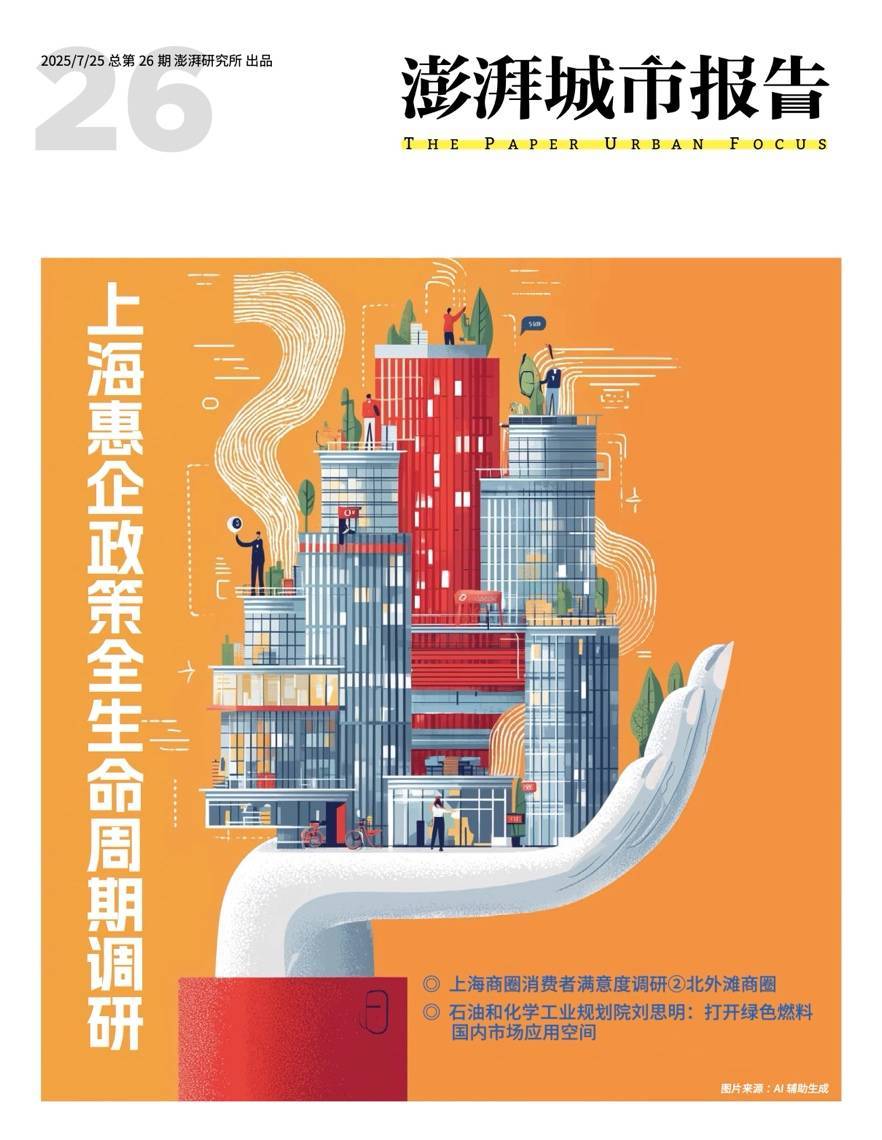
上海惠企政策成效如何?欢迎订阅《澎湃城市报告》第26期
Sou Hu Cai Jing· 2025-08-19 10:41
Group 1 - The report focuses on the effectiveness and impact of government policies aimed at benefiting enterprises in Shanghai, utilizing interviews and surveys to analyze the perspectives of policy makers, implementers, and users [5] - The first article examines the basic content, composition, nature, and objective impact of the enterprise benefit policies [5] - The second article presents and analyzes how the policies are communicated and implemented, detailing the roles of policy-making departments, the "Shuishen Dui" platform, parks/buildings, and service intermediaries [5] Group 2 - The North Bund business district is identified as a core area for Shanghai's development as an international consumption center, forming a "golden triangle" with the Bund and Lujiazui [9] - The report reviews the transformation of the North Bund from an industrial functional area to a central business district and then to a central activity area, based on interviews with 34 consumers including tourists, local residents, and business professionals [9] - Recommendations for enhancing the business district's capabilities are provided based on consumer demand and satisfaction evaluations, as well as data analysis and expert interviews [9] Group 3 - Shanghai is advancing its green transition plan, which includes promoting green fuel certification services and enhancing international cooperation to strengthen its influence in the global green shipping fuel market [12] - The International Maritime Organization (IMO) is set to approve global shipping net-zero emissions regulations by April 2025, linking mandatory emission reduction targets with greenhouse gas pricing for the shipping industry [12] - As the world's largest container port, Shanghai Port is a key node in the construction of green shipping corridors [12]
海丰国际(01308) - 2025 H1 - 电话会议演示
2025-08-15 01:30
SITC International Holdings Company Limited (Stock Code: HK1308) August 2025 Disclaimer This document does not constitute an offer to sell or issue or the solicitation of an offer to buy or acquire securities of SITC International Holdings Company Limited (the "Company") in any jurisdiction or an inducement to enter into investment activity, nor may it or any part of it form the basis of or be relied on in connection with any contract or commitment whatsoever. Specifically, this document does not constitute ...

天津港投用我国北方规模最大纯电动拖轮船队
Jing Ji Ri Bao· 2025-08-14 10:32
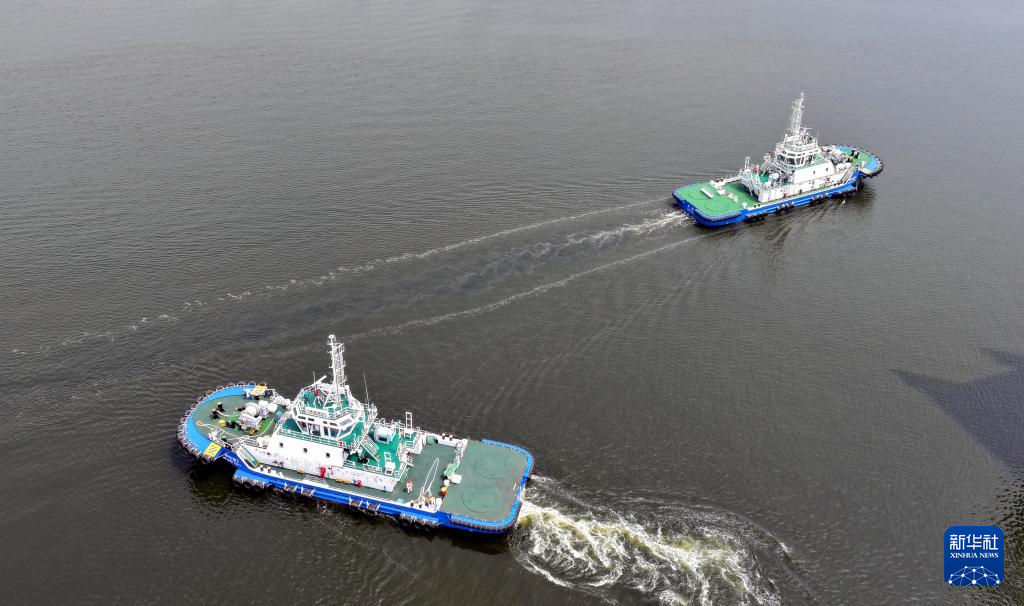
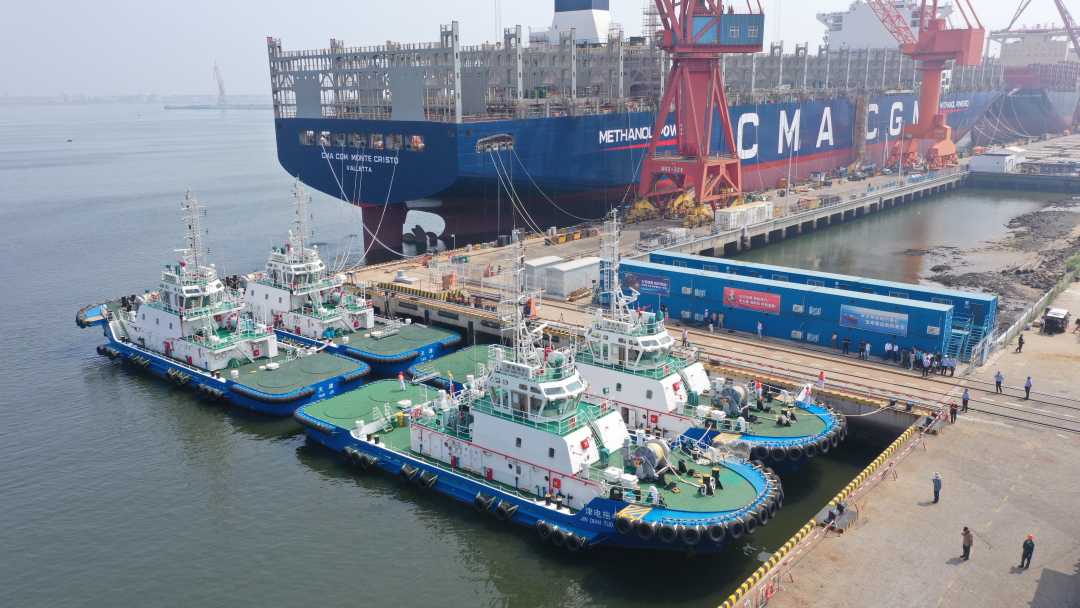
Group 1 - The "Green Fleet" consisting of four pure electric tugboats has officially set sail from the Tianjin port, marking a significant step towards environmentally friendly maritime operations [1] - The electric tugboats are operated by Tianjin Xinjincheng Shipping Technology Service Co., Ltd., and are noted for their environmental, economic, and advanced features, with a battery range of approximately 120 nautical miles and a fast charging capability of three hours [3] - Multiple departments in Tianjin have collaborated to ensure the smooth operation of the "Green Fleet," including the Tianjin Maritime Safety Administration, which has facilitated docking support and expedited the approval process for the tugboats [3]

山东港口青岛港落地船用甲醇加注业务 绿色能源加注能力再提升
Zhong Guo Xin Wen Wang· 2025-08-14 09:19
据介绍,山东港口计划逐步在山东全域提供甲醇、LNG、液氨等全品类绿色替代能源加注服务,全力 推动中国北方绿色船燃加注枢纽的建设,持续完善绿色替代能源加注服务网络,为加快建设世界级海洋 港口群贡献更多力量。(完) (文章来源:中国新闻网) 为确保首次加注业务进行,山东青岛港与中远海运集运、中国船燃全流程协同。青岛前湾集装箱码头有 限公司和方舟智能作为业务实施单位,与中国船燃青岛公司紧密对接,充分借鉴国际先进港口经验,针 对气候条件、政策环境、运营流程以及甲醇特性,逐一破解技术与管理难题,构建了安全、高效的甲醇 加注模式,为业务常态化开展提供了可靠参考。 此次作业采用陆地撬装式加注设备。加注前期,中国(山东)自贸试验区管委会多次牵头组织专项会议, 联合青岛海事局、黄岛海关、黄岛出入境边防检查站等相关行业专家,系统研讨和评审作业准备、作业 流程、风险点及应急预案等关键环节,精准剖析业务难点,制定切实可行的解决方案,并在作业前组织 开展联合演练,确保了整个加注作业过程安全可控。 中新网青岛8月14日电 "中远海运康乃馨"轮14日在山东港口青岛港完成210吨甲醇加注作业,标志着船 用甲醇加注业务在该港落地。该港成为同时 ...
中国北方规模最大纯电动拖轮船队在天津投用
Ren Min Wang· 2025-08-13 15:20
Core Viewpoint - The launch of a fleet of four pure electric tugboats marks a significant advancement in environmentally friendly maritime operations in northern China, specifically at Tianjin Port [2][5][11]. Group 1: Fleet Details - The fleet consists of four pure electric tugboats, which is currently the largest of its kind in northern China [5][9][13]. - These tugboats will assist various vessels in entering and leaving the port and docking operations within Tianjin Port [5][9][11]. Group 2: Environmental Impact - Compared to traditional fuel-powered tugboats, the electric tugboats achieve zero exhaust emissions and operate with low noise levels [5][9][11]. - The implementation of electric tugboats aligns with global trends towards sustainable shipping practices [5][9]. Group 3: Technical Specifications - Each tugboat is equipped with 5,400 horsepower, advanced motors, and intelligent control systems [5][9][11]. - These features are expected to enhance operational efficiency while significantly reducing operational and maintenance costs [5][9][11].