
美联储货币政策

Search documents
詹姆斯金融银行财报显示营收1594万美元,净利润275万美元
Jing Ji Guan Cha Wang· 2026-02-12 19:27
Financial Performance - The company's recent financial report shows revenue of $15.94 million, net profit of $2.75 million, earnings per share of $0.61, and a price-to-earnings ratio of 10.27 [2] Stock Performance - On November 29, 2025, the stock price surged by 5.70%, closing at $17.98, with a trading volume of 940 shares and a turnover rate of 0.02% [3] Industry Policy and Environment - On the same day, the overall banking sector rose by 0.68%, with some regional bank stocks performing actively. Attention is needed on the Federal Reserve's monetary policy impact on net interest margins and financing costs for small and medium-sized banks [4] Company Fundamentals - The company's business includes community banking, mortgage banking, and investment consulting, with a need to monitor changes in loan quality and progress in interest rate risk management [5] Institutional Views - Currently, no institutions have issued ratings or investment recommendations for the stock [6]

深夜巨震!美股三大指数高开低走,芯片股却逆势大涨,美光科技暴涨近10%,黄金白银原油价格同步飙升!
Sou Hu Cai Jing· 2026-02-12 17:02
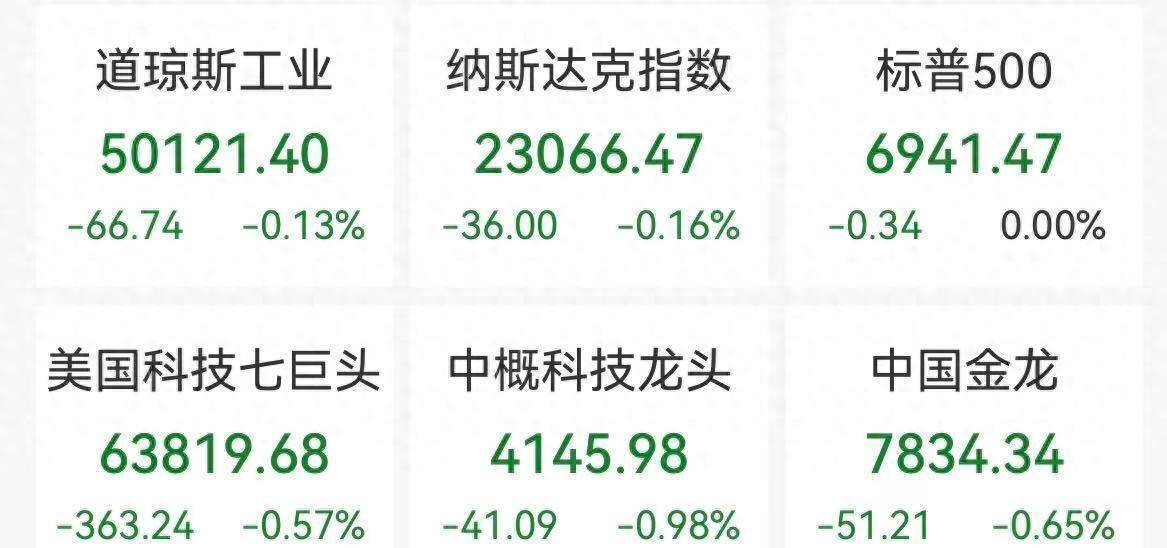
Economic Data and Market Reaction - The U.S. non-farm payrolls increased by 130,000 in January, significantly exceeding the market expectation of 55,000, marking the largest increase in over a year [1][2] - The unemployment rate slightly decreased from 4.4% in December to 4.3%, the lowest since August 2025 [2] - Despite the strong employment report, U.S. stock markets experienced volatility, with the Dow Jones Industrial Average down 0.13%, S&P 500 nearly flat, and Nasdaq Composite down 0.16% [1][4] Sector Performance - Semiconductor stocks performed exceptionally well, with the Philadelphia Semiconductor Index rising by 2.28% and Micron Technology's stock surging nearly 10% [1][5] - The healthcare sector added 124,000 jobs, double the normal level for January 2025, indicating strong growth in this industry [2] - Large tech stocks showed mixed results, with Google and Microsoft down over 2%, while Nvidia and Tesla saw gains of 0.78% and 0.8%, respectively [5] Commodity Market Movements - Gold and silver prices surged due to increased risk aversion, with spot gold rising over 1% to $5,083.7 per ounce and silver up over 4% to $84.3 per ounce [7] - International oil prices also increased, with WTI crude oil futures up 1.05% to $64.63 per barrel, driven by geopolitical tensions [8] Geopolitical Developments - U.S. President Trump emphasized the need for continued negotiations with Iran after a meeting with Israeli Prime Minister Netanyahu, indicating a preference for diplomatic solutions [9][10] - The geopolitical climate remains tense, with military deployments in the Middle East and ongoing sanctions against Iran, which could impact market stability [11][12] Semiconductor Industry Insights - South Korea's semiconductor exports reached $6.73 billion in the first ten days of February, a year-on-year increase of 137.6%, reflecting strong global demand [13] - Micron Technology's stock price target was raised significantly by Morgan Stanley, indicating confidence in the company's future performance amid supply shortages [6][13] - The semiconductor industry is transitioning from quarterly business to long-term collaborative agreements, driven by increasing demand for advanced memory chips [14]

2026年1月美国就业数据点评:“强复苏”还是“弱平衡”?
Shenwan Hongyuan Securities· 2026-02-12 15:18
Overview - In January 2026, the U.S. non-farm payrolls increased by 130,000, exceeding market expectations of 65,000, indicating a strong employment report[1] - The unemployment rate fell to 4.3%, down from 4.4% as anticipated, while the labor force participation rate rose to 62.5%[1][6] - The average hourly wage in the private sector increased by 0.4% month-on-month, surpassing the expected 0.3%[1][10] Employment Data Adjustments - The annual benchmark revision revealed that the average monthly job growth for 2025 was adjusted down to only 15,000, with a significant downward revision of 898,000 jobs for March 2025[1][11] - The non-seasonally adjusted figures for 2025 were revised down by 862,000 jobs, indicating a weaker employment landscape than previously reported[1][11] Sector Performance - The education and health services sector contributed significantly to job growth, adding 137,000 jobs, while the construction sector added 33,000 jobs, driven by non-residential contractors[2][21] - Manufacturing saw a slight recovery with an addition of 5,000 jobs, breaking a streak of negative growth over the past 13 months[2][21] Market Reactions - Following the employment data release, U.S. Treasury yields, the dollar index, and stock markets all experienced upward movements, reflecting reduced concerns over layoffs[2][14] - The 10-year Treasury yield briefly surpassed 4.2%, indicating market optimism regarding economic stability[2][14] Future Outlook - Despite the strong January employment figures, analysts caution that the data may contain "water," suggesting underlying weaknesses in the labor market[4] - The potential for a "low growth balance" in the U.S. job market is anticipated for 2026, with risks from tariffs and immigration policies posing challenges[4]
【环球财经】美国就业数据“注水”难提振市场信心
Xin Hua She· 2026-02-12 12:26
Group 1 - The U.S. stock market indices closed lower on February 11, despite better-than-expected non-farm employment data, indicating a lack of strong market confidence [1] - The U.S. Labor Department reported that 130,000 new non-farm jobs were added in January, surpassing market expectations of 70,000 and the previous month's 50,000 [1] - The annual revision of benchmark data significantly lowered the total number of new non-farm jobs added in 2025 from 584,000 to 181,000, marking the lowest annual job growth in over 20 years [1] Group 2 - Structural issues in the U.S. job market remain prominent, with new job additions concentrated in a few sectors like healthcare, indicating ongoing challenges in the overall employment landscape [2] - Financial services, trade, transportation, and utilities sectors are experiencing job losses, suggesting that the labor market is still under significant stress [2] - The number of long-term unemployed individuals increased by 386,000 compared to the previous year, highlighting that a "full recovery" of the U.S. economy is still a long way off [2] Group 3 - The perceived "inflated" employment data poses new challenges for the Federal Reserve in making monetary policy decisions, with a consensus that the Fed will likely maintain the current benchmark interest rate in March [2] - The probability of the Fed keeping interest rates unchanged in March rose to 94.6%, significantly higher than the previous day's 79.9% [2]
综述丨美国就业数据“注水”难提振市场信心
Xin Hua Wang· 2026-02-12 12:03
Core Viewpoint - The recent U.S. non-farm employment data, while showing an increase in job numbers, is viewed as potentially inflated and fails to instill strong market confidence [1][2]. Group 1: Employment Data Analysis - The U.S. Labor Department reported an addition of 130,000 non-farm jobs in January, exceeding market expectations of 70,000 and the previous month's 50,000 [1]. - The benchmark data for new non-farm jobs for 2025 was significantly revised down from 584,000 to 181,000, marking the lowest annual job growth in over 20 years, which raises questions about the reliability of the January data [2]. - Structural issues in the U.S. job market persist, with new job additions concentrated in a few sectors like healthcare, indicating ongoing challenges in the overall employment landscape [2]. Group 2: Market Reactions and Federal Reserve Implications - The perceived "watered-down" data presents challenges for the Federal Reserve in making monetary policy decisions, as the reliability of economic indicators is in question [3]. - The market currently anticipates that the Federal Reserve will maintain the current benchmark interest rate, with a probability of 94.6% for no change in the March meeting, a significant increase from 79.9% the previous day [3].
综述|美国就业数据“注水”难提振市场信心
Xin Hua She· 2026-02-12 12:00
Core Viewpoint - The recent U.S. employment data, while showing an increase in non-farm jobs, is viewed as potentially inflated and fails to instill strong market confidence [1][2]. Group 1: Employment Data Analysis - The U.S. Labor Department reported an addition of 130,000 non-farm jobs in January, exceeding market expectations of 70,000 and the previous month's 50,000 [1]. - However, the baseline data for 2025 was significantly revised down from 584,000 to 181,000, marking the lowest annual job growth in over 20 years, which raises questions about the reliability of the January data [2]. - Structural issues in the U.S. job market persist, with new jobs concentrated in a few sectors like healthcare, indicating ongoing challenges in the overall employment landscape [2]. Group 2: Market Reactions and Implications - Analysts suggest that the new employment data is unlikely to excite investors, as high-income job sectors such as financial services, trade, transportation, and utilities are experiencing declines [2]. - The number of long-term unemployed individuals increased by 386,000 compared to the previous year, highlighting that a comprehensive economic recovery is still a long way off [2]. - The perceived "watered-down" data presents challenges for the Federal Reserve in making monetary policy decisions, with a high probability (94.6%) that interest rates will remain unchanged in March [3].
BlueberryMarkets:美国1月新增就业13万超预期,降息或延后
Sou Hu Cai Jing· 2026-02-12 08:03
Group 1 - The January non-farm payroll report from the U.S. Bureau of Labor Statistics indicates a significant increase in employment, with 130,000 new jobs added, marking the largest growth since the second half of 2025, while the unemployment rate slightly decreased by 0.1 percentage points to 4.3% [2] - Employment growth in January showed clear industry differentiation, with healthcare, social assistance, and construction leading the way, adding 82,000, 42,000, and 33,000 jobs respectively, while federal government and financial sectors saw job losses [2] - Average hourly earnings for private sector non-farm employees rose by $0.15 to $37.17, reflecting a year-on-year increase of 3.7%, indicating a moderate wage growth [2] Group 2 - Concerns about the sustainability of employment growth persist, as January's data collection was affected by multiple cold waves, potentially leading to data inaccuracies, and job growth remains concentrated in a few sectors, with manufacturing employment continuing to lag [3] - The employment data has a direct impact on Federal Reserve policy, with the Fed having paused interest rate cuts for three consecutive times, maintaining rates in the 3.50%-3.75% range, and the strong January non-farm data has significantly cooled market expectations for short-term rate cuts [3] - The labor market's resilience is better than expected, but issues such as structural imbalances and insufficient growth sustainability remain unresolved, suggesting that future Federal Reserve policy adjustments will depend on upcoming economic data to balance inflation and employment goals [3]

黄金交易提醒:金价无视非农续涨1.2%,CPI公布前多头窗口已打开
Sou Hu Cai Jing· 2026-02-12 06:18
Core Viewpoint - The recent surge in gold prices, despite strong U.S. non-farm payroll data, indicates a robust demand for gold as a long-term investment, driven by various macroeconomic and geopolitical factors [1][3][5]. Group 1: Gold Price Movement - On February 11, spot gold prices peaked at $5,118 per ounce, closing at approximately $5,083 per ounce, reflecting a gain of over 1% [1]. - U.S. gold futures for April rose by 1.3%, settling at $5,098.50 per ounce, despite strong employment data that typically supports higher interest rates [1]. - Following the initial surge, gold prices slightly weakened to around $5,055 per ounce, with a decline of about 0.5% [1]. Group 2: Employment Data Impact - The strong U.S. labor market, with 130,000 new jobs added in January and a drop in the unemployment rate from 4.4% to 4.3%, initially caused a shift in market expectations regarding Federal Reserve interest rate cuts [3][4]. - Despite this, the underlying demand for gold remained strong, as market participants view gold purchases as a long-term strategy based on fundamental factors [3]. Group 3: Geopolitical and Monetary Policy Factors - Geopolitical tensions, particularly regarding U.S. military deployments in the Middle East, have reinforced gold's appeal as a safe-haven asset [4][5]. - The uncertainty surrounding the Federal Reserve's leadership transition, particularly with Kevin Warsh potentially taking over, adds to the market's cautious outlook on future monetary policy [5]. - Central banks globally continue to increase their gold reserves, driven by a long-term strategy of diversifying away from the U.S. dollar, which supports ongoing demand for gold [5]. Group 4: Future Outlook - The upcoming U.S. Consumer Price Index (CPI) report is critical for assessing inflation trends, which will influence market expectations for interest rate cuts [6]. - Technical analysis indicates that gold prices have formed a pattern of higher lows and higher highs, with resistance levels projected between $5,150 and $5,200 per ounce [6]. - Long-term forecasts for gold prices have been significantly raised, with some predictions suggesting prices could approach $6,000 by the end of 2026, reflecting a strong consensus on a structural bull market for gold [6][7]. Group 5: Investment Sentiment - The current market environment suggests that traditional macroeconomic indicators are being overshadowed by deeper structural changes, leading to a new phase where buying gold at high prices is considered reasonable [7]. - Factors such as risk aversion, geopolitical uncertainties, and the ongoing trend of de-dollarization are contributing to gold's status as a core asset in global investment portfolios [7].

IC平台:美国就业数据好于预期 欧元兑美元维持震荡
Sou Hu Cai Jing· 2026-02-12 06:13
Group 1 - The EUR/USD currency pair has shown stability, trading around 1.1860 for three consecutive days, with market sentiment being cautious as traders await upcoming U.S. economic data for clearer direction [1] - The recent strengthening of the dollar against the euro is primarily due to changing expectations regarding the Federal Reserve's interest rate adjustments, supported by optimistic U.S. employment data [3] - The U.S. non-farm payrolls increased by 130,000 in January, significantly above the market expectation of 70,000, while the unemployment rate decreased from 4.4% to 4.3%, contributing to reduced expectations for a loosening of monetary policy by the Federal Reserve [3] Group 2 - Current market expectations indicate a nearly 94% probability that the Federal Reserve will maintain existing interest rates at the next monetary policy meeting, up from 80% the previous day, enhancing the dollar's attractiveness [3] - The European Central Bank's (ECB) stance on interest rates is a crucial support factor for the euro, with increasing market consensus that the ECB will keep rates stable for the remainder of the year [3] - Approximately 85% of economists surveyed in a Reuters poll believe the ECB will maintain its interest rates unchanged throughout 2026, which helps sustain the euro's appeal and mitigates the pressure from the strengthening dollar [4]

COMEX金站稳5100关口多头剑指5250美元
Jin Tou Wang· 2026-02-12 03:05
Group 1 - The core viewpoint of the articles highlights that despite strong U.S. employment data exceeding market expectations, precious metals markets remain resilient, driven by ongoing geopolitical tensions and safe-haven demand [1][2] - The U.S. Labor Department reported a significant increase of 130,000 in non-farm employment for January, far surpassing the revised December figure of 48,000 and the market forecast of 55,000, marking the strongest growth since December 2024 [1] - Following the employment report, market expectations for a Federal Reserve rate cut in March have dropped below 15%, with predictions indicating that the federal funds rate will stabilize in the range of 3.5% to 3.75% [2] Group 2 - The gold futures market shows that the next key target for bulls is to close above the strong resistance level of $5,250, while bears aim to break below the strong support level of $4,670 [3] - Current gold prices have seen a significant rise, with April gold futures increasing by $65.6 to reach $5,096.6 per ounce [1] - The fundamental supply and demand dynamics in the gold and silver markets, including safe-haven demand and central bank purchases, remain robust, overshadowing the negative expectations stemming from a strengthening U.S. economy [2]