风险控制

Search documents
从400美元到2亿,期货大师理查德·丹尼斯的财富密码
Sou Hu Cai Jing· 2025-08-13 10:04
Group 1 - Richard Dennis achieved a remarkable 120% annualized compound growth rate (CAGR) over 19 years, turning an initial capital of $400 into over $200 million, showcasing the potential for wealth creation in trading [2][3] - Dennis's trading philosophy, particularly the "Turtle Trading Rules," emphasizes trend-following, risk management, and disciplined trading, which have become foundational principles in quantitative trading [2][8] Group 2 - Dennis began his trading career with a mere $400 and quickly capitalized on market opportunities, such as the corn pest outbreak and the soybean price surge in 1973, demonstrating his ability to identify and act on trends [3][4] - The "Turtle Experiment" conducted by Dennis and his partner William Eckhardt trained 23 individuals in trading, resulting in an average annual return of around 100%, proving that trading skills can be taught and learned [8][10] Group 3 - Dennis's approach to trading includes strict risk management, where he limits losses to no more than 2% of his account balance per trade, ensuring capital preservation even during market downturns [7][10] - Continuous learning and adaptation to market changes are crucial, as Dennis regularly reflects on his trading experiences to refine his strategies, which is a valuable lesson for investors [11][12]


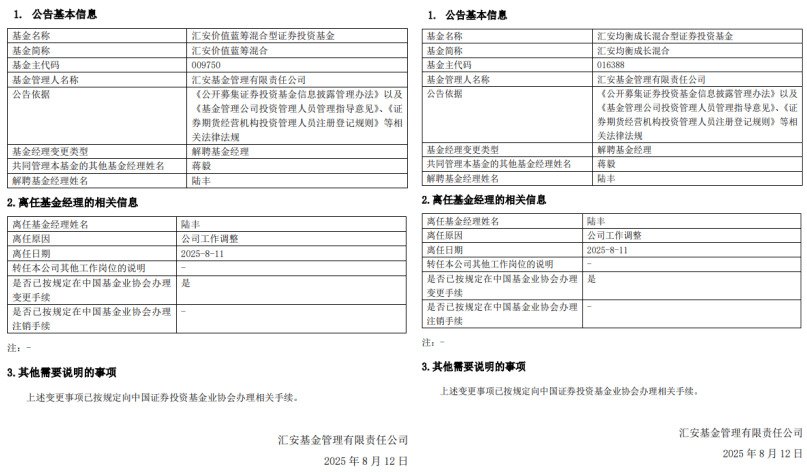
汇安基金陆丰连卸两基!五年任内仅调研一次、连续三年踩中“问题公司”
Sou Hu Cai Jing· 2025-08-13 05:30
8月12日,汇安基金接连发布两则公告,汇安价值蓝筹混合、汇安均衡成长混合两只产品解聘基金经理陆丰,由蒋毅管理。 | 基金名称 | 汇安价值蓝筹混合型证券投资基金 | | --- | --- | | 基金简称 | 汇安价值蓝筹混合 | | 易金主代码 | 009750 | | 基金管理人名称 | 汇安基金管理有限责任公司 | | 公告依据 | 《公开募集证券投资基金信息披露管理办法》以及 | | | 《基金管理公司投资管理人员管理指导意见》、《证 | | | 券期货经营机构投资管理人员注册登记规则》等相 | | | 关法律法规 | | 基金经理变更类型 | 解聘基金经理 | | 共同管理本基金的其他基金经理姓名 | 蒋毅 | | 解聘基金经理姓名 | 陆丰 | | 基金名称 | 汇安均衡成长混合型证券投资基金 | | --- | --- | | 基金简称 | 汇安均衡成长混合 | | 基金主代码 | 016388 | | 基金管理人名称 | 汇安基金管理有限责任公司 | | 公告传据 | 《公开募集证券投资基金信息按露管理办法》以及 | | | 《基金管理公司投资管理人员管理指导意见》、《证 | | | 券期货 ...
亚厦股份: 风险投资管理制度
Zheng Quan Zhi Xing· 2025-08-12 11:14
Core Viewpoint - The company has established a comprehensive risk investment management system to regulate its risk investments and related information disclosure, ensuring compliance with relevant laws and protecting investor interests [1][2]. Group 1: Risk Investment Definition and Scope - Risk investments include securities investments, derivative transactions, and other investment behaviors recognized by the Shenzhen Stock Exchange [1][2]. - Certain investment behaviors, such as fixed-income investments and strategic investments exceeding 10% of total equity, are excluded from this system [1][2]. Group 2: Principles of Risk Investment - The company's risk investments must comply with national laws and regulations, focus on risk control, and align with the company's asset structure [3]. - Risk investment funding must come from the company's own funds, and the scale of risk investments should not affect normal business operations [3][4]. Group 3: Decision-Making and Management - Approval for risk investments is required if the total amount exceeds 10% of the latest audited net assets and is over 10 million RMB [3]. - Derivative transactions require a feasibility analysis report to be submitted to the board for approval before execution [3][4]. Group 4: Information Disclosure Requirements - The company must disclose investment decisions within two trading days after the board resolution, including details such as investment purpose, amount, and risk control measures [6][7]. - If a securities account is already established, the company must report this information simultaneously with the board resolution announcement [7]. Group 5: Responsibilities and Oversight - The chairman of the board is the primary responsible person for risk investment management, while the general manager directly oversees project operations [5][9]. - The audit committee is responsible for supervising the use of risk investment funds and must report on projects that do not meet expected benefits [5][9].

“市场波动是镜子,照见的是人性的博弈” ——任春辉自述二十年交易哲学之路
Sou Hu Wang· 2025-08-11 09:18
Core Insights - The article emphasizes the importance of understanding market dynamics and the behavior of traders, suggesting that successful trading requires adapting to market conditions rather than trying to predict them [1][10] - It highlights a systematic approach to trading, focusing on key indicators and metrics to gauge market sentiment and potential turning points [3][4] Group 1: Trading Philosophy - The philosophy of trading is likened to understanding water currents, where traders must learn to navigate rather than measure the water quality [1] - A methodical approach is advocated, with the team making only twelve core decisions annually while focusing on three key charts: liquidity, market sentiment, and critical price levels [3][4] Group 2: Market Indicators - Key indicators for market analysis include monitoring trading volume relative to historical averages and assessing volatility levels to identify potential market shifts [3] - The article discusses the significance of behavioral indicators, such as the sudden silence in trading activity, which can signal impending market crises [6] Group 3: Learning from Mistakes - The workspace contains capsules representing past trading mistakes, serving as educational tools to highlight the importance of risk management and the lessons learned from historical errors [6][9] - The narrative stresses that true expertise in trading comes from understanding human behavior and market psychology rather than solely relying on technical indicators [4][10] Group 4: Technology and Human Insight - The article reflects on the limitations of AI in trading, particularly its inability to grasp the human emotions involved in decision-making during volatile market conditions [8] - It suggests that while technology can enhance trading strategies, the essence of successful trading lies in human judgment and emotional intelligence [8][9]
不止于绝对收益!一个风控优先的基金经理与他的稳健风格打法
聪明投资者· 2025-08-10 23:53
Core Viewpoint - The article discusses the investment strategies and performance of fund manager Sheng Zhenshan, highlighting his unique approach to risk management and asset allocation in a volatile market environment [2][3][6]. Group 1: Market Environment and Fund Performance - The market has experienced significant fluctuations from early 2024 to mid-2025, with a notable drop below 2700 points and subsequent recovery [2]. - A set of equity mixed funds and ordinary stock funds was analyzed, focusing on those with a maximum drawdown of 10% and a scale exceeding 100 million, achieving returns above 8% in 2025 [2]. - Sheng Zhenshan's fund, "Industrial Bank Selected Return," achieved a maximum drawdown of 8.1% and a recovery time of only 11 days, with a return of 29.43% since its management began [3]. Group 2: Investment Philosophy and Strategy - Sheng Zhenshan emphasizes risk management as a core principle, shaped by his early experiences in unfavorable market conditions [6][20]. - His investment approach is characterized by a balanced asset allocation strategy, avoiding extreme bets and maintaining a diversified portfolio [7][11]. - The focus is on identifying undervalued assets through a dynamic valuation process, considering both growth and valuation aspects [8][9]. Group 3: Sector Focus and Asset Allocation - Sheng Zhenshan's portfolio is heavily weighted towards aviation and gold stocks, diverging from traditional sectors like energy and utilities [4]. - He adopts a supply-side perspective to assess industry cycles, prioritizing sectors with potential for capital improvement rather than those experiencing rapid growth [10][29]. - The investment strategy includes holding a diversified basket of low-correlation assets to mitigate risks and enhance returns [11][43]. Group 4: Insights on Specific Assets - The article discusses Sheng Zhenshan's views on gold, indicating a long-term bullish outlook despite short-term volatility, with a focus on the underlying asset's future value rather than immediate profits [50][52]. - In the aviation sector, he believes that current valuations are low, and the industry is nearing a recovery phase, making it an attractive investment opportunity [56][57]. - The approach to dividend stocks emphasizes the importance of sustainable earnings and dividends over mere historical performance [58][59].
风控能力跃升构建利润引擎,低估值高回报的乐信(LX.US)将演绎价值回归
Ge Long Hui· 2025-08-08 09:25
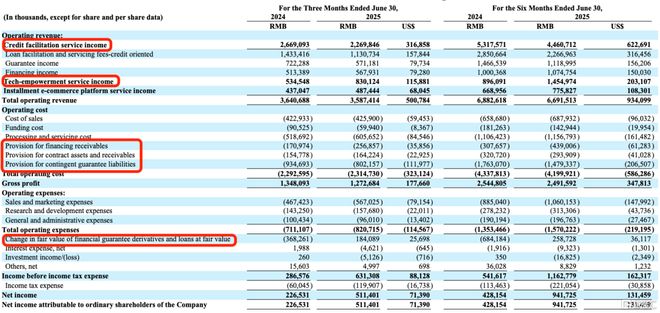
Core Viewpoint - Lexin (LX.US) reported strong financial performance in Q2, with revenue of 3.59 billion RMB, a 15.6% increase quarter-over-quarter, and a GAAP net profit of 511 million RMB, up 19% quarter-over-quarter and 126% year-over-year, marking the highest profit in 14 quarters [1] Financial Performance - Q2 operating revenue reached 3.64 billion RMB, with significant contributions from credit facilitation service income and tech-empowered service income [3] - Financial net income increased from 1.818 billion RMB in the previous quarter to 2 billion RMB, reflecting a 10% growth [1][2] Risk Improvement - The company has shown continuous improvement in risk indicators, with new asset FPD decreasing by approximately 5% and the overall asset 90+ delinquency rate down by about 6% [4] - The positive change in the fair value of financial guarantee derivatives and loans has further contributed to profit, indicating improved risk levels [4][5] Strategic Adjustments - In response to the new lending regulations, Lexin proactively adjusted its risk strategy in Q2, enhancing risk identification and management for high-risk clients [5] - The company is leveraging technology upgrades to improve risk control capabilities and differentiate pricing strategies, leading to quality growth [5][6] Ecosystem Development - Lexin's ecosystem business is rapidly expanding, with significant growth in installment retail and e-commerce, achieving a 71% increase in gross profit to 97 million RMB and an 80% increase in GMV to 2 billion RMB [6][7] - The integration of technology and finance is seen as a long-term competitive advantage, with AI being embedded in various operational processes [8][9] Shareholder Returns - The company announced a dividend of 0.194 USD per ADS, a 76% increase from the previous period, and plans to increase the dividend payout ratio from 25% to 30% of net profit [10][11] - A stock buyback plan of up to 50 million USD is also in place, aimed at enhancing shareholder value and boosting stock performance [10][11] Valuation Perspective - Lexin's current PE ratio is below 4, and PB ratio is 0.67, indicating it is undervalued compared to peers, with potential for valuation premium as risk improves and technology integration progresses [11]

2025年股指期货怎么操作和交易指南:从入门到实践,规范操作助稳健
Sou Hu Cai Jing· 2025-08-07 20:18
Group 1 - The core concept of stock index futures trading involves understanding specific rules and processes, which is essential for rational participation [1] - The first step in trading stock index futures is account opening, requiring investors to meet certain conditions such as capital thresholds and risk assessments [1] - Familiarity with contract elements, including the underlying index, contract multiplier, and expiration date, is crucial for accurately calculating profits and losses [1] Group 2 - The order placement process for stock index futures follows standardized steps, allowing investors to buy or sell contracts through trading software [2] - Risk control principles must be adhered to, including setting stop-loss and take-profit points to manage potential losses effectively [2] - Investors should monitor margin adequacy to avoid forced liquidation due to insufficient margin [2] Group 3 - Understanding the settlement system is important, as daily settlements adjust margin balances based on daily profits and losses [4] - Timely closing of expiring contracts or cash settlement is necessary to prevent default situations [4] - Overall, stock index futures trading requires comprehensive knowledge from account opening to risk management to ensure stable participation [4]

股票账户怎么加杠杆指南:2025年新手必读的融资融券指南
Sou Hu Cai Jing· 2025-08-06 05:33
Core Viewpoint - The article emphasizes the importance of understanding how to leverage stock accounts through compliant methods, particularly focusing on margin trading as the primary legal avenue for investors to increase their trading scale while managing associated risks [1][4]. Summary by Sections Compliance and Methods - The compliant method for leveraging stock accounts is through margin trading, where eligible investors can apply for financing limits from securities companies to borrow funds for stock purchases [1][2]. - Margin trading is strictly regulated, with clear limitations on leverage ratios and tradable securities, making it the main legal way to leverage stock accounts [1][2]. Requirements for Margin Trading - Investors must meet specific criteria to engage in margin trading, including maintaining an account for a certain period, having assets above a defined threshold, and passing risk assessments and knowledge tests [1][2]. - These requirements are designed to ensure that investors understand the risks involved before participating in leveraged trading, serving as protective measures [1][2]. Operational Rules and Risks - There are explicit rules governing the operation of leveraged stock accounts, such as the requirement that financed stocks must fall within a designated range of stable and liquid stocks [2]. - The leverage ratio typically does not exceed 1:1, meaning that with 100,000 yuan of personal funds, an investor can borrow an additional 100,000 yuan, resulting in total trading capital of 200,000 yuan [2]. - Investors must monitor their accounts closely, as a decline in account assets below the maintenance margin ratio may require additional margin deposits or result in forced liquidation [2]. Balancing Profit and Risk - It is crucial for investors to balance potential profits against risks when leveraging stock accounts, as leveraging can amplify both gains and losses, especially during market volatility [2]. - Investors should assess their own situations to determine whether to leverage and by how much, avoiding excessive leverage that could lead to risks beyond their capacity [2][4].

联检科技(301115.SZ)详解全球化战略蓝图,风控体系护航中国检测扬帆出海
Cai Fu Zai Xian· 2025-08-05 07:07
近日,由联检科技主办的"联全球、检风险、见未来"企业出海风险控制培训会成功举行。本次会议汇聚 了资本市场分析师、行业合作伙伴及企业代表等多方力量,众人聚焦企业出海的核心挑战,就全球化征 程中的风险管控实战经验展开深度交流。会上,联检科技明确勾勒出其加速推进的全球化战略蓝图。值 得关注的是,随着该集团于今年4月完成从"建科股份"到"联检科技"的品牌升级,其全球化布局已从前 期的探索试水阶段迈入全面加速的崭新征程。 清晰的"三步走"全球化进阶路径 记者观察发现,联检科技的全球化布局呈现出清晰的阶梯式演进特征。 联检科技的战略起点选在东南亚的越南市场这一选择颇具行业代表性。多位与会分析师指出,越南作为 试验田,其价值不仅在于积累了本地化运营的初步经验,更重要的是暴露了中资企业在税务筹划、合规 风控等关键领域的系统性短板——这些实战教训恰恰是当前急于出海的企业最亟需的战略资源。 当前阶段,联检科技正在东南亚、中东及非洲等重点区域市场快速铺开。其战略重心已从早期的单 纯"技术输出",显著转向构建"平台型业务生态"。值得关注的是其采用的"三层管理架构"(国际事业部 +区域公司/合资平台+本地团队)与多元化投资模式(独资、 ...
投资的第一性原理是风险控制
雪球· 2025-08-03 05:33
Core Viewpoint - The article emphasizes the importance of risk control in investment, particularly through diversification, especially in the current high valuation environment of the market [4][10][14]. Market Overview - The market experienced significant volatility, with a notable drop on Thursday and a slight decline on Friday, indicating a turbulent market environment since around July 30, 2023 [2][8]. - The current market sentiment is concerning, with many investors overly optimistic despite high valuation levels, particularly in dividend indices [4][5]. Risk Control Strategies - The article reiterates three core risk control strategies: risk diversification, stop-loss measures, and volatility control [4]. - It highlights the necessity of diversification during bull markets, as those who concentrate their investments often face severe losses in bear markets [10][11]. Diversification Techniques - The "Three-Part Method" is introduced as a means to effectively manage risk through time, asset, and market diversification [12]. - **Time Diversification**: Advocates for dollar-cost averaging and adjusting investment based on market valuations [12]. - **Asset Diversification**: Encourages not to concentrate investments in a single asset class, suggesting a mix of stocks, bonds, and commodities, while also considering alternative investments when traditional options are overvalued [12]. - **Market Diversification**: Recommends allocating assets across different markets to mitigate regional risks, such as including U.S. Treasuries in the portfolio [13]. Investment Philosophy - The ultimate goal of investment is to achieve stable cash flow and financial independence, which can be accomplished through a diversified and risk-managed approach [14][15]. - The article concludes by urging investors to reflect on their portfolio's diversification and to adopt a mindset that prioritizes risk management [14].