对等关税

Search documents
特朗普对等关税“4.2”将至,资金作何选择?
日经中文网· 2025-03-30 02:35
Core Viewpoint - The current market is characterized by high uncertainty regarding the seriousness and impact of the Trump administration's efforts to reshape the economic framework, with the upcoming "reciprocal tariffs" date of April 2 being a significant turning point [1][2]. Group 1: Economic Policies and Market Reactions - The Trump administration's initial approach to restoring industrial competitiveness involves raising tariffs, while also planning to implement a dollar depreciation policy if necessary, which could lead to market volatility [2][3]. - The market initially reacted positively to Trump's policies, reminiscent of "Trump 1.0," but the subsequent "Trump 2.0" has seen a significant downturn, with the stock market losses in March completely offsetting previous gains since the election [2][3]. - The uncertainty surrounding the details of the reciprocal tariffs is seen as a critical moment, with mixed sentiments in the market as participants await clarity [2][3]. Group 2: Investment Strategies and Market Trends - There is a noticeable trend of diversifying investments away from U.S. markets, with funds being directed towards regions less affected by U.S. policies, such as China and Europe, which have seen significant stock market recoveries [3][4]. - Investors are increasingly focusing on assets with low sensitivity to Trump’s policies, referred to as "low beta" investments, such as gold, which has appreciated significantly over the past year [4]. - The "Magnificent 7" stocks that previously drove the U.S. market higher are now facing scrutiny, with concerns about their high sensitivity to Trump's policies impacting their valuations [4][5]. Group 3: Broader Economic Implications - The potential for retaliatory tariffs could dampen global trade, and the U.S. economy faces challenges in achieving tax cuts without reducing fiscal spending [3][5]. - The ongoing domestic divisions and chaos in the U.S. are expected to prolong the period of economic uncertainty, raising questions about the sustainability of the current economic trajectory [3][5]. - The market is at a crossroads, contemplating whether the U.S. is entering a "golden age" as claimed by Trump or if it is on the brink of a global economic downturn due to high tariffs [5].



印度“讨好”特朗普:拟取消天然气关税、下调农产品进口税
Hua Er Jie Jian Wen· 2025-03-28 12:17
Core Viewpoint - India is considering the cancellation of import taxes on U.S. liquefied natural gas (LNG) and reducing tariffs on U.S. agricultural products to address trade imbalances and avoid potential trade sanctions from the Trump administration [1][2]. Group 1: LNG Import Tax - India is contemplating the removal of a 2.5% basic customs duty and a 0.25% social welfare tax on U.S. LNG imports to enhance procurement and reduce trade surplus with the U.S. [2][3] - The Indian government aims to increase energy imports from the U.S. from $10 billion to $25 billion, with a target of achieving $500 billion in bilateral trade by 2030 [2][3]. Group 2: Agricultural Tariffs - India is also considering lowering tariffs on U.S. agricultural products, including pecans, pulses, and non-GMO soybeans, in response to U.S. requests [4]. - The potential reduction in agricultural tariffs may create opportunities for U.S. exporters, although it could negatively impact India's domestic agricultural sector, which is politically sensitive [4].

国家体育总局官宣!周继红、张晓蓬,退休
证券时报· 2025-03-26 12:12
Group 1 - The article reports on the personnel changes in the National Sports Administration, specifically the removal of Zhou Jihong from her position as the Director of the Swimming Management Center and the leader of the National Diving Team, as well as Zhang Xiaopeng from his role as the Deputy Director and Discipline Inspection Secretary of the Table Tennis and Badminton Management Center [1] - Zhou Jihong is noted for her significant achievements, including winning the first Olympic gold medal for China in diving at the 1984 Los Angeles Olympics and her various roles within international swimming organizations, including being the first female Vice President of FINA [1]

莫迪如愿以偿!特朗普同意出口印度F35,歼20遇到真正对手了
Sou Hu Cai Jing· 2025-03-25 16:37
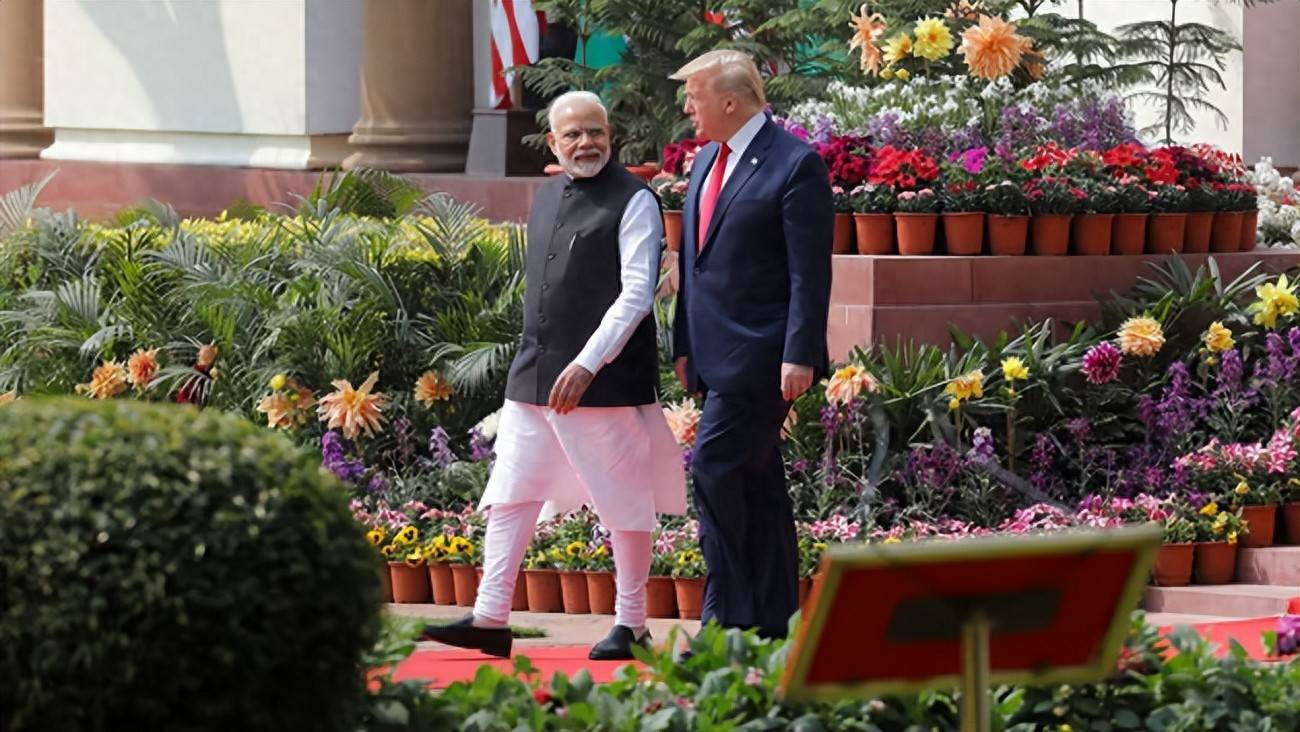
Group 1 - The core issue of the meeting between Modi and Trump was tariffs, with Modi concerned about potential trade actions from the Trump administration that could affect India [3][5] - Modi expressed his intention to deepen cooperation with the U.S. across multiple sectors during his visit [3][9] - Trump emphasized the need for a reciprocal trade relationship, highlighting India's high tariffs that hinder U.S. exports [5][7] Group 2 - Following the meeting, Trump noted that the U.S. trade deficit with India is close to $100 billion, and Modi agreed to initiate negotiations to address this imbalance [9][10] - The proposed solutions include increased U.S. exports of oil, natural gas, and liquefied natural gas to India, as well as enhanced military sales [10][12] - Modi aims to reach a bilateral trade target of $500 billion by 2030, indicating a significant increase in trade relations [12][14] Group 3 - The meeting resulted in Modi largely accommodating Trump's trade demands, raising questions about India's national interests versus U.S. interests [14][16] - The potential sale of F-35 fighter jets to India is still in the proposal stage, with formal negotiations yet to begin [16][18] - The acquisition of advanced military equipment like the F-35 may enhance India's perceived military strength but raises concerns about the lack of a robust domestic military-industrial base [20][21]
特朗普宣布!四大行业将被征税,对等关税有“折扣”
证券时报· 2025-03-25 14:36
当地时间3月24日,美国总统特朗普表示,他将很快宣布针对汽车和药品的关税。 此外,行业关税的征税对象还将包括木材和半导体行业。 特朗普还表 示,4月2日的对等关税实施日将会如期实行,但会有国家有"折扣"。 另据英国《金融时报》报道,特朗普着眼于4月2日出台两步走的关税计划,其中包括立即征收高达50%的关税。 英国《金融时报》援引律师和知情人士的话称,特朗普可能立即出台汽车关税。特朗普团队还在讨论对贸易伙伴启动所谓的301调查。正在讨论的另一个选项 与1974年贸易法第122条挂钩,允许不超15%的临时关税。 对等关税将如期实施但会有"折扣" 在3月24日内阁会议上,美国总统特朗普、美国国务卿鲁比奥和特斯拉首席执行官马斯克在美国华盛顿特区出席白宫举行的内阁会议。会议上,特朗普表示将 很快宣布针对汽车、制药和其他行业的关税。 "我们很快就会宣布汽车行业的关税,就像我们此前宣布的钢和铝。我们还会在某个时候宣布针对药品的关税。因为我们必须有药品。"特朗普说。 "我们被世界上每个国家都欺骗了。"特朗普在内阁会议上说,"我们将在不久的将来宣布其中一些事情,而不是在很长的将来。" 在周一晚些时候,特朗普在白宫的另一场活动中 ...

传印度“断臂求生“:230亿美元对美关税大放水 保660亿美元出口命门
智通财经网· 2025-03-25 10:07
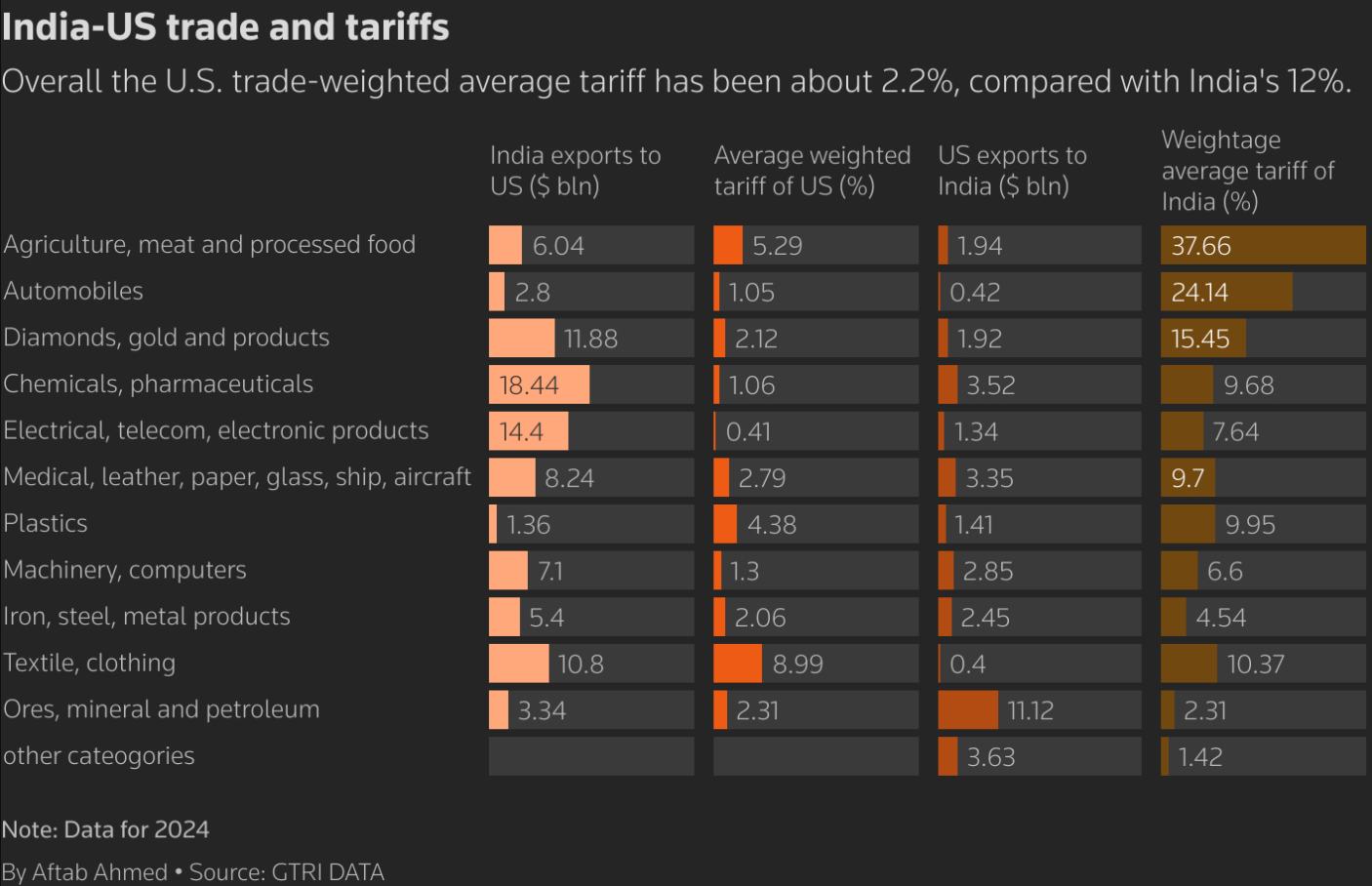
Core Viewpoint - India is implementing a significant tax reduction plan on over half of its imports from the U.S., valued at approximately $23 billion, in response to the impending tariffs announced by President Trump, aiming to protect its $66 billion export market to the U.S. [1][2] Group 1: Trade Negotiations - India plans to reduce tariffs on 55% of U.S. imported goods, with current rates ranging from 5% to 30% [2] - The Indian government is negotiating to reach an agreement before the implementation of reciprocal tariffs by the U.S. [2] - The Indian government is considering broader tariff reforms to unify and lower trade barriers, although these discussions are still in early stages [2][3] Group 2: Economic Impact - If the U.S. implements reciprocal tariffs, 87% of India's exports to the U.S. (valued at $66 billion) could be affected, with potential tariff increases of 6-10 percentage points on key products [1] - Key exports at risk include pharmaceuticals and automobiles, valued at $11 billion, which heavily rely on the U.S. market [1] Group 3: Political Considerations - The Indian government is cautious about not compromising national interests in the negotiations, with clear red lines set for discussions [3][4] - The Indian Trade Minister emphasized that while India seeks to maintain its trade relationship with the U.S., it will not sacrifice domestic interests [4] Group 4: Tariff Structures - The average tariff rate in the U.S. is 2.2%, while India's average tariff rate stands at 12%, highlighting a significant disparity in trade policies [4] - The U.S. has labeled India as a "tariff abuser," which adds pressure on India to negotiate favorable terms [4] Group 5: Market Dynamics - The negotiations are critical as they could influence hundreds of billions in trade flows, with the U.S. pushing for more substantial concessions from India [5]
突发!特朗普签令
证券时报· 2025-03-25 04:28
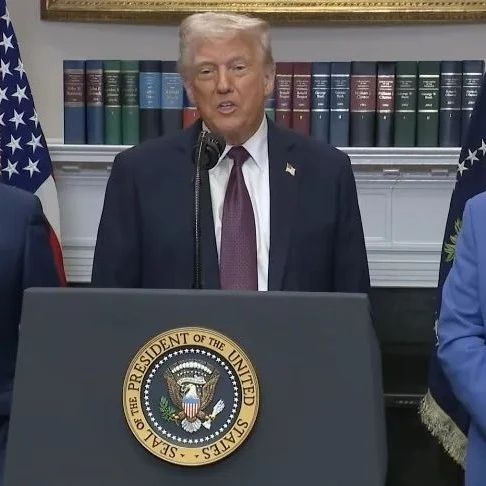
Core Viewpoint - The U.S. government, under President Trump, has announced a 25% tariff on goods imported from countries that purchase Venezuelan oil, effective April 2, as a response to Venezuela's perceived hostility towards the U.S. [3][4] Group 1: U.S. Tariff Announcement - President Trump signed an executive order imposing "tariff sanctions" on countries importing Venezuelan oil, with a potential 25% tariff on all goods from these nations starting April 2 [3]. - The Secretary of State has the authority to decide on the imposition of the 25% tariff, which will last for one year from the last import date of Venezuelan oil or until an earlier date agreed upon by relevant U.S. officials [3]. - Trump characterized the tariff as a necessary measure against Venezuela, which he claims is hostile towards the U.S. [3]. Group 2: Venezuelan Response - Venezuela's Foreign Ministry condemned the U.S. tariff as "illegal" and "arbitrary," asserting that it violates international trade agreements [4]. - The Venezuelan government plans to take appropriate actions in international institutions to defend its rights against what it views as a new act of aggression by the U.S. [4]. Group 3: Broader Economic Implications - Trump indicated that he may offer tariff exemptions to many countries if they achieve "reciprocal" trade terms, with the EU agreeing to lower auto tariffs to match U.S. levels [6][7]. - Concerns are rising among economists and market participants regarding the potential for a U.S. economic downturn, with a 40% probability of recession predicted for the year, up from an earlier estimate of 30% [7].
25%关税!刚刚,特朗普签了!
券商中国· 2025-03-25 01:40
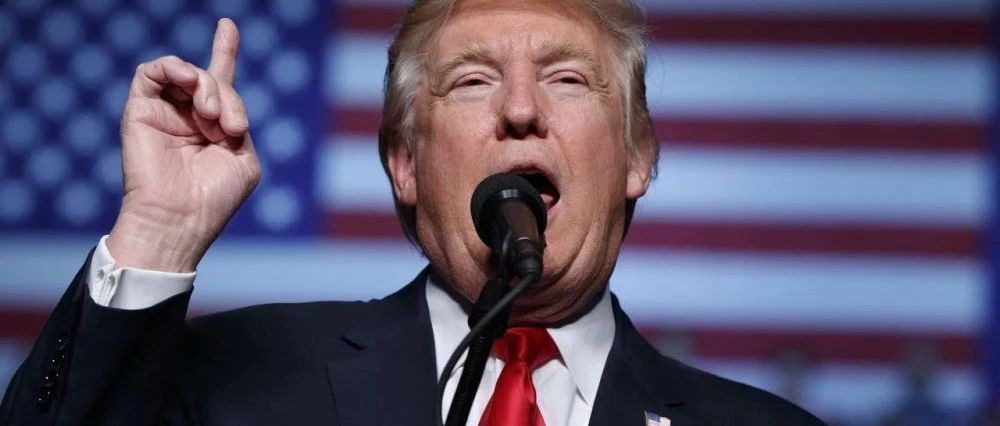
Core Viewpoint - The article discusses the recent executive order signed by President Trump imposing a 25% tariff on goods imported from countries that directly or indirectly import Venezuelan oil, effective April 2. This move is expected to impact international oil prices and trade relations significantly [1][3][4]. Group 1: Tariff Implementation - The U.S. will impose a 25% tariff on all goods from countries importing Venezuelan oil starting April 2 [3][4]. - The Secretary of State has the authority to decide on the implementation of these tariffs, which will last for one year from the last import date of Venezuelan oil [3][4]. - Trump referred to this tariff as a "secondary tariff," similar to secondary sanctions aimed at third-party countries [4]. Group 2: Impact on Oil Prices - Following the announcement, international oil prices surged, with WTI crude oil futures rising by 1.21% to $69.11 per barrel, marking the highest level since March 4 [1][4]. - Brent crude oil futures also increased by 1.16%, reaching $73.00 per barrel [1][4]. Group 3: Additional Tariffs - Trump indicated plans to announce additional tariffs on automobiles, wood, and chips in the coming days, suggesting a broader approach to tariffs beyond the Venezuelan oil issue [7][8]. - He mentioned that not all tariffs would take effect on April 2, hinting at potential exemptions for certain countries [7][9]. Group 4: Economic Concerns - Analysts express concerns that escalating tariffs could lead to economic downturns in the U.S., with predictions of a 40% chance of recession this year, up from 30% earlier [10]. - The potential for stagflation, characterized by slow growth and high inflation, is also highlighted as a significant risk [10].
海外政策|特朗普关税是否存在预期差?
中信证券研究· 2025-03-25 00:14
Core Viewpoint - April is expected to be a critical time for the implementation of Trump's tariff policies, with the results of the "America First Trade Policy Memorandum" and the introduction of "reciprocal tariffs" being key milestones [1][2][3] Group 1: Tariff Policy Implementation - The ideal policy path for Trump involves quickly implementing negative policies in the short term while maintaining a high tolerance for their side effects, followed by a gradual reduction of shocks and the introduction of positive policies like tax cuts to ensure economic recovery in Q2 and a strong return by year-end [2][5] - The "reciprocal tariffs" concept aims to impose tariffs on U.S. imports that match the tariffs imposed by trading partners on U.S. exports, intending to reduce trade discrimination and trade deficits [3][4] Group 2: Trade Negotiations with China - The tariffs imposed on China, including the 20% tariffs, are seen as extensions of domestic U.S. issues, with the April 1 results of the trade memorandum indicating the formation of Trump's negotiation strategy with China [4][5] - Recent preliminary contacts between the U.S. and China suggest that substantive negotiations may begin after April, although the coordination challenges may be greater than during Trump's previous term [4][5] Group 3: Market Expectations - The market has already priced in the potential disturbances from Trump's return to power, and domestic macro and industrial policies are prepared for these risks, with various measures expected to accelerate implementation to mitigate risks [5]

美国4月组合关税有哪些新花样?(民生宏观裴明楠)
川阅全球宏观· 2025-03-24 15:26
作者: 裴明楠 林彦 美国关税的"D-day"(第二次世界大战中盟军诺曼底登陆的日子)渐近,4月份特朗普的新关税组合拳或分两部分:一是"对等关税";二是针对性的行业关税。 对等关税本身的不确定性主要在于"非税壁垒"将被多大程度纳入计算,对中国而言,加征对等关税的"纸面"空间目测有限(美对中关税>中对美关税+进口增值 税),但不排除将其他贸易壁垒加入计算从而再次提高关税;预计印度和欧盟国家面临的对等税率或较高。经济后果的不确定性则在于对手国是否愿意妥协对美降 关税。 于中国而言,主要关注以下两点: 加征对等关税的"纸面"空间料有限,关注非税壁垒。 目前中国对美平均关税16.0%,算上中国13%的增值税共计29%,仍略低于美国对中国平均关税32%(包含今年 新增的20%) ,美国对华加征的"纸面"空间有限,但若美方将非税壁垒纳入计算,仍有对中国征对等关税的理由。 | 状态 | 对象 | 关税措施/计划的内容 | | --- | --- | --- | | こ溶地 | 北美 | 对来自加墨的不符合"美墨加协定" (USMCA) 的商品征收25%普遍关税 (其中加拿大能源10% | | | | 、加墨的钾肥10%关税 ...