
量子计算

Search documents
帮主郑重:谈谈2025下半年投资市场的看法
Sou Hu Cai Jing· 2025-08-30 08:39
Economic Overview - The GDP growth for the first half of the year is 5.3%, with consumption contributing over half, indicating a stable economic foundation [3] - The central bank is implementing policies such as interest rate cuts and a 500 billion yuan loan to support consumption and elderly care, aiming to "stabilize confidence" [3] Investment Opportunities - **Technology Sector**: The government has launched the "Artificial Intelligence+" initiative, focusing on computing power and chips, with many companies seeing AI revenue approaching 25% [4] - **Consumer Recovery**: Retail sales increased by 5% in the first half of the year, with policies driving demand for 12 million home appliances, benefiting leading companies like Midea and Haier [4] - **Renewable Energy**: The cost of HJT solar cells has dropped to 0.15 yuan per kWh, and there is a potential surge in offshore wind installations, with companies like Mingyang Smart Energy and Daikin Heavy Industries having orders extending into next year [4] Risks to Monitor - High savings rates among consumers indicate that domestic demand may not recover quickly [5] - Rapid technological advancements in semiconductors could lead to volatility, necessitating careful monitoring of R&D investments [5] Investment Strategy - Diversification is recommended, with suggestions to allocate funds into indices like CSI 300 and STAR Market 50, as well as gold ETFs, which have seen a 50% increase in scale [7] - Following government policies in emerging sectors such as low-altitude economy and quantum computing may reveal new investment opportunities [7] - Flexibility in investment positions is crucial, with attention to upcoming events like special treasury bonds and developer conferences [8]

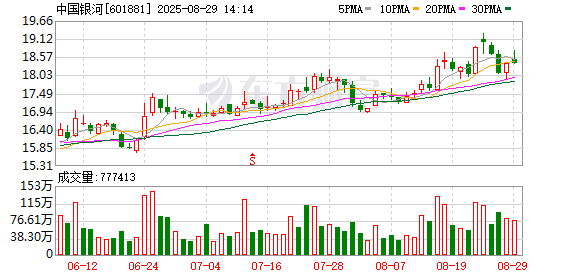
中国银河证券上半年净利润64.88亿元 创历史新高
Xin Hua Cai Jing· 2025-08-29 06:13
Core Viewpoint - China Galaxy Securities reported strong financial performance in the first half of 2025, with significant growth in revenue and net profit, driven by active market trading and robust wealth management services [2][3]. Financial Performance - The company's operating revenue for the first half of 2025 was 13.747 billion yuan, a year-on-year increase of 37.71% [2]. - Net profit attributable to shareholders reached 6.488 billion yuan, reflecting a year-on-year growth of 47.86% [2]. - The profit level achieved is the highest since the first half report in 2010 [2]. Wealth Management Business - Wealth management revenue amounted to 5.926 billion yuan, up 35.55% year-on-year, accounting for 43.11% of total revenue [2]. - The number of domestic corporate clients exceeded 18 million, an increase of approximately 2 million year-on-year [2]. - The scale of financial products held reached 214.147 billion yuan, a 1.4% increase from the beginning of the year [2]. Investment Trading Business - Investment trading revenue was 3.858 billion yuan, a year-on-year increase of 5.81%, representing 28.07% of total revenue [2]. - The company has enhanced its focus on equity investments, particularly in advanced technology sectors such as AI chips, quantum computing, and biomedicine [3]. Investment Banking Performance - The company completed one IPO project and four refinancing projects in the domestic market during the first half of 2025, with a total equity underwriting scale of 20.598 billion yuan, ranking eighth in the market [3]. - In the Hong Kong market, the company successfully completed 11 IPO projects and underwrote 103 offshore bonds, showing stable growth in investment banking rankings [4]. International Business Development - The company aims to deepen its investment banking involvement throughout the entire lifecycle of enterprises and enhance functional construction [4]. - In Southeast Asia, the company completed 34 equity and bond financing transactions, totaling 1.8 billion Singapore dollars, including the largest REIT IPO in the Malaysian market [4].

资讯日报:国务院公布《关于推动城市高质量发展的意见-20250829
Guoxin Securities Hongkong· 2025-08-29 05:32
Market Overview - The Hong Kong stock market saw all three major indices decline, with net selling by southbound funds exceeding HKD 20 billion[9] - Major tech stocks underperformed, with Meituan dropping 12.55%, JD down 5%, Alibaba down 4.69%, and Tencent and Xiaomi also declining[9] - Semiconductor stocks surged, with InnoCare rising over 15% and SMIC increasing nearly 11% to reach a new listing high[9] U.S. Market Performance - On August 28, U.S. markets opened high and closed with all three major indices rising, with the Dow and S&P 500 reaching new closing highs[9] - Nvidia's Q2 revenue grew 56% year-on-year, exceeding expectations, and the company approved an additional USD 60 billion for stock buybacks[9] - Quantum computing stocks led gains, with Quantum Computing up over 8% and Rigetti Computing up over 7%[9] Japanese Market Insights - The Nikkei 225 index rose 0.73%, driven by strong performance in metal and energy stocks[12] - Berkshire Hathaway increased its stake in Mitsubishi Corporation to 10.23%, pushing the stock prices of Japan's five major trading companies higher[12] - Foreign investment in Japanese stocks showed signs of slowing, with a net decrease of JPY 496.8 billion in the week ending August 22[12] Key Economic Indicators - U.S. initial jobless claims for the week ending August 23 were 229,000, lower than the expected 230,000[12] - The U.S. Q2 GDP annualized growth rate was revised to 3.3%, above the expected 3.1%[12] - The Chinese government released guidelines to promote high-quality urban development, focusing on city cluster integration and innovation[12]
以提升产业发展质量维护产业安全
Ren Min Ri Bao· 2025-08-29 04:10
Core Viewpoint - Industrial security is emphasized as a core component of economic security, with a focus on enhancing resilience, technological self-reliance, and high-level openness to improve industrial development quality [1] Group 1: Industrial Scale Expansion - Steady expansion of industrial scale is crucial for maintaining industrial security, serving as a stabilizing factor during the transition from middle-income to high-income status [2] - China's manufacturing sector has maintained the largest global scale for 15 consecutive years, showcasing unique advantages in scale and system [2] - Future efforts should focus on continuing to expand industrial scale while stabilizing the proportion of industrial and manufacturing sectors in the national economy [2] Group 2: Industrial Quality Upgrade - Promoting quality upgrades in industries is essential to avoid low-level repetitive investments that can harm industrial security [3] - Digital transformation is highlighted as a key area, with Shenzhen's manufacturing value added projected to account for about one-third of its GDP in 2024, significantly above national averages [3] - Emphasis on green low-carbon development and the establishment of advanced industrial clusters in fields like artificial intelligence and life sciences to enhance industrial safety [3] Group 3: Enhancing Industrial Resilience - Strengthening industrial resilience is necessary for building a modern industrial system and ensuring industrial security [4] - Despite improvements, there are still weaknesses in the industrial chain that need to be addressed through technological advancements and diversified supply systems [4] - Monitoring and early warning systems for various risks are essential to enhance governance resilience [4] Group 4: Strengthening Technological Innovation - Technological self-reliance is a critical aspect of industrial development quality, with a focus on addressing "bottleneck" issues in technology [4] - Investment in foundational technology and major innovative infrastructure is necessary to improve the supply of original and cutting-edge technologies [4] Group 5: Expanding High-Level Openness - Expanding high-level openness is vital for enhancing industrial development quality, transitioning from passive integration into global supply chains to active participation [5] - China's foreign investment and global capacity layout have accelerated, particularly in relation to countries involved in the Belt and Road Initiative [5] - Future strategies should include aligning with international trade rules and enhancing international industrial cooperation in emerging sectors [5]

国金证券:量子计算产业规模有望快速扩张 关注核心设备环节
智通财经网· 2025-08-29 01:53
Core Viewpoint - The quantum computing industry in China is expected to rapidly expand due to the combined effects of US-China competition, policy emphasis, and equity cooperation, with a significant increase in orders and revenue for core companies indicating a turning point in the sector's prosperity [1] Group 1: Quantum Computing Landscape - Quantum computing is anticipated to break the computational bottleneck, with major companies like Google and IBM investing heavily and planning to increase the number of quantum bits to millions by around 2030 [2] - Superconducting technology is the mainstream route for quantum computers, accounting for 36% of the global market, with key players including IBM, Google, and domestic firms like GuoDun Quantum and Benyuan Quantum [2] Group 2: Market Dynamics and Growth Projections - The global quantum computing market is projected to grow from $5.04 billion in 2024 to $21.998 billion by 2030, with a CAGR of 87.64% [3] - The shift in major shareholders of GuoDun Quantum to China Telecom Quantum Group is expected to accelerate the commercialization of quantum computing in China [3] Group 3: Domestic Development and Policy Impact - The current landscape shows a tripartite competition among the US, China, and Europe, with market shares of 29.7%, 28.8%, and 25.3% respectively, and US restrictions on exporting quantum information technology to China [3] - Domestic quantum computing technology is increasingly aligning with international standards, supported by government policies emphasizing self-sufficiency in quantum technology [3] Group 4: Sector Performance and Investment Focus - The quantum computing sector is showing signs of a turning point, with significant revenue growth reported by key companies such as Liangxi Technology and GuoDun Quantum, with increases of 284% year-on-year [4] - The upstream segment, which includes critical hardware like dilution refrigerators and measurement control systems, constitutes 40% of the total market, indicating a focus for potential investment [4] - Domestic dilution refrigerators are achieving competitive performance levels, providing ultra-low temperature environments essential for quantum chips, while measurement control systems are capable of managing up to 1,000 quantum bits, aligning with international standards [4]


量子计算专题:下一代计算革命,关注核心设备环节 | 投研报告
Zhong Guo Neng Yuan Wang· 2025-08-29 01:33
Core Viewpoint - The quantum computing industry is expected to grow significantly, with a projected increase from $5.04 billion in 2024 to $21.998 billion by 2030, reflecting a CAGR of 87.64% [1][3]. Industry Overview - Quantum computing is poised to break through computational bottlenecks, attracting major companies like Google and IBM, which are investing heavily to enhance quantum bit counts to millions by around 2030 [2]. - The mainstream technology route for quantum computing is superconducting technology, which is favored for its ease of device integration and scalability, currently holding a 36% market share [2]. Market Dynamics - The quantum computing sector is entering a critical application demonstration phase, with leading products achieving hundreds of quantum bits, indicating readiness for specific applications [3]. - The market is currently divided among the US, China, and Europe, with respective market shares of 29.7%, 28.8%, and 25.3% [3]. Supply Chain Insights - The upstream segment of the quantum computing industry, which includes key hardware components, accounts for 40% of the total market size [5]. - Key components such as dilution refrigerators and measurement control systems are critical for quantum computing, with domestic manufacturers making significant strides in performance and capability [5]. Company Performance - Core companies in the quantum computing sector, such as Liangxi Technology and Guoshun Quantum, have reported rapid revenue growth, with increases of 284% and nearing previous year's total revenue, respectively [5]. - The shift in major shareholder of Guoshun Quantum to China Telecom Quantum Group is expected to accelerate the commercialization of quantum computing in China [1][3]. Investment Recommendations - The ongoing US-China competition, policy support, and strategic partnerships are expected to drive the growth of China's quantum computing industry, with a focus on upstream core equipment like dilution refrigerators and measurement control systems [6].
帮主郑重:标普500突破6500点!科技股领涨背后的中长线布局机会
Sou Hu Cai Jing· 2025-08-29 00:55
Group 1 - The core driving force behind the recent surge in the US stock market is the performance of technology stocks, with major players like Google, Apple, and Amazon contributing significantly to the index's rise [3] - Nvidia's data center revenue was slightly below expectations, but its growth resilience, especially outside of China, was interpreted positively by the market, indicating that the long-term AI narrative remains intact [3] - Quantum computing companies, such as Quantum Computing Inc. and Rigetti Computing, have seen significant stock price increases, suggesting that capital is positioning itself for the next generation of computing technology [4] Group 2 - The expectation for a Federal Reserve interest rate cut has increased, with market probabilities for a 25 basis point cut in September rising above 85%, which continues to boost market risk appetite [5] - The US economy showed resilience with a 3.3% GDP growth in Q2 and a stable unemployment rate around 4%, providing a solid foundation for market performance [6] - Major tech companies like Nvidia and Google reported earnings that exceeded expectations, validating the profitability potential of AI technologies rather than mere speculative trading [6] Group 3 - Long-term investment strategies should focus on core technology leaders and companies with substantial advancements in quantum computing, while being cautious of market volatility [7] - The S&P 500's price-to-earnings ratio is above 25, indicating high valuation pressure, which investors should be aware of [7] - The recent market highs are attributed to economic resilience, tech profitability, and expectations of monetary easing, suggesting a strategic approach for long-term investors to capitalize on quality assets while managing risks [7]



【私募调研记录】正圆投资调研海尔生物、透景生命等3只个股(附名单)
Zheng Quan Zhi Xing· 2025-08-29 00:08
Group 1: Haier Biomedical - The overseas revenue distribution is as follows: Europe 40%, Africa 30%, Asia 20%, and America 10% [1] - The low-temperature storage market share is less than 10%, while smart medication and laboratory solutions show strong growth [1] - The company aims for a revenue growth target of 15%-30% through continuous implementation of co-creation strategies [1] - Domestic large project funnel growth is at 38%, with medical projects growing nearly 200% and pharmaceutical growth at 118% [1] - The company focuses on mergers and acquisitions to enhance value, targeting a double-digit capital return rate for subsidiaries in 2024 [1] Group 2: Tuojing Life - The company’s subsidiary, Hebei Tuojing, focuses on invasive fungal disease detection and has completed restructuring and integration [2] - The industry is significantly impacted by centralized procurement policies, with expectations for growth in self-immune testing, HPV screening, and thrombosis detection [2] - The company has made an asset impairment provision of approximately 13.44 million yuan, mainly due to bad debt losses and inventory adjustments [2] - The company seeks projects with clear clinical application value and technological innovation in the in vitro diagnostics field [2] Group 3: GuoDun Quantum - Quantum communication is transitioning from point applications to information security infrastructure construction, with operators investing in network construction [3] - China leads globally in quantum satellite communication, having launched multiple quantum satellites [3] - The company emphasizes independent research and development while collaborating with research institutions to incubate commercially viable products [3] - Quantum computing hardware sales cycles range from six months to a year, with service revenue being a smaller proportion [3] - The company is focused on building a complete ecosystem through cooperation, highlighting the importance of both hardware and software [3]

国泰海通证券股份有限公司 关于三未信安科技股份有限公司 2025年半年度持续督导跟踪报告
Zheng Quan Ri Bao· 2025-08-28 22:55
Core Viewpoint - The report outlines the ongoing supervision of Sanwei Xinan Technology Co., Ltd. by Guotai Haitong Securities Co., Ltd. as the sponsor, highlighting the company's financial performance, risks, and competitive advantages in the commercial password industry [1][2]. Continuous Supervision Work - Guotai Haitong Securities is responsible for the continuous supervision of Sanwei Xinan post-listing, with no significant issues reported [2]. Major Risk Factors - **Technological Upgrade Risk**: The company faces risks related to the rapid evolution of cryptographic technologies, including quantum computing, which could impact its competitive edge if it fails to keep pace with industry developments [3]. - **Core Technology Leakage Risk**: Despite confidentiality agreements with key personnel, there remains a risk of core technology leakage due to potential mismanagement or collaboration with suppliers and clients [4]. - **Intensified Market Competition Risk**: The commercial password industry in China has over 1,200 companies, leading to increased competition as the market grows due to government support [5]. - **Market Space Squeeze Risk**: Some downstream partners may expand into the upstream password board card market, potentially reducing the company's market share [6]. - **Seasonal Business Fluctuation Risk**: The company's revenue and profit are unevenly distributed throughout the year, with a significant portion occurring in the second half, particularly in Q4 [7]. Major Financial Indicators - In the first half of 2025, the company's revenue was CNY 195 million, a year-on-year increase of 15.19%, attributed to the consolidation of Jiangnan Tianan and growth in the energy and transportation sectors [9]. - The total profit and net profit attributable to shareholders saw significant declines, with decreases of 555.34% and 314.35% respectively, primarily due to increased R&D investments and project delays [10]. - R&D expenses accounted for 40.34% of revenue, up from 31.27% the previous year, reflecting the company's commitment to innovation [11]. Core Competitiveness - **Leading Technology and Personnel Advantage**: The company has developed several industry-leading products and holds numerous patents, with a strong R&D team comprising 43.15% of its workforce [12]. - **Comprehensive Product System**: The company has established a complete product system for commercial password technology, including self-developed chips and various product lines [13]. - **Quality Customer Base**: The company has built a strong reputation across multiple sectors, including government and finance, ensuring robust market presence [14]. - **First-Mover Advantage in New Fields**: The company is a pioneer in applying password technology in emerging fields like cloud computing and blockchain, actively participating in standard-setting [15][16]. R&D Expenditure and Progress - R&D expenses increased by 48.61% year-on-year, driven by talent acquisition and the acquisition of Jiangnan Tianan [18]. - The company applied for 60 intellectual property rights in the first half of 2025, including 16 invention patents, demonstrating its ongoing commitment to innovation [18]. Use of Raised Funds - As of June 30, 2025, the company has complied with regulations regarding the use of raised funds, with no violations reported [19][20].

深圳布局 光量子计算机制造工厂
Zheng Quan Shi Bao· 2025-08-28 22:22
Group 1 - Shenzhen will establish a quantum computer manufacturing plant, expected to produce dozens of optical quantum computers annually, enabling mass production of specialized optical quantum computers [1] - The plant will be operated by Beijing Boson Quantum Technology Co., Ltd., a company focused on quantum computing research and development [1] - Optical quantum computing utilizes the quantum properties of light for computation, offering significant information capacity and superior parallel processing capabilities, achieving exponential acceleration for specific computationally difficult problems [1] Group 2 - The manufacturing facility will encompass three main business segments: module development, complete machine production and manufacturing, and quality control and testing systems [1] - Construction of the plant is currently underway, with equipment deployment expected to begin by the end of October 2025 [1]