
人工智能(AI)

Search documents
未来宽松取向明确 降息节奏充满变数
Qi Huo Ri Bao Wang· 2025-11-21 03:23
Core Viewpoint - The Federal Reserve's October meeting minutes reveal significant internal divisions regarding the decision to lower interest rates and the potential for further cuts in December, leading to increased uncertainty about future monetary policy direction [1][2][3] Group 1: Interest Rate Decisions - The Federal Reserve lowered the federal funds rate by 25 basis points in October, bringing the target range to 3.75% to 4.0%, marking the second consecutive rate cut of the year [1] - There is a notable split among Federal Reserve members regarding the appropriateness of the October rate cut, with some members expressing support for maintaining rates unchanged [2] - The outlook for a potential December rate cut is uncertain, with some members suggesting it may be suitable if economic conditions align with expectations, while others caution against further cuts due to inflation risks [2][3] Group 2: Economic Indicators - The labor market is expected to soften gradually, with recent data indicating a relatively weak job market, which may support the Fed's continued accommodative stance [4] - Initial jobless claims were reported at 232,000, and continuing claims at 1.957 million, both higher than previous values, indicating labor market challenges [4] - The uncertainty surrounding key economic data, particularly employment and inflation figures, may lead the Fed to adopt a cautious approach in its December meeting [4][6] Group 3: Monetary Policy Outlook - The current monetary policy approach is characterized as "risk management-style easing," reflecting the Fed's cautious stance amid internal disagreements on the pace of rate cuts [3][6] - The Fed's future policy path may enter a new phase, marked by a clear accommodative stance but with variable timing based on economic data performance [3] - The potential for inflation to exceed expectations poses a significant constraint on the Fed's ability to lower rates further, especially in light of the recent tariff policies [4][6]
观察| 杨立昆离职:我们不在AI泡沫中,但在LLM泡沫中
未可知人工智能研究院· 2025-11-21 03:02
Core Viewpoint - The article emphasizes that the current obsession with Large Language Models (LLMs) is misguided, equating LLMs to a mere "slice of bread" while neglecting the broader and more complex landscape of artificial intelligence (AI) [1][2][4]. Group 1: AI History and Development - The essence of AI is to enable machines to think and act like humans, and it has never been dominated by a single technology like LLMs [5]. - Since the inception of AI in 1956, various technologies have contributed to its evolution, including perceptrons, expert systems, and advancements in machine learning and computer vision [6][8]. - LLMs are a recent development in the long history of AI, and their prominence should not overshadow other significant advancements in the field [8][9]. Group 2: Innovation and Market Trends - True innovation often occurs in overlooked areas rather than in the spotlight, as evidenced by historical technological breakthroughs [10][11]. - The current trend in AI focuses excessively on the scale of LLMs, leading to a competitive environment where companies prioritize parameter counts over meaningful advancements [14][15]. - Future opportunities in AI may lie in areas such as Agentic AI, model compression, and neuro-symbolic AI, which address practical challenges rather than merely expanding LLM capabilities [15][16]. Group 3: Concerns in China's AI Landscape - The rapid establishment of AI colleges in China has led to a narrow focus on LLMs, sidelining other critical areas like machine vision and reinforcement learning [17][18]. - This one-size-fits-all educational approach risks creating a talent shortage in essential AI fields, as the industry increasingly demands diverse skill sets [18][19]. - The article warns that an overemphasis on LLMs could stifle innovation and limit the development of alternative AI pathways, which are crucial for future advancements [19][20]. Group 4: Conclusion and Future Directions - While LLMs represent a significant milestone in AI, they are not the endpoint; a comprehensive approach involving various AI technologies is necessary for true progress [23][24]. - Companies should focus on their specific needs rather than blindly following LLM trends, as practical applications like machine vision in manufacturing may yield better results [24]. - The future of AI will belong to those willing to explore uncharted territories and challenge the prevailing notion that LLMs are synonymous with AI [25][26].


白宫替英伟达出头:这项对华限制,不许过
Guan Cha Zhe Wang· 2025-11-21 02:49
Core Points - The U.S. government is urging Congress to reject a bill that would limit NVIDIA's ability to sell AI chips to China and other "hostile nations," indicating a potential victory for NVIDIA in its lobbying efforts against the legislation [1][3] - The proposed GAIN AI Act aims to prioritize AI chip supply for U.S. companies like Microsoft and Amazon while restricting exports to China, highlighting the competitive landscape in the AI sector [1][3] - Despite the potential defeat of this bill, there is a bipartisan consensus in Congress to continue imposing restrictions on China's AI development, with plans for a simpler legislative approach to enforce stricter export controls [3][4] NVIDIA's Market Position - NVIDIA's third-quarter revenue reached a record $57 billion, a 62% year-over-year increase, but its sales in China plummeted by 63% to $3 billion, reflecting the impact of geopolitical tensions [5][6] - The CFO of NVIDIA expressed disappointment over the inability to secure large orders from China due to geopolitical issues and competition, emphasizing the need for ongoing communication with both U.S. and Chinese markets [6] - NVIDIA's market share in China has drastically decreased from 95% to 0%, with the CEO highlighting the adverse effects of U.S. policies that have led to a complete exit from the Chinese market [6][7]

“输了中国赢了世界又如何”,英伟达“很失望”
Xin Lang Cai Jing· 2025-11-21 02:25
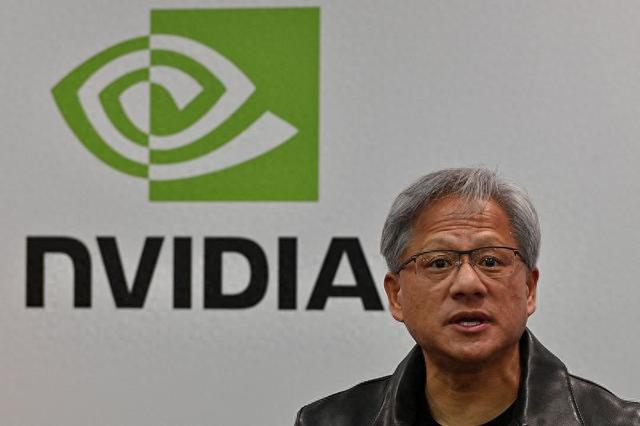
【文/观察者网 熊超然】当地时间11月19日,美国芯片制造商英伟达公司发布今年第三季度财报,在截 至10月26日的三个月内,其总营收同比增长62%,达到创纪录的570亿美元。 香港《南华早报》11月20日报道指出,尽管英伟达的季度营收创下历史新高,但其在中国市场的销售额 却不断下滑,该公司在中国大陆(包括香港地区)的销售额暴跌63%,至30亿美元。 从拜登政府到特朗普政府,为围堵打压中国科技发展,美国实施了一系列芯片出口限制措施,且不断收 紧,而英伟达的AI芯片则是其"重中之重"。为此,英伟达寻求对华出售"减配特供版"H20芯片,但仍被 特朗普政府紧盯不放。 据报道,今年第一季度,H20芯片曾为英伟达创造了46亿美元销售额,但在今年第二季度,英伟达未向 中国客户出售任何H20芯片。 今年7月中旬,英伟达创始人兼首席执行官黄仁勋在华宣布,美国政府已批准H20芯片销往中国。然 而,这款H20芯片在今年第三季度仅创造约5000万美元的收入。 更严重的问题还不是在销售方面,英伟达在中美两国之间的处境似乎变得越发尴尬,特别是此后围绕在 这家公司身上的争议持续扩散发酵。 7月31日,为维护中国用户网络安全、数据安全,中方 ...
四大证券报精华摘要:11月21日
Xin Hua Cai Jing· 2025-11-21 01:30
Group 1 - The quant long strategy is facing significant challenges as the competition in the industry enters a more refined phase, with top institutions showing stronger resilience through multi-dimensional strategy iterations [1] - Insurance companies have issued over 70 billion yuan in bonds this year, with perpetual bonds becoming a key tool for capital replenishment, accounting for nearly 70% of the total issuance [2] - The credit card non-performing asset transfer market is becoming more active, with banks exploring the transfer of short-aged asset packages, indicating a shift in how retail non-performing assets are managed [3] Group 2 - The AI sector in the US is experiencing a "gear-shifting" phase, with major institutions adjusting their holdings in tech stocks, reflecting concerns over potential valuation bubbles despite strong demand for AI [4] - Leaders in the lithium battery industry emphasize the importance of disruptive innovation and globalization to maintain competitiveness, recognizing the long-term demand certainty in the sector [5] - The securities industry is seeing an increase in allocation value driven by policy, capital, and fundamental factors, with significant stock price movements in brokerage firms following major merger announcements [6][7] Group 3 - The acceleration of personal non-performing loan transfers has been noted, with over 26 billion yuan in assets listed for transfer in November alone, indicating a proactive approach to managing retail loan risks [8] - Several venture capital firms have successfully raised dollar funds, driven by the explosive growth in China's AI sector, highlighting a renewed interest from global capital [9] - Recent interpretations of company law clarify rules regarding stock buybacks, providing legal frameworks for handling disputes related to buyback agreements [10] Group 4 - Large-scale energy storage projects are expected to see increased profitability, becoming core assets in the new power system due to their flexibility and rapid response capabilities [11] - Lithium carbonate futures prices are fluctuating around 100,000 yuan per ton, driven by strong demand expectations and market adjustments, although caution is advised regarding potential price corrections [12] - The bond ETF market has seen significant growth, with total assets exceeding 714.8 billion yuan, enhancing liquidity and providing diverse investment options [13]
达利欧:AI热潮虽现泡沫迹象,但真正的拐点还未到来
Di Yi Cai Jing· 2025-11-20 23:47
达利欧表示,美国科技股估值偏高、AI 热潮具备泡沫特征,但市场仍未出现"刺破泡沫"的关键条件。 关于人工智能(AI)热潮是否已进入泡沫区间的讨论在华尔街不断发酵。桥水基金(Bridgewater Associates)创始人瑞·达利欧(Ray Dalio)近日在多家媒体采访中表达了不同观点。他认为,尽管估值 已处在偏高位置,但缺乏触发泡沫破裂的关键条件,"现在并不是从 AI 相关资产抽身的时候"。 黄金仍是关键配置 在加密资产方面,达利欧持相对谨慎的态度。他透露,比特币长期占其投资组合约1%,但对其能否成 为各国央行采用的储备资产信心不足。 他给出的理由主要有两点:第一,比特币的所有交易永久记录且可追踪,与主权货币体系的结构与隐私 要求存在根本差异;第二,量子计算未来可能带来的安全风险,使其长期稳定性仍存不确定性。 近期多家机构警示AI主题的高估值风险,但达利欧认为,市场是否进入泡沫并不是关键,更重要的是 泡沫何时会真正被刺破。他提到,从历史经验看,泡沫最终走向破裂通常与两类因素有关:其一是货币 政策突然收紧,其二是市场出现必须出售资产的压力。目前,这两种情形都不明显。 当地时间11月19日,英伟达最新财报显 ...
凌晨!全线大跳水!美股,利空突袭!
券商中国· 2025-11-20 23:45
Core Viewpoint - The U.S. stock market experienced a significant drop after initially rising due to Nvidia's strong earnings report, highlighting concerns over high valuations in the tech sector and the impact of mixed labor market data on Federal Reserve interest rate expectations [2][3][7]. Market Performance - Following Nvidia's earnings, the Nasdaq initially surged by 2.58% but ultimately closed down by 2.15%, with the Dow Jones and S&P 500 also declining by 0.84% and 1.56%, respectively [3][6]. - The VIX index, a measure of market volatility, spiked over 11% during the trading session, indicating increased investor fear [2]. Federal Reserve Expectations - The latest labor market data showed a significant increase in non-farm employment, with 119,000 jobs added in September, far exceeding the expected 52,000, while the unemployment rate rose to 4.4% [7]. - As a result, the probability of a 25 basis point rate cut by the Federal Reserve in December dropped to 39.6%, with a 60.4% chance of maintaining current rates [2][7]. Technology Sector Concerns - Major tech stocks, including Oracle, Nvidia, Amazon, and Tesla, all saw declines, with Oracle dropping over 6% and Nvidia closing down 3% despite earlier gains [6][8]. - The semiconductor sector also faced significant losses, with the Philadelphia Semiconductor Index falling nearly 5%, and individual stocks like Micron and AMD experiencing drops of over 10% and 8%, respectively [8][9]. Market Sentiment and Analysis - Analysts expressed concerns about whether AI can generate sufficient revenue to justify the substantial investments made in infrastructure, contributing to the market's downturn [7][8]. - The market is currently grappling with how to balance growth versus value stocks and the allocation between risk assets and safe havens [8]. Bubble Concerns - Ray Dalio noted the presence of a bubble in the market driven by AI-related investments, but he emphasized that external factors would be necessary to burst this bubble, rather than company performance alone [10][11]. - The cost of credit default swaps (CDS) for Oracle has doubled recently, indicating increased market skepticism regarding the company's financial stability amid AI spending [10].


美股市场已偏离健康轨道
Jing Ji Ri Bao· 2025-11-20 22:08
美股近期展现的脆弱性,是在市场结构失衡情况下,估值过高、投资者信心不足的必然结果。自今年4 月以来,美股经历了一轮迅猛上涨。推动上涨的因素来自多方面,包括全球贸易战局势缓解、美联储政 策转向宽松等,但是人工智能(AI)投资持续扩张是主要因素,AI相关股票也贡献了绝大部分涨幅。 进入10月,随着美股涨势达到空前高点,估值来到高位。一些支撑因素却迎来考验,例如市场开始忧虑 AI投资的可持续性,让美股的高估值受到打击。 受英伟达财报提振,近期低迷的美股盘后出现普涨。然而,财报带动的股市反弹,难掩市场的结构性问 题。近段时间,美股持续走弱,科技板块尤为疲软,这是在市场结构失衡情况下,估值过高、投资者信 心不足的必然结果。当整个股市需要依赖一家企业的"完美财报"来维持稳定时,说明市场已经偏离健康 轨道。 当地时间11月19日,美股上市公司英伟达公布了2026财年三季度(2025年7月28日至10月26日)财报: 营收570.1亿美元,预计四季度营收约650亿美元。两项数据均超出华尔街预期。受财报提振,近期低迷 的美股盘后出现普涨,让投资者松了一口气。然而,财报带动的股市反弹,难掩市场的结构性问题。 在财报发布前,市场情 ...
量化多头策略迎大考 行业竞争步入精细化比拼阶段
Zhong Guo Zheng Quan Bao· 2025-11-20 20:08
Core Insights - The A-share market is experiencing high volatility with a decline in the performance of technology growth stocks, leading to a noticeable decrease in individual stock profitability [1][2] - Quantitative long strategies are facing significant challenges due to factor decay, rising costs, and stricter regulations, prompting a shift towards platformization, AI integration, and multi-strategy approaches [1][3] Performance Challenges - Since November, the market has entered a phase of index volatility and stock differentiation, putting pressure on quantitative long strategies [2] - Despite a marginal decline in market profitability in October, quantitative long products achieved an average return of approximately 0.93% and an excess return of 1.5%, outperforming subjective long strategies [1][2] - There is a clear performance divergence among leading and mid-tier quantitative firms in terms of excess returns since the fourth quarter [1][2] Strategy Iteration - The market's complexity has highlighted the operational challenges and evolution directions of quantitative strategies [3] - Key challenges identified include the decline in factor effectiveness, rising trading costs, and the need for compliance with regulatory requirements [3] - Leading firms are adopting multi-dimensional iterations, such as enhancing trend prediction across all frequency bands and improving algorithms to control slippage [3][4] Competitive Landscape - The year 2025 is anticipated to be favorable for quantitative strategies, with significant growth in performance, fundraising, and product registration [5] - The proportion of quantitative product registrations has increased significantly, with quantitative long products leading this growth [5] - The competition in the quantitative industry is shifting from isolated algorithm breakthroughs to comprehensive system engineering [5][6] - The deep application of AI and machine learning is becoming a driving force in quantitative strategy development [5][6] Future Outlook - The market is witnessing a concentration of resources towards leading firms with stable operations and robust performance [6] - The consensus in the industry suggests that quantitative long strategies will focus on refining existing frameworks rather than making disruptive changes [6]
多家VC机构成功募集美元基金中国AI爆发成重要驱动力
Zheng Quan Shi Bao· 2025-11-20 18:36
Core Insights - The resurgence of USD funds in China is attributed to policy benefits and continuous technological innovations, particularly in the AI sector, which is seen as a significant opportunity for global capital [1][6]. Fundraising Activity - November has seen a surge in USD fund fundraising, with notable announcements including Monolith's dual-currency fund totaling $488 million (approximately 3.5 billion RMB) [2] - Source Code Capital announced a new growth fund of $600 million, also in dual currency [2] - Blue Pool Capital is reportedly raising $750 million (approximately 5.3 billion RMB) for its first direct private equity fund, focusing on global consumption, finance, and technology [2] - Kangqiao Capital completed fundraising for its second USD fund, totaling $500 million, aimed at supporting healthcare innovation globally [2][3]. Focus on AI Sector - Both Monolith and Source Code Capital have identified AI as a core investment focus, with Source Code Capital targeting "AI+" related fields and Monolith covering the entire AI industry chain [4]. - Monolith's new funds received subscription interest exceeding 160% of their initial target, totaling around $630 million, but they opted to reduce the final fundraising amount to $488 million to maintain investment discipline [4]. - Source Code Capital's new fund features an unconventional 25-year lifespan, reflecting LPs' long-term confidence in the Chinese market [5]. Investor Landscape - The LP structure for Monolith includes long-term funds from Europe, the Middle East, and Southeast Asia, providing a stable funding source [5]. - Successful fundraising for USD funds is largely attributed to the strong past performance of these institutions, which has built global capital trust [6]. Global Capital Dynamics - The current fundraising wave coincides with the explosive growth of China's AI industry, which is perceived as undervalued compared to similar assets in the U.S. [6][7]. - The competition in the AI sector is primarily between China and the U.S., with China having unique advantages in application fields, particularly in B2B scenarios [7]. - As global capital increasingly recognizes the value of Chinese tech assets, the trend of USD fundraising in China's private equity market is expected to continue [7].
