
人民币国际化

Search documents
中国首次夺得铁矿石定价权!
Sou Hu Cai Jing· 2025-10-16 11:25
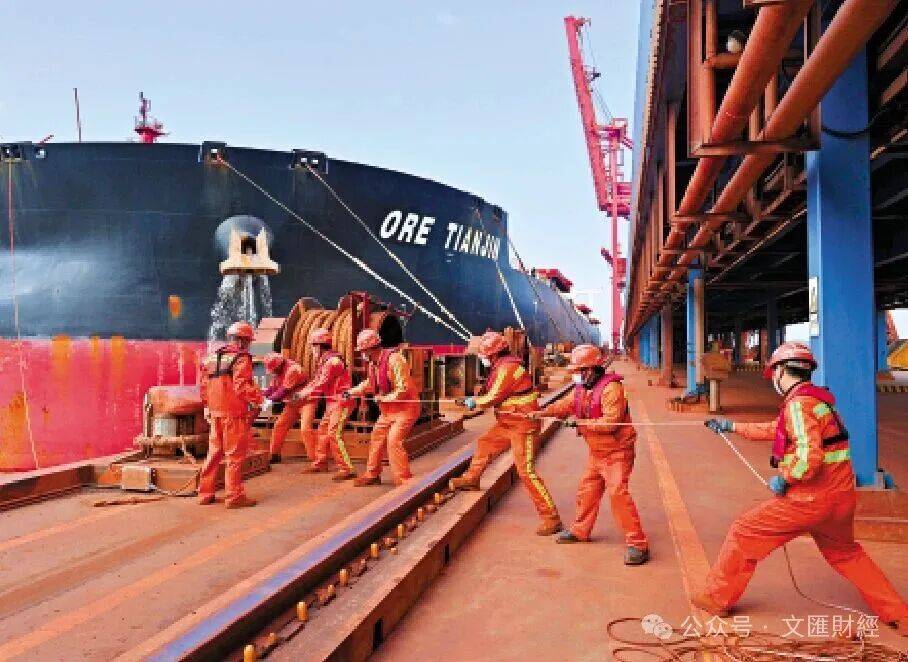
Core Viewpoint - Australia’s BHP will settle iron ore trades in RMB, marking China’s first acquisition of iron ore pricing power and successfully lowering iron ore prices [1][3]. Group 1: Trade Agreements - China Mineral Resources Group has signed an agreement with BHP to implement RMB settlement for iron ore spot trades starting as early as Q4 of this year [1]. - This agreement signifies a shift in pricing power, allowing China to reduce its reliance on USD for iron ore transactions [3]. Group 2: Market Dynamics - Historically, the USD has dominated global commodity pricing, with iron ore trade exceeding $1.2 trillion annually, 80% of which is settled in USD [3]. - Chinese companies have faced significant risks from exchange rate fluctuations and reliance on USD clearing channels [3]. Group 3: Strategic Moves - Following a breakdown in negotiations with BHP, China ordered major steel mills and traders to halt purchases of BHP's iron ore priced in USD, marking the first ban on Australian iron ore imports [3]. - BHP's acceptance of RMB settlement is seen as a result of China's concentrated procurement strategy, which has increased its bargaining power [3][4]. Group 4: Broader Implications - Other major iron ore producers, including Brazil's Vale and Australia's Rio Tinto, have also agreed to RMB settlements, indicating a trend towards de-dollarization in commodity trading [4]. - The agreement with BHP is expected to enhance China's economic security and accelerate the internationalization of the RMB [4].


财政部在香港发行110亿元人民币国债 年内发行进度已近90%
Zheng Quan Ri Bao Wang· 2025-10-16 07:45
Core Viewpoint - The Ministry of Finance of the People's Republic of China has successfully issued the fifth phase of RMB bonds in Hong Kong, reflecting strong investor demand and a systematic approach to bond issuance [1][2][3] Group 1: Issuance Details - On October 15, 2023, the Ministry of Finance issued RMB 11 billion in bonds with a subscription multiple of 3.13 times, including 2-year bonds at 1.50%, 3-year bonds at 1.51%, and 5-year bonds at 1.70% [1] - The total planned issuance for the year is RMB 68 billion, with 89.7% of this target already achieved, totaling RMB 61 billion issued to date [1][2] Group 2: Market Impact - The continuous issuance of RMB bonds in Hong Kong is a key measure for deepening financial cooperation between the mainland and Hong Kong, as well as promoting the internationalization of the RMB [2][3] - The increase in issuance scale from RMB 55 billion in 2024 to RMB 68 billion in 2023, along with an earlier issuance start date, indicates a positive response to market demand [2][3] Group 3: Investor Sentiment - The strong demand for RMB bonds reflects a significant increase in international investor confidence, contributing to greater capital inflow and trading activity in Hong Kong's financial market [3][4] - The issuance strategy is seen as a precise response to current international capital allocation needs, enhancing the global standing of Hong Kong's financial market [4]
美元霸权遭遇釜底抽薪!铁矿石人民币结算覆盖三成贸易,浪潮引发连锁反应
Sou Hu Cai Jing· 2025-10-16 06:26
Core Insights - BHP has agreed to use RMB for 30% of its iron ore trade with China, marking a significant shift in international settlement currencies and challenging the dominance of the US dollar in commodity markets [1][3][7] Group 1: Trade Dynamics - China Mineral Resources Group has instructed domestic buyers to halt all dollar-denominated purchases of BHP iron ore, allowing only RMB transactions, which demonstrates China's strong bargaining power in the iron ore market [3] - BHP's long-term contract pricing negotiations revealed a divergence in pricing mechanisms, with BHP proposing a fixed price of $109.5 per ton while China advocated for a market-driven floating price [3] - China's iron ore imports represent nearly 40% of the global market, with an annual volume of approximately 1.1 billion tons, enhancing its negotiating leverage [3] Group 2: Economic Impact - The shift to RMB settlement is expected to save Chinese steel mills about $8 per ton in transaction costs, translating to significant financial savings for large-scale importers [5] - BHP is projected to benefit from improved cash flow and an annual revenue increase of approximately $210 million due to the RMB settlement [5] Group 3: Infrastructure and Support - The Cross-Border Interbank Payment System (CIPS) has fully integrated RMB settlement for iron ore trade, facilitating smoother transactions and reducing exchange rate risks [5][14] - CIPS processed transactions worth 90.19 trillion yuan in the first half of 2025, covering 189 countries, which supports the growing adoption of RMB in international trade [5] Group 4: Global Trends - As of 2025, RMB settlements accounted for 25% of China's iron ore imports, with significant shares in trade with Brazil (28%) and Russia (48%) [7] - The global iron ore trade, valued at $1.2 trillion in 2025, is predominantly dollar-denominated, but BHP's move signals a potential shift in this paradigm [7] - The trend towards de-dollarization is accelerating, with various countries exploring alternative currencies for international trade [7][10] Group 5: Future Prospects - The introduction of RMB-denominated iron ore futures by the London Metal Exchange in 2026 and the establishment of a RMB pricing index by JPMorgan are indicative of a broader acceptance of RMB in commodity pricing [7][12] - The potential for a stable RMB settlement mechanism in commodity markets could reshape the international monetary system and challenge the existing dollar-centric framework [16]

国债期货开盘全线上涨,30年国债ETF博时(511130)红盘上扬
Sou Hu Cai Jing· 2025-10-16 03:08
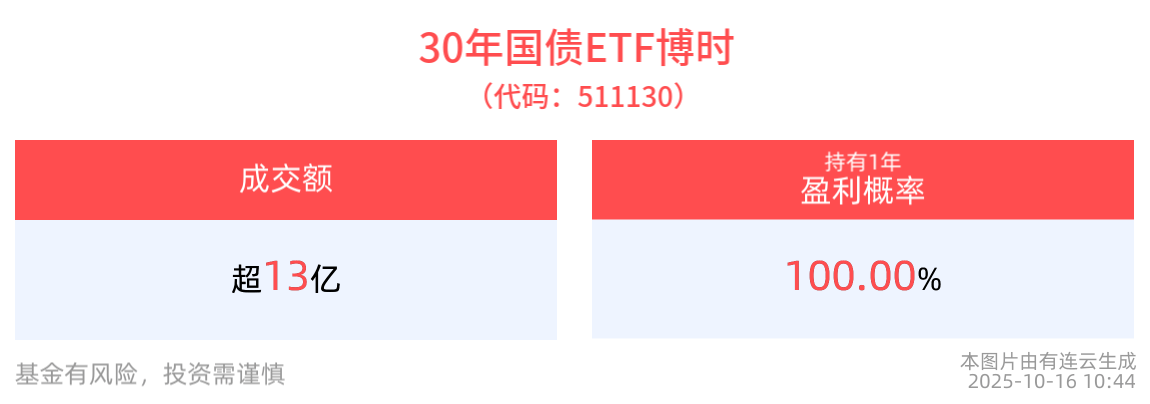
Group 1 - The 30-year government bond ETF from Bosera has seen a price increase of 0.27%, reaching 106.1 yuan as of October 16, 2025, with a cumulative increase of 2.60% over the past year [3] - The liquidity of the Bosera 30-year government bond ETF is notable, with a turnover rate of 7.39% and a transaction volume of 1.304 billion yuan, while the average daily transaction volume over the past month was 3.716 billion yuan [3] - The Ministry of Finance successfully issued 11 billion yuan of government bonds in Hong Kong, with a subscription multiple of 3.13 times, indicating strong investor interest [3] Group 2 - The National Bureau of Statistics reported a 0.1% month-on-month increase in China's CPI for September, with a year-on-year decrease of 0.3%, while the core CPI rose by 1%, marking the first return to a 1% increase in 19 months [3] - The PPI remained flat month-on-month and decreased by 2.3% year-on-year, with the decline narrowing by 0.6 percentage points compared to the previous month [3] - The issuance of RMB bonds in Hong Kong is expected to enhance the use and influence of the RMB in international financial markets, promoting the internationalization of the currency [3] Group 3 - Citic Securities noted that public funds currently hold nearly 40% of convertible bonds, a historical high, driven by the growth of passive ETF shares [4] - The latest scale of the Bosera 30-year government bond ETF reached 17.621 billion yuan, closely tracking the Shanghai Stock Exchange's 30-year government bond index [4] - The index reflects the overall performance of government bonds with a 30-year maturity listed on the Shanghai Stock Exchange [4]
110亿元人民币国债香港发行,30年国债ETF(511090)盘中飘红
Sou Hu Cai Jing· 2025-10-16 02:52
Core Insights - The 30-year government bond ETF (511090) has seen a 0.18% increase as of October 16, 2025, with a trading volume of 9.46 billion yuan and a turnover rate of 3.24% [1] - The latest scale of the 30-year government bond ETF has reached 29.144 billion yuan, with an average daily trading volume of 9.572 billion yuan over the past week [1] - On October 15, the Ministry of Finance of the People's Republic of China issued the fifth phase of RMB government bonds in Hong Kong, with a total issuance scale of 11 billion yuan and a subscription multiple of 3.13 times [1] Market Activity - The 30-year government bond ETF closely tracks the China Bond 30-Year Government Bond Index, which consists of publicly issued 30-year government bonds with a maturity of 25-30 years [2] - The bonds issued include 40 billion yuan of 2-year bonds at a coupon rate of 1.50%, 40 billion yuan of 3-year bonds at 1.51%, and 30 billion yuan of 5-year bonds at 1.70% [1] Strategic Implications - Issuing RMB government bonds in Hong Kong is expected to enhance the use and influence of the RMB in international financial markets, promoting the internationalization of the currency [1] - The issuance in Hong Kong is seen as a way to attract global capital and increase the attractiveness of China's bond market [1]
《海外资管机构赴上海投资指南(2025版)》发布
Sou Hu Cai Jing· 2025-10-16 02:52
Group 1 - The core viewpoint of the article highlights the release of the "Overseas Asset Management Institutions Investment Guide (2025 Edition)" by the Shanghai Fund Industry Association, aimed at enhancing Shanghai's status as an international financial center and promoting high-level, institutional openness in the capital market [1] Group 2 - The 2025 edition of the guide emphasizes the deepening of China's financial market opening, the elevation of Shanghai's international financial center capabilities, the accelerated high-quality development of the Chinese fund industry, and the continued leading scale of Shanghai's fund industry [1] - It notes that the internationalization of the Renminbi is progressing steadily, with the cross-border Renminbi settlement volume reaching 64.1 trillion yuan in 2024, representing a year-on-year increase of 22.5% [1] - The Renminbi Cross-Border Payment System (CIPS) has expanded its business volume to cover 189 countries and regions, with 1,690 participants involved [1]
人民币中间价年内大涨近900点,收复7.1关口
21世纪经济报道· 2025-10-16 02:33
Core Viewpoint - The recent appreciation of the RMB against the USD is attributed to both internal and external factors, indicating a potential long-term upward trend in the RMB exchange rate [4][10][12]. Exchange Rate Movements - On October 16, the RMB to USD central parity rate was reported at 7.0968, an increase of 27 basis points from the previous trading day [1]. - The RMB has appreciated over 900 points against the USD this year, with an onshore appreciation of 2.40% and an offshore appreciation exceeding 2.8% [3][4]. Economic Indicators - The core CPI in China rose by 1.0% year-on-year, marking the first increase back to 1% in 19 months, reflecting the effectiveness of macroeconomic policies [3]. - The strong performance of the A-share market has attracted international capital back to Chinese assets, increasing demand for the RMB [4][11]. External Influences - The risk of economic recession in the US and the softening labor market have prompted the Federal Reserve to signal a potential interest rate cut, putting downward pressure on the USD index [4][10]. - The market anticipates a nearly 100% probability of a 25 basis point rate cut by the Federal Reserve in October following recent economic data [3]. Long-term Outlook - Analysts suggest that the RMB may have entered a long-term appreciation cycle, driven by the Federal Reserve's easing monetary policy and the relative economic strength of China [12][14]. - The RMB's appreciation is expected to be supported by structural economic adjustments and increased attractiveness of RMB-denominated assets [11][15].
现货黄金突破4220美元/盎司,上海金ETF(159830)涨超0.6%,机构:央行黄金储备比例仍低于全球平均水平
2 1 Shi Ji Jing Ji Bao Dao· 2025-10-16 02:08
Group 1 - Spot gold prices have risen above $4220 per ounce, marking a $200 increase over the week and reaching new highs for four consecutive trading days [1] - The Shanghai Gold ETF (159830) has increased by 0.62%, while the CSI A500 ETF Tianhong (159360) has decreased by 0.24%, with notable stocks like Jiangte Electric, ZTE, Chifeng Jilong Gold, Zhongjin Gold, and Hunan Gold showing gains [1] - The Shanghai Gold ETF closely tracks Shanghai Gold (SHAU.SGE) and has lower management and custody fees compared to similar products, supporting T+0 trading [1] Group 2 - Domestic prices for gold jewelry have surged, with some brands exceeding 1235 RMB per gram, reflecting an increase of over 100 RMB per gram since October 1 [2] - Global central banks are increasing gold purchases, with China's gold reserves rising for 11 consecutive months, reaching 74.06 million ounces by September 2025, which is 7.7% of foreign reserves [2] - The trend towards increasing gold reserves is seen as a strategy to optimize international reserve structures and respond to changes in the global environment, indicating a sustained upward trend in gold prices [2]

《海外资管机构赴上海投资指南(2025版)》发布,今年有这些要点更新!(附全文下载)
Di Yi Cai Jing· 2025-10-16 01:40
Group 1: Core Insights - The Shanghai Fund Industry Association is set to update the "Guidelines" for the fifth time in 2025, aiming to enhance the construction of Shanghai as an international financial center and promote high-level, institutional openness in the capital market [1] - The "Guidelines" have been revised annually since their inception in 2020, providing policy guidance and practical advice for overseas asset management institutions looking to operate in Shanghai [1] Group 2: Financial Market Opening - The internationalization of the Renminbi is progressing steadily, with cross-border Renminbi settlement reaching 64.1 trillion yuan in 2024, a year-on-year increase of 22.5% [1] - The Renminbi Cross-Border Payment System (CIPS) has expanded its reach to 189 countries and regions, with 1,690 participants [1][12] Group 3: Financial Center Development - Shanghai's financial market is leading in scale, with the financial industry's added value reaching 807.27 billion yuan in 2024, accounting for 15% of the city's GDP [4][18] - The total trading volume in Shanghai's financial market was 365.03 trillion yuan, reflecting an 8.2% growth [4][18] Group 4: Foreign Investment Participation - As of June 2025, foreign institutions held a total of 4.23 trillion yuan in the interbank bond market, with 893 foreign institutions approved for Qualified Domestic Institutional Investor (QDII) status [3][14] Group 5: Fund Industry Development - By the end of 2024, China's open-end public fund assets reached 3.98 trillion USD, ranking fourth globally, with public fund assets surpassing 34 trillion yuan by June 2025 [6][20] - The scale of equity funds (stock and mixed funds) within open-end funds reached 8.42 trillion yuan by June 2025, marking a year-on-year growth of 26% [7][20] Group 6: Shanghai Fund Industry Leadership - As of June 2025, Shanghai had 75 public fund management institutions, with 5,129 public fund products and a management scale of 12.74 trillion yuan, all ranking first in the country [10][27] - The number of registered private fund managers in Shanghai reached 3,701, managing 40,500 funds with a total scale of 5.10 trillion yuan, also leading nationally [10][33] - Notably, 43 out of 89 hundred-billion securities private funds are based in Shanghai, representing 48% of the total [10][33]

首日成交58亿 头部券商银行落地 首批跨境债券回购交易
2 1 Shi Ji Jing Ji Bao Dao· 2025-10-15 12:27
Core Insights - The cross-border bond repurchase business has officially launched, with major securities firms like CICC and CITIC Securities quickly responding and executing initial trades totaling 5.8 billion yuan on the first day [1][5][6] - The People's Bank of China, the China Securities Regulatory Commission, and the State Administration of Foreign Exchange issued a joint announcement to support foreign institutional investors in conducting bond repurchase transactions in the Chinese bond market [1][6] - This initiative aims to deepen financial market openness and facilitate liquidity management for foreign investors, following the launch of offshore RMB bond repurchase business by the Hong Kong Monetary Authority earlier this year [1][6] Summary by Sections Cross-Border Bond Repurchase Launch - The cross-border bond repurchase business allows foreign institutions to conduct repurchase transactions using RMB-denominated bonds as collateral, providing a significant financing avenue in both onshore and offshore RMB markets [1][6] - The first day of trading saw a total transaction volume of 5.8 billion yuan, indicating strong market interest and participation [1][5] Participation of Major Firms - CICC and CITIC Securities were among the first to act as market makers for the cross-border repurchase business, successfully executing multiple transactions on the launch day [2][3] - CICC emphasized its commitment to supporting the internationalization of the RMB and contributing to the high-level opening of financial markets [2][3] Involvement of Financial Institutions - Other major banks, including Bank of China, Industrial and Commercial Bank of China, and Agricultural Bank of China, also participated actively in the cross-border bond repurchase market, facilitating initial trades [5][6] - The participation of various types of foreign institutional investors, including central banks and asset management firms, was noted, with a diverse range of bond types being traded [5][6] Market Impact and Future Outlook - The initiative is expected to enhance the attractiveness of RMB-denominated bonds and optimize the Qualified Foreign Institutional Investor (QFII) system, reinforcing Hong Kong's status as an international financial center [6] - The ongoing expansion of the cross-border bond repurchase business is anticipated to continue, with potential for more firms to qualify as market makers by 2026 [4][6]

