数字经济

Search documents
回顾2025|第七届“蒙格斯智库年度作家”榜单揭晓
Xin Lang Cai Jing· 2026-01-03 07:12
来源:蒙格斯报告 探索前沿、研判趋势、赋能实践 于不确定性中锚定发展确定性 以理性洞察穿透时代迷雾 把握经济发展的核心脉搏 从DeepSeek的横空出世到AI泡沫风险防控 从美国关税冲突博弈到地缘政治解构 从资本市场起伏到消费活力提振 蒙格斯智库专家学者们 AI浪潮重塑产业生态 地缘博弈交织经贸变局 解构AI浪潮驱动的产业变革路径 拆解关税冲突背后的经贸博弈逻辑 预判资本市场波动趋势 探寻提振消费活力的有效路径 引领读者洞悉复杂变局 与不确定性交织下的财经核心脉络 感知时代转型进程中的强劲发展动能 为致敬过去一年的丰硕思想成果 蒙格斯特别推出年度重磅企划 "蒙格斯2025年度阅读量TOP10文章"以及 第七届"蒙格斯智库年度作家"评奖 致敬每一份智慧洞见与深度思考 展望崭新的2026年 期待专家学者们在前沿领域持续深耕细作 创作出更多映照时代的思想华章 房地产曾是中国经济高速发展的重要引擎,其金融化属性催生了行业繁荣,却也暗藏投机泡沫与高空置 率的隐忧——城镇住房空置率持续攀升,租售失衡导致刚需难满足、资源浪费等多重困境。当"堵"式调 控难破僵局,"租售并举"成为破题关键。文章聚焦房地产金融化的核心矛盾,探索 ...


数字人民币实名钱包余额开始计付利息
Sou Hu Cai Jing· 2026-01-03 04:33
Core Viewpoint - The introduction of interest-bearing digital RMB wallets by six major state-owned banks marks a significant transition from a cash-like version to a deposit currency version, enhancing the functionality of digital RMB and aligning with the People's Bank of China's action plan for digital currency management [5][9]. Policy Core: Real-name Interest Calculation and Security Boundaries - The interest-bearing policy applies to personal and corporate real-name wallets, with interest calculated at a rate of 0.05% per annum, similar to current savings accounts, with quarterly interest payments [6]. - Non-real-name wallets, which only require mobile number verification, are excluded from interest calculations, emphasizing the importance of real-name systems for financial security [6]. Promotion Foundation: Scale and Scenarios - As of November 2025, digital RMB has processed 3.48 billion transactions totaling 16.7 trillion yuan, with 230 million personal wallets and 1.884 million corporate wallets established, indicating a growing user base [7]. - The application scenarios for digital RMB span various sectors, including retail, dining, education, and cross-border payments, showcasing its potential for widespread adoption [7]. Supporting Upgrades: App 2.0 Enhancing User Experience - The digital RMB App has been upgraded to version 2.0, addressing user needs for interest tracking and enhancing interface design with personalized themes, thereby improving user engagement [8]. In-depth Interpretation: Win-Win Institutional Innovation - The core significance of the interest-bearing policy lies in the transformation of digital RMB's legal status from a central bank liability to a commercial bank liability, creating a mutually beneficial incentive mechanism for users and banks [9]. - This initiative positions China as a leader in the global exploration of central bank digital currencies, reinforcing financial security through innovative regulatory measures [9].

直播间里“吆喝”忙!景泰电商成为农特产品“起飞引擎”
Xin Lang Cai Jing· 2026-01-03 02:49
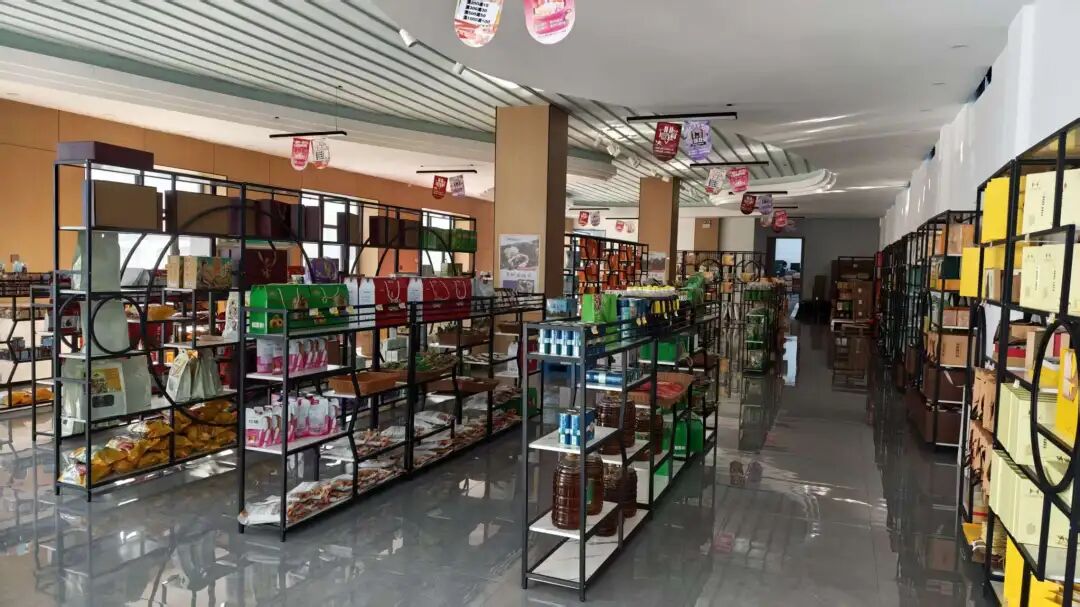
Core Insights - The article highlights the rapid development of the e-commerce industry in Jingtai County, leveraging digital economy opportunities to enhance rural revitalization through agricultural product branding and logistics improvement [1][3]. Group 1: E-commerce Development - Jingtai County has established an e-commerce entrepreneurship park that integrates supply chain services, training, and incubation to support local e-commerce practitioners [1][2]. - The county has successfully trained over 30 live-streaming hosts and incubated more than 40 e-commerce projects, with over 400 hosts promoting more than 100 agricultural products [2]. Group 2: Economic Impact - As of the end of November, Jingtai County's online retail sales reached 496 million yuan, with rural online transactions amounting to 145 million yuan, and a total of 330 million yuan in consumption assistance from East-West cooperation [3]. - The county conducted over 560 live-streaming sales events, generating sales exceeding 7.2 million yuan, and completed four training sessions, cultivating 202 talents in e-commerce [3]. Group 3: Future Plans - The county plans to strengthen the "Jingli" regional public brand, focusing on brand-led development and a full-chain upgrade, while innovating a model that integrates "live streaming + cultural tourism + exhibition promotion" to expand sales channels [5].
武汉2025年全社会用电量同比增长4.76%
Chang Jiang Ri Bao· 2026-01-03 01:02
Core Insights - In 2025, the total electricity consumption in Wuhan reached 85.712 billion kilowatt-hours, reflecting a year-on-year growth of 4.76%, indicating robust resilience in the economy [1] - The electricity consumption data highlights a shift in Wuhan's economic landscape, with significant growth in sectors such as new energy vehicle manufacturing and internet data services, which saw year-on-year increases of 71.9% and 240.6% respectively [1] Group 1: Electricity Consumption Trends - The second industry saw a year-on-year electricity consumption increase of 5.53%, with manufacturing electricity consumption rising by 7.57%, significantly above the average growth rate [1] - New energy vehicle manufacturing electricity consumption grew by 71.9%, underscoring Wuhan's leading position in the electric vehicle transformation [1] - The computer, communication, and other electronic equipment manufacturing sectors experienced a 14.29% increase in electricity consumption [1] Group 2: Economic Growth Indicators - In the first three quarters of 2025, Wuhan's industrial added value above designated size grew by 5.4%, with the computer, communication, and other electronic equipment manufacturing sector growing by 18.0% [2] - The electrical machinery and equipment manufacturing sector saw an 11.7% growth, further supporting the trend of increased electricity consumption in high-tech manufacturing [2] - The production of automobiles in Wuhan showed steady growth, with new energy vehicle output expected to increase by 56.7%, raising its share of total vehicle production to 52.72% [2] Group 3: Changes in Electricity Structure - Urban and rural residential electricity consumption grew by 3.84%, which is lower than the overall electricity consumption growth rate, indicating a shift in consumption patterns [2] - The electricity consumption in the charging and swapping service industry increased by 17.4%, reflecting the rising willingness of citizens to adopt green transportation [2] - These changes in electricity consumption patterns illustrate the coordinated development and green transformation of urban and rural areas in Wuhan [2]
政策赋能,消费以“质”提“速”
Shan Xi Ri Bao· 2026-01-03 00:19
Group 1 - The core viewpoint of the articles highlights the robust growth in consumer retail sales in Shaanxi Province, with a year-on-year increase of 8.1% from January to November 2025, driven by effective policy alignment and consumer demand [1] - The "old-for-new" policy has significantly boosted retail sales in categories such as home appliances, communication devices, and automobiles, with notable growth rates of 65.8% for first and second-level energy-efficient appliances, 60.0% for smartphones, and 34.8% for new energy vehicles, indicating a shift towards green and quality consumption [1] - Digital economy empowerment has opened new avenues for consumption growth, with retail sales through public networks increasing by 25.3%, breaking spatial and temporal limitations and allowing for the full release of consumer potential in the digital wave [1] Group 2 - The consumer market's stable operation is supported by a solid foundation, with retail sales of grain, oil, and food products increasing by 12.6%, demonstrating the resilience of essential consumer spending [2] - The central economic work conference has prioritized "maintaining domestic demand as the main driver and building a strong domestic market" as a key task for economic work in 2026, emphasizing the need for Shaanxi to leverage its large-scale market advantages [2] - Policies should focus on enhancing the adaptability of supply and demand in the consumer sector, addressing urgent public concerns, and fostering new economic growth points to inject vitality into economic stability and improvement [2]
2026:让每一滴汗水都能被看见
Xin Lang Cai Jing· 2026-01-02 18:29
Core Viewpoint - The article highlights China's economic resilience and growth potential in 2025, projecting a GDP growth of around 5%, positioning it among the leading economies globally [3][4]. Group 1: Economic Performance - In 2025, China's GDP is expected to grow by approximately 5%, maintaining its position among major global economies [3]. - The strong performance reflects the resilience of the Chinese economy, driven by innovation from entrepreneurs and the hard work of millions of laborers [3]. Group 2: New Productive Forces - The core industries of artificial intelligence are rapidly expanding, with significant breakthroughs in quantum computing and deep-sea exploration [4]. - The digital economy's core industries are increasingly contributing to GDP, indicating a shift from factor-driven to innovation-driven growth [4]. Group 3: Domestic Demand - The total retail sales of consumer goods are steadily increasing, supported by policies like "trade-in" for automobiles and home appliances [4]. - The introduction of the "Private Economy Promotion Law" is expected to stabilize over 180 million business entities, enhancing the market environment [4]. Group 4: Open Cooperation - Despite global trade protectionism, China's foreign trade has shown resilience, with a 3.6% year-on-year increase in total goods trade in the first eleven months [4]. - The proportion of trade with Belt and Road Initiative countries exceeds half of the total foreign trade, indicating a robust open economy [4]. Group 5: Future Strategies - In 2026, the focus will be on expanding domestic demand to stimulate a virtuous cycle of consumption and investment [5][6]. - The government plans to implement proactive fiscal policies and maintain a moderately loose monetary policy to support economic stability and growth [5]. Group 6: Technological Innovation - The strategy for 2026 emphasizes self-reliance in technology, targeting key areas such as artificial intelligence, integrated circuits, and biotechnology [6]. - The aim is to enhance the role of enterprises in technological innovation and increase R&D investment intensity [6]. Group 7: Overall Outlook - The development blueprint for 2026 emphasizes strategic determination, comprehensive reform, and high-quality opening-up to navigate challenges [7]. - The collective effort of all contributors is essential for achieving high-quality development and advancing towards modernization [7].
壁仞科技港股上市首日暴涨82%,国产GPU的逆袭之路
Sou Hu Cai Jing· 2026-01-02 11:14
Core Insights - Wall Street celebrated the debut of Biren Technology on January 2, 2026, with its stock price soaring 82% on the first day, reaching a market capitalization of over HKD 85.5 billion, marking a significant challenge to global tech monopolies in the semiconductor industry [2] - The market's enthusiasm reflects strong expectations for domestic GPUs to replace imports, especially in a sector historically dominated by NVIDIA and AMD [2] Company Performance - Biren Technology's IPO was impressive, with an initial price of HKD 19.6, which surged to HKD 35.7 at opening, indicating robust investor confidence [2] - The company's revenue is projected to grow by 367% year-on-year by 2025, with over 60% of revenue coming from data center operations, showcasing its successful entry into high-end fields like AI and high-performance computing [2] Technological Advancements - Biren Technology's success is attributed to three key transformations: architectural innovation with its self-developed "Cuanfeng" architecture, ecosystem development through open-source tools, and vertical integration from chip design to system solutions [3] - The company has surpassed international competitors in some projects during recent MLPerf benchmark tests, indicating its products' reliability in critical sectors such as government cloud and autonomous driving [3] Market Challenges - Despite the capital market's enthusiasm, challenges remain, including foundry risks due to concentrated global advanced process capacity and a software ecosystem lag, particularly against NVIDIA's established CUDA ecosystem [4] - Continuous innovation pressure is significant, as NVIDIA invests billions annually in R&D, necessitating that newcomers like Biren Technology accelerate their pace [4] Industry Opportunities - The global demand for AI computing power is growing over 60% annually, and traditional giants cannot meet the entire demand, creating opportunities for domestic players [5] - China's digital economy has surpassed CNY 80 trillion, generating substantial local procurement needs, while the rise of open architectures like RISC-V is reshaping industry rules [5] Vision for the Future - The founder of Biren Technology emphasized that true competition lies not in current technical parameters but in defining the next computing paradigm, which is a valuable asset for Chinese semiconductor companies [6] - The listing of Biren Technology symbolizes a broader rise of China's hard tech sector, indicating a shift from technology following to defining the future, with the potential for more Chinese voices in the global GPU industry over the next decade [6]

李在明访华行程公布
财联社· 2026-01-02 08:59
Group 1 - South Korean President Lee Jae-myung is scheduled to make a state visit to China from January 4 to 7, 2026 [1][2] - The visit will include discussions on practical cooperation in areas such as supply chain investment, digital economy, environmental and climate change, cultural exchanges, tourism, and combating transnational crime [2] - During the visit, Lee will arrive in Beijing on January 4 and will spend two days in Shanghai, where he plans to visit the site of the Korean Provisional Government from the Japanese colonial period [2] Group 2 - When asked about South Korea's stance on the Taiwan issue, the National Security Office Chief stated that South Korea respects the One China policy and acts in accordance with this position [3]

韩国总统李在明访华行程公布:将于4日抵达北京,6日前往上海
Xin Lang Cai Jing· 2026-01-02 08:11
Group 1 - South Korean President Lee Jae-myung will visit China from January 4 to 7, 2026, marking his first state visit to China since taking office [1][2] - The visit will include discussions on practical cooperation in areas such as supply chain investment, digital economy, environmental and climate change, cultural exchanges, tourism, and combating transnational crime [1] - Over 200 South Korean business leaders, including executives from Samsung, SK Group, Hyundai Motor Group, and LG Group, will accompany the president on this visit [2] Group 2 - The visit coincides with the 100th anniversary of the establishment of the Korean Provisional Government's site in Shanghai, which will be commemorated during the trip [1] - The meeting in Beijing will follow a previous meeting between the two countries' leaders at the APEC summit in November 2025, aiming to further strengthen the strategic partnership between South Korea and China [1][2] - The South Korean government emphasizes the importance of the relationship with China, highlighting mutual respect for the One China policy regarding Taiwan [1]
韩国总统李在明访华行程公布
第一财经· 2026-01-02 06:56
Group 1 - The core viewpoint of the article is that South Korean President Lee Jae-myung will visit China from January 4 to 7, 2026, marking his first state visit to China since taking office [3][4]. - The visit aims to strengthen the strategic partnership between China and South Korea, following a meeting between the two countries' leaders in November 2025 [4]. - Key topics for discussion during the visit include supply chain investment, digital economy, environmental issues, cultural exchanges, tourism, and combating transnational crime [3]. Group 2 - A significant delegation of over 200 South Korean business leaders, including executives from major companies like Samsung, SK Group, Hyundai, and LG, will accompany President Lee during the visit [4]. - The visit coincides with the 100th anniversary of the establishment of the Korean Provisional Government in Shanghai, which will be commemorated during Lee's stay [3].