
科技创新

Search documents
广州“十五五”时期将在七个方面增创新优势、实现新突破
Zhong Guo Xin Wen Wang· 2026-01-19 16:48
Group 1 - The core viewpoint of the report emphasizes the need for Guangzhou to innovate and achieve breakthroughs in seven key areas to enhance its economic and social development during the "14th Five-Year Plan" period [1][2][3] Group 2 - The first area focuses on building a modern industrial system, particularly in artificial intelligence, marine industries, and biomedicine, to optimize industrial ecology and promote cluster development [1] - The second area aims at promoting high-level technological self-reliance by integrating education, technology, and talent development, enhancing original innovation, and improving the efficiency of the regional innovation system [1] - The third area highlights the importance of the Greater Bay Area in driving reforms, enhancing the business environment, and facilitating comprehensive cooperation among Guangdong, Hong Kong, and Macau [2] - The fourth area emphasizes urban development through coordinated land and sea planning, urban renewal, and the creation of a smart city with global competitiveness [2] - The fifth area focuses on enhancing cultural strength by promoting socialist core values, preserving local cultural heritage, and fostering cultural exchanges [3] - The sixth area addresses social development by advancing rural revitalization, improving public services, and promoting high-quality population development [3] - The seventh area involves constructing a new security framework to enhance urban safety and governance [3]
2025年中国经济成绩单出炉:5%增速里的“含科量”有多高?
Xin Lang Cai Jing· 2026-01-19 15:08
Group 1 - In 2025, China's GDP reached 1401879 billion yuan, growing by 5.0% year-on-year, showcasing a stable economic foundation amidst global challenges [1] - The year marked a significant shift towards innovation-driven growth, with R&D expenditure intensity reaching 2.8%, surpassing the OECD average for the first time [2] - High-tech manufacturing's added value accounted for 17.1% of industrial added value, indicating a strong transition towards new economic drivers [2] Group 2 - China achieved a notable increase in high-tech product exports, which grew by 13.2% year-on-year, reflecting the effectiveness of innovation-driven strategies [2] - The country maintained its position as the second-largest in R&D investment globally, with total R&D expenditure reaching 39262 billion yuan [4] - China became the first country with over 5 million valid domestic invention patents, highlighting its advancements in core technologies [4] Group 3 - The integration of artificial intelligence across various industries is transforming traditional sectors, enhancing efficiency and productivity [5][6] - New retail models, such as unmanned stores, are experiencing double-digit growth, driven by the incorporation of digital technologies [7] - The government is implementing proactive macro policies to support stable economic operations, including plans to boost consumer income and enhance high-quality consumption [8]
A股晚间热点 | 高层召开座谈会!实施更加积极的财政政策
智通财经网· 2026-01-19 13:53
Group 1 - Premier Li Qiang emphasized the need for a more proactive fiscal policy and moderately loose monetary policy to enhance domestic demand and drive high-quality development [1] - The International Monetary Fund (IMF) raised China's economic growth forecast for 2025 by 0.2 percentage points to 5%, indicating significant resilience despite multiple challenges [7][8] - The number of stocks priced over 100 yuan in the A-share market reached a historical high of 222, with notable technology companies dominating the list [5] Group 2 - The Supreme People's Procuratorate announced a crackdown on financial fraud and market manipulation to ensure the safety of the capital market [4] - The commercial aerospace sector is gaining attention, with successful satellite launches and expectations of industry growth driven by policy support and technological advancements [10] - Positive announcements include Pingzhi Information winning a 4.89 billion yuan computing project, while negative announcements involve Western Gold's major shareholder reducing its stake by 1% [11][16]


市委常委会召开会议:以更高标准更实举措推进全面从严治党,强化“六个意识”全力推动高质量发展
Chang Jiang Ri Bao· 2026-01-19 13:34
会议还研究了其他事项。 编辑:赖俊 1月19日,市委常委会召开会议,传达学习习近平总书记在二十届中央纪委五次全会上 的重要讲话和全会精神,研究我市贯彻落实工作;传达学习省委主要领导在市委常委会2025 年度民主生活会暨中央和省委联动巡视反馈意见整改专题民主生活会上的讲话要求,部署我 市贯彻落实工作;传达学习全省科技创新大会要求,研究我市贯彻落实措施;研究城市精细 化管理工作,审议相关文件。省委常委、市委书记盛阅春主持会议并讲话。 会议强调,要深入学习贯彻习近平总书记关于科技创新的重要论述,认真落实全省科技 创新大会要求,坚定不移把创新驱动作为城市发展主导战略,在推进科技创新和产业创新上 开拓进取,打造具有全国影响力的科技创新中心。要以"一城三廊多带"为重点载体,增强科 技创新策源功能,提升创新体系整体效能;以"五谷联动"为重要抓手,推动特色产业集群发 展,构建体现武汉优势的现代化产业体系;以教育科技人才一体化发展为关键路径,深化科 技体制机制改革,促进创新要素自由流动、高效配置;以"强核壮圈联群"为重要抓手,提升 辐射带动能力,主动融入国家战略布局,确保"十五五"开好局、起好步。 会议强调,要切实把思想和行动 ...
深高新投创投发行首单市属国企创投机构银行间科创债
Sou Hu Cai Jing· 2026-01-19 13:32
当前,我国正加速完善金融支持科技创新的多元化融资体系,科创债凭借资金规模大、成本低、期限匹 配度高的优势,成为连接资本市场与硬科技领域的重要纽带。 从资金投向看,本期债券募集资金将精准聚焦新一代电子信息、高端装备制造、生物医药与健康、绿色 低碳等战略性新兴产业,重点布局航天军工、半导体、人工智能等核心赛道,深度贴合国产替代与"专 精特新"企业的成长需求。这一投向严格践行"投早、投小、投长期、投硬科技"的投资理念,与深高新 投集团长期深耕硬科技领域的战略一脉相承,将为处于成长期的科技型企业提供稳定的资本支持,助力 破解硬科技企业融资周期长、抵押品不足的行业痛点。 业内分析指出,随着债券市场"科技板"配套规则的不断完善,叠加风险分担工具的落地,科创债有望成 为创投机构培育耐心资本的重要载体。 深圳商报·读创客户端记者 陈发清 1月19日,深圳市高新投创业投资有限公司(下称"深高新投创投")2026年第一期科技创新公司债券成 功落地银行间市场。本期债券注册总额10亿元,首期发行2亿元,期限3年,票面利率低至1.8%,认购 倍数达3.2倍。 值得关注的是,该债券系首单由深圳市属国企创投机构在银行间市场发行的科创债。作 ...
杨德龙:2026年我国资本市场投资机会明显增多|立方大家谈
Sou Hu Cai Jing· 2026-01-19 12:29
Economic Growth - The overall economy achieved stable growth, with GDP growth projected at 5% for the year, reflecting a recovery and improvement trend [1] - Quarterly GDP growth rates for 2025 are forecasted at 5.4%, 5.2%, 4.8%, and 4.5% respectively [1] - China's trade surplus reached a historic high of over $1.1 trillion, showcasing the competitiveness of Chinese export products [1] Domestic Demand - The main issue in domestic demand is the imbalance of strong supply versus weak demand, with stable prices indicating insufficient demand [1] - Policies to stabilize consumption include promoting trade-in programs and subsidies for certain products, which have positively impacted sales [1] - Retail sales growth remains relatively low, indicating the need for further policies to enhance residents' income and unlock greater consumption potential [1] Income Disparity - Rural residents experienced a real income growth rate of 6%, significantly higher than the 4.2% growth for urban residents, indicating structural improvement [2] - The decline in labor demand in some urban factories has led to a return of laborers to rural areas, contributing to faster income growth in rural regions [2] Investment Opportunities - The new energy sector is witnessing a differentiated market, with some areas showing profit improvements while others face significant losses, emphasizing the need for value investment [3] - The stock market is currently in a phase of adjustment, with expectations for stronger performance around the Spring Festival [4] - The technology sector is expected to remain a dominant feature, with emerging industries such as robotics, semiconductor chips, and biomedicine identified as beneficiaries of economic transformation [3][4]
北京大学张影:做好机制保障,释放核心劳动群体的消费能力和意愿
Xin Jing Bao· 2026-01-19 12:28
Group 1 - The core viewpoint of the article highlights that China's economy is projected to grow by 5% in 2025, with GDP surpassing 140 trillion yuan, reflecting the implementation of new development concepts and the effectiveness of high-quality development, particularly in structural optimization [1] - The foreign trade data from the previous year showed strong performance, with not only total growth but also an increase in the proportion of high value-added products, indicating a robust foreign trade engine [1] - Although overall fixed asset investment has slowed, manufacturing investment has risen, demonstrating China's commitment to industrial upgrading and technological innovation during the economic transition period [1] Group 2 - Income growth is identified as the foundation for consumption growth, with rural residents' per capita disposable income growth rate (5.8%) outpacing that of urban residents (4.3%), leading to faster rural consumption expenditure growth [1] - The total rural consumption expenditure is currently only about one-sixth of that of urban areas, indicating a need to effectively enhance the income and consumption willingness of low- and middle-income groups, especially rural residents [1] - To sustainably boost consumption, a long-term mechanism must be established to ensure income growth for key groups, focusing on transforming income growth into effective consumption [2] Group 3 - Service consumption is noted as a prominent highlight of the 2025 consumption market, with service-oriented consumption, exemplified by the concert economy, thriving and driving multiple consumption sectors such as transportation, accommodation, and dining [3] - The high ceiling of service consumption is significant for promoting the shift from goods to services, transforming residents' lifestyles, and establishing habitual consumption patterns [3]
新华视评·关注民企创新丨“产学研”不能总让民企当“配角”
Xin Hua Wang· 2026-01-19 12:27
Core Viewpoint - The integration of industry, academia, and research is crucial for realizing the value of technological innovation, yet many private enterprises currently find themselves in a subordinate role within the innovation ecosystem [1] Group 1 - Private enterprises have been relegated to a "supporting role" or even a "background actor" in the current technological innovation landscape [1] - The long-standing position of private enterprises as "supporting actors" reflects multiple blockages in the existing industry-academia-research cooperation mechanism [1] - To transform private enterprises from "runners-up" to "leaders," it is essential to address these bottlenecks with targeted solutions [1]
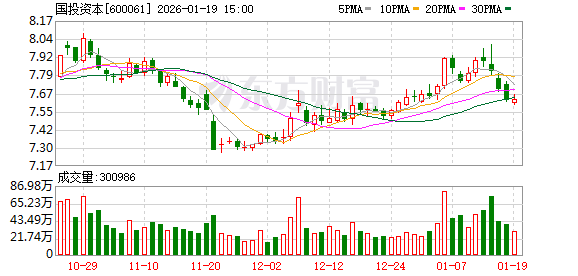
国投资本:积极为包括商业航天在内的科技创新企业提供高质量金融服务
Zheng Quan Ri Bao· 2026-01-19 11:08
(文章来源:证券日报) 证券日报网讯 1月19日,国投资本在互动平台回答投资者提问时表示,公司始终坚持金融服务实体经 济,积极把握科技创新发展趋势,依托股东投资生态圈和自身资源禀赋,深耕产融结合特色赛道,积极 为包括商业航天在内的科技创新企业提供高质量金融服务,以实际行动助力国家科技自立自强。 ...

廊坊发展:业绩深陷“微利困局”,研发投入长期边缘化,专利表述多年雷同
Zheng Quan Shi Bao Wang· 2026-01-19 11:02
Core Viewpoint - The company, Langfang Development, is forecasting a significant decline in net profit for 2025, with an expected profit of approximately 14 million yuan, representing a year-on-year decrease of about 83.52% [1]. Financial Performance - The expected non-recurring net profit for 2025 is around 13.4 million yuan, indicating a year-on-year increase of 35.68% [1]. - The company attributes the profit reduction primarily to the lack of asset disposals during the reporting period, which resulted in no non-recurring gains or losses [1]. - Over the past 20 years, the company's operational performance has been mediocre, with non-recurring net profits fluctuating between minor profits and losses [1]. Business Operations - Langfang Development is primarily engaged in the heating business and other related activities [1]. - As of the first half of 2025, the company has signed contracts for a cumulative area of 10.9137 million square meters, with an actual heating area of 5.6804 million square meters [1]. - The company operates in a heating area exceeding 100 square kilometers, making it the largest heating enterprise in Langfang City [1]. Ownership Structure - The actual controller of Langfang Development is the Langfang State-owned Assets Supervision and Administration Commission, classifying it as a local state-owned enterprise [1]. - As of the end of the third quarter of 2025, the largest shareholder is Evergrande Group, holding a 20% stake in the company [1]. Research and Development - The company has shown insufficient investment in technological innovation, with disclosed R&D expenditures only available for the years 2021 to 2025, and each year being less than 2.2 million yuan [2]. - The company has consistently used similar language in its annual reports regarding its patents, indicating a lack of detailed disclosure about the specific content, quantity, and value of its patents [2].
