
人工智能(AI)

Search documents
美联储会议纪要暴严重分歧:多人认为不适合12月降息,一些人担心股市无序下跌
Sou Hu Cai Jing· 2025-11-19 21:07
Core Viewpoint - The recent Federal Reserve meeting minutes reveal significant divisions among policymakers regarding the potential for a rate cut in December, with no clear majority supporting the move, while there is unanimous agreement to halt the balance sheet reduction [1][2][3]. Group 1: Monetary Policy Outlook - Most participants at the meeting indicated that a shift towards a more neutral policy stance might warrant a further rate cut, although several expressed skepticism about the appropriateness of a 25 basis point cut in December [2][4]. - Many members believe that maintaining rates unchanged for the remainder of the year may be suitable based on their economic outlook [2][4]. - The minutes highlight a hawkish sentiment within the Fed, as many participants noted that further rate cuts could exacerbate inflation risks, especially given the current high inflation data and a cooling labor market [4][8]. Group 2: Financial Stability Concerns - Some Fed officials expressed concerns about high asset valuations in financial markets, particularly the risk of a disorderly decline in stock prices if the market reassesses the prospects of AI technologies [5][8]. - There are also worries related to corporate high debt levels, indicating that the Fed is closely monitoring financial stability alongside inflation and employment [5][8]. Group 3: Balance Sheet Reduction - Almost all participants agreed that ending the balance sheet reduction on December 1 is appropriate, concluding a three-and-a-half-year process that began on June 1, 2022 [6][7]. - After halting the balance sheet reduction, the Fed plans to reinvest the principal from agency mortgage-backed securities into short-term U.S. Treasury securities, which is expected to enhance flexibility in managing reserve requirements [7][8].
MSCI (NYSE:MSCI) 2025 Conference Transcript
2025-11-19 20:42
MSCI Conference Call Summary Company Overview - **Company**: MSCI Inc. (NYSE: MSCI) - **Industry**: Financial Services, specifically analytics and data solutions for investment management Key Points and Arguments GenAI and Efficiency - MSCI is optimistic about the potential of Generative AI (GenAI) to enhance efficiency and create new product opportunities [4][5] - Internal applications of GenAI have led to significant time savings, with 50%-60% reductions in code refactoring time [5] - AI Insights, a product allowing clients to query portfolio data using natural language, has been well received and is expected to drive client efficiency [6][7] Monetization Strategy - AI Insights will be bundled into existing products to enhance client retention and attract new sales, while also justifying pricing increases due to added value [10] - The demand for MSCI's data is expected to grow as clients increasingly utilize AI capabilities [12] Subscription Sales and Client Segments - Recent quarters have shown strong net new subscription sales, particularly in the analytics segment [13] - Client segmentation includes 40% asset managers, 20% hedge funds, 20% banks and broker-dealers, 15% asset owners, and 5% other [14] - Strategies include consolidating services with clients to reduce costs and improve business relationships [15][17] Private Assets and New Product Development - MSCI has launched a private credit factor model, completing its suite of private asset analytics [28] - The firm aims to address challenges in managing portfolios with significant private asset allocations, particularly during market corrections [30] Wealth Management Initiatives - MSCI is investing in the MSCI Wealth Manager tool to enhance portfolio construction and advisor workflows [21][22] - The integration of private asset data into wealth management solutions is a key focus area [23] Regional Growth Dynamics - The majority of hedge funds and broker-dealers are based in the US, influencing regional growth patterns [35] - Asia presents significant opportunities for asset owners, particularly in private asset management [36] Product Integration and Innovation - MSCI One is evolving into a comprehensive platform for accessing all MSCI content, including AI Insights and analytics [37][38] - The firm is focused on integrating various product lines to enhance client experience and operational efficiency [46] Pricing Strategy - MSCI employs a tailored pricing strategy based on the incremental value provided to clients, avoiding a one-size-fits-all approach [39] Equity Factor Models - There is a robust roadmap for equity factor models, with a focus on transient factors related to current events [42] Additional Important Insights - MSCI emphasizes an open architecture philosophy, distributing content through various channels to reduce friction for clients [38] - The firm is committed to cross-pollination of capabilities across product lines to enhance client solutions [46]

全球资管深研系列(二):组合个性化,税务效率化
Guoxin Securities· 2025-11-19 13:07
Core Insights - Separate Managed Accounts (SMA) are customized investment tools for high-net-worth and institutional clients, allowing investors to directly own each security in their account while benefiting from professional management, combining the advantages of fund-like management with personal asset control [3][6][10] - Compared to Model Portfolios, SMAs offer significant differences in customization, ownership, and tax management, enabling tailored investment strategies based on individual risk preferences and ESG considerations [3][10] - The global SMA market is evolving towards digitalization, deeper ESG customization, and scalability, with opportunities for domestic accounts to adopt similar strategies to enhance personalization and tax efficiency [3][10] Overview of SMA Business - SMA allows investors to have direct ownership of securities, providing transparency and tax efficiency, making it a preferred choice for high-net-worth and institutional investors [6][10] - Various forms of SMA exist, including discretionary, non-discretionary, model-driven, multi-manager, and tax-optimized types, catering to different investor preferences and needs [12][10] International SMA Practices - J.P. Morgan is a leading SMA provider with over $300 billion in assets under management, utilizing a tax-driven index strategy that has significantly outperformed benchmarks [24][3] - Vanguard's SMA strategy focuses on low-cost, direct indexing, enhancing tax efficiency through coordinated rebalancing, with a minimum investment threshold of $10,000 [31][3] - Fidelity employs a tax-smart investing approach, utilizing a proprietary STAR Score system for stock selection and achieving a tax efficiency rate of 85% in 2024 [34][35] Key Features of SMA Providers - J.P. Morgan's SMA includes a comprehensive management structure with dedicated teams for investment management and client service, ensuring tailored solutions and compliance monitoring [16][24] - Vanguard's SMA leverages a direct indexing platform to provide personalized investment solutions, enhancing tax management and cost efficiency [31][32] - Morgan Stanley's SMA platform emphasizes professional management and tax optimization, allowing clients to directly hold assets while benefiting from expert guidance [51][53] Investment Strategies and Performance - J.P. Morgan's Large Cap Growth Strategy SMA achieved a five-year annualized net return of 15.25%, significantly outperforming the Russell 1000 Growth Index [24][3] - Morgan Stanley's ClearBridge Small Cap SMA focuses on undervalued small-cap stocks, employing a probability distribution valuation model to identify long-term growth opportunities [59][60] - Fidelity's cross-account tax loss harvesting technology enhances after-tax returns by 0.5%-1.2%, demonstrating the effectiveness of tax optimization strategies [35][3]


林伯强:能源清洁低碳转型是新质生产力︱能源思考
Di Yi Cai Jing· 2025-11-19 13:02
Core Viewpoint - The continuous iteration of green low-carbon clean energy technologies will provide stronger support for low-carbon transition development, driven by new productive forces that are inherently green [1][7]. Group 1: Energy Transition and New Productive Forces - The energy clean low-carbon transition accelerates the formation and development of new productive forces through three main channels: enhancing energy utilization efficiency, electrification of end-use energy, and constructing a new power system centered on clean electricity [2]. Group 2: Enhancing Energy Utilization Efficiency - Improving energy utilization efficiency is essential for achieving clean low-carbon transition goals, with energy conservation being a key pathway for carbon reduction. Continuous technological innovation is crucial for developing more efficient energy utilization technologies and core equipment [3]. - The systematic enhancement of energy efficiency relies on the large-scale promotion of energy-saving technologies and products, driving the rapid rise of the energy-saving industry, which includes three sub-sectors: large-scale manufacturing of energy-saving equipment, specialized energy management services, and integration of intelligent control systems [3]. Group 3: Electrification of End-Use Energy - The electrification of end-use energy is crucial for low-carbon transition, with renewable energy and electric vehicles emerging as key growth areas. The future energy system in China needs to focus on clean low-carbon renewable energy, making electricity the core power source for various production and living scenarios [4]. Group 4: New Power System Construction - In the process of energy clean low-carbon transition, wind and solar power will become the core growth drivers of clean energy, supported by energy storage technology, digital technology, and smart grids. The development of energy storage technology is essential for stabilizing the future power system [5]. Group 5: Challenges in Coupling New Productive Forces and Energy Transition - The need for stable energy supply for economic development may conflict with the short-term impacts of low-carbon transition on energy-intensive industries. High-energy-consuming industries, while injecting vitality into the supply chain, also pose environmental challenges [11]. - The application of low-carbon technologies faces bottlenecks and cost pressures, with the current pace of energy storage development lagging behind the growth of renewable energy installations [12]. - The explosive growth of AI technology impacts the power supply-demand landscape, as the energy consumption for AI model training and large computing centers increases significantly [13]. Group 6: Collaborative Pathways for Dual Breakthroughs - To alleviate the conflict between industrial competitiveness and low-carbon transition, it is necessary to enhance renewable energy development and advance the electrification of high-energy-consuming industries through supportive policies and technologies [16]. - A diversified electricity market trading mechanism should be established to facilitate the integration of renewable energy and carbon markets, enhancing the overall efficiency of energy supply and demand [17]. - Accelerating the development of clean energy industries is vital for solidifying the green foundation of new productive forces, focusing on key technology research and the establishment of AI data centers linked to renewable energy projects [18].
诺基亚公布全新战略:聚焦AI驱动的网络变革
Sou Hu Cai Jing· 2025-11-19 11:53
IT之家 11 月 19 日消息,诺基亚今日举行 2025 年资本市场日(Capital Markets Day),正式公布其全新战略,旨在把握人工智能(AI)驱动的网络转型浪 潮,引领行业进入"AI 超级周期"(AI supercycle),并充分捕获其中蕴含的巨大价值。公司同步宣布了新的长期财务目标、战略性关键绩效指标(KPI)、 运营模式演进方案,以及集团领导团队的调整安排。 为高效落实新战略方向,诺基亚将简化其运营架构,整合为两大核心业务板块:网络基础设施(Network Infrastructure)与移动基础设施(Mobile Infrastructure)。此次重组预计 2026 年 1 月 1 日起正式生效,旨在推动公司更敏捷地创新、更高效地服务客户,并持续提升股东价值。诺基亚现设定目标: 到 2028 年,可比运营利润(comparable operating profit)达到 27 亿至 32 亿欧元,较截至 2025 年第三季度末的过去 12 个月(2024 年 Q4–2025 年 Q3)所实 现的 20 亿欧元显著提升。 诺基亚总裁兼首席执行官贾斯汀・霍塔德(Justin Hotar ...



东方财富陈果:2026年牛市继续,成长及周期是高胜率方向
2 1 Shi Ji Jing Ji Bao Dao· 2025-11-19 11:46
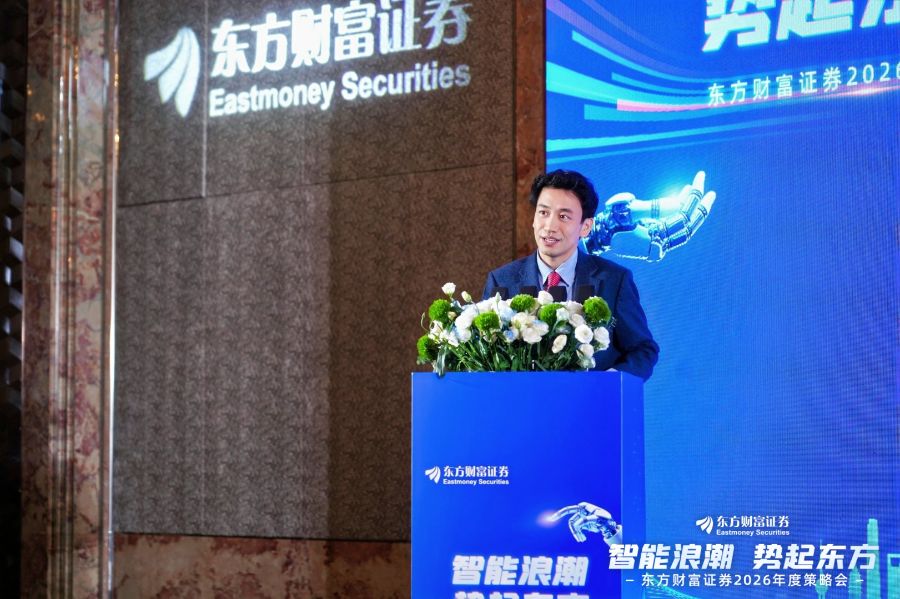
21世纪经济报道记者 孙永乐 上海报道 "2026年中国资产重估逻辑将继续演绎,内外资对权益市场的增配有望共振,国内居民权益类资产配置仍有广阔提升空间,A股 新高可期。"11月18日,东方财富证券研究所副所长、首席策略官陈果表示。 从产业周期视角看,陈果判断,成长及周期风格仍是2026年清晰可见的高胜率方向,分别对应AI产业浪潮、PPI同比回暖两条中 观线索。而消费板块未必悲观,需要等待"击球点"。 对应到3条中观胜率线索,陈果给出了值得关注的行业:①泛AI:半导体、海外算力、有色、电网设备、端侧AI等;②周期反 转:海风、储能、锂电设备、光伏、化工、油/煤等;③国际化:工程机械、创新药等。 AI是推动资本市场功能深化的核心力量 值得一提的是,在11月举办年度策略会的10余家券商中,东方财富证券是少有在主题中重点提及人工智能与AI浪潮的机构,并 邀请了多名行业大咖对相关话题进行深度解读。 陈果是在东方财富证券2026年度策略会上作出上述研判。本次会议以"智能浪潮•势起东方"为主题,东方财富证券研究所总量及 行业首席分析师团队悉数亮相,吸引了不少投资者关注。 2026年牛市继续已是一致预期 陈果指出,2025年 ...

折叠屏iPhone曝新进展;谷歌涨超1%,Gemini 3 Pro发布;阿里千问冲入App Store免费应用榜前二【美股盘前】
Mei Ri Jing Ji Xin Wen· 2025-11-19 11:45
Group 1 - Nvidia is set to release its quarterly earnings report, with an implied stock price volatility of approximately 7%, equating to a market cap fluctuation of up to $320 billion. The focus will be on management's insights regarding demand, supply chain, and customer investment trends, as AI has evolved into a significant economic driver [1][2] - Alibaba's newly launched Qianwen App has quickly risen to the second position in the Apple App Store's free app rankings, indicating strong initial user engagement [1] - Google's stock rose over 1% following the release of its latest large model, Gemini 3 Pro, which topped the LMArena leaderboard, showcasing its competitive edge in AI technology [2] Group 2 - Tesla has received approval to operate ride-hailing services in Arizona, although it is not permitted to offer autonomous ride-hailing services under the current TNC license, reflecting regulatory progress for the company [2] - Gold stocks have seen a pre-market surge as spot gold prices reached $4,100 per ounce, with companies like Coeur Mining and Pan American Silver rising over 2% [2] - Citigroup has raised its price target for Baidu from $166 to $181, maintaining a buy rating, as the company reported better-than-expected Q3 results despite a decline in online marketing services revenue, offset by growth in cloud revenue [2]

美股资金从AI转向医药板块
Xin Lang Cai Jing· 2025-11-19 11:08
Core Viewpoint - The pharmaceutical sector, particularly companies like Eli Lilly and Amgen, has seen significant stock price increases, driven by a shift in investor focus from AI-related stocks to more stable growth stocks in healthcare [2][3][4]. Group 1: Market Trends - The S&P 500 index reached a historical high on October 28, with Eli Lilly's stock rising by 25% and Amgen's by 17% [2]. - AI-related stocks, such as Oracle and Meta, have experienced significant declines, with Oracle down 22% and Meta down 20% [3]. - Investors are reallocating funds from large-cap tech stocks to defensive sectors like healthcare, which are perceived as offering stable growth [3][4]. Group 2: Policy Impact - Concerns over potential drug price reductions under the Trump administration had previously suppressed healthcare stocks, but these fears have begun to ease [4][5]. - A recent agreement between Pfizer and the U.S. government to control drug prices has shifted market perceptions, leading to a more favorable outlook for pharmaceutical companies [4][5]. Group 3: Company Performance - Eli Lilly reported strong earnings for Q3 2025, with its diabetes drug Mounjaro and obesity drug Zepbound exceeding market expectations [5]. - Other companies like Merck and Amgen also reported earnings surpassing market forecasts, contributing to rising stock prices [5]. - Analysts, including Morgan Stanley's Michael Wilson, have a positive outlook on healthcare stocks due to earnings growth, reduced policy uncertainty, and low valuations [5].



币圈动荡持续!加密货币总市值六周蒸发1.2万亿美元,比特币几乎回吐年内涨幅
第一财经· 2025-11-19 09:59
Core Viewpoint - The cryptocurrency market is experiencing significant turmoil, with a collective negative sentiment among investors leading to substantial capital outflows and price declines across various digital assets [3][5][6]. Market Overview - The total market capitalization of over 18,000 cryptocurrencies tracked by CoinGecko has dropped by 25% since the peak on October 6, resulting in a loss of approximately $1.2 trillion [5]. - Bitcoin's price has decreased by about 28%, reaching $91,700, nearly erasing all gains made in the year [5]. - Six of the top 20 cryptocurrencies by market capitalization have fallen over 40%, with three down approximately 60% [6]. Investor Sentiment - Matthew Hougan from Bitwise Asset Management noted that investor sentiment in the cryptocurrency market is extremely negative, with many opting to exit the market to avoid further losses [3]. - A report from CoinShares indicated that digital asset investment products, including Bitcoin ETFs, saw a capital outflow of $2 billion in the past week, marking the largest single-week outflow since February [6]. Market Dynamics - Tim Sun from HashKey Group highlighted that the unprecedented liquidation event on October 10 has had lasting impacts on the market, compounded by the longest government shutdown in U.S. history, tightening liquidity, and a hawkish shift in Federal Reserve interest rate expectations [6][10]. - The correlation between Bitcoin and U.S. equities is becoming more pronounced, with Bitcoin increasingly influenced by mainstream investors' risk appetite [6]. Broader Economic Context - Analysts suggest that the recent downturn in the cryptocurrency market is reflective of broader trends in global equity and commodity markets, with liquidity concerns driving investor behavior [8][10]. - The S&P 500 index has seen a decline of 19% since October 15, indicating a broader risk-off sentiment among retail investors [9].

财富观 | 业绩超预期股价却大跌,H股科技股将会怎么走?
Sou Hu Cai Jing· 2025-11-19 09:22
导语 今年三季度,小米集团总收入同比增长22%至1131亿元,经调整净利润同比增长80.9%至113.1亿元。华 泰证券认为,该公司净利润超过市场一致预期12.6%。 "问题在于现在市场情况并不明确,整体避险情绪在升温。"红蚁资本投资总监李泽铭向第一财经分析, 小米三季度业绩的确高于市场预期,但手机业务板块出现了同比下滑,成本上涨也不容易转嫁给消费 者,再加上市况不佳导致小米19日以及最近股价下跌;跌破40港元之后,要看能否守住今年4月时36港 元的低位。位 关于多家科技股业绩超预期却继续下跌,李泽铭认为,现在困扰港股的因素,包括美联储12月份是否减 息的忧虑,目前委员投票情况来看,赞成减息跟反对减息的票数相当接近;另一方面,市场更加担心 AI投资所造成的泡沫,最近领跌的板块,基本上都是跟AI相关的,美股和港股都是类似情况,这个情 绪进一步蔓延也导致了市场下跌。近日港股成交比较低迷,预计12月美联储议息结果落地后,港股成交 额及波动幅度有望重新放大。 华金证券策略分析师邓利军认为,市场短期风险偏好可能偏中性。国内短期稳增长政策预期仍对风险偏 好有一定支撑;海外方面,受美联储内部分歧加剧影响,12月降息预期有所 ...
