
机构抵押贷款支持证券(MBS)

Search documents
关于美联储缩表的常见问题-Federal Reserve Monitor-FAQs on a smaller Fed footprint
2026-02-10 03:24
Summary of Key Points from the Conference Call Industry Overview - The focus of the conference call is on the Federal Reserve's balance sheet policies and the implications of a smaller Fed footprint in the financial markets. Core Insights and Arguments - **Balance Sheet Reduction Tools**: The Federal Reserve can reduce its balance sheet through two methods: passive quantitative tightening (QT) and active QT. Passive QT involves allowing securities to mature without reinvestment, while active QT involves selling selected securities directly, which can lead to increased market volatility and potential losses [5][9][12]. - **Liquidity Implications**: Reducing the balance sheet drains liquidity from the financial system. A decrease in assets leads to a reduction in Fed liabilities, tightening financial conditions and increasing volatility as reserves transition from "ample" to "scarce" [5][11][13]. - **Mortgage-Backed Securities (MBS) Runoff**: The runoff of MBS is expected to be slow due to elevated mortgage rates, which have limited prepayment speeds. The Fed's MBS portfolio may take years to decline naturally without active sales, which would require significantly lower mortgage rates [10][24][27]. - **Regulatory Considerations**: To effectively shrink the balance sheet, there must be a reduction in banks' demand for reserves, potentially requiring changes to liquidity regulations such as the Liquidity Coverage Ratio (LCR) and Internal Liquidity Stress Test (ILST). Lower liquidity buffers could increase financial stability risks [11][64][67]. - **Treasury Coordination**: Adjustments to Treasury General Account (TGA) targets or the issuance mix can influence how balance sheet reduction flows through the system and affect the maturity structure of the Fed's portfolio [11][87]. Additional Important Insights - **Impact of New Fed Chair**: The nomination of Kevin Warsh as the new Chair of the Board of Governors has renewed focus on the Fed's balance sheet policies. Warsh has criticized the Fed for its large footprint in financial markets, emphasizing the need for a smaller balance sheet and less market intervention [6][7]. - **Profitability Concerns**: The Fed has faced operating losses since September 2020, as interest earned from low-yielding securities has not covered the interest paid on reserves. Active sales of MBS could exacerbate these losses but may lead to improved profitability in the long run [32][41][38]. - **Market Volatility**: A smaller Fed footprint could lead to higher volatility in macro markets, as reduced communication and guidance from the Fed may result in less consensus among investors and more policy surprises [87][88]. Conclusion - The Federal Reserve's approach to balance sheet reduction is complex and involves significant trade-offs between liquidity, market functioning, and financial stability. The implications of these policies will be closely monitored as the Fed navigates its new leadership and economic conditions.
美联储会议纪要暴严重分歧:多人认为不适合12月降息,一些人担心股市无序下跌
Sou Hu Cai Jing· 2025-11-19 21:07
Core Viewpoint - The recent Federal Reserve meeting minutes reveal significant divisions among policymakers regarding the potential for a rate cut in December, with no clear majority supporting the move, while there is unanimous agreement to halt the balance sheet reduction [1][2][3]. Group 1: Monetary Policy Outlook - Most participants at the meeting indicated that a shift towards a more neutral policy stance might warrant a further rate cut, although several expressed skepticism about the appropriateness of a 25 basis point cut in December [2][4]. - Many members believe that maintaining rates unchanged for the remainder of the year may be suitable based on their economic outlook [2][4]. - The minutes highlight a hawkish sentiment within the Fed, as many participants noted that further rate cuts could exacerbate inflation risks, especially given the current high inflation data and a cooling labor market [4][8]. Group 2: Financial Stability Concerns - Some Fed officials expressed concerns about high asset valuations in financial markets, particularly the risk of a disorderly decline in stock prices if the market reassesses the prospects of AI technologies [5][8]. - There are also worries related to corporate high debt levels, indicating that the Fed is closely monitoring financial stability alongside inflation and employment [5][8]. Group 3: Balance Sheet Reduction - Almost all participants agreed that ending the balance sheet reduction on December 1 is appropriate, concluding a three-and-a-half-year process that began on June 1, 2022 [6][7]. - After halting the balance sheet reduction, the Fed plans to reinvest the principal from agency mortgage-backed securities into short-term U.S. Treasury securities, which is expected to enhance flexibility in managing reserve requirements [7][8].
美联储或考虑扩大持有规模,接近“流动性补给”的新阶段
Huan Qiu Wang· 2025-11-09 01:09
Core Viewpoint - The Federal Reserve may soon consider expanding its securities holdings to maintain sufficient reserves in the banking system, indicating a shift towards a new phase of liquidity support after two years of balance sheet reduction [1][3]. Group 1: Federal Reserve Actions - John Williams, President of the New York Federal Reserve, stated that the potential bond purchases would be a natural step in executing a strategy for sufficient reserves, not a change in policy stance [3]. - Since the initiation of balance sheet reduction in June 2022, the Federal Reserve's balance sheet has decreased by $2.2 trillion, reducing its GDP ratio from a peak of 35% to approximately 21%, making the timing for halting the reduction more appropriate [1]. Group 2: Market Implications - Financial institutions have increasingly utilized repurchase agreement facilities to address short-term funding pressures since October [1]. - The Markit iBoxx index for Chinese dollar bonds showed a 0.1% decline in returns as of October 31, with investment-grade bond returns also down by 0.1%, while high-yield bond returns remained unchanged [1].

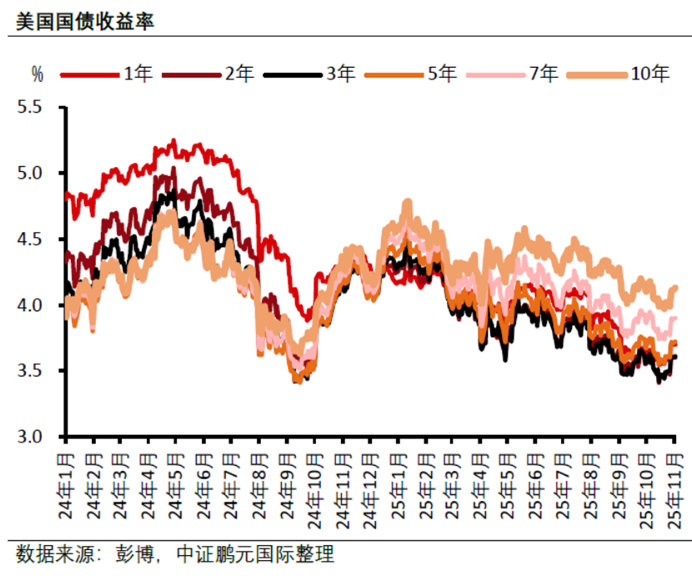
美联储“量化紧缩终结” 是一场静默的流动性反转
Sou Hu Cai Jing· 2025-11-02 16:33
Core Viewpoint - The Federal Reserve officially announced the end of its quantitative tightening (QT) program effective December 1, 2025, transitioning to a neutral reinvestment state, which is not considered a restart of quantitative easing (QE) but a shift under the "ample reserves framework" [1][7][17] Summary by Sections QT Process Overview - The QT policy began on June 1, 2022, amid severe inflation, with a maximum monthly reduction of $95 billion in liquidity from the financial system [2] - The QT process saw adjustments, including a reduction in the monthly cap for Treasury securities and MBS, indicating a preparation for exiting QT [2] Balance Sheet Structure - The Fed's holdings of Treasury securities decreased from $5.77 trillion at peak to $4.20 trillion, while MBS holdings fell from $2.74 trillion to $2.07 trillion [3] - Significant interruptions occurred during the banking crises in March 2023 and due to seasonal tax payments in January 2025, leading to temporary liquidity injections [3] Monetary Market Pressure Signals - Key indicators in the monetary market showed stress, including a significant drop in the Fed's overnight reverse repurchase agreement (ON RRP) balance, indicating low liquidity buffers [4] - Rising volatility in short-term financing market rates was observed, with increased spreads between effective federal funds rate and interest on excess reserves [4][5] Policy Adjustment Details - The FOMC unanimously agreed to end QT, with a focus on reinvesting all principal payments from maturing securities into short-term T-bills [7] - The Fed aims to align its balance sheet with banking system reserve needs and nominal GDP growth, indicating a dynamic approach to balance sheet management [7][16] Impact of Reinvestment on Liquidity - The end of QT allows for reinvestment of maturing securities back into the financial system, which is expected to enhance liquidity and lower long-term interest rates [8][9] - The reinvestment strategy is projected to stabilize the balance sheet while addressing the ongoing natural reduction of MBS holdings [9] Bond Market Reaction - The bond market reacted swiftly to the end of QT, with a notable decline in yields for both 10-year and 30-year Treasury securities [10] - The narrowing of swap spreads indicates a renewed interest in Treasury securities, with significant inflows into 10-year bonds following the announcement [10] Real Estate and Corporate Financing - The real estate market is expected to benefit from lower long-term interest rates, with forecasts indicating a decrease in mortgage rates [12] - Corporate financing conditions are improving, with a rise in investment-grade and high-yield bond issuance, reflecting lower borrowing costs [13] Currency and Bitcoin Trends - The dollar weakened significantly following the announcement, with a notable drop in the DXY index, indicating reduced attractiveness of the dollar [14] - Bitcoin experienced volatility post-announcement, with mixed market reactions and a shift towards a cautious outlook among investors [15] Policy Framework Adjustment - The end of QT signifies a deeper evolution in the Fed's monetary policy framework, moving towards managing short-term rates through excess reserves rather than relying on reserve scarcity [16] - Future adjustments to the balance sheet will be aligned with economic activity and reserve needs, indicating a flexible approach to monetary policy [16] 2025 Outlook - The Fed's balance sheet is expected to stabilize around $6.54 trillion until the end of 2025, with potential for net purchases of Treasury securities in 2026 [17] - Improved liquidity conditions are anticipated to positively impact various sectors, including bonds, real estate, and corporate financing [17]
美联储“量化紧缩终结”是一场静默的流动性反转
Di Yi Cai Jing· 2025-11-02 12:35
Core Viewpoint - The Federal Reserve's transition from a shrinking balance sheet to a liquidity stabilizing anchor marks a key point in the normalization of monetary policy in the post-pandemic era [1] Summary by Sections Federal Reserve's Balance Sheet Management - The Federal Reserve announced the end of its quantitative tightening (QT) plan effective December 1, 2025, ceasing the active reduction of its securities holdings [1] - The total assets of the Federal Reserve stood at $6.54 trillion as of October 22, 2025, down from a peak of $8.96 trillion in April 2022, maintaining a ratio of approximately 22% of nominal GDP [1] QT Process Review - QT began on June 1, 2022, amid the highest inflation since December 1981, with a maximum monthly reduction of $95 billion in liquidity from the financial system [2] - The pace of QT was adjusted multiple times, with the monthly reduction slowing to approximately $38.5 billion by April 2025 [2] Balance Sheet Structure - The holdings of U.S. Treasury securities decreased from a peak of $5.77 trillion in 2022 to $4.20 trillion by October 2025, while MBS holdings fell from $2.74 trillion to $2.07 trillion [3] - Significant interruptions in the QT process occurred during the banking crises in March 2023 and due to seasonal tax payments in January 2025 [3] Monetary Market Pressure Signals - Key indicators in the monetary market showed stress, including a significant drop in the Federal Reserve's overnight reverse repurchase agreement (ON RRP) balance, which fell from $2.55 trillion to $219 billion [4] - The effective federal funds rate (EFFR) and interest on excess reserves (IOER) spread widened, indicating increased volatility in short-term financing markets [4] Policy Adjustment Details - The FOMC unanimously agreed to end QT, with a focus on reinvesting the principal payments from maturing securities into short-term T-bills [6] - The Federal Reserve aims to align its balance sheet with banking reserve needs and nominal GDP growth, indicating a shift towards a more dynamic management approach [6] Impact of Reinvestment on Liquidity - The end of QT allows for the reinjection of funds into the financial system, which is expected to lower long-term interest rates and improve liquidity conditions [7] - The reinvestment strategy is projected to lead to a monthly balance sheet expansion of $25 billion to $35 billion due to the natural reduction of MBS holdings [8] Bond Market Reaction - The bond market reacted swiftly to the end of QT, with a notable decline in the yields of 10-year and 30-year U.S. Treasury securities [9] - The narrowing of swap spreads indicates a renewed interest in trading strategies that bet on the convergence of Treasury yields and swap rates [9] Mortgage and Corporate Financing - The housing market is expected to benefit from declining long-term interest rates, with forecasts suggesting a drop in 30-year fixed mortgage rates [10] - Corporate financing conditions are improving, with a significant increase in investment-grade corporate bond issuance and a reduction in high-yield bond spreads [11] Currency and Bitcoin Trends - The U.S. dollar weakened significantly following the announcement, with the dollar index experiencing its largest single-day drop since July 2024 [12] - Bitcoin's price showed volatility post-announcement, reflecting mixed market sentiment regarding future liquidity conditions [13] Policy Framework Adjustment - The end of QT signifies a deeper evolution in the Federal Reserve's monetary policy framework, moving towards a model that adjusts reserves in line with economic activity [14] - Economic data supports a cautious easing path, with expectations of potential interest rate cuts in 2026 [14] 2025 Outlook - The Federal Reserve's balance sheet is expected to stabilize around $6.54 trillion until the end of 2025, with a potential shift to net purchases of Treasury securities in early 2026 [15] - The overall liquidity improvement is anticipated to positively impact various sectors, including real estate and small business financing, while putting pressure on the dollar [15]
交银国际:美联储预防式降息延续 短期政策路径不确定性预计将有所上升
智通财经网· 2025-10-31 05:56
Core Viewpoint - The Federal Reserve is transitioning from a "preventive rate cut" approach to a "wait-and-see" stance, leading to increased uncertainty in short-term policy paths [1] Group 1: Federal Reserve's Rate Decisions - The Federal Reserve cut rates by 25 basis points to a range of 3.75%-4.00% during the October meeting, amidst a complex backdrop due to the U.S. government shutdown affecting key employment data [2] - The decision reflects a proactive approach to mitigate potential job market downturns, despite stable private sector employment indicators [2][3] - Internal divisions within the Federal Reserve are growing, with some members advocating for more aggressive cuts while others suggest pausing [3] Group 2: Economic Indicators and Market Reactions - The market's expectation for a December rate cut has decreased from 82.4% to 63.8% following the October meeting, indicating a shift in sentiment [1] - The upcoming December decision will heavily depend on employment and inflation data post-government shutdown, with a focus on whether job market indicators show significant improvement [1][3] - Recent easing of U.S.-China trade tensions may alleviate inflationary pressures from tariffs, presenting a potential positive factor for the economy [3] Group 3: Monetary Policy and Market Conditions - The Federal Reserve announced it will stop balance sheet reduction starting December 1, as liquidity tightening signals have emerged in the U.S. money market [4] - Since the initiation of balance sheet reduction in June 2022, the Fed's balance sheet has contracted by $2.2 trillion, reducing its GDP ratio from 35% to approximately 21% [4] - The dollar index has shown signs of a rebound, and with the Fed's hawkish signals, market volatility risks are expected to increase, potentially impacting metal prices and emerging market assets [5]
货币政策转向精细化:主要央行政策分化凸显 贸易与通胀成核心变量
Xin Hua Cai Jing· 2025-10-31 00:43
Core Insights - Major central banks, including the European Central Bank (ECB), the Federal Reserve (Fed), the Bank of Japan (BoJ), and the Bank of Canada, are adopting different monetary policy strategies amid stable inflation paths and high external uncertainties, indicating a new phase of data dependency and risk assessment in global monetary policy [1] Group 1: European Central Bank (ECB) - The ECB decided to keep the deposit facility rate unchanged at 2.00%, with the main refinancing rate and marginal lending rate also held steady at 2.15% and 2.40%, respectively, marking the third consecutive meeting without changes [2] - The ECB emphasized that its policy stance will rely on data and be assessed at each meeting, without pre-setting the interest rate path [2] - The ECB's asset purchase programs are being reduced in an orderly and predictable manner, as the euro system has ceased reinvesting the principal of maturing securities [2] Group 2: Federal Reserve (Fed) - The Fed announced a 25 basis point reduction in the federal funds rate target range to 3.75%–4.00%, marking the second consecutive rate cut, which aligns with market expectations [3] - The Fed noted that economic activity is expanding at a moderate pace, with employment growth slowing and the unemployment rate slightly rising, while inflation remains relatively high [3] - The Fed plans to end its balance sheet reduction operations by December 1, 2025, marking the conclusion of a three-year quantitative tightening period, during which its securities holdings decreased by $2.2 trillion [3][4] Group 3: Bank of Japan (BoJ) - The BoJ decided to maintain its policy rate at 0.5%, with a vote of 7 in favor and 2 against, amid increasing calls for rate hikes from some committee members [5] - The BoJ's governor stated that Japan's economy is experiencing moderate recovery but still shows signs of weakness, with inflation exceeding the 2% target for 41 consecutive months [5] - The timing of any future rate hikes will be based on data rather than a predetermined schedule, with upcoming wage negotiations being a key variable for assessing sustainable consumption and inflation [5] Group 4: Bank of Canada - The Bank of Canada lowered its key overnight rate by 25 basis points to 2.25%, the lowest level since July 2022, in response to the impact of U.S. trade policies on the Canadian economy [7] - The Bank of Canada significantly revised its GDP growth forecasts downwards, projecting a growth rate of 1.2% for 2025 and 1.1% for 2026, while maintaining an inflation target of around 2% [7] - The governor indicated that monetary policy cannot fully offset the structural damage caused by trade wars, and the unpredictability of U.S. trade policies adds to economic forecasting uncertainty [7] Group 5: Policy Divergence and Economic Outlook - Central banks are implementing differentiated strategies to address their unique structural challenges, emphasizing "no preset paths" and "data dependency," reflecting a cautious approach to economic outlooks [8] - The upcoming December meetings are expected to be critical observation points for potential shifts in policy direction as key economic data resumes publication [8]
美联储10月FOMC会议点评:预防式降息延续
BOCOM International· 2025-10-30 14:48
Global Macro - The Federal Reserve lowered interest rates by 25 basis points to a range of 3.75%-4.00% during the October FOMC meeting, reflecting a preventive approach amid uncertainties due to the U.S. government shutdown and missing key labor market data [1][2] - The decision to cut rates was influenced by the ongoing strength of the U.S. stock market and loose financial conditions, indicating a proactive measure against potential employment downturn risks [1][2] - Internal divisions within the Federal Reserve are growing, with some members advocating for more aggressive cuts while others suggest a pause, indicating a cautious stance on future rate adjustments [2][3] Market Conditions - The Fed announced it will stop balance sheet reduction starting December 1, as signs of tightening liquidity in the U.S. money market have emerged, including a decrease in overnight reverse repo balances and shrinking bank reserves [3][4] - The Fed's balance sheet has contracted by $2.2 trillion since June 2022, reducing its GDP ratio from a peak of 35% to approximately 21%, making the timing for halting balance sheet reduction appropriate [3][4] - Market expectations for a rate cut in December have decreased significantly from 82.4% to 63.8% following the October meeting, highlighting increased uncertainty regarding short-term policy direction [3][4] Economic Outlook - The U.S. dollar index has shown signs of a rebound, and with the stock market at historical highs, market volatility risks are expected to increase, potentially impacting metal prices and emerging market risk assets [4]
美联储10月货币政策会议点评与展望:美联储10月再度预防式降息,但数据缺失、通胀风险将推升后续降息变数
Dong Fang Jin Cheng· 2025-10-30 05:21
Group 1: Federal Reserve Actions - The Federal Reserve lowered the federal funds rate target range from 4.00%-4.25% to 3.75%-4.00%, a decrease of 25 basis points[2] - This marks the first consecutive rate cut in a year, following the initial cut earlier this year[2] - The Fed will end its balance sheet reduction on December 1, after three and a half years of contraction, with total assets shrinking from $9 trillion to $6.6 trillion[4] Group 2: Economic Indicators - The labor market shows signs of weakness, with ADP reporting a decrease of 32,000 jobs in September, significantly below the expected increase of 50,000[3] - The September Consumer Price Index (CPI) data was below expectations, alleviating concerns about inflation driven by tariffs[3] - The Fed's Beige Book indicated widespread low demand for labor across various regions and sectors[3] Group 3: Market Liquidity and Risks - Recent liquidity pressures in the money market have led to a rise in repo rates, with the Secured Overnight Financing Rate (SOFR) reaching a high of 4.5%[5] - The total reserves in the banking system have fallen below $3 trillion, indicating a shift from "ample liquidity" to "tight liquidity"[5] - The Treasury's increased issuance of debt has withdrawn significant liquidity from the market, exacerbated by seasonal factors like tax payments[5] Group 4: Future Outlook - There is potential for another rate cut in December, but it is not guaranteed, as some officials advocate for a pause[6][7] - The uncertainty surrounding future rate cuts is heightened by the ongoing government shutdown and its impact on economic data availability[7] - The Fed's policy path in 2026 may depend heavily on economic and employment data trends, with an expected median rate of 3.4% indicating room for about two more cuts[8]
10月降息恐为年内最后一次 美债收益率上涨逾10BP
Xin Hua Cai Jing· 2025-10-30 00:59
Core Viewpoint - The Federal Reserve announced a 25 basis point cut in the federal funds rate target range to 3.75% to 4.00%, but Chairman Powell's comments weakened market confidence in a December rate cut, leading to a rise in U.S. Treasury yields [1][2]. Summary by Sections Federal Reserve Decision - The Federal Open Market Committee (FOMC) decided to lower the federal funds rate target range by 25 basis points, marking the second cut since September 17 [1]. - The FOMC noted that economic activity is expanding at a moderate pace, with employment growth slowing and a slight increase in the unemployment rate, while inflation remains high [1]. Diverging Opinions within the Fed - There are significant divisions within the Federal Reserve, with some members concerned that premature or excessive rate cuts could reignite inflation, while others argue for more aggressive easing to prevent deeper economic recession [2]. - Powell indicated that further rate cuts in December are not guaranteed, emphasizing the uncertainty due to a lack of government data during the shutdown [2]. Market Reactions - Following Powell's statements, U.S. Treasury yields rose significantly, with the 10-year yield increasing by 10.01 basis points to 4.0757% and the 2-year yield rising by 10.82 basis points to 3.5980% [2]. - The probability of a 25 basis point cut in December has dropped from over 90% to below 70% according to CME FedWatch [4]. Asset and Balance Sheet Management - The FOMC announced the end of balance sheet reduction operations starting December 1, which had involved monthly reductions of $50 billion in U.S. Treasuries and $35 billion in mortgage-backed securities [4]. - The Fed's balance sheet has decreased from nearly $9 trillion to approximately $7.2 trillion since the start of the balance sheet reduction in 2022, which is expected to alleviate liquidity pressures in the interbank market [4].