科技自立自强

Search documents
央行将加强货币政策调控支持增长,金融科技ETF(516860)近10日“吸金”合计2.24亿元
Xin Lang Cai Jing· 2025-09-30 03:17
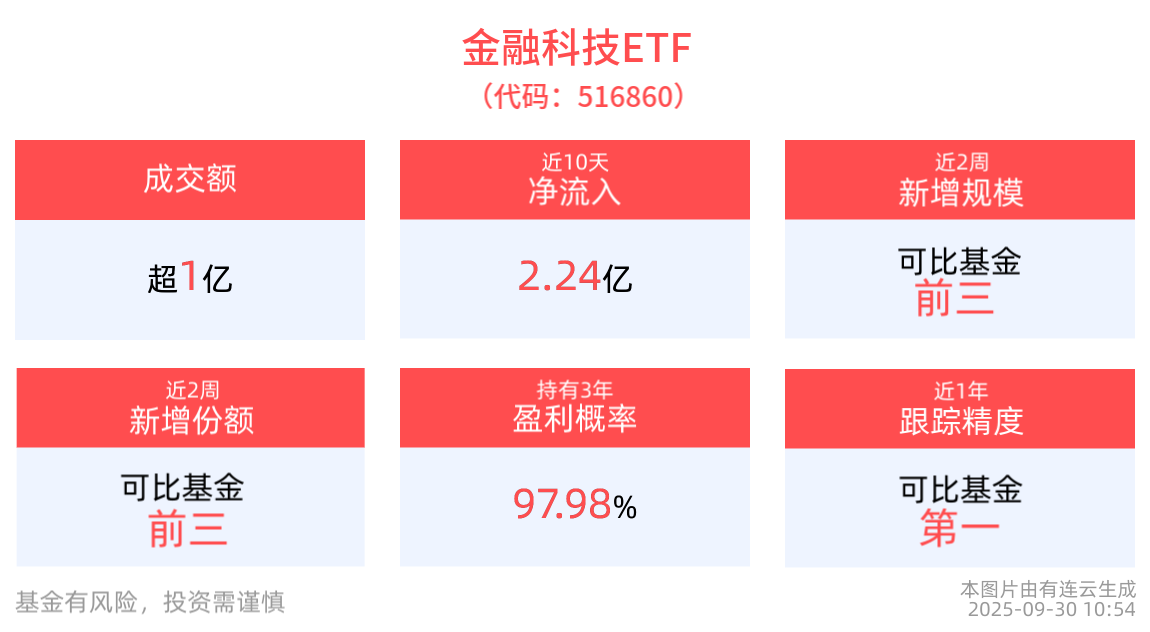
Group 1 - The core viewpoint of the news highlights the performance of the financial technology sector, with the China Securities Financial Technology Theme Index experiencing a slight decline of 0.24% as of September 30, 2025, while individual stocks showed mixed results [3] - The financial technology ETF (516860) reported a decrease of 0.44%, with a latest price of 1.58 yuan, but has seen a cumulative increase of 12.19% over the past three months, ranking 3rd out of 6 comparable funds [3] - The People's Bank of China emphasized the need for a moderately loose monetary policy to enhance credit supply and maintain capital market stability, which is expected to benefit the financial technology sector [3] Group 2 - In the first half of 2025, the computer industry achieved growth in both revenue and profit, with the financial technology segment showing significant contributions from companies like Shenzhou Information and Tonghuashun [4] - The financial technology ETF experienced a notable increase in scale, growing by 81.59 million yuan over the past two weeks, ranking 3rd out of 6 comparable funds [4] - The financial technology ETF has seen a net inflow of 20.43 million yuan recently, with a total of 224 million yuan net inflow over the last 10 trading days, indicating strong investor interest [4] Group 3 - As of August 29, 2025, the top ten weighted stocks in the China Securities Financial Technology Theme Index accounted for 54.08% of the index, with companies like Tonghuashun and Dongfang Caifu leading the list [5]


为航天任务护航!极氪9X以航天标准打造旗舰标杆
Zhong Guo Qi Che Bao Wang· 2025-09-30 02:23
Core Viewpoint - The launch of the Zeekr 9X marks a significant milestone in China's new energy vehicle industry, as it collaborates with aerospace technology to enhance vehicle reliability and performance for space mission support [1][20]. Group 1: Product Launch and Features - The Zeekr 9X was officially launched on September 29, 2023, and is set to participate in major aerospace mission support [1]. - The vehicle incorporates advanced technologies such as a super electric hybrid system and a "megawatt-level electric drive system," providing powerful and stable power output [9]. - The Zeekr 9X features a high-strength body made of over 91% high-strength steel and aluminum, ensuring safety and performance [13]. Group 2: Testing and Validation - The Zeekr 9X successfully passed rigorous tests in extreme environments, including high-speed tests on gravel roads and stability tests in sandstorms, earning recognition from experts [4]. - The vehicle's AI digital chassis and advanced suspension system enhance its stability and adaptability to various terrains, achieving the industry's first 5A certification for high-speed crosswind safety [17]. Group 3: Strategic Importance - The collaboration between Zeekr and aerospace technology signifies a shift towards self-reliance in China's new energy vehicle sector, moving away from reliance on imported vehicles for aerospace mission support [20]. - The Zeekr 9X embodies the spirit of precision and excellence found in the aerospace industry, aligning with the rigorous standards established over decades in China's aerospace development [10]. Group 4: Community Engagement - In conjunction with the launch, Zeekr initiated a "Flagship Escort" owner recruitment campaign, inviting early adopters to participate in significant national technological events, enhancing community engagement and brand loyalty [18].

加快我国重大科技基础设施高质量发展
Ke Ji Ri Bao· 2025-09-30 01:30
Core Viewpoint - Major scientific infrastructure is crucial for supporting original innovation and achieving high-level technological self-reliance in the context of intensified global technological competition [1][4]. Group 1: Development and Current Status - China's major scientific infrastructure has developed into a world-class system through national planning and a phased approach, with facilities like the Shanghai Synchrotron Radiation Facility and the Spallation Neutron Source leading internationally [2][3]. - The current trend is towards systematization, digitalization, and internationalization, integrating technologies like 5G and AI to enhance operational efficiency and facilitate global scientific collaboration [2][3]. Group 2: Strategic Importance - Major scientific infrastructure plays a core role in basic research and industrial applications, providing essential support for fields such as quantum materials and AI training, thereby enhancing the innovation chain from research to application [3][4]. - It serves as a key link in optimizing resource allocation for regional coordinated development, fostering innovation ecosystems across different regions of China [3][4]. Group 3: Challenges and Structural Issues - Despite advancements, China's major scientific infrastructure faces structural challenges, including a tendency to prioritize construction over research and issues with resource allocation and collaboration [6][7]. - There is a need for a systematic approach to overcome these challenges and fully activate the strategic potential of major scientific infrastructure [6][7]. Group 4: Future Directions and Recommendations - To achieve the goal of becoming a technological powerhouse by 2035, major scientific infrastructure must transition from scale expansion to quality enhancement, focusing on strategic areas like quantum technology and deep space exploration [7][8]. - Recommendations include strengthening top-level design, enhancing collaborative mechanisms, innovating funding models, and restructuring talent cultivation systems to better support the infrastructure's capabilities [7][8].
锚定兴学强国 胸怀国之大者
Ren Min Ri Bao· 2025-09-29 22:30
Core Viewpoint - Tianjin University, founded in 1895, has consistently pursued the mission of "strengthening the nation through education," reflecting the evolution of higher education in China and its commitment to cultivating talent and technological self-reliance in service of national strategies [1][9]. Group 1: Historical Development - Tianjin University has evolved from imitating American university models to adopting European influences in the 1920s, and later the Soviet model after the founding of New China, ultimately forging its own path post-reform and opening [1]. - The university's predecessor, Beiyang University, was established to meet the urgent needs of the nation, contributing to the development of China's modern industrial system and economic growth through the establishment of key engineering disciplines [3]. Group 2: Contributions to National Strategies - Tianjin University has played a pivotal role in addressing national challenges, such as reducing dependence on imported potassium fertilizers by extracting them from salt lake resources, showcasing its long-standing commitment to agricultural and resource development [2]. - The university leads significant projects like the National Large-scale Earthquake Engineering Simulation Research Facility, enhancing disaster prevention and mitigation capabilities in various sectors [4]. Group 3: Talent Development Initiatives - The university is actively adapting to future talent requirements by creating specialized programs, such as the "Leading Class" in the Chemical Engineering Department, which integrates multiple disciplines and offers early completion of degrees [6]. - Tianjin University emphasizes the integration of artificial intelligence with traditional disciplines, launching new micro-specialties to enhance students' competitiveness in alignment with national needs [6]. Group 4: Innovative Research and Technology - The university is at the forefront of groundbreaking research, including the development of revolutionary "de-localized" electrolytes for drones and advancements in brain-machine interface technology, indicating its commitment to innovation in biomedical engineering [8]. - The establishment of the Synthetic Biology and Bio-Manufacturing College reflects the university's focus on emerging technologies and its aim to contribute to building a world-class scientific powerhouse [7].
勇担使命再出发——写在中国石油天然气集团有限公司成立75周年之际
中国能源报· 2025-09-29 11:32
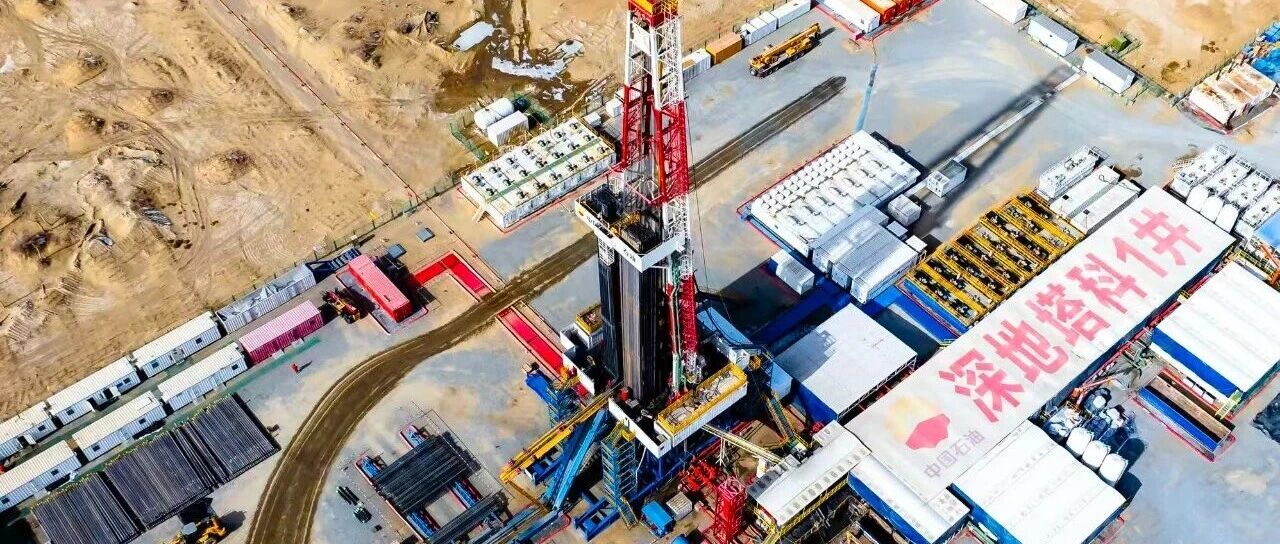
Core Viewpoint - China National Petroleum Corporation (CNPC) celebrates its 75th anniversary, reflecting its significant role in the development of China's oil industry and its commitment to national energy security and innovation [4][28]. Historical Development - The foundation of China's oil industry was laid in 1949 with an initial crude oil production of 120,000 tons, which has since evolved into a major global player [5]. - Major milestones include the discovery of the first large oil field, the Daqing Oilfield, in 1959, and surpassing 10 million tons of crude oil production in 1978, positioning China among the world's leading oil producers [5][9]. Current Achievements - CNPC has established a new production pattern with domestic oil and gas output reaching 1 billion tons each for crude oil, natural gas, and overseas oil and gas rights, solidifying its position in the energy sector [9][10]. - The company has made significant advancements in deep earth exploration, achieving a breakthrough with the successful drilling of the TaKe 1 well, which reached a depth of over 10,000 meters [31][32]. Technological Innovation - CNPC has transitioned from being a technology user to an innovator, focusing on high-level technological self-reliance and integrating innovation with industrial development [14][33]. - The company has developed advanced drilling technologies and equipment, enhancing its capabilities in deep and ultra-deep oil and gas exploration [33][39]. International Expansion - CNPC has expanded its international presence, particularly in the Middle East, establishing strong partnerships and leading projects such as the West Qurna-1 oil field in Iraq [18][19]. - The company has successfully executed numerous overseas projects, contributing to its status as a key player in the global energy market [20]. Green Transition - CNPC is actively pursuing a green transformation, integrating renewable energy projects alongside traditional oil and gas operations, with a goal of achieving a balanced energy portfolio by 2035 [26][27]. - The company has made strides in developing renewable energy sources, including wind and solar power, and aims to enhance its role in the clean energy sector [21][25]. Future Goals - CNPC aims to become a world-class integrated international energy and chemical company, focusing on sustainable development and innovation in energy supply [28][40].

以“打印+芯片”双引擎驱动发展——专访纳思达副总裁张剑洲
Xin Hua Cai Jing· 2025-09-29 11:07
Core Insights - Nasda's "Bentu" brand has shown significant growth in the domestic market, particularly in the "Xinchuang" sector, with printer sales increasing by approximately 65% year-on-year in the first half of 2025, and a remarkable 130% quarter-on-quarter growth in Q2 [2] - The company is focusing on emerging markets with a strategy of deep localization, establishing local subsidiaries and teams in regions like Southeast Asia, the Middle East, and Latin America to better serve customer needs [3] - The automotive-grade MCU chip sales have exceeded 30 million units, demonstrating the company's successful transition from printing chips to high-end industrial and automotive chips, with significant applications in major automotive brands [4] Xinchuang Market Growth - The "Bentu" brand has established itself as a core supplier in the Xinchuang market, particularly in finance and government sectors, with multiple benchmark cases demonstrating its product competitiveness and reliability [2] Emerging Market Strategy - After divesting its stake in the U.S. subsidiary, the company has shifted its focus to emerging markets, emphasizing a localized approach that includes building local teams and partnerships [3] - In Brazil, the company has set up a local subsidiary and formed strategic partnerships to provide tailored printing management solutions [3] Automotive and Robotics Chip Development - The company has reported a 42% revenue growth in non-printing chips, highlighting its successful expansion into high-end automotive and industrial chip markets [4][5] - The launch of the G32A217 ultrasonic sensor chip marks a significant advancement in domestic technology for automotive applications, breaking foreign monopolies [5] Synergy Between Printing and Chip Business - The integration of printing and chip businesses creates a unique competitive advantage, allowing for a closed-loop system that enhances product development and application [6] - This synergy results in improved security, supply chain stability, and cost optimization for clients, particularly in sensitive sectors like government and finance [7]

走进钱家店铀矿 探索绿色矿山的科技密码
Ren Min Wang· 2025-09-29 10:01
Group 1 - The article emphasizes the importance of natural uranium as a core material for nuclear power, highlighting it as a strategic resource essential for national security and energy production [3] - The efficient utilization of uranium resources and sustainable environmental development are identified as critical issues that need to be addressed [3] - The article introduces the exploration of green mining technologies at the Qianjiadian uranium mine, showcasing advancements in the field [3] Group 2 - The initiative "Witnessing the Road of Science and Technology" aims to popularize scientific knowledge and promote scientific spirit, contributing to the goal of building a strong technological nation [1] - The collaboration between the China Association for Science and Technology and People's Daily focuses on key national science and technology strategies, significant awards, and critical technologies [1] - The project includes in-depth interviews and research at grassroots levels to produce engaging scientific content and promote the spirit of scientists [1]
创新药、低空飞行器、量子计算、脑机接口 院士报告为颠覆性技术“把脉问诊”
Ke Ji Ri Bao· 2025-09-29 09:48
Group 1: Innovation in Pharmaceuticals - China has made significant progress in innovative drug development, with the number of new drug approvals increasing from 4 in 2015 to 37 in 2024, and the proportion of first-in-class drugs rising from 4% to 38% [1] - Despite the advancements, challenges such as lack of original theories and technologies, intense competition, changing international environments, and payment system issues pose risks to sustainable industry growth [1][2] Group 2: Development of eVTOL Industry - The eVTOL industry in China is rapidly developing, currently leading globally, supported by the foundations laid by the aviation and new energy vehicle industries [2] - Key technological challenges include distributed propulsion aerodynamics, high-energy power sources, and safety control in complex environments, with a focus on smart technologies to enable autonomous flight [2] Group 3: Quantum Computing and Technology - The development of quantum technology is highlighted as a path for differentiation, with significant progress in solid-state quantum computing and scientific instrument research [3] - Emphasis is placed on the need for China to strengthen its independent research and development of scientific instruments to become a technological powerhouse [3] Group 4: Brain-Computer Interface Advancements - Brain-computer interfaces are categorized into brain control and brain modulation, with potential applications in aiding patients with movement disorders and treating mental health conditions [3] - Innovative non-invasive techniques are being explored to target specific brain areas for treatment, avoiding the side effects associated with traditional invasive surgeries [3] Group 5: Overall Technological Landscape - The reports from the four academicians reflect China's technological self-reliance and the competitive landscape of global technology [4] - Addressing the challenges is crucial for China to maintain a leading position in disruptive innovation and to secure control over technological advancements [4]
科技股大市值化成趋势?科创50ETF近一年涨幅翻倍!
Sou Hu Cai Jing· 2025-09-29 06:51
Core Insights - The Sci-Tech 50 Index has become the best-performing index since September 24 of last year, with the Sci-Tech 50 ETF (588000) accumulating a rise of 126.11% [1] - The A-share market has undergone significant changes over the past year, with the technology growth sector leading the way, as evidenced by the 126% increase in the Sci-Tech 50 and a 101.96% increase in the ChiNext Index [1] - The electronic industry has seen a market capitalization increase of 6.96 trillion yuan, surpassing the banking sector to become the largest industry by market cap in A-shares [1] Market Dynamics - The market capitalization of the technology sector now accounts for over 25% of the A-share market, significantly higher than the combined market cap of the banking, non-bank financial, and real estate sectors [1] - The number of technology companies in the top 50 by market capitalization has increased from 18 at the end of the 13th Five-Year Plan to 24 currently [1] - Future reforms will focus on enhancing the adaptability of the multi-tiered market system, with an emphasis on the Sci-Tech Board and ChiNext Board reforms to support innovation through issuance, mergers, and acquisitions [1] Investment Opportunities - The Sci-Tech 50 ETF (588000) closely tracks the Sci-Tech 50 Index, selecting the largest 50 technology leading stocks from the Sci-Tech Board, with over 60% of its holdings in the semiconductor industry, which is critical for domestic substitution [2] - The ETF also invests in medical devices, software development, photovoltaic equipment, and consumer electronics, aligning with the direction of high-quality development and technological self-reliance [2] - The latest scale of the ETF is 72.786 billion yuan, ranking among the top in its category, providing an efficient investment route into the technology sector without the need for a Sci-Tech Board investment permission, with a low management fee rate of only 0.15% per year [2]
国清汇宣布国庆期间正式启动37批次清算程序
Sou Hu Cai Jing· 2025-09-28 09:56
Core Viewpoint - The announcement of the 37th batch of clearing procedures by GuoQingHui, involving a total of 10 trillion RMB, signifies a substantial step towards economic transformation and consumption upgrade in China [1][2]. Group 1: Economic Context - The current international economic environment is complex, with high inflation pressures in major economies and uncertainties in global supply chains, impacting China's economic landscape [1]. - China is undergoing a critical phase of transitioning from old to new economic drivers, facing external downward pressures while needing to enhance domestic consumption and confidence [1]. Group 2: GuoQingHui's Mission - GuoQingHui was established to systematically address the issue of historical dormant funds, which have accumulated due to various factors, causing economic stagnation [2]. - The 37th batch of clearing is unprecedented in scale and impact, representing a commitment to resolving historical financial issues and strategically deploying resources for future economic growth [2]. Group 3: Economic and Social Impacts - The release of cleared funds is expected to stimulate consumer spending, particularly in key sectors such as real estate, automotive, and tourism, thereby boosting domestic demand [4]. - The return of dormant funds will alleviate financial pressures on households, restoring social trust and enhancing public confidence in national strategies [5]. - The funds will also support industrial upgrades, green transformation, and technological innovation, contributing to high-quality economic development [6]. Group 4: Clearing Procedures and Innovations - The clearing process will utilize a dedicated "settlement direct card" to ensure the safety, compliance, and efficiency of fund distribution [7]. - The Ministry of Finance will provide special subsidies to compensate for the long wait experienced by the public, encouraging active participation in the clearing process [7]. Group 5: Future Outlook - The initiation of the 37th batch of clearing is not only a solution to historical issues but also an accelerator for China's economic transformation, promoting the strategy of common prosperity [8]. - GuoQingHui aims to expedite future batches of clearing to ensure more dormant funds are returned safely and efficiently, representing a significant step towards common prosperity in the face of global uncertainties [8].