
新能源汽车渗透率

Search documents
本田净利腰斩只剩95亿,仍上调全年利润预期
Sou Hu Cai Jing· 2025-08-06 10:54
Core Insights - Honda reported a significant decline in net profit for Q1 of FY2026, with a net profit of 196.67 billion yen, down 50.2% year-on-year [2] - The company attributed the profit drop primarily to a 27.5% tariff on automobile imports in the U.S., which reduced operating profit by approximately 125 billion yen for the quarter [2] - Despite the sharp decline in net profit, Honda raised its full-year operating profit forecast from 500 billion yen to 700 billion yen [2] Financial Performance - Sales revenue for Q1 FY2026 was 5.34 trillion yen, a decrease of 1.2% year-on-year [2] - Operating profit for the same period was 244.17 billion yen, reflecting a 49.6% year-on-year decline [2] - The company expects a total annual profit reduction of 450 billion yen due to tariffs [2] Market Performance - Honda's global retail sales forecast for FY2026 remains unchanged at 3.62 million units [2] - In 2024, Honda's global sales fell to 3.807 million units, a decrease of 4.6% year-on-year [3] - In the Chinese market, Honda's sales dropped to 852,000 units, down 30.9% year-on-year, marking the first time since 2015 that annual sales fell below one million units [3] - For the first half of the year, Honda's sales in China were 315,200 units, a decline of over 24% year-on-year [3]


上半年新能源汽车渗透率创新高 预计2035年达85%-90%
Yang Shi Xin Wen· 2025-08-05 00:38
具体来看,在2025年6月的国内零售市场中,自主品牌新能源车的渗透率为75.4%,豪华品牌为30.3%, 而主流合资品牌的新能源车渗透率则相对较低,仅为5.3%。这显示出自主品牌在新能源领域的市场份 额显著高于其他类别品牌。 展望未来,中国汽车工程研究院股份有限公司政研咨询中心副总工程师朱云尧预测,到2025年,新能源 汽车的渗透率将达到50%左右;到2030年,这一比例将上升至70%-75%;而到2035年,预计新能源汽车的 渗透率将达到85%-90%。 中国机械工业联合会提供的数据显示,2025年上半年,中国新能源汽车市场的渗透率达到了44.3%,这 一数字创下了同期的历史新高。此外,据乘用车市场信息联席会的数据表明,截至2025年6月,新能源 汽车在国内总体乘用车零售市场的渗透率为53.3%,相比去年同期提高了4.8个百分点。 乘联分会还预测,2025年7月全国狭义乘用车零售总量预计约为185万辆,较去年同期增长7.6%,但环 比下降了11.2%。其中,新能源车型的零售量预计可达约101万辆,其渗透率预计将进一步提升至 54.6%。 ...
7月零跑小鹏突破单月交付新高
Dong Zheng Qi Huo· 2025-08-03 13:09
1. Report Industry Investment Rating No relevant content provided. 2. Core Views of the Report - In the 30th week of this year (July 21 - July 27), domestic new energy passenger vehicle retail sales reached 239,000 units, a year - on - year increase of 11.7%, with a new energy penetration rate of 53.8%. Since the beginning of the year, cumulative retail sales of new energy passenger vehicles have reached 6.16 million units, a year - on - year increase of 27.7%, and the cumulative new energy penetration rate is 50.9% [1][117]. - From July 1 - 27, the retail sales of new energy vehicles in the national passenger vehicle market were 789,000 units, a year - on - year increase of 15% compared to the same period in July last year, and a 17% decrease compared to the same period last month. The retail penetration rate of the new energy market was 54.6%. Since the beginning of the year, cumulative retail sales have reached 6.258 million units, a year - on - year increase of 31%. The wholesale volume of new energy vehicles from national passenger vehicle manufacturers was 816,000 units, a year - on - year increase of 17% compared to the same period in July last year, and a 20% decrease compared to the same period last month. The wholesale penetration rate of new energy manufacturers was 54.2%. Since the beginning of the year, cumulative wholesale volume has reached 7.264 million units, a year - on - year increase of 35% [1][118]. - In terms of vehicle manufacturers' July delivery volume, Leapmotor and XPeng broke monthly records, and the sales data of Hongmeng Zhixing (AITO) was also relatively good. The Ministry of Industry and Information Technology stated that it will consolidate the comprehensive governance results of the "involution - style" competition in the new energy vehicle industry and strengthen the management of new energy vehicle power battery recycling [2][118]. - Globally, in June, the sales volume of new energy vehicles increased by 13.3% year - on - year to 1.483 million units. In the first half of 2025, the cumulative year - on - year increase was 27.0% to 7.813 million units. The new energy penetration rate in June was 27.3%, a month - on - month increase of 0.8 percentage points. The European new energy market has clearly recovered this year due to last year's low growth and the introduction of subsidy policies this year. The US automobile market has been affected by import vehicle tariffs. Vehicle sales increased significantly in March and April, but have turned negative year - on - year since May and June. The electrification trend has reversed. In June, the sales volume of new energy vehicles was 119,000 units (a year - on - year decrease of 9.0%), and the penetration rate has remained in the 10% range for a long time [2][119]. 3. Summary According to Relevant Catalogs 3.1 Key Target Tracking - The report shows the weekly price changes of relevant sectors and listed companies, including BYD, SERES, Great Wall Motor, SAIC Motor, etc., and provides their closing prices and weekly price change percentages [12][15]. 3.2 Industrial Chain Data Tracking 3.2.1 China New Energy Vehicle Market Tracking - **Sales and Exports in the Chinese Market**: It includes charts of China's new energy vehicle sales (seasonal), penetration rate, domestic sales (seasonal), exports (seasonal), and sales of EV and PHV models, with data sources from the China Association of Automobile Manufacturers and Marklines [16][21][23]. - **Inventory Changes in the Chinese Market**: There are charts of monthly new inventory in new energy passenger vehicle channels and manufacturers, with data from the East - Securities Derivatives Research Institute [24][25]. - **Delivery Volume of Chinese New Energy Vehicle Manufacturers**: Charts show the monthly delivery volumes of Leapmotor, Li Auto, XPeng, NIO, ZEEKR, AION, VOYAH, and Deepal, with data from company announcements [27][28][32]. 3.2.2 Global and Overseas New Energy Vehicle Market Tracking - **Global Market**: Charts present global new energy vehicle sales (by region), penetration rate, and sales of EV and PHV models, with data from Marklines [39][40][43]. - **European Market**: It includes charts of European new energy vehicle sales, penetration rate, and sales of EV and PHV models in the UK, Germany, and France, with data from Marklines [44][45][49]. - **North American Market**: Charts show North American new energy vehicle sales, penetration rate, and sales of EV and PHV models, with data from Marklines [56][57][58]. - **Other Regions**: Charts display new energy vehicle sales, penetration rate, and sales of EV and PHV models in Japan, South Korea, Thailand, etc., with data from Marklines [59][60][63]. 3.2.3 Power Battery Industry Chain - It includes charts of power battery installation volume (by material), export volume (by material), weekly average price of power battery cells, cell material cost,开工 rates and prices of ternary materials, ternary precursors, lithium iron phosphate, etc., with data from the China Automotive Power Battery Industry Innovation Alliance, SMM, and Shanghai Steel Union [75][77][81]. 3.2.4 Other Upstream Raw Materials - Charts show the daily prices of rubber, glass, steel, and aluminum, with data from Shanghai Steel Union, Longzhong Information, and Wind [99][100][102]. 3.3 Hot News Summaries 3.3.1 China: Policy Dynamics - The National Development and Reform Commission has completed the allocation of the third batch of 69 billion yuan in ultra - long - term special treasury bond funds to support the replacement of old consumer goods with new ones in the third quarter of this year. The fourth batch of 69 billion yuan will be allocated in October [105]. - The Ministry of Industry and Information Technology will strengthen the management of new energy vehicle power battery recycling and consolidate the comprehensive governance results of the "involution - style" competition in the new energy vehicle industry [105]. 3.3.2 China: Industry Dynamics - From July 1 - 27, the retail sales of new energy vehicles in the national passenger vehicle market increased by 15% year - on - year, and the cumulative retail sales since the beginning of the year increased by 31% year - on - year. It is estimated that the retail sales of new energy vehicles in July will be about 1.01 million units [106][107][108]. - In the 30th week (July 21 - July 27), the retail sales of new energy passenger vehicles were 239,000 units, and the cumulative retail sales since the beginning of the year were 6.16 million units, a year - on - year increase of 27.7% [108]. 3.3.3 China: Enterprise Dynamics - Changan Automobile's indirect controlling shareholder will change to China Changan Automobile [108]. - VOYAH Automobile acquired the Wuhan Yunfeng Factory for 723 million yuan [109]. - Leapmotor delivered 50,129 vehicles in July, a year - on - year increase of over 126%, and its monthly sales exceeded 50,000 for the first time [110]. - XPeng delivered 36,717 vehicles in July, a year - on - year increase of 229%, setting a new monthly delivery record [110]. - Li Auto delivered 30,731 vehicles in July, a year - on - year decrease of 39.7%, and launched its first pure - electric SUV, the Li i8 [111]. - NIO delivered 21,017 vehicles in July, a year - on - year increase of 2.5%, and launched the new large - sized pure - electric SUV, the LeDao L90 [111]. - Hongmeng Zhixing delivered 47,752 vehicles in July [113]. 3.3.4 Overseas: Policy Dynamics - The US will impose a 15% tariff on the EU and South Korea and extend the tariff agreement with Mexico for 90 days [113]. 3.3.5 Overseas: Industry Dynamics - In June, the global sales volume of new energy vehicles increased by 13.3% year - on - year to 1.483 million units. In the first half of 2025, the cumulative year - on - year increase was 27.0% to 7.813 million units [114]. 3.3.6 Overseas: Enterprise Dynamics - Stellantis' adjusted operating profit in the first half of the year decreased by 94%. Its inventory at the end of June was 1.2 million vehicles, including 298,000 vehicles in the manufacturer's inventory [114][115][116]. - Mercedes - Benz's adjusted EBIT in the second quarter decreased by 50.9%, and in the first half of the year, it decreased by 40.7%. Its car and van sales also showed a downward trend [116]. 3.4 Industry Views The content is consistent with the core views of the report, emphasizing the sales situation of new energy vehicles in China and globally, the performance of vehicle manufacturers, and the development trends of the European and US markets [117][118][119]. 3.5 Investment Suggestions - The penetration rate of the Chinese new energy vehicle market exceeded 30% in 2023 and 50% since 2024. In 2025, high - competitiveness new car products are continuously being launched, and price wars are gradually being halted. - Due to severe trade protectionism in Europe and the US, which poses risks to exports, attention should be paid to new growth points such as Belt and Road countries and the Middle East. - In terms of the competitive landscape, domestic brands' market shares continue to expand. Attention should be paid to enterprises with strong product capabilities, smooth overseas expansion, and stable supply [3][120].
整车管家系列:如何看待2025下半年新能源增长动能
Changjiang Securities· 2025-07-27 13:14
Investment Rating - The report maintains a "Positive" investment rating for the automotive industry [14]. Core Insights - The penetration rate of new energy vehicles (NEVs) in the passenger car market has slowed down since 2025, with a focus on opportunities for growth in the second half of the year due to key new vehicle launches [5][12]. - The total market volume from January to May 2025 reached 8.48 million units, a year-on-year increase of 6.6%, with a NEV penetration rate of 49.5%, up 2.5 percentage points from 2024 [8][26]. Summary by Relevant Sections Low-End Market (Below 80,000 Yuan) - The low-end market saw a total volume of 930,000 units from January to May 2025, a significant year-on-year increase of 68%, with a NEV penetration rate nearing 75% [9][33]. - The market's small scale and high penetration base limit its contribution to the overall market's NEV penetration rate [9][33]. Mid-Range Market (80,000 to 250,000 Yuan) - The mid-range market had a total volume of 5.25 million units from January to May 2025, showing a slight decline of 0.4% year-on-year, with a NEV penetration rate of 43.0%, up 1.6 percentage points from 2024 [10][53]. - The decline in NEV penetration rate is attributed to price reductions by joint venture brands, which have affected the market dynamics [10][57]. High-End Market (Above 250,000 Yuan) - The high-end market recorded a total volume of 2.06 million units from January to May 2025, a year-on-year decline of 2.6%, with a NEV penetration rate of 53.3%, up 2.0 percentage points from 2024 [11][59]. - The slowdown in NEV penetration is due to price reductions among luxury brands and the maturity of popular models from domestic brands, with significant new vehicle launches expected in the second half of the year [11][59]. Investment Recommendations - The report suggests focusing on strong intelligent driving vehicles as a key opportunity in the new cycle of the automotive industry [12]. - It also highlights the potential for leading manufacturers that have seen their market share drop due to joint venture price cuts [12]. - Additionally, there is optimism regarding structural growth in NEV exports despite a general slowdown in overall export growth [12].

乘联分会:7月狭义乘用车零售预计185.0万辆 新能源预计101万辆
news flash· 2025-07-24 13:55
Group 1 - The core viewpoint of the article indicates that the retail sales of narrow-sense passenger vehicles in July are expected to reach approximately 1.85 million units, reflecting a year-on-year growth of 7.6% but a month-on-month decline of 11.2% [1] - The top manufacturers, which account for about 80% of the total market, have set retail targets for this month that show a year-on-year increase of 6% compared to July of the previous year, but a decrease of about 10% compared to the previous month [1] - The retail sales of new energy vehicles are projected to reach around 1.01 million units, with a penetration rate expected to rise to 54.6% [1]
6月新能源轻客销2.4万辆渗透率超61%!五菱/远程争冠 大通/江铃翻倍涨 | 头条
第一商用车网· 2025-07-23 06:58
Core Viewpoint - The new energy light commercial vehicle (NE LCV) market in China has shown a fluctuating trend in sales, with a cumulative growth of 14% in the first five months of 2025, indicating a strong recovery and potential for continued growth in the sector [1][11]. Market Performance - In June 2025, the NE LCV market sold 24,300 units, representing a month-on-month increase of 1% and a year-on-year increase of 10% [4][6]. - The sales trend for NE LCVs in the first half of 2025 has been characterized by alternating months of growth and decline, culminating in a total of 120,700 units sold, which is a 14% increase compared to the same period last year [11][25]. Market Penetration - The NE LCV market has achieved a penetration rate exceeding 60% in three out of the first five months of 2025, highlighting its position as the segment with the highest penetration of new energy vehicles in the commercial vehicle market [1]. Regional Insights - In the first half of 2025, all 31 provincial-level administrative regions in mainland China recorded NE LCV registrations, with Guangdong province leading with over 22,500 units, accounting for 18.68% of the national total [13][15]. Company Performance - In June 2025, Wuling maintained its position as the monthly sales champion with over 5,000 units sold, followed by Yuancheng and Changan, which also showed significant growth [19][23]. - The market share of Wuling and Yuancheng exceeded 10% in June, with Wuling holding 21.98% and Yuancheng 17.33% [23][29]. Sales Rankings - The cumulative sales rankings for NE LCVs in the first half of 2025 show that Wuling, Yuancheng, and Changan are the top three brands, with respective sales of 27,900 units, 20,700 units, and 15,100 units [27][29]. - The overall market performance indicates that most companies experienced growth, with significant increases noted for Wuling (92%), Jiangling (83%), and Guizhou Changjiang (73%) [27][29]. Future Outlook - The NE LCV market is expected to continue its growth trajectory, with the potential for further increases in sales and market penetration as the year progresses [31].





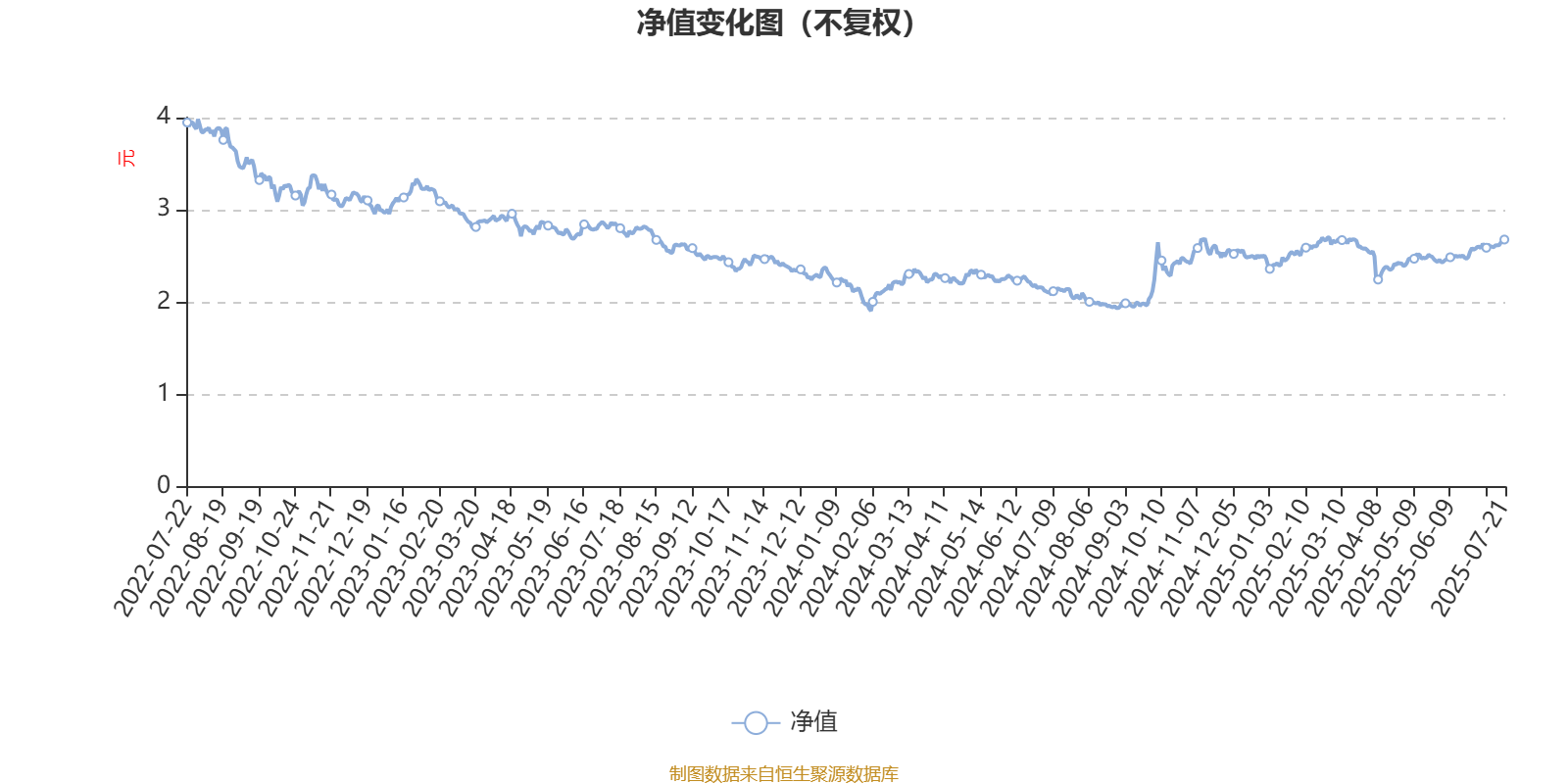
工银新能源汽车混合A:2025年第二季度利润3136.01万元 净值增长率2.23%
Sou Hu Cai Jing· 2025-07-22 03:44
Core Viewpoint - The AI Fund ICBC New Energy Vehicle Mixed A (005939) reported a profit of 31.36 million yuan in Q2 2025, with a net asset value growth rate of 2.23% and a fund size of 1.629 billion yuan as of the end of Q2 2025 [2][16]. Fund Performance - As of July 21, the fund's net value growth rates were 10.93% over the past three months, 5.32% over the past six months, 25.01% over the past year, and -32.09% over the past three years, ranking 76/171, 98/171, 62/166, and 62/126 respectively among comparable funds [3]. - The fund's Sharpe ratio over the past three years was -0.3009, ranking 71/120 among comparable funds [9]. - The maximum drawdown over the past three years was 52.18%, with the largest single-quarter drawdown occurring in Q1 2021 at 30.07% [11]. Fund Strategy and Holdings - The fund manager indicated significant adjustments to the portfolio structure in the first half of the year, including avoiding segments with intense price competition, increasing allocation to upstream sectors, enhancing investment in new technology sectors, and focusing on globally competitive leading companies [2]. - As of June 30, the fund's average stock position over the past three years was 87.08%, with a peak of 93.58% at the end of H1 2025 and a low of 59.8% at the end of H1 2022 [14]. - The top ten holdings of the fund as of Q2 2025 included companies such as XianDao Intelligent, CATL, Yutong Bus, and others [20]. Market Outlook - The fund anticipates that the penetration rate of new energy vehicles in China will reach 60% by 2025, with a projected compound annual growth rate of around 10% over the next three years [2]. - The overseas new energy vehicle market is still in its early stages, while China's new energy industry chain possesses significant global competitive advantages, suggesting substantial growth potential for leading companies [2].
上半年中国汽车产销量双双跃上1500万辆 新能源汽车上半年国内销量587.8万辆,占汽车国内销量比例为46.8%,渗透率不断提高
Zheng Quan Ri Bao· 2025-07-10 16:42
Group 1: Overall Market Performance - In the first half of the year, China's automotive production and sales reached 15.62 million and 15.65 million units, respectively, representing year-on-year growth of 12.5% and 11.4% [1] - In June, automotive production and sales were 2.794 million and 2.904 million units, with year-on-year growth of 11.4% and 13.8% [1] - The top fifteen automotive groups sold a total of 14.43 million units, accounting for 92.2% of total sales, with BYD leading at 2.146 million units, a 33.0% increase [1] Group 2: Passenger Vehicle Market - Passenger vehicle production and sales totaled 13.52 million and 13.53 million units in the first half, with year-on-year growth of 13.8% and 13% [2] - Chinese brand passenger vehicles sold 9.27 million units, a 25% increase, capturing 68.5% of the market share, up 6.6 percentage points from the previous year [2] - In June, sales of Chinese brand passenger vehicles reached 1.707 million units, growing by 19.3% [2] Group 3: Segment Performance - The top ten sedan manufacturers sold 3.907 million units, accounting for 68.9% of total sedan sales, while the top ten SUV manufacturers sold 4.802 million units, representing 67.5% of SUV sales [3] - New energy vehicles (NEVs) were a significant highlight, with production and sales of 6.968 million and 6.937 million units, reflecting year-on-year growth of 41.4% and 40.3% [3] - In June, NEV production and sales were 1.268 million and 1.329 million units, with new car sales accounting for 45.8% of total new car sales [3] Group 4: Powertrain Types - Both pure electric and plug-in hybrid vehicles showed rapid growth, with pure electric vehicle production and sales at 4.488 million and 4.415 million units, marking year-on-year growth of 50.1% and 46.2% [4] - NEV domestic sales reached 5.878 million units, a 35.5% increase, making up 46.8% of total domestic sales [4] - NEV exports reached 1.06 million units, a 75.2% increase, with June exports at 205,000 units, a year-on-year increase of 140% [4] Group 5: Future Outlook - The automotive industry anticipates continued growth in the second half of the year, driven by the orderly implementation of "two new" policies and a rich supply of new products from companies [5]
车市半年复盘:强者愈强 插混出口暴增
2 1 Shi Ji Jing Ji Bao Dao· 2025-07-10 14:23
Group 1: Industry Overview - In the first half of 2025, China's automobile production and sales both exceeded 15 million units, with production at 15.62 million and sales at 15.65 million, representing year-on-year growth of 12.5% and 11.4% respectively [1] - The domestic market for new energy passenger vehicles has surpassed that of fuel vehicles, with sales of new energy vehicles reaching 5.52 million units, a year-on-year increase of 34.3%, while traditional fuel vehicle sales fell by 1.8% to 5.43 million units [1] - New energy vehicles accounted for 44.3% of total industry sales, indicating a significant shift towards electrification [1] Group 2: Profitability and Competition - Despite increased production and sales, the automotive industry's profits have declined, with profits for January to May 2025 at 178.1 billion, down 11.9% year-on-year, and a profit margin of 4.3% [1][2] - Intense price competition among companies is a primary reason for low profit margins, prompting industry associations to advocate against harmful competition and for improved product quality [2] - The Central Financial Committee has emphasized the need to regulate low-price competition and promote the exit of outdated production capacity [2] Group 3: Market Dynamics - Domestic brands are increasing their market share, with Chinese brand passenger vehicle sales reaching 68.5%, a rise of 6.6 percentage points year-on-year, while foreign brands continue to decline [3] - The top fifteen car manufacturers account for over 90% of the market share, with sales of 14.43 million units, a year-on-year increase of 9.8% [3] - BYD, SAIC, and Geely are leading the sales rankings, collectively holding a market share of 36.9%, with BYD achieving sales of 2.1 million units, a 33% increase [4] Group 4: Export Trends - China has become the world's largest automobile exporter, with passenger car exports reaching 2.581 million units in the first half of 2025, a year-on-year increase of 10.3% [6] - New energy vehicle exports surged by over 70% to 1.06 million units, while fuel vehicle exports declined by 7.5% [6] - Chery remains the top exporter, with 550,300 units exported, accounting for 17.8% of total industry exports [7] Group 5: Future Outlook - The automotive industry is expected to continue its transformation towards electrification and smart technology, with companies focusing on local market penetration and brand building [6] - The competition in the market is anticipated to intensify as companies strive to meet their annual sales targets, with BYD, SAIC, and Geely setting ambitious goals for 2025 [5][6] - The growth in exports is driven by the increasing demand for plug-in hybrid and mixed-power vehicles, particularly in markets like Australia and Southeast Asia [8]
交银国际每日晨报-20250710
BOCOM International· 2025-07-10 01:22
Group 1: Core Insights - The retail sales of passenger cars in June reached 2.084 million units, showing a year-on-year increase of 18.1% and a month-on-month increase of 7.6% [1] - The cumulative retail sales for the first half of the year amounted to 10.901 million units, reflecting a year-on-year growth of 10.8% [1] - The penetration rate of new energy vehicles (NEVs) in June reached 53.3%, marking a month-on-month increase of 0.4 percentage points and a new high for the year [1] Group 2: New Energy Vehicle Performance - In the first half of 2025, the penetration rate of NEVs was 50.1%, with retail sales in June reaching 1.111 million units, which is a year-on-year increase of 29.7% and a month-on-month increase of 8.2% [1] - NEVs accounted for 41.1% of total vehicle exports in June, an increase of 17 percentage points compared to the same period last year [1] Group 3: Market Outlook and Recommendations - The market is expected to see stable growth in July, with several new models set to launch, including XPeng G7, Ledo L90, Li Auto i8, and BYD Sea Lion 06 [2] - Investment recommendations include focusing on BYD (1211 HK) for its intelligent driving and export potential, XPeng Motors (9868 HK/XPEV US) for its new model launches, and Geely Auto (175 HK) for internal resource integration following the privatization of Zeekr [2]