电力市场化改革

Search documents
新疆甘肃增量项目机制电价出炉,《油气管网设施公平开放监管办法》发布
Xinda Securities· 2025-10-19 00:39
Investment Rating - The investment rating for the utility sector is "Positive" [2] Core Insights - The report highlights the recent release of mechanism electricity prices for new projects in Xinjiang and Gansu, with solar power priced at 0.235 yuan/kWh and wind power at 0.252 yuan/kWh [4] - The report indicates that the power sector is expected to see profit improvement and value reassessment following multiple rounds of supply-demand tensions in the electricity market [4] - The ongoing market reforms in electricity pricing are anticipated to lead to a gradual increase in electricity prices, benefiting power operators [4] Summary by Sections Market Performance - As of October 17, the utility sector declined by 0.7%, outperforming the broader market, which saw a 2.2% drop [11] - The electricity sector specifically saw a decrease of 0.66%, while the gas sector fell by 0.99% [13] Electricity Industry Data Tracking - The price of thermal coal at Qinhuangdao Port (Q5500) increased by 34 yuan/ton week-on-week, reaching 740 yuan/ton as of October 17 [20] - Coal inventory at Qinhuangdao Port decreased by 960,000 tons week-on-week, totaling 5.45 million tons [25] - Daily coal consumption in inland provinces was 3.107 million tons, down 312,000 tons/day from the previous week [28] Natural Gas Industry Data Tracking - The LNG ex-factory price index in Shanghai was 4,013 yuan/ton, down 20.19% year-on-year and 0.32% week-on-week [51] - The EU's natural gas supply increased by 8.8% year-on-year, reaching 6.07 billion cubic meters in week 41 of 2025 [58] Key Industry News - The mechanism electricity prices for solar and wind projects in Xinjiang were announced, with a total of 67 projects selected [4] - The release of the "Regulations on Fair and Open Supervision of Oil and Gas Pipeline Facilities" marks a significant step in China's oil and gas market reform [4] Investment Recommendations - The report suggests focusing on national coal power leaders such as Guodian Power, Huaneng International, and Huadian International, as well as regional leaders in tight supply areas [4] - For natural gas, companies with low-cost long-term gas sources and receiving station assets are expected to benefit from market conditions [4]




全文 | 赋能全球碳中和,上海定势能源董事长钱胜利呼吁中国软硬件能源技术协同出海
Xin Lang Zheng Quan· 2025-10-18 10:13
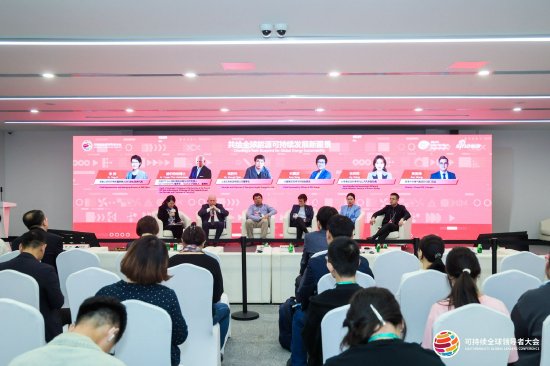
Group 1: Conference Overview - The 2025 Sustainable Global Leaders Conference will be held from October 16 to 18 in Shanghai, focusing on "Collaborating to Address Challenges: Global Action, Innovation, and Sustainable Growth" [1] - The conference is co-hosted by the World Green Design Organization (WGDO) and Sina Group, with support from the Shanghai Huangpu District Government [1] - Approximately 500 prominent guests, including 100 international attendees, will participate, featuring politicians, Nobel laureates, and leaders from Fortune 500 companies [1] Group 2: China's Role in Global Energy Transition - Chinese enterprises are increasingly significant in the global carbon neutrality and reduction process, with strong supply chain systems and manufacturing capabilities for solar and wind energy products [3][5] - The new energy industry in China has transitioned from being "large but weak" to "large and strong," contributing significantly to global energy green transformation and emission reduction [3][5] Group 3: Integration of Technology and Services - Chinese companies possess not only hardware manufacturing capabilities but also robust modern service industries, advanced technical services, and strong investment capabilities [5][11] - There is a call for equipment exporters to upgrade from "product export" to "technology and service export," integrating local power trading rules and price prediction models into energy management systems [6][12] Group 4: Enhancing Green Energy Consumption - Companies can reduce carbon footprints by expanding the consumption of green electricity through market-based trading and long-term contracts [8][9] - Establishing flexible production capabilities and internal energy storage resources can enhance the ability to consume renewable energy [10] Group 5: Challenges and Opportunities - The current support system for overseas projects primarily focuses on low-cost hardware, while advanced software technologies are not being exported simultaneously [12] - There is a need for clearer market signals and pricing mechanisms to guide consumption behavior and improve efficiency in the electricity market [9][10]

云南增量机制电价结果可观,8月我国天然气表观消费量同比增长1.8%
Xinda Securities· 2025-10-12 05:06
Report Industry Investment Rating - The investment rating for the utilities industry is "Optimistic" [2] Core Viewpoints of the Report - After multiple rounds of power supply - demand contradictions in China, the power sector is expected to see profit improvement and value re - evaluation. With the advancement of power market reform, the electricity price trend is likely to rise slightly, and the cost of coal - fired power enterprises is relatively controllable. The performance of power operators is expected to improve significantly. For the natural gas sector, with the decline of upstream gas prices and the recovery of domestic consumption, the city - gas business is expected to achieve stable gross margins and high growth in gas sales volume [5]. Summary by Directory 1. This Week's Market Performance - As of October 10, the utilities sector rose 3.5%, outperforming the market. The power sector rose 3.25%, and the gas sector rose 5.50%. Among sub - industries, the thermal power generation sector rose 6.13%, the hydropower generation sector rose 2.28%, etc. [12][13] - For power companies, the top three gainers were Shanghai Electric Power (18.71%), Wanneng Power (10.56%), and Guiguan Power (7.00%); the bottom three were Jidian Co., Ltd. (0.64%), Zhongmin Energy (1.55%), and Three Gorges Energy (1.65%). For gas companies, the top three gainers were Dazhong Public Utilities (21.12%), Guoxin Energy (6.87%), and Zhongtai Co., Ltd. (5.27%); the bottom three were Furan Energy (-1.93%), Jiufeng Energy (0.84%), and Lantian Gas (2.18%) [15] 2. Power Industry Data Tracking 2.1 Power Coal Prices - The annual long - term agreement price of Qinhuangdao Port's power coal (Q5500) in October was 676 yuan/ton, up 2 yuan/ton month - on - month. The market price of Shanxi - produced power coal (Q5500) at Qinhuangdao Port was 703 yuan/ton as of October 10, remaining flat week - on - week. The prices of power coal in some production areas decreased week - on - week [21] - Overseas power coal prices: As of October 9, the FOB spot price of Newcastle NEWC5500 kcal power coal was 71.2 dollars/ton, up 0.70 dollars/ton week - on - week. As of October 10, the ex - warehouse price of Indonesian coal (Q5500) at Guangzhou Port was 732.82 yuan/ton, down 0.95 yuan/ton week - on - week [23] 2.2 Power Coal Inventory and Power Plant Daily Consumption - As of October 10, the coal inventory at Qinhuangdao Port was 6.41 million tons, up 650,000 tons week - on - week. As of October 9, the coal inventory of 17 inland provinces was 94.159 million tons, up 1.712 million tons week - on - week, and the daily consumption was 3.419 million tons, up 692,000 tons/day week - on - week. The coal inventory of 8 coastal provinces was 33.509 million tons, down 400,000 tons week - on - week, and the daily consumption was 2.067 million tons, up 177,000 tons/day week - on - week [28][30] 2.3 Hydropower Inflow - As of October 11, the outflow of the Three Gorges Reservoir was 22,100 cubic meters/second, up 206.09% year - on - year and down 7.14% week - on - week [42] 2.4 Key Power Market Transaction Electricity Prices - In the Guangdong power market, as of September 20, the weekly average price of the day - ahead spot market was 284.90 yuan/MWh, down 3.80% week - on - week and 15.5% year - on - year; the weekly average price of the real - time spot market was 280.40 yuan/MWh, down 12.81% week - on - week and 15.2% year - on - year. Similar data for the Shanxi and Shandong power markets are also provided [49][56][57] 3. Natural Gas Industry Data Tracking 3.1 Domestic and Overseas Natural Gas Prices - As of October 10, the national index of LNG ex - factory prices at the Shanghai Oil and Gas Trading Center was 4,031 yuan/ton, down 20.90% year - on - year and up 0.37% month - on - month. The European TTF spot price was 11.32 dollars/million British thermal units, down 10.8% year - on - year and 1.6% week - on - week; the US HH spot price was 3.03 dollars/million British thermal units, up 31.2% year - on - year and down 8.7% week - on - week; the Chinese DES spot price was 10.98 dollars/million British thermal units, down 15.1% year - on - year and up 5.2% week - on - week [55][60] 3.2 EU Natural Gas Supply, Demand, and Inventory - In the 39th week of 2025, the EU's natural gas supply was 5.58 billion cubic meters, up 14.3% year - on - year and 2.5% week - on - week. The inventory was 90.865 billion cubic meters, down 13.18% year - on - year and up 1.15% week - on - week. The estimated consumption was 4.55 billion cubic meters, up 12.5% week - on - week and 5.5% year - on - year [63][72][74] 3.3 Domestic Natural Gas Supply and Demand - In August 2025, the apparent domestic natural gas consumption was 36.41 billion cubic meters, up 2.5% year - on - year. The domestic natural gas production was 21.24 billion cubic meters, up 6.1% year - on - year. The LNG import volume was 6.35 million tons, down 2.9% year - on - year and up 16.7% month - on - month [77][78] 4. This Week's Industry News 4.1 Power Industry News - In Yunnan, the clearing mechanism electricity price for photovoltaic projects was 0.33 yuan/kWh, and for wind power projects was 0.332 yuan/kWh. In August 2025, the national wind power utilization rate was 96.6%, and the photovoltaic power utilization rate was 96.4% [86] 4.2 Natural Gas Industry News - In August 2025, the national apparent natural gas consumption was 36.41 billion cubic meters, up 1.8% year - on - year. From January to August, it was 284.56 billion cubic meters, down 0.1% year - on - year [90] 5. This Week's Important Announcements - Guiguan Power's cumulative power generation in the first three quarters of 2025 was 31.848 billion kWh, up 14.89% year - on - year. Jiufeng Energy plans to invest in the second - phase project of the Xinjiang Qinghua coal - to - natural - gas demonstration project, with an estimated annual profit of 1.47746 billion yuan and an investment return rate of 11.74% [87][88] 6. Investment Recommendations and Valuation Tables 6.1 Investment Recommendations - For the power sector, it is recommended to focus on national coal - fired power leaders, regional leaders in areas with tight power supply, hydropower operators, coal - fired power equipment manufacturers, and flexibility retrofit technology companies. For the natural gas sector, it is recommended to focus on companies with low - cost long - term agreement gas sources and receiving terminal assets [5][91] 6.2 Valuation Tables - The report provides the valuation tables of major companies in the utilities industry, including data such as net profit attributable to the parent company, EPS, PE, and closing prices from 2024 to 2027 for various companies [92]
藏格矿业子公司藏格钾肥取得采矿许可证;赣锋锂业称拥有固态电池一体化布局 | 新能源早参
Mei Ri Jing Ji Xin Wen· 2025-10-10 14:47
Group 1 - Cangge Mining's subsidiary has obtained mining rights and licenses, providing legal support for lithium extraction from salt lakes [1] - The mining area covers 724.3493 square kilometers, with a depth range from 2680 meters to 2658 meters, focusing on potassium salts and associated minerals [1] - This acquisition strengthens Cangge Mining's core business in potassium fertilizers and clears legal obstacles for lithium extraction, enhancing its competitive edge in the renewable energy sector [1] Group 2 - Ganfeng Lithium has reported a significant stock price fluctuation, with a cumulative increase of over 20% in three trading days [2] - The company claims to have a complete integrated layout for solid-state batteries, with capabilities in key production areas and partnerships with well-known drone and eVTOL companies [2] - Ganfeng Lithium's high-energy-density batteries have a range of 320Wh/kg to 550Wh/kg and can achieve up to 1000 cycles, indicating strong commercial potential [2] Group 3 - Guiguan Electric has achieved a total power generation of 31.848 billion kWh in the first three quarters of 2025, marking a year-on-year increase of 14.89% [3] - Hydropower generation increased by 21.93%, while thermal power and wind power saw declines, with solar power generation rising by 52.20% [3] - The growth in power generation is attributed to increased water inflow in hydropower plants and the expansion of renewable energy capacity [3]



月度用电量连续两个月破万亿!限电到电力自由,中国做对了什么?
Sou Hu Cai Jing· 2025-10-06 14:29
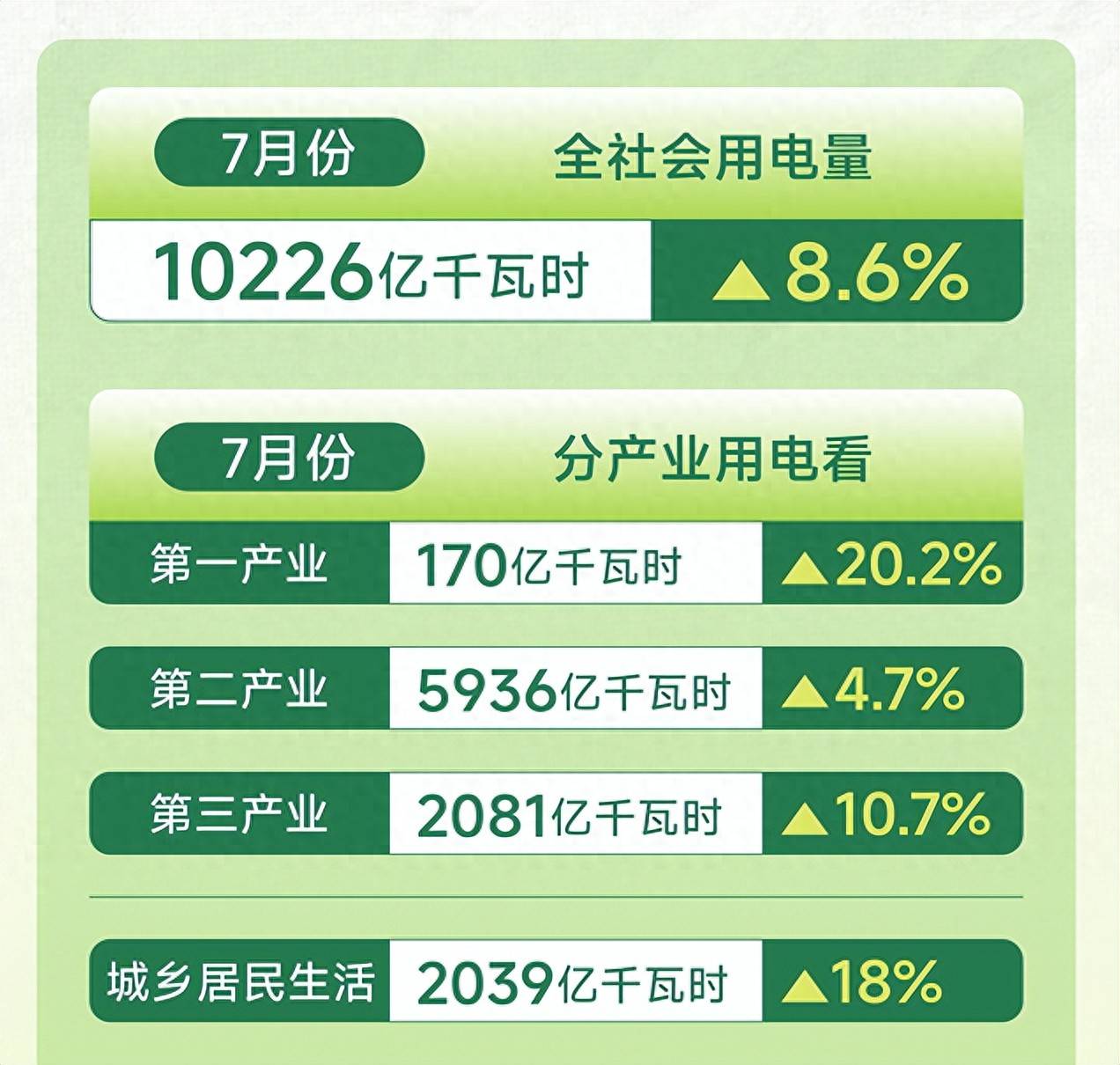
Core Insights - China's electricity consumption reached an unprecedented 1 trillion kilowatt-hours in July and August, marking a significant milestone in global energy consumption [1][3] - This consumption level is equivalent to the annual electricity usage of Japan or the combined annual usage of Germany and France, highlighting China's rapid energy growth [3] - The increase in electricity consumption is driven by advanced manufacturing sectors, particularly in new energy vehicles, lithium batteries, and photovoltaic products, as well as data centers supporting AI and digital economies [4][7] Group 1: Electricity Consumption and Structure - The record electricity consumption reflects a shift from previous years when power shortages were common, showcasing improvements in energy supply and infrastructure [3][4] - The growth in electricity usage is attributed to two main sectors: advanced manufacturing and AI-driven data centers, both of which require substantial energy [4][7] Group 2: Technological Innovations - China's unique technological solutions, such as the ultra-high voltage (UHV) power grid, enable efficient long-distance electricity transmission, overcoming geographical resource distribution challenges [8][10] - The UHV technology allows for minimal energy loss during transmission, with over 50,000 kilometers of UHV lines constructed, accounting for 90% of the global total [10] Group 3: Energy Transition and Market Reforms - A significant shift in energy production has occurred, with renewable energy sources like wind and solar surpassing coal in installed capacity, reflecting a strategic transition to a diversified energy mix [11][12] - China's energy market reforms have kept electricity prices stable for consumers, contrasting sharply with rising energy costs in Europe, thus maintaining a competitive edge in industrial electricity pricing [15][16] Group 4: Future Implications - The increasing demand for electricity from AI and digital sectors positions electricity as the "new oil" in the digital economy, with China poised to leverage its energy advantages in future global competitions [18] - The ongoing development of large-scale hydropower projects, such as those planned along the Yarlung Tsangpo River, further solidifies China's energy strategy and capacity for sustainable growth [18][19]
储能缺芯潮:需求爆发与产业再平衡
高工锂电· 2025-10-06 10:20
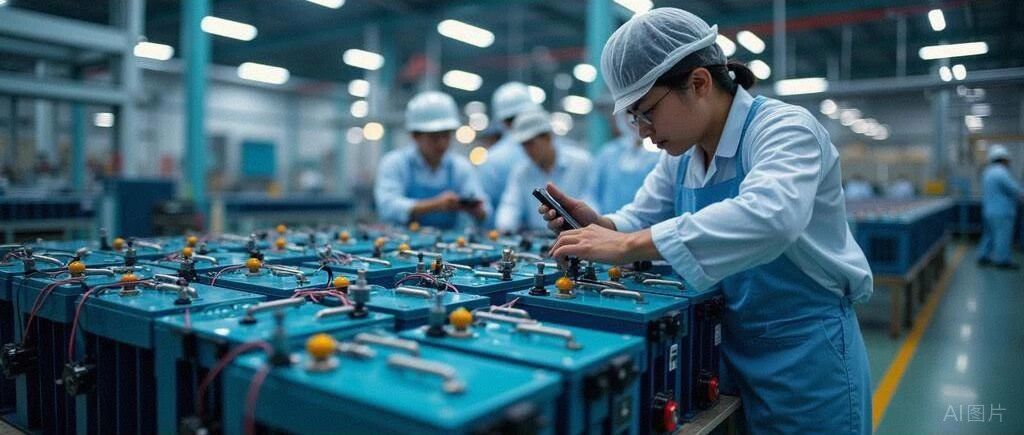
Core Insights - The article highlights a significant supply-demand imbalance in the energy storage battery sector, driven by a surge in demand and a shortage of battery cells, leading to increased prices and a shift in the supply chain dynamics [3][5][6]. Group 1: Supply and Demand Dynamics - The energy storage battery supply is under pressure, with leading manufacturers operating at full capacity and orders extending into 2026 [3][14]. - The tight supply has prompted some companies to raise prices, although the increase is modest, with reports of a 0.01 yuan/Wh hike [4][5]. - The overall market for energy storage has shifted from being driven by policy incentives to being driven by market dynamics, with a 150% year-on-year increase in domestic energy storage bidding scale [9]. Group 2: Market Opportunities - The global energy transition is creating new opportunities in the energy storage market, with countries like Saudi Arabia and Chile planning significant investments in storage capacity [10]. - The U.S. market is also experiencing a "rush to install" due to IRA subsidies, with planned additions exceeding 10GW in 2025 [12]. - Chinese companies are increasingly winning contracts abroad, with cumulative bids in Saudi Arabia exceeding 24GWh [10]. Group 3: Technological Advancements - The article notes a technological divide, with leading companies like CATL advancing to larger capacity cells (587Ah) while many second-tier firms remain at lower capacities (314Ah) [24]. - The shift towards larger capacity cells (500Ah+) is expected to become a critical differentiator in the market, influencing future investment flows [25]. Group 4: Supply Chain Strategies - Companies are focusing on securing supply chain stability, with firms like Chuangneng New Energy signing long-term agreements with key material suppliers [21]. - Innovative collaboration models are emerging, such as CLS agreements by Yiwei Lithium Energy, which ensure supply security while providing technology sharing benefits [23]. Group 5: Industry Outlook - The energy storage sector is entering a new phase characterized by a dual competition in scale and technology, with the potential for significant growth as it becomes a new engine for the renewable energy industry [26]. - The transition from a supply shortage to a new balance is reshaping the lithium battery industry's operational rules, moving away from a focus solely on the power sector [27].

【前瞻分析】2025年中国售电行业市场发展现状分析
Sou Hu Cai Jing· 2025-09-30 15:53
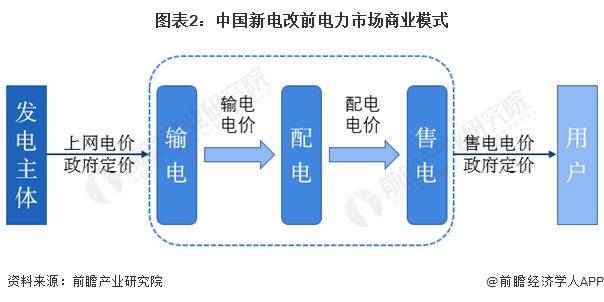
Group 1 - The core viewpoint of the article highlights the evolution of China's electricity market, emphasizing the shift from a monopolistic structure to a more competitive environment following the 2002 reform [2] - The article outlines the significant increase in national electricity demand, with total electricity consumption reaching 83,128 billion kilowatt-hours in 2021, a year-on-year growth of 10.3% [4] - The article discusses the regional distribution of electricity sales companies, noting a concentration in the eastern coastal and southern provinces, where economic activity and electricity demand are high [6] Group 2 - The competitive landscape of China's electricity sales market is analyzed, identifying leaders such as State Grid, Southern Power Grid, Guodian Power, and Huaneng International, all with revenues exceeding 100 billion yuan and growth rates above 10% [8] - The article provides insights into the performance of challengers like Guangdong Power, Guangzhou Development, and Inner Mongolia Huadian, which have revenues over 10 billion yuan and growth rates exceeding 20% [8] - The article includes a heat map of the electricity sales company industry chain, indicating the geographical distribution of these companies across China [7]


电力市场化改革涉深水区,电价下行如何影响行业格局?
证券时报· 2025-09-24 09:22
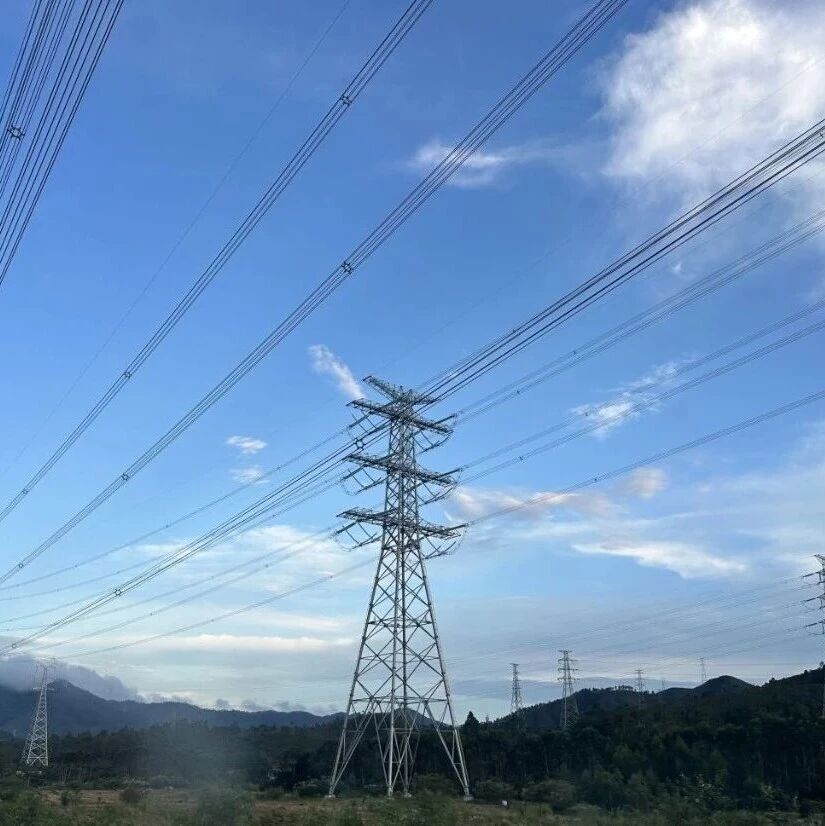
Core Viewpoint - The trend of declining electricity prices in China is becoming more pronounced as the proportion of market-based electricity trading increases, impacting the profitability of power generation companies [1][5]. Summary by Sections Electricity Price Trends - In the first half of this year, the on-grid electricity prices have decreased to varying degrees, affecting net profit margins of power generation companies. The decline is attributed to factors such as policy changes, supply and demand dynamics, costs, and the spot market [2][6]. - Shandong province has announced the results of its 2025 renewable energy pricing auction, marking a significant milestone in the marketization of the renewable energy sector. The auction revealed that the photovoltaic mechanism price was set at 0.225 CNY/kWh, which is 43% lower than the coal-fired benchmark price [2][10]. Impact on Investment Decisions - The decline in electricity prices is significantly influencing investment decisions among power generation companies. Some companies are reconsidering investments in photovoltaic projects in Shandong due to the competitive pricing environment [4][13]. - Companies are advised to enhance their operational capabilities and actively engage with electricity market rules rather than passively adapting to price changes [4][12]. Financial Performance of Power Generation Companies - Longyuan Power reported an average on-grid electricity price of 399 CNY/MWh in the first half of the year, a decrease of 23 CNY/MWh compared to the same period in 2024. Wind power prices averaged 422 CNY/MWh, down 16 CNY/MWh, while photovoltaic prices were 273 CNY/MWh, down 5 CNY/MWh [6][11]. - Datang New Energy noted a decline in net profit margin from 29.90% in 2024 to 27.89% in the first half of this year, primarily due to falling electricity prices [6]. Market Dynamics and Policy Changes - The implementation of the "136 Document" has significantly influenced the electricity market, allowing renewable energy to participate in market trading without discrimination, leading to price reductions driven by supply and demand [6][7]. - The marketization of electricity trading has accelerated, with market trading volume reaching 2.95 trillion kWh in the first half of the year, a year-on-year increase of 4.8%, and market trading accounting for 60.9% of total electricity consumption [9][10]. Future Outlook and Strategies - As the proportion of renewable energy increases, the volatility of electricity prices is expected to rise. Companies are encouraged to adapt their investment strategies to focus on cost control, project site selection, and enhancing trading capabilities [12][14]. - Long-term power purchase agreements are suggested as a strategy for power generation companies to stabilize revenue expectations amidst price fluctuations [14].
电力市场化改革涉深水区,电价下行如何影响行业格局?
Zheng Quan Shi Bao Wang· 2025-09-24 07:15
Core Viewpoint - The trend of declining electricity prices in China is increasingly evident due to the rising proportion of market-based electricity trading, impacting the profitability of power generation companies [1][2][4]. Group 1: Electricity Price Trends - The average on-grid electricity price for Longyuan Power's generation business decreased to 399 RMB/MWh in the first half of the year, down 23 RMB/MWh from the same period in 2024 [2]. - The average on-grid electricity price for wind power was 422 RMB/MWh, a decrease of 16 RMB/MWh, while solar power averaged 273 RMB/MWh, down 5 RMB/MWh [2]. - The 136 Document issued by the National Development and Reform Commission and the National Energy Administration is a significant policy affecting the electricity market, allowing renewable energy to participate in market trading without differentiation [2][4]. Group 2: Market Dynamics - The market trading volume reached 2.95 trillion kWh in the first half of the year, a year-on-year increase of 4.8%, with market-based trading accounting for 60.9% of total electricity consumption [4]. - The decline in coal prices has reduced the cost of thermal power, leading to competitive pricing pressures on renewable energy sources like solar and wind [3][6]. - The rapid increase in solar power installations has exacerbated the supply-demand imbalance, further driving down solar electricity prices [6]. Group 3: Company Strategies and Adjustments - Companies are adjusting their investment strategies in response to the changing electricity market, focusing on cost control, project site selection, and enhancing trading capabilities [9]. - Long-term power purchase agreements are seen as a viable strategy for stabilizing revenue expectations and facilitating renewable energy consumption [9]. - Companies are encouraged to actively engage with market rules and enhance operational capabilities rather than passively adapting to price changes [1][9].
用电量连续两月突破万亿千瓦时,新经济增长点涌现
第一财经· 2025-09-24 05:58
Core Insights - The article highlights the continuous increase in electricity consumption in China, with August 2023 recording a total electricity usage of 10,154 billion kilowatt-hours, marking a 5.0% year-on-year growth [3][5] - The growth in electricity consumption is attributed to high summer temperatures and supportive government policies aimed at stabilizing industrial growth [3][5] - The article emphasizes the importance of enhancing energy supply capabilities to meet the rising electricity demand, especially with the increasing integration of renewable energy sources [8][9] Electricity Consumption Trends - In August 2023, the manufacturing sector's electricity consumption grew by 5.5%, the highest monthly growth rate of the year, driven by recovery in raw material industries such as steel and chemicals [6] - The first industry saw a significant increase in electricity usage, with a year-on-year growth of 9.7% in August, particularly in livestock and fishery sectors [5][6] - The third industry maintained a robust growth rate, with a cumulative electricity consumption of 13,297 billion kilowatt-hours from January to August, reflecting a 7.7% year-on-year increase [6] Energy Supply and Resilience - The article discusses the high electricity load across most provinces, indicating a significant test for China's power system's regulatory and resource coordination capabilities [8] - The energy supply resilience is characterized by strong self-sufficiency, operational adjustment capabilities, and emergency support systems [8] - Since the 14th Five-Year Plan, domestic energy production has accelerated, with over 90% of the consumption increase being self-supplied, highlighting the growing role of renewable energy [8] Future Challenges and Recommendations - The article identifies the core challenge of maintaining grid stability amid increasing renewable energy integration, which has intermittent and volatile characteristics [9] - Recommendations include advancing the construction of new energy infrastructure to support large-scale development of wind and solar power, and enhancing grid management through technological and managerial innovations [9] - The need for market-oriented reforms to encourage demand-side response and promote energy-efficient behaviors among users is also emphasized [9]