高端化

Search documents
向“三化”跃迁 | 大家谈 如何破除“内卷式”竞争
Zhong Guo Hua Gong Bao· 2026-01-30 02:53
Core Viewpoint - The key to breaking the "involution" competition in the petrochemical industry lies in transitioning the development paradigm from "bulk generalization" to "high-end, specialized, and green" approaches, thereby establishing irreplaceable competitive advantages and opening new value growth opportunities. Group 1: High-End Development - Companies must break free from the low-end generic product competition and focus on high-end polyolefins and high-performance engineering plastics to achieve import substitution by addressing industry chain weaknesses and national strategic needs [1] - By deepening collaboration among production, education, research, and application, companies should focus on overcoming core technologies such as key monomers and high-end catalysts, accelerating the industrialization demonstration process [1] - This approach not only expands new application scenarios with differentiated products but also elevates companies from the "cost segment" of the supply chain to the "profit center" of the value chain, enhancing technological self-control capabilities [1] Group 2: Specialization - Companies should identify precise niches in the vast market to avoid red ocean competition, focusing on rapidly growing segments such as electronic chemicals, new energy battery materials, and high-end medical materials [1] - Establishing specialized R&D and application development teams to provide highly customized products and integrated technical solutions will create deep partnerships with downstream clients [1] - This "invisible champion" model, based on unique technologies, can build solid technological barriers, effectively capture sustainable product premiums, and form differentiated "moats" [1] Group 3: Green Development - Green low-carbon initiatives have become a core competitive advantage, and companies should invest in bio-based materials, plastic chemical recycling, and CO2-derived chemicals while promoting large-scale applications to reduce costs [2] - Optimizing processes to lower energy and material consumption and providing full lifecycle carbon footprint management solutions will help meet downstream green supply chain requirements [2] - This strategy not only mitigates potential policy and carbon tax risks but also positions companies to capture the green premium market, transforming environmental advantages into brand value and new growth points [2] Group 4: Strategic Transformation - The transition towards "three transformations" represents a profound strategic shift, requiring petrochemical companies to leverage technological innovation, market segmentation, and green low-carbon initiatives to systematically reshape product structures and business models [2] - This transformation is essential for companies to fundamentally escape inefficient internal competition and gain initiative in the new phase of high-quality development [2]
昂瑞微的“反常规”成绩单:虽亏损但为何更具长期价值?
是说芯语· 2026-01-29 23:34
Core Viewpoint - OnMicro is expected to report a loss exceeding 100 million yuan for the year 2025, with the loss magnitude further expanding compared to the previous year, reflecting the company's strategic determination during an industry downturn [1][3]. Loss Analysis - The RF chip industry is currently facing phase-specific pressures, with weak demand in the consumer electronics market leading to a decline in mobile phone shipments and inventory reduction. This has resulted in operational challenges for upstream chip companies, including industry leaders [3]. - OnMicro has chosen a differentiated strategy by not engaging in price competition in a shrinking market. Instead, the company has made a prudent decision to actively divest low-margin projects with limited growth potential, effectively streamlining operations during the industry downturn [3][4]. Strategic Confidence - While many companies are anxious due to fluctuations in the consumer electronics market, OnMicro has built a performance "buffer" through diversified business layouts. The company has long pursued a diversification strategy, focusing on stable demand sectors such as IoT, smart meters, and industrial control, which provide ongoing business support [5]. Strategic Ambition - Historically, domestic RF chip companies have focused on the mid-to-low-end replacement market. However, OnMicro aims to break this pattern by targeting the high-end market, concentrating on high-tech RF front-end modules, which have been dominated by overseas giants [8]. - The company is actively collaborating with leading domestic chip manufacturing and packaging enterprises to overcome technical bottlenecks and establish a self-sufficient supply chain, reflecting a commitment to high-end and independent development [8]. Industry Outlook - The semiconductor industry is characterized by significant cyclicality, with alternating peaks and troughs. Currently, the RF chip industry is in an adjustment phase following the transition from 4G to 5G, leading to a cooling market demand. However, historical experience suggests that downturns can be optimal periods for forward-looking companies to optimize their layouts and accumulate strength [9]. - The long-term growth logic of the RF chip industry remains clear, with advancements in 5G and the acceleration of 6G research driving upgrades towards high-frequency, wide-band, and low-power technologies. OnMicro is focusing on high-integration module development, with its 5G L-PAMiD module already in mass production for flagship models [10].


打通上下游看黑电-产业迎来向上共振
2026-01-29 02:43
Summary of Key Points from the Conference Call Industry Overview - The black electronics (黑电) industry is experiencing a trend of upward resonance between upstream and downstream companies, with profits and stock prices of panel manufacturers and downstream OEMs both increasing, indicating enhanced overall profitability of the industry chain [1][2]. Core Trends - The main drivers of development in the black electronics industry are large-screen and high-end trends, with the average TV size continuously increasing. The penetration rate of high-end display technologies like Mini LED is expected to grow rapidly, reaching nearly 20 million units by 2026, which will drive industry chain upgrades [1][3]. - The average TV size in China has significantly increased, with mainstream sizes rising from 65 inches to 75 inches, and the proportion of 85-inch TVs is rapidly increasing [3]. Panel Price Dynamics - The cyclicality of panel prices has weakened due to supply-side contractions (changes in old and new capacities, long-term KPI reductions, and production control by panel manufacturers) and demand-side growth driven by large-screen and high-end trends. The market landscape has also changed with the exit of Japanese and Korean companies, allowing mainland manufacturers to dominate [1][5]. - Future panel price centers are expected to rise, with panel manufacturers' profit margins improving due to declining depreciation costs and rising utilization rates, projected to reach around 82% by the end of 2025 [6]. Profitability and Investment Opportunities - Current net profit margins for TV panel manufacturers are close to high single digits, with room for improvement. Historical margins have exceeded 10% and even 15% [7][8]. - The black electronics industry presents investment opportunities, particularly for competitive mainland panel manufacturers like BOE and TCL, which are expected to enter a profit release cycle [6][8]. Downstream Market Trends - The downstream OEM market is expected to continue the trends of large-screen and high-end products. China leads globally in large-screen TV adoption, with average sizes increasing significantly compared to the US and Europe [9]. - The penetration rate of high-end Mini LED TVs has risen from single digits to over 30%. Despite rising shipping costs affecting overseas markets, Chinese brands like Hisense and TCL are promoting affordable large-screen TVs [9]. Competitive Environment - The competitive environment is improving, with leading domestic brands like Hisense, TCL, Xiaomi, and Skyworth increasing market share, while second-tier brands are losing ground. In the overseas market, North American brands are struggling due to inflation and consumer downgrading [10][11]. Profit Margin Potential for OEMs - OEM profit margins are expected to improve, even with potential increases in panel prices. Factors contributing to this include optimized competitive landscapes and structural upgrades driven by large-screen and high-end trends [12]. - Collaborations and acquisitions, such as TCL's joint venture with Sony and Hisense's acquisition of Toshiba, are enhancing brand and product structures, leading to improved profitability [12]. Impact of Panel Price Changes - Short-term increases in panel prices are driven by downstream stocking demands and reduced supply during the Spring Festival. However, long-term fluctuations are expected to be limited, with downstream price increases aligning with those of panels, minimizing negative impacts on OEM profits [13]. Recommendations for Investment - Recommended companies include upstream leaders like Tian'ao Technology, BOE, and Rainbow Technology, as well as downstream players like Hisense and Tianjiao Electronics, which are expected to achieve significant profit growth due to increased industry concentration and technological advancements [14].
高端机床行业发展向好 上市公司加码布局
Zheng Quan Ri Bao Wang· 2026-01-28 13:25
Group 1 - The global robotics industry is entering a new stage of large-scale production, with domestic manufacturing equipment upgrade policies being strengthened, making machine tools a core pillar for high-end manufacturing industry autonomy [1] - Zhejiang Haideman Intelligent Equipment Co., Ltd. plans to raise no more than 1.517 billion yuan for specific projects, including 917 million yuan for high-end composite machine tool industrialization and 250 million yuan for high-precision machine tool and robot hardware R&D [1] - Other companies like Qinchuan Machine Tool Group and Nuwei CNC Equipment are also investing in high-end CNC machine tool projects, focusing on automation and intelligent production capabilities [2] Group 2 - The machine tool industry is experiencing simultaneous scale expansion and structural upgrades, with a growing domestic CNC machine tool market and increasing demand for high-end products [3] - The integration of advanced technologies such as AI and digital twin into high-end machine tools is expected to be a key competitive focus, driven by the stringent requirements of downstream manufacturing sectors [3] - Industry experts suggest that companies should increase investment in core technology R&D, enhance collaboration with downstream industries, and actively expand into global markets to seize opportunities during industry transformation [4]

同比增长5.6% 2025年武汉GDP突破2.2万亿元
Zhong Guo Xin Wen Wang· 2026-01-28 05:46
Economic Overview - In 2025, Wuhan's GDP reached 22,147.35 billion yuan, reflecting a year-on-year growth of 5.6% at constant prices [1] - The primary industry added value was 481.21 billion yuan, growing by 3.8%; the secondary industry added value was 6,589.72 billion yuan, increasing by 5.0%; and the tertiary industry added value was 15,076.42 billion yuan, rising by 5.9% [3] Industrial Growth - In 2025, the added value of Wuhan's above-scale industries grew by 6.2%, with over 70% of the 35 major industrial categories experiencing growth [5] - Key supporting industries included computer, communication, and other electronic equipment manufacturing, as well as automobile manufacturing; high-tech manufacturing added value surged by 16.6% [5] Service Sector Development - The modern service industry in Wuhan is advancing, with added value increasing by 5.9% [5] - The transportation, warehousing, and postal sectors saw a significant increase of 9.6% in added value; cultural and tourism sectors also showed strong performance, with cultural arts industry revenue growing by 25.1% [5] Foreign Trade Performance - Wuhan's foreign trade expanded steadily, achieving a total import and export volume of 4,548.5 billion yuan, a 12.7% increase year-on-year [7] - Exports totaled 2,968.5 billion yuan, up by 13.2%, while imports reached 1,580.0 billion yuan, growing by 11.9% [7] Future Goals - Wuhan aims to become a national central city and has set a target of reaching a GDP of 30 trillion yuan by the end of the 14th Five-Year Plan [7] - The city is focusing on building a modern industrial system and promoting the development of five key sectors, including manufacturing and modern services [7]

丹阳界牌镇汽车零部件产业迈向高质量发展新程
Xin Hua Ri Bao· 2026-01-27 22:02
Core Insights - The automotive parts industry in Jiepai Town is experiencing a transformation towards high-end and intelligent manufacturing, exemplified by companies like Baorui Automotive, which has invested significantly in automation and aims for substantial sales growth by 2026 [1][2]. Group 1: Company Developments - Baorui Automotive has invested 30 million yuan in a new automated production line, focusing on lightweight products for the new energy vehicle sector, with a sales target of 450 million yuan by 2025 and 600 million yuan by 2026 [1]. - Jiangsu Haidelite Intelligent Technology Co., Ltd. has over 20 years of experience in the automotive lighting sector, investing over 10 million yuan annually in R&D, with a sales goal of exceeding 1 billion yuan by 2025 [2]. - Jiangsu Junxin Auto Parts Co., Ltd. operates over 40 production lines and has developed more than 3,000 types of auto parts, with a new 300 million yuan factory under construction to enhance capacity and service [2]. Group 2: Industry Trends - Jiepai Town is enhancing its automotive parts industry by strengthening supply chains and promoting high-quality development, focusing on brand marketing and market expansion [3]. - The region is home to a complete automotive parts supply chain, from raw material supply to processing and assembly, which is crucial for supporting the growth of new energy vehicles [1][2].
业绩预告增长超324% 宁波东力再掀增长热潮
Quan Jing Wang· 2026-01-27 11:46
Group 1 - Ningbo Dongli (002164) forecasts a net profit of 195 million to 205 million yuan for 2025, representing a year-on-year growth of 324.74% to 346.53% [1] - The significant increase in net profit is attributed to two main factors: receipt of 136.6 million yuan from judicial authorities as non-recurring gains and successful market promotion of high-power density intelligent products [1] - The company is a leading player in the domestic reducer industry, specializing in the research, production, and sales of reducers, motors, and automation control systems, with applications across various sectors [1] Group 2 - The subsidiary Dongli Transmission is recognized as a national manufacturing champion and green factory, focusing on gear transmission and electric drive equipment, and has established long-term strategic partnerships with numerous Fortune 500 companies [2] - In the first half of 2025, the Chinese machinery industry showed a trend of stability and improvement, with a year-on-year increase of 9.0% in value added for large-scale enterprises and a revenue of 15.3 trillion yuan, growing by 7.8% [2] - The Ministry of Industry and Information Technology and other departments have introduced policies to support the growth of the machinery industry, particularly in high-precision reducers and domestic substitution, providing strong support for the company's development [2] Group 3 - In December 2025, the company signed a global strategic partnership agreement with Nidec Corporation, becoming the sole partner for robot reducer components, integrating deeply into Nidec's global industrial system [3] - This collaboration marks a new phase of long-term, systematic, and global cooperation in the field of precision transmission [3] - The company is entering new markets with products like robot precision joint reducers, benefiting from the accelerated process of high-end product import substitution and the expansion of emerging application scenarios [3]

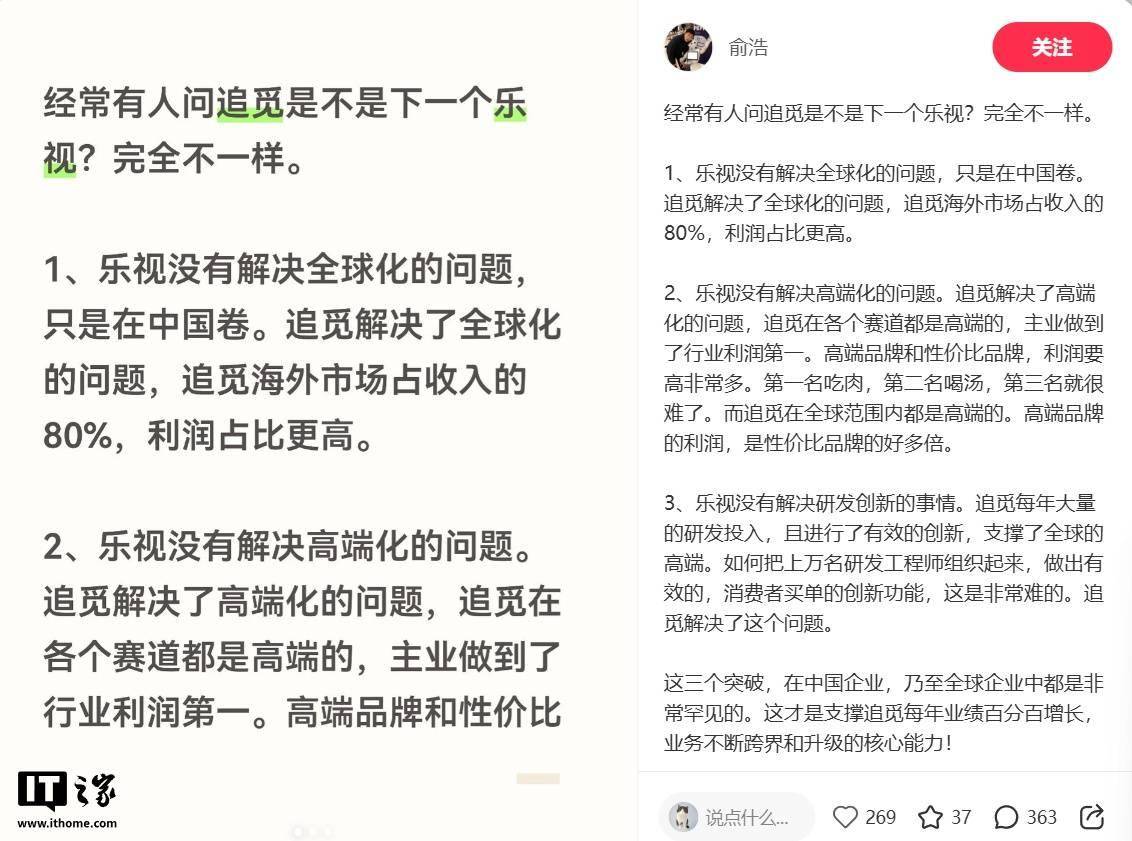
追觅是下一个乐视?CEO回应:三大不同,追觅全球罕见
Sou Hu Cai Jing· 2026-01-27 10:05
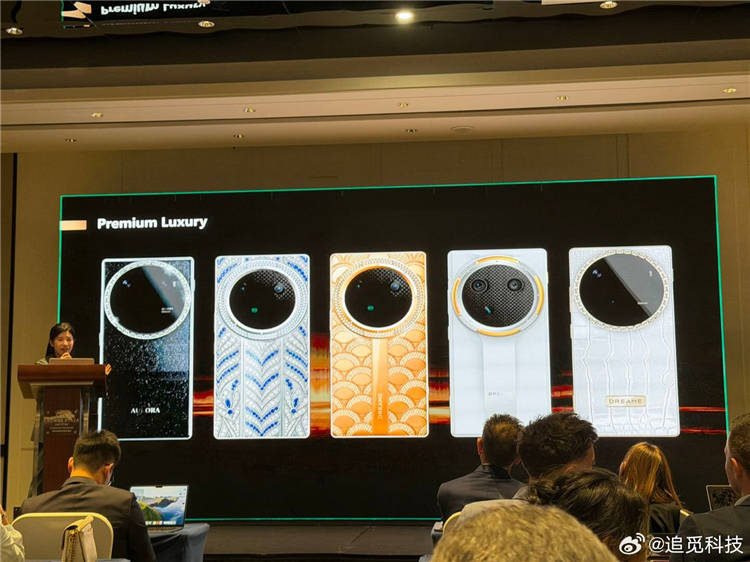
做新能源汽车、做高端智能手机、做酒旅品牌、做航空服务…… 追觅近期不断曝出跨界开拓新业务,甚至其CEO俞浩还曾表示要打造人类历史上第一个百万亿美金公司。 看到如此疯狂的追觅,许多人都想起了曾经生态化反模式的乐视,以及为梦想窒息但至今在美国没有回国 的贾跃亭。 有意思的是,追觅CEO俞浩今日发文,回应了追觅是不是下一个乐视的问题。他认为追觅和乐视完全不一 样,而这个不一样主要有3点体现。 首先是乐视没有解决全球化问题,而追觅解决了全球化问题。他透露追觅海外市场营收占比高达80%,利 润占比还更高。 其次乐视没有解决高端化问题,而追觅解决了高端化问题,并且在各个赛道都是高端的,主业还做到了行 业利润第一。 最后就是乐视没有解决研发创新的问题,而追觅每年大量研发投入且有效创新,做出了消费者买单的创新 功能。 简单来说,俞浩认为追觅解决了市场、品牌以及技术创新的问题,而这在全球企业中都罕见,支撑着追觅 每年业绩百分百增长,业务不断跨界和升级。 虽然俞浩这样回答,但许多细节都经不起推敲。比如他说追觅解决了高端化问题,追觅主业利润行业第一 高,但很明显这两者之间没有必然的联系。而且就算追觅品牌足够高端,但跨界到其他行业, ...
“广货行天下”春季行动灯饰专场促销活动在中山古镇举行
Nan Fang Ri Bao Wang Luo Ban· 2026-01-27 09:03
Core Insights - The "Guanghuo Hang Tianxia" Spring Action promotional event in Zhongshan, Guangdong, showcased over 100 companies participating in live streaming sales, significantly boosting daily exposure by 70%-80% and increasing single-session transaction volume by approximately 120% [1][2] - Guangdong's lighting industry is transitioning towards high-end, intelligent, and green manufacturing, moving from traditional production to a comprehensive solution model that integrates design and smart manufacturing [1][3] - The province's lighting industry is projected to generate revenues of 177.146 billion yuan in 2024, accounting for about 70% of the national market share, with exports valued at 54.92 billion yuan, representing 52% of the national total [3] Industry Development - The event featured major companies like Opple Lighting and Mulin Sen, with 20 premium exhibition booths and 80 quality enterprises conducting live streams, highlighting the shift from selling products to offering solutions and experiences [2] - Guangdong's lighting industry has established a robust ecosystem with a complete supply chain, leading to a competitive advantage in both domestic and international markets [2][3] - The region is developing a world-class lighting industry belt, with a focus on rapid response and one-stop procurement capabilities, attracting global buyers and capital [4][5] Future Outlook - The industry is evolving towards a model that emphasizes system solutions rather than just product sales, with Guangdong lighting companies participating in large-scale projects and establishing overseas warehouses and service centers [5] - The collaborative regional model, known as "1+1+N," is enhancing competitiveness, with Shenzhen focusing on high-end LED technology and Zhongshan serving as the largest production base for lighting fixtures globally [4][5] - The Guangdong lighting sector is leveraging its strong cluster foundation and growing international capabilities to expand its global market presence and pursue high-quality development [5]
追觅是不是下一个乐视?CEO俞浩回应称“完全不一样”
Sou Hu Cai Jing· 2026-01-27 03:43
IT之家 1 月 27 日消息,追觅科技创始人兼 CEO 俞浩昨晚在社交媒体发布长文,表示经常有人问追觅是不是下一个乐视?俞浩称"完全不一样"。 1、乐视没有解决全球化的问题,只是在中国卷。追觅解决了全球化的问题,追觅海外市场占收入的 80%,利润占比更高。 3、乐视没有解决研发创新的事情。追觅每年大量的研发投入,且进行了有效的创新,支撑了全球的高端。如何把上万名研发工程师组织起来, 做出有效的,消费者买单的创新功能,这是非常难的。追觅解决了这个问题。 这三个突破,在中国企业,乃至全球企业中都是非常罕见的。这才是支撑追觅每年业绩百分百增长,业务不断跨界和升级的核心能力! 2、乐视没有解决高端化的问题。追觅解决了高端化的问题,追觅在各个赛道都是高端的,主业做到了行业利润第一。高端品牌和性价比品牌, 利润要高非常多。第一名吃肉,第二名喝汤,第三名就很难了。而追觅在全球范围内都是高端的。高端品牌的利润,是性价比品牌的好多倍。 IT之家注意到,俞浩在评论区中回应了裁员传闻,表示历史上整体裁员非常少,只有过一次,去年六七月,中国区人效太低,要提高人效。俞浩还称"核心 人员很稳定"。 那你们电商板块为啥裁员啊 昨天 19 ...