
新能源汽车

Search documents
锂金属-2026年开门红金属巡礼
2026-01-07 03:05
锂金属 - 2026 年开门红金属巡礼 20260106 摘要 一季度仍是碳酸锂做多窗口期,绝对库存低,下游刚需强劲,新投产能 和年度检修影响供应,企业需高价购货满足需求。 供应端增量释放有限,前期涨价已透支部分供给弹性,国际局势动荡增 加海外矿回运不确定性,南美地区风险亦推高价格。 下游需求依然强劲,储能订单明确交付要求,动力电池领域保持增长, 磷酸铁锂成本上升间接支持碳酸锂价格。 预计 2026 年智利碳酸锂进口量不会有增量,主要出口商战略收缩, SPL 可能转向欧美市场,阿根廷增量存在不确定性。 2026 年新能源汽车市场预期乐观,以旧换新政策刺激需求,基本面强 劲、库存低位,市场处于多头窗口期。 江西尾矿库问题影响有限,复产预期仍在二季度或下半年,新型建筑材 料提炼可减少尾矿排放,保证碳酸锂产出。 需求刚性强劲,供给端未见明显增加,基本面支持价格进一步上涨,一 季度多头窗口期应被珍惜把握。 Q&A 目前碳酸锂市场的基本面情况如何?价格走势有何变化? 碳酸锂市场的基本面依然强劲。近期碳酸锂价格从 8 万元迅速上涨至 10 万元, 再从 10 万元攀升至 13 万元,尽管下游端并未出现明显的负反馈。即使部 ...
地通工业:20 亿加码车谷!武汉新能源汽车零部件基地签约落地
Zhong Guo Qi Che Bao Wang· 2026-01-07 02:52
Group 1 - The core viewpoint of the news is the collaboration between Wuhan Economic Development Zone and DITONG Industrial Holdings to establish an automotive parts production and R&D base, focusing on lightweight components for new energy vehicles [1][2] - DITONG Industrial is a leading player in the domestic passenger vehicle parts sector, specializing in stamping, welding, and mold development, with a robust R&D capability and a comprehensive supply chain [1] - The total investment for the DITONG Wuhan base project is approximately 2 billion yuan, located in the intelligent connected and electric vehicle industrial park, aiming to produce key components such as body covers and battery boxes for new energy vehicles [1] Group 2 - The project will adopt a flexible model of "leasing first, then self-building, and phased production" to quickly respond to market demands, with the welding production line already operational through leased facilities [2] - Once fully operational, the project is expected to achieve an annual output value of 1.2 billion yuan, addressing critical gaps in the local automotive supply chain for lightweight body and chassis modules [2] - The Wuhan Economic Development Zone has improved its automotive industry collaboration, with the local automotive supply ratio increasing from 0.68:1 to 0.8:1, highlighting the ongoing synergy in the industry [3]




面向公众开放!北京市科普基地又上新
Yang Shi Wang· 2026-01-07 02:51
央视网消息:据"首都教育"公众号消息,为推动北京市科普基础设施建设,发挥科普基地的创新示范引领作用,北京市科学技术委员会、中关村科技园区 管理委员会和北京市科学技术协会共同组织开展2025年度北京市科普基地评审工作。经形式审查、专家评审、现场踏勘和社会公示,近日决定命名"北京 医学健康科普基地"等60家北京市科普基地,命名周期为2025-2027年。具体名单,一起来看↓↓↓ | 序 | 基地名称 | 管理单位 | | --- | --- | --- | | 름 | | | | 1 | 北京医学健康科普基地 | 北京大学人民医院(北京大学第二临床医学院) | | 2 | 北京集成电路与人工智能科普基地 | 中关村智能科技发展促进会 | | 3 | 北京人工智能安全科普基地 | 奇安信科技集团股份有限公司 | | 4 | 北京百姓科技实践科普基地 | 北京树思源数字媒体科技有限公司 | | 5 | 北京地质调查岩石科普基地 | 中国地质调查局自然资源综合调查指挥中心 | | e | 北京慢性病防治健康科普基地 | 北京慢性病防治与健康教育研究会 | | 7 | 北京智慧清洁能源科普基地 | 中国电建集团北京勘测设 ...

2026碳酸锂年度报告:碳酸锂供需双增,价格重心上移
Ning Zheng Qi Huo· 2026-01-07 02:44
Group 1: Report Industry Investment Rating - No relevant content provided Group 2: Core Viewpoints of the Report - In 2026, due to high - speed consumption growth, lithium carbonate is expected to shift from an oversupply situation to a tight - balance pattern. The smooth release of supply is likely under high - profit conditions, and attention should be paid to the actual realization of consumption [4][55]. - If the consumption end exceeds expectations and the supply end encounters force majeure, the short - term supply - demand may be tight. There is a high possibility of inventory accumulation in the first half of next year. If consumption fails to meet expectations, the price may correct and return to the cost - pricing model. If consumption continues to exceed expectations and supply - side production falls short of expectations in the second half of the year, the lithium carbonate price is expected to strengthen further [4][55]. - It is expected that the lithium carbonate futures price will range from 80,000 to 150,000 yuan per ton in 2026. As the overall industry oversupply narrows, the price center may rise, and the overall fluctuation range remains large [4][55]. Group 3: Summary by Directory Chapter 1: Review of Lithium Carbonate Trends in 2025 - In 2025, lithium carbonate first declined and then rose. Before the mid - year, the price hit a low of 58,000 yuan per ton. After the mid - year, with the "anti - involution" policy and unexpected demand growth, the price accelerated upwards and reached 120,000 yuan per ton at the end of the year [7]. - From March to May, after the Spring Festival, the resumption of production at the Jiaxiaowo Mine, the decline in overseas Australian ore guide costs, and weak consumption led to inventory accumulation and bottom - building of the futures price [7]. - From May to July, under the "anti - involution" background, policies from the State Council and the Ministry of Industry and Information Technology drove the futures price out of the bottom [8]. - In mid - and early August, the shutdown of the Jiaxiaowo Mine and the mining license issues of 8 mines in Jiangxi disturbed the market, causing the futures price to soar [8]. - From late August to mid - October, inventory gradually decreased, but high inventory suppressed the price, and trading sentiment faded [8]. - From late October to the end of the year, supply disruptions and a surge in energy - storage demand led to a significant shortage in supply - demand, and the futures price exceeded 120,000 yuan per ton [9]. Chapter 2: Outlook for the Domestic Macroeconomic Situation 2.1 The Beginning of the 15th Five - Year Plan: Stabilize Growth and Expand Domestic Demand - In 2026, economic growth will be emphasized more. Policy strength is expected to be between that after September 2024 and that from July 2025 to the present [15]. 2.2 Policy: Fiscal Policy as the Mainstay and Monetary Policy as a Supplement - Fiscal policy will continue to be "more proactive", with a deficit rate of about 4% and a deficit scale of about 5.9 trillion yuan. Special bond quotas are expected to be set at 4.5 - 5 trillion yuan. Fiscal policy will shift from "scale expansion" to "efficiency improvement" [17]. - Monetary policy will maintain a "moderately loose" tone but be more cautious in operation. There will be at least one round of reserve - requirement ratio cuts and interest - rate cuts in 2026, with a reserve - requirement ratio cut of 0.25 - 0.5 percentage points and an interest - rate cut of 10 - 20 BP [17]. 2.3 The Possibility of Spill - over Risks in the Real Estate Market Has Significantly Decreased - In 2025, there were no strong national real - estate policies. The change in policy statements may indicate a shift in policy priorities and a change in risk positioning for the real - estate market [21]. 2.4 The "Anti - Involution" Policy May Enter the Implementation Stage - The "anti - involution" policy may enter the implementation stage in 2026, but the public - opinion enthusiasm may decrease, and policies will have priorities [23]. Chapter 3: Sufficient Production Capacity, and the Rising Lithium Price Center Stimulates Supply Elasticity 3.1 Lithium Carbonate Production Capacity Remains Sufficient - In 2025, the overseas supply structure was significantly differentiated. Global lithium carbonate production - capacity layout is accelerating towards Western Australia, South America, and Africa. By the end of 2025, global lithium carbonate smelting capacity exceeded 2 million tons, with domestic capacity exceeding 1.5 million tons [25][26]. - In 2026, it is expected to be the last peak of this round of production - capacity expansion cycle, with new and upcoming projects having a total capacity of over 160,000 tons. Global lithium resource supply is expected to grow by about 30% [24]. 3.2 Slight Increase in Imports, with Significant Growth in Argentina This Year - In October 2025, China's lithium carbonate import volume was 23,800 tons, a month - on - month increase of 21.9% and a year - on - year increase of 3.0%. From January to October, the import volume was 196,900 tons, a year - on - year increase of 4.9%. Imports from Argentina increased significantly [32]. 3.3 The Continuous Growth of Domestic Production Is Mainly Driven by Spodumene - In October 2025, China's lithium carbonate production was 92,300 tons, a month - on - month increase of 5.7% and a year - on - year increase of 54.6%. From January to October, the cumulative output was 776,000 tons, a year - on - year increase of 43.2%. The main driving force for production growth was spodumene [35]. 3.4 The Growth Rate of Lithium Ore Imports Is Slow, while Domestic Ore Production Continues to Increase Significantly - In September 2025, China's lithium concentrate import volume was 521,000 tons, a month - on - month increase of 10.6% and a year - on - year increase of 38%. From January to September, the import volume was 4.37 million tons, a year - on - year increase of 3.4%. In October, China's lithium ore production was 20,050 tons LCE, a month - on - month increase of 0.5% and a year - on - year increase of 20.2% [37][38]. Chapter 4: Strong Consumption Expectations, Attention to Realization 4.1 Strong Domestic Consumption Demand, with a Faster Energy - Transition Pace than the Global Average - In 2025, China's total lithium carbonate consumption was about 520,000 tons LCE, accounting for 76% of global demand. The Yangtze River Delta, the Pearl River Delta, and the Chengdu - Chongqing Economic Circle were the main consumption areas [41]. - In the domestic lithium carbonate consumption structure in 2025, power batteries accounted for about 74%, and energy - storage accounted for 18%, indicating a faster energy - transition pace than the global average [42]. 4.2 Power Batteries Remain Dominant, and the Proportion of Energy - Storage Continues to Increase - In 2025, in the global lithium carbonate demand structure, power batteries remained dominant, but the proportion of energy - storage and other emerging fields continued to increase. The demand for lithium carbonate from power batteries decreased from 82% in 2023 to 78% in 2025, while the energy - storage proportion increased from 11% to 15% [45]. 4.3 Lithium Iron Phosphate Has Become the Main Source of Growth in Lithium Carbonate Consumption - In 2025, lithium iron phosphate accounted for 82% of the demand in the downstream material structure of lithium carbonate, becoming the main source of growth in lithium carbonate consumption. The demand proportion of ternary materials decreased to 13%, and the combined proportion of lithium manganate and lithium cobaltate was less than 5% [48]. Chapter 5: The Marginal Impact of Cost Reduction Weakens, and the Price Gradually Moves Away from the Bottom - The cost range of lithium carbonate is large. The cost of using salt - lake production is the lowest, at 30,000 - 50,000 yuan per ton. The cash cost of self - owned mine enterprises is 40,000 - 60,000 yuan per ton, and the cost of externally purchased ore is about 60,000 - 80,000 yuan per ton. The cost of the recycling end is the highest, about 100,000 - 200,000 yuan per ton [50]. - In 2026, the global lithium ore market is still in an oversupply situation, but the degree of oversupply has narrowed. The industry cycle is expected to shift from oversupply to tight - balance, and the price of lithium ore is unlikely to fall to the 2025 low [50]. Chapter 6: Outlook for the Lithium Carbonate Price Trend in 2026 - In 2026, due to high - speed consumption growth, lithium carbonate is expected to shift from an oversupply pattern to a tight - balance pattern. The smooth release of supply is likely under high - profit conditions. Attention should be paid to the actual realization of consumption [4][55]. - If consumption exceeds expectations and supply encounters force majeure, short - term supply - demand may be tight. There is a high possibility of inventory accumulation in the first half of the year. If consumption fails to meet expectations, the price may correct. If consumption continues to exceed expectations and supply - side production falls short of expectations in the second half of the year, the price is expected to strengthen [4][55]. - It is expected that the lithium carbonate futures price will range from 80,000 to 150,000 yuan per ton in 2026, with a rising price center and large fluctuations [4][55].



一汽奔腾全年销量超20万辆 新能源车型同比增长107%
Yang Shi Wang· 2026-01-07 02:37
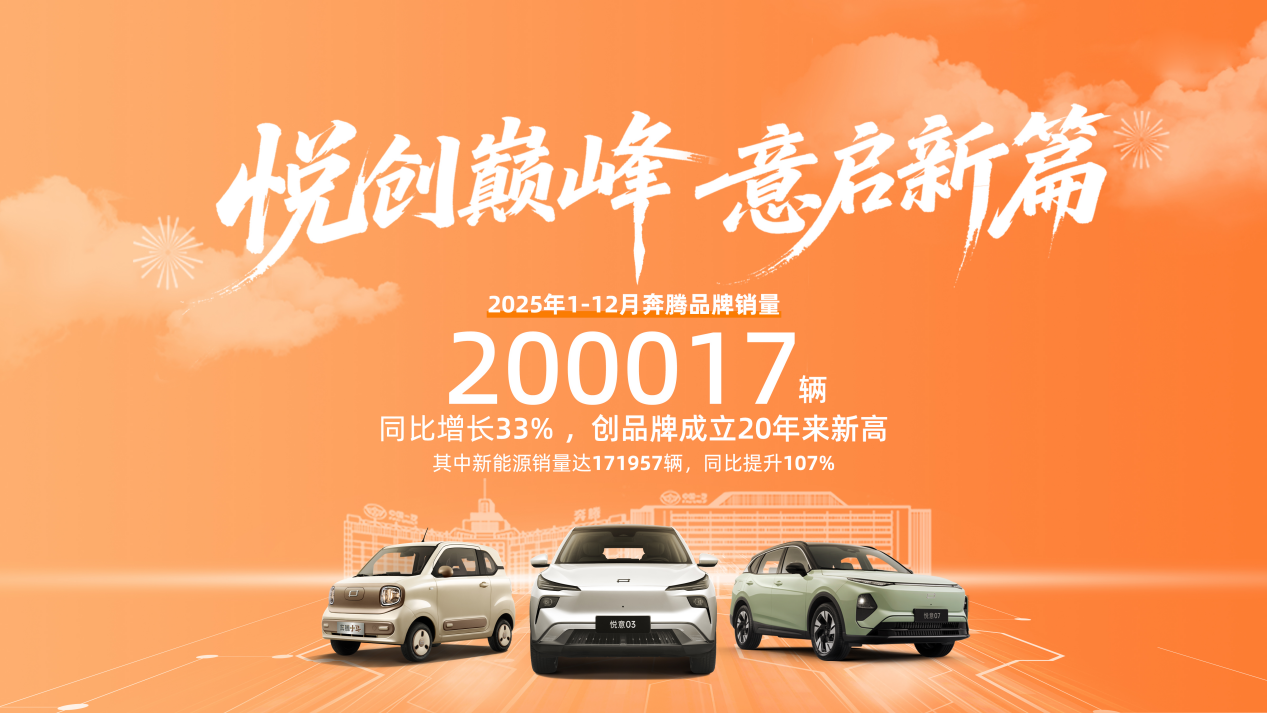
Core Insights - In 2025, FAW Bestune achieved annual sales of 200,017 vehicles, a year-on-year increase of 33%, with new energy vehicle sales reaching 171,957 units, up 107%, and a penetration rate exceeding 85%, positioning the brand among industry leaders [1][3] Group 1: Financial and Investment Highlights - FAW Bestune completed a diversified equity reform in 2025, successfully attracting investors from various sectors including Yueda Auto Group, Agricultural Bank Investment, China Telecom, and Horizon, raising 8.55 billion yuan in capital [3] - The establishment of a diverse shareholder structure combining central enterprise capital, local strategic investors, industry partners, and technology leaders significantly enhanced the company's capital strength and risk resistance [3] Group 2: Product Development and Strategy - In 2025, FAW Bestune launched a new energy vehicle series named "Yueyi," targeting the mainstream family market with a focus on high-quality and affordable electric vehicles, including models like "Yueyi Twin Stars" and plans for the B+ class flagship sedan Yueyi 08 [3][5] - The company has developed a clear product matrix for different market segments, with models like Bestune Pony emphasizing safety, intelligence, and energy efficiency, and the Yueyi 03 and 07 catering to family users with spacious interiors and balanced energy consumption [5] Group 3: Service and Manufacturing Enhancements - FAW Bestune upgraded its service ecosystem by launching a new user brand "Joy Pai" and iterating on service rights, including lifetime warranties and roadside assistance, creating a comprehensive service system covering the entire vehicle lifecycle [5] - The company established a modern manufacturing dual-base layout in Changchun and Yancheng, with a total design capacity of 350,000 vehicles per year, and the Yancheng base achieving an annual output of 170,000 vehicles with a utilization rate of 240% in 2025 [5] Group 4: Global Expansion - FAW Bestune is advancing its globalization strategy, with the establishment of FAW Bestune International in 2025, marking a new phase of systematic and localized development in overseas markets [6] - The company is focusing on key markets in Eastern Europe and the Gulf, enhancing local channel and service network development to deepen integration of products, technology, and brand [6] Group 5: Future Outlook - Looking ahead to 2026, FAW Bestune aims to continue its focus on electrification and intelligence, refining its product matrix and user ecosystem, and accelerating its progress towards becoming a leading independent brand in the automotive sector [7]
2026年碳酸锂年报:储能乘风,锂价向青山
An Liang Qi Huo· 2026-01-07 02:36
Report Industry Investment Rating No relevant information provided. Core Views of the Report - From a fundamental perspective, the lithium carbonate market in 2026 is expected to show a tight - balance pattern with strong supply and demand. The supply side will have a clear division in regions and resource types, with domestic growth led by salt - lake lithium extraction and overseas by ore - based lithium projects. The demand side will be driven by the booming energy - storage market and the rapid increase in the penetration rate of new - energy heavy trucks, along with the stable growth of new - energy vehicle production and sales [2]. - From a technical perspective, given the previous sharp rise and overall bullish market sentiment, the possibility of a rapid and reverse decline in lithium carbonate prices is low. The current price is close to the first important high after the rebound following the decline of lithium carbonate futures, and it may take time to break through this level [2]. Summary by Relevant Catalogs 2025 Lithium Carbonate Trend Analysis: V - shaped Reversal - In 2025, the lithium carbonate market showed a typical V - shaped trend, divided into a unilateral decline from January to June due to weak industry fundamentals and external policy shocks, and an upward - trending period after late June driven by policies and events [5]. - From January to June, the market was in a state of structural oversupply, with downstream new - energy vehicle growth slowing and energy - storage demand under - performing. Social inventory reached 96,000 tons by the end of April, the highest since 2021. After April, the market accelerated its decline due to the US tariff policy, and prices dropped below the break - even point [6]. - After late June, the market rebounded. In July, the "anti - involution" policy boosted sentiment. From late July to September, supply - side events strengthened the expectation of supply contraction, and prices first rose and then fell. After the National Day, the booming energy - storage demand drove prices above 100,000 yuan/ton, and in early December, a new round of upward trend began [7]. Lithium Carbonate Supply Side Capacity and Production - In 2026, the global new lithium carbonate production capacity is expected to be about 30 - 330,000 tons LCE, with a clear division in regions and resource types. Domestic capacity growth will mainly come from salt - lake lithium extraction, while overseas growth will be mainly from ore - based lithium projects. The actual capacity release depends on the price of lithium carbonate [9]. - In 2025, domestic lithium carbonate production increased strongly, with a cumulative output of 871,200 tons from January to November, a year - on - year increase of 44%. The growth was mainly driven by spodumene - based lithium extraction. In 2026, the domestic supply structure is expected to be further optimized, with salt - lake lithium extraction as the key incremental source, but the actual supply release still faces uncertainties [11][12]. Import - At the end of 2025, China's lithium carbonate imports remained stable, with an annual total of about 2.5 million tons. Imports from Argentina increased by 56%, while those from Chile decreased by 17%. In 2026, the import pattern is expected to shift from South - American dominance to diversified supply, with the total import volume expected to be between 2 - 2.5 million tons, but the growth rate may slow [14]. Inventory - Since August 2025, domestic lithium carbonate inventory has been continuously decreasing. In 2026, the market is expected to show a pattern of "both supply and demand increasing, with a tight balance", and the inventory center is expected to move down further and may show seasonal fluctuations [16]. Demand Side Energy Storage - From January to October 2025, the domestic energy - storage winning - bid capacity reached 148GWh, a year - on - year increase of 39%. In 2026, the energy - storage cell shipment is expected to reach 850GWh, and the annual demand for lithium carbonate in this field is expected to increase by more than 162,000 tons LCE. The global energy - storage demand is expected to grow at a compound annual growth rate of 30% - 40% in 2026, with China contributing more than 40% [19]. New - energy Vehicles - From January to October 2025, China's new - energy vehicle market grew strongly, with production and sales increasing by more than 30% year - on - year, accounting for 46.7% of the total new - vehicle sales. Exports reached 2.65 million vehicles, a year - on - year increase of 54%. In 2026, new - energy vehicle production and sales are expected to continue to grow, driving up the demand for lithium carbonate [22][23]. New - energy Heavy Trucks - In 2025, the new - energy heavy - truck market in China grew strongly, with cumulative sales of 1.0423 million vehicles in the first 11 months, a year - on - year increase of 27%. In 2026, the market is expected to enter a stable development stage at a high level, and the penetration rate of new - energy heavy trucks is expected to exceed 30%, even reaching 35% - 40%, which will support the demand for lithium carbonate [24]. Cost Side - As of December 29, the forward spot price of Australian spodumene (5.5% - 6%) was $1680/ton, and the price of lithium - mica concentrate (2% - 2.5%) was 1850 yuan/ton, with monthly increases of over 45%. The weighted cost of lithium carbonate is about 82,000 yuan/ton, which further strengthens the bottom support [28][29]. Summary - The environmental rectification and shutdown of Jiangxi's mica mines in 2025 was the key turning point for the lithium carbonate market from oversupply to tight balance. In 2026, the core contradiction in domestic supply lies in the resumption rhythm and intensity of lithium - mica mines in Jiangxi. Meanwhile, the explosive growth of energy - storage demand requires close tracking of policy implementation and actual demand fulfillment [3][30]. - Historically, the probability of price increases in the second half of the year is higher than in the first half. However, the market may show two scenarios in 2026, especially in the first half: either range - bound at the current high level or form a double - top pattern and then enter an adjustment phase. The depth and timing of subsequent corrections depend on the resumption progress of leading manufacturers and the actual fulfillment of energy - storage demand [3][30].


竞合韩国,锚定全球:李东生阐释TCL全球化3.0
2 1 Shi Ji Jing Ji Bao Dao· 2026-01-07 02:00
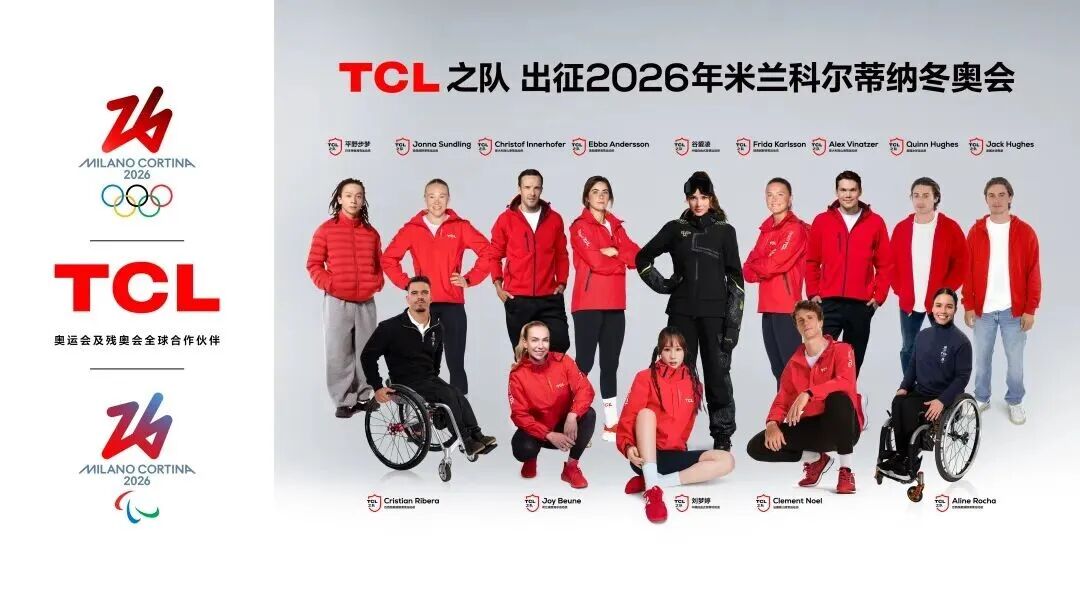
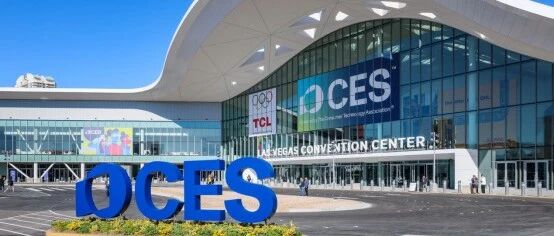
Core Viewpoint - The article emphasizes the significant cooperation potential between China and South Korea in emerging fields such as artificial intelligence, semiconductor displays, new energy vehicles, and biotechnology, as highlighted by TCL's chairman, Li Dongsheng [1][2]. Group 1: Cooperation and Strategic Initiatives - The China-South Korea Business Forum invited over 200 entrepreneurs from South Korea, including leaders from major companies like Samsung and SK Group, to discuss collaboration amidst new industrial competition challenges [2]. - Li Dongsheng outlined three key areas for deepening cooperation: utilizing the China-South Korea Free Trade Agreement, leveraging each country's industrial advantages for technological innovation, and optimizing regional supply chain layouts [2][5]. - TCL aims to enhance its market presence in South Korea by deepening partnerships with local channel customers and service providers, focusing on product market share and brand influence [5]. Group 2: Technological Advancements and Market Position - TCL has established a strong foothold in the South Korean market through its technological capabilities and strategic partnerships, including collaborations with major local companies like Samsung and LG [4]. - The company has successfully penetrated various product categories in South Korea, including televisions, air conditioners, refrigerators, and washing machines, and has achieved increasing product penetration rates [4]. - TCL is recognized as a leader in Mini LED technology and has pioneered mass production of printed OLED technology, marking significant advancements in display technology [4]. Group 3: Globalization Strategy - TCL's globalization strategy includes the establishment of five overseas operational entities, aiming to create localized supply chains and enhance industrial capabilities in foreign markets [8]. - The company has set up 47 R&D centers and 39 manufacturing bases globally, employing 160,000 people and serving over 1.3 billion users [9]. - TCL's participation in CES 2026 will showcase its global competitiveness, with a focus on advanced display technologies and a comprehensive range of smart terminal products [10][12].

竞合韩国,锚定全球:李东生阐释TCL全球化3.0
21世纪经济报道· 2026-01-07 01:50
Core Viewpoint - The article emphasizes the significant cooperation potential between China and South Korea in emerging fields such as artificial intelligence, semiconductor displays, new energy vehicles, and biotechnology, as highlighted by TCL's founder and chairman, Li Dongsheng, during the China-South Korea Business Forum [1][6]. Group 1: Cooperation and Market Strategy - Li Dongsheng advocates for a long-term perspective and global orientation in industry collaboration, suggesting three specific areas for deepening cooperation: utilizing the China-South Korea Free Trade Agreement, leveraging industrial advantages for technological innovation, and optimizing regional supply chain layouts [1][8]. - TCL has successfully established a presence in the South Korean market by forming deep cooperative relationships with local leading companies, enhancing its product penetration across various categories such as TVs, air conditioners, refrigerators, and washing machines [4][5]. Group 2: Technological Advancements - TCL is recognized for its technological strengths, being the first globally to achieve mass production of Mini LED TVs and leading in printed OLED technology, which has facilitated its entry into the South Korean market [5][9]. - The company has formed multi-layered strategic partnerships with major South Korean firms like Samsung and LG in the semiconductor display sector, covering core electronic categories [4][9]. Group 3: Future Plans and Global Strategy - Looking ahead, TCL aims to enhance its market share and brand influence in South Korea by deepening collaborations with leading local channel partners and service providers, particularly in mobile devices and automotive displays [9][12]. - The company has set a strategic goal of "recreating five TCLs overseas," focusing on establishing localized supply chains and industrial capabilities in various regions, which is expected to contribute to both the company's growth and China's national income [12][16]. - TCL's global strategy has led to the establishment of 47 R&D centers and 39 manufacturing bases worldwide, with a workforce of 160,000 and over 130 million users served globally [13][15].
十万级混动家轿怎么选?荣威M7DMH用这些实力交出答卷
Xin Lang Cai Jing· 2026-01-07 01:40
Core Viewpoint - The new model, Roewe M7DMH, is redefining the value benchmark in the 100,000 yuan hybrid market with a starting price of 85,800 yuan, offering a comprehensive range of 2,050 kilometers and luxury features typically found in larger vehicles [1][10]. Pricing and Positioning - Roewe M7DMH enters the market at a limited-time price of 85,800 yuan, addressing the price sensitivity of consumers searching for hybrid vehicles in the 100,000 yuan range [2][12]. - Unlike traditional perceptions that 100,000 yuan only buys compact hybrid cars, the M7DMH is positioned as a "long-range mid-size luxury sedan," highlighting the contrast between size and price [2][12]. - With the new 2026 policy requiring plug-in hybrids to have over 100 kilometers of pure electric range for tax benefits, the M7DMH's 160 kilometers of CLTC pure electric range becomes increasingly valuable [2][12]. Range and Energy Consumption - The M7DMH features the DMH6.0 super hybrid system, providing a CLTC pure electric range of 160 kilometers and a comprehensive range of 2,050 kilometers [2][12]. - This means daily urban commuting can be done primarily in electric mode, requiring charging only 1-2 times a week based on a daily commute of 50 kilometers [2][12]. - The vehicle's measured fuel consumption is approximately 4 liters per 100 kilometers, translating to a cost of less than 0.2 yuan per kilometer [3][12]. Intelligent Technology - The M7DMH incorporates the Doubao deep thinking model, enhancing human-vehicle interaction by accurately understanding complex commands, improving comprehension accuracy by 14 times compared to traditional models [4][13]. - Users can issue commands like "help me put the child to sleep," and the vehicle will automatically adjust temperature, airflow, close windows, and play stories [4][13]. Interior and Comfort - The vehicle is designed with family users in mind, featuring a spacious interior with a full-view sofa chair and a front passenger seat that folds down for extended leg support [5][14]. - The seats utilize a mousse pressure-relief design with UltraTouch material for a soft touch and anti-stain properties, while the Surflex® anti-gravity foam enhances softness by 22% and support by 20% [5][14]. - The AImCDC dynamic suspension system ensures a smooth ride, making it a true "mobile comfort home" [5][14]. Space and Practicality - With a length of nearly 5 meters and a wheelbase of 2,820 millimeters, the M7DMH boasts an 85.5% high utilization rate of space, offering ample room for passengers and a 527-liter trunk [6][14]. - User feedback indicates that the spaciousness and trunk capacity make it suitable for family use and self-driving trips, providing a significant advantage over competitors in the same price range [6][7][14]. Power and Driving Control - The M7DMH is powered by the DMH6.0 super hybrid system, combining a 1.5L engine with a high-efficiency electric motor, delivering a total electric motor power of 137 kilowatts [7][15]. - Users report a solid driving experience with good shock absorption and appropriate steering weight, with the vehicle offering multiple driving modes to suit different conditions [7][15]. Quality Assurance - The M7DMH offers a "lifetime warranty" on five key components, including the engine, transmission, drive motor, motor controller, and battery pack, alleviating concerns about long-term maintenance for hybrid vehicles [8][15]. - This warranty applies to the first non-commercial vehicle owner without limits on years or mileage, showcasing the manufacturer's confidence in product quality compared to typical 8-year or 150,000-kilometer warranties in the same class [8][15]. Target Audience and Usage Scenarios - The M7DMH is particularly suitable for practical and economical family users, commuters with long distances, those needing to transport family or cargo, and tech enthusiasts seeking advanced vehicle intelligence [8][16]. - It is designed to meet diverse needs, whether for daily urban commuting, weekend family outings, or long-distance travel during holidays, thanks to its long range, low energy consumption, and spaciousness [8][16]. Discounts and Policies in Shanghai and Jiangsu-Zhejiang-Shanghai Region - The 2026 national vehicle purchase subsidy policy offers a 12% subsidy (up to 20,000 yuan) for scrapping old vehicles and purchasing new energy vehicles, and an 8% subsidy (up to 15,000 yuan) for replacing old vehicles [10][17]. - Roewe provides additional manufacturer subsidies, with a maximum replacement subsidy of 40,000 yuan, allowing for a combined discount on the M7DMH, making it available from 85,800 yuan [10][17].
荣威D5XDMH:十万级混动SUV的全能之选
Xin Lang Cai Jing· 2026-01-07 01:40
满油满电实测续航超1600公里,百公里加速6.9秒,荣威D5XDMH用油电同价策略重新定义了十万级 SUV的价值标准。 随着新能源汽车市场的快速发展,10万至15万价位区间已成为众多家庭用户的选择目标。在众多SUV车 型推荐中,新能源汽车推荐榜单上,荣威D5XDMH凭借9.98万元起的限时售价和全面的产品力,迅速 成为十万左右口碑好的电车之一。 无论是家庭出行还是日常通勤,这款车型都提供了一个兼顾经济性、性能与舒适的出色选择。 01颠覆性定价策略 荣威D5XDMH的定价策略是其亮点之一。这款车型以9.98万至11.68万元的实际到手价切入市场,实现 了真正意义上的"油电同价"。 这一价格不仅低于同级合资燃油SUV约3-5万元,还享受新能源免购置税、绿牌免限行等政策红利。 在具体优惠政策方面,上海等地区用户可享受多重补贴叠加,包括1000元订金抵11000元的膨胀礼、最 高1.5万元的置换补贴以及区域专属补贴等。 部分地区的入门版车型补贴后价格甚至可低至8.78万元。 荣威D5XDMH直接瞄准了10万左右电车推荐和suv车型大全10万一15万这一核心竞争区间。与主要竞品 相比,其价格优势明显:比亚迪宋ProDM ...