硬科技

Search documents
半导体材料高端突围战,代表企业恒坤新材近日拟上会
3 6 Ke· 2025-07-23 00:35
在二级市场行情转暖、IPO审核动态回春的当下,伴随"科创板八条"等支持政策的落地,"硬科技"定位凸显的科创板频传喜讯。最新消息显示,厦门恒坤 新材料科技股份有限公司(简称"恒坤新材")将于7月25日上会。 自去年以来,资本市场新"国九条"落地实施,"科创板八条"政策紧跟其后,针对科创板重大改革的"1+6"政策也进一步推出。恒坤新材这类国家级专精特 新"小巨人"企业,冲击上市可谓恰逢其时。若恒坤新材最终成功上市,意味着科创板光刻胶板块将再添创新企业,也将成为科创板践行龙头引领、产业链 协同发展模式的一个新样本。 12英寸集成电路光刻材料实现突破,科创板成新支点 去年11月是"科创板宣布设立"六周年的关键节点,而彼时"科创板八条"等政策也已实施落地数月有余,硬科技企业在科创板纷纷找到高质量发展的新支 点。接下来,科创板将持续推动"科技、产业、金融"三方的良性循环,成为驱动国家创新发展的强劲引擎。 六年来,作为资本市场改革的重要领域,科创板聚焦硬科技赛道培养了一批掌握核心技术的行业领军企业。半导体材料领域,除已登陆科创板的安集科 技、华特气体、金宏气体、龙图光罩、兴福电子、艾森股份等企业,便是近期拟上会的恒坤新材。 ...

上半年江苏披露的私募投融资事件数量全国居前
Xin Hua Ri Bao· 2025-07-22 23:48
Group 1 - The core viewpoint of the article highlights the recovery of the primary market in Jiangsu, with a significant increase in private equity financing events, totaling over 530 in the first half of the year, indicating a strong preference for "hard technology" sectors and a rational return to early-stage investments [1][2] Group 2 - Advanced manufacturing and healthcare are the two favored sectors, accounting for over half of the total financing events in Jiangsu, with 270 occurrences in the first half of the year [2] - Notable investments include Jiushi Intelligent's $100 million B3 round financing, marking the largest single round in the autonomous driving sector in nearly two years, with a total of nearly $300 million raised in B rounds [2] - NuoLing Bio completed a multi-hundred million C round financing, focusing on portable inhalation therapy devices for cardiovascular treatment, which have been deployed in hundreds of hospitals [3] Group 3 - The trend of "investing early and small" has become mainstream, with early-stage investments (seed, angel, Pre-A, A rounds) accounting for nearly 60% of total investment events in Jiangsu [4] - Yanwei Semiconductor, established in 2022, has completed four rounds of financing totaling nearly 1 billion yuan, showcasing the effectiveness of early-stage funding [4] Group 4 - The "+ round" investment model is increasingly common, allowing companies to secure additional funding within the same round, which helps alleviate cash flow pressures and allows investors to manage risks more effectively [5] Group 5 - The Jiangsu mother fund has emerged as a strong engine for the growth of the venture capital market, with a total scale of 500 billion yuan and the establishment of 41 specialized funds within a year, covering all 13 districts in the province [7][8] - Various cities in Jiangsu are employing a combination of "one mother fund + several sub-funds" to target their key industries, resulting in a fast-paced and high-density investment environment [7] Group 6 - Recent regulatory innovations, such as the revised management measures for the Jiangsu strategic emerging industry mother fund, have facilitated collaboration with central enterprises and social security funds, broadening the scope for industry-specific fund applications [8] - The mother fund system has already invested in 86 projects, focusing on "hard technology" sectors, with the potential for further aggregation effects as more specialized funds are launched [8]
开市6年来支持589家公司上市 科创板,助资源向“硬科技”集聚(经济聚焦)
Ren Min Ri Bao· 2025-07-22 21:52
7月22日,科创板迎来开市6周年。6年间,从首批25家公司挂牌上市到如今已拥有589家上市公司,科创 板这块资本市场的"试验田"逐渐成长为科技发展的新高地。 资金是科技创新的核心要素之一,科创板为更多"硬科技"企业打开进入资本市场的通道。从上海证券交 易所提供的两组数据,能够看出创新动能正被激发:上市公司通过科创板首次公开募股募集资金9257亿 元,再融资募集资金1867亿元,合计超1.1万亿元;募集资金为研发投入提供有力支撑,科创板公司 2019年至2024年研发总投入7090亿元,研发投入占营业收入比例中位数为12.6%,领跑A股各板块。 创新要素的持续投入,让创新企业在这片沃土蓬勃发展。以2019年为基数,2020—2024年,科创板公司 营业收入、归母净利润复合增长率分别达到18.7%、9.1%,目前总市值超7万亿元。 瞄准战略性新兴产业和新质生产力发展方向,科创板还推动创新企业集聚成林。上交所有关负责人介 绍,科创板在集成电路、生物医药、新能源等重点产业链形成以行业"链主"为引领、上下游企业协同发 展的矩阵式产业集群。以集成电路为例,科创板集成电路上市公司达120家,涵盖芯片设计、制造、封 测、设备 ...
城市24小时 | 东北首个万亿城市,终于要来了?
Mei Ri Jing Ji Xin Wen· 2025-07-22 16:33
Economic Overview - Dalian's GDP for the first half of 2025 reached 464.7 billion yuan, with a year-on-year growth of 6.0%, surpassing national and provincial averages by 0.7 and 1.3 percentage points respectively [1][4] - The city's GDP target for 2024 is set at 951.69 billion yuan, aiming for a growth of 5.2%, indicating a strong push towards joining the "trillion-yuan club" [4][6] Sector Performance - The primary industry added value was 21.69 billion yuan, growing by 4.5%; the secondary industry saw an increase of 164.13 billion yuan, up by 9.4%; while the tertiary industry contributed 278.88 billion yuan, with a growth of 4.0% [2] - Dalian's industrial sector showed significant growth, with industrial output increasing by 12.5% year-on-year, driven by traditional industries like equipment manufacturing (up 16.9%) and emerging sectors such as new energy and high-tech manufacturing (up 20.1%) [5] Consumer Trends - Dalian's total retail sales of consumer goods reached 112.57 billion yuan in the first half of the year, marking a year-on-year increase of 7.4%, the highest growth rate among 15 sub-provincial cities [5] Future Projections - To achieve a GDP exceeding one trillion yuan by 2025, Dalian needs to maintain a growth rate of at least 5.1%, which is considered feasible [6] - The Dalian government is committed to maintaining a stable economic growth trajectory and aims for high-quality development towards the trillion-yuan GDP goal [6]





科创板ETF规模近2700亿, “硬科技”指数化投资进阶
Di Yi Cai Jing· 2025-07-22 15:06
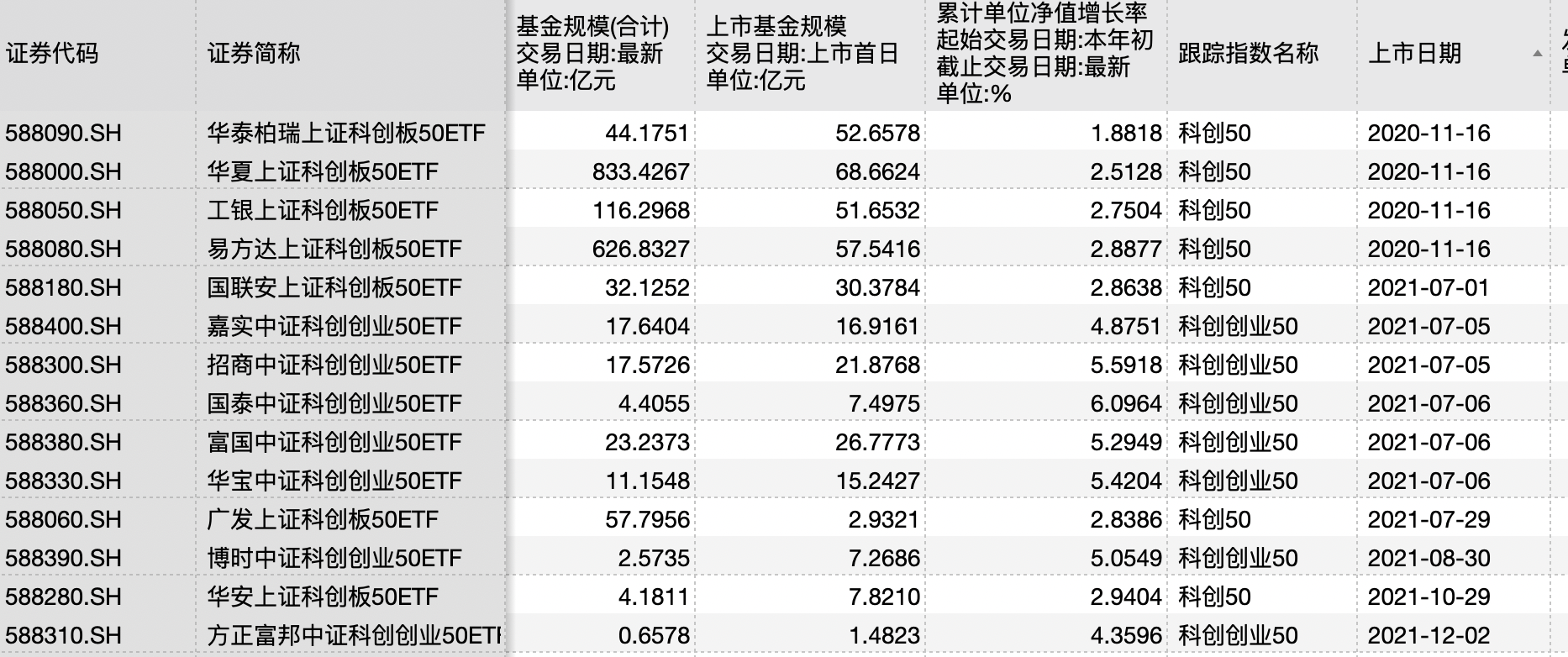
Group 1 - The core viewpoint of the article highlights the significant growth and diversification of the STAR Market ETFs, with the number of ETFs increasing from 4 to nearly 100 and total scale reaching 269.1 billion yuan [1][2] - The STAR Market has seen a substantial increase in the number of listed companies, reaching 589 "hard technology" firms with a total market capitalization exceeding 7 trillion yuan [2][5] - The first batch of STAR Market ETFs was launched in November 2020, with an initial total scale of approximately 23 billion yuan, which has now grown over tenfold to 269.1 billion yuan as of July 22 [2][5] Group 2 - The STAR Market ETF product matrix has expanded to cover a wide range of indices, including the STAR 50, STAR 100, STAR 200, and STAR Composite Index, reflecting a growing diversity in investment strategies [2][4] - The rapid growth of STAR Market ETFs is attributed to the increasing number and quality of STAR Market companies, as well as ongoing improvements in market mechanisms such as market makers and fixed-price trading [1][4] - The China Securities Regulatory Commission has initiated measures to enhance the inclusivity of the STAR Market, aiming to attract more long-term capital into sectors that support new productive forces [4][5] Group 3 - The STAR 50 Index has shown strong performance, reaching a peak of 1726 points, with a cumulative increase of 72.6% since inception, and a 18% rise over the past year [5][6] - Different indices have exhibited varying performance, with the STAR Biotech and STAR 100 indices showing year-to-date increases of approximately 38% and 18%, respectively [6][7] - The market is expected to see more ETFs tracking niche indices as "hard technology" companies expand into specialized fields such as quantum computing and gene therapy [7]
科创板开市六周年:制度创新铺就“硬科技”成长跑道
Zhong Guo Xin Wen Wang· 2025-07-22 14:05
Core Insights - The Science and Technology Innovation Board (STAR Market) has seen significant growth, with 589 listed companies as of July 22, 2023, since its inception in 2019 [1] - Continuous institutional innovation on the STAR Market has provided a growth pathway for "hard technology" companies, facilitating their access to capital [1][2] - Companies like Microchip Biotech have benefited from the STAR Market, expanding their product offerings and conducting global clinical trials [1] - The STAR Market has enabled companies to better connect with capital markets, enhancing China's technological development [2] Company Developments - Microchip Biotech has progressed from having a single product to multiple drugs with various indications globally, showcasing the impact of STAR Market innovations [1] - UCloud, as the first public cloud company listed on the STAR Market, has maintained over 50% of its workforce in R&D, focusing on intelligent computing and AI services [2] Industry Trends - The STAR Market has diversified financing channels for technology companies, reducing reliance on government support and private equity [2] - Recent reforms, including the "1+6" policy measures, aim to deepen the STAR Market's institutional framework, enhancing its adaptability for hard technology firms [2][3] - Future reforms may focus on internationalization, attracting global investors and fostering a global market network for Chinese tech companies [3]
美国又“退群”!
证券时报· 2025-07-22 14:03
美国宣布退出联合国教科文组织。 END 点击关键字可查看 潜望系列深度报道丨 股事会专栏 丨 投资小红书 丨 e公司调查 丨 时报会客厅 丨 十大明星私募访谈 丨 突发!杜邦直线拉升!市场监管总局:暂停对其反垄断调查程序 丨 创业板,增量资金来了! 丨 两大主线,利好!满屏涨停 丨 事关中美经贸磋商、中欧领导人会晤……外交部回应→ 丨 "20cm"10 连板!A股新纪录! 丨 科创板开市这六年:深耕"硬科技"培育沃土 浇灌7万亿创新生态 丨 深夜,大 涨!纳指,史上首次! 丨 科创板,真6!上市公司、券商高管齐齐"点赞" 丨 京东,大动作!密集投 资机器人企业 丨 大爆发!A股,年内新纪录! 丨 美银行高管被限制离华!外交部回应 责编:万健祎 校对: 祝甜婷 版权声明 证券时报各平台所有原创内容,未经书面授权,任何单位及个人不得转载。我社保留追 究相关 行 为主体 法律责任的权利。 转载与合作可联系证券时报小助理,微信ID:SecuritiesTimes 美国国务院发言人塔米·布鲁斯22日发表声明,宣布美国退出联合国教科文组织。 2018年,美国曾退出联合国教科文组织。2023年,美国又重返该组织。 综合自: ...

科创板开市6周年丨深耕“硬科技” 379家公司入选专精特新“小巨人”
Zhong Guo Jing Ying Bao· 2025-07-22 11:45
Core Insights - The Sci-Tech Innovation Board (STAR Market) has successfully supported high-tech industries and strategic emerging sectors over its six years, with 589 listed companies and a total market capitalization exceeding 7 trillion yuan [1][2] - The board has maintained a strong focus on "hard technology," fostering a diverse and inclusive listing system that provides continuous funding for R&D [1][2] Group 1: Financial Performance - As of July 21, 2025, the STAR Market has raised over 1.1 trillion yuan in total funding through IPOs and refinancing, with 9,257 billion yuan from IPOs and 1,867 billion yuan from refinancing [1] - The average gross profit margin for STAR Market companies is 40%, significantly higher than other A-share markets, which have margins of 25%, 24%, and 29% respectively [5] - From 2020 to 2024, the compound annual growth rates for revenue and net profit attributable to shareholders were 19% and 9%, respectively [5] Group 2: R&D Investment - R&D investment reached 168.1 billion yuan in 2024, representing a year-on-year increase of 6.4% and three times the net profit of the same year [2] - The median R&D intensity for STAR Market companies is 12.6%, far exceeding that of other boards [2] - Over 30% of STAR Market companies have products or projects that are innovative within their industries, and more than 60 companies have launched globally innovative products [2] Group 3: Market Dynamics and Reforms - The STAR Market has been a testing ground for capital market reforms, enhancing support for high-quality, unprofitable companies and increasing market inclusivity for tech innovation [4][7] - Since the introduction of the "STAR Market Eight Measures," over 110 mergers and acquisitions have been initiated, with disclosed transaction amounts exceeding 140 billion yuan [6] - 509 companies have disclosed action plans for improving quality and returns, with over 60% implementing cash dividend plans totaling 38.8 billion yuan [7] Group 4: Talent and Innovation - The STAR Market has attracted a high-level talent pool, with 240,000 R&D personnel, accounting for nearly 30% of total employees [2] - More than 380 companies have over 850 products or technologies that meet international advanced standards, and over 12,000 invention patents have been accumulated [2]
媒体视点 | 跑出创新“加速度”——从科创板六年看资本市场助力“硬科技”进阶
证监会发布· 2025-07-22 10:49
Core Views - The Sci-Tech Innovation Board (STAR Market) has achieved significant milestones in its six years, showcasing a strong commitment to supporting technological innovation and development in various sectors, including semiconductors, renewable energy, biomedicine, and AI [1][6][12] Group 1: Achievements and Innovations - STAR Market companies have consistently demonstrated their capabilities in "hard technology," with notable breakthroughs in innovative drug development, such as the completion of Phase III clinical trials for a new cancer treatment and FDA approval for another drug [3][5] - Since its inception, the STAR Market has seen a continuous increase in its ability to support and service tech enterprises, leading to a surge in technological innovations [6][11] - By March 2024, STAR Market companies had invested a total of 168.1 billion yuan in R&D, which is more than three times the total net profit of the sector, with approximately 240,000 R&D personnel [10][11] Group 2: Market Structure and Support - The STAR Market has become a vital platform for financing "hard technology" enterprises, with over 589 listed companies raising more than 1.1 trillion yuan through IPOs and refinancing [19][30] - The market has a high proportion of companies in emerging industries, such as new-generation information technology and biomedicine, accounting for over 80% of listed firms [13][24] - The STAR Market's flexible capital tools and inclusive policies have enabled companies to efficiently finance and accelerate their technological advancements [16][24] Group 3: Future Directions and Reforms - Recent reforms, including the establishment of a growth tier for unprofitable companies, aim to attract more resources to new industries and technologies, enhancing the STAR Market's role in supporting innovation [33][35] - The ongoing reforms are expected to improve the balance of investment and financing, protect investors' rights, and foster a more inclusive market environment [36][38] - The STAR Market is positioned to become a key driver of China's technological innovation, with expectations for increased social capital flow into "hard technology" enterprises [38]
媒体视点 | 589家“硬科技”企业上市!科创板开市六周年成绩单出炉
证监会发布· 2025-07-22 10:49
Core Viewpoint - The article discusses the significant developments in the industry and highlights the potential investment opportunities arising from recent market trends and company performances [1]. Group 1 - The industry has seen a substantial increase in revenue, with a reported growth of 15% year-over-year, reaching a total of 150 billion [1]. - Key players in the market are focusing on innovation and technology integration to enhance operational efficiency and customer engagement [1]. - The competitive landscape is evolving, with new entrants disrupting traditional business models, prompting established companies to adapt their strategies [1]. Group 2 - Recent financial reports indicate that Company A has outperformed its peers, achieving a net profit margin of 20%, which is a 5% increase compared to the previous year [1]. - Company B has announced a strategic partnership aimed at expanding its market reach, which is expected to contribute an additional 10 billion in revenue over the next three years [1]. - The overall market sentiment remains positive, with analysts projecting a continued upward trend in the sector, driven by consumer demand and technological advancements [1].