
双碳目标

Search documents
海南自贸港综合交通场景创新中心揭牌
Hai Nan Ri Bao· 2025-11-23 00:53
Core Viewpoint - The establishment of the Hainan Free Trade Port Comprehensive Transportation Scene Innovation Center aims to enhance the integration of industry, academia, and research, facilitating the transition from laboratory innovations to market applications in smart transportation [1][2] Group 1: Innovation Center Establishment - The innovation center was officially unveiled during the 2025 20th China Intelligent Transportation Conference, focusing on bridging the gap between transportation technology innovation and real-world applications [1] - It is a joint initiative between Hainan Transportation Group and Hainan University, aimed at collaborative technological breakthroughs in transportation [1] Group 2: Focus Areas and Collaborative Efforts - The center will concentrate on three main areas: smart transportation technology suitable for tropical island conditions, low-altitude transportation applications, and green low-carbon technologies to support carbon reduction goals [1][2] - Hainan Transportation Group has formed a "Comprehensive Three-Dimensional Transportation Collaborative Innovation Alliance" with institutions like Beihang University and Chang'an University to drive digital transformation in transportation [1] Group 3: Industry Application and Talent Development - The establishment of a technology innovation enterprise incubation center will provide pilot testing and market validation opportunities for technological achievements [2] - A "dual talent attraction and cultivation" plan will be implemented, involving collaboration with Hainan University to build a team of chief scientists and promote knowledge exchange between academia and industry [2]
海南森林变身“绿色提款机”
Hai Nan Ri Bao· 2025-11-23 00:47
Core Viewpoint - Hainan province is actively developing forestry carbon sink products, transforming its forests into valuable carbon trading assets, thereby promoting ecological and economic benefits [1][2]. Group 1: Carbon Sink Development - The red mangrove forest in Hainan's Lingao County can generate 3,236.05 tons of carbon sinks over seven years, with a market price of 100 yuan per ton [2]. - As of now, Lingao County has approximately 17,800 tons of tradable carbon sinks, with over 7,100 tons already traded [2]. - The "Forestry Carbon Sink Benefit Farmers Comprehensive Service" project has established a carbon sink network covering 15 village collectives and about 26,000 people, involving approximately 5,174 acres of red mangrove [2][3]. Group 2: Methodology and Research - Hainan's forestry department is conducting baseline surveys and dynamic monitoring of forestry carbon sinks, aiming to explore mechanisms for realizing the value of ecological products [3]. - The provincial forestry research institute is developing carbon sink methodologies tailored to tropical forests, which will quantify the carbon reduction effects of various forestry models [3]. Group 3: Carbon Sink Products and Applications - Hainan has launched its first national park carbon sink product, focusing on the carbon sequestration potential of the tropical rainforest restoration project in the Dingluo Mountain area, generating over 620,000 yuan in trading revenue [3]. - Carbon sink products are available for societal purchase, applicable for carbon neutrality in events, judicial ecological restoration, and more [4]. - The forestry carbon sink has supported over 20 judicial executions, with a total judicial purchase amount exceeding 650,000 yuan [4].
上海长三角氢能科技研究院院长张焰峰:氢能全球化合作已成主旋律
2 1 Shi Ji Jing Ji Bao Dao· 2025-11-22 15:35
Core Viewpoint - The hydrogen energy industry in China is transitioning from a demonstration phase to a critical period of large-scale development, expected to become a strategic emerging industry alongside photovoltaics and new energy vehicles during the 14th Five-Year Plan [4]. Industry Development - Over 65 countries and regions globally have established hydrogen energy strategies, recognizing it as a new productive force [4]. - By 2024, global electrolysis hydrogen production capacity is projected to reach 2 GW, with China accounting for approximately 65% of this capacity and about 60% of global electrolyzer manufacturing capacity [4]. Policy Framework - The "China Hydrogen Energy Industry Development Medium and Long-Term Plan (2022)" positions hydrogen as a crucial component of the future energy system, with regulations aligning hydrogen energy with LNG standards effective from January 1, 2025 [4][5]. - Local governments in China issued 556 hydrogen-related regulations in 2024, reflecting a shift from strategic planning to implementation [5]. Production Capacity - By the end of 2024, China's hydrogen production capacity is expected to exceed 50 million tons per year, with fossil fuel-based hydrogen still dominating supply [6]. - Coal-based hydrogen production capacity is approximately 28 million tons per year, while natural gas and industrial by-product hydrogen each account for about 20% of the supply [6]. Project Development - More than 600 renewable energy electrolysis hydrogen projects are planned across the country, with built capacity of about 12,500 tons per year, primarily in North and Northwest China [7]. Storage and Transportation - Technologies for high-pressure hydrogen storage, liquid hydrogen storage, pipeline transportation, and offshore transportation have matured, with significant projects like the "West Hydrogen East Send" pipeline advancing [8]. Application Scenarios - Hydrogen is penetrating various sectors, including transportation, industry, and energy storage, with a focus on commercial exploration through coordinated deployment of vehicles, hydrogen stations, and hydrogen sources [8]. - The industrial sector is a major consumer of hydrogen and is evolving from gray hydrogen to green hydrogen applications, aligning with carbon reduction goals [8]. Future Prospects - Hydrogen energy is recognized as one of the six future industries in China's 14th Five-Year Plan, alongside quantum technology and nuclear fusion energy, indicating its potential as a new growth point [9][10]. - The global hydrogen industry is increasingly characterized by cooperation, with Chinese companies moving from equipment export to project investment and joint development, aiming for comprehensive participation in the global hydrogen landscape [10].

全球见证亮眼答卷!2025第八届中国国际光伏与储能产业大会多项数据再攀新高度
Sou Hu Cai Jing· 2025-11-22 14:07
Core Insights - The 2025 8th China International Photovoltaic and Energy Storage Industry Conference was held in Chengdu, focusing on the theme "Solar Storage Co-Prosperity, Integration Empowerment, Intelligent Innovation for the Future" [1] - The conference attracted over 5,000 participating and exhibiting companies, with total project signing amounts exceeding 33 billion RMB [1][50] - The event featured a record number of high-profile guests, including government leaders, industry experts, and representatives from over 200 media outlets, achieving a total online reach of over 200 million [1][120] Event Overview - The conference took place from November 17 to 20, 2025, and is recognized as one of the top three international events in the solar storage industry globally [2][137] - It included 45 sessions over four days, comprising main meetings, parallel sessions, and evening events, showcasing the industry's commitment to high standards and global collaboration [1][60] Participation and Engagement - The event saw participation from over 2,500 key leaders and experts, with nearly 20 government delegations from various regions in China attending [9][16] - International participation included over 100 overseas buyers from regions such as Europe, Asia, Africa, and Latin America, enhancing global cooperation in the renewable energy sector [38][28] Industry Impact - The conference emphasized the importance of collaboration among government, industry, and academia to drive innovation and address industry challenges [27][20] - Significant projects were signed during the event, focusing on various aspects of the solar and energy storage industry, including photovoltaic projects and energy storage solutions [53][55] Key Announcements and Initiatives - The conference launched the "Chengdu Declaration" aimed at breaking the cycle of excessive competition and strengthening global energy security [1][84] - The "2025 China and Global New Energy Development White Paper" was released, providing insights into the current state and trends of the renewable energy industry [90][84] Media Coverage - The event garnered extensive media attention, with over 200 media outlets covering the conference, resulting in more than 1,500 published articles and a significant online presence [120][126] - A new media alliance for the global solar storage industry was established to enhance communication and collaboration within the sector [128][129]

国际观察丨巴西贝伦气候大会上的中国声音
Xin Hua Wang· 2025-11-22 10:58
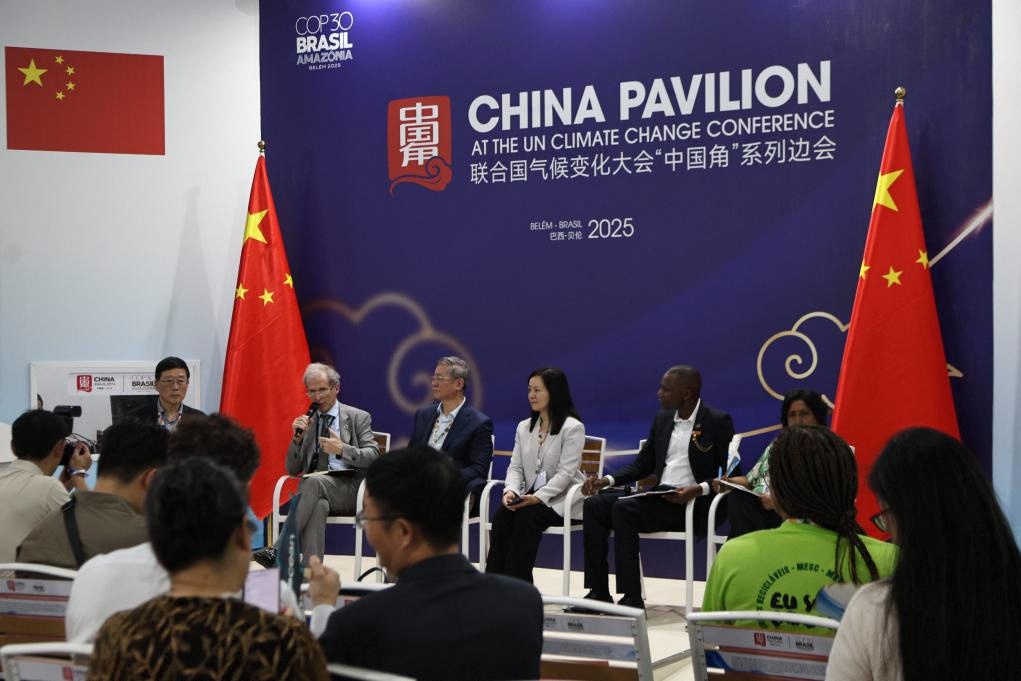
今年是《巴黎协定》签署十周年,也是中国提出碳达峰碳中和目标的第五年。长期以来,中国作为负责任的发展中国家,坚持实施积极应对气候 变化国家战略,坚定推进"双碳"目标。 漫步大会国家馆区,"中国角"每日高朋满座,是大会的"强力磁场"和与会代表的热门"打卡地"。从用再生电路板与退役锂电池铝材制作的桌椅, 到稻壳制作的可降解水杯和纸制茶几,处处细节体现出绿色低碳理念。 巴西贝伦气候大会上的中国声音 新华社记者周永穗 赵焱 《联合国气候变化框架公约》(以下简称《公约》)第三十次缔约方大会(COP30)闭幕在即。美国缺席,欧洲和加拿大顾虑重重,单边主义抬 头与地缘政治紧张加剧给全球气候治理合作带来挑战……大会能否达成共识仍未知,但与之形成对比的是,尽管面临资金和技术方面的巨大挑 战,全球南方国家坚持在能源转型道路上稳步前行,大会上的中国声音获得众多与会嘉宾的认可和支持。 2025年11月10日,在巴西贝伦,人们参加COP30"中国角"系列边会的首场边会。当地时间10日上午,《联合国气候变化框架公约》第三十次缔约 方大会(COP30)"中国角"系列边会在巴西贝伦拉开序幕,首场边会聚焦生态文明和美丽中国实践。新华社发(克劳迪 ...
“华龙一号”批量化建设新进展!漳州核电2号机组首次并网
Bei Jing Ri Bao Ke Hu Duan· 2025-11-22 04:41
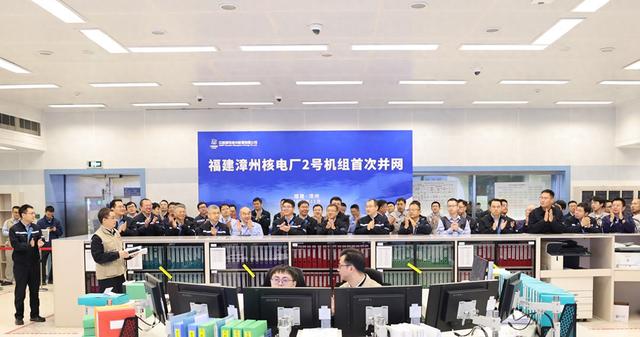
转自:北京日报客户端 11月22日9时32分,中核集团旗下中国核电投资控股的漳州核电2号机组首次并网成功,正式向电网送出 第一度电。至此,"华龙一号"批量化建设一期工程两台机组全部并网发电,为国家能源结构优化、实 现"双碳"目标做出新的贡献。 截至目前,漳州核电1号机组已安全稳定发电超88亿度,2号机组预计在年内投入商运,3、4号机组处于 土建安装阶段,5、6号机组正在扎实推进前期工作。作为"十四五"期间投产的重点项目,漳州核电1、2 号机组投产后,年发电量预计可达200亿度,可减少二氧化碳排放约1600万吨,相当于每年减少标准煤 消耗超600万吨。 图片来源:中核集团 并网现场 "华龙一号"作为我国核电走向世界的国家名片,是我国研发设计的具有完整自主知识产权的三代压水堆 核电创新成果。目前"华龙一号"已成为全球在运、在建机组总数最多的第三代核电技术,是当前核电建 设的主力堆型,标志着中国核电技术与综合竞争力跻身世界第一方阵,充分印证了"中国方案"的先进与 可靠。 漳州核电是"华龙一号"批量化建设的始发地,也是目前全球最大的"华龙一号"核电基地,规划建设6 台"华龙一号"核电机组。基地全面建成后,预计每年可提 ...

走进雄安新区:昝岗片区的现代化新气象
Jing Ji Wang· 2025-11-22 04:33
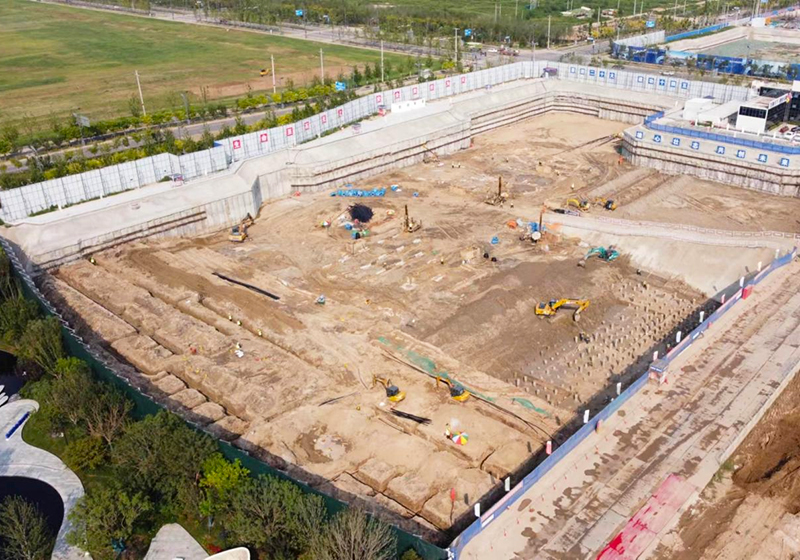
Core Insights - The Xiong'an Future Science and Technology City project is being developed with a focus on innovation and smart city elements, integrating above-ground, underground, and cloud-based planning and construction [1] Group 1: Project Overview - The project features a smart park system consisting of "1 platform, 3 brains, and 5 smart scenarios," which includes diverse functions such as industrial offices, residential apartments, commercial facilities, and ecological parks [1] - An underground urban complex is being built to facilitate seamless transportation, smart traffic, commercial services, and cultural leisure activities [1] Group 2: Environmental Sustainability - The project utilizes geothermal energy resources found approximately 100 meters underground, which will significantly reduce heating energy consumption and support carbon neutrality goals [1] - The geothermal heat pump system is expected to save about 40% in operational costs compared to traditional air conditioning systems, marking the project as a model for low-carbon and environmentally friendly development [1]
风云气象卫星:“天穹之眼”如何照亮美好生活
Ren Min Wang· 2025-11-22 01:41
Core Insights - The news highlights the significant advancements of China's Fengyun meteorological satellites, which now serve 133 countries and regions, showcasing China's transformation from a follower to a leader in meteorological technology [1] Group 1: Technological Advancements in Agriculture - The Fengyun satellite system enables real-time monitoring of crop conditions, allowing farmers to make informed decisions regarding irrigation and fertilization, thus transitioning traditional agriculture to smart agriculture [2] - The use of satellite-guided precision fertilization has reduced chemical fertilizer usage in Northeast China, while remote sensing has improved irrigation efficiency in arid regions [2] Group 2: Disaster Prevention and Response - The Fengyun-4 satellite has improved the monitoring and identification of severe weather events, reducing the time for disaster warnings to as little as 5 minutes and enhancing severe weather alerts by 40 minutes [3] - The satellite's rapid imaging capabilities allow for real-time emergency responses, playing a crucial role in disaster management and reporting [3] Group 3: Ecological Monitoring and Protection - Fengyun satellites serve as "space sentinels" for ecological protection, providing data for environmental assessments and monitoring changes in ecological conditions [4] - The satellite data supports initiatives like ecological red lines and tracking carbon neutrality goals, contributing to sustainable development [4] Group 4: Enhancing Public Services - The Fengyun-3 G satellite's precipitation measurement radar fills a gap in precipitation detection, providing accessible agricultural weather information to rural farmers and aiding livestock herders and fishermen [5] - These services exemplify the satellite's role in bridging the gap between advanced technology and everyday life, enhancing public welfare [5] Group 5: Space Weather Monitoring - Fengyun satellites also monitor space weather, providing critical data for major space missions and enhancing the safety of satellite navigation and aerospace operations [6] - The upcoming launch of the world's first space weather AI model, "Fengyu," is expected to significantly improve forecasting accuracy [6] Group 6: Global Contribution and Future Outlook - China is transitioning from a "follower" to a "contributor" in global meteorological governance, sharing Fengyun satellite data through the World Meteorological Organization [7] - The Fengyun-2 H satellite and Fengyun-4 A satellite are pivotal in providing meteorological support for regional and international initiatives, with a high satisfaction rate among international users [7] - Future developments in the next generation of Fengyun satellites are anticipated to further enhance China's capabilities in meteorological services and global cooperation [7]
新能源消纳需突出市场机制作用
2 1 Shi Ji Jing Ji Bao Dao· 2025-11-22 00:06
Group 1 - The core focus of global climate governance is the clean and low-carbon transition of the energy system, emphasized by the UN Secretary-General's call for support for renewable energy development to achieve the 1.5°C temperature control target [1] - China has submitted its "2035 Nationally Determined Contribution Report," aiming for a 7%-10% reduction in greenhouse gas emissions from peak levels by 2035 and a target of over 360 million kilowatts of installed capacity for wind and solar power [1][2] - The proportion of non-fossil energy consumption in China has increased from 16.0% in 2020 to 19.8% in 2024, indicating significant progress in renewable energy development [2] Group 2 - The "Guiding Opinions" issued by the National Development and Reform Commission and the National Energy Administration aim to address challenges in renewable energy consumption and establish a comprehensive control system by 2030 and 2035 [3] - Specific measures include categorizing policies for different renewable energy types, promoting new consumption models, enhancing the adaptability of the new power system, and improving the national unified electricity market [3][4] - The "Guiding Opinions" also emphasize strengthening market mechanisms and expanding application scenarios for renewable energy, aligning with previous policies to foster innovation and system regulation [4]
多元拓展清洁能源终端替代
Jing Ji Ri Bao· 2025-11-21 22:41
Core Viewpoint - The development of clean energy is crucial for achieving the "dual carbon" goals, ensuring energy security, and promoting a comprehensive green transformation of the economy and society [1][2]. Group 1: Achievements in Clean Energy Development - Since the "14th Five-Year Plan," China's clean energy sector has rapidly advanced, achieving significant milestones. Compared to the end of the "13th Five-Year Plan," renewable energy generation capacity and output have increased by approximately 18% and 10%, respectively. Nuclear power capacity and annual generation have risen by about 30%, while new energy storage capacity has grown nearly 30 times [2]. Group 2: Challenges in Clean Energy Sector - Despite rapid expansion, the clean energy sector faces deep-rooted challenges, including the contradiction between the rapid increase in installed capacity and insufficient consumption. There is a low proportion of non-electric utilization scenarios, and new energy storage and hydrogen energy have yet to establish stable and reliable business models. Additionally, the clean energy transition in end-use faces dual constraints of inadequate technical adaptability and high transformation costs [2]. Group 3: Strategies for Clean Energy Development - To address these challenges, a systematic approach is needed, focusing on supply, consumption, market, technology, and international cooperation. This includes enhancing the multi-supply of clean energy, accelerating the construction of clean energy storage and transportation networks, and optimizing the layout of the industrial chain to prevent excessive competition [3][4]. Group 4: Expanding Clean Energy Applications - The strategy involves diversifying clean energy applications in various sectors. In industry, there is a push for high-energy-consuming industries to relocate to areas rich in clean energy. In transportation, the development of clean energy transport corridors and integrated charging stations is emphasized. In buildings, existing structures are encouraged to install photovoltaic systems, and new public buildings are to fully utilize clean energy [4]. Group 5: Innovation and International Cooperation - Accelerating technological innovation in clean energy is essential, focusing on key technologies such as perovskite photovoltaics and floating offshore wind power. The establishment of a clean energy intellectual property operation center and high-value patent pool is also highlighted. Furthermore, international cooperation is encouraged, particularly in the context of the Belt and Road Initiative, to enhance cross-border electricity interconnection and international power market development [5].