
智能化

Search documents
纸杯生产设备行业发展现状与技术趋势分析
Sou Hu Cai Jing· 2025-10-29 18:11
Industry Overview - The disposable paper cup market in China surpassed 15 billion yuan in 2022, with an annual growth rate of approximately 8% [4] - The demand for paper cup production equipment has increased, with over 200 domestic manufacturers primarily located in Guangdong, Zhejiang, and Jiangsu [4] - Paper cup production equipment can be categorized into three types: fully automatic high-speed production lines, semi-automatic equipment, and small desktop devices [4] - Modern equipment has seen a 25% reduction in energy consumption and a decrease in waste rate from 3% to below 1% compared to five years ago, attributed to servo control systems and intelligent detection technology [4] Technical Features of Modern Equipment - Automation control systems using PLC and touch screen interfaces enhance production efficiency, allowing for digital parameter settings and real-time monitoring [5] - Equipment with intelligent control systems can reduce operator demand by 40% and improve product consistency by 15% [5] - Energy-saving designs include servo motors that save 30% more energy than traditional motors and systems that recover waste heat [6] - Advanced equipment can process various eco-friendly materials, including traditional PE-coated paper and PLA biodegradable coatings [8] Equipment Selection Considerations - Users should match equipment capacity to actual needs, with small restaurants considering desktop devices that produce 2,000-5,000 cups per hour for optimal ROI [9] - Key components such as imported bearings can significantly extend the continuous operation time of the equipment [10] - After-sales service capabilities should be evaluated, with industry standards suggesting remote guidance within 24 hours and on-site support within 72 hours [11] Industry Development Trends - Future equipment is expected to incorporate intelligent features such as visual inspection systems and IoT remote monitoring [12] - There is a growing emphasis on green manufacturing, including the ability to process thinner eco-friendly materials and reduce carbon emissions [13] - Flexible production capabilities will be enhanced to meet personalized demands, with equipment that can produce multiple cup types being more favored [14] Manufacturer Recommendations - Ruian Mingyuan Machinery Co., Ltd. specializes in producing various paper product forming machinery and has a comprehensive quality management system [15][19] - The company offers customized solutions to meet specific client needs, including design and assembly line automation [19] Conclusion - The paper cup production equipment industry is transitioning from mechanization to intelligent automation, necessitating continuous innovation from manufacturers to meet efficiency and environmental standards [20]


领益智造(002600.SZ)拟24.04亿元收购浙江向隆96.15%股权 加速深化汽车产业布局
智通财经网· 2025-10-29 18:05
Group 1 - The company, Lingyi Technology, announced a cash acquisition of 96.15% equity in Zhejiang Xianglong Machinery for 2.404 billion yuan [1] - Zhejiang Xianglong specializes in the research, manufacturing, and sales of automotive drive shafts and transmission shafts, serving well-known domestic and international manufacturers of both new energy and fuel vehicles [1] - The acquisition aims to enhance the company's presence in the automotive industry, optimize its product matrix, and adapt to trends in automotive electrification and intelligence, as well as explore the expanded application of AI terminal hardware [1]

宗馥莉公开露面!
证券时报· 2025-10-29 15:35
Core Insights - The article highlights the recent developments and strategic planning of Hongsheng Group, emphasizing the leadership of Zong Fuli as the president and her focus on high-quality development for 2025 [1][2][4]. Group 1: Company Overview - Hongsheng Beverage Group was established in 2003 and is controlled by offshore company Hengfeng Trading, which is also controlled by Zong Fuli [4]. - The company has a comprehensive industrial layout covering food ingredients, equipment manufacturing, and packaging printing, with 19 production bases and 48 subsidiaries nationwide [5]. Group 2: Recent Developments - A recent meeting held in Hangzhou focused on the progress made in production operations, technological innovation, and safety management, with Zong Fuli outlining the next steps for the company [2][4]. - The meeting emphasized that 2025 is a critical year for promoting high-quality development, urging all regions to focus on process innovation, production capacity enhancement, and strict food safety management [4]. Group 3: Strategic Focus - The company aims to improve core competitiveness through continuous process innovation and upgrading production lines to enhance digital and intelligent production levels [4]. - There is a strong emphasis on deepening human efficiency management reforms and ensuring product quality and safety through a robust quality management system [4].

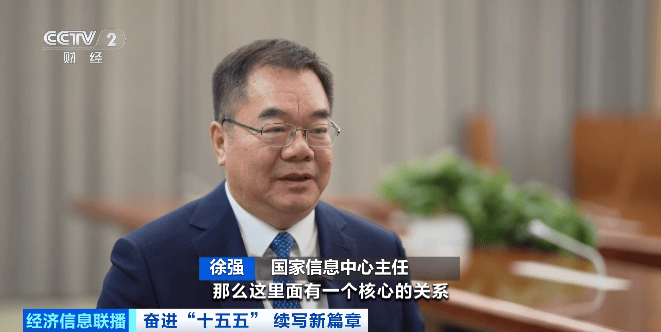
徐强:高质量发展需处理好政府与市场关系
Sou Hu Cai Jing· 2025-10-29 15:20
Core Viewpoint - The article emphasizes the importance of establishing a high-level socialist market economy system in China, focusing on enhancing the momentum for high-quality development through effective government and market relationships [1][3]. Group 1: High-Quality Development - High-quality development requires a balanced relationship between government intervention and market efficiency, particularly during times when market mechanisms fail [3]. - The construction of a modern industrial system is essential for achieving high-quality development, with a focus on intelligent, green, and integrated development as key guiding principles for future industrial growth [5][8]. Group 2: Future Industrial Development - The future direction of China's industrial development will prioritize intelligent, green, and integrated approaches, with intelligent development leveraging artificial intelligence to enhance various industries [8]. - Different regions in China will need to identify their unique advantages, such as talent, application scenarios, or computing power, to effectively implement intelligent strategies [10]. Group 3: Technological Innovation - The next five years should focus on accumulating original technological innovations, which are crucial for achieving self-reliance in technology and maintaining a competitive edge in high-end sectors [12][14]. - Emphasizing original technology and innovation will be vital for occupying the technological high ground and leading future industrial development, particularly in core technology breakthroughs [14].
进博会|将汽车生态链搬入“四叶草” 上海嘉定进博会首次独立设展
Zhong Guo Jing Ying Bao· 2025-10-29 15:08
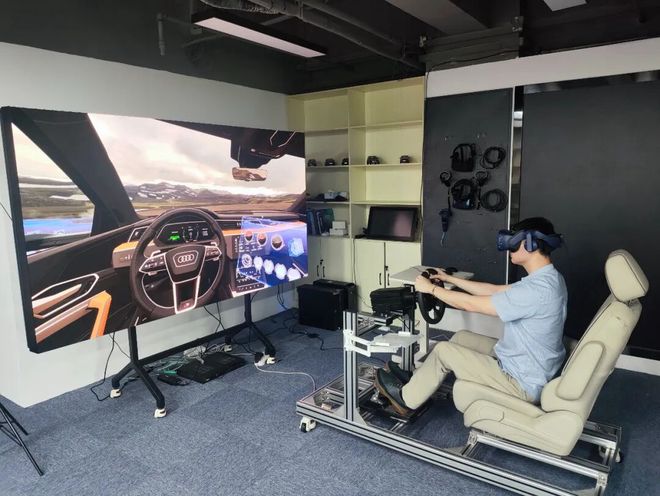
Core Insights - The eighth China International Import Expo (CIIE) will take place from November 5 to 10, showcasing the automotive industry in Shanghai's Jiading District for the first time [2] - Jiading aims to establish itself as a world-class automotive industry center and a leading area for advanced autonomous driving, promoting both traditional and smart electric vehicles [2] Exhibition Overview - Jiading will feature a dedicated exhibition area of approximately 300 square meters, divided into four functional zones: reception area, international enterprise exhibition area, Jiading New Four Modernizations Innovation Laboratory, and government-enterprise meeting area [2] - The exhibition will utilize various formats such as vehicle displays, component arrays, digital screens, and interactive experiences to highlight Jiading's automotive ecosystem and innovation [2] Featured Companies and Innovations - NIO will showcase its new ET9 model, representing a decade of technological innovation and positioned as a smart electric flagship vehicle [3] - The Kalman brand will present its Zr model, designed for young users with a focus on futuristic and technological aesthetics [4] - Arkadia-life will display the P01 smart sofa, merging automotive design with home decor, showcasing cross-industry innovation [4] Future Innovations - The Jiading New Four Modernizations Innovation Laboratory will present cutting-edge products from six companies across various fields, emphasizing Jiading's innovation capabilities in electric, intelligent, connected, and shared vehicles [6] - Zhijing Technology will demonstrate its AI automotive design system, allowing users to create designs interactively [6] - Other exhibitors include companies focusing on high-performance sensors, sustainable materials, and innovative human-machine interaction solutions [7] Strategic Development - Jiading's strategic layout, referred to as "Two Cities and Two Districts," aims to enhance its comprehensive advantages in automotive, innovation, openness, and ecology, fostering a new high-quality development pattern [7]

深市育先锋·重器显担当|深市机械设备制造龙头 以创新技术护航超级工程
Zheng Quan Ri Bao· 2025-10-29 13:52
Core Insights - The article highlights the significant role of leading mechanical equipment manufacturers listed on the Shenzhen Stock Exchange in driving innovation and meeting market demands in high-end machinery manufacturing, particularly in large-scale engineering projects both domestically and globally [1][2]. Industry Performance - The mechanical industry in China has shown robust growth, with a reported increase of 8.7% in the added value of large-scale mechanical industries in the first three quarters of 2025, outperforming the national industrial growth rate by 2.5 percentage points [3]. - 68% of monitored mechanical products experienced year-on-year production growth, with notable increases in the production of automobiles, solar cells, and excavators, all exceeding 10% [3]. Company Innovations and Strategies - Companies like Zoomlion Heavy Industry Science and Technology Co., Ltd. and XCMG Group focus on technological breakthroughs and customized equipment development to meet specific project needs, such as high-altitude and challenging geological conditions in the Yarlung Tsangpo River hydropower project [1][3]. - Jerry Oilfield Services Group has invested over 2 billion yuan in R&D over the past five years, achieving leading market shares in various oil and gas development equipment sectors [3]. Global Expansion Efforts - Leading companies are actively integrating into global supply chains by establishing localized service networks and participating in international standard-setting, with Zoomlion reporting a compound annual growth rate of 62% in overseas revenue over the past three years [4]. - By the end of 2024, Zoomlion's overseas revenue is expected to exceed 23.38 billion yuan, with over 400 service points established globally [4]. Supportive Environment - The growth of these companies is supported by a collaborative framework involving government policies, capital market empowerment, and sustained R&D investments [5][6]. - The Ministry of Industry and Information Technology has outlined a plan for the mechanical industry to maintain steady growth, targeting an annual revenue increase of approximately 3.5% and a revenue goal exceeding 10 trillion yuan by 2026 [6]. R&D and Technological Leadership - Continuous high-intensity R&D investment is crucial for maintaining technological leadership, with Zoomlion achieving significant accolades and holding the highest number of effective patents in the industry [7]. - Over the past five years, Zoomlion's average annual R&D investment intensity has exceeded 7%, with a reported R&D expenditure of 1.694 billion yuan in the first half of 2025, accounting for 6.82% of its revenue [7].


深市育先锋・重器显担当|深市机械设备制造龙头 以创新技术护航超级工程
Zheng Quan Ri Bao Zhi Sheng· 2025-10-29 13:42
Core Insights - The article highlights the significant role of leading mechanical equipment manufacturers in the Shenzhen Stock Exchange in driving innovation and meeting market demands in high-end machinery manufacturing [1][2][8] Group 1: Company Developments - Zoomlion Heavy Industry Science and Technology Co., Ltd. has made breakthroughs in 4000-ton level crane technology and established the largest and most comprehensive intelligent construction machinery industrial base globally, known as "Zoomlion Smart Industrial City" [1] - XCMG Group focuses on developing equipment for extreme working conditions, specifically tailored for the high-altitude and challenging geological environment of the Yarlung Tsangpo River downstream hydropower project [1] - Yantai Jereh Petroleum Service Group has been continuously innovating core equipment for shale gas extraction to meet national energy security needs [1][3] Group 2: Industry Growth - The mechanical industry in China has shown robust growth, with a reported 8.7% year-on-year increase in value added for large-scale mechanical industries in the first three quarters of 2025, outperforming the national industrial growth rate by 2.5 percentage points [3] - 68% of monitored mechanical products have seen a year-on-year increase in cumulative output, with significant growth in automotive, solar cells, and excavators, all exceeding 10% [3] Group 3: International Expansion - Companies are actively integrating into the global supply chain by conducting market research, establishing localized service networks, and participating in international standard-setting [4] - Zoomlion's overseas revenue has seen a compound annual growth rate of 62% over the past three years, with foreign income expected to exceed 51% of total revenue by the end of 2024, amounting to 23.38 billion yuan [4] Group 4: Support Mechanisms - The growth of leading mechanical equipment manufacturers is supported by a collaborative effect of policies, capital, and research and development [6][8] - The Chinese government has implemented various supportive policies, including subsidies and tax incentives for technology projects, to create a favorable environment for industry growth [6] - Continuous high-intensity R&D investment is crucial for maintaining technological leadership and market expansion, with companies like Zoomlion investing over 1.694 billion yuan in R&D in the first half of 2025, representing 6.82% of their revenue [7][8]
共进股份2025年前三季度净利润同比增长529.94% 全球化布局驱动高增长
Zheng Quan Ri Bao Wang· 2025-10-29 13:15
Group 1 - The core viewpoint of the news is that Shenzhen Gongjin Electronics Co., Ltd. reported significant growth in revenue and net profit for the first three quarters of 2025, indicating strong operational performance and market expansion [1] - For the first three quarters of 2025, the company achieved operating revenue of 6.539 billion yuan, a year-on-year increase of 8.15%, and a net profit of 86 million yuan, a remarkable year-on-year growth of 529.94% [1] - In Q3 2025, the company recorded operating revenue of 2.386 billion yuan, reflecting a year-on-year growth of 16.10% and a quarter-on-quarter increase of 13.51%, with net profit reaching 29 million yuan [1] Group 2 - The improvement in overall profitability is attributed to revenue growth, enhanced gross margin, and effective control of operating expenses, with a gross margin of 11.99% for the first three quarters, up 0.25 percentage points year-on-year, and a decrease in expense ratio by 1.99 percentage points [1] - The company has been actively expanding both domestic and international markets, deepening cooperation with core clients, and continuously consolidating its competitive advantages [1] - The overseas business accounted for over 70% of total revenue in the first three quarters, with a year-on-year growth rate exceeding 40%, showcasing strong momentum in international development [1] Group 3 - To support business growth, the company is enhancing its global production capacity, operating nearly 90 SMT production lines across four major production bases, which meet high-end electronic product manufacturing requirements [2] - The company’s second phase factory in Vietnam has commenced production, and a North American cooperative factory project is underway, indicating ongoing expansion of overseas capacity [2] - The company is experiencing positive progress in diversified business areas driven by global data center construction, AI computing power demand, and automotive intelligence trends, with significant revenue recovery in its AP series and expanding market share in switches and servers [2]

比亚迪携 K-Car 攻入日本车市!铃木社长直言 “竞争将至”,东京车展变 “压强测试场”
Mei Ri Jing Ji Xin Wen· 2025-10-29 12:29
Core Insights - The 2025 Japan Mobility Show serves as a significant platform for Japanese automakers to showcase their strategies and maintain their competitive edge in the global automotive market [1] Group 1: Event Overview - The 2025 Tokyo Motor Show is being held at the Tokyo International Exhibition Center, featuring major Japanese brands such as Toyota, Honda, Nissan, Mitsubishi, Suzuki, and Subaru, while international brands are minimally represented [4] - BYD made its global debut of a new pure electric K-Car model, which has garnered attention from Japanese automakers, indicating a new competitive landscape [4][6] Group 2: BYD's Participation - BYD, as the only Chinese automaker at the show, emphasizes its commitment to building a comprehensive ecosystem of hybrid and electric vehicles in Japan, with plans to introduce 7 to 8 models by 2027 [5][6] - The company has established 66 sales points in Japan, indicating a steady expansion of its distribution network [6] Group 3: Japanese Automakers' Strategies - Japanese automakers are focusing on niche markets, with Honda's new electric concept car emphasizing compactness and driving enjoyment, while Nissan is testing consumer acceptance of its Chinese-made N7 electric sedan [11][13] - Mazda's global debut of the Vision Model concept car and the new generation CX-5 highlights its commitment to electrification and innovation in air filtration technology [14] Group 4: Industry Trends - The Tokyo Motor Show reflects a divergence in strategies between Japanese automakers and their Chinese counterparts, with the former focusing on smaller, specialized vehicles while the latter targets larger, more comprehensive models [11][13] - Despite the emphasis on electrification, it has not yet become the central strategy for major Japanese brands, indicating a potential gap in their long-term vision [16]


均胜电子2025前三季度营收利润双增 新获订单约714亿元
Zheng Quan Shi Bao Wang· 2025-10-29 12:28
Core Insights - Junsheng Electronics reported significant growth in both revenue and profit for Q3 2025, with a notable increase in gross margin, indicating strong operational performance and effective strategic initiatives [1][2]. Financial Performance - The company achieved a total revenue of 45.844 billion yuan, representing an 11.45% increase year-on-year; net profit attributable to shareholders was 1.12 billion yuan, up 18.98% year-on-year, with a non-recurring net profit of 1.122 billion yuan, reflecting a 19.22% increase [1]. - In Q3 alone, revenue reached 15.497 billion yuan, a 10.25% year-on-year growth, while net profit for the quarter was 413 million yuan, marking a 35.40% increase year-on-year and a 12.4% increase quarter-on-quarter [1]. Profitability Improvement - The overall gross margin for the first three quarters improved by 2.7 percentage points to 18.3%, with Q3 gross margin reaching 18.6%, the highest in nearly three years, driven by effective cost control and operational efficiency [2]. - The company plans to enhance gross margin further through initiatives such as domestic chip substitution and increasing the proportion of self-produced gas generators [2]. Order Acquisition and Business Growth - Junsheng Electronics secured new orders totaling approximately 71.4 billion yuan in the first three quarters, with Q3 alone contributing 40.2 billion yuan, marking a record for quarterly orders [2]. - The automotive safety and electronics sectors contributed significantly to order growth, with 39.6 billion yuan and 31.8 billion yuan in orders, respectively, driven by increasing demand from leading domestic brands and new car manufacturers [2]. Technological Advancements - The company successfully obtained global orders worth 15 billion yuan for central computing units and intelligent networking products from two major automotive brands in Q3, with an additional 5 billion yuan in projects announced in October [3]. - R&D investment reached 2.558 billion yuan in the first three quarters, focusing on advanced technology and product development, including expansion into the robotics sector [3]. Asset and Equity Growth - As of September 30, 2025, total assets amounted to 68.679 billion yuan, a 7.03% increase from the end of the previous year, while equity attributable to shareholders rose by 5.64% to 14.323 billion yuan, indicating stable asset structure [3].
