人机协同

Search documents
当负责裁员的被裁掉,AI变革比想象中更猛烈
Qi Lu Wan Bao Wang· 2025-10-17 06:37
Core Insights - Amazon has cut 15% of its global "People Experience and Technology" (PXT) team, affecting 1,500 employees, signaling a strategic shift towards AI integration in its operations [2][3] - The layoffs are not merely cost-cutting measures but reflect a broader trend of AI reshaping traditional corporate functions, indicating that AI's impact is deepening within organizations [2][3] - CEO Andy Jassy has previously stated that AI will transform operational logic, potentially leading to a reduction in company size, supported by a $100 billion investment in AI and cloud infrastructure [2] Company Actions - The PXT team, which includes core functions like recruitment and training, has seen AI replace roles traditionally considered irreplaceable, indicating a shift from execution to decision-making levels [3] - Amazon is simultaneously hiring 250,000 warehouse and logistics workers while reducing its HR workforce, highlighting a structural adjustment where algorithmic replacements target standardized roles, while human roles remain in areas requiring physical and flexible responses [3][4] - The focus of HR is shifting from transactional tasks to strategic empowerment, as AI takes over repetitive work, prompting HR to concentrate on talent development and organizational evolution [3] Industry Implications - Amazon's actions reflect a broader industry trend, with companies like Google and IBM also optimizing their workforces for AI capabilities, leading to a "U-shaped effect" in the job market where white-collar jobs shrink while blue-collar demand remains strong [4] - The dual strategy of cutting HR jobs while expanding logistics roles raises concerns about the future of blue-collar positions as AI continues to advance, potentially overlooking non-quantifiable metrics like employee creativity and organizational cohesion [4] - The layoffs serve as a warning to all companies about the relentless pace of technological change, emphasizing the need to rebuild human-machine collaboration capabilities to thrive amid transformation [4]


下一代安全运营在哪?人机协同,首个AI安服数字员工诞生
Nan Fang Du Shi Bao· 2025-10-17 05:22
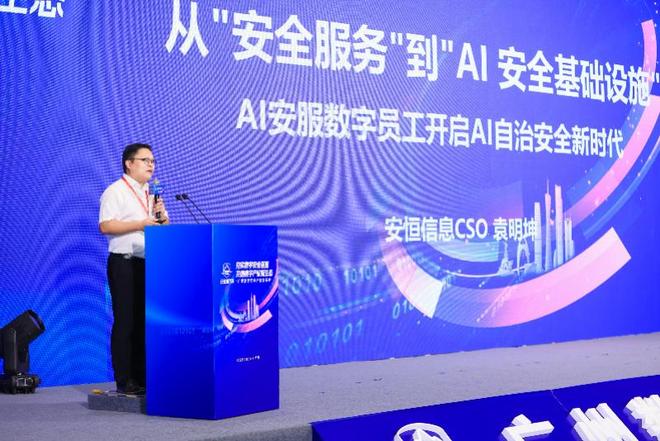
Core Insights - The launch of "An Xiao Long," the world's first AI security service digital employee, marks the beginning of a new era in global security services, emphasizing human-machine collaboration and universal capability [1][3]. Group 1: Transition to AI Security Infrastructure - The shift from human-driven tools to human-machine collaboration is necessary due to the increasing challenges in cybersecurity amid rapid digital economic growth [3]. - Companies face a fundamental contradiction between the expanding attack surface and limited top-tier security resources, necessitating a transition to AI-driven solutions [3]. Group 2: Significance and Innovation of "An Xiao Long" - "An Xiao Long" is based on 18 years of security experience and integrates top security research, providing continuous security services without time constraints [4]. - The AI-driven architecture of "An Xiao Long" includes a brain, a nervous system, and a weaponry library, enabling it to understand expert instructions and execute complex security tasks autonomously [4]. Group 3: Value Proposition and Impact - The value of "An Xiao Long" lies in democratizing expert capabilities, reducing emergency response times from hours to minutes, and enabling immediate compliance assessments [5]. - The launch event was supported by various governmental and industry organizations, highlighting the collaborative effort in advancing AI security development [5].

AI重构财务,我们离“无需报销”还有多远?丨ToB产业观察 | 巴伦精选
Tai Mei Ti A P P· 2025-10-17 02:41
Core Insights - The financial sector is undergoing a transformation driven by AI, moving from manual processes to automated and intelligent decision-making [2][4][5] - The adoption of AI in finance has been limited until recently due to high costs, but advancements like DeepSeek have significantly reduced these costs, making AI applications viable [4][5] - Despite the potential benefits, challenges such as AI hallucinations and the need for explainability remain significant barriers to widespread adoption in finance [2][12] Cost Reduction and Demand Surge - The financial industry has only recently begun to embrace AI, transitioning from process automation to intelligent decision-making, with a notable starting point being the launch of DeepSeek [4] - Prior to DeepSeek, the cost of using AI for tasks like expense report auditing was significantly higher than manual processes, deterring many companies from adopting AI solutions [4] - After the introduction of DeepSeek, the cost of AI auditing for receipts dropped from 9-10 RMB to 0.6-0.7 RMB, making it more cost-effective than manual auditing [4][5] AI Applications in Finance - AI has begun to empower various financial scenarios, including receipt auditing and expense management, which were previously reliant on manual verification [6][8] - The introduction of AI has enabled companies to handle complex tasks, such as recognizing receipts in multiple languages, which was a challenge for finance personnel [8] - The financial control capabilities of companies are currently at levels L3-L4, with the integration of AI being crucial for advancing to level L5 [8] Intent Recognition and Dynamic Decision-Making - AI has transformed the interaction in finance from manual data entry to natural language processing, allowing for more intuitive user experiences [9] - AI's ability to make dynamic decisions based on various data points represents a significant advancement over previous static rules [9][10] - The shift from task-oriented roles to decision-making roles is a key evolution in the finance sector, as AI takes over repetitive tasks [10] Challenges of AI Implementation - The phenomenon of AI hallucinations poses a major challenge, particularly in finance where accuracy is critical [12] - Hallucinations can arise from outdated data, unreliable online information, and imbalanced data distributions, necessitating robust solutions to mitigate these issues [12][13] - Organizations must overcome cognitive biases and structural inertia to fully leverage AI capabilities in finance [14][15] Organizational Evolution - The successful integration of AI in finance requires a rethinking of organizational structures and roles, moving away from traditional task-based divisions [15] - Financial shared service centers with empowered leadership can effectively implement AI strategies to optimize costs and improve decision-making [15][16]

毕马威:世界对AI的看法已转变
财富FORTUNE· 2025-10-14 13:07
Core Insights - The article discusses the rapid adoption of AI in major U.S. companies, highlighting a significant increase in the deployment of AI agents from 11% to 42% within six months, indicating a fourfold growth [2] - There has been a fundamental shift in perception towards AI, with resistance dropping from 47% to 21%, and over half of employees now accepting or actively engaging with AI tools [2][3] - The relationship between human employees and AI is evolving, with AI being compared to a "toddler" that requires human guidance and supervision, emphasizing the need for human-AI collaboration [4][5] Group 1: AI Adoption and Perception - The deployment of AI agents in companies has surged, with 42% of firms now utilizing them, up from 11% [2] - The perception of AI has shifted from fear to acceptance, with only 21% of employees expressing resistance compared to 47% previously [2] - The technology departments are leading the adoption, with 95% of them using AI to enhance efficiency [2] Group 2: Human-AI Collaboration - AI is not yet capable of fully replacing human employees, necessitating a "human in the loop" approach for effective collaboration [3][4] - Employees view AI as an empowering tool rather than a replacement, fostering a sense of security due to the need for human oversight [4][5] - The skills required in the AI era include critical thinking, questioning ability, and adaptability, which are becoming increasingly important [4] Group 3: Measuring AI Impact - Traditional business metrics are inadequate for capturing the transformative impact of AI, with 78% of leaders acknowledging that conventional KPIs fail to reflect AI's value [6] - Many AI projects have not met expected ROI, indicating a need for new metrics to evaluate AI effectiveness [6] - Companies are now focusing on productivity (97%), profitability (94%), and quality improvement (91%) as key indicators of AI's impact [6] Group 4: Workplace Transformation - The workplace culture is evolving due to AI, requiring entry-level employees to develop higher levels of skepticism, critical thinking, and adaptive reasoning [7] - There is a trend among 56% of leaders to adjust recruitment strategies for entry-level positions to reduce repetitive tasks and increase critical work [8] - The younger generation, accustomed to digital technology, may need to cultivate more skepticism towards AI due to its early-stage development [7]

夜间服务能力提升22%,“京晓保”智能助手解答近21万个问题
Xin Jing Bao· 2025-10-10 03:50
Core Insights - The Beijing Municipal Human Resources and Social Security Bureau launched an AI-powered policy consultation assistant named "Jing Xiao Bao" in July, aimed at enhancing traditional job roles and exploring a new management model of human-machine collaboration [1][2] - "Jing Xiao Bao" has received over 93,000 visits and answered nearly 210,000 questions, significantly improving the consultation experience for citizens and businesses [1] Group 1: Service Innovation - The assistant integrates over 1,200 policy documents and 8,800 frequently asked questions from the human resources and social security sector, utilizing a "large language model + Beijing human resources knowledge base" approach [1] - The system ensures that new policies are updated within 24 hours and hot issues are iterated within 48 hours, maintaining synchronization between the knowledge base and actual business operations [1] Group 2: User Engagement - "Jing Xiao Bao" is accessible through various platforms, including the municipal human resources bureau's official website and WeChat mini-programs, allowing real-time interaction via text or voice for inquiries related to employment, social security, and labor relations [2] - The most frequently answered questions pertain to social insurance benefits, wage issues, labor contracts, and other matters concerning citizens' rights, as well as common procedural inquiries like retirement age and social security card replacement [2] Group 3: Performance Metrics - The assistant's usage during off-peak hours (5 PM to 9 AM) exceeds that of the 12333 hotline by 22.3%, addressing issues of hotline accessibility and long wait times for consultations [1] - "Jing Xiao Bao" effectively alleviates the pressure on the hotline, enhancing the governance capability of human resources and social security services [1]
合合信息拟赴港上市丨发布智能审核白皮书,开启企业审核自动化新篇
Quan Jing Wang· 2025-09-30 03:18
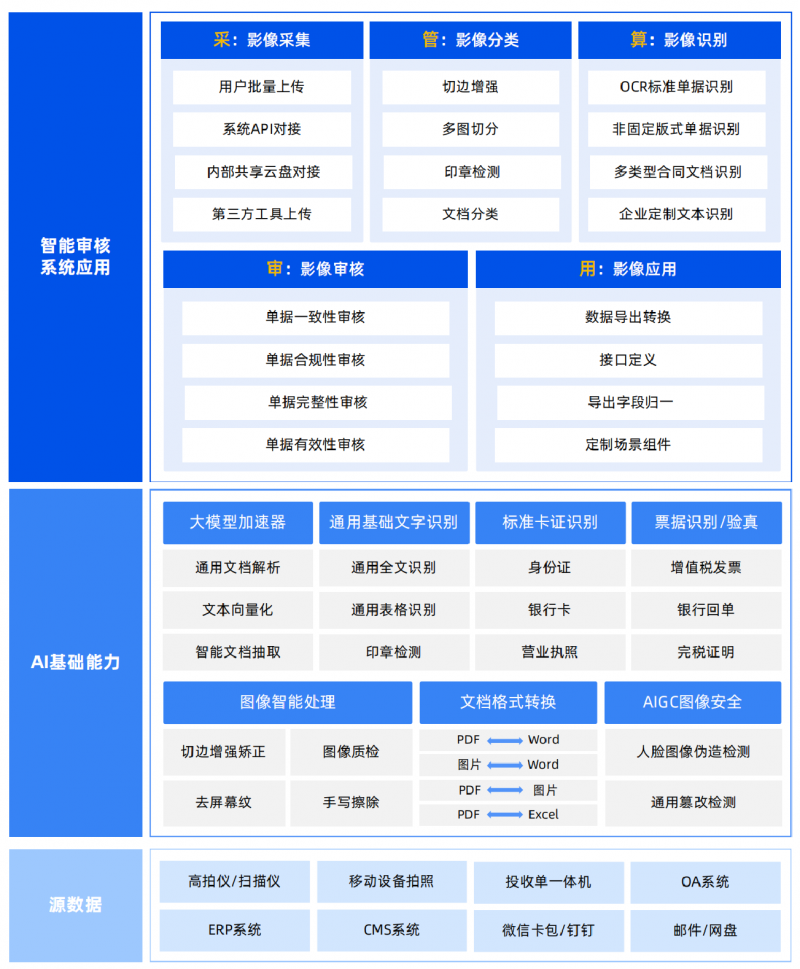
Core Insights - Hehe Information has officially submitted its main board listing application to the Hong Kong Stock Exchange, aiming to leverage capital market resources to enhance its core capabilities in commercial big data and intelligent decision-making [1] - The company has released a white paper on intelligent auditing, marking a new chapter in enterprise audit automation [1] Group 1: Intelligent Auditing Challenges - In high-frequency trading scenarios such as banking and cross-border finance, the auditing process faces numerous challenges, including a lengthy and fragmented audit chain that may involve over ten audit steps and data spread across multiple incompatible systems [1] - The complexity of audit materials and the potential for human error in manual verification can lead to significant economic losses for enterprises [1] Group 2: AI Intelligent Auditing System - Hehe Information has developed an AI intelligent auditing system with strong document processing capabilities, capable of accurately parsing complex tables, handwritten text, seals, and various document formats [3] - The system supports cross-system automatic comparison and helps enterprises achieve automated audit management [3] - In a collaboration with a well-known logistics company, the system demonstrated its ability to effectively parse customized invoices and billing documents, achieving an accuracy rate of over 98% for overseas invoice and billing sample field recognition [3] Group 3: Product Offering - The product TextIn DocFlow offers enterprise users a "plug-and-play, one-click integration" experience, enabling intelligent processing of various domestic and international documents [3] - It provides a one-stop solution for intelligent collection, classification, extraction, verification, and processing of documents, significantly reducing development time [3] Group 4: Future Outlook - With the advancement of AI technologies represented by large models, the automation of repetitive auditing tasks is becoming a reality, reducing operational risks and enhancing work efficiency [4] - Hehe Information plans to continue exploring AI applications in document parsing, extraction, and auditing across various complex scenarios, aiming for a comprehensive upgrade in document processing intelligence [4]
北大汇丰赵泠箫:居民理财理念正从“保本保息”向“风险收益相匹配”转变
Xin Lang Cai Jing· 2025-09-30 01:58
Core Insights - The wealth management industry in China is undergoing a critical transformation phase due to the deepening of asset management regulations, with a focus on rebalancing risk and return [3][4] - There is a shift in residents' investment philosophy from "capital preservation and interest guarantee" to "matching risk and return," which raises the requirements for institutions' asset allocation capabilities and risk management systems [3][4] - The integration of technology and regulatory frameworks is expected to drive innovation in the wealth management sector, enhancing service delivery and optimizing capital allocation [4][5] Industry Challenges - The industry faces structural imbalances between risk and return, exacerbated by global interest rate fluctuations and geopolitical uncertainties, making traditional low-risk assets less attractive [3][11] - The low interest rate environment has compressed the yield space for traditional fixed-income products, with the ten-year government bond yield dropping to approximately 2% in July 2024 [3][11] - Investors' preference for stable returns, especially among aging populations, creates tension with the inherent volatility of high-yield products [3][11] Technological and Regulatory Innovations - The fusion of large models and explainable AI is set to upgrade smart investment advisory services from standardized tools to dynamic "wealth managers," allowing for real-time analysis of investor needs and market changes [4][5] - The rapid adoption of personal pension accounts is expected to optimize the funding structure and encourage long-term capital support for strategic sectors like green bonds and technology innovation [4][10] - Regulatory policies will continue to play a stabilizing and catalytic role, ensuring compliance and fostering a professional development environment for long-term funds [4][10] Asset Allocation Strategies - Investors should consider five key factors when constructing a diversified asset portfolio: risk tolerance, investment horizon, asset correlation, liquidity needs, and macroeconomic cycles [7][14] - A "core-satellite" strategy is recommended, where core assets (60%-70%) focus on stable returns and liquidity, while satellite assets (30%-40%) target higher growth opportunities [8][14] - Regular rebalancing of the portfolio is essential to maintain alignment with investment goals and market conditions [9][14] Future of Wealth Management - The personal pension market is poised for significant growth, driven by improved regulations and a diverse product ecosystem, which will enhance long-term investment strategies [13][14] - The integration of wealth management and consumer finance is expected to create a dual-driven model that supports both long-term capital growth and short-term liquidity needs [10][13] - The focus on sustainable and responsible investing will likely increase, as the industry adapts to new consumer demands and market trends [10][13]
以审计为窗读懂中国 以青年交流凝聚共识
Ren Min Ri Bao· 2025-09-28 22:28
Core Viewpoint - The first Asian Auditing Organization Youth Training Program held in Nanjing and Shanghai showcased the auditing wisdom of Asian countries and highlighted China's proactive integration into global governance [1][2]. Group 1: Event Overview - The training program took place from September 22 to 26, with over 90 young representatives from 42 countries participating [1]. - Discussions focused on "sharpening auditing skills" and "technology empowering auditing development," culminating in the release of an international initiative by young auditors [1]. Group 2: Technological Integration in Auditing - Chinese auditors presented cases utilizing satellite imagery to identify land use changes, which resonated with participants from developing countries [1]. - The application of artificial intelligence and big data in auditing was emphasized, showcasing its potential to enhance efficiency and effectiveness in audit processes [1][2]. Group 3: Professional Development and Collaboration - The program highlighted the importance of professional skills and resilience among auditors, with a call for adapting to new challenges in the auditing landscape [2]. - A collaborative atmosphere was fostered, with participants sharing innovative practices and insights from their respective countries [2]. Group 4: Future Directions and Strategic Importance - The initiative aims to transform professional spirit, integrity awareness, and knowledge sharing into collective actions among Asian auditing youth [3]. - The program is seen as strategically significant for the future development of auditing in Asia, enhancing the capabilities and ethics of young auditors [3].
复旦大学管理学院:人机协同成财务转型主旋律
Zheng Quan Shi Bao Wang· 2025-09-28 10:42
近日,复旦大学会计硕士(MPAcc)专业学位项目联合复旦管院商业知识发展与传播中心、复旦MPAcc CFO50人+论坛,正式发布《2025中国财务人员AI应用现状蓝皮书》。 专家组预测,未来三到五年,AI与财务专业的融合将进一步深化。AI应用将从"自动化"走向"智能化"; 人机协同将成为财务组织的新范式:未来的财务团队将是人类专家与AI系统深度协作的共同体,人类 的判断力、伦理观,以及战略思维将和AI的计算力与洞察力实现互补。核心能力要求将发生根本性重 构:对财务人员而言,专业技能与数字素养必须双轨进化。除传统的财务知识外,数据解读、流程建 模、提示工程及AI工具治理能力,将成为财务人才的核心竞争力——企业教育和培训体系需积极响应 这一能力结构的转变。 课题组组长、复旦大学管理学院会计学系副系主任,教授,博士生导师张新指出:"这份报告不仅记录 技术变迁,更揭示了组织与个体协同进化的密码。人工智能不会取代财务专业,但会重新定义它。那些 积极拥抱变化、主动驾驭技术,并持续进行能力增值的个人与组织,将在智能财务新纪元中赢得前所未 有的发展机遇。" 人工智能正重塑商业世界,而财务,作为企业的核心枢纽,正站在这场变革的 ...
接近温和拐点,AI将迎来比撒手速度的周期
3 6 Ke· 2025-09-28 02:05
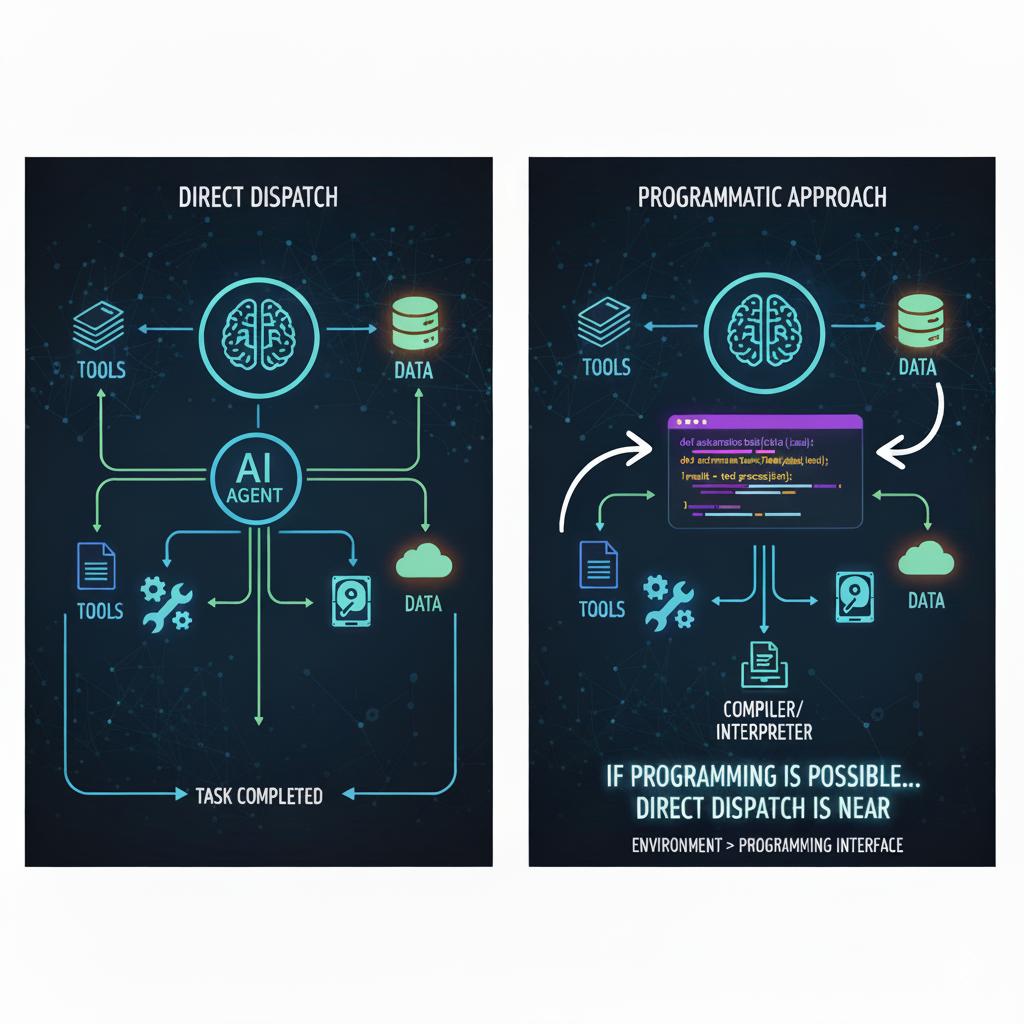
Core Insights - The article discusses a pivotal moment in AI development, transitioning from "human-machine collaboration" to "human-machine delegation," indicating a shift in competitive dynamics towards who can more effectively delegate tasks to autonomous AI agents [1][6][10]. Group 1: AI's Impact on Work - AI is currently enhancing productivity as a "co-pilot" but has not yet fundamentally disrupted organizational structures [1]. - A recent survey at Anthropic revealed that engineers' workloads have increased two to three times, with their roles shifting from coding to managing AI agent systems [1][7]. Group 2: Programming and AI - The ability of AI to handle programming tasks signifies a broader capability to tackle semi-open systems, suggesting that programming may soon be rendered obsolete in practice [2][3]. - Programming is characterized as a digital-native activity involving logic, system thinking, resource allocation, and continuous refinement, which AI is beginning to master [8][9]. Group 3: New Organizational Models - The emergence of "unmanned companies" is anticipated, where human roles transition from executors to managers and orchestrators of AI systems [7][15]. - The new organizational model will focus on strategic oversight rather than direct execution, with humans acting as value injectors, system architects, and macro navigators [17]. Group 4: Contextual Overload and Efficiency - A new "law" of exponential context overload will emerge, making human intervention impractical in AI-driven decision-making processes [10][11]. - Organizations that attempt to maintain human oversight in execution loops will likely face efficiency challenges and may be eliminated from competition [12][13]. Group 5: Automation and Augmentation - The definitions of automation and augmentation highlight a shift towards more complex task delegation and collaborative interactions with AI, moving beyond simple tool usage [21][22]. - Recent data indicates that users are increasingly assigning higher-level tasks to AI models, marking a significant shift in how AI is perceived and utilized [23].