
以价换量

Search documents
2025年长沙国庆楼市全景图——热度与分化的双重奏
Sou Hu Cai Jing· 2025-10-11 06:43
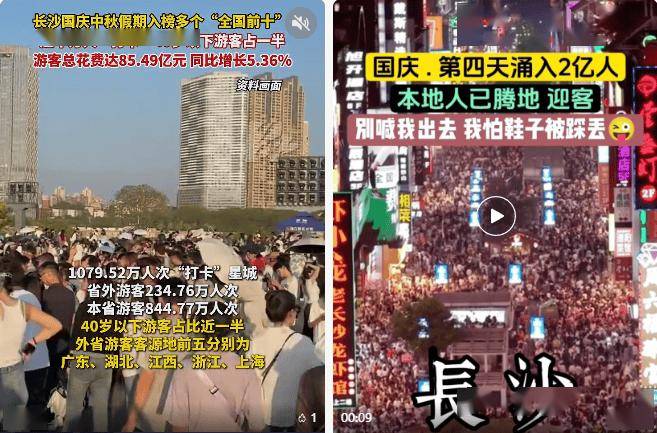
Core Insights - The tourism and real estate markets in Changsha experienced significant activity during the National Day holiday, with over 10 million visitors and a notable increase in both tourist spending and real estate transactions [1][3]. Tourism Performance - Changsha received 10.79 million tourists during the holiday, marking a year-on-year increase of 13.39% - Total tourist spending reached 8.549 billion yuan, reflecting a year-on-year growth of 5.36% [1]. Real Estate Market Overview - The real estate market in Changsha showed a "structural recovery" rather than a broad-based increase, with new developments taking center stage [3]. - Daily average net signed residential units during the holiday was 49, with a total signed area of 53,700 square meters and an average transaction price of 12,635 yuan per square meter [3]. New Developments Performance - The top three projects in terms of sales during the holiday were all new developments launched in September, indicating the success of pre-holiday customer accumulation strategies [4][3]. - The sales amount for the top projects included: - Wanxiang Chunyu and Jing: 0.516 billion yuan - Jiaxin Yanghu Jinxie: 0.415 billion yuan - Changsha Ruifu: 0.402 billion yuan [4]. Visitor and Subscription Data - The average number of visitors per project reached 196 groups, with an average of 14.1 subscriptions per project, representing increases of 226% and 417% respectively compared to the third quarter [7]. - Notable projects like Jiaxin Yanghu Jinxie and Zhaoshang Xu achieved visitor numbers exceeding 1,000 during the holiday [7]. Marketing Strategies - Developers employed a combination of "visible discounts" and "hidden subsidies" to stimulate sales, effectively lowering the initial purchase threshold for price-sensitive customers [19][21]. - The marketing strategies included significant discounts, promotional offers, and enhanced commissions for sales channels, which helped boost transaction volumes [23][24]. Market Trends and Outlook - The strong visitor and subscription data indicate that genuine housing demand is being released in an orderly manner, with expectations for a potential increase in net signed data in October [25][26]. - The market may see intensified competition and price wars as projects that underperformed during the holiday seek to accelerate sales through more aggressive promotional measures [26][27]. - The overall health of the Changsha market remains robust, with quality products and reasonable pricing being key to transactions [28].

深圳楼市新政“满月” 市场热度明显提升
Zheng Quan Shi Bao Wang· 2025-10-10 09:30
Core Insights - Shenzhen's real estate market has shown signs of recovery following the new policies implemented on September 5, with increased transaction volumes in both new and second-hand housing [1][2][3] New Housing Market - From September 5 to September 30, 16 new projects received pre-sale permits, a significant increase from only 6 in August, indicating developers' renewed confidence [2] - The combination of policy benefits and high-quality housing supply has amplified transaction volume growth, with increased viewings and reservations reported [2] Second-Hand Housing Market - The number of new second-hand residential contracts signed from September 6 to October 6 reached 3,699, marking a year-on-year increase of 32.63% [1] - The recorded volume of second-hand homes in September was 5,808, reflecting a month-on-month increase of 10.3% and a year-on-year increase of 52.4%, continuing a trend of exceeding the industry benchmark for seven consecutive months [1] Market Expectations - The Shenzhen Real Estate Association anticipates that the market will maintain high transaction volumes into the fourth quarter of 2025, driven by the ongoing effects of the new policies and the traditional sales peak [3] - Differentiated regulatory measures between core and non-core areas are expected to sustain market activity, with non-core areas benefiting from relaxed policies and lower prices, attracting first-time and upgrading buyers [3] Overall Market Performance - Despite a generally subdued performance during the National Day and Mid-Autumn Festival holidays, core cities like Beijing, Shanghai, and Shenzhen have seen year-on-year growth in new housing transaction areas [4] - The second-hand housing market in key cities has shown significant recovery in September, with expectations for continued moderate increases in transaction activity in October, although the "price-for-volume" strategy is likely to persist in the short term [4]
楼市“银十”平淡开局 市场分化仍将持续
Zhong Guo Jing Ying Bao· 2025-10-09 16:07
Core Insights - The overall real estate market in China continues to adjust, with the average daily transaction volume of new homes in 14 key cities dropping by nearly 30% year-on-year during the National Day and Mid-Autumn Festival holiday [1][2] - Core cities like Beijing, Shanghai, and Shenzhen maintain high market activity, while many second and third-tier cities show a significant decline, highlighting the structural characteristics of the current real estate market [1][2] Market Performance - The average daily transaction volume for new homes in the 14 key cities during the holiday was 449 units, a decrease of 27.2% compared to last year [2] - In Beijing, the average daily transaction volume of new residential properties increased by 52% year-on-year during the holiday, while second-hand homes saw a 73% increase [2][3] - Shanghai's new residential properties experienced a slight increase of 3% in daily transactions compared to last year [4] Policy Impact - Beijing implemented policies to stimulate the market, including relaxing purchase restrictions and increasing loan limits, which led to a 21% month-on-month increase in new home transactions in September [3] - Shanghai's new policies included removing purchase limits for eligible buyers and adjusting mortgage rates, resulting in a 23% month-on-month increase in new home transactions [3][4] - Shenzhen's new regulations led to a 44% month-on-month increase in new home transactions, although year-on-year growth was only 1% due to high base effects [4] Market Differentiation - The market is experiencing increasing differentiation, with over 470 policies introduced nationwide this year, primarily benefiting core cities [6] - Major real estate companies are cautiously acquiring land in core cities, with significant land transaction amounts reported in cities like Shanghai, Hangzhou, and Beijing [6][7] - Analysts predict that new supply in core cities may support new home sales, while cities with limited new projects will focus on inventory reduction [7] Future Outlook - The upcoming policies are expected to maintain a loose stance, aiming to stabilize the market and accelerate the implementation of existing measures [7] - The 20th Central Committee's upcoming meeting may provide direction for the real estate sector's development over the next five years [7]
“金九”百城房价分化:新房结构性微涨 二手房环比下跌
Mei Ri Jing Ji Xin Wen· 2025-10-09 14:48
Core Insights - The real estate market in September showed mixed signals, with new home prices experiencing slight increases while second-hand home prices continued to decline [1][2][5]. New Home Market - In September, the average price of new homes in 100 cities was 16,926 yuan per square meter, reflecting a month-on-month increase of 0.09% and a year-on-year increase of 2.68% [1][2]. - The third quarter saw a cumulative increase of 0.47% in new home prices, although this was a slowdown compared to the previous quarter [2]. - First-tier cities, such as Shanghai and Guangzhou, led the price increases, with Shanghai seeing a month-on-month rise of 0.82% [3][4]. - The new home market is characterized by a structural increase in prices driven by the active launch of quality projects by developers in core cities [3][4]. Second-Hand Home Market - The average price of second-hand homes in September was 13,381 yuan per square meter, marking a month-on-month decrease of 0.74% and a year-on-year decrease of 7.38% [5][6]. - Second-hand home prices have been in a continuous decline for 41 months, with a cumulative drop of 5.79% in the first three quarters of the year [1][5]. - The second-hand market is under significant pressure, particularly in second-tier cities, which experienced the largest declines [6][7]. Policy and Market Dynamics - Recent policy adjustments in cities like Shenzhen and Shanghai aim to alleviate pressure on the second-hand market, including relaxed purchase restrictions and tax incentives [7]. - The overall sentiment in the real estate market remains cautious, with high inventory levels and weak market expectations contributing to ongoing price adjustments [7].
“金九”百城房价分化:新房结构性微涨,二手房环比下跌
Mei Ri Jing Ji Xin Wen· 2025-10-09 12:53
Core Insights - The real estate market in September showed mixed signals, with new home prices experiencing slight increases while second-hand home prices continued to decline [1][2][5]. New Home Market - In September, the average price of new homes in 100 cities was 16,926 yuan per square meter, reflecting a month-on-month increase of 0.09% and a year-on-year increase of 2.68% [1][2]. - The new home prices in the third quarter saw a cumulative increase of 0.47%, although this was a slowdown compared to the previous quarter [2]. - First-tier cities, such as Shanghai and Shenzhen, exhibited strong performance with new home prices rising by 0.48% month-on-month and 6.87% year-on-year [2][3]. - The market remains uneven, with second and third-tier cities struggling to reduce inventory, as evidenced by a 0.35% month-on-month decline in new home prices in September [3]. Second-Hand Home Market - The average price of second-hand homes in September was 13,381 yuan per square meter, marking a month-on-month decrease of 0.74% and a year-on-year decrease of 7.38% [5][6]. - The second-hand home market has faced continuous pressure, with prices declining for 41 consecutive months, and a cumulative drop of 5.79% in the first three quarters of the year [5][6]. - Second-tier cities experienced the largest declines in second-hand home prices, with a month-on-month drop of 0.87% in September [6]. Market Dynamics and Policy Responses - The increase in new home prices is attributed to the active launch of quality projects by developers in core cities, which has helped stabilize the market [3][4]. - Various cities have begun implementing targeted policies to alleviate pressure on the second-hand home market, such as relaxing purchase restrictions and optimizing tax policies [7]. - Despite these efforts, the second-hand home market is expected to continue facing downward pressure due to high inventory levels and weak market expectations [7].
有中介晒成交记录!直击深圳楼市新政落地首月,有这些变化
Nan Fang Du Shi Bao· 2025-10-09 11:43
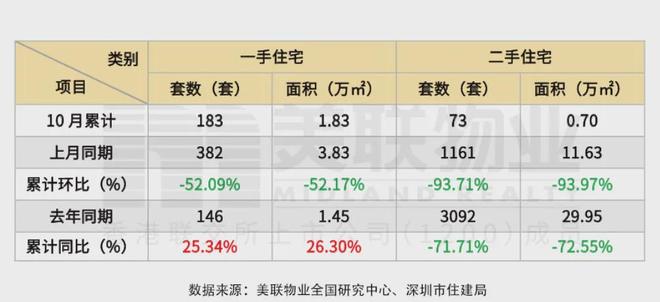
Core Insights - The new housing policy in Shenzhen, implemented in early September, has had a short-term positive impact on the real estate market, particularly during the National Day holiday, but overall transaction volumes remain under pressure compared to last year [2][7][9]. Market Performance - During the National Day holiday (October 1-8), Shenzhen's first-hand residential registrations reached 183 units, a year-on-year increase of 25.34%, but a month-on-month decrease of 52.09% [2][3]. - The second-hand residential market showed a significant decline, with only 73 units registered, marking a 93.71% drop month-on-month and a 71.71% decrease year-on-year [2][3]. - The overall transaction volume for September was higher, with a total of 7,633 units registered, reflecting a 20.7% month-on-month increase and a 38.3% year-on-year increase [9]. Consumer Behavior - Despite the new policy and promotional activities during the holiday, consumer sentiment remains cautious, with many potential buyers preferring leisure activities over house hunting [10]. - The market is experiencing a shift in buyer behavior, with a notable decrease in foot traffic to sales offices compared to previous years [10]. Market Dynamics - Real estate agencies reported varying degrees of growth in transaction volumes during the holiday, with some agencies noting a 131% increase in first-hand residential contracts and a 22% increase in second-hand contracts [4][5]. - The market is expected to face downward pressure in the fourth quarter, as the demand that was released in September may not sustain [9][12]. Promotional Strategies - Many real estate agencies are employing aggressive marketing strategies, including "zero down payment" offers and commission rebates, to attract buyers [6]. - Various promotional events and activities were organized during the holiday to enhance buyer engagement and provide information on real estate policies [6].
极飞科技港股IPO:收入增速仅个位数 合同负债骤降七成 生产疑似大量外包 产品质量堪忧、频遭投诉、屡罚屡犯
Xin Lang Zheng Quan· 2025-10-09 02:21
Core Viewpoint - Guangzhou XAG Technology Co., Ltd. has submitted a second IPO application to the Hong Kong Stock Exchange after withdrawing its previous application in 2021, aiming to raise funds for R&D, global sales expansion, and operational needs [3][5][15]. Financial Performance - In the first half of 2025, XAG's revenue growth significantly slowed, with a year-on-year increase of only 2.08%, indicating a potential failure of its "price-for-volume" strategy [3][12]. - The company's total revenue for the reporting period was 6.05 billion, 6.14 billion, 10.66 billion, and 7.45 billion RMB, with a compound annual growth rate of 32.74% from 2022 to 2024 [9][10]. - The adjusted net profit improved from -2.47 billion to 1.34 billion RMB, achieving profitability in 2024 [9][10]. Contract Liabilities and Cash Flow - XAG's contract liabilities plummeted by 77.64%, from 353 million RMB at the end of 2024 to 78.99 million RMB by June 30, 2025, raising concerns about future sales [15][16]. - The company's operating cash flow turned negative in the first half of 2025, with a net outflow of 53.67 million RMB, compared to a net inflow of 843.4 million RMB in the same period last year [14][15]. Product Sales and Pricing Strategy - The average selling prices of XAG's agricultural drones and other products have seen significant declines, with average prices dropping by 18.57% for drones and 84.27% for IoT products [12][13]. - Despite a 107.81% increase in agricultural drone sales in 2024, the average selling price decreased by 9.76%, suggesting that the "price-for-volume" strategy may be losing effectiveness [11][12]. Internal Control and Quality Issues - XAG has faced multiple complaints and penalties related to product quality and after-sales service, with 60 complaints reported in the past year [20][26]. - The company has been penalized 54.46 million RMB in 2022 and 10.06 million RMB in 2023 for various issues, raising questions about its internal controls [20][25]. Production Capacity and Asset Management - XAG's production capacity has increased significantly, yet its fixed assets have decreased by 61.41%, from 113 million RMB to 43.59 million RMB, indicating potential inefficiencies [18][19]. - The utilization rate of agricultural machinery has dropped to 53.6%, with a significant portion of production capacity remaining idle [18][19].
卖房也要“反内卷”!北京“金九”二手房网签破1.5万套,协会倡议中介不得恶意压价
Hua Xia Shi Bao· 2025-10-03 00:29
Core Viewpoint - The real estate industry in Beijing is experiencing a significant increase in transaction volume, driven by policy adjustments and market dynamics, while facing challenges related to high listing volumes and pricing pressures [3][6][8]. Group 1: Market Dynamics - The Beijing real estate market saw a notable increase in second-hand housing transactions, with September recording an average of 525 daily transactions, a 22% increase from August and a 27% increase year-on-year [3]. - In September, the total number of second-hand residential contracts reached 15,843, marking a 19.4% year-on-year increase and a 20.5% month-on-month increase [6]. - The "Golden September and Silver October" period traditionally boosts real estate sales, with both buyers and developers actively participating in the market [7]. Group 2: Policy Impact - Recent policy changes, including the relaxation of purchase restrictions outside the Fifth Ring Road, have allowed previously ineligible buyers to enter the market, thus increasing overall transaction volumes [6]. - The Beijing Municipal Housing and Urban-Rural Development Committee issued 25 new pre-sale permits in September, providing nearly 6,000 new housing units, which has stimulated market activity [6]. Group 3: Pricing and Supply Issues - Despite the increase in transaction volume, the high number of listings (14.1 million as of October 2) indicates a supply-demand imbalance, leading to continued downward pressure on prices [3][7]. - Analysts suggest that the current market conditions reflect a "price for volume" strategy, where sellers are compelled to lower prices to attract buyers, particularly in a high-supply environment [7][9]. - The introduction of new housing products with higher usable area ratios has further complicated the market, impacting the pricing dynamics of second-hand homes [8][9]. Group 4: Industry Practices - The Beijing Real Estate Brokerage Industry Association has issued guidelines to curb unethical practices among real estate agents, including false showings and price manipulation tactics [3][8]. - Reports of agents hiring individuals to create artificial demand and pressure sellers to lower prices highlight the complexities and challenges within the current market environment [8][9].

卖房也要“反内卷”!北京“金九”二手房网签破1.5万套 协会倡议中介不得恶意压价
Hua Xia Shi Bao· 2025-10-03 00:26
Core Viewpoint - The real estate industry in Beijing is experiencing a significant shift with new regulations aimed at curbing unethical practices among real estate agents, coinciding with a notable increase in transaction volumes during the traditional peak season of "Golden September and Silver October" [1][4]. Group 1: Regulatory Changes - The Beijing Real Estate Brokerage Industry Association issued ten initiatives to regulate real estate brokerage behavior, prohibiting false showings, price manipulation, and unethical practices that harm homeowners' rights [1]. - The new regulations aim to address the high listing volumes and supply pressures in the second-hand housing market, emphasizing the need for fair pricing and ethical conduct among agents [2][7]. Group 2: Market Performance - In September, Beijing's second-hand housing market saw a daily average transaction of 525 units, a 22% increase from August and a 27% year-on-year growth [1]. - The total number of second-hand residential contracts signed in September reached 15,843, marking a 19.4% year-on-year increase and a 20.5% month-on-month increase [4]. - The increase in transactions is attributed to policy adjustments, an uptick in new housing supply, and a market trend of "price for volume" [4][5]. Group 3: Supply and Demand Dynamics - The high listing volume in the second-hand market is creating supply-side pressure, with 14.1 million units listed as of October 2 [1]. - The introduction of new housing projects, with nearly 6,000 units approved for sale in September, is providing buyers with more options and stimulating market activity [5]. - Analysts suggest that as supply continues to rise alongside demand, the market may stabilize, but prices are likely to remain under pressure due to competitive pricing strategies among sellers [5][6]. Group 4: Future Outlook - The real estate market is expected to maintain a high level of listing activity, with a moderate recovery in transaction volumes anticipated in the fourth quarter [6]. - The ongoing trend of "price for volume" is likely to persist in the short term, influenced by the high inventory levels and market expectations [6][7].

深圳二手房录得量呈现波动调整 市场期待国庆长假楼市“成色”
Zheng Quan Shi Bao Wang· 2025-09-29 12:20
Group 1 - The introduction of new housing policies in Shenzhen on September 5 has led to an increase in market activity, with a notable rise in both new and second-hand property transactions despite a slight decline in second-hand sales due to typhoon weather [1][2] - As of September 28, the total number of new residential units sold in Shenzhen reached 1,482, while second-hand residential transactions totaled 4,323, indicating a robust market despite some fluctuations [1][2] - Real estate agents report a significant increase in decision-making speed and confidence among buyers with clear demands, although prices in the second-hand market remain relatively stable [1][2] Group 2 - The decline in second-hand housing prices over the past four years has made homeownership more accessible to previously unaffordable buyers, driving up transaction volumes [2] - The new policies are expected to create a positive cycle in the housing market, facilitating the transition from second-hand to new homes, particularly for buyers looking to upgrade [2] - The recent policy changes have led to a 35% increase in new home purchases in the 23 days following the policy implementation compared to the previous 23 days, and a 75% increase compared to the same period in August [2] Group 3 - Nationally, the new housing market has remained stable since 2025, but there has been a slight decline in sales since the second quarter, with September showing signs of recovery due to improved supply [3] - The second-hand housing market continues to operate on a "price for volume" basis, with key cities seeing a year-on-year increase in transaction numbers for the first three quarters [3]