
国内国际双循环

Search documents
洋山港拓宽新航路
Xin Hua Wang· 2025-12-30 10:08
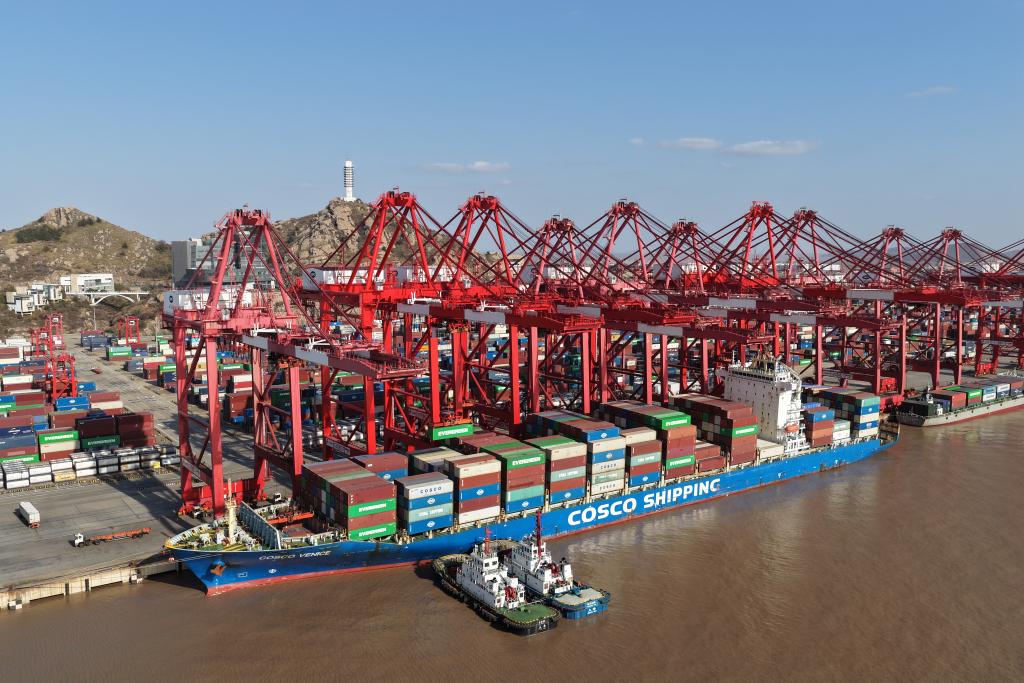
从长江到东海,港航运输能级提升,带动了产业带、港口圈、城市群发展,更形成了港航业与贸易、投资、金融、科技的交叉互动。作为链接国 内、国际双循环的重要枢纽航点,上海港加速了资源要素流动、便利了跨境贸易运输,更提升了城市经济运行功能。 洋山港作为上海国际航运中心建设的关键支点、全球航运市场的重要坐标,已经成为航运综合物流枢纽、港航技术跃升平台和高水平对外开放窗 口。 在遥远的大洋彼岸,秘鲁钱凯港近日迎来开港一周年,已结出累累硕果。一年来,"钱凯—上海"海运航线进出口货值已达53.5亿元,进出口货物 达19.7万吨。受这条航线带动,2025年前10个月,上海对秘鲁的外贸进出口值大幅增长47.1%。 未来,洋山北侧开发将成为新的增长极。小洋北工程作为国家重点项目,对于提升长三角世界级港口群整体竞争力具有重大战略意义,该项目如 今正在紧锣密鼓建设中,洋北一期预计将于2026年投产。 记者:贾远琨、狄春 ...

纵深推进全国统一大市场建设(高质量发展故事汇·第14期)
Ren Min Wang· 2025-12-29 22:23
本期主讲人:习近平经济思想研究中心副主任 李玉举 视频报道请看人民日报客户端、"人民网+"客户端,英文报道请看环球时报英文版客户端 海南先声药业实验室,工作人员在做实验。 人民网记者 皇甫万里摄 云南昆明斗南花卉市场一角。 受访者供图 闽粤联网工程福建云霄换流站。 资料图片 建设全国统一大市场,是以习近平同志为核心的党中央作出的重大决策。这不仅是构建新发展格局的基 础支撑和内在要求,也是关乎国家发展全局和长远的战略之举。 当今世界,市场是最稀缺的资源。作为全球第二大消费市场,中国拥有14亿多人口、超1.9亿户经营主 体,这样超大规模且极具增长潜力的市场,是我国发展的巨大优势和应对变局的坚实依托,对资源集 聚、创新激励、产业升级、经济增长发挥着有力支撑作用。如何用好市场资源和优势?纵深推进全国统 一大市场建设,至关重要。 近年来,我们加强战略谋划和顶层设计,出台关于加快建设全国统一大市场的意见,围绕完善法律规范 或操作指引,制定系列配套措施,推动全国统一大市场建设取得积极成效——市场基础制度不断完善, 市场设施互联互通显著增强,商品服务和资源要素流动更加顺畅,统一大市场的规模效应和集聚效应不 断彰显。但是我们也 ...

高水平科技自立自强支撑经济高质量发展:作用机理与实践路径
Xin Lang Cai Jing· 2025-12-29 20:21
Core Viewpoint - The article emphasizes the importance of high-level technological self-reliance and strength in supporting high-quality economic development in China, particularly in the context of a new round of technological revolution and industrial transformation [1]. Group 1: Economic Structure Optimization - The Chinese government has placed significant emphasis on optimizing and upgrading the economic structure in recent years [1]. - The interaction between technology and the economy is highlighted as a key area of exploration for sustainable development [1]. Group 2: Theoretical Foundations - The article references Marxist theory, which posits that technological progress drives the development of productive forces [1]. - Historical experiences of the Chinese Communist Party in fostering a positive interaction between technology and the economy are noted as essential for understanding current strategies [1]. Group 3: Mechanisms of Support - High-level technological self-reliance is characterized by advantages in independent innovation, deep integration of technology and economy, and a systematic approach to strategic technological power [1]. - This self-reliance supports the formation of a "technology innovation-driven" economic development model and the establishment of a dual circulation economic development pattern [1]. Group 4: Challenges and Shortcomings - The article identifies several shortcomings in high-level technological self-reliance, including limitations in basic research, original innovation, and the integration of technology and industry [1]. - The current state of support is described as insufficient, with weak nodes and an imperfect structure [1]. Group 5: Recommendations for Improvement - The article suggests that the government should focus on three key areas: strategic core, enterprise主体, and innovation orientation [1]. - It calls for targeted strengthening of the basic research system, deep integration of innovation and industrial chains, and comprehensive reform of the technological system [1].
金观平:扩大内需与扩大开放并不矛盾
Jing Ji Ri Bao· 2025-12-29 09:07
Core Viewpoint - The relationship between expanding domestic demand and opening up to the outside world is crucial for China's economic response to various risks and challenges, ensuring a good start for the "14th Five-Year Plan" and achieving high-quality development [1] Group 1: Importance of Domestic Demand - Domestic demand is the fundamental driving force for China's economic development, with the central economic work conference prioritizing "domestic demand as the mainstay, building a strong domestic market" as a key task for 2026, highlighting the urgency of expanding domestic demand [1] - A strong and stable domestic demand market provides a "strategic depth" for expanding openness, as substantial domestic consumption and investment can absorb international quality goods and services, smoothing economic fluctuations and enhancing China's voice in the international economic system [1] Group 2: Synergy Between Domestic Demand and Openness - Expanding domestic demand and opening up are not contradictory; rather, they are mutually reinforcing and form an organic unity that drives sustainable economic development [2] - A smoother domestic circulation creates a gravitational field for global resources, facilitating the construction of a new development pattern that promotes both domestic and international dual circulation [2] - Historical growth periods in China's economy have coincided with coordinated expansion of domestic demand and openness, indicating that this synergy is both a historical lesson and a current necessity [2] Group 3: Balancing Demand and Supply - Correctly handling the relationship between expanding domestic demand and opening up requires achieving a higher-level dynamic balance where demand drives supply and supply creates demand [3] - Achieving this balance is challenging, as historical lessons remind that expanding domestic demand should adhere to market-oriented reforms, breaking industry monopolies and local protectionism to ensure growth is based on efficiency and innovation [3] - When expanding openness, it is essential to coordinate development and security within a robust risk prevention system to ensure the stability and sustainability of the Chinese economy [3]
高质量发展大市场丨洋山港拓宽新航路
Xin Hua Wang· 2025-12-29 06:37
在遥远的大洋彼岸,秘鲁钱凯港近日迎来开港一周年,已结出累累硕果。一年来,"钱凯—上海"海运航线进出口货值已达53.5亿元,进出口 货物达19.7万吨。受这条航线带动,2025年前10个月,上海对秘鲁的外贸进出口值大幅增长47.1%。 洋山港作为上海国际航运中心建设的关键支点、全球航运市场的重要坐标,已经成为航运综合物流枢纽、港航技术跃升平台和高水平对外开 放窗口。 从长江到东海,港航运输能级提升,带动了产业带、港口圈、城市群发展,更形成了港航业与贸易、投资、金融、科技的交叉互动。作为链 接国内、国际双循环的重要枢纽航点,上海港加速了资源要素流动、便利了跨境贸易运输,更提升了城市经济运行功能。 未来,洋山北侧开发将成为新的增长极。小洋北工程作为国家重点项目,对于提升长三角世界级港口群整体竞争力具有重大战略意义,该项 目如今正在紧锣密鼓建设中,洋北一期预计将于2026年投产。 记者:贾远琨、狄春 新华社音视频部制作 【纠错】 【责任编辑:胡蓉】 ...
完善西部陆海新通道金融服务体系
Jing Ji Ri Bao· 2025-12-29 01:00
Core Viewpoint - The recent issuance of the "Opinions on Financial Support for Accelerating the Construction of the Western Land-Sea New Corridor" by the People's Bank of China and eight other departments aims to enhance the financial service system for the corridor, promoting high-quality development through 21 key measures focused on financing and settlement functions [2][3]. Financial Support Measures - The "Opinions" emphasize the importance of financial cooperation with relevant countries to expand capital connectivity and establish a clear and scalable financial cooperation network, particularly in light of China's participation in the Regional Comprehensive Economic Partnership (RCEP) [2][3]. - The document outlines a development line that integrates logistics, trade, and industry, advocating for financial reform and innovation to enhance the financial service system for the corridor [3]. Regional Collaboration - The initiative involves 13+2 provinces and municipalities, aiming to break regional barriers and promote a collaborative financial development model [4]. - Measures include integrated credit granting among financial institutions along the corridor and establishing a joint credit and syndicate loan mechanism to enhance financial cooperation across regions and with ASEAN countries [4]. Financial Product Innovation - A highlight of the initiative is the deepening of financial product innovation in the logistics sector, particularly through railway transport document financial services, which align with the corridor's development goals [5]. - Financial institutions are encouraged to develop tailored financial products to meet diverse financing and settlement needs across different stages of development [4]. Capital Market Contributions - The capital market is expected to provide diverse financing channels, with nearly 700 billion yuan in corporate bonds issued to support enterprises along the corridor in the first 11 months of the year [6]. - The China Securities Regulatory Commission aims to deepen comprehensive reforms in the capital market to enhance financing for various entities [6]. Cross-Border Financial Services - The "Opinions" propose measures to optimize cross-border trade settlement and investment financing, creating a more convenient and secure foreign exchange service environment [7]. - The initiative includes promoting the use of the digital yuan for cross-border transactions, enhancing efficiency and reducing costs for enterprises [7]. Implementation and Monitoring - The People's Bank of China plans to establish a collaborative mechanism to ensure the effective implementation of the "Opinions," including a dynamic monitoring and evaluation system for financial services [8]. - A financial service center for the corridor is set to be established in Chongqing, aiming to facilitate cooperation among financial institutions and enhance service capabilities [8].
为未来中国拓展“增量空间”——我国脱贫地区新观察
Ren Min Ri Bao· 2025-12-28 22:16
Group 1 - The significance of China's victory in poverty alleviation is increasingly evident, marking a crucial milestone in the process of Chinese-style modernization and a solid step towards common prosperity for all people [1] - The "14th Five-Year Plan" emphasizes the goal of common prosperity, with over 70% of fiscal spending in the public budget directed towards improving people's livelihoods [1] - The central economic work conference stresses the need to combine investments in material and human resources to consolidate and expand the achievements of poverty alleviation [1] Group 2 - China's poverty alleviation efforts have lifted nearly 100 million rural poor out of poverty in eight years, with a five-year transition period established to ensure the sustainability of these achievements [3] - International economic leaders have recognized China's development achievements, particularly in poverty reduction, as a miracle and a successful model for other developing countries [3] Group 3 - Poverty-stricken areas in China are transforming from weak links in development to new sources of high-quality growth, showcasing resilience and potential in the face of changing circumstances [4] - Regions like Sichuan and Qinghai are being positioned as important growth poles for high-quality development, focusing on clean energy and ecological tourism [4][5] Group 4 - The integration of rural areas into the national economic framework is being enhanced, with significant improvements in logistics and e-commerce, leading to a more efficient domestic market [8] - The total output value of leading industries in 832 poverty-stricken counties has exceeded 1.7 trillion yuan, with per capita disposable income in these areas rising from 12,588 yuan in 2020 to 17,522 yuan in 2024 [8] Group 5 - The shift from outdated economic models to new driving forces is evident in poverty-stricken areas, with a focus on technological and industrial innovation to modernize agriculture [9] - Initiatives like the "smart orchard big data platform" in Gansu are enhancing agricultural productivity and efficiency, demonstrating the potential for technology to drive growth in rural areas [9][10] Group 6 - The development of renewable energy sources, such as solar power in Qinghai, is transforming previously disadvantaged areas into models of sustainable development [10] - The emphasis on green development is becoming a defining characteristic of poverty alleviation regions, contributing to both environmental sustainability and economic growth [10][11]
八部门联合发布21条举措——完善西部陆海新通道金融服务体系
Jing Ji Ri Bao· 2025-12-28 21:51
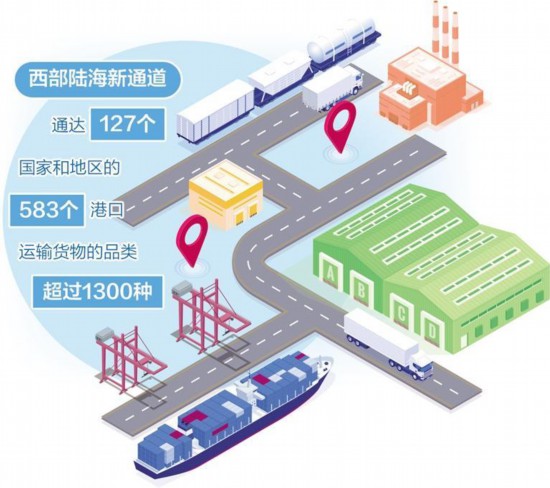
Core Viewpoint - The issuance of the "Opinions on Financial Support for Accelerating the Construction of the Western Land-Sea New Corridor" by the People's Bank of China and eight other departments aims to enhance the financial service system for the corridor, promoting high-quality development through 21 key measures focused on financing and settlement functions [1][2][3]. Financial Support Measures - The "Western Land-Sea New Corridor" connects Guangxi Beibu Gulf and the Indian Ocean to the south, and Central Asia to Europe to the west, serving as a critical node in the Belt and Road Initiative [2]. - The corridor has reached 583 ports in 127 countries and regions, with over 1,300 types of goods transported, indicating its growing influence and importance [2]. - The "Opinions" emphasize a development line of "corridor drives logistics, logistics drives trade, trade drives industry," focusing on problem orientation, multi-cross collaboration, and integrated development [2][4]. Multi-Cross Collaboration - The "Opinions" propose measures for integrated credit granting among financial institutions along the corridor, establishing joint credit and syndicate loan mechanisms, and a unified service network for domestic and foreign branches [4]. - A high-quality financial circulation system is essential for supporting the construction of the corridor, logistics, industry, and trade, with a focus on developing tailored financial products and integrated financial solutions [4]. Innovation in Financial Products - The introduction of railway transport document financial services is highlighted as a significant innovation in logistics financial products, aligning with the corridor's development positioning [5]. - Financial institutions are encouraged to provide more support and favorable terms for enterprises based on the authenticity of trade backgrounds and risk mitigation through railway transport documents [5]. Capital Market Contributions - The capital market offers diverse financing channels, including stock exchanges, corporate bonds, asset securitization, and real estate investment trusts (REITs) [6]. - In the first 11 months of the year, enterprises along the corridor issued nearly 700 billion yuan in corporate bonds, enhancing financing channels and reducing costs [6]. Cross-Border Financial Services - The "Opinions" introduce measures to optimize the cross-border settlement system, aiming to create a more convenient and secure foreign exchange service environment [7]. - There is a push for higher levels of trade and investment in renminbi settlement, with an emphasis on utilizing digital renminbi for payment and settlement [7]. Implementation and Monitoring - The People's Bank of China plans to establish a collaborative mechanism to ensure the effective implementation of the "Opinions," including dynamic monitoring and evaluation of financial services [8]. - A financial service center for the corridor is set to be established in Chongqing, aiming to enhance cooperation among financial institutions along the corridor [8].
经济日报金观平:扩大内需与扩大开放并不矛盾
Jing Ji Ri Bao· 2025-12-28 21:50
Group 1 - The relationship between expanding domestic demand and opening up is crucial for China's economic response to various internal and external risks, ensuring a good start for the "14th Five-Year Plan" and achieving high-quality development [1] - Domestic demand is identified as the fundamental driving force for China's economic development, with the emphasis on "domestic demand as the mainstay" being a top priority in the 2026 economic work tasks set by the Central Economic Work Conference [1] - High-level opening up is seen as a key path to stimulate domestic demand potential and improve its quality, through the introduction of advanced technology, management experience, and competitive mechanisms [1][2] Group 2 - Expanding domestic demand and opening up are not contradictory but are mutually reinforcing elements that together drive sustainable economic development [2] - A smooth domestic circulation enhances the attraction of global resources, facilitating the formation of a new development pattern that promotes both domestic and international dual circulation [2] - Historical experiences indicate that periods of rapid economic growth in China often coincide with coordinated expansion of domestic demand and opening up [2][3] Group 3 - Achieving a higher-level dynamic balance between demand-driven supply and supply-creating demand is essential, which requires market-oriented reforms to break industry monopolies and local protectionism [3] - A comprehensive risk prevention system is necessary to ensure the stability and long-term sustainability of the Chinese economy while expanding both domestic demand and opening up [3]
浙江首个春晚分会场花落义乌
Di Yi Cai Jing· 2025-12-28 10:13
多年来,义乌位居全国百强县排头兵位置。城乡居民人均可支配收入连续18年位居全国县市第1,连续 两年位居"中国县域共同富裕指数"第1,全国社会治理百强县第1。这里还有联合国、世界银行等权威机 构认定的"全球最大的小商品批发市场",与全球233个国家和地区都有贸易往来,出口总量超全国25个 省份。 多年来,义乌位居全国百强县排头兵位置。 作为世界小商品之都,人均GDP领跑全国县域经济的标杆,义乌能入选总台2026年春晚分会场,既因为 其是"中国看世界、世界看中国"的重要国际贸易窗口、新时代陆上丝绸之路和海上丝绸之路的重要交汇 点,也是国家"一带一路"倡议和国内国际双循环的重要节点城市。 今天下午,中央广播电视总台对外宣布,浙江迎来首个春晚分会场——义乌成为2026年春晚四个分会场 之一。其他三个分会场分别为哈尔滨、合肥、宜宾。 ...