
战略转型

Search documents
高价泡面、用户底线、资本困局与零售终局:商业世界的信任博弈与模式重塑
Sou Hu Cai Jing· 2026-01-10 06:10
Group 1: Key Insights on HeFu Lao Mian - HeFu Lao Mian's positioning as a "health noodle" is contradicted by the revelation that staff use pre-packaged ingredients, leading to consumer skepticism about the authenticity of their "freshly made" claims [3][4] - The brand's reliance on a narrative of health and craftsmanship is undermined when the reality of industrialized food preparation is exposed, resulting in a significant loss of consumer trust [7][8] - This incident serves as a cautionary tale for all dining brands that depend on appealing narratives to justify premium pricing, highlighting the importance of genuine consumer experiences over marketing rhetoric [7][8] Group 2: Key Insights on Xiaomi - Xiaomi's founder Lei Jun's live-streaming session aimed to clarify multiple controversies, emphasizing that user trust is paramount and announcing the termination of partnerships with KOLs who attacked users [3][11] - The live-stream was a proactive strategy to manage public perception and redirect discussions towards factual and technical aspects, countering fragmented narratives that could harm the brand [11][12] - This approach reflects a broader strategy of reinforcing brand values and establishing a clear boundary regarding user respect and product integrity amidst a competitive landscape [12][13] Group 3: Key Insights on Huiyuan Juice - Huiyuan Group's public statement accused its major shareholder of financial misconduct and using unverified materials to produce counterfeit products, leading to a takeover of Beijing Huiyuan [3][14] - The conflict highlights the clash between financial restructuring strategies and the operational realities of the food industry, where quality and safety are non-negotiable [16][18] - This situation serves as a warning to other national brands seeking capital assistance, emphasizing that financial strategies must align with industry standards to avoid jeopardizing brand integrity [17][18] Group 4: Key Insights on IKEA - IKEA's decision to close several large stores in China marks a shift from its previous "destination retail" model to a focus on smaller stores and enhanced online presence, reflecting changing consumer behaviors [3][21] - The new strategy aims to reduce costs and improve flexibility in urban areas, addressing the challenges posed by local competitors and the rise of e-commerce [21][22] - This transition signifies a broader trend in foreign retail operations in China, indicating that success now requires deep localization and adaptability rather than a one-size-fits-all global approach [22][23]

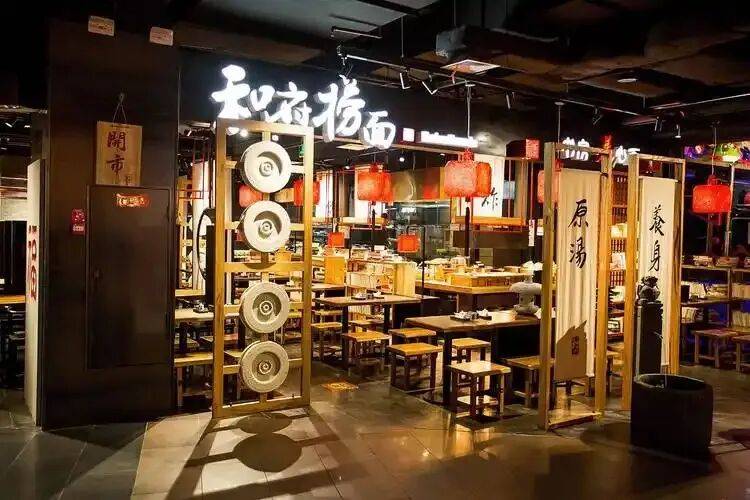
技术为核、双轮驱动,毅昌科技战略转型成效显现
Quan Jing Wang· 2026-01-09 10:19
Group 1 - The core viewpoint of the article highlights Yichang Technology's successful transformation from a traditional home appliance component supplier to a high-end intelligent manufacturing solution provider, with a clear future blueprint presented during the investor briefing on January 9 [1] - The management revealed that the strategic transformation has begun to show results in financial and business structure, with the automotive and new energy businesses accounting for over 60% of total revenue by the first half of 2025, making them the main growth drivers, particularly with new energy revenue increasing by 177.09% year-on-year [1] - The company's confidence stems from its deep technological layout in the new energy sector, having acquired and integrated core technologies in battery thermal management, becoming a supplier to leading companies such as CATL, EVE Energy, and Sungrow, and successfully entering Huawei's HarmonyOS ecosystem [1] Group 2 - In the robotics sector, the company is not merely following trends but is leveraging its core capabilities in mold and injection molding to extend into this area, having signed strategic agreements with technology companies for the development and delivery of components for embodied intelligent robots [1] - The unique qualification of having a "national-level industrial design center" is continuously translating into competitive advantages in customer acquisition and product premium, enabling the company to participate in early joint development with clients and upgrade from a "manufacturer" to a "design and manufacturing integrated solution provider" [1] - With the entry of state-owned assets from Chuzhou, Yichang Technology's dual-wheel drive strategy of "automotive fundamentals + new energy business" is expected to accelerate further, solidifying its leading position in the high value-added precision component sector [2]

从复合肥到磷化工,芭田股份业务重塑?
市值风云· 2026-01-09 10:09
Core Insights - The article discusses the strategic transformation of Batian Co., Ltd. from a traditional fertilizer manufacturer to an integrated phosphate chemical company focusing on "phosphate rock + high-end compound fertilizers + new energy materials" [4]. Group 1: Company Overview - Batian Co., Ltd. is the first publicly listed company in China's compound fertilizer industry, currently undergoing a significant strategic shift [4]. - The company is focusing on technological innovation and industrial chain layout to differentiate itself in a market facing product homogeneity and upstream raw material fluctuations [3]. Group 2: Financial Performance - In 2024, the compound fertilizer business contributed 2.6 billion yuan, accounting for 76.6% of total revenue; phosphate rock business achieved revenue of 710 million yuan, a year-on-year increase of 82% [5]. - By the first half of 2025, revenue from phosphate rock business rose to 998 million yuan, increasing its share of total revenue to 39.3%, becoming the company's second-largest revenue source [5]. - For the first three quarters of 2025, the company reported total revenue of 3.8 billion yuan, a year-on-year growth of 56.5%, with significant contributions from phosphate rock and its processed products, indicating a "dual-drive" phase of compound fertilizers and phosphate rock [7]. - The net profit attributable to shareholders reached 690 million yuan, reflecting a year-on-year increase of 236% [7].


西子健康冲刺港股IPO:FoYes收入暴增364%,研发投入不足1%引担忧
Xin Lang Cai Jing· 2026-01-09 04:27
Core Viewpoint - The company has successfully transformed its business model from third-party brand agency to self-owned brand operation, significantly increasing its revenue and profitability through a strong focus on its proprietary brands [1][5][17]. Business Operations and Model - Xizi Health is a sports nutrition and functional food company with products including protein powder, creatine, and functional gummies, operating under four proprietary brands: FoYes, fiboo, Gu Ben Ri Ji, and Hot Rule [1]. - The revenue share from self-owned brands surged from 42.4% in 2023 to 97.3% in the first nine months of 2025, becoming the main revenue driver [1]. Revenue and Growth - The company reported a revenue of 1.692 billion yuan in 2024, a 17.0% increase from 1.447 billion yuan in 2023, with revenue for the first nine months of 2025 reaching 1.609 billion yuan, reflecting a 23.0% year-on-year growth [2][3]. - The core brand FoYes showed exceptional performance, generating 562 million yuan in the first nine months of 2025, a staggering increase of 364.2% year-on-year, accounting for 35.0% of total revenue [2]. Profitability Metrics - The gross margin improved from 44.4% in 2023 to 59.5% in the first nine months of 2025, driven by the higher margin of self-owned brands, which reached 60.3% compared to 30.8% for third-party brands [3][4]. - Net profit for 2024 was 149 million yuan, a significant increase of 59.0% from 94 million yuan in 2023, but only a slight increase of 1.9% to 118 million yuan in the first nine months of 2025 [3][4]. Revenue Structure Changes - Self-owned brand revenue in 2024 was 1.498 billion yuan, a 144.0% increase from 614 million yuan in 2023, and further increased to 1.567 billion yuan in the first nine months of 2025, a 38.7% year-on-year growth [5]. - In contrast, revenue from third-party brands plummeted by 76.5% to 194 million yuan in 2024 and further declined to 43 million yuan in the first nine months of 2025 [5]. Customer and Supplier Concentration - The concentration of customers decreased significantly, with the top five customers accounting for only 8.1% of revenue in the first nine months of 2025, down from 21.6% in 2023 [6]. - Supplier concentration remains high, with the top five suppliers accounting for 45.0% of purchases, indicating potential supply chain risks [6]. Management and Shareholding Structure - The company's shareholding is highly concentrated, with major shareholders controlling 77.85% of the equity, posing a risk of major shareholder influence [7]. - The core management team has an average industry experience of 15 years but lacks international market experience, which may hinder overseas expansion plans [7]. Research and Development Investment - R&D spending is notably low, with only 0.7% of revenue allocated to R&D in 2025, significantly below industry standards [9][10]. Financial Challenges - The company faces financial challenges, including high sales expenses, with a sales expense ratio of 47.0%, which is significantly above the industry average [15]. - Operating cash flow has been declining, dropping from 2.70 billion yuan in 2023 to 0.66 billion yuan in the first nine months of 2025, a decrease of 75.6% [11][12].
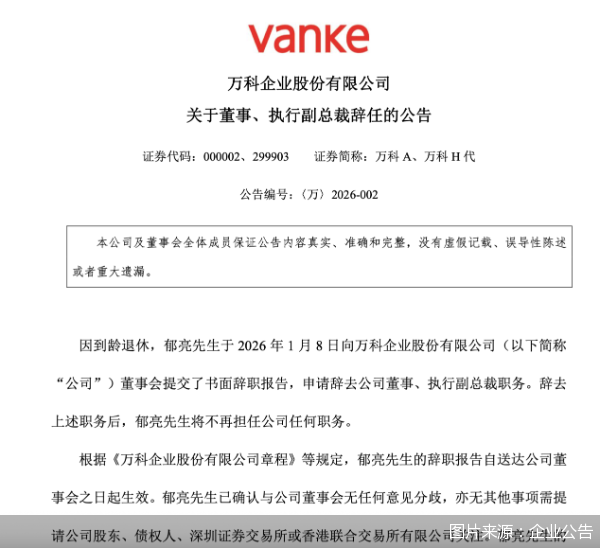
郁亮退休,万科进入全深铁周期
Bei Jing Shang Bao· 2026-01-08 13:12
Core Viewpoint - The retirement of Yu Liang marks the end of a significant era for Vanke, coinciding with the company's struggle for survival amid ongoing debt negotiations and industry challenges [1][5]. Group 1: Leadership Transition - Yu Liang submitted his resignation due to reaching retirement age, officially stepping down from all positions within Vanke [1]. - His leadership began in 2017 when he took over as chairman, during a time when Vanke was already a major player in the real estate sector with annual sales in the hundreds of billions [3]. - Yu Liang's tenure was characterized by a strategic shift from being a residential developer to a broader "urban construction and life service provider" [3][4]. Group 2: Financial Challenges - Vanke is currently engaged in negotiations to extend the maturity of two domestic medium-term notes totaling 5.7 billion yuan [5]. - The company has faced significant financial pressure, with a forecast of substantial losses and unprecedented debt levels [4][5]. - Vanke's proactive approach to debt extension reflects its commitment to risk management and responsibility towards creditors, aiming to create conditions for orderly risk clearance in the industry [5]. Group 3: Support from State-Owned Enterprises - The future of Vanke increasingly relies on support from its major shareholder, Shenzhen Metro Group, which has provided substantial financial assistance totaling approximately 30.8 billion yuan [6]. - Vanke has also been active in asset disposal and equity transfer to improve liquidity, achieving sales of 100.46 billion yuan and optimizing new capacity worth 17.84 billion yuan by the end of Q3 2025 [6]. - The transition of leadership to Huang Liping from Shenzhen Metro Group signals a stronger control by the state-owned entity to navigate the ongoing crisis [6].

湖南西子健康集团股份有限公司(H0295) - 申请版本(第一次呈交)
2026-01-07 16:00
香港聯合交易所有限公司與證券及期貨事務監察委員會對本申請版本的內容概不負責,對其準確性或 完整性亦不發表任何意見,並明確表示概不就因本申請版本全部或任何部分內容而產生或因倚賴該等 內容而引致的任何損失承擔任何責任。 Hunan Xizi Health Group Co., LTD 湖 南 西 子 健 康 集 團 股 份 有 限 公 司 於中華人民共和國成立的股份有限公司) 的申請版本 警告 本申請版本乃根據香港聯合交易所有限公司(「聯交所」)及證券及期貨事務監察委員會(「證監會」) 的要求而刊發,僅用作提供資訊予香港公眾人士。 本申請版本為草擬本,其內所載資料並不完整,亦可能會作出重大變動。 閣下閱覽本文件,即 代表 閣下知悉、接納並向湖南西子健康集團股份有限公司(「本公司」)、其獨家保薦人、整體協 調人、顧問或包銷團成員表示同意: 於 本 公 司 招 股章 程 根 據 香 港 法 例 第 32章 公 司( 清盤 及 雜 項 條 文 )條 例 送 呈 香 港 公 司 註冊 處 處 長 登 記前,不會向香港公眾人士提出要約或邀請。倘在適當時候向香港公眾人士提出要約或邀請,有 意投資者務請僅依據於香港公司註冊處處 ...
51亿买公司捆绑69亿负债,佛塑科技“蛇吞象”并购是赚是亏?
Xin Lang Cai Jing· 2026-01-07 11:17
Core Viewpoint - The acquisition of Jinli Co., Ltd. by Foshan Plastics Technology has been approved by the CSRC, marking Foshan's entry into the battery membrane sector with a deal valued at nearly 5.1 billion yuan, which has been in planning since October 2024 [2][4]. Group 1: Acquisition Details - The acquisition price for 100% of Jinli Co., Ltd. is set at 5.08 billion yuan, which is significantly lower than its previous IPO valuation of approximately 13.1 billion yuan [4][12]. - Jinli Co., Ltd. has a revenue of about 2.63 billion yuan and assets totaling 12.5 billion yuan, making it a larger entity compared to Foshan Plastics, which has a revenue of around 2.22 billion yuan [4][12]. - The acquisition is expected to create synergies in technology, production, and customer resources, enhancing Foshan's competitive position in the new energy materials sector [6][9]. Group 2: Market Position and Performance - Jinli Co., Ltd. has rapidly risen to become a leading player in the wet-process membrane market, achieving a market share of approximately 18% in 2024, ranking second in the industry [5]. - In the first half of 2025, Jinli Co., Ltd. reported a sales volume of 3.75 billion square meters and a revenue of 3.26 billion yuan, successfully turning a profit with a net income of 255 million yuan [6][12]. - The wet-process membrane market in China is experiencing high growth, with a total shipment volume of 11.2 billion square meters in the first half of 2025, reflecting a year-on-year increase of 58% [5]. Group 3: Financial Challenges and Strategic Intent - Jinli Co., Ltd. has faced financial challenges, including a significant increase in debt, with interest-bearing liabilities reaching 6.912 billion yuan as of June 2025 [12]. - The acquisition is seen as a strategic move for Foshan Plastics to quickly enter the lithium battery membrane market and enhance its position in the new energy supply chain [9][11]. - The deal includes performance guarantees, with Jinli Co., Ltd. committing to net profits of no less than 230 million yuan, 360 million yuan, and 610 million yuan for the years 2025 to 2027 [13].

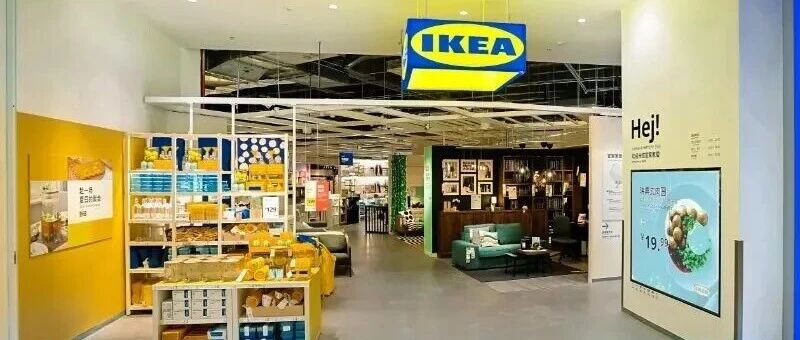
宜家将关7店,称未来2年开超10家小店
21世纪经济报道· 2026-01-07 06:56
Core Viewpoint - IKEA is shifting its strategy in China by closing seven physical stores while focusing on optimizing costs, improving efficiency, and reallocating resources to enhance customer experience and operational effectiveness [2][3]. Group 1: Store Closures and Openings - Starting February 2, 2026, IKEA will close seven stores in China, including locations in Shanghai, Guangzhou, Tianjin, Nantong, Xuzhou, Ningbo, and Harbin [2]. - Despite the closures, IKEA will maintain 34 physical customer touchpoints in China and plans to open over ten new smaller stores in key markets like Beijing and Shenzhen within the next two years [2][3]. Group 2: Strategic Focus and Adaptation - The company emphasizes that true growth is about building resilience to adapt quickly to changing retail environments, focusing on optimizing its business mix and channel layout [3]. - IKEA's future expansion will prioritize smaller formats and strategic markets rather than entering new cities, aiming to enhance customer service and interaction [4]. Group 3: Recent Developments and Collaborations - IKEA has been actively adjusting its operations, including the closure of stores in various cities while simultaneously opening new ones, reflecting a dynamic balance in its strategy [5]. - A strategic partnership with Gaohua Capital will lead to the establishment of a real estate fund, with IKEA planning to open a new store in Wuxi [4].
大连重工:高端制造是公司“五化”战略转型的重要组成部分
Zheng Quan Ri Bao Wang· 2026-01-06 13:48
Core Viewpoint - Dalian Heavy Industry emphasizes "high-end manufacturing" as a crucial part of its strategic transformation towards "five modernizations" (intelligent, green, high-end, international, and service-oriented) [1] Group 1: Strategic Focus - The company plans to leverage its strengths in material handling machinery, metallurgical machinery, and energy equipment to focus on high-end development [1] - Key areas of focus include the deployment of large megawatt wind power core components, ultra-large wind power castings, and industrial gearboxes [1] Group 2: Innovation and Development - Dalian Heavy Industry aims to create an internationally leading heavy industry enterprise group, driven by national equipment localization needs and customer demands [1] - The company will implement a series of reforms and innovations, emphasizing a dual-driven approach of "market demand + technological innovation" to enhance value creation and competitive differentiation [1] Group 3: Mergers and Acquisitions - The company remains focused on its core business while exploring development opportunities in the upstream and downstream of the industry chain [1] - Dalian Heavy Industry will consider various development methods, including external mergers and acquisitions, to support strategic upgrades and high-quality development [1] Group 4: Governance and Compliance - All major decisions will strictly adhere to relevant laws and regulations, with a core focus on protecting the rights of all shareholders [1] - The company is committed to steadily advancing its business layout and enhancing corporate value while actively rewarding investor trust [1]

上峰水泥拟出资9000万元联合设立半导体产业基金 深化新质材料战略转型
Zheng Quan Ri Bao Zhi Sheng· 2026-01-06 13:09
Core Viewpoint - Gansu Shafeng Cement Co., Ltd. is establishing a venture capital fund focused on the semiconductor industry, aiming to integrate core resources and support its transformation into new material businesses [1][2]. Group 1: Fund Establishment and Investment Strategy - The company’s wholly-owned subsidiary, Ningbo Shangrong Logistics Co., Ltd., plans to invest 90 million yuan in a joint venture with several institutions to establish the Suzhou Ruicun Venture Capital Partnership, with a total subscription amount of 173 million yuan [1]. - The fund will primarily invest in semiconductor materials, equipment, and components, with Ningbo Shangrong holding a 52.02% stake in the fund [1]. - The strategic partnership includes specialized investment firms focused on semiconductors and new materials, enhancing the company's ability to connect with industry leaders and local funds [2]. Group 2: Long-term Strategic Planning - The company has identified the semiconductor industry as a core investment direction since 2020, with annual investment plans approved by the board [2]. - By 2025, the company aims to complete strategic investments in semiconductor firms, establishing a comprehensive investment system covering materials, equipment, manufacturing, and testing [2][3]. Group 3: Investment Performance and Future Outlook - The company has invested over 2 billion yuan in new economic sectors, with 27 projects, including several that have entered the IPO process [3]. - The net profit contribution from equity investments is projected to reach 22.6% in 2024, with a cumulative profit of 530 million yuan over the past five years [3]. - The company’s new five-year strategic plan aims to cultivate a growth-oriented business in new materials, alongside its traditional construction materials and equity investment businesses [3][4].
